

Star Oilco

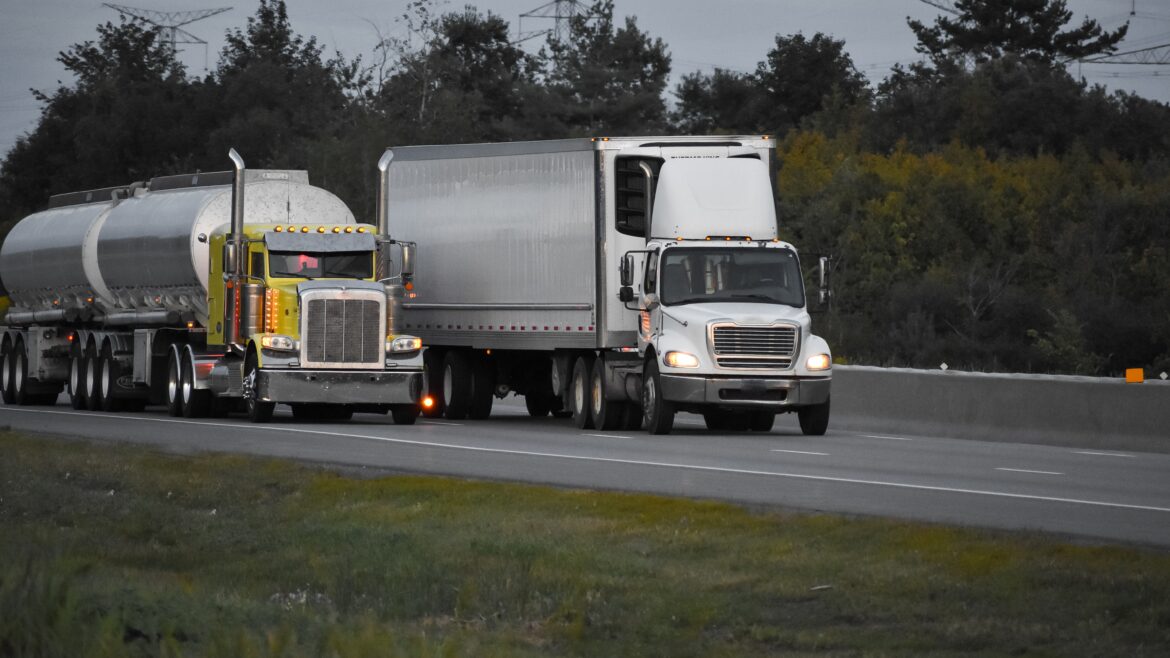
Two semi-trucks driving on a highway with trees in the background
Fuel Market Report: Sept 28th-Oct 4th 1024 683 Star Oilco

Fuel Market Report: Sept 28th-Oct 4th

fuel-market-report-star-oilco

Did You Know That R99 Is The Same Cost As Diesel Currently?

Call to set up R99 Mobile Fueling Onsite Service in Portland at the same cost of retail diesel. Dyed untaxed R99 is also available. Give us a call today to schedule your delivery.

Wholesale Price Average 10/4/25

Wholesale LowWholesale Avg
E10$2.56$2.69
B5$2.81$2.93
B20$2.83$3.05
R99$2.74$2.85

Average Retail Prices 10/4/25

NationalOregonWashington
E10$3.12$4.13$4.51
B5$3.68$4.47$5.06

Taxes

FederalState: ORLocalState: WA
Gas$0.184$0.40$0-.13$0.494
Diesel$0.244$0.40$0-.13$0.494

Portland Retail Fuel Price Variance

Fuel Market News

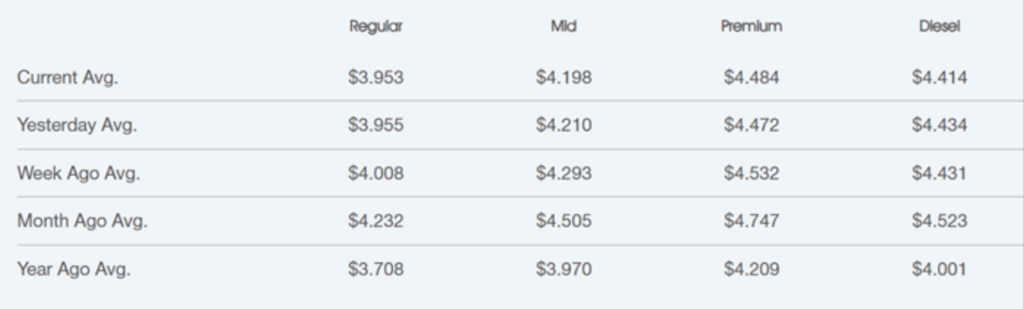
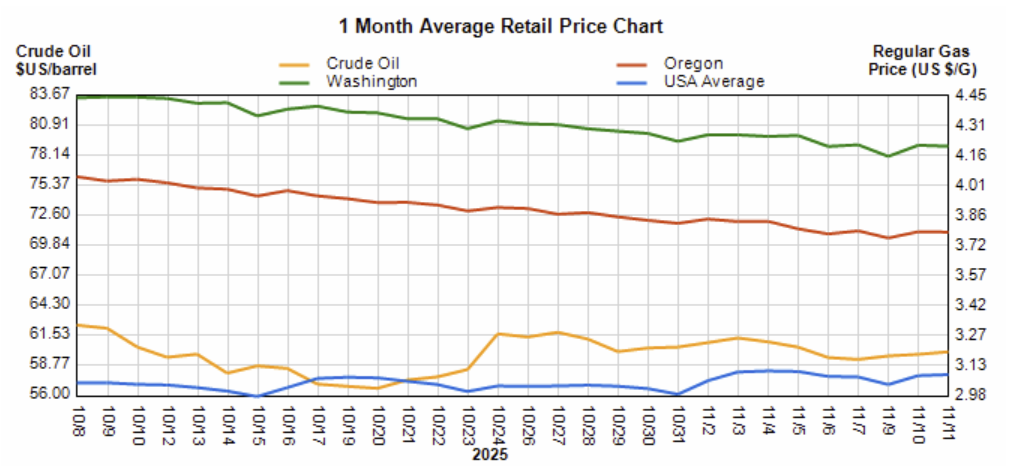
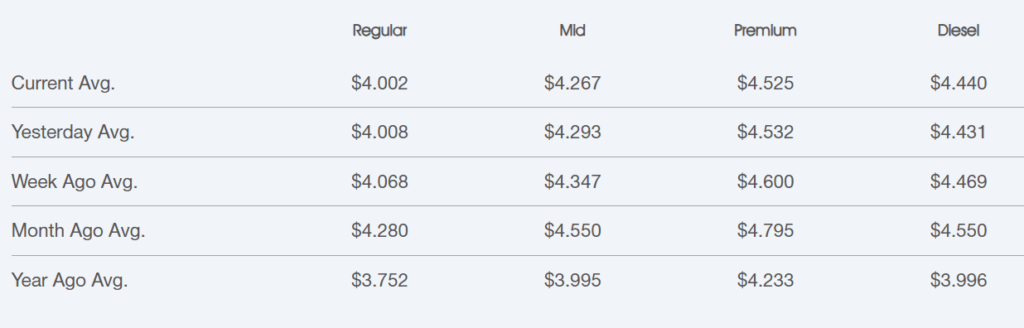
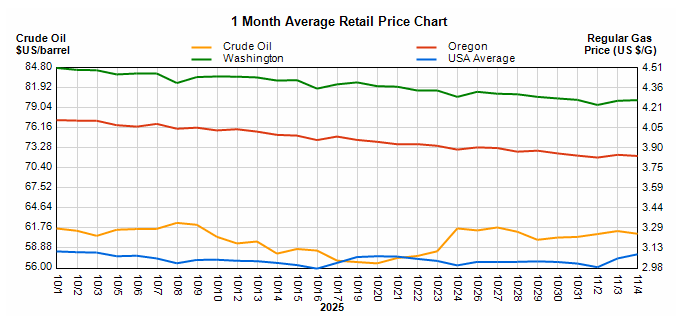
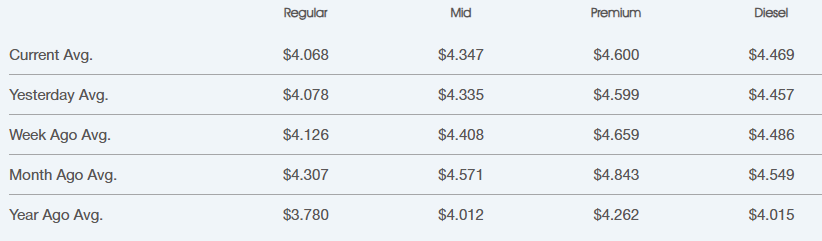
Fuel prices varied this past week as gas prices increased slightly and diesel prices dipped. Gas prices increased by $0.13/gal on the rack average market and dropped $0.06/gal on the retail street market. Diesel prices dropped $0.10/gal across the board for rack averages, while the retail street average did not move from the week prior. As mentioned in earlier reports, gas prices should come down in the coming weeks with the winter fuel blend back on the market. Fuel prices typically reach their lowest price level from October to December every year. We can expect the same in the coming weeks. Oil prices are also currently below $62/barrel, which will help contribute to lower prices.

fuel-market-report-star-oilco-5-18-24

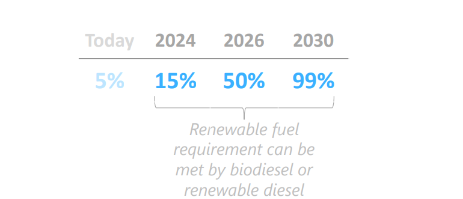
Important Note: Per the City Of Portland, “Distributors in the City of Portland are required to meet the minimum biofuel content requirements for all fuel they distribute beginning on May 15, 2024. All diesel fuel distributed to retail stations, non-retail dealers, or wholesale purchaser-consumers must include a minimum of 15% biofuel content, from either renewable diesel or biodiesel. This requirement increases to 50% on May 15, 2026, and 99% on May 15, 2030”.

Want to know what to expect this Fall in regards to our diesel market? You can read our 2025 Diesel Market Outlook For Oregon.

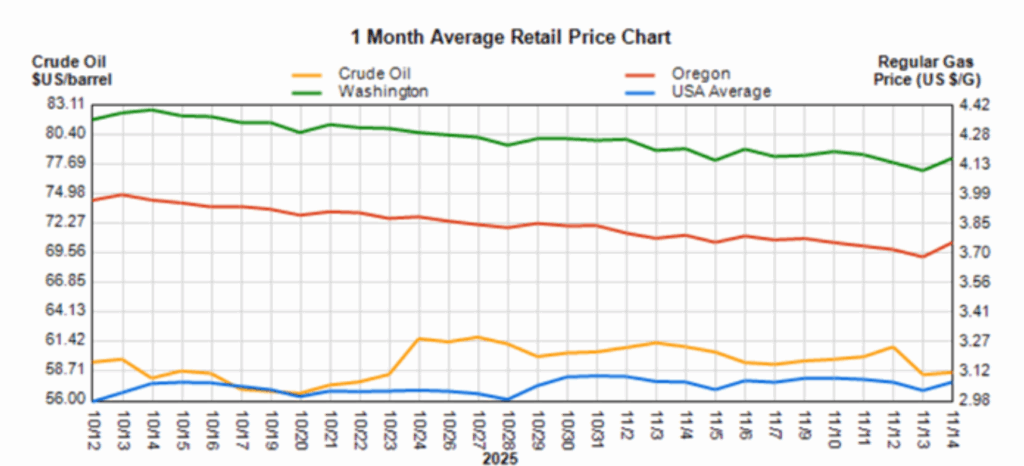
Crude oil is trading just below $62, at a current price of $61.52/barrel. This is $1.59/barrel lower than it was last week.

Crude oil is the main ingredient for gasoline and diesel. Per AAA, on average about 50% of what you pay at the pump is the price of crude oil, breaking down as 25% refining, 11% distribution & marketing, and 14% taxes – a helpful breakdown for consumers wondering why they are paying the prices that they pay. Crude Oil is currently trading at $61.52/barrel compared to $63.11/barrel last week and $69 a year ago.

It’s essential to recognize that fuel prices result from a complex interplay of the factors mentioned above and other regional factors. Additionally, prices may vary by specific regions within Oregon and Washington. For the most precise and up-to-date information on fuel prices and the causes for these price changes within your area, use the links below for AAA & GasBuddy.

If you have any questions, feel free to contact Star Oilco and speak to one of our fuel market advisors to discuss how the market can impact your business.

Set up your R99 Mobile Fueling Onsite Service in Portland Today Including Dyed Untaxed R99.

Give Us A Call Today

For other news in the fuel market:

https://gasprices.aaa.com/?state=OR

https://www.gasbuddy.com/charts

Join the Fuel Market Report newsletter for your weekly fill of updates!

Two semi-trucks driving on a highway with trees in the background
Fuel Market Report: September 21st-27th, 2025 1024 683 Star Oilco

Fuel Market Report: September 21st-27th, 2025

fuel-market-report-star-oilco

Did You Know That R99 Is The Same Cost As Diesel Currently?

Call to set up R99 Mobile Fueling Onsite Service in Portland at the same cost of retail diesel. Dyed untaxed R99 is also available. Give us a call today to schedule your delivery.

Wholesale Price Average 9/27/25

Wholesale LowWholesale Avg
E10$2.44$2.56
B5$2.95$3.11
B20$3.06$3.17
R99$2.85$2.96

Average Retail Prices 9/27/25

NationalOregonWashington
E10$3.14$4.19$4.56
B5$3.68$4.47$5.05

Taxes

FederalState: ORLocalState: WA
Gas$0.184$0.40$0-.13$0.494
Diesel$0.244$0.40$0-.13$0.494

Portland Retail Fuel Price Variance

Fuel Market News

Fuel prices trickled down this past week with both wholesale rack averages and retail street prices down. Rack averages in Portland dropped $0.10/gal on E10 gasoline, and dropped less than $0.02/gal on diesel across the board. This trickled down into the retail market as street prices are down about $0.05/gal in Portland. The Olympic Pipeline is back online and the winter-blend of fuel is coming back to the market. We should see prices continue to come down slightly in the coming weeks as winter fuel hits stations across Oregon. Fuel prices typically reach their lowest levels during late fall/early winter every year so we should see downward pricing in the weeks ahead. For more information on prices, visit our website for weekly updates.

fuel-market-report-star-oilco-5-18-24

Important Note: Per the City Of Portland, “Distributors in the City of Portland are required to meet the minimum biofuel content requirements for all fuel they distribute beginning on May 15, 2024. All diesel fuel distributed to retail stations, non-retail dealers, or wholesale purchaser-consumers must include a minimum of 15% biofuel content, from either renewable diesel or biodiesel. This requirement increases to 50% on May 15, 2026, and 99% on May 15, 2030”.

Want to know what to expect this Fall in regards to our diesel market? You can read our 2025 Diesel Market Outlook For Oregon.

Crude oil is trading just below $65, at a current price of $63.11/barrel. This is $0.47/barrel higher than it was last week.

Crude oil is the main ingredient for gasoline and diesel. Per AAA, on average about 50% of what you pay at the pump is the price of crude oil, breaking down as 25% refining, 11% distribution & marketing, and 14% taxes – a helpful breakdown for consumers wondering why they are paying the prices that they pay. Crude Oil is currently trading at $63.11/barrel compared to $62.64/barrel last week and $68 a year ago.

It’s essential to recognize that fuel prices result from a complex interplay of the factors mentioned above and other regional factors. Additionally, prices may vary by specific regions within Oregon and Washington. For the most precise and up-to-date information on fuel prices and the causes for these price changes within your area, use the links below for AAA & GasBuddy.

If you have any questions, feel free to contact Star Oilco and speak to one of our fuel market advisors to discuss how the market can impact your business.

Set up your R99 Mobile Fueling Onsite Service in Portland Today Including Dyed Untaxed R99.

Give Us A Call Today

For other news in the fuel market:

https://gasprices.aaa.com/?state=OR

https://www.gasbuddy.com/charts

Join the Fuel Market Report newsletter for your weekly fill of updates!

Two semi-trucks driving on a highway with trees in the background
Fuel Market Report: September 14th-20th, 2025 1024 683 Star Oilco

Fuel Market Report: September 14th-20th, 2025

fuel-market-report-star-oilco
1 month average retail fuel price chart comparing crude oil prices per barrel with gasoline prices in Oregon, Washington, and the USA, September 2025.

Did You Know That R99 Is The Same Cost As Diesel Currently?

Call to set up R99 Mobile Fueling Onsite Service in Portland at the same cost of retail diesel. Dyed untaxed R99 is also available. Give us a call today to schedule your delivery.

Wholesale Price Average 9/20/25

Wholesale LowWholesale Avg
E10$2.52$2.66
B5$2.97$3.13
B20$3.04$3.18
R99$2.87$2.98

Average Retail Prices 9/20/25

NationalOregonWashington
E10$3.18$4.24$4.62
B5$3.69$4.48$5.05

Taxes

FederalState: ORLocalState: WA
Gas$0.184$0.40$0-.13$0.494
Diesel$0.244$0.40$0-.13$0.494

Portland Retail Fuel Price Variance

Table of average fuel prices for Regular, Mid, Premium, and Diesel comparing current, yesterday, one week ago, one month ago, and one year ago.

Fuel Market News

Gas prices have trickled back down this week as the Olympic pipeline has been back online and is supplying throughout the PNW. The past two weeks were filled with a massive price jump in gas, with retail averages above $4.50/gal. We should continue to see these numbers fall back this week. Rack averages for Portland are down $0.49/gal for E10 gasoline, while diesel prices did not move more than $0.01/gal. This is the biggest price drop we have seen for gas in months, but it was expected after the Olympic pipeline was offline. As we roll into October, retail stations will switch back to the winter blend of fuel, which may cause a temporary price spike due to logistics, but will be followed by further price dips throughout the market.

fuel-market-report-star-oilco-5-18-24

Important Note: Per the City Of Portland, “Distributors in the City of Portland are required to meet the minimum biofuel content requirements for all fuel they distribute beginning on May 15, 2024. All diesel fuel distributed to retail stations, non-retail dealers, or wholesale purchaser-consumers must include a minimum of 15% biofuel content, from either renewable diesel or biodiesel. This requirement increases to 50% on May 15, 2026, and 99% on May 15, 2030”.

Want to know what to expect this Fall in regards to our diesel market? You can read our 2025 Diesel Market Outlook For Oregon.

Crude oil is trading just below $65, at a current price of $62.64/barrel. This is $1.88/barrel lower than it was last week.

Crude oil is the main ingredient for gasoline and diesel. Per AAA, on average about 50% of what you pay at the pump is the price of crude oil, breaking down as 25% refining, 11% distribution & marketing, and 14% taxes – a helpful breakdown for consumers wondering why they are paying the prices that they pay. Crude Oil is currently trading at $62.64/barrel compared to $64.52/barrel last week and $67 a year ago.

It’s essential to recognize that fuel prices result from a complex interplay of the factors mentioned above and other regional factors. Additionally, prices may vary by specific regions within Oregon and Washington. For the most precise and up-to-date information on fuel prices and the causes for these price changes within your area, use the links below for AAA & GasBuddy.

If you have any questions, feel free to contact Star Oilco and speak to one of our fuel market advisors to discuss how the market can impact your business.

Set up your R99 Mobile Fueling Onsite Service in Portland Today Including Dyed Untaxed R99.

Give Us A Call Today

For other news in the fuel market:

https://gasprices.aaa.com/?state=OR

https://www.gasbuddy.com/charts

Join the Fuel Market Report newsletter for your weekly fill of updates!

Two semi-trucks driving on a highway with trees in the background
Fuel Market Report: September 7th-13th, 2025 1024 683 Star Oilco

Fuel Market Report: September 7th-13th, 2025

fuel-market-report-star-oilco
September 2025 fuel market report showing crude oil prices and average retail gas prices in Oregon, Washington, and USA.

Did You Know That R99 Is The Same Cost As Diesel Currently?

Call to set up R99 Mobile Fueling Onsite Service in Portland at the same cost of retail diesel. Dyed untaxed R99 is also available. Give us a call today to schedule your delivery.

Wholesale Price Average 9/13/25

Wholesale LowWholesale Avg
E10$2.89$3.15
B5$2.99$3.12
B20$3.02$3.17
R99$2.88$2.98

Average Retail Prices 9/13/25

NationalOregonWashington
E10$3.20$4.08$4.46
B5$3.70$4.48$5.03

Taxes

FederalState: ORLocalState: WA
Gas$0.184$0.40$0-.13$0.494
Diesel$0.244$0.40$0-.13$0.494

Portland Retail Fuel Price Variance

September 2025 U.S. average gas and diesel prices compared to yesterday, last week, last month, and last year.

Fuel Market News

Gas prices skyrocketed this past week while diesel prices remained stagnant. The maintenance shutdown of the Olympic pipeline caused gas prices to increase by over $0.20/gal in just a week. Diesel prices moved $0.005/gal, with next to no movement on diesel prices. Commuters in Portland saw retail gas prices over $4.50/gal during the past week, and prices have yet to come down. The Olympic pipeline is back online this week, with capacities back to normal. We should see prices fall this coming week with the pipeline maintenance complete and the switch to winter fuel approaching.

fuel-market-report-star-oilco-5-18-24

Important Note: Per the City Of Portland, “Distributors in the City of Portland are required to meet the minimum biofuel content requirements for all fuel they distribute beginning on May 15, 2024. All diesel fuel distributed to retail stations, non-retail dealers, or wholesale purchaser-consumers must include a minimum of 15% biofuel content, from either renewable diesel or biodiesel. This requirement increases to 50% on May 15, 2026, and 99% on May 15, 2030”.

Want to know what to expect this Fall in regards to our diesel market? You can read our 2025 Diesel Market Outlook For Oregon.

Crude oil is trading just below $65, at a current price of $64.52/barrel. This is $2.17/barrel higher than it was last week.

Crude oil is the main ingredient for gasoline and diesel. Per AAA, on average about 50% of what you pay at the pump is the price of crude oil, breaking down as 25% refining, 11% distribution & marketing, and 14% taxes – a helpful breakdown for consumers wondering why they are paying the prices that they pay. Crude Oil is currently trading at $64.52/barrel compared to $62.35/barrel last week and $68 a year ago.

It’s essential to recognize that fuel prices result from a complex interplay of the factors mentioned above and other regional factors. Additionally, prices may vary by specific regions within Oregon and Washington. For the most precise and up-to-date information on fuel prices and the causes for these price changes within your area, use the links below for AAA & GasBuddy.

If you have any questions, feel free to contact Star Oilco and speak to one of our fuel market advisors to discuss how the market can impact your business.

Set up your R99 Mobile Fueling Onsite Service in Portland Today Including Dyed Untaxed R99.

Give Us A Call Today

For other news in the fuel market:

https://gasprices.aaa.com/?state=OR

https://www.gasbuddy.com/charts

Join the Fuel Market Report newsletter for your weekly fill of updates!

Two semi-trucks driving on a highway with trees in the background
Fuel Market Report: Aug 31st-Sept 6th, 2025 1024 683 Star Oilco

Fuel Market Report: Aug 31st-Sept 6th, 2025

fuel-market-report-star-oilco
1-month average retail gas price chart showing crude oil, Oregon, Washington, and U.S. averages for August–September 2025

Did You Know That R99 Is The Same Cost As Diesel Currently?

Call to set up R99 Mobile Fueling Onsite Service in Portland at the same cost of retail diesel. Dyed untaxed R99 is also available. Give us a call today to schedule your delivery.

Wholesale Price Average 8/23/25

Wholesale LowWholesale Avg
E10$2.49$2.66
B5$2.89$3.03
B20$2.90$3.01
R99$3.82$2.96

Average Retail Prices 8/23/25

NationalOregonWashington
E10$3.16$3.97$4.40
B5$3.68$4.45$5.01

Taxes

FederalState: ORLocalState: WA
Gas$0.184$0.40$0-.13$0.494
Diesel$0.244$0.40$0-.13$0.494

Portland Retail Fuel Price Variance

Oregon gas and diesel price averages for regular, midgrade, premium, and diesel fuel comparing current, yesterday, last week, last month, and last year

Fuel Market News

Fuel prices are up across the board this past week, with both diesel and gas jumping over $0.15/gal. Rack averages in Portland jumped $0.20/gal for E10 gasoline and $0.16/gal for diesel. This comes on the heels of the Olympic pipeline maintenance this past week, after issues arose within the pipeline system requiring un-forecasted maintenance. This directly affects supply throughout the PNW, creating pricing bubbles throughout Washington, Oregon & California. Gas prices are expected to continue to climb this week, with maintenance yet to be fully completed. This will also roll into the switch from Summer blends of fuel to Winter blends of fuel, which will begin in the coming weeks. This may temporarily spike prices, with pricing drops thereafter.

fuel-market-report-star-oilco-5-18-24

Important Note: Per the City Of Portland, “Distributors in the City of Portland are required to meet the minimum biofuel content requirements for all fuel they distribute beginning on May 15, 2024. All diesel fuel distributed to retail stations, non-retail dealers, or wholesale purchaser-consumers must include a minimum of 15% biofuel content, from either renewable diesel or biodiesel. This requirement increases to 50% on May 15, 2026, and 99% on May 15, 2030”.

Want to know what to expect this Fall in regards to our diesel market? You can read our 2025 Diesel Market Outlook For Oregon.

Crude oil is trading just below $65, at a current price of $62.35/barrel. This is $2.37/barrel lower than it was last week.


Crude oil is the main ingredient for gasoline and diesel. Per AAA, on average about 50% of what you pay at the pump is the price of crude oil, breaking down as 25% refining, 11% distribution & marketing, and 14% taxes – a helpful breakdown for consumers wondering why they are paying the prices that they pay. Crude Oil is currently trading at $62.35/barrel compared to $64.72/barrel last week and $68 a year ago.

It’s essential to recognize that fuel prices result from a complex interplay of the factors mentioned above and other regional factors. Additionally, prices may vary by specific regions within Oregon and Washington. For the most precise and up-to-date information on fuel prices and the causes for these price changes within your area, use the links below for AAA & GasBuddy.

If you have any questions, feel free to contact Star Oilco and speak to one of our fuel market advisors to discuss how the market can impact your business.

Set up your R99 Mobile Fueling Onsite Service in Portland Today Including Dyed Untaxed R99.

Give Us A Call Today

For other news in the fuel market:

https://gasprices.aaa.com/?state=OR

https://www.gasbuddy.com/charts

Join the Fuel Market Report newsletter for your weekly fill of updates!

Industrial backup generator installed outside a commercial building
Emergency Back-up Diesel Fuel 1024 683 Star Oilco

Emergency Back-up Diesel Fuel

In an emergency, how often will your Emergency Back-up Diesel Fuel tank need to be filled?

We deliver dyed diesel seven days a week and will keep your equipment full for you.

Emergency Back-up diesel fuel delivered in Portland, Oregon

What is the condition of your Emergency Back-up Diesel Fuel in your generator tank?
When the Power goes out, we have diesel ready to keep your backup generator fueled.  We can also set up automatic fueling and DEF top off service with confirmation for your facility team’s needs. Whether you want long term stabilized diesel, dyed R99 renewable diesel, or B20 biodiesel blends we have you covered with your fuel specification needs.

Emergency Back-up diesel fuel tank avaialble.

Star Oilco has 250 gallon and 500 gallon tanks available to increase the onsite supply for an emergency back-up diesel need in the Pacific Northwest.

We have drivers on the road today with diesel.

When was the last time you had your generator filled with stabilized diesel?  We deliver off road diesel treated for long term storage.

Open an account with Star Oilco today and prepare for the next power outage.

Recent heat waves might have caused power outages.  Make sure your generators are full for this winter now.  With dynamic changes in the way power is used in the Pacific Northwest power outages have become more common than ever before.


Are you prepared for the next emergency?
Have you filled up since the last time?
Would you want to test your diesel fuel oxidative stability to make sure it is still good?

Keeping your back-up generator fueled could be the difference between an inconvenience and a disaster.  Stay ahead of the next emergency and re-fuel now.


Remember that ordering diesel for your generator is a specialized service, we will make it easy for you.

Getting the fuel for your generator or emergency equipment is only one part of the problem.  How you store it can be just as important.  This is why its important to work with a company that can help you.

You want to stabilize and treat your diesel for generators and other back up equipment.

Order fuel treated for long term storage!

Star Oilco is an expert at fueling back-up generators, emergency water pumps, and other long term off-road diesel storage requirements. We understand, that in the Pacific Northwest, biodiesel blending is required by state laws. Biodiesel needs an extra layer of care when stored as a back-up diesel fuel.Filling a Generator in the Snow

Most off-road diesels and heating oils are ultra-low sulfur diesel containing at least 5% quantity of biodiesel.  This means long term storage requires a proactive approach.  You can’t just hope it works or wait to see if the fuel will burn after years of storage.

Emergency back-up generator diesel fuel is a specially treated oxidative stabilized off-road fuel designed to store for years.

Fueling a backup generator is a specialized product. The fueling service requires a vendor who understands your needs and keeps you up and running in an emergency.

Generators take off-road diesel, of course, but you want an ultra-low sulfur diesel to ensure it works with modern emission systems. Some companies deliver higher sulfur product that look the same but foul the emission systems of your equipment.

Beyond the service provided, you also want a vendor who offers a fuel stabilizer and biocide for the special long term storage needs of your backup generator. Star Oilco recommends you add a biocide and long-term storage stabilizer to your fuel to ensure it is good whenever you need it.

Use additives designed to prolong the life of your emergency diesel fuel.

Biocides prevent the growth of biological activity in the tank. In scenarios where micro-organisms like algae, bacteria, yeasts, and other bugs are growing in your fuel, biocides kill this growth. It is still important to remove the residual grit and other contaminants that are the hallmark of bugs growing in your tank. Usually, turning over the fuel or using a filtration can remove this.

If your tank absolutely has to be clean, you can contract a tank professional to enter the tank and physically clean the tank bottom or reline the tank with either fiberglass or an epoxy resin. We use Valvtect Bioguard Plus 6 for generators, emergency water pumps, backup boiler fuel, and other long term storage purposes. This product kills any existing biological growth and stabilizes your fresh diesel fuel for long term storage. Make sure your diesel is ready the next time you need backup power.

Water in diesel destroys fuel quality rapidly.

Check your tank for water every fall and spring.

Pumping the tank bottom removes water if it ever finds its way into your storage tank. Additionally, you want to put in an absorbent material designed to absorb water and not fuel. If your long-term storage tank has water and you are not planning to burn 100% of the fuel in the near future, DO NOT add anything that removes water by distributing into the fuel. Adding a “fuel drier” that actually pushes the water into solution with the diesel will worsen the long-term quality of your fuel, not improve it. That water is where bugs find their home to grow in fuel.

Star Oilco will test your fuel at no charge if you have an open account.

Feel free to call us with any questions you may have about long term storage of diesel. Star Oil can also deliver treated diesel ready for long term storage complete with Premium Diesel additive to improve the long-term storage quality of your fuel. For biocide, we use Valvtect BioGuard fuel microbiocide to kill any possible biological activity and prevent any chance of it starting.

Diesel Testing and Storage in Portland

If you have a long-term diesel storage tank and you are in the Portland, Oregon area, we are here to test your fuel.  Make sure your diesel is there for you when disaster strikes.

Tank Testing Form

  • This field is for validation purposes and should be left unchanged.


For more reading on diesel fuel quality assurance:

Fight Humbug in your Diesel Tank (using Valvtect Bioguard Plus 6 to stabilize your stored diesel)

Emergency Back Up Generator Fuel Quality (designed to provide a checklist to help Facility Managers keep those backup generators ready for emergency action)

Using Dessicant Breathers to keep diesel fuel dry and clean (an introductory primer on desiccant breathers and how they can be used to keep long term diesel storage drier and cleaner)

Using Diesel Filters to clean up your diesel fuel quality (an introductory primer on using aggressive filtration in line with diesel fuel dispensing for fuel quality assurance)

Close-up of golden liquid waves symbolizing fuel energy in motion
Oil Vs. Gas Heating – Which Is The Safest? 1024 585 Star Oilco

Oil Vs. Gas Heating – Which Is The Safest?

Heating

Automatic Keep Full Delivery
· On Approved Credit
· Budget Plan Available
· Optional Tank Contracts
· Optional Service Contracts
· Senior Citizen Discount Available
· Prompt Pay Discount Available

Will Call Delivery
· Cash/Check discounts available
· Payment Plan (on approved credit)
· Senior Citizen Discount Available
· Prompt Pay Discount Available

OIL VS. GAS – Which fuel is safer?

While a leak in your oil tank may cause temporary inconveniences, there have been no deaths or injuries associated with leaking oil tanks. The risks of injury are far greater with natural gas leaks and the statistics from the U.S. Department of Transportation’s Office of Pipeline Safety show that between 1986-1998, natural gas pipeline accidents have resulted in the deaths of over 200 people, injured more than 1,700 people, and caused more than $300 million in property damage. So safety is a legitimate concern.

Is natural gas cleaner and more efficient?

This is a misperception that is refuted by studies done by the U.S. Environmental Protection Agency, and the U.S. Dept. of Energy. According to these studies, heating oil and natural gas produce approximately the same levels of pollutants. Natural gas is not cleaner than heating oil. According to the U.S. Dept. of Energy and the Gas Appliances Manufactures Association, heating oil equipment is actually more efficient, on average, than natural gas heating equipment.

Is either natural gas or oil better for the environment?

No. Both fuel sources cause similar amounts of pollutants in the environment. Many environmentalists are concerned about the risks to our wetlands, river and forests, that will be the impact of gas pipeline construction, and about leaks and accidents that have occurred in existing pipelines. Further, many have expressed concern about natural gas as it is a power greenhouse gas which contributes to global warming.  If you are interested in heating with a fuel that is environmentally friendly, ask us about our biodiesel home heating oil.


Buying A Home Heated With Oil? Get The Facts! 150 150 Star Oilco

Buying A Home Heated With Oil? Get The Facts!

Buying a Home Heated With Oil? Get the Facts!

Portland, Oregon – For many people, buying a new home is among life’s most stressful events. It ranks high with getting married and welcoming a new baby into the family. The process can become more complicated when the house being considered for purchase is heated with oil.  After months of active searching, Kimberly and Alex Gorham1 found a home in Southwest Portland that met their desired criteria with a single exception—the house was heated with oil.  “Neither of us had ever lived in a home that had oil heat,” explained Kimberly. “We both had negative associations with heating oil tanks and assumed that the underground tank on the property would have to be decommissioned. It was a foregone conclusion that we’d convert to natural gas.”

Addressing Common Misperceptions

According to Rhonda Lehr, it is not uncommon for homeowners to be confused about heating oil. Misperceptions abound, from “It’s illegal to put a heating oil tank back in the ground” to “They don’t make oil furnaces anymore” or “Heating oil is dirty.” Lehr knows because she’s a customer service manager for the Oregon Oil Heat help desk, a phone line that the Oregon Petroleum Association administers to address the needs and concerns of heating oil customers as well as the industry as a whole. The help desk is a place for heating oil customers, real estate agents and potential home buyers to get answers to questions ranging from where to get equipment to how to find a reputable soil tester.

When it comes to helping potential new home buyers decide whether to keep a heating oil system or convert to another source of energy, however, Lehr doesn’t get nearly as many calls as she would like. “By the time homeowners have made a real estate decision, they’ve already been convinced that they need to convert away from heating oil,” notes Lehr. What many people don’t know is that the most practical, economical and environmental solution for many homeowners is to stick with heating oil. Indeed, the Consumer Energy Council of America Research Foundation concluded that in 95% of all cases, it makes economic sense for a homeowner to stick with heating oil. After 18 years of taking customer service calls, Lehr understands why homeowners who choose to stay with heating oil do so, including:

  • Competitive prices. Small independent heating oil dealers compete with one another to keep prices as low as possible. Customers are free to choose the dealer that best meets their needs.
  • Peace of mind. A heating oil storage tank on one’s own property provides a level of security, control and price protection that other home heating options can’t offer.
  • Heating oil is a very safe fuel; it is a liquid so it cannot explode. It also has an extraordinarily low risk for carbon monoxide poisoning.
  • According to the Environmental Protection Agency (EPA), modern oil burners are one of the cleanest combustion sources available, releasing near zero levels of smoke. Moreover, a good working heating oil system doesn’t release any odor or soot into a living space.
  • Heating oil provides even, ambient warmth and burns very hot, thus warming your home quickly and completely.
  • Personal relationships. Many heating oil dealers are multi‐generational, family‐owned businesses whose employees are committed to providing the best customer service possible.

The Tank Issue

None of this is to say that heating oil tanks are not an issue. “Anyone buying or selling a home that has an old heating oil tank in the ground needs to inform him or herself of the tank’s condition,” says Greg Brennan, an equipment specialist who trains heating oil technicians at Portland Community College. Brennan is also co‐owner of Universal Applicators, a tank and environmental services company that works throughout the Pacific Northwest.   “The reality is that older heating oil tanks can leak,” observes Brennan. “Nonetheless, many homeowners choose to continue using oil heat even after a cleanup is completed because they prefer it over other energy sources.” Fortunately, the oil heat industry has been working for decades to design tanks that withstand the most severe conditions. Replacements for older storage tanks range from aboveground tanks that are designed to fit into small basements and garages, to underground tanks made of ultra‐strong, corrosion‐resistant fiberglass and steel.

So what do you need to know if you are buying a home with a heating oil tank? According to the Oregon Department of Environmental Quality (DEQ), homeowners/sellers who know of any tanks on the property that are no longer in use must ensure that the tank has been emptied of oil and must give the buyer documentation that it has been emptied. (Note: This is not the same thing as a tank that has been “decommissioned,” a generic term for taking a tank out of service by cleaning it, then removing it or filling it in place with an inert material. If a homeowner stops using an underground tank, DEQ only requires that it be emptied. Decommissioning is entirely voluntary.)

If a seller or realtor can’t tell you whether there is an oil tank on the property, Universal Applicators’ Brennan suggests looking for visual clues, such as a vent pipe (usually attached to the side of the house) or a fill pipe (normally located in the ground, near the house). He also recommends looking on the basement floor or walls for concrete patches where oil lines once were. In the absence of visual clues, he tells homeowners to check with the Department of Environmental Quality (DEQ) for any reported releases or hire a qualified expert to check for a tank on the property.

Once a tank is discovered, the next step is soil sampling. According to Oregon state law, soil samples or tank tests are only required when an underground tank is suspected of leaking, or if oil is known to have leaked into the ground. Nevertheless, soil sampling is now a routine request during property transactions. Anyone borrowing money to purchase a home is likely to be required by their lender to conduct soil testing to determine whether there has been any contamination on the property.

When it comes to hiring a contractor to conduct soil sampling, home buyers and sellers are encouraged to do their homework. Many companies that do soil samples also make money on the cleanup, and there have been isolated cases of fraud. (For example, some companies have been caught selling a cut‐rate, single‐sample service in which they collect the two samples required but send only the most obviously impacted sample to the lab for analysis. The seller is then presented with a bid for the cleanup, without the benefit of full representative information.) The Oregon Oil Heat help desk can provide homeowners with a list of tank testers that have demonstrated good business practices, and consumers are encouraged to check with consumer ratings agencies such as the Better Business Bureau and Angie’s List. Of course, any time a homeowner is concerned about the integrity of a heating oil tank, he or she should have it checked or have it emptied and replaced. It is always in the best interest of both buyers and sellers to be sure that a tank is sound, and a replacement tank is much less expensive than allowing a known or suspected problem to continue.

The Lowdown on Leaks

So what to do if an underground tank is found to leak? Brennan’s first advice to homeowners is “don’t panic.” That’s because a tank leak is not the environmental catastrophe that most people believe it to be. The days of soil clean ups running tens of thousands of dollars and entailing huge excavation projects are gone, in large part because environmental experts recognize that heating oil in soil usually has a limited impact to humans or animals. In addition, DEQ’s requirements for soil clean ups have been modified so many projects require very little soil removal. Instead, a series of soil samples can be taken that document the contamination, and verifies there is no threat to ground water. This information is compiled and submitted to DEQ who then will close the file on the site. Leaking tanks are also not the financially devastating accidents that they are purported to be. In Oregon, the average clean‐up cost from a leaking tank is under $4,000. As Lehr from the Oregon Oil Heat help desk points out, tank service contracts offered by oil heat dealers cover much of the cost of the tank replacement and cleanup.

“If a homeowner has an old tank that is in good working condition, with no evidence of oil ever having leaked out or water having leaked in, it can be covered for up to $4,000 for operational or structural failure with a tank replacement,” explains Lehr. “There is a phase‐in period over a year, and an automatic delivery schedule to monitor usage is required for coverage. That’s because when customers order 100 gallons here and 100 gallons there, nobody is proactively monitoring for oil loss. Full-service programs keep tanks full via an automatic delivery schedule and are better able to detect a problem early.” Greg Brennan at Universal Applicators admits that the idea of having an old tank in the ground is unsettling to some people. “But as with anything, regular and proper maintenance is the key to keeping an oil heat system running safely and efficiently.” In fact, when it came to building his own 3,000 square foot home, Brennan chose oil heat for its superior efficiency. “A heating oil tank is like the roof on a house—with proper installation and ongoing care and maintenance, its lifespan can be extended for many, many years.”

Making an Informed Decision

For new homeowners Kimberly and Alex, sticking with heating oil was a logical choice. The house they had purchased had a brand new, high‐efficiency oil furnace. The underground tank was not leaking, yet there was plenty of available space if they decided to install an aboveground tank in the future. They also liked the idea of controlling their own heating supply, and being able to balance out the highs and lows of oil prices without being tied to a large public utility. Last but not least, they had their hearts set on an oil‐fired hot water heater, which provides unlimited supplies of hot water at a fraction of the cost of a gas or electric water heater.

Still, Kimberly and Alex needed additional assurance. “As consumers who just want to do the right thing in terms of cost and comfort, we needed additional data points.” With input from friends, colleagues and their home inspector, they learned that conversion is an extremely expensive, long‐term investment. In some cases, the thousands of dollars it costs to convert to natural gas are never recovered once you consider the costs to remove the old system, run the gas line, prepare the new gas system, do the plumbing and wiring and buy the equipment that will only last about 15 years (heating oil equipment, in contrast, lasts up to 30 years). Moreover, people who’ve spent the time, money and effort to make the switch often complain that they are simply not as warm and comfortable as they had been with heating oil.

The Bioheat Benefit

Lastly, for Kimberly and Alex, there is also the issue of the environment.  “oil has a huge environmental benefit—especially as biofuels become a better option.”   Indeed, many homeowners who once considered converting to natural gas are opting to stay with their oil heat systems as biodiesel heating oil becomes more readily available throughout the country. “Biodiesel heating oil is a well‐tested and renewable fuel made from vegetable oils like soy and canola grown domestically,” explains Tyson Keever, Co‐Founder of SeQuential Biofuels. “When used for heating, biodiesel is mixed with regular heating oil to produce a new energy source that has the highest BTU content of any alternative fuel and is extraordinarily clean‐burning.”

In Oregon, the most common blends of biodiesel heating oil are B20 (20% soy or canola oil mixed with 80% regular heating oil) and B5 (5% soy or canola mixed with 95% regular heating oil. And while 5% may not seem like a lot, if everyone using heating oil used a B5 blend, more than 400 million gallons of regular heating oil could be conserved. For homeowners like Kimberly and Alex, that’s a major selling point.

Another selling point is that homeowners don’t have to make any modifications to their existing heating oil systems to begin using blends of B5 or B20. In fact, biodiesel naturally cleanses and lubricates a heating system, potentially lowering cleaning costs and extending the life of equipment that has been properly cared for. “For homeowners who keep up with regular system maintenance, there are no problems using low blends of bioheat,” assures Keever. (To use higher biodiesel blends, up to and including B99, homeowners will need to make certain modifications to their heating oil system, depending on the materials in their tanks, pumps and fuel lines.) “Most people don’t associate heating oil with alternative energy,” concludes John Huber, President of the National Oilheat Research Alliance which focuses on consumer and professional education, as well as research and development in the oilheat industry. “Yet home heating oil has reduced its carbon footprint by nearly 40% over the last three decades. Thirty years ago, the average oil heat consumer used 1,300 gallons of oil per year. Today, that number has been reduced by nearly 500 gallons thanks to new technology and high‐efficiency equipment. Homeowners owe it to themselves to get the facts for themselves before making the decision to convert.”

Yellow diesel backup generator for emergency power
Fuel Quality In An Emergency Back-Up Generator Matters – Find Out Why 1024 683 Star Oilco

Fuel Quality In An Emergency Back-Up Generator Matters – Find Out Why

                      Emergency Back Up Generator Diesel Fuel Quality

The fuel in your generator is the single most overlooked item in maintaining a back up generator.  Be prepared and know your back up generator diesel fuel quality is ready with these best practices.

When the power goes out, don’t let a decade old tank of diesel be your weak link.


Diesel Generator Fueling Service

As a provider of back up generator fueling services we know how critical fuel is in an emergency.

Back up generators are everywhere when you start looking for them.  Rarely needed but when a storm or disaster strikes their failure to fire will be extremely conspicuous. In the Pacific Northwest where resilience planning around a major subduction zone earthquake is a monthly subject of talk.  Back up diesel will be the only immediately power source after a quake.  Diesel generators are taking center stage for emergency preparedness, placing those who maintain them in some high level policy discussions.

Avoid a double emergency when the back up power isn’t there for your need by focusing on the diesel fuel quality.

The worst case scenario for fuel quality is water getting into your diesel fuel reservoir as well as biological growth occurring in that water logged diesel. If water is present in diesel, and that diesel is in a warm dark place, bacteria will start growing in your tank. So first preventive step is watch for water.  The most likely problem with fuel you will see is the fuel aging and degrading in place over years of not being used.  That can be addressed with your routine maintenance on the tank.

CIM-TEK water absorber

NOTE: To get a small amount of water or to ensure a dryer tank of fuel, CIM TEK makes a Tank Dryer which absorbs a small amount of water in a tank. Handy similar to adding a desiccant into a closet with a slight condensation issue. 

Back up power generator diesel fuel quality.

The big rule for storing back up generator fuel is to make sure the diesel you use is clean and dry.

First ensure you are testing the generator by running it once a month.  Move fuel through the system and ensure the generator is starting right up. Run the generator for a while to use up fuel and be prepared to order a regular top off when you get below 3/4th of a tank. When checking the fluids on the generator prior to start up see if the fuel filter has a visual transparent bottom where you can see what the fuel looks like there. If it looks like dirty fuel or there is evidence of water take notice.  After cycling the generator take a peek and make sure the fuel it’s pulling into the generator is bright (not dark and degraded).  If you are seeing any water (even a small drop) that is an indication of real concerns.

If you are using up half a tank a year and adding to it, the fuel quality will usually stay within specification.  If you have worries the easiest way is to just start over. With older generators sometimes it’s a good idea to just evacuate the tank (empty all the older diesel fuel) and replace it with fresh diesel treated and stabilized for long term storage.

Most back up generators are seeing routine annual maintenance where the mechanical needs of the equipment are walked through. If this is occurring ask for a bottom sample from the back up generators fuel tank. Also ask to see what the fuel in the bottom of the fuel filter (assuming they are changing that) would give an indication if problems might exist deep in the fuel tank.

Back Up Diesel Generator Fuel Service

Sampling and Onsite Testing of Fuel from Generator Diesel Tank:

  1. Pull sample from tank bottom
    1. Use a professional “Bacon-Bomb Sampler” (google it to see one) or a small fuel transfer pump available at any auto parts store.
  2. Visually inspect it by swirling it in a beaker or mason jar.
    • Look for water and dirt fall out as you swirl.  If you see a few drops of water form you’ve got a water problem. If you are seeing coffee ground type material in the fuel, that’s biological growth. If an algal or gunk type slime appears, that’s also biological growth.
    • If clear like cranberry juice and bright – your fuel is in good shape.  If a darker cherry color yet still clear, your fuel is aging and you should consider swapping or burning fuel off in the next year.
  3. If fuel is dark in color (showing that it is aging in the tank) you can send that sample to a lab to test it. You want to ensure you are confirming the following:
    • Oxidation Stability (or Accelerated Stability)
    • Water Content in PPM (under 50 PPM is what you want, under 100 PPM is not uncommon, and over 100 PPM there is probably water in the fuel and you want to pursue remedial action.)
    • Make sure the fuel testing lab you are using (your current fuel vendor should have a recommendation or do it for free for you) is checking for:
      • oxidative stability (if it’s aging out of specification),
      • biological growth (if bugs are growing in it),
      • water content (indicating a puddle someplace in the tank causing higher water content in the fuel) and,
      • dirt content of the fuel (if there is dirt, there is probably biological growth or some other problem).
  4. Set aside sample in a warm dark place for a month and check it for biological growth occurring which will confirm if you have fuel growing inside the tank.
    • How to test diesel for biological growth In-House:
      • Take your sample that appears to be in great condition and set it aside in a warm dark place for a month (day light kills most biological growth in fuel, though day light ages your diesel in other ways).
      • When you come back to look at the sample, if a film or layer of darker color is appearing in the fuel, this is biological growth occurring.
      • If you see nothing and want to experiment further, add a slight amount of water to this sample, shake it up, and put it back in a warm dark place.
      • When you check back if there is a a new layer of darker color on the surface of where the water contacts the fuel, that’s what grows in your tank.
      • If nothing grows, your fuel is safely stabilized for storage this year. Even if water is finding its way into your fuel tank, the fuel is safe and will be ready to start.
        • NOTE: Do not leave water in your tank, even if the fuel looks good. Eventually it will be a major problem and something will grow. If you are putting biocide in your tank regularly and their is an environment for growth, something resistant to that biocide will take root and you WILL NOT be able to get it out of the tank without serious effort.

NOTE: If you are curious to see a fuel lab analysis of the diesel this is an example.  This is a lab analysis from Hydrotex, Star Oilco’s premium diesel additive provider.  They are very supportive in testing everything we send them for quality assurance. 


Do you have questions about generator diesel fuel storage?

If you have questions about fuel storage, Star Oilco has answers.  Star Oilco does not do tank cleaning, we still will help you figure out what you need to do in order to have the result you need.

Contact Form

  • This field is for validation purposes and should be left unchanged.


For more on Diesel Fuel Quality Assurance please see these other Star Oilco articles:

Desiccant breathers, dry diesel, and keeping your diesel fuel clean.

Every question Star Oilco has been asked about dyed diesel.

Keep and make your diesel fuel cleaner. 

Bioguard Plus 6, Kill and prevent biological growth in your diesel fuel storage tank.


Two semi-trucks driving on a highway with trees in the background
Fuel Market Report: August 17th-23rd, 2025 1024 683 Star Oilco

Fuel Market Report: August 17th-23rd, 2025

fuel-market-report-star-oilco
1 month average retail fuel price chart showing crude oil, Oregon, Washington, and U.S. average gas prices from July to August 2025

Did You Know That R99 Is The Same Cost As Diesel Currently?

Call to set up R99 Mobile Fueling Onsite Service in Portland at the same cost of retail diesel. Dyed untaxed R99 is also available. Give us a call today to schedule your delivery.

Wholesale Price Average 8/23/25

Wholesale LowWholesale Avg
E10$2.49$2.66
B5$2.89$3.03
B20$2.90$3.01
R99$3.82$2.96

Average Retail Prices 8/23/25

NationalOregonWashington
E10$3.16$3.97$4.40
B5$3.68$4.45$5.01

Taxes

FederalState: ORLocalState: WA
Gas$0.184$0.40$0-.13$0.494
Diesel$0.244$0.40$0-.13$0.494

Portland Retail Fuel Price Variance

Oregon average fuel price variance table for Regular, Mid, Premium, and Diesel in August 2025

Fuel Market News

Gas prices dipped slightly, and diesel prices saw significant price jumps this past week. Rack averages in Portland were down $0.03/gal while diesel prices were up over $0.10/gal on B5, B20, and R99. Renewable diesel prices dipped significantly this month, with prices as low as $2.50/gal. The Portland market’s need for Renewable Diesel will continue to be high in demand as the 2026 RFS deadline approaches, with diesel blends increasing to B50 blends. Questions of supply remain unclear, with Neste pulling out of the market in early 2025. Much remains unknown about the future supply of diesel in Oregon. Demand will be very high, and supply will need to be strong to support this. Where the supply comes from remains unknown for most. The winter blend of gas and diesel will soon be back on the market as we roll into September next week. This may create an initial increase in prices, with pricing dips following into October/November. Oil prices have remained slightly below $65/barrel. OPEC+ has announced a production boost headed into September, which may lead to crude oil prices below $60/barrel into the fall/winter

fuel-market-report-star-oilco-5-18-24

Important Note: Per the City Of Portland, “Distributors in the City of Portland are required to meet the minimum biofuel content requirements for all fuel they distribute beginning on May 15, 2024. All diesel fuel distributed to retail stations, non-retail dealers, or wholesale purchaser-consumers must include a minimum of 15% biofuel content, from either renewable diesel or biodiesel. This requirement increases to 50% on May 15, 2026, and 99% on May 15, 2030”.

Crude oil is trading just below $65, at a current price of $64.72/barrel. This is $1.38/barrel higher than it was last week. 


Crude oil is the main ingredient for gasoline and diesel. Per AAA, on average about 50% of what you pay at the pump is the price of crude oil, breaking down as 25% refining, 11% distribution & marketing, and 14% taxesa helpful breakdown for consumers wondering why they are paying the prices that they pay. Crude Oil is currently trading at $64.72/barrel compared to $63.34/barrel last week and $69 a year ago. 

It’s essential to recognize that fuel prices result from a complex interplay of the factors mentioned above and other regional factors. Additionally, prices may vary by specific regions within Oregon and Washington. For the most precise and up-to-date information on fuel prices and the causes for these price changes within your area, use the links below for AAA & GasBuddy.

If you have any questions, feel free to contact Star Oilco and speak to one of our fuel market advisors to discuss how the market can impact your business.

Set up your R99 Mobile Fueling Onsite Service in Portland Today Including Dyed Untaxed R99.

Give Us A Call Today

For other news in the fuel market:

https://gasprices.aaa.com/?state=OR

https://www.gasbuddy.com/charts

Join the Fuel Market Report newsletter for your weekly fill of updates!