
Star Oilco

Person looking through binoculars in an autumn forest with vibrant fall colors reflected in both lenses, symbolizing focus on Oregon’s diesel and CO2 credit market conditions.
Oregon Diesel Market Forecast Fall 2025 1024 1024 Star Oilco

Oregon Diesel Market Forecast Fall 2025

What market forces are impacting the Oregon diesel outlook?

The US market is short diesel in storage while the Oregon market is short CO2 credits causing a unique market condition as we head into fall.

Diesel prices in the Pacific Northwest have not been following National trends for diesel.  The west coast is paying a premium compared to other nearby states.  Diesel in Oregon is significantly higher than the national average.  More to the point, the carbon credits associated with biodiesel and renewable diesel in Oregon are trading at recent record high prices. Higher than California’s CO2 credit prices. What’s going on?

Well for once it isn’t the price of crude oil causing this, or the amount of biofuels. Its all about todays Oregon diesel and carbon markets.  The story starts a few weeks before Memorial day.

Memorial day is often cited as the kick off to the driving season.  It also is when we usually see construction and trucking pick up with the summer weather.  A few weeks before Memorial day the Olympic pipeline went down unexpectedly.  The Olympic pipeline serves Portland and Eugene with their diesel and gasoline fuels from the refineries in northwest Washington state.

That pipeline had an unexpected outage.  Those happen for plenty of reasons usually safety checks or repairs. When the pipeline went down the market was notified it would probably be a week and open again the Monday before memorial day.  That Monday, the Monday before one of the bigger fuel weekends of the year, came and notice went out the pipeline would still be down for another week.

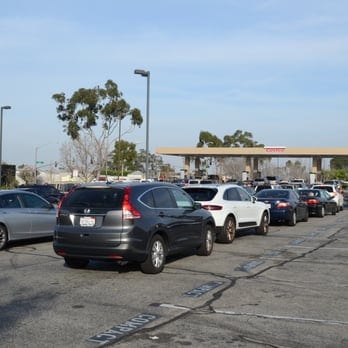
At that moment supply was already short for gas and diesel. Especially diesel.  The Portland and Eugene market saw diesel like a dollar cheaper in states like Idaho, Utah and others. So guess where diesel started flowing from? Markets responded as the bigger players on the ground in Oregon started moving diesel from those states.  Your local truck stops, gas stations, and cardlocks didn’t run out of fuel in several parts of Oregon because of these efforts.

In a US diesel market that was already tight for diesel supply, Portland, Oregon had an event that made it even tighter demanding diesel from around the region. Markets responded sending higher price offers to bring diesel into Oregon. Source is US EIA.

Oregon does not have any petroleum refineries or even biofuel plants.  It can only be supplied by pipeline, barge, rail or truck from outside the state.  When the pipeline came back online quite a bit of outside diesel had flowed into the state from nontraditional sources by rail and truck.

The people who moved that diesel are regulated in Oregon with two programs for CO2 emissions.  One is called the Clean Fuels Program which requires anyone importing diesel into Oregon to come up with a CO2 reductions by either blending low carbon biofuels or buying CO2 credits from others that use those fuels in the state.  Oregon also has a Cap and Invest program which only allows so much fossil fuel to be sold inside Oregon in a calendar year.  Oregon caps the total market for fossil fuels sold at retail stations as part of it’s carbon reducing strategy.

Guess what happens when a bunch of suppliers start bringing in gas and diesel to meet the market need?  They have to come up with Carbon credits and allowances to meet those carbon reduction programs for liquid fuels.  When unexpected volumes of diesel get imported into Oregon the CO2 market dynamics change.

For diesel, they need to start blending biofuels such as renewable diesel and biodiesel.  So since that Memorial Day pipeline outage the people who imported diesel from other states need CO2 credits under Oregon Clean Fuels Program as well as to ensure they done sell to many additional gallons of fossil fuel diesel to exceed the allowance of Oregon’s cap and invest regime.

Therefore CO2 credits are high, people are trying to blend more biofuels to catch up to the unexpected volumes of diesel they moved into Oregon.  Prices are higher than the rest of the US for diesel as a hangover to the supply disruption.

Upside for the first summer in a few years there is plenty of Renewable Diesel in the Portland, Oregon market as the CO2 credit prices are higher than California and the diesel prices are also high to help.  In the last month we have seen a huge amount of Renewable Diesel show up into the terminals in Portland.  So hopefully we will see lower prices heading into fall as all this works itself out.  As we pass by Labor Day the market cost of diesel should normalize and return to a much more affordable price.

The one downside of high diesel prices is that it makes Renewable Diesel the same price as fossil diesel.  If you want to try it, now is a good time where you can get it affordably and field test it for results with your fleet.  Want to see how it performs in reducing truck regens, EGR services, and see if fuel economy improves with a cleaner burning synthetic diesel running in your fleet.  This fall is a good time to experiment with it.

If you want to try Renewable Diesel in your fleet.  Star Oilco has it immediately available.  Please reach out to give it a try at either our Cardlock locations, with Mobile Onsite Refueling in your yard, or a Loaner Bulk Tank trial of the fuel in a few trucks.

Star Oilco has Renewable Diesel seven days a week for your fleet: Mobile Onsite Fueling, Cardlock, and Bulk Delivery.
Call us at 503-283-1256 or email at OrderDesk@StarOilco.net.

Renewable Diesel in Oregon

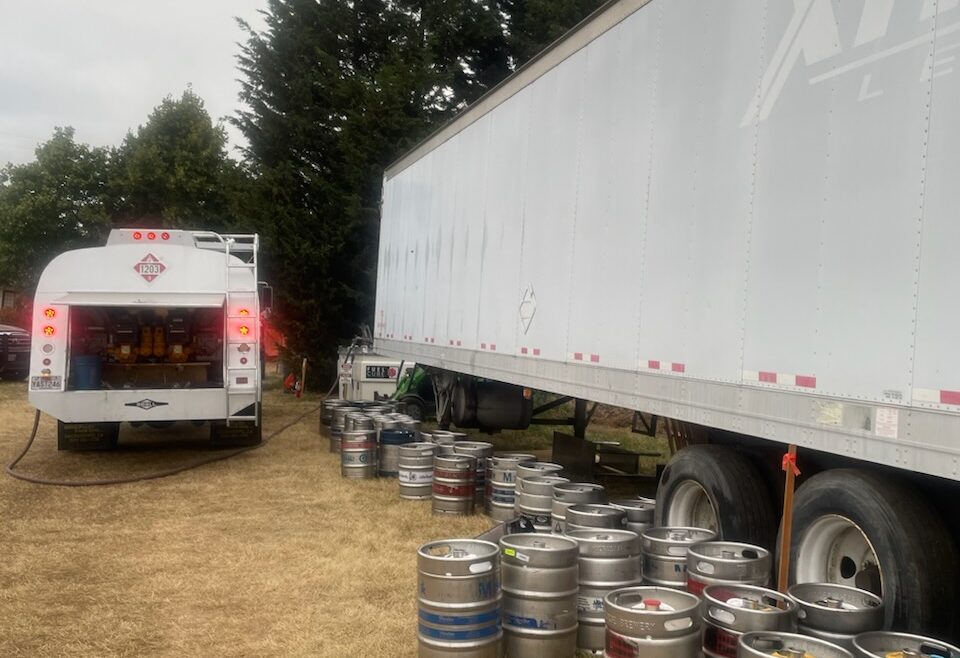
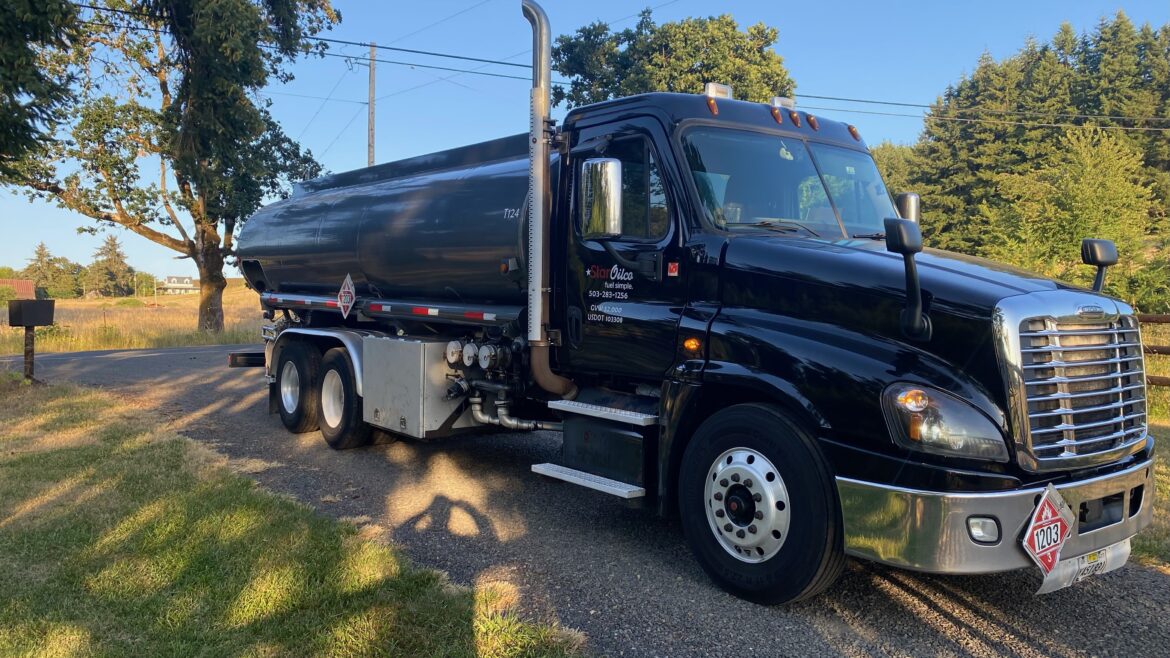
Star Oilco fuel trucks staged for mobile on-site fueling
On-Site Mobile Fueling Benefits -Truck Fleets 1024 768 Star Oilco

On-Site Mobile Fueling Benefits -Truck Fleets

For companies that operate truck fleets, managing fuel consumption is a critical aspect of their operations. Refueling logistics and costs can pose significant challenges. A fuel delivery truck service is also known as fleet fueling, mobile fueling or wet hosing. By incorporating a fleet fueling service that fills their trucks every morning, companies will reap numerous benefits and eliminate additional costs. Through this approach of fleet fueling, efficiency will be improved. Costs are reduced and operations are streamlined. Ultimately, this improves profitability and sustainability for the company and the environment. 

Enhanced Operational Efficiency 

Having a fuel delivery truck fill a company’s truck fleet each morning can significantly enhance operational efficiency. Instead of requiring drivers to waste valuable time searching for gas stations and waiting in queues, the fleet is primed and ready for their daily routes. This allows for optimized productivity as drivers can focus on their core responsibilities through wet hose fueling.

Furthermore, with a centralized refueling system, companies can eliminate the risk of trucks running low on fuel during the day. This minimizes unforeseen delays, ensuring timely deliveries and improving customer satisfaction. The streamlined refueling process also reduces administrative burdens, eliminating drivers to track fuel expenses and submit reimbursement forms.  

Cost Savings and Budget Predictability

Implementing a fuel delivery truck service offers substantial cost savings for companies with truck fleets. By purchasing fuel in bulk, companies can negotiate favorable pricing terms with the fuel supplier. It allows companies to secure discounts or fixed rates. Fuel costs predictability allows for better budget planning, avoiding fluctuating fuel prices.

By eliminating the need for drivers to refuel at public gas stations, the company can prevent unauthorized fuel purchases, fuel theft, and the potential for inaccurate expense reporting. The fuel delivery service ensures that fuel consumption is closely monitored, minimizing fuel misuse.  

In addition, having a dedicated fuel delivery truck also reduces the wear and tear on company trucks caused by constant stops at gas stations. This reduces maintenance and repair costs in the long run. With regular fuel top-ups in the morning, trucks operate at optimal fuel levels, improving engine performance and extending their lifespan.  

Environmental Sustainability

By consolidating fuel delivery through a dedicated truck, companies can contribute to environmental sustainability. Bulk fuel delivery reduces the number of individual fuel stops to gas stations, resulting in reduced carbon emissions. The streamlined fleet fueling process also minimizes fuel spills and or possible leakage from conventional methods. This solution preserves air and soil quality. 

Furthermore, adopting a fuel delivery service encourages alternative and cleaner fuels. Companies can explore options like biodiesel or electric vehicles, and the fuel delivery truck can be equipped to accommodate these eco-friendly fuel sources. By transitioning to greener fuels, companies can reduce their carbon footprint and align with environmental regulations and customer preferences.  

For companies with truck fleets, integrating a fuel delivery truck service offers numerous advantages. Moreover, the streamlined refueling process through fleet fueling or mobile fueling enhances operational efficiency. Your truck fleets will benefit from fleet fueling by eliminating your employees wasting time on the clock with refueling stops. You will also benefit from the minimized administrative burdens. Cost savings are achieved through bulk purchasing, predictable budgeting, and reduced maintenance expenses. This approach contributes to environmental sustainability by reducing carbon emissions and promoting cleaner fuel alternatives.  

By optimizing fuel management and leveraging the many benefits of fuel delivery, companies can drive their fleet operations to new levels of productivity, cost-effectiveness, and environmental responsibility. Embracing this innovative solution not only benefits the company itself but also enhances customer satisfaction and positions the company as a leader in sustainable business practices. 

Star Oilco technician testing off-road diesel fuel quality with a funnel and filter on-site in Portland OR
Off-Road Diesel – When To Use And The Benefits 1024 768 Star Oilco

Off-Road Diesel – When To Use And The Benefits

What are the benefits and when can you use off-road diesel 

Off-road diesel excels with a higher cetane rating, enhancing engine performance and offering cost savings without taxes. However, it’s strictly for off-road vehicles like tractors and construction machinery. Using it in regular on-road cars is illegal, leading to fines and potential imprisonment. 

Green fuel nozzle for off-road diesel fueling

Advantages of off-road diesel 

Higher Cetane Rating: Igniting Efficiency 

Off-road diesel takes the lead with a significantly higher cetane rating. With quicker ignition, 20% fewer emissions, and an impressive 15% reduction in engine downtime. It’s not just fuel; it’s a performance booster. 

Engine Performance and Durability 

Crafted for off-road adventures, this fuel has specialized additives that provide extra lubrication and deliver approximately 12% improvement in engine efficiency. Better performance isn’t just a promise; it’s a measurable reality with a 10% boost in fuel economy. 

No Tax, More Savings 

On-road diesel carries higher taxes, supporting highway maintenance. The federal tax is the same across the U.S., but states can add charges based on volume or spending. In contrast, off-road fuel sidesteps federal and state excise taxes due to non-road use, as it causes no wear and tear on the roads, saving you more with each gallon. 

Cost-Effective Fueling 

Brace yourself for the financial magic – lower tax rates. Off-road diesel translates into tangible savings, averaging 25 to 50 cents per gallon. For businesses on the off-highway path, it’s not just about fuel; it’s about a budget-friendly journey with an estimated annual savings of $5,000 to $10,000. 

Legal Ease: Staying Compliant 

Dyed in red for a reason, off-road diesel isn’t just a visual standout; it’s a regulatory lifesaver. If you follow standard rules, avoid penalties, choose a fuel that aligns with the law while boasting a 0% penalty rate for unauthorized use. It’s your ticket to smooth, trouble-free operations. 

Dyed Diesel: A Dual Role in Heating 

Expand the use of dyed diesel beyond the road. If your furnace can run on heating oil, embrace dyed diesel for a potential 20% savings on heating costs. It’s not just a fuel choice; it’s a strategy for financial warmth. 

Off-road vehicle tire tracks in remote open terrain

On-Road Diesel vs Off-Road Diesel: Key Differences 

Let’s simplify the diesel dilemma. Both on-road and off-road options share the same chemical makeup, but here’s the twist.

Legal Roads: 

On-road Diesel: Legal for road vehicles, dispensed at gas stations. 

Off-road Diesel: Reserved for non-road machines (tractors, generators).  

Legal Boundaries: 

On-road Diesel: Mandatory for licensed road vehicles in the U.S. 

Off-road Diesel: Illegal for on-road vehicles; hefty fines ($100 to more than $1,000 for one gallon) for misuse, or you may lose your job. 

Color Code: 

On-road Diesel: Clear, available at local gas stations, often called clean or green fuel due to eco-friendliness. 

Off-road Diesel: Red-tinted, dyed for off-road identification. 

Sulfur Content: 

On-road Diesel: Adheres to low sulfur content standards set by the EPA ( (15 ppm sulfur). 

Off-road Diesel is intended for off-road machinery and may have a higher sulfur content (maximum 3000-5000 mg/kg). 

Tax Terrain: 

On-road Diesel: Subject to state excise and federal taxes, generally pricier. 

Off-road Diesel: Tax-exempt, cost-effective for industries like construction and agriculture. 

Availability Channels: 

On-road Diesel: Available for purchase at gas stations. 

Off-road Diesel: Sold through bulk distributors for industrial use. 

Diesel fuel flowing into a dark reflective liquid surface

Off-road Diesel: Who Qualifies? 

Off-road diesel isn’t for everyone, but it could be your fuel hero if you’re in specific industries. 

Who Can Use? 

  • Construction Industry: Heavy-duty champions like cranes, loaders, and excavators 
  • Agriculture Realm: From tractors to harvesters, it fuels the farm force. 
  • Specialty Equipment: Generators, heaters, and more, amplifying productivity. 

Exceptions: 

  • Separate Tanks for Equipment: If your vehicle has a dedicated tank for extra gear, like in reefer trucks, and it doesn’t power the motor, you’re in. 
  • Emergency Saviors: In state-declared emergencies (severe weather or disasters), using off-road diesel on public roads might get a temporary nod. Rules vary, so check your state’s stance.  

Who Are Not Allowed To Use? 

  • Regular On-road Vehicles: Cars, SUVs, and standard trucks hitting public roads or any vehicle having the license to move on the road. 

Ultimately, on-road powers our daily commute, but off-road, dyed in red, proves the unsung hero for industries, offering substantial savings. Portland’s and Pacific Northwest’s off-road fuel suppliers have trustworthy reputations as fuel suppliers.  

Legal boundaries are crucial – fines loom for misusing off-road diesel. So, whether on legal roads or off, choose wisely, stay compliant, and drive on with informed decisions and smoother rides ahead! 

Sign up to receive our fuel market report for your weekly FILL of updates!

Name

Two semi-trucks driving on a highway with trees in the background
Fuel Market Report: August 10th-16th, 2025 1024 683 Star Oilco

Fuel Market Report: August 10th-16th, 2025

fuel-market-report-star-oilco
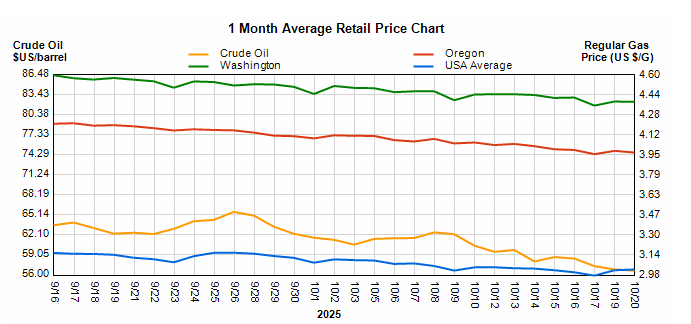
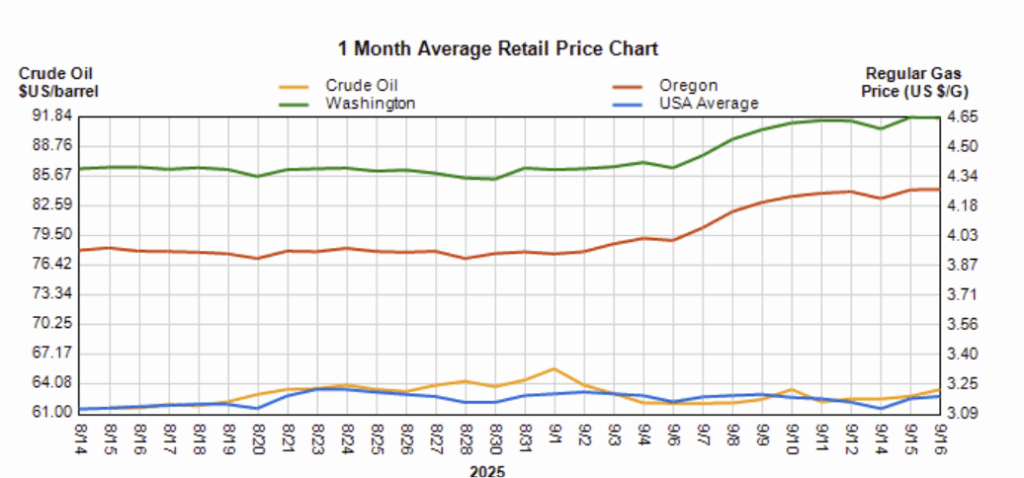
1 Month Average Retail Gasoline and Crude Oil Price Chart – Oregon, Washington, and U.S. Trends (July–August 2025)

Wholesale Price Average 8/16/25

Wholesale LowWholesale Avg
E10$2.51$2.69
B5$2.83$2.94
B20$2.81$3.02
R99$3.64$2.79

Average Retail Prices 8/16/25

NationalOregonWashington
E10$3.14$3.98$4.41
B5$3.69$4.47$5.01

Taxes

FederalState: ORLocalState: WA
Gas$0.184$0.40$0-.13$0.494
Diesel$0.244$0.40$0-.13$0.494

Oregon Fuel Price Variance

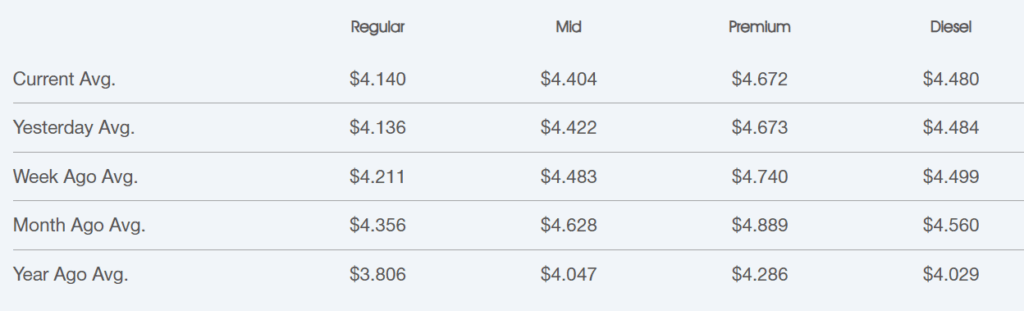
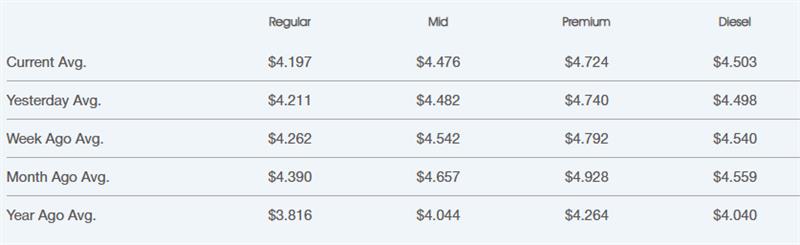
Oregon average fuel price variance chart on Regular, Mid, Premium, and Diesel (August 2025)

Fuel Market News

Diesel prices are down significantly and gas prices have hovered around the same price range for the wholesale rack average market. These prices have had little impact at the street pump price level so drivers are not seeing as much of a difference as distributors. Diesel prices have dropped over $0.20/gal since the beginning of August while gas prices have hovered around the $3.90/$4.00 range. Gas prices should remain around this level in coming weeks with a slight uptick in late September when the winter blend of fuel begins to hit the market and then a further downtick in gas prices both wholesale and retail. Drivers can expect to see lower gas prices October 1st than today. The summer was a very mild one for hurricanes as the South experience next to no distributions in production due to natural disasters. This could change this week with Hurricane Erin reaching a category 4 and headed to the east coast and Florida region.

fuel-market-report-star-oilco-5-18-24

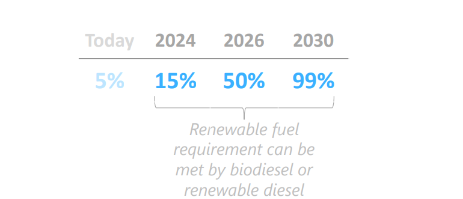
Important Note: Per the City Of Portland, “Distributors in the City of Portland are required to meet the minimum biofuel content requirements for all fuel they distribute beginning on May 15, 2024. All diesel fuel distributed to retail stations, non-retail dealers, or wholesale purchaser-consumers must include a minimum of 15% biofuel content, from either renewable diesel or biodiesel. This requirement increases to 50% on May 15, 2026, and 99% on May 15, 2030”.

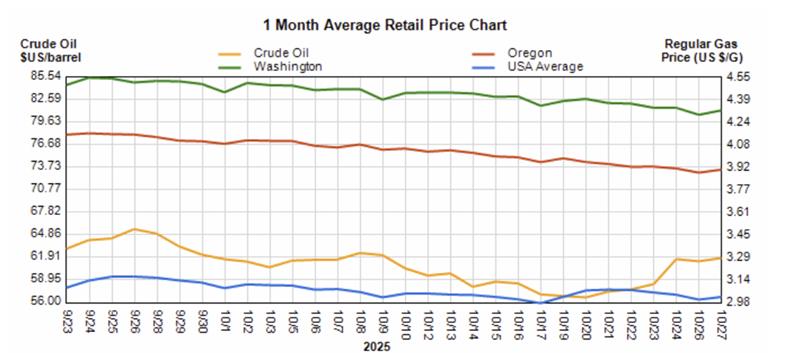
Crude oil is trading below $70, at a current price of $63.34/barrel. This is $1.80/barrel lower than it was last week. 


Crude oil is the main ingredient for gasoline and diesel. Per AAA, on average about 50% of what you pay at the pump is the price of crude oil, breaking down as 25% refining, 11% distribution & marketing, and 14% taxesa helpful breakdown for consumers wondering why they are paying the prices that they pay. Crude Oil is currently trading at $63.34/barrel compared to $65.14/barrel last week and $69 a year ago.

It’s essential to recognize that fuel prices result from a complex interplay of the factors mentioned above and other regional factors. Additionally, prices may vary by specific regions within Oregon and Washington. For the most precise and up-to-date information on fuel prices and the causes for these price changes within your area, use the links below for AAA & GasBuddy.

If you have any questions, feel free to contact Star Oilco and speak to one of our fuel market advisors to discuss how the market can impact your business.

For other news in the fuel market:

https://gasprices.aaa.com/?state=OR

https://www.gasbuddy.com/charts

Join the Fuel Market Report newsletter for your weekly fill of updates!

Two semi-trucks driving on a highway with trees in the background
Fuel Market Report: July 13th-19th, 2025 1024 683 Star Oilco

Fuel Market Report: July 13th-19th, 2025

fuel-market-report-star-oilco

Wholesale Price Average 7/19/25

Wholesale LowWholesale Avg
E10$2.46$2.57
B5$3.19$3.27
B20$3.28$3.32
R99$3.17$3.22

Average Retail Prices 7/19/25

NationalOregonWashington
E10$3.14$4.98$4.39
B5$3.72$4.51$5.03

Taxes

FederalState: ORLocalState: WA
Gas$0.184$0.40$0-.13$0.494
Diesel$0.244$0.40$0-.13$0.494

Oregon Fuel Price Variance

Fuel Market News

Fuel prices trickled down this week with both gas and diesel prices dropping. Although the drops were very marginal, with gas prices down $0.02/gal and diesel prices down less than $0.05/gal. Rack averages in Portland saw a steeper drop-off while retail street prices hardly budged. Fuel prices should remain steady in the coming weeks as political climates in the Middle East have toned down and hurricane season has been very quiet for the southern states. Historically, fuel prices have been higher around this time of year with summer travel and increased demand for fuel. Yet surprisingly, fuel prices were at the exact same level in Portland a year ago today. Iran has agreed to new nuclear talks amid the tensions in the Middle East. On July 22nd Britan, France, Germany and Iran will hold talks to re-engage this discussion.

fuel-market-report-star-oilco-5-18-24

Important Note: Per the City Of Portland, “Distributors in the City of Portland are required to meet the minimum biofuel content requirements for all fuel they distribute beginning on May 15, 2024. All diesel fuel distributed to retail stations, non-retail dealers, or wholesale purchaser-consumers must include a minimum of 15% biofuel content, from either renewable diesel or biodiesel. This requirement increases to 50% on May 15, 2026, and 99% on May 15, 2030”.

Reasons For Price Variance

Oil Prices Below $70

OPEC+ Production Cuts

Crude oil is trading just below $70, at a current price of $67.10/barrel. This is $0.49/barrel higher than it was last week.


Crude oil is the main ingredient for gasoline and diesel. Per AAA, on average about 50% of what you pay at the pump is the price of crude oil, breaking down as 25% refining, 11% distribution & marketing, and 14% taxesa helpful breakdown for consumers wondering why they are paying the prices that they pay. Crude Oil is currently trading at $67.10/barrel compared to $66.61/barrel last week and $69 a year ago.

It’s essential to recognize that fuel prices result from a complex interplay of the factors mentioned above and other regional factors. Additionally, prices may vary by specific regions within Oregon and Washington. For the most precise and up-to-date information on fuel prices and the causes for these price changes within your area, use the links below for AAA & GasBuddy.

If you have any questions, feel free to contact Star Oilco and speak to one of our fuel market advisors to discuss how the market can impact your business.

For other news in the fuel market:

https://gasprices.aaa.com/?state=OR

https://www.gasbuddy.com/charts

Join the Fuel Market Report newsletter for your weekly fill of updates!

Two semi-trucks driving on a highway with trees in the background
Fuel Market Report: July 6th-12th, 2025 1024 683 Star Oilco

Fuel Market Report: July 6th-12th, 2025

fuel-market-report-star-oilco

Wholesale Price Average 7/12/25

Wholesale LowWholesale Avg
E10$2.45$2.58
B5$3.23$3.31
B20$3.25$3.35
R99$3.29$3.36

Average Retail Prices 7/12/25

NationalOregonWashington
E10$3.15$4.00$4.40
B5$3.70$4.50$5.00

Taxes

FederalState: ORLocalState: WA
Gas$0.184$0.40$0-.13$0.494
Diesel$0.244$0.40$0-.13$0.494

Oregon Fuel Price Variance

Fuel Market News

Fuel prices trickled up this week, with street retail prices dropping slightly and rack averages going up about $0.05/gal. Portland rack averages for gas jumped $0.07/gal, while B5, B20 & R99 diesel averages moved up less than $0.03/gal. AAA analysts predict prices at the pump will continue to fall as tensions calm in the Middle East and no hurricanes are expected to hit the Golf Coast in the coming weeks. According to the EIA, “Gasoline production dipped last week, averaging 9.6 million barrels per day, compared to 10.1 million barrels the previous week”. Although this dip may not seem extreme, it is surprising coming off a record-setting 4th of July with traveling trends reaching all-time highs. With inventories relatively steady, we should see prices at the pump hover around their current price with some slight dips into August.

Oregonians may be in store for higher diesel prices this year with the end of Blenders Tax Credits, the introduction of the Producers Tax Credit & the Oregon Climate Protection Program going into 2025. For more on this report, visit the link below.

2025 Fuel Market Outlook: Oregon

fuel-market-report-star-oilco-5-18-24

Important Note: Per the City Of Portland, “Distributors in the City of Portland are required to meet the minimum biofuel content requirements for all fuel they distribute beginning on May 15, 2024. All diesel fuel distributed to retail stations, non-retail dealers, or wholesale purchaser-consumers must include a minimum of 15% biofuel content, from either renewable diesel or biodiesel. This requirement increases to 50% on May 15, 2026, and 99% on May 15, 2030”.

Reasons For Price Variance

Oil Prices Below $70

OPEC+ Production Cuts

Crude oil is trading just below $70, at a current price of $66.61/barrel. This is $1.39/barrel lower than it was last week.


Crude oil is the main ingredient for gasoline and diesel. Per AAA, on average about 50% of what you pay at the pump is the price of crude oil, breaking down as 25% refining, 11% distribution & marketing, and 14% taxesa helpful breakdown for consumers wondering why they are paying the prices that they pay. Crude Oil is currently trading at $66.61/barrel compared to $68.00/barrel last week and $70 a year ago.

It’s essential to recognize that fuel prices result from a complex interplay of the factors mentioned above and other regional factors. Additionally, prices may vary by specific regions within Oregon and Washington. For the most precise and up-to-date information on fuel prices and the causes for these price changes within your area, use the links below for AAA & GasBuddy.

If you have any questions, feel free to contact Star Oilco and speak to one of our fuel market advisors to discuss how the market can impact your business.

For other news in the fuel market:

https://gasprices.aaa.com/?state=OR

https://www.gasbuddy.com/charts

Join the Fuel Market Report newsletter for your weekly fill of updates!

Two semi-trucks driving on a highway with trees in the background
Fuel Market Report: June 29th – July 5th, 2025 1024 683 Star Oilco

Fuel Market Report: June 29th – July 5th, 2025

fuel-market-report-star-oilco
1-month average retail fuel price trends in Oregon, Washington, and the USA alongside crude oil prices for June 29th through July 5th

Wholesale Price Average 7/5/25

Wholesale LowWholesale Avg
E10$2.42$2.51
B5$3.22$3.29
B20$3.19$3.33
R99$3.28$3.35

Average Retail Prices 7/5/25

NationalOregonWashington
E10$3.14$4.02$4.41
B5$3.68$4.47$4.95

Taxes

FederalState: ORLocalState: WA
Gas$0.184$0.40$0-.13$0.494
Diesel$0.244$0.40$0-.13$0.494

Oregon Fuel Price Variance

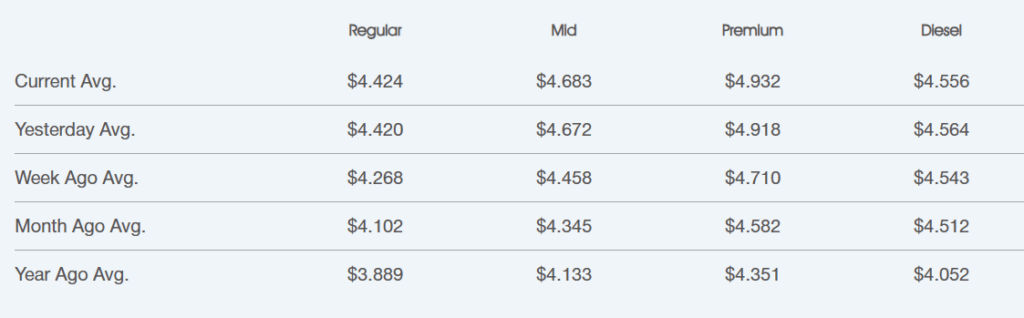
Chart of average gas prices over time for Regular, Mid, Premium, and Diesel in July 2025.

Fuel Market News

The past week brought a mix of pricing fluctuation, with gas prices down and diesel prices up. Rack averages in Portland dipped $0.05/gal for gasoline and jumped $0.02/gal for diesel. Smaller price fluctuations than weeks past, as the market is still balancing the heightened political climate in the Middle East, with much remaining uncertain for the weeks ahead. Crude oil is hovering just below $70/barrel at a current rate of $68.00/WTI Crude, and is expected to remain at this level in the weeks ahead. Retail fuel prices are still high in Oregon and Washington, with most retail stations in Portland averaging around $4.15/gal. The 4th of July brought an increase of 1.7 million drivers traveling, which is up 2.4% from last year.

Oregonians may be in store for higher diesel prices this year with the end of Blenders Tax Credits, the introduction of the Producers Tax Credit & the Oregon Climate Protection Program going into 2025. For more on this report, visit the link below.

2025 Fuel Market Outlook: Oregon

fuel-market-report-star-oilco-5-18-24

Important Note: Per the City Of Portland, “Distributors in the City of Portland are required to meet the minimum biofuel content requirements for all fuel they distribute beginning on May 15, 2024. All diesel fuel distributed to retail stations, non-retail dealers, or wholesale purchaser-consumers must include a minimum of 15% biofuel content, from either renewable diesel or biodiesel. This requirement increases to 50% on May 15, 2026, and 99% on May 15, 2030”.

Reasons For Price Variance

Oil Prices Below $70

OPEC+ Production Cuts

Crude oil is trading below $70, at a current price of $68.00/barrel. This is $3.09/barrel higher than it was last week. 


Crude oil is the main ingredient for gasoline and diesel. Per AAA, on average about 50% of what you pay at the pump is the price of crude oil, breaking down as 25% refining, 11% distribution & marketing, and 14% taxesa helpful breakdown for consumers wondering why they are paying the prices that they pay. Crude Oil is currently trading at $68.00/barrel compared to $64.91/barrel last week and $72 a year ago. 

It’s essential to recognize that fuel prices result from a complex interplay of the factors mentioned above and other regional factors. Additionally, prices may vary by specific regions within Oregon and Washington. For the most precise and up-to-date information on fuel prices and the causes for these price changes within your area, use the links below for AAA & GasBuddy.

If you have any questions, feel free to contact Star Oilco and speak to one of our fuel market advisors to discuss how the market can impact your business.

For other news in the fuel market:

https://gasprices.aaa.com/?state=OR

https://www.gasbuddy.com/charts

Join the Fuel Market Report newsletter for your weekly fill of updates!

Two semi-trucks driving on a highway with trees in the background
Fuel Market Report: June 22nd-28th, 2025 1024 683 Star Oilco

Fuel Market Report: June 22nd-28th, 2025

fuel-market-report-star-oilco
1-month average retail fuel price trends in Oregon, Washington, and the USA alongside crude oil prices for June 22nd through June 28th

Wholesale Price Average 6/28/25

Wholesale LowWholesale Avg
E10$2.43$2.56
B5$3.16$3.27
B20$3.27$3.32
R99$3.13$3.27

Average Retail Prices 6/28/25

NationalOregonWashington
E10$3.19$4.05$4.43
B5$3.69$4.46$4.92

Taxes

FederalState: ORLocalState: WA
Gas$0.184$0.40$0-.13$0.494
Diesel$0.244$0.40$0-.13$0.494

Oregon Fuel Price Variance

Current average fuel prices for regular, mid-grade, premium gasoline, and diesel in June 2025.

Fuel Market News

The past week brought downward price fluctuations as oil prices dipped and rack averages dropped. Rack averages in Portland were $0.10/gal lower than the week prior across the board for both gas and diesel. The retail street price did not see these dips, as the Oregon retail average remained high around $4.15 and closer to $4.20 in the greater Portland area. After the heightened tensions and missile strikes on Iran, many analysts expected the market to skyrocket for crude oil prices, while the opposite occurred. Crude oil prices peaked at $74/barrel on June 20th and have since dropped below $65 as of the 30th.

Oregonians may be in store for higher diesel prices this year with the end of Blenders Tax Credits, the introduction of the Producers Tax Credit & the Oregon Climate Protection Program going into 2025. For more on this report, visit the link below.

2025 Fuel Market Outlook: Oregon

fuel-market-report-star-oilco-5-18-24

Important Note: Per the City Of Portland, “Distributors in the City of Portland are required to meet the minimum biofuel content requirements for all fuel they distribute beginning on May 15, 2024. All diesel fuel distributed to retail stations, non-retail dealers, or wholesale purchaser-consumers must include a minimum of 15% biofuel content, from either renewable diesel or biodiesel. This requirement increases to 50% on May 15, 2026, and 99% on May 15, 2030”.

Crude oil is trading below $65, at a current price of $64.91/barrel. This is $3.85/barrel lower than it was last week.


Crude oil is the main ingredient for gasoline and diesel. Per AAA, on average about 50% of what you pay at the pump is the price of crude oil, breaking down as 25% refining, 11% distribution & marketing, and 14% taxesa helpful breakdown for consumers wondering why they are paying the prices that they pay. Crude Oil is currently trading at $64.91/barrel compared to $68.76/barrel last week and $74 a year ago.

It’s essential to recognize that fuel prices result from a complex interplay of the factors mentioned above and other regional factors. Additionally, prices may vary by specific regions within Oregon and Washington. For the most precise and up-to-date information on fuel prices and the causes for these price changes within your area, use the links below for AAA & GasBuddy.

If you have any questions, feel free to contact Star Oilco and speak to one of our fuel market advisors to discuss how the market can impact your business.

For other news in the fuel market:

https://gasprices.aaa.com/?state=OR

https://www.gasbuddy.com/charts

Join the Fuel Market Report newsletter for your weekly fill of updates!

Close-up of a diesel fuel cap on a yellow fuel tank
What Is Your Diesel Fuel Quality? Find Out 1024 683 Star Oilco

What Is Your Diesel Fuel Quality? Find Out

Find out what the bottom of your diesel tank looks like!

Call Star Oilco to get your diesel tested. 

This winter, Star Oilco is offering complementary diesel fuel testing for any fleet operating in our service area. We are providing fuel quality testing in partnership with Hydrotex to assist fleets in our area struggling with containing the cost of fuel related maintenance.  Typically a diesel lab test costs over $200 depending on the lab.  Don’t let the hurdle of a scientific analysis stand between you and full knowledge of what is effecting your fleet.

Since the move to Ultra Low Sulfur Diesel in 2007 along with moving changes in diesel refining and biodiesel mandates fuel quality has been a moving target.  More importantly petroleum refiners and distributors follow an ASTM specification for diesel which is not as stringent as the ISO standards demanded by OEMs making the trucks on the road today.  Water and dirt in fuel are robbing your fleet of money.  Get a handle on it and move forward armed with that knowledge.

Star Oilco and Hydrotex can help you understand what is going on, what the quality of your tank bottom is, and what you need to do to reduce the cost of operating your fleet as it relates to diesel fuel.

Call Star Oilco and state you want to get your fuel tested for both ASTM and ISO specification. A member of our team will help you take the sample off of the bottom of your tank as well as from your dispensing nozzle.

Call Star Oilco today for have a sample taken and tested.  

503-283-1256 or email OrderDesk@StarOilco.net

Two semi-trucks driving on a highway with trees in the background
Fuel Market Report: June 15th-21st, 2025 1024 683 Star Oilco

Fuel Market Report: June 15th-21st, 2025

fuel-market-report-star-oilco
1-month average retail fuel price trends in Oregon, Washington, and the USA alongside crude oil prices for June 15th through June 21st

Wholesale Price Average 6/21/25

Wholesale LowWholesale Avg
E10$2.74$2.80
B5$3.28$3.39
B20$3.39$3.45
R99$3.27$3.38

Average Retail Prices 6/21/25

NationalOregonWashington
E10$3.22$4.06$4.44
B5$3.68$4.42$4.86

Taxes

FederalState: ORLocalState: WA
Gas$0.184$0.40$0-.13$0.494
Diesel$0.244$0.40$0-.13$0.494

Oregon Fuel Price Variance

June 2025 chart of Oregon average fuel prices for Regular, Mid, Premium, and Diesel.

Fuel Market News

The past week brought in more upward price fluctuation following the escalated tensions in the Middle East involving Israel, Iran, and the U.S. Crude oil jumped up to $77/barrel on Thursday but has since trickled back down below $70 as of Monday. Rack averages in Portland jumped $0.17/gal on gas, $0.27/gal on B5 diesel, $0.26/gal on B20 diesel & $0.23/gal on R99 Renewable diesel. The largest price hikes we’ve seen all year for a single week. The U.S coordinated bomb strikes on Iran on Sunday, June 22nd, which were followed by Iran attacking US bases in Qatar, while not officially announced, these are both signs of a new war beginning between the US & Iran. What this could mean for crude oil and commodity pricing is unknown, but it is assumed that crude oil will begin a sharp climb in price in the weeks to follow.

Oregonians may be in store for higher diesel prices this year with the end of Blenders Tax Credits, the introduction of the Producers Tax Credit & the Oregon Climate Protection Program going into 2025. For more on this report, visit the link below.

2025 Fuel Market Outlook: Oregon

fuel-market-report-star-oilco-5-18-24

Important Note: Per the City Of Portland, “Distributors in the City of Portland are required to meet the minimum biofuel content requirements for all fuel they distribute beginning on May 15, 2024. All diesel fuel distributed to retail stations, non-retail dealers, or wholesale purchaser-consumers must include a minimum of 15% biofuel content, from either renewable diesel or biodiesel. This requirement increases to 50% on May 15, 2026, and 99% on May 15, 2030”.

Crude oil is trading below $70, at a current price of $68.76/barrel. This is $2.56/barrel lower than it was last week. 


Crude oil is the main ingredient for gasoline and diesel. Per AAA, on average about 50% of what you pay at the pump is the price of crude oil, breaking down as 25% refining, 11% distribution & marketing, and 14% taxesa helpful breakdown for consumers wondering why they are paying the prices that they pay. Crude Oil is currently trading at $68.83barrel compared to $71.32/barrel last week and $72 a year ago. 

Fuel prices result from a complex interplay of the factors mentioned above and other factors regionally. Additionally, prices may vary by specific regions within Oregon and Washington. For the most precise and up-to-date information on fuel prices and the causes for these price changes within your area, use the links below for AAA & GasBuddy.

If you have any questions, feel free to contact Star Oilco and speak to one of our fuel market advisors to discuss how the market can impact your business.

Join the Fuel Market Report newsletter for your weekly fill of updates!