
Posts Tagged :

Commercial Cardlock

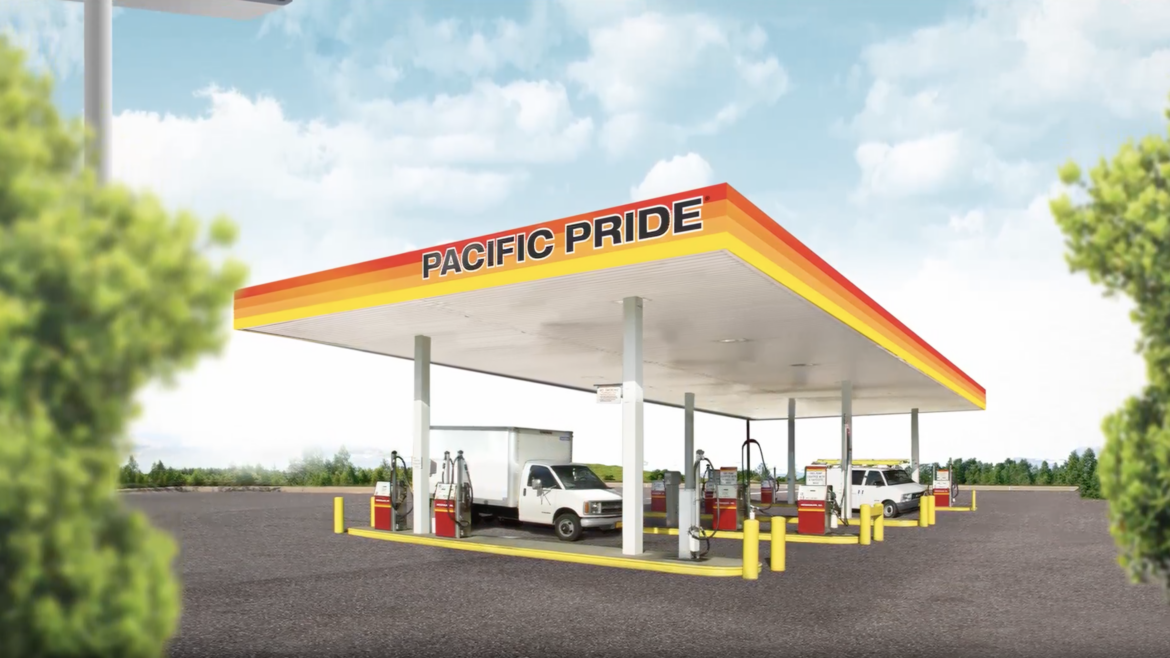
Pacific Pride commercial fuel station with service vehicles fueling
Requirements For Business Access To Pacific Pride Fueling Sites. 1024 556 Star Oilco

Requirements For Business Access To Pacific Pride Fueling Sites.

Requirements for a business to get access to Pacific Pride Cardlock sites in Oregon.

Star Oilco is a proud Independent Franchisee of Pacific Pride.

Get out of the gas line

Pacific Pride Commercial Fueling

24 hours a day, 7 days a week, 365 days a year without retail waiting in line.

Commercial fuel access for the around-the-clock business.

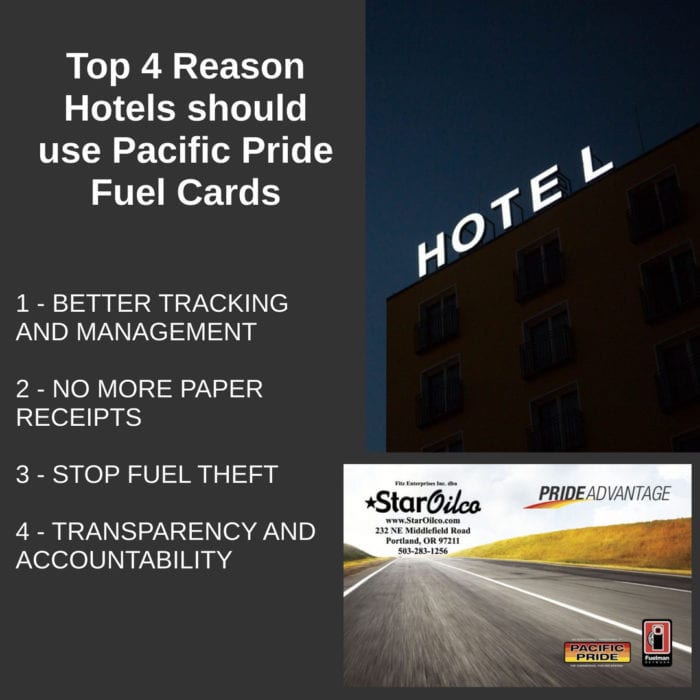
If you want to start using Pacific Pride cardlock cards in your business, please message or call Star Oilco and we will get you set up with cards. Pacific Pride has many advantages beyond the 24 hour self serve convenience. Pacific Pride is designed to secure fuel cards from internal fraud or theft in both small and large business.

Pacific Pride Fuel Network Graphic

Many small businesses wonder what it takes to use a stand-alone cardlock location as they sit in traffic, seeing the easy in-and-out commercial fueling locations without the lines of retail gas stations. Conveniently located for commercial truck traffic with high flow diesel pumps near industrial areas, ports, and major freeways, commercial cardlock locations have real advantages for many fleets.

As wages rise, the cost of full serve retail gas stations is rising with it and stand-alone commercial fueling can save time as well as money. When businesses see these commercial fueling stations with little wait and 24 hour access, they have questions. Star Oilco can make getting set up with Pacific Pride in Oregon easy.

Self-serve diesel is already legal in Oregon and often cheaper at a commercial cardlock throughout Oregon.
Self-serve gasoline is allowed in several rural counties in Oregon outside of the I-5 corridor. Self-serve gasoline in the more populated parts of Oregon requires a business use described below. If you have a business use for gasoline, you can get access to self serve locations and start saving money over retail immediately.

Pacific Pride Fueling Network Provider

How to get a Pacific Pride Cardlock Card in Oregon

Oregon law currently DOES NOT allow self-serve gasoline along the I-5 corridor. Diesel is legally allowed for self serve, but gasoline as a flammable liquid is not. Therefore, the Oregon Fire Marshall has rules restricting the use of commercial cardlock gasoline for individual uses. For commercial uses Pacific Pride, CFN and other Commercial Cardlock networks are allowed for businesses in Oregon. If you operate a fleet, or reside outside of Oregon, these requirements do not apply in your home state, but if you substantially operate in Oregon the state Fire Marshall will have an expectation of these rules applying to you.

 Rules for using self-serve Commercial Cardlock in Oregon

  • Business purpose required for gasoline cardlock use in Oregon (not any other state).
  • If you are using solely diesel, commercial cardlock is available to everyone (individuals and businesses).
  • If you are planning on fueling gasoline vehicles, you must be a business (or use it for commercial use).
  • To access gasoline at cardlock in Oregon you must be able to prove that you use over 900 gallons of fuel a year.
  • To access gasoline at cardlock in Oregon someone in your business must also take a Oregon Fire Marshall Safety Test.
    • Message Star Oilco below for a copy of the Oregon Fire Marshall Safety Test


If you have questions about Pacific Pride or other cardlock systems please don’t hesitate to contact Star Oilco with any questions you may have. Star Oilco has a long tradition of making cardlock easy for businesses large and small. In particular, we specialize in helping you secure fuel usage to eliminate fuel theft and reduce any chance or opportunity for thieves.

The first step required to getting a Fleet Fuel card for using commercial cardlock is to open up an account with Star Oilco.

For more information about how to use commercial cardlock to secure your business from theft, please also check out Star Oilco’s white paper on knocking out fuel theft by implementing a No Tolerance Fuel Theft Policy in your business at www.NoMoreFuelTheft.com.

Pacific Pride & Star Oilco cardlock card can give you control over when and where fuel is bought.


Contact Form

  • This field is for validation purposes and should be left unchanged.


Star Oilco Logo with Phone number

Star Oilco is a proud independent Franchisee of Pacific Pride

Pacific Pride Cardlock Fuel Security

Icons representing fuel, savings, and driver control for fleet card security
Upgrade your Fleet Card’s Security Features 1024 653 Star Oilco

Upgrade your Fleet Card’s Security Features

Human Resource strategies to stop employees from stealing gas and diesel in your  business with these best practices.


Upgrade the security features on your Pacific Pride fuel cards with Star Oilco.

Star Oilco is an independent Franchisee of Pacific Pride

Are you looking to use a corporate fleet card to simplify your fuel buying while also knocking out your exposure to employee gas theft?
Star Oilco can make that easy for you.

Regardless of what system you choose, there are some organizational best practices, that when implemented, will be self-reinforcing in your organization. Simple little changes to how you approach fuel cards will greatly reduce any opportunity for theft.

Whether you use a Pacific Pride, Voyager, WEX, Comdata, Fuelman, or CFN corporate fleet card, you can take inventory of what you are currently doing and upgrade that process with these best practices.

Fleet Card Best Practice #1: Your current vendor should be able to assist you with securing your fleet card.  Call your current card provider and ask for a list of every active card, the last time it was used, the PINs associated with these cards, and security features associated. Check these against your next bill to see what cards aren’t being used.  Turn off a card not being used.

Fleet Card Best Practice #2: Annually take inventory of what cards you have and who is using them. Line up this list of active cards with your employees and make sure there isn’t a lost card out there.  Often a card policy implemented by Human Resources or your Dispatcher is a good way to track what employees have what cards.

On a regular basis, pass a clip board around asking each employee with a fleet card to confirm they still have that card and initial a confirmation that the card is still in their possession.  You would be surprised how individual cards can float between employees as it is easier than asking for a new card.

Fleet Card Best Practice #3: Audit your transactions regularly. This is a great project for your Account’s Payable to look through. Check against the card list of active cards looking for transactions that occur outside of normal business hours and days. Look for locations outside of your service area as well.  Also look for cards with more than one transaction in a day or large volumes as often that’s theft.

Fleet Card Best Practice #4: Put your Fleet Cards on the key ring dispatched with the vehicle, not with the driver. To limit a risk of a stolen card, restrict card ownership to management and maintenance. Everyone else should have cards directly connected with a vehicles license plate, so if that card goes missing it is obvious.

Fleet Card Best Practice #5: Program your cards for the vehicles they are attached to. You do this by connecting the card to the vehicle with a key ring. Then program the Fleet Card to only allow a specific fuel for that vehicle (regular, premium or diesel), limit the fill volume needed for that vehicle’s tank, and also limit the times of day that vehicle can get fuel. This reduces the opportunity for theft to exceed a small minimum and also makes theft obvious when the limits are hit.

Fleet Card Best Practice #6: it’s the 21st Century so manage in real time.  Make sure your Fleet Card provider can send an email to your Dispatch or fleet management in real time as the fuel cards are being used. Mistakes relating to efficiency or theft will be far more obvious and trainable if the transaction is observed the day of rather than a week. Instant feedback and communication is critical to change bad behavior of driver’s who mean to do well but may just have mad ea simple mistake.

Fleet Card Best Practice #7: Buy fuel by your vehicle not by an individual.  Move your Fleet Card program to a “Floating PIN” system. All modern Fleet Cards should offer this option. It enables you to attach the Fleet Card to the vehicle (all costs are tracked by the vehicle number and/or license plate on your invoices) and provide a unique and secret PIN to each of your driving employees.

If they use the card, their name appears on the bill next to their transaction. If PINs are kept secret and this is enforced, any theft or inappropriate fuel usage will be extremely obvious and accountable.

Fleet Card Best Practice #8: Adopt a “No Tolerance Fuel Theft Policy” as part of your hiring process, as well as every time you replace or issue new Fleet Cards. This is a policy managed by your Human Resources or Driver Compliance department. It is a form disclosing that any fuel cards or PINs related with cards are confidential and assigned to a person or vehicle.

Any use of a PIN will be the responsibility of the person who that PIN is associated with. A personal private PIN is their responsibility. If it is used, they are responsible and any observed fuel theft will be a first-time fire/termination offense. PINs are to be kept secret and if the PIN is known by someone else, it is their responsibility to let management know and get that personal PIN changed.

Fleet Card Best Practice #9: Negotiate a Cost-Plus basis for your fleet fueling costs. You should be able to have a frank conversation with your commercial fueling provider about where prices come from and how much margin they charge you. In many markets, fuel providers can even get a wholesale cost plus basis for fuel that beats the retail street mark ups. Pacific Pride and CFN stand alone commercial cardlocks are focused on this type of need. Often the savings for diesel customers is very substantial due to this model of pricing.

Fleet Card Best Practice #10: Negotiate the terms you need for the way you buy fuel. If you have a frank conversation about the terms and costs related with buying fuel, you’ll have more options that are available but not advertised. Industry standard for fuel sellers is either ten day terms with twice monthly or monthly billing. If you have the ability to pay faster, often deeper discounts are provided.

For extremely large customers daily billing could net thousands of dollars in savings a month. For operations relying on 45-day fuel charge reimbursements, talking to a fuel vendor about matching your fuel bill with a fleet’s Accounts Receivable can prevent huge cash-flow crunches.

Need to secure your fleet from fuel theft?

Call Star Oilco, we can make it easy.

Star Oilco can help you field all of these Best Practices. Our motto is “Keep it Simple” and we are there to make this easy. Feel free to reach out and see what Star Oilco can do for your fleet to upgrade it’s fleet fueling security.

To download a white paper on these Pacific Pride fuel card security feature best practices go HERE to our Stop Fuel Theft page.


Star Oilco is an independent Franchisee of Pacific Pride

Contact Form

  • This field is for validation purposes and should be left unchanged.
Empty Pacific Pride fueling station with modern fuel dispensers
Why should my fleet use Pacific Pride fuel cards? 1024 683 Star Oilco

Why should my fleet use Pacific Pride fuel cards?

Star Oilco Pacific Pride corporate fuel card

Pacific Pride Fleet Fuel card by Star Oilco


                      A prospective customer asked recently:

          “Why should I use a Pacific Pride fleet card over a gas station credit card?”

Here’s our answer:

There are many reasons to use a commercial cardlock solution for your fleet. The biggest reason why you should use Star Oilco for your cardlock needs is that we are a locally owned and operated business that will take the time to tailor a card program to your specific fleet’s needs by asking questions like:

  • What is the greatest risk of theft that we can secure against?
  • Where is the greatest opportunity for savings in how you fuel?

Fleet card sellers and the larger cardlock companies are often focused on making your needs fit their product. Star Oilco focuses on YOU.  That’s a big difference.

          With Star Oilco, you don’t have to choose between price or convenience

PRICE: Cardlock locations do not use a credit card satellite to run transactions. This means you’re saving 2% to 4% right off the bat by using Pacific Pride or CFN, because cardlock operators taking are not charging you to run your bill through a Visa or other network. Plus, by pulling into a gas station to buy fuel, you’re often forced to pay $.10 a gallon more to use a Comdata, WEX, Voyager, Mastercard or Visa backed fleet card.

With Pacific Pride, you won’t face this charge because it’s on Fleetcor’s network. And by working with a local Pacific Pride franchisee who owns the location, you’ll benefit from their ability to offer additional savings at their location that are not available to anyone else. They own the fuel and therefore have ultimate control on saving you money.

CONVENIENCE: With convenience, comes risk. With Star Oilco’s modern cardlock offering, we can secure your risk and still enable several levels of convenience and access, dependent on your customized fleet need.

                                                     We keep things simple


24-7 Convenience with Easy to Access Fueling Facilities

Clean, well-lit and large truck friendly cardlock facilities. Cardlock is made for business and if you are operating doubles and triples, we can work with your staff to map out the easy in-and-out high-flow diesel fueling options for your drivers.

Industry-Leading Card Security

We offer a wide range of solutions that allow you, as a fleet manager, to lock down and protect your fleet from theft. If you only operate in specific areas, we can turn off whatever cards you want to not operate outside of where you want your trucks. If you don’t operate after a certain time of day we can turn non-management cards off to guard against after-hours sales fuel theft.

Email Notification for Total Control

See fuel transactions in real time. When your drivers make a fuel purchase at Pacific Pride or other affiliate fueling locations, an email will notify you or your dispatch. If your drivers are following your processes and procedures for fuel procurement, it will be easy for you to immediately reinforce the rules instead of waiting for a bill. Better yet, if something is wrong with the fuel purchase (out of area/time/product), you will know immediately a problem has occurred and can respond accordingly.

Flexibility or Structured Control.  We offer both!

Whether you want your drivers to be able to get fuel and get on the road as fast as possible or stay locked into a specific zip code of only the lowest-cost commercial cardlock locations, we can make that happen. And not only do we make it easy, we can shift gears quickly to stay ahead of your evolving business needs.

Total Accountability for Fuel Usage

Total accountability means added convenience for your controller, CPA and HR manager. Beyond designing simple security features, we can:

  • Align fuel usage with your vehicle license plates by providing a private PIN to your employees.
  • Track miles per gallon in the vehicles to confirm if the fuel actually went into that vehicle or not.
  • Customize billing to link employee names to card usage.

Bottom line: You will know which vehicle took what fuel and who the person was who fueled it. And when an unlikely fueling occurs, you will have evidence of the person who did it and that the vehicle’s mileage is off, providing proof if needed. Combine Pacific Pride’s total control with a “No Tolerance Fuel Theft Policy” for additional authority to fire fuel thieves under any state’s employment laws.

Simple and Accurate Fuel Management and Reporting

Star Oilco’s system enables easy reports anytime you want them. If you require a CSV file or other report for your operation, tax reports, budgeting or other business needs we are there for you to make this easy.

Commercial Diesel Pricing with Volume Discounts

Pacific Pride commercial cardlocks are priced from the wholesale market rate. Our price is straightforward and based a daily OPIS Wholesale Rack report from your local market.  Instead of retail posted price signs where the corner gas station is trying to get as much as they can, our diesel fuel is priced on a cost plus basis. This is far more transparent and will save you money compared to retail on diesel fuel. When prices are high, our prices are far more fair. When prices fall, we fall with the wholesale market from the OPIS Average the day the market starts moving down. Pacific Pride locations are also designed with high speed diesel pumps that save large trucks time.

Try Pacific Pride to see for yourself!

To sign up for Star Oilco’s Pacific Pride fleet card or ask questions:

Contact Form

  • This field is for validation purposes and should be left unchanged.

Star Oilco is an independent franchisee of Pacific Pride

Star Oilco fuel truck delivering diesel to a refrigerated trailer at an outdoor event with beer kegs stacked alongside
Documenting Fuel Theft – A Wex Article 4 Step Approach 768 1024 Star Oilco

Documenting Fuel Theft – A Wex Article 4 Step Approach

Wright Express Fuel Cards versus Fuelman Fleet Cards for small business

Wright Express  (also known as WEX) has a great article for corporate fuel buyers on the best practices when documenting and confronting fuel theft.

WEX: Tips for enforcing proper fuel card usage and preventing employee theft.

A few things they left out that Star Oilco would include. As a Pacific Northwest Commercial Cardlock provider serving Oregon and Washington, we approach things a little differently than a credit card concept like WEX. We accept and love working with WEX, Voyager, Comdata and other fleet cards but still like personalizing the security of a fuel card to the use of it.  Call your current fuel vendor (or call Star Oilco) and review your security features.  If you suspect there is fuel theft, rather than watch it happen just eliminate the places it can occur. With either CFN or Pacific Pride networks the features are inherit and we can help you guarantee they are being used correctly.

Get out of the gas line

The Four Step Approach to Fuel Card Management

When a customer tells us they suspect fuel theft this is what we recommend to do with either CFN or Pacific Pride cards:

  1. Establish a no tolerance fuel theft policy and have every employee sign it.  This policy includes an acknowledgement by them they have a secret PIN unique to them and if it is used they are responsible for it. So if there is theft with their PIN they can be fired for that theft.
  2. Now that all users of your company vehicles have a unique PIN code. Attache their name to the use of that PIN.  So when you get your fuel bill, the actual names of the users of the cards is there next to the transaction. Just this best practice (and sharing this evidence with your team) will keep honest people honest. If they know their name appears to the transaction they will think about ownership of their actions.
  3. Ensure you have set limits on the cards to line up with the needs of the business.  Attach the fuel cards to the vehicle that uses them.  Then make sure the fuel type and volumes allowed line up with that vehicle. If a vehicle is diesel, that fuel should be the only fuel allowed to be used.  If that vehicle has a 30 gallon or 100 gallon tank set limits so no more than that can be fueled in a given day.  Just limiting the fuel volume to the tank size of a vehicle can eliminate most of the fuel theft that would occur.  Also you can limit the time of day as well as weekends. If a fleet isn’t on the road after 6pm, you can guarantee no fuel theft occurs after 6pm.
  4. Turn over the cards by having all drivers/staff turn in their old cards. Then re-issue those cards attached to the key-rings of the fleet keys.  Star Oilco can provide a card older designed to go on the vehicle key-ring to make this a no cost easy reform.By doing those things which is an easy project you will knock out most of the opportunity for theft as well as send a strong signal to your team that fuel theft is not okay. Honest employees will understanding clearly that theft is occurring and is not okay, the dishonest employees will know to immediately stop.  If theft continues it will also be very easy to spot as the name of the thief will appear on the bill alongside the transaction. That combined with a No Tolerance Fuel Theft policy will make removing the fuel thief an easy proposition for you regardless of your state of operation.If you do business in Oregon and Washington and have questions about securing your fuel purchases.

For more on how to stop fuel theft in your small business please see the Star Oilco whitepaper on securing your fleet cards at StarOilco.com/Stop-Fuel-Theft/ for a strategy on saving your business from the pain of managing drivers from stealing.

Call Star Oilco’s Sales Team at 503-283-1256 for an complementary audit of your processes and how we can give you peace of mind and less to worry about in your business.

Contact Form

  • This field is for validation purposes and should be left unchanged.
Two Pacific Pride fuel cards on a country road background
Stop fuel theft- Pacific Pride fleet cards 512 440 Star Oilco

Stop fuel theft- Pacific Pride fleet cards

Fuel Cards that stop fuel theft with easy to use security controls.

Fuel theft is a very real expense fleets should be thinking about how to avoid.  Every fleet is experience more turn over in their driver pool than they want.  This can cost your business in more than just training expense and overtime.  Add in rising gas prices impacting your entry level employees and an unlocked fuel card is a huge temptation.  Remove the temptation of fuel theft and keep honest drivers honest with Star Oilco’s secure fleet card solution.

Get real time e-receipts when your employees buy fuel with your fleet card.

Having control and real time awareness of what is happening in your small business is a critical piece for growing a successful business. With Star Oilco’s Fleet Cards you can control your fuel cards by only turning them on in the zip codes or states you want to operate in. You can also shut the cards off for weekends and evenings so that when your business isn’t open either is the ability for a dishonest employee to steal fuel.  Our cards also offer real time e-receipts emailing you who is buying fuel where and when enabling your team to reinforce you fuel policies at the moment someone violates it.

Control where, when, and what product can be purchased with your business fleet card.

In Pamona, California two men altered a van to steal thousands of gallons of gas with a stolen credit card.  Credit cards are not designed to secure a business or an individual from fuel theft. Pacific Pride fleet cards are. Especially for corporate or small business fueling.

Similarly in St. Petersberg, Florida an employee used a company fuel card without security controls to steal over $3,000 in gasoline.  Pacific Pride’s controls make this type of theft extremely transparent and easy to get ahead of.

Star Oilco’s Pacific Pride fuel cards can secure your small business from this kind of threat. Be it a special van altered with a giant tank or an employee fueling up his wife’s car while fueling his own company vehicle we can prevent the risk of huge theft.

Pacific Pride Fueling Network Provider

Use a fleet card that sets controls on the gallons that can be bought, time of day, and area of town a card can be used in.

How we do this is with the designed Pacific Pride system which limits your fleet cards to total gallons per transaction, number of transactions a day, time of day, and locations you would actually need fuel. An ounce of prevention is worth a pound of cure. A gallon of restriction literally might be worth tens of thousands of dollars of possible theft. Call us for more information. 503-283-1256

Star Oilco is an Independent Franchisee of Pacific Pride. We are there to make commercial fueling simple for you.  For more information on preventing fuel theft, saving money on fuel, or simplifying your fuel management all you have to do is ask. We want to help.

For Star Oilco’s Whitepaper on stopping fuel theft please go to www.NoMoreFuelTheft.com page to download it.

Fuel bill audit best practices

Contact Form

  • This field is for validation purposes and should be left unchanged.
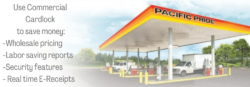
Pacific Pride commercial fueling station with text highlighting cost-saving benefits of using cardlock fuel cards.

Using a Pacific Pride cardlock fuel card helps businesses save through wholesale pricing, detailed fuel usage reports, enhanced security, and real-time e-receipts.

Construction Loaner Diesel Tanks
Diesel Fueling for Construction Jobsites 720 720 Star Oilco

Diesel Fueling for Construction Jobsites

Diesel fueling for construction jobsites in Portland, Oregon.

Keep full service for construction jobsites with R99 Renewable Diesel available.

Diesel Fuel for Construction


If you are managing a project we will keep that jobsite full.

Diesel fueling for construction jobsites seven days a week in the Portland metro region.  We have a variety of diesels accompanied with DEF top off to keep your operation running without interruption. We can provide a consistent schedule to keep going seven days a week.  If you are running generators, blowers, heaters and other 24-7 equipment we can keep those running through the weekends.  Our autofill construction service can provide the fuel you need, tanks for your project, and regular scheduled service to guarantee uptime.

Does your diesel fueling for construction needs call for a guaranteed stops on a schedule? Do your projects sometime require every 12 hour or 6 hour fueling? Does you fueling project needs call for generators, heaters, reefer-trailers, light sets, and yellow iron?  Star Oilco can do a few gallons wet hose fueled into your equipment to 100,000+ supply contracted for your project.  We have trucks dispatched seven days a week with several shifts.  Star Oilco can do twice a day fueling if needed for your project including regular 0 gallon stop by visits to confirm your equipment is running.

We can keep your generators running, your heaters blowing hot air, your pumps pumping, and your crew running without having to stop for fuel or DEF!


Fueling Back Hoe on construction site

Jobsite fueling service to meet the needs of your project management.

Off Road Diesel, Dyed Renewable Diesel and DEF available for your project need.


Mobile Fueling of Construction site in Portland, Oregon

Keep Full Mobile Onsite Fueling

Star Oilco can provide scheduled mobile fueling to your jobsite seven days a week.  Our diesel construction fuel service includes onsite tanks as well as DEF equipment for your project needs. At start of shift and end of shift schedule is also available for delivery.


Tight Access Diesel Construction Fueling Available.

Star Oilco’s fleet includes smaller fuel trucks able to access tight to reach areas in parking garages, active facilities, back alleys, inside buildings, and other hard to reach areas required by a project.


DEF Delivery Included with your Diesel Fueling.

Diesel Exhaust Fluid (DEF) keep full and bulk delivery service to your jobsite.  We have DEF bulk equipment as well as boxes available for your project.  What you want for your operations is what we want. Keeping those small DEF tanks full and generators running is what we can do for you.  We are here to make it easy.


Renewable Diesel in Oregon

Dyed Renewable Diesel for your Diesel Construction Fueling needs.

Does your project require a lower CO2 footprint?  We have off-road R99 Renewable Diesel on our trucks daily.  Star Oilco also has multiple sources for R99 in the Pacific Northwest for your needs to guarantee supply. If large volumes are needed for Renewable Diesel for a project in the future we can enable a contract to meet these needs.


Construction Loaner Diesel Tanks


Diesel Fueling Construction Tanks available.

Star Oilco has fuel tanks available for your project.  Our typical inventory of tanks sizes are 250 and 500 gallon UL142 double wall thanks.  We have 100 and 50 gallon fuel cells for moving fuel around a jobsite in the back of a fuel truck. Larger sizes available for longer term and larger projects with advance planning.


Wet Hose Fueling Service in Vancouver, WashingtonStar Oilco can provide your project with the fuel you request.
– B5 ULSD Dyed Diesel
– B20 ULSD Dyed Diesel
– Dyed R99 Renewable Diesel
– E10 Gasoline
– Non-Ethanol Premium Gasoline
– Kerosene, and others if the project calls for it.

Schedule Your Fuel Delivery Today

  • This field is for validation purposes and should be left unchanged.
greenhouse gas emissions reduction graphic by Star Oilco
Why diesel fuel in Oregon may go up in 2025 940 788 Star Oilco

Why diesel fuel in Oregon may go up in 2025

What are the market forces impacting diesel in Oregon for 2025?

There are some big changes coming for diesel fuel in Oregon and it is not widely reported. The biggest likely change being a smaller supply of renewable diesel in the first quarter of 2025.  Renewable Diesel is expected to see a shorter supply than in recent years as imports drop off with the removal of subsidies.

Oregon is going to see several major market forces impacting the wholesale, as well as retail cost of diesel to those that buy it.   To list them simply, the following events will converge on New Years Eve:
The end of the $1 a gallon US Blenders Tax Credit (BTC) subsidy on biodiesel and renewable diesel.
– The subsidy replacing the BTC, the Producers Tax Credit (PTC), blocks imported biofuels such as Neste Renewable Diesel.
– Oregon is relaunching its Climate Protection Program which will cap the market allowance for fossil fuels.
Portland has a Renewable Fuels Program that requires the blending of Biodiesel and Renewable Diesel under a 60% reduction in CO2 emissions from petroleum diesel (biofuels sold in Portland must be below a 40CI under Oregon’s Clean Fuels Program).
California has mandates for Renewable Diesel in many uses raising the cost of R99 renewable diesel throughout the US.

These forces will raise the cost of fossil fuel diesel, renewable diesel and biodiesel while at the same time Oregon and Portland are requiring the use of these biofuels.  This will mean a higher retail and wholesale price inside Oregon compared to the rest of the United States. We cover the details of these trends below in depth.

THE OREGON CLIMATE PROTECTION PROGRAM

The biggest change impacting the price for on-road diesel is the return of Oregon’s Climate Protection Program (CPP). The program’s more common name is Cap and Invest, in fuel pricing it is referred to as “Cap at the Rack” as its allowance requirements are priced on a gallon of fossil fuel.  The program caps the total fossil fuel allowed to be sold inside Oregon. Then, revenue generated from selling the allowances to import CO2 contributing fossil fuels into the state, is invested to reduce future needs for these fuels.  In 2025, this program will return and fuel importers into the state of Oregon will have to capture the cost of reducing their CO2 emissions under this program.

Oregon previously had a “Cap and Invest” program limiting the total market share allowed for petroleum diesel fuels.  This created a higher cost for diesel fuels refined from petroleum compared to renewable diesel and biodiesel. This program was stopped by an Oregon court decision in 2023. The Oregon Department of Environmental Quality (DEQ) just finished and published the new rules for this program correcting the issues the court had with the program.

The way the Oregon Cap and Invest works on the market is similar to musical chairs. If you imagine the market for diesel is limited just like seats in musical chairs, every year they will take a few of the fossil fuel chairs away.  That means that anyone maintaining their existing customer gallons or trying to grow their volumes must meet this demand with renewable diesel, biodiesel or some other fuel.  The limited market for fossil fuels is represented by “Allowances” provided by the Oregon DEQ.  If a fuel seller cannot reduce their fossil fuel dependency, they need to buy a CPP Allowance in an Oregon DEQ curated market for them.

The value of these CPP Allowances is actually charged on each gallon of fuel sold by the regulated parties.  It is commonly called “Cap at the Rack” and can range in cost from nothing to over $.50 a gallon depending on how hard it is to meet the need of the program.  The biggest impact on the Cap at the Rack cost is how much renewable diesel or biodiesel is being used by those selling fuel.   Prior to the stoppage of Oregon’s CPP program, the Cap at the Rack cost usually ran around $.05 to $.30 a gallon.  It is expected we will see a return to this cost starting January 1st, 2025.  OPIS reports have an adjusted and non-adjusted option to capture the cost of this program.

The way the CPP program is designed is that if a fuel seller brings in a lower CO2 fuel like renewable diesel or biodiesel into the state of Oregon those gallons do not count towards the fossil fuel market cap.  So a R99 seller has no CPP Allowance obligations for those gallons.  A B20 biodiesel blender, as well, picks up 20% more gallons available to sell as those biodiesel gallons do not count against their CPP Allowances.  This facet of the CPP is why the market of renewable diesel in particular is a big deal for diesel prices.

The intent of Oregon is for consumers, fleets, farmers, municipalities, and industry in Oregon to grow their energy needs, they will need to use more low carbon energy.  If this energy use is a fleet running over 32,000 GVW this will mean low CO2 biomass based diesel fuels.   At the same time, the CPP program is kick-starting back into existence, the world of these biofuels is seeing some major market changes.

OREGON CLEAN FUELS PROGRAM

Oregon has another program to reduce the CO2 of the liquid fuels sold inside the state.  This program is additional and works in conjunction with the CPP.  It is the Clean Fuels Program (CFP) and is extremely similar to the California Low Carbon Fuel Standard (LCFS).  This program creates a market for Carbon Credits that are traded and required by fuel importers into Oregon.  OPIS also shows this program’s cost per gallon on their reporters.

Where the Climate Protection Program is like musical chairs with market share as the allowed market for fossil fuel shrinks year over year, the Clean Fuels Program is like a coupon required with sales of fossil fuel.  The major importers of fossil fuels into Oregon must show they are blending lower CO2 biofuels by presenting CO2 credit generated under the CFP program.  Users of fuel inside Oregon also see a benefit for bringing in low CO2 fuels when the market needs the credits so that voluntary users of high blend biofuels like R99, B99, B20 or E85 (85% ethanol) get financial support via a reduced final cost per gallon if using those fuels.

The reason we see renewable diesel in Oregon compared to the rest of the United States is because of this program.  This value of a Carbon Credit is usually taken to buy down the competitive price of these biofuels.  The concept is that if a fuel importer is bringing low CO2 fuels into Oregon, the reduction in CO2 these fuels represent can generate a CO2 credit.  That credit being sold on an open market to help reduce the cost of a low CO2 fuel compared to a fossil fuel.  The market for these credits is banked and has been building for years. Currently, the CO2 value is low as there are plenty of credits.

If the market availability of renewable diesel and biodiesel is dropping, the value of these credits should be rising.  The overall market will be bearing this cost though consumers will likely never see it.  In effect these regulatory market impacts of less renewable diesel in Oregon will mean a higher Carbon Credit price under the CFP program.  That will help lower the blended or delivered costs of B99 biodiesel and R99 renewable diesel hitting the end consumer.

RENEWABLE DIESEL AND BIODIESEL SUPPLY IN OREGON

Biodiesel and renewable diesel are called “Biomass Based Diesel” as a respective class of biofuels.  Where fossil fuel diesel is made from crude petroleum, biomass based diesels are diesel fuels made by several technologies from biomass feedstocks. The most widely used feedstock being fats, oils, and greases from virgin vegetable seed oils (soy and canola) or waste streams like recycled deep fryer oils, meat processors rendering fats, recovered trap greases, and many other sources of fat waste streams.

The 2025 Oregon Fuels Forecast for Oregon predicts a 199+ million gallon need for R99

The Oregon Department of Administrative Services Office of Economic Analysis produces a Clean Fuels Forecast which describes the size of the market need in Oregon.  In 2023, Oregon used 133.3 million gallons of R99 inside the state. The fossil fuel diesel used in 2023 was 577.6  million gallons by comparison.  So R99 and B99 blended with those gallons is a substantial 26% of the diesel burned in Oregon by the most recent total data.  The forecast for 2024 Renewable Diesel is 46.6 million gallons of R99, which appears to be exceeded by quite a bit.

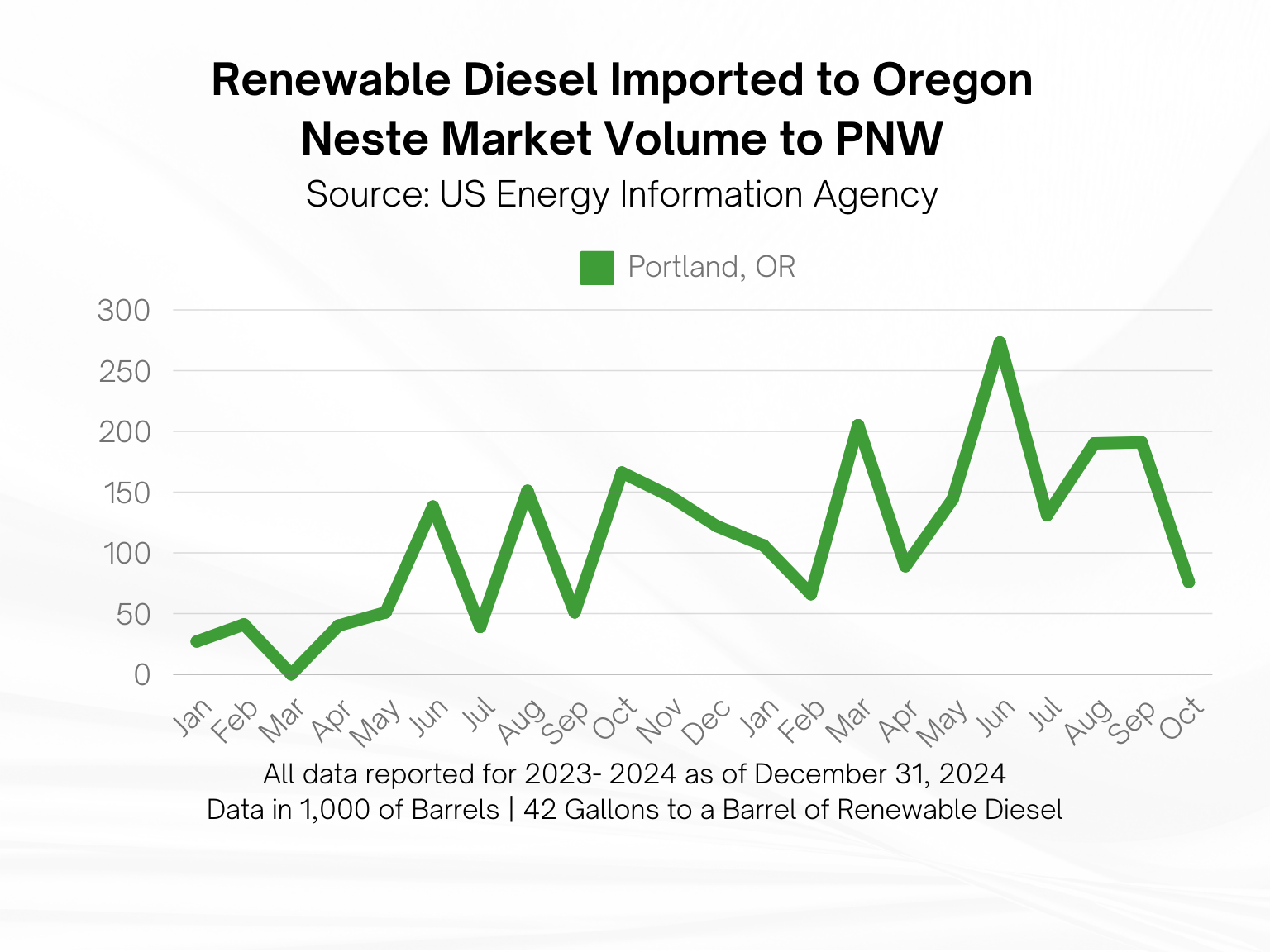
We do not have total consumption numbers for 2024 yet, but we do know thanks to the US Energy Information Agency, that imported R99 from Neste Singapore by itself through October was roughly 62 million gallons rounding up.  The Oregon Clean Fuels Forecast expects 199.5 million gallons of renewable diesel in 2025.  As the program ramps up with this expectation, the imports of previous years will be far less competitive without subsidies.  This means the price of renewable diesel will be higher, unless US production scales to not only fill this market void but also add tens of millions of gallons into the state.

Of that 133.3 million gallons of R99 used in 2023 in Oregon, a third, more than 40 million gallons of it was imported Neste Renewable Diesel.  973,000 barrels of renewable diesel was shipped from Singapore to Oregon that year.  Other renewable diesel refiners such as Diamond Green, HF Sinclair, Marathon, Montana Renewables, Phillips 66 and Chevron also had R99 product sold into Oregon.  Regardless of the expansion of US domestic Renewable Diesel production in recent years, the Neste product no longer receiving subsidies will have a real impact to maintain these 133+ million gallons of R99 inside Oregon.

This same projection reports that Oregon’s B99 Biodiesel use inside the state in 2023 was 78.8 million gallons.  With a projection of Biodiesel to rise 83.8 million gallons in 2025.  Given these market needs, Star Oilco predicts R99 to be expensive compared to petroleum diesel. Biodiesel will be more competitive given the available product and no substantial change in suppliers.  Biodiesel will also need to be used to replace R99 gallons under the CO2 reduction programs of Oregon. Due to these market forces Star Oilco has contracts for supply at reasonable prices for our existing customers.

R99 is mandated in certain diesel uses in California by the California Air Resource Board (CARB) which make for an inelastic price.  Diesel equipment operators in California will have to buy R99 at any price.  This will raise the prices we in Oregon can expect to see renewable diesel at.  The other low CO2 diesel fuel biodiesel will not be impacted by CARB the same way and we can expect to see B20 become more widely sold because of its more competitive price.

Biodiesel has a much more widely used market development around the US, especially in over-the-road trucking.  The plants that make biodiesel also tend to be co-located, owned in collaboration with feedstock producers, and integrated within the Soy industry that produces the feedstock.  Expect that biodiesel will continue to be more competitive with diesel than renewable diesel if price is the concern.

It is worth mentioning that the CARB mandates for R99 use in California will have impact to set the price for renewable diesel in other states.  If the market demand mandated by CARB continues and the market is short, the price can be expected to rise to meet this demand.  So unsubsidized imported R99 will likely continue to flow into California and other states but it will be at a full cost to make up the subsidy.  This will likely mean that incremental gallons of R99 needed to meet the market growth projected in Oregon will be at a premium over Oregon diesel to match California’s diesel market.

US BLENDERS TAX CREDIT EXPIRATION IMPACTING OREGON

The biggest unknown on how expensive diesel will be for Oregonians relates to Federal biofuel policy.  For the last twenty years the US Government has had an on-again/off-again subsidy on biodiesel and more recently renewable diesel.  There have been years the subsidy was not renewed which informs us of what probably will happen with prices on biodiesel.  Renewable diesel though is a stickier market.  The reaction of R99 renewable diesel prices in California, Washington and Oregon market is the big question and it comes down to an issue of production.  Two big issues at play are how much renewable diesel will these states continue to see from Neste’s Singapore plant and how much new US production for renewable diesel comes online to feed the market need.

The Blenders Tax Credit will be replaced with the Producers Tax Credit

The Blenders Tax Credit expired December 31st.  There are those that hope that in January the new Congress will take up an extension of this but most experts in the industry do not expect and are not betting an extension will not occur.  Meanwhile there is subsidy regime named the “Clean Fuels Production Credit” or the slang term preferred by industry the Producers Tax Credit (PTC) which ranges from $.20 a gallon to $.80 a gallon depending on how low CO2 the fuel as well as some labor practices.  The PTC also bars imported renewable diesel and biodiesels from getting any money at import.  Approximately more than 40,000,000 gallons a month of renewable diesel flows from Neste Singapore to the west coast, this will have a huge impact on Oregon.  For those accustomed to that fuel at the same price as fossil fuel diesel, the expiration of this subsidy will raise our prices for those demanding R99 renewable diesel which was already in short supply prior to this change.

There is also another wrinkle in the subsidy policy of the US with this.  The subsidy on Sustainable Aviation Fuel (SAF), basically renewable diesel meeting the Jet A fuel specification, is still in place for imported product for another year.  Europe also has some significant incentives and mandates for SAF.  Renewable diesel refiners, both domestic as well as foreign have a huge financial incentive to make renewable jet fuel over renewable diesel. This reality probably means that if a gallon of fuel can go to a jet fuel market over a transportation market it will.

So the market forces for renewable diesel in particular probably means less R99 available nationwide in the US.  While that is happening, the state of California has mandated that all off road equipment run R99 Renewable Diesel.  So regardless of what the price of this fuel is, California will have to use it in huge volumes.  Markets being what they are, for high volume fleets demanding R99 they can expect the R99 price in Oregon will track the price paid in California.  There will be exceptions of contract relationships for supply of R99 as well as retail brands moving renewable diesel blends to meet their strategic CPP requirements.  This will definitely mean anyone wanting R99 will want to line up a contractual supply agreement or can expect a higher price than in 2024.

THE FEDERAL RFS AND RINS

It should also be mentioned that the US EPA has a Renewable Fuel Standard of its own. It is a completely different regulatory system compared to the Portland RFS.  This program requires gasoline refiners as well as importers to use so much biofuel in their sales inside the United States.  Federally refiners and importers must prove they blended specifically assigned amounts of ethanol, and biomass based diesel fuels.

This program attaches a Renewable Industry Number (RIN) on every gallon of biofuel sold in the US.  As there are many unobligated users of this biofuel in the US those blending their own biodiesel, renewable diesel and ethanol generate RINs that can be sold to the refiners and importers of gasoline inside the US.

The RIN value has been low compared to historic values for biomass based diesels.  As Biodiesel and Renewable Diesel generate the same type of RIN, the reduction in imported R99 might raise the value of these RINs.  This value increase for the Renewable Industry Number is expected to slightly off set the hard subsidy.  It will be a market based value so it can not be relied upon for lowering the cost of biofuels, but can be expected to help with price.

As more US produced renewable diesel is coming online, hopefully enough to replace the lost imported gallons before the busy summer diesel season, these RIN values may not have a major contribution to the wholesale price of R99.

CONCLUSION

We predict diesel prices to rise in Oregon compared to the US in the first quarter of 2025

Star Oilco’s team saw these market conditions coming during the summer of 2024.  We have locked in contractual supply of R99 renewable diesel for our existing customers and have additional supply for customers seeking R99 renewable diesel by Star Oilco owned cardlock sites, mobile onsite fueling or smaller volume bulk delivery.

Star Oilco expects a Cap at the Rack price from the Oregon CPP to be between $.10 and $.40 a gallon by the end of January depending on biofuel supply. With unofficial conversational predictions with several large fossil fuel refiners and brokers, there is an expectation of over $.25 a gallon as a Cap at the Rack price.  We think it will be higher than that with the removal of millions of gallons of R99 from Oregon’s market.  In the first quarter with the removal of imported R99 hitting the state we expect the Cap at the Rack price to start in the higher $.30 a gallon range where it left off when the program was ended by a court. As the low CO2 exempt renewable diesel gallons shrink in the first quarter a heavier reliance on fossil diesel will be required.

We expect quite a bit of biodiesel to be loaded up ahead of the $1 a gallon subsidy being ended on December 31st.  Renewable diesel will be in short supply due to disruptions in supply of imported product.  So first quarter R99 will be at a premium and B99 for blending with diesel will be a deal to be had as fossil fuel diesel prices rise.  Expect to see far more B10 and B20 offered in the market place as either a more common than not fuel at retail gas stations, truck stops, and most cardlock stations, especially in Portland.  Star Oilco will have options for our customers of either B20, R99, or R20 blends of diesel all complying with the City of Portland Renewable Fuel Standard inside the city.  Star Oilco’s Portland CFN and Pacific Pride locations will have both R99 and B20 hoses available for customers.

California will continue to demand any and all R99.  If the market is short R99 because of a removal of imported renewable diesel, the value of R99 in California will rise to justify foreign R99 to enter the market without a subsidy.  Star Oilco presumes that number will be between $.40 to $.80 a gallon.  If R99 in California is able to demand a premium, Oregon will have to pay that price for incremental gallons.  Oregon has a specific need for R99 and B99 for retail gasoline sellers to meet the Climate Protection Program (if you sell so much gasoline you must reduce your market share someplace and R99 diesel is the easiest way to do that).  Oregon retailers will be seeking to move a budgeted amount of renewable diesel and biodiesel to meet their fossil fuel allowance budgets under the CPP.  Each gallon beyond that will have to compete with California at a high price.

R99 will still be available but we expect incremental gallons to be at a premium.  Contractual gallons direct with a refiner of renewable diesel will have a consistent price that a business can manage fuel surcharges against diesel.  Outside of a contract for volumes, the wholesale rack price of R99 may vary wildly compared to a B5 ULSD fossil fuel diesel prices depending on how high diesel is going for are as well as the CPP and CFP values of a Carbon Credit and Cap at the Rack.

The big unknown to price is how one key importer of R99 will respond to the market without a subsidy.  It is the assumption of Star Oilco that California will continue to buy imported R99 without a subsidy for it’s off-road mandated market. If the economics of Neste are such, they can compete and open the floodgates of R99 and this could change.  This open flood of product is not expected especially given the economics of Sustainable Aviation Fuel which renewable diesel plants are expected to make more of in 2025.

The Oregon and Washington market will see a flow of new capacity of R99 for retailers mandated to reduce their fossil fuel volumes.  US production of R99 is expected to more than compensate by 2026, but 2025 will be a chasm to jump.  Chevron, HF Sinclair, Marathon, and Phillips 66 will be procuring and supplying US made biomass based diesel to the Pacific NW for their retail gas station needs.  We would expect to see R99 or blends of it sold at parity with branded diesel in the retail market in Oregon.

Commercial sellers of wholesale unbranded diesel will have a tougher time lining up R99 at a price in line with wholesale B5 or B20 ULSD.  No doubt with these higher prices we will be seeing an evolution of R20 (20% renewable diesel) as well as blends of biodiesel with renewable diesel available inside the City of Portland for it’s Renewable Fuel Standard as a premium fuel at a competitive price with diesel.

Star Oilco has R99 and R20 blends for commercial customers in the Portland, Oregon area.  We also have R99 available for Clark County Washington commercial and municipal fleets.  Star Oilco also has biodiesel blends and can support fleets seeking to succeed with it.  Call us if you would like to talk about your fuel supply in 2025.

If your fleet has an interest in a consistent and contractual supply of R99 renewable diesel or wants to develop a relationship that prioritizes a 20% of renewable diesel blended to meet Portland’s Renewable Fuel Standard compliance please feel free to reach out to Star Oilco.

Reach Out To Our Team

Our team of fuel experts would be happy to work with you and help you understand how this affects your operations

Abandoned vintage fuel truck rusting in a grassy field
Oregon Self Serve Gasoline 683 1024 Star Oilco

Oregon Self Serve Gasoline

Oregon Governor Tina Kotek signs historic Consumer Choice (Self Serve) Gasoline bill.

Oregon legalizes self serve gasoline.

Self Serve Gasoline law awaits Governor’s Signature.

Oregon Self Serve Gasoline FAQs:

Q: Can I self serve gasoline at a cardlock location?
A: Not unless you are doing so for a commercial use. 

The Gas Self Serve bill requires for retailers to provide Full Serve as an option alongside Self Serve gasoline.  Diesel fuel can be self served and the general public can fuel themselves with diesel at a Commercial Cardlock now.  For gasoline customers, as cardlock does not offer full serve we can not open it up to the general public.  Commercial Cardlock is regulated by the Oregon State Fire Marshall who still requires a business purpose for self serving gasoline at a 24-7 stand alone cardlock.

Q: When does Self Serve become available at a retail gas station?
A: Friday August 5th, 2023 is when consumers can opt to fuel their own gasoline in Oregon. 

Q: What if I do not want to self serve my own gasoline?
A:  The new Self Serve gasoline rules in Oregon require that any retail gas station offering self serve also provide full serve. 

There must be well marked islands for Self Serve Gasoline and Full Serve gasoline service.  Anyone wanting full service will still have it as an option.  The law also requires that all sites have no more Self Serve fueling pumps as Full Serve fueling positions. So Full Service gasoline will be readily available at any site offering Self Serve gasoline.  The law also expressly requires that there is no difference in price between Full Serve and Self Serve gasoline.

Oregon Self Serve is Legal in Oregon State

Oregon Self Serve at retail gas stations is coming to consumers who want it.  The Oregon Legislature has passed HB2426, a law that would give consumers a choice if they want to serve their own gasoline at a retail gas station. This law is awaiting the Governor’s signature to be signed into law.

As the Legislature has adjourned, Governor Tina Kotek has 30 days from when the Bill was passed to sign it into law, veto it, or let it expire without signature.


THE HISTORY OF FULL SERVE LEGAL REQUIREMENTS IN OREGON

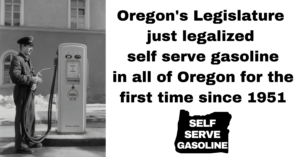
Oregon outlawed self serve gasoline in 1951.  The trend for self serve as a business model started in California.  The first self serve retail gas station was in 1947 in Los Angeles.  The restriction on serving your own gasoline had a basis in public safety and was not allowed by the Fire Codes in most states.   With the potential for large self serve gas stations coming Oregon made a decision to prevent the widespread adoption on a fire safety basis.

Inside the Oregon fuel industry there are anecdotal stories of the full serve mandate law coming from a coalition of consumers and local fuel sellers resisting bigger entrants to the market with huge numbers of fuel islands and few employees.  Full service gas was viewed as a competitive advantage for local gas stations that was also preferred by consumers.  In the 1980’s a few attempts were made to legalize self serve in Oregon and was resoundingly shot down by the public.  The growth of Oregon’s cardlock industry came out of this as business allowances were made for self serve gasoline with 24-7-365 access to fuel.

HB2426: SELF SERVE IS A CHOICE, NOT A REQUIREMENT

Talk to any longtime born and raised Oregonian, Full Serve Gas is a cherished right of Oregon residency.  This right will not be extinguished with this law.  Self Serve in the more populated parts of Oregon will require Full Serve as a choice.  The point of this law is to get wider service available for gas stations currently forced to close, operate at reduced island capacity, or reduced hours due to labor shortages.

BACKGROUND ON GASOLINE RETAIL IN OREGON:

Oregon has required gasoline be served by an attendant at retail gas stations.  Gasoline is a Class 1 Flammable Liquid.  Under a safety basis this fuel was restricted to only professionals and businesses to dispense it.  Diesel, which is a Class 3 Flammable Liquid because it catches fire at a higher temperature was not restricted from self serve.

In 2015 the more rural and less populated counties of Oregon were allowed to use self serve gasoline as a strategy to increase service hours at gas stations.  In 2017 this policy was expanded to more rural counties in Oregon.  The rules required options for full service gas service during predictable hours for those wanting or needing service.  During the COVID lock downs due to extreme labor shortages as well as fear of human contact self serve was allowed statewide.  With this House Bill 2426 all of Oregon can choose to serve gasoline themselves if they want.

HB2326 – THE OREGON SELF SERVE LAW:

HB 2326, as a statute, has a great deal of legal detail.  We have paraphrased and simplified the language of HB2326 as it relates to the self serve subject below:

A gas station selling gasoline at retail may not designate more than the same number
of fuel pumps for self-service as are available for full service.

Retail gas stations must:
Post signage clearly showing what fuel pumps are self serve and which are full service.

Designate at least one person to be available to pump fuel for those needing full service.

In the more populous counties of Oregon, any gas station must provide a Full Service attendant during any hours they offer the choice of self serve gasoline.

Gas stations opting to allow self serve fuel pumps cannot charge a different price for Full Service or Self Service gasoline at those pumps.

If you have any questions about Oregon’s Self Serve legal change please feel free to reach out to Star Oilco.  If we do not have the answer to your questions we will find it for you.


Graphic of fleet trucks on yellow background representing fuel theft prevention
5 Strategies to Control Fuel Theft and Track Fuel Spending 1024 554 Star Oilco

5 Strategies to Control Fuel Theft and Track Fuel Spending

How to Control Fuel Theft and Track Fuel Spending in your Business.

With gasoline and diesel costs high, theft is on the rise.  Grab control of your fuel.

Set controls and protections on spending and save money by stopping fuel theft.

Star Oilco is an independent Franchisee of Pacific Pride

5 Strategies to lock down your gas card

Simple monitoring processes can mean thousands of dollars.   Every dollar needs to stretch a little more.  Control your fuel spending.

Protect your business by setting controls and monitoring systems.  As fuel prices have spiked up, it has become a big priority for many.  What was an inconvenience of internal fuel theft of a few hard to replace employees is becoming a very costly problem.  Below is a strategy of how to grab control of your fuel cards.

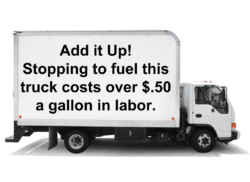
Use Star Oilco to secure yourself from that fuel theft while also saving on your cost of fuel over retail. Oregon and Washington have some of the highest minimum wages in the U.S.  As the minimum wage and regulations increase, so do the costs at retail gas stations. This is doubly so in Oregon, where you are paying the gas stations employee to fuel your tank and the employee to be there. We can save you money and significantly reduce your risk of fuel theft while also getting your drivers out of retail gas station lines.

Keep a Good Employee Honest

Just like your business experiencing the squeeze of high gas prices, so are your employees commuting to work.  Sometimes when things get tight an employee may make poor choices.  Maybe they use a company credit card to pay a bill, or they fill up their personal vehicle.  Simple controls on your fuel cards could eliminate these issues.  Losing a good employee because they made a bad decision can cost a company a lot of money. Remove the temptation and secure your fleet cards.

Fuel Cards Designed for the Customer Big or Small

Whether your an owner/operator or you are managing a large fleet of corporate vehicles using commercial cardlocks can help you save time and money.  Stand-alone commercial-only Pacific Pride and CFN sites in the northwest are a real resource for businesses. They speed up the labor associated with fueling and significantly lock down the chance fraud or theft will occur on your fuel card. Stand-alone sites limit access to convenience store items so employees won’t be tempted to spend time browsing and make purchases on the company credit card.  If you need even tighter control we can send an email every time your driver uses your Pacific Pride card and a CSV file with your transactions if you have a 3rd party tracking software.  In addition, your bill can be organized by vehicle or driver. Easily identify who, what and where your employees are filling up.

With Pacific Pride and CFN stand-alone commercial cardlock sites, there are other benefits beyond just the convenience. The biggest difference is that these commercial cardlock sites are built with security in mind. Retail stations are engineered to sell as many products as possible to those pulling up for gasoline. Commercial cardlock sites are designed for commercial users who seek the fastest fueling experience. That is a big difference between the two.

Who can get a Pacific Pride or CFN Fuel Cardlock Card?

All you need to access Pacific Pride sites in Oregon is a business license and use over 900 gallons of total fuel a year. CFN commercial cardlock sites have the same requirements. When you work with a company such as Star Oilco that can issue both you only need a total of 900 gallons – not 900 each set.  If you are a business using a commercial quantity of fuel, you qualify to self-serve gasoline and you can stop paying your employees to shop at the most expensive retail gas stations with the best mini-mart selection. Late night fueling becomes easier and less expensive and you can get them back on the road 24-7 and usually without a line to wait in.


What Do You Need for Fueling Cards in Washington or any other state?

If you drive into Oregon and want to use gasoline, you still need the same requirements as stated above. If you don’t need access to Oregon gas stations it is much easier to get a fuel card.

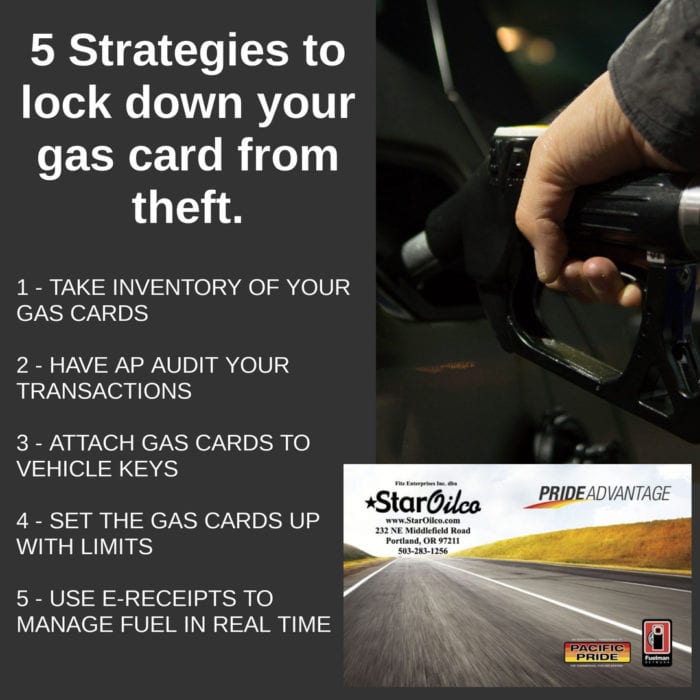
Top 5 Strategies to lock down your gas card from theft.

Regardless of what system you choose, use these best practices in your organization. Simple little changes to how you approach fuel cards will greatly reduce any opportunity for theft.

Get out of the gas line

Gas Card Strategy #1

TAKE INVENTORY OF YOUR GAS CARDS – Star Oilco can help with this with an annual review of all of your cards, the last time they were used, and who used them.   Know who has your cards! Every year take inventory of what cards you have and who is using them. A clear card policy implemented by Human Resources or your Dispatcher is a good way to track what employees (or vehicles) have what cards. Star Oilco performs an annual card audit in conjunction with our Oregon Fire Marshall audit.

We’ll gladly supply a list of cards that you have and when they were last used. We can line up a list of active cards with your employees and make sure there isn’t a lost or unused card out there. Using this list, pass a clip board around asking each employee with a fleet card to confirm they still have that card and initial a confirmation that the card is still in their possession. You would be surprised how individual cards can float between employees as it is easier than asking for a new card.

Gas Card Strategy #2

HAVE ACCOUNTS PAYABLE AUDIT YOUR TRANSACTIONS – Star Oilco can provide you with E-Receipts letting you know every time fuel is purchased by an email making it easy in real time.  Review your transactions regularly for strange transactions such as: multiple transactions per day on a single vehicle or card, switching fuel types, and refuels when your business isn’t open. Reviewing your bill, you’ll want to look for transactions that occur outside of normal business hours and days or if certain vehicles are fueling more than once a day these can be indications of theft. An additional indicator is if fuel is being bought outside of your service area. Some of the most common times of day for employee fuel theft are early morning on the way to work (before you open) or after the bars close after midnight.

Gas Card Strategy #3

ATTACH GAS CARDS TO VEHICLE KEYS – Star Oilco can provide you a turnkey program for this strategy with our fleet card program at no additional cost.  By assigning each vehicle in your fleet with its own card is a great practice that communicates this is a card for business and comes back to the business not their own wallet. Put your Fleet Cards on the key ring dispatched with the vehicle. Each driver is then assigned a number that can be used on any vehicle in the fleet. This way you know exactly who is using the card and which vehicle is being filled. To limit a risk of a stolen card, restrict individual card ownership to management and maintenance. Everyone else should have cards directly connected with a vehicles license plate, so it is obvious if that card goes missing.

Gas Card Strategy #4

SET THE GAS CARDS UP WITH LIMITS –  When you assign a card to each vehicle in the fleet you can set limits based on the vehicle. A gasoline vehicle only needs access to gasoline. If your tank size is 20 gallons, that card should be limited to 20 gallons per transaction. Continue to program your cards for the vehicles they are attached to. You can also restrict a card to ensure no one accidentally buys expensive premium or worse, puts the wrong fuel in the vehicle. Reducing the amount of time they can use a card a day limits exposure to theft. A vehicle that never drives more then 50 miles in a day shouldn’t need to fill up more then once a 24 hour period. This reduces the opportunity for theft and also makes theft obvious when the limits are hit. You can also add limits on zip codes, states, and times of days. If someone does steal a card, they would be limited by the time, location, and purchase amount, ensuring that your theft exposure is a few dozen gallons instead of thousands of dollars.

Gas Card Strategy #5

USE E-RECEIPTS TO MANAGE FUEL IN REAL TIME – It’s the 21st century so manage in real time. You can set-up cards to email you based on each card or, if you have one specific one you are are worried about, that card can be set to email you or your fleet management in real time. Better yet, if theft is occurring, you will see it immediately and be able to react. Not only will this lock down your gas card’s security, it will also allow you to address mistakes relating to efficiency. Owners and dispatchers also use this to see where the driver is and if they are where they said they were when they are fueling. Instant feedback and communication is critical to change bad behavior of drivers who mean to do well but may just have made a simple mistake.


Need to lock down your gas card from fuel theft?

Call Star Oilco, we can make it simple.

Star Oilco can help you field all of these best practices. Our motto is “Keep it Simple” and we are here to make this easy. Feel free to reach out and see what Star Oilco can do for your fleet to upgrade its fleet fueling security.

To download a white paper on these Pacific Pride fuel card security feature best practices, go to our Stop Fuel Theft page.


Star Oilco is an independent Franchisee of Pacific Pride

Contact Form

  • This field is for validation purposes and should be left unchanged.
Pacific Pride commercial fuel station with service vehicles fueling
7 Ways to Stop Fuel Theft Before it Happens 1024 556 Star Oilco

7 Ways to Stop Fuel Theft Before it Happens

STOP FUEL THEFT

IN YOUR BUSINESS TO REALLY SAVE ON YOUR COST OF DIESEL AND GASOLINE

Save money by managing  your diesel and gasoline fleet cards. Know who, how, and where fuel is bought.

In the new world of diesel and gasoline over $5 you need a strategy to control where and how fuel is bought by your business.

Controlling your fuel expense can be time consuming and vital for any business. We recommend approaching it from a Human Resource management perspective.

Seize control of the use of fuel cards with real time feedback:

  • Who is buying
  • What type of fuel
  • Where it’s bought
  • When are they buying

Set a clear standard and make sure you put controls on your fleet cards to ensure you keep honest employees from doing something that requires discipline.  Below are some of the best practices for controlling your fleet’s fuel purchases.

7 Ways to Stop Fuel Theft Before it Happens

Why Pacific Pride and CFN Fleet Cards?

Often we are asked how to save money on fueling a small business fleet.  Usually the biggest cost isn’t the pennies you save per gallon, but the gallons you can save by stopping theft.  To save money on gasoline, make sure you aren’t paying for thieves to use your small business fuel cards.

Every fuel business seeks to avoid fuel slippage – the loss of fuel due to theft, waste or buying the wrong and/or more expensive fuel product. How can you secure the slippage, once and for all?  These steps not only help with managing employees, but they can help you spot unusual purchases from stolen or skimmed cards. Skimming is when thieves hide a device that copies cards information and pin information. Thieves then clone the card and can attempt to use them in other locations.  Using fuel cards vs Credit cards can save owners thousands of dollars.  Employees have less access to non-authorized purchases and thieves can’t use fuel cards to purchase other items.

Star Oilco can help you establish a program to eliminate fuel slippage that includes an easy-to-use management process and enforcement of a “No Tolerance Fuel Theft Policy.”

Star Oilco has a simple and effective approach designed to empower you to easily manage your fuel cards.

Cardlock and secure fleet cards have been around since the 1970s and oddly enough, our competitors fail to field them properly. Star Oilco is here to help and would like to give you some simple and efficient practices to eliminate fuel slippage. We have an easy to implement strategy to lock down your cardlock and fleet cards in order to knock out the opportunity for fuel theft in your business.

Fuel cards assigned to the vehicle not the person

By attaching the fuel cards to the vehicle and not the human being, you immediately break the driver’s belief that the company is providing fuel to them and not the company vehicle.

That’s why we recommend you attach the fleet card to the vehicle key chain and NOT in a driver’s wallet. For additional security, employ a Corporate Fleet Card that is secured by a PIN.  Star Oilco recommends either Pacific Pride or CFN, both of which are in the Fuelman Network. Star Oilco will provide you with a keychain designed to hold up to two fleet cards.

Each Person has a secret PIN

Use a “Floating PIN” system where every member of the team has a secret PIN that is only to be used by them.

We recommend attaching fuel cards to the vehicle key chain and having each driver use their own secret PIN to purchase fuel. With this secret PIN, Star Oilco’s Fuel Cards track their name with every fuel purchase. Their name will appear next to the transaction on the bill and on an E-Receipt confirming who bought what, when, and where. This personalizes all fuel usage. Many companies already have a secret PIN policy around time cards and clocking in and out of work. This Best Practice stacks well with that.

Enforce a "No Tolerance Fuel Theft"

Implement and enforce a “No Tolerance Fuel Theft Policy” that every employee must sign.

Policies vary but should generally include language that requires the use of a fleet card for fuel purchases, states that PIN use is tracked by employee, confirms that employees are held accountable for any wrongdoing associated with their PIN and acknowledges that fuel theft will lead to immediate termination.  Star Oilco’s approach documents and provides evidence as well as real time knowledge for you to respond and ensure a fuel theft culture doesn’t grow in your business.

If you have fuel thieves in your business, make sure you document it at a Human Resource level.  In many states a first time a fuel thief is caught they may still qualify for unemployment when dismissed.  A No Tolerance Fuel Theft Policy when you on-board a new employee protects your from thieves getting away with it at the expense of your business.

Set-up E-Receipts for purchases

Use E-Receipts to reinforce your fuel policy.

An E-Receipt is a real-time email showing who bought what fuel, when and where, as it happens. Make sure this E-Receipt is going to several levels in your office, where employees are paying attention to what your drivers are doing.  If your fleet knows that their fuel purchases are completely transparent, they will think twice before doing something convenient for themselves over what the company needs. When a driver buys the wrong product, or was getting fuel out of route, you can follow up immediately to reinforce your fuel policies without waiting for a bill to show up at the end of the month. This is a great tool to spot additional transactions that may not be coming from your employees.  “Get an email every time your fleet stops for fuel” is another article that talks about this if you would like more information.

Limit hours and locations for Usage
Star Oilco can limit your fuel cards to work only during your business hours and/or within your territory.

Whether your territory is an entire state or limited to specific zip codes, you can define where your fleet can get fuel and where they cannot. And to avoid late night or early morning fuel theft, consider disabling your fuel cards during specified periods of the day or week, so that your cards don’t work when you don’t want them being used. This can easily be done as you need it by either contacting Star Oilco and asking us to do it for you, or by logging into your online Pacific Pride / CFN portal to set these restrictions yourself.  Cards with limits are less attractive to thieves the more you can limit the usage the less appealing your card is for skimming thieves.

Limit the amount of fuel per purchase

Set up your cards to only allow for a certain quantity or specific grade of fuel.

Consider limiting the volume of fuel purchased to match the size of a vehicle’s tank. Also, limit the number of transactions per day as well. That way, if for some reason that card gets stolen and someone has a working PIN, their theft is thoroughly limited.

Review your bill - Annual audit at least

Ask your vendor to review of all the cards and PINs you’ve used throughout the year.

Star Oilco seeks to do this annually. As per the state of Oregon (where Star Oilco is located), we receive a Fire Marshall audit every year and as they audit our cardlock records, we do the same and review every card and PIN for that year. You should do this too and Star Oilco can help. We recommend turning off all cards that are not being regularly used, which also allows you to adjust other details as needed. If you would like more information about this ‘What’s in a “Keep it Simple Fuel Audit”’ tells a little more about how we can review your current bill and simplify what you’re spending, where you’re spending it and give you tips on how to save some money.

Why use Commercial Cardlock over a retail gas station fleet card?

Commercial Cardlock locations in the CFN and Pacific Pride network are designed for business.  Fast and easy in and out to save your business on labor as well as far more competitive prices especially on diesel.  In Oregon where self serve gasoline is limited there are rules to using fleet cards at stand along cardlock locations.  Here are the rules involved with getting a Pacific Pride or CFN commercial cardlock card which enables you 24-7-365 access to stand alone commercial fuel stations.

If you would like to learn more fill out the following form.

Contact Form

  • This field is for validation purposes and should be left unchanged.