
Posts Tagged :

Bulk Fuel

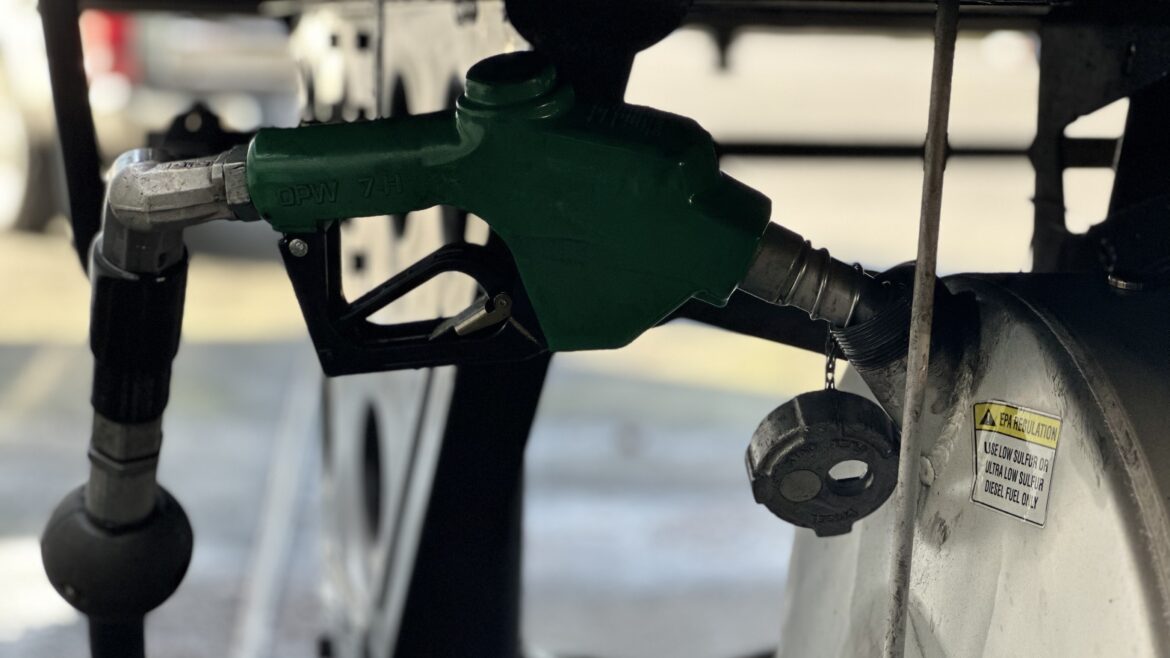
Green diesel nozzle filling off-road fuel tank labeled for ultra low sulfur diesel
Every Question About Off-Road Diesel 1024 768 Star Oilco

Every Question About Off-Road Diesel

Got questions about red dyed diesel? We have answers!

If you don’t find the answer you’re looking for related to red dyed diesel (or off-road diesel) reach out to us directly and we’d be happy to help answer your questions.

Red Diesel is off-road diesel, in the United States this fuel is denoted with a red dye. The dye marks this as fuel for off-road equipment and vehicles and as such it doesn’t have road fuel taxes included in the priceThis dye takes a great deal of clear fuel to dilute so it makes it very obvious if an on-road vehicle has been using off-road untaxed fuel. Tax authorities can and do check for vehicles using off-road red diesel in on-road vehicles. They do this by using a black light to spot any residual presence of dye in the fuel as well as at key places in the engine compartment.

On-road diesel is clear or slightly green. Refineries place a green dye into diesel fuel which is obvious if fuel is freshly dispensed into a bottle to observe its color. As fuel ages this dye fades to yellow or darker colors. Part of a visual observation to inspect diesel fuel quality is to check the fuel for a “bright” appearance with the slight green dye being a giveaway that the diesel is fresh and in good condition.

Nearly all diesel has dye in it. Typically when talking about dyed diesel, we’re referring to a red dye added to off-road diesel. Off-road diesel is normally used for heating oil, construction fueling, agricultural use, and other off-road equipment not used on the highway system where fuel taxes would be required by law.

comparison chart showing difference between off-road diesel and on-road diesel fuel in Portland OR

Why is diesel dyed?

Diesel is dyed in order to denote if it has paid road tax or not. On-road diesel in the United States usually has a light green tint to it. Off-road diesel has a red dye to denote it has not paid road taxes as required by all states and the Federal government.

What is off-road diesel?

Off-road diesel is diesel fuel dyed red to show it is untaxed and available only for off-road fuel uses such as construction fueling, equipment never used on a public road, agricultural use, heating oil, boiler fuel, and other non-taxed diesel fuel uses under state and Federal fuel tax law. In Oregon, with proper paperwork, some off-road uses can buy on-road fuel with the Oregon state tax exemption.

What is farm diesel?

Farm or diesel for agricultural use is off-road diesel that is not charged on-road fuel taxes. Agricultural use fuel is a tax-exempt use of diesel fuel. If diesel is burned on a farm and can be tracked for such, taxes can be avoided. Farms are allowed to receive clear diesel without road taxes charged on it in Oregon. Often it is dyed red to denote it is tax free. In Oregon, where P.U.C. for trucks over 26,000 GVW pay a weight mile tax instead of a per gallon state road tax, some farms will track their use of clear diesel so they can file for Federal road taxes on off-road usage.

Contact Us Today To Order Your Off-Road Diesel
Star Oilco technician testing off-road diesel fuel quality with a funnel and filter on-site in Portland OR

All diesel sold in the United States typically has some dye in it. On-road diesel usually has a slight green tint to it. This is a dye added by either the refiner or terminal provider with the fuel. Off road diesels are dyed red to denote that the fuel is untaxed and is for use in off-road purposes only.

Solvent Red 26 and Solvent Red 164 are the allowed dyes prescribed by the United States Internal Revenue Service for marking diesel as for un-taxed off-road use only.

Off-road diesel is classified as a Class II combustible liquid by the National Fire Code. A flammable fuel is one with a flash point below 100 degrees F. Diesel’s flash point is between 126 and 205 degrees F (typically assumed to be about 160 degrees F)That classifies it as a Class II combustible.

Fuel taxes charged is the big difference between the two fuels. All on-road diesel is clear or greenish in color to denote it is both ultra-low sulfur diesel and the on-road fuel taxes associated with using it to power a highway vehicle have been paid. Dyed fuel means that fuel taxes are not paid and that the fuel can not be used to power a vehicle on a public road.

It depends on the sulfur content of the fuel and the year/engineering of the truck.  If your dyed fuel is ultra low sulfur it is typically the exact fuel as on road diesel with an added injected red dye to denote it is untaxed for off road use only.

Red Dyed fuel can occasionally be low sulfur or high sulfur content.  That sulfur content will create real issues with a  post 2007 pick up or commercial diesel truck with a tier 3 or tier 4 emission system.  Most diesel in the US today including off-road diesel is ultra low sulfur (under 15 ppm sulfur). Low sulfur diesel is over 15 parts per million and can be as high as 500 ppm.  High sulfur diesel is over 500 ppm and can range in the thousands of parts per million.  That sulfur means far more soot and black smoke out of your tail pipe.  If you are “rolling coal” out of a modern diesel that’s bad for the truck as well as violates emissions laws in the US.  Similarly if you are using a 2007 or newer truck it will have very tight tolerances on the fuel injectors which can more easily coke up if running a higher sulfur or even dirtier specification diesel.  It is recommended to use ultra low sulfur fuel in all equipment.

It is illegal because diesel used for on-road use has taxes to pay for those roads. These taxes are charged at a federal, state, and municipal level depending on where you are at.  Off road diesel has a red dye injected into it at the time of loading the fuel delivery truck.  This loading of a fuel truck at a terminal is the point of taxation and tracking for diesel down stream in the economy.  If you see a fuel with a red dye, it is untaxed.  To use this in an on-road vehicle if you get caught can result in huge fines. In Oregon it could be as much as $10,000 a day for use of red dyed diesel in an on road use.  It is not uncommon for scale stops of commercial tanks to flashlight a saddle tank and check for any evidence of dye in fuel at a DOT scale stop.

Is off-road diesel or dyed diesel high sulfur diesel?

Dyed diesel (or off-road diesel) can be high sulfur fuel. High sulfur diesel is defined as diesel fuel with over 500 parts per million of sulfur content.

Is off-road diesel or dyed diesel ultra-low sulfur diesel?

Off-road and dyed diesel fuels can be ultra-low sulfur but are not guaranteed to be. There has been a consistent push to reduce sulfur in all fuels in the United States as led by EPA regulation. In recent years, EPA standards require off-road construction and agricultural equipment to have an emissions system that allow ultra-low sulfur to operate without major problems. So today’s off-road diesel being delivered is ultra-low sulfur. If you have a tank with old stored dyed red diesel fuel in it, you can assume it has a higher than ultra-low sulfur content.

What is dyed ULSD fuel?

Dyed ULSD fuel is ultra-low sulfur diesel with a red dye in it to denote that it is for off-road or untaxed purposes only. These purposes are typically for heating oil, construction fuel, agricultural fuel, generator fuel or other off-road uses. The “ULSD” is an acronym for ultra-low sulfur diesel.

Dyed diesel can be either #1 or #2 diesel. Both fuels require a red dye in them to confirm they are untaxed and cannot be used for on road fuels.

Dyed diesel and off-road diesel can be kerosene (which crosses as #1 diesel fuel), but not necessarily. Do not assume a dyed fuel is kerosene, which is a rarer fuel. Kerosene is different than #1 diesel for one characteristic: its confirmed ability to be absorbed and taken up by a wick. All kerosene is #1 dieselNot all #1 diesel fuels are kerosene. The same goes for dyed diesels and off-road fuels. All dyed kerosene is dyed and off-road diesel. Not all dyed fuel is kerosene.

Yes, dyed diesel and off-road diesel are stove oil. Typically a #1 stove oil or #2 stove oil, similar to diesel. Historically stove oils had a slightly different set of specification concerns which is why they were called “stove oils” versus diesel. When petroleum refineries distilled crude oils to get diesel range fuels, it was less exact than it is today with hydrocracking technology. Today with both oil refinery technologies and the EPA emission regulations, the number of distillate range fuel specifications is far more consolidated in order to ensure compliance with EPA and state rules. If your heating appliance is demanding stove oil, it typically needs a #1 stove oil or #1 kerosene product. This product is expected to produce less soot and therefore to work better in a pot stove type of application. The most modern stove oil appliance in the U.S. are Monitor and Toyostove thermostatically controlled direct vent heaters.

Depends on the year of your truck, and we assume you mean red dyed diesel fuelFirst, using dyed diesel, off road diesel, or heating oil in an on-road vehicle is against the lawIf you are caught in Oregon the fine can be as big as $10,000 and the State of Oregon does aggressively pursue this type of tax avoidanceBeyond the legal use of off-road fuelTypically on the west coast dyed diesel is ultra low sulfur diesel. Which means it will not cause maintenance issues if burned in your engine.  Dependent on the age of the dyed fuel, or if it is actually a heating oil, it might be high sulfur or low sulfur fuel. If you use that in a post 2007 engine with a particulate trap it will have serious maintenance issues if you use that fuel.

Yes, dyed diesel and off-road diesel are acceptably used as heating oil. Dyed diesel and off-road diesel these days are typically ultra-low sulfur diesel. Heating oil can be low sulfur or high sulfur in content under EPA and most state laws. So heating oil sometimes cannot be dyed diesel (when used for off-road equipment or agricultural use) but dyed/off-road diesel can always be used for heating oil and conform to the necessary specification required by heating oil furnaces.

Yes! But in today’s ultra-low sulfur market, most off-road diesel is below 15 parts per million. If your equipment requires ultra-low sulfur diesel, it is a good practice to confirm that is what fuel you are getting. Some low sulfur diesel (under 500 parts per million sulfur fuel) and high sulfur diesel (over 500 parts per million sulfur) is still in the marketplace used by heating oil, boiler systems, locomotive, and marine applications.

Off-road diesel gels at cold temperatures. At colder temperatures, wax crystals begin to form and fall out of the diesel, clogging filters and gelling up the fuel. Also, the water and naturally held-in diesel will ice up and obstruct filters. This phenomenon is called diesel gelling.

All diesel fuels will gel if it gets cold enough. Both a formation of wax crystals and ice forming in your fuel will obstruct filters and take your equipment down. Rule of thumb: with no treatment your diesel fuel should operate without any issues above 20 degrees Fahrenheit. Below 20 degrees Fahrenheit, you will want to ensure your vendor is treating the fuel for winter use to ensure it will operate down to -20 degrees FahrenheitIf you are facing temperatures below that, you will want to confirm with your vendor that they are testing that fuel to operate below -20 degrees Fahrenheit.

Why does the government require diesel be dyed red?

From a informational pamphlet from the US IRS on untaxed fuel: 

“The federal government requires dyeing of untaxed diesel fuel and kerosene for two reasons. To help reduce tax evasion by identifying fuel on which excise taxes have not been paid, and to help reduce air pollution by identifying fuel not suitable for use in highway vehicles.”

Does off-road diesel go bad?

Off-road and dyed diesel do age and can go bad. All diesel fuels adhering to ASTM specification should be safe for storage up to a year without additional treatment and testing. If you are storing diesel for long term use, it is a good best practice to treat the fuel with a biocide and oxidative stabilizer to ensure that the fuel stays within specification and nothing will begin to grow in your fuel tank. The biggest enemy of long term diesel storage is water and dirt entering the fuel through a tank vent. As temperatures change a tank will breath pulling in air and moisture from outside. Ensuring there is no water in the tank and that outside contaminants can’t get into a tank are how keep your fuel within specification.

Untreated, you can assume that diesel fuel is good for a year. If treated with a biocide to prevent biological growth from growing in the tank, you can expect diesel to be good for two to three years. After two to three years, diesel begins to show age as it loses its brightness when sampled. After three years you will want to sample and test the fuel to ensure it is within specification for reliable use.

Fuel taxes vary by state and sometimes even local municipality. With off-road diesel, usually the only taxes to consider are sales taxes on the fuel. In Oregon there are no taxes on dyed off-road fuel. In Washington state there are sales taxes for dyed-diesel charged on top of the sale price of the fuel. (NOTE: If you use clear diesel in Washington state there is no sales tax as the road tax is being charged.)  If you are curious for a more in depth answer Star Oilco has a full explanation of Oregon Diesel Taxes (a unique system in the United States for local fuel tax collection of trucks over 26,000 GVW).

Yes. If you are consuming dyed diesel and are not paying for the on-road fuel taxes in Washington state, the sales tax is charged. If you use clear fuel with road taxes attached to the fuel, the sales tax is not charged. For more on Washington fuel taxes see the Washington Department of Revenue. 

Your petroleum distributor has some small taxes (under $.01) attached to the fuel they buy at the wholesale terminal level. Those taxes being the U.S. EPA Superfund cleanup and the “LUST” or Leaking Underground Storage Tank cleanup fund. Beyond that, there are no taxes (Federal, state or local municipality) on fuel used for off-road diesel in Oregon state.

In Oregon you can buy clear fuel exempt of Oregon’s state road taxes. The qualifications for using clear diesel Oregon State tax exempt are the following: 

vehicles issued a valid ODOT Motor Carrier permit or pass (weight receipt) 

vehicles issued a valid Use Fuel User emblem by the ODOT Fuels Tax Group 

vehicles registered to a US government agency, Oregon state agency, Oregon county or city, and displays a valid Oregon “E” plate 

vehicles, or farm tractors/equipment only incidentally operated on the highway as defined in ORS 319.520 

vehicles or equipment that are unlicensed and/or used exclusively on privately owned property 

What happens if I use dyed diesel in an on-road vehicle?

If you get caught in Oregon, a $10,000 a day fine can be levied. We have seen fuel tax cheats get caught repeatedly so be aware Oregon is on the look out for any amount of dye in the saddle tank of an on-road vehicle. If the fuel you use is low sulfur or high sulfur fuel and your vehicle has a particulate trap, you will have maintenance issues with the emission system of your vehicle.

Only if that pickup is dedicated to an off-road use. If you plan to ever use that truck on a public road (even to cross a street), and dyed fuel is found in that vehicle, fines up to $10,000 per occurrence can (and are) levied by state regulators. If you have a closed facility or large farm and are not registering the vehicle for on-road use (so the pickup must not leave the site), you can use off-road diesel as the vehicle’s fuel. If you have license plates and it’s permitted for on-road use, any regulator spotting dyed fuel in that truck will presume it is an on-road pickup.

Typically when checking for illegal use of dyed fuel, regulators will sample from the tank or spin the fuel filter and observe for obvious dyed fuel. If the fuel is clear (or even slightly pink) and they suspect dyed fuel was used in the vehicle, they can apply a special black light that will glow an obvious color denoting dyed fuel had been in contact with the vehicle. They will shine that light on the filter, fuel tanks, and various parts in the engine compartment that would have come into contact with the fuel. If those areas denote even a mild trace of the red-dye used in off-road diesel, they will cite the vehicle operator. There are kits sold online for filtering dye out of fuel to remove the colorThose kits will not remove enough dye to avoid detection by these lights.

Off road diesel is dyed red to show that the on-road fuel taxes are not paid or that it is a tax-free fuelThe Federal Government and State Government’s have fuel taxes for on-road fuel usage to help pay for the roads we all drive onIf you are using diesel for a non-road equipment, machinery, or heating/boiler applications the fuel taxes are exempt and the fuel is dyed to ensure it’s tax free status is immediately seenRegulators in a road side or site level inspection can also shine a black light on specific places in a vehicles system to denote if dyed fuel is being used in violation of the law as well.

In the Pacific Northwest at the current moment? Usually nothing. Heating oil is dyed diesel. Most petroleum distributors are selling the mainstream dyed diesel specification for use as heating oil in order to lower the overall cost of the fuel. There are different ASTM specifications for heating oil and dyed diesel dependent on the state you buy it in. Heating oil’s specification has wider tolerances than diesel specifications as furnaces and boilers can handle dirtier, lower quality fuels than off-road equipment with a particulate trap. Heating oil is always a diesel fuel, but sometimes dyed diesel for off-road equipment has a different specification than heating oil. For example, in Oregon a 5% biodiesel or 5% renewable diesel mandate exists for any dyed diesel fuel used in off-road equipment. This biofuel mandate exempts heating oil and boilers. So heating oil can be biodiesel free but off-road diesel for equipment cannot.

Get Your Off-Road Diesel Delivered Today
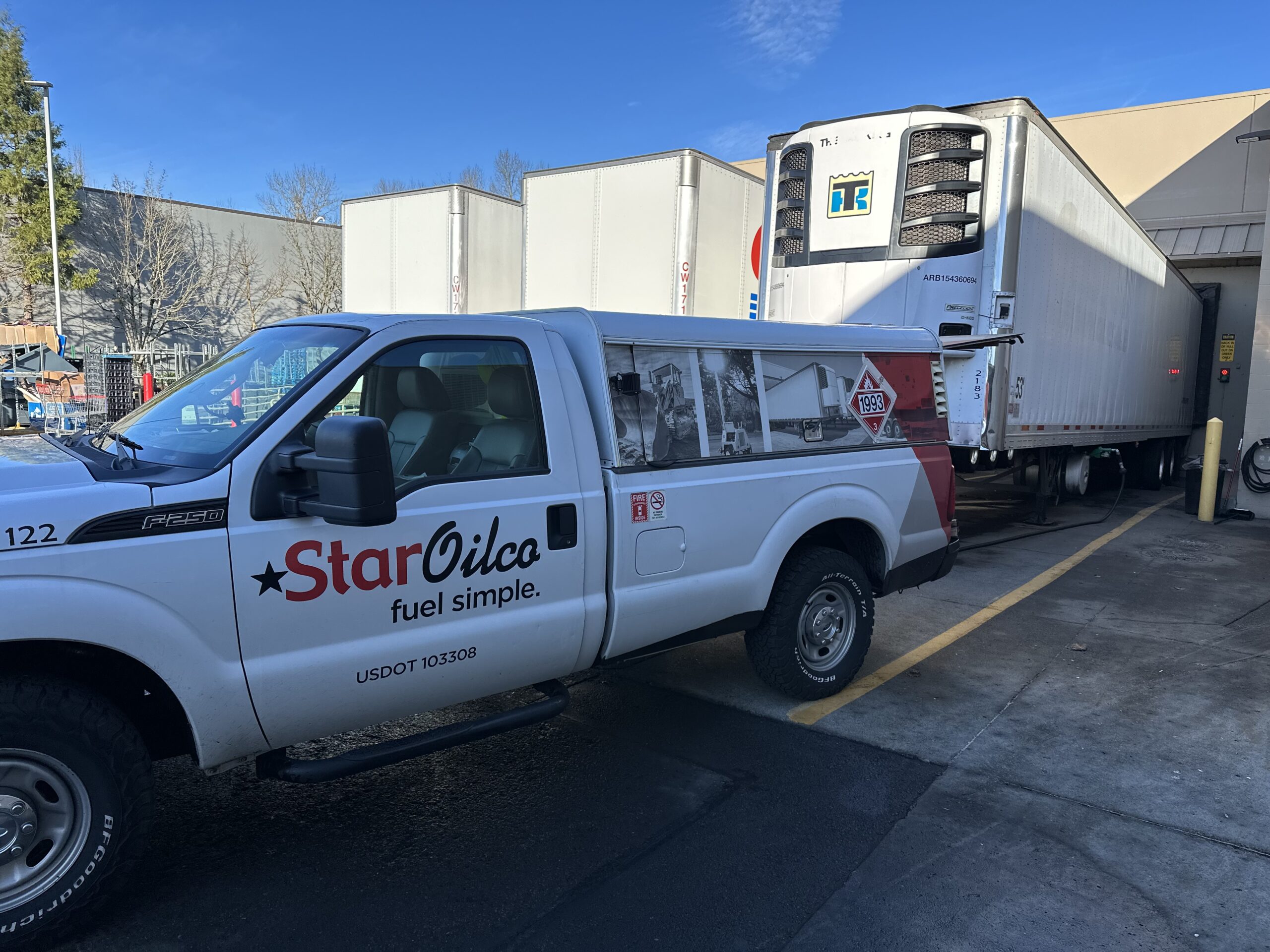
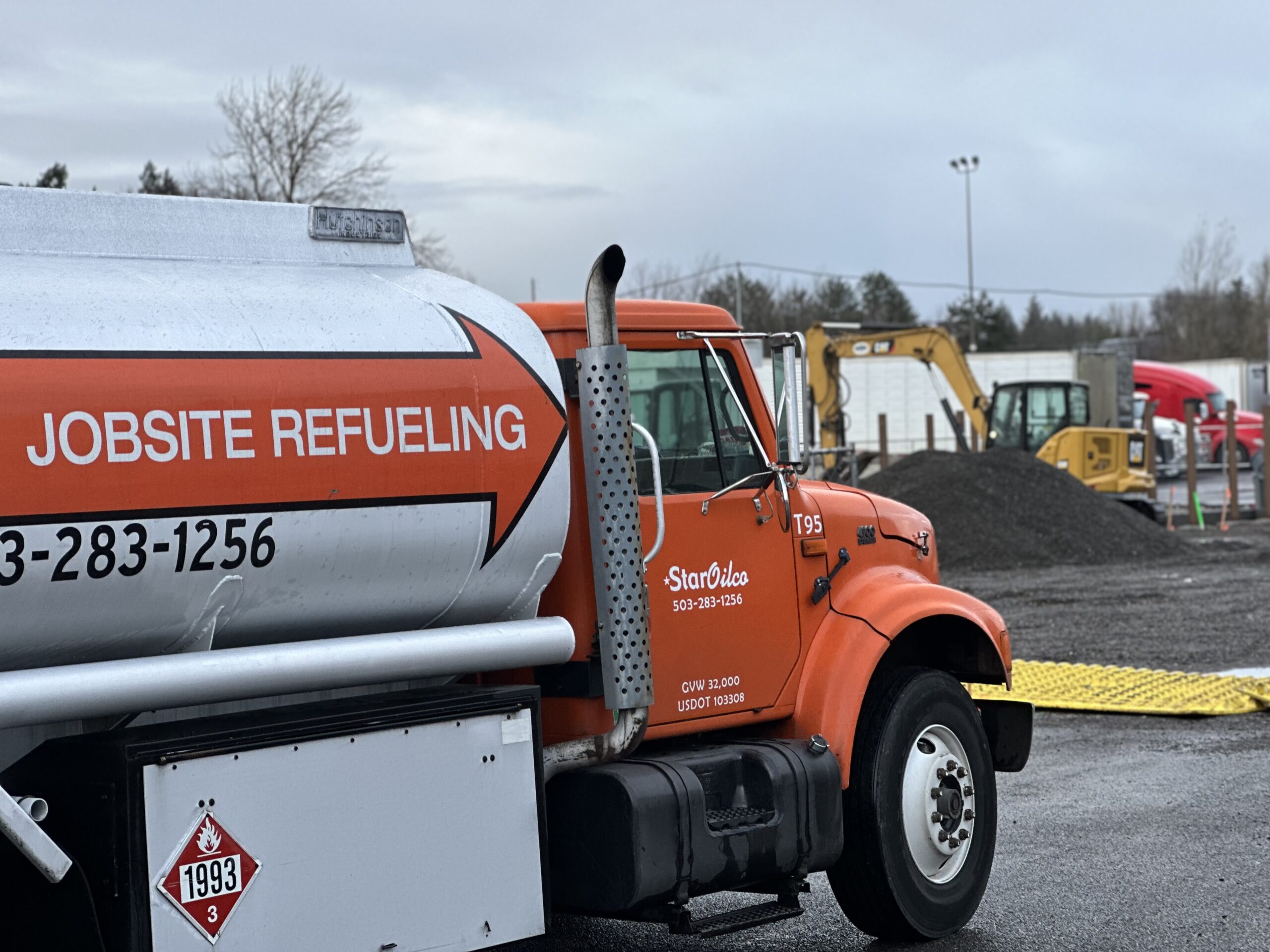
Star Oilco truck refueling off-road diesel at a job site in Portland OR

Can refrigerated trailers or “reefers” use dyed diesel even if they are attached to a truck moving it on the highway?

Yes, refrigerated trailers are off-road equipment. The diesel fueled refrigeration trailer is off-road equipment as its engine is not powering something actually driving down the road. These trailers can use any ultra-low sulfur diesel fuel (dyed or clear). If using on-road clear fuel in a refrigerated trailer, if you track and keep proof of the on-road fuel being used in the off-road piece of equipment, you can file for those fuel taxes back. Proof is required though so consult with your CPA or accountant.

The first step is to set up an account with Star Oilco. It’s easy to pay through a simple credit application or by placing a credit card on the account. Oregon and Washington are highly regulated when it comes to fuels such as diesel. We need to account for who is ordering and getting fuel (yes, Oregon even checks sometimes as the DEQ tracks every gallon of diesel moving into the state). Determine if you want a loaner tank onsite or a keep-full service plan. Star Oilco will deliver bulk or wet hose fuel your job site on a regular schedule. We are here to make it as easy as possible for you to focus on your project, not fueling. Let us know what you want: we will keep it simple and make it easy for you.

If you are storing off-road or dyed diesel for longer than six months you will want to make sure it is stabalized. Star Oilco recommends Valvtect Plus Six as the fuel additive you want to useOur recommended fuel additive is a fuel microbiocide with stability additives made for diesel long term storageThis kills and prevents the growth of biological “hum-bugs” in your tankBacteria, yeast, and algae can grow in your fuel tank. Usually in a small amount of water that collects in the bottom of the fuel storage tank (be it the bulk tank you  fuel out of or the saddle tank on your equipment).

There are several ways to do this.  What you will want to do varies based on how much water and what it is in.  If you are dealing with a large bulk fuel tank you want to definitely pump the tank bottom to get the water out.  If you are seeing extreme biological activity (Hum-Bug growing in your tank) you want to do a kill dose treatment on that tank. It might not be a bad idea to also spend a few thousand dollars to have a professional tank cleaning company come in and manually clean the tank prior to adding the kill dose to kill anything growing in your tankIf it’s the tank on your equipment usually the best route is to drain the tank, flush the tank, and also put a kill dose of  a fuel microbiocide to make sure nothing continues to growIf you want to talk to someone feel free to call Star Oilco, you do not need to be our customer for us to walk through some solutions you can do yourself. 

There are a very few rural gas stations that provide this fuel.  Some Pacific Pride or CFN cardlock locations also have pump available for this fuel.  The easiest way to acquire this fuel is through a fuel company.  Star Oilco is one such company that can deliver dyed diesel for it’s customers, or provide cardlock cards for its customers.
Contact Us Today To Get Your Off-Road Diesel Delivered To Your Location

  • This field is for validation purposes and should be left unchanged.
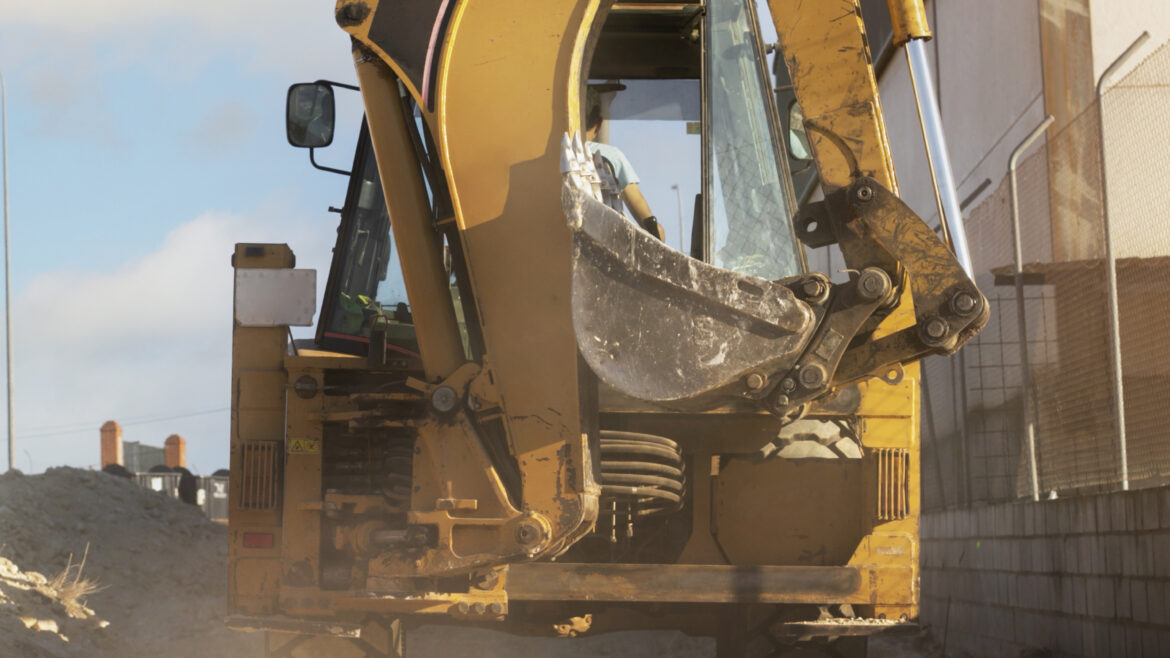
Excavator on construction site using off-road diesel
Diesel Loaner Tanks for Construction 683 1024 Star Oilco

Diesel Loaner Tanks for Construction

WE LOAN DIESEL TANKS FOR CONSTRUCTION PROJECTS

DYED OFF ROAD DIESEL FUELING SERVICE BY STAR OILCO

Wethose Fueling for Construction

If you need diesel, kerosene, gasoline, biodiesel, or renewable diesel in bulk or as a wet-hose fueling service, we are ready for your project.  We also deliver Diesel Exhaust Fluid on jobsites. We won’t let your generators go down.  Daily routes for diesel fueling in Portland, Oregon and Vancouver, Washington. 

Star Oilco serves the whole Portland metro area included the ex-burbs.  Our routes deliver to Salem, Oregon as well as Longview and Kelso, Washington.

Call and ask for our Dispatch to set up service today at 503-283-1256.

Off Road Dyed Diesel Delivery

All-dyed construction and generator fuel delivered by Star Oilco is premium diesel treated with Hydrotex PowerKleen. Star Oilco’s premium diesel is stabilized for long-term storage for the total up-time needs of construction fueling. There is an additional treatment of fuel microbiocide to kill and prevent growth of bacteria/algae in your diesel. Star Oilco can add Valvtect BioGuard to your fuel to stabilize your fuel for long term storage upon request as well.


Construction season is here.

Star Oilco still has loaner tanks immediately available for your job site, project or temporary fleet needs.  Make life easier and keep your team working hard. Get ahead of the rush and reserve your UL142 double wall loaner tank now.

Just let us know if you need a 12V pump (powered by your equipment’s battery) or a 110V plug in pump with your equipment set up.

Star Oilco has both 550 gallon and 275 gallon tanks with 110% containment meeting UL 142 for your next construction project.  Star Oilco can provide larger tanks if arranged with notice beforehand.  Larger tanks available for longer term project if needed.  We also provide remote tank monitoring on these tanks. These tanks meet fire code in Oregon and Washington for construction refueling and provide temporary storage of fuel on an ever-changing construction job site. Oregon and Washington fire code allow temporary double wall tanks for construction projects where an active permit has been pulled and needs diesel to complete.

Ultra Low Sulfur Diesel is 15 PPM
Please also remember that ultra low sulfur diesel (ULSD) is the standard of off-road dyed fuel now as well. New off-road equipment will need ultra low sulfur diesel given the modern emission systems required.  This is a recent change.

If you are renting newer equipment, it will have a need for ULSD and Diesel Exhaust Fluid (DEF). You will need to ensure that any fuel on a jobsite running newer equipment with diesel after treatment is ultra low sulfur diesel fuel. If you are operating your own tanks as you receive newer equipment, you will want to flush the fuel to make sure you get all the higher sulfur fuels out of it. All equipment from Star Oilco is drained as well as flushed prior to deliver as part of our set up.

If you are a contractor, project manager, or need a temporary tank for on-site fuel, we can help. In cases where you need an auxiliary tank, transfer fuel tank, an emergency back-up fuel supply, or even a long-term rented loaner tank for specialized equipment, Star Oilco can solve problems for you. For long-term projects, we can also work to get cardlock and other novel tracking solutions to secure your on-site fuel needs. Give us a call, we are here to help.

Kick the Can Card

Call our Dispatch at 503-283-1256 or tell us what you need in the following Contact Form.

We have loaner tanks immediately available. Open an account and get started today.


Dense cluster of green leaves representing microbial growth
BioGuard Plus 6 Stabilize Your Diesel Tank 1024 683 Star Oilco

BioGuard Plus 6 Stabilize Your Diesel Tank

Fight Humbug in your Diesel Tank!

Fall weather is around the corner and moisture is depositing in your diesel tank.

Treat your diesel; keep things from growing in your diesel.

Prepare your diesel fuel, heating oil, kerosene, or boiler fuel for storage.

Make sure your fuel works when you need it. If you have a bulk diesel tank, stop stuff from growing in your diesel before it starts.

Star Oilco provides complementary diesel fuel quality testing for tanks in our service area.

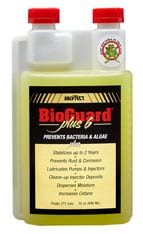
Valvtect BioGuard Plus 6

Valvtect Plus 6 – Stabilizer and Biocide

Use every spring and winter to guarantee your tank is not providing a habitat to fuel system spoiling microbes.

Water in diesel is a fact of life these days. Biological growth spoiling your fuel quality does not have to be. Ultralow sulfur diesel and biodiesel have water in them. Over time, water entrained in your diesel fuel can fall out of solution. Add to that they condensation that will natural develop in your fuel tank and you have an environment for hum-bug to grow in your heating oil, diesel, or boiler fuel storage tank.


If you are storing diesel for longer than six months you want to stabilize that fuel.

In the summer when temperatures swing at night, your tank is breathing air in and out.  If it is raining, your tank is likely also breathing in the water. With the rainy season and long after it passes, be aware that water is everywhere unless you work to seal it out of your fuel storage system.  You can use a desiccant breather as a way to filter moisture from the atmosphere from getting into our tank.

If your tank does not have a desiccant breather on it, your fuel tank can collect condensation. As air moves in and out of the tank with temperature changes, moisture will collect on the wall of the tank. Yeasts, bacteria, fungi, and algae can grow in that water which collects on the bottom of the tank. Make sure your tank is not a habitat for growing bugs every spring and winter.

Microbiological growth in diesel fuel, also known as “humbug” in fuel, can start growing and if unchecked, will wreak havoc with your fleet. Once it starts in your fuel tank it will spread throughout your fleet. If you see a random need to spin filters between services or odd fuel-related maintenance issues, you likely have bugs growing in your fuel tanks.

Star Oilco recommends BioGuard Plus 6 as a regular biocide for routine maintenance.  

BioGuard Plus 6 is the only EPA certified biocide product that has both a biocide as well as a fuel stabilizer with detergent in one product. This detergent stabilizer acts as an aggressive tank cleaner (NOTE: BioGuard available without Plus 6).

When using Valvtect BioGuard, treat first with a kill, done in your bulk diesel storage. That will spread and kill the growing bugs in your fleet. Maintenance will clean up any remaining bacteria. If you do not have a known or seen problem, a kill twice a year is a great way to guarantee it does not appear and treat the individual tanks of your fleet.

ValvTect BioGuard™ PLUS 6Valvtect BioGuard Plus 6

BioGuard® Plus 6™ is the ONLY EPA registered diesel additive that combines a biocide with a multi-functional diesel additive to prevent bacteria, algae and all other major diesel related problems.

BioGuard Plus 6 is the perfect solution for ultra low sulfur diesel and biodiesel problems; such as bacteria, algae, excess water, sludge, filter plugging, injector wear & deposits, poor fuel economy and unstable fuel.

Only BioGuard Plus 6 prevents bacteria and algae growth, plus:

  • Stabilizes fuel for up to 2 years
  • Prevents rust and corrosion
  • Lubricates pumps and injectors
  • Cleans-up injector deposits
  • Disperses moisture
  • Increases cetane

ValvTect BioGuard Plus 6
“It’s ALL Your Diesel Fuel Needs!”

32 oz Bottle treats 375 Gallons
1 Gallon Bottle treats 1500 Gallons
Also available in 2.5 Gallon Plastic Bottles, 55 Gallon Drums and 300 Gallon Totes

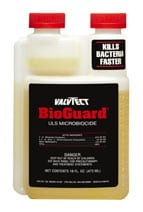
BioGuard ULS Fuel Microbiocide

BioGuard is an EPA registered dual soluble (fuel & water) microbiocide that effectively kills bacteria and fungi that grow in diesel fuel, heating oil and gasoline. It prevents bacteria caused filter plugging and bacteria caused corrosion of the fuel system.

BioGuard typically works in 2-3 hours versus 24-36 hours needed by other biocide products. BioGuard has also been found to be up to twice as effective as other biocides.

This additive can be used in all diesel and gasoline bulk tanks and vehicle tanks, including marine, farm, truck fleet, home heat, generators, and railroad storage tanks.

  • Kills bacteria and other biocontamination quickly
  • Twice as effective as other biocides
  • Breaks up sludge and slime
  • Prevents bacteria plugged filters
  • Prevents bacteria caused corrosion
  • Bottle contains easy measuring spout

16 oz. container treats 460 gallons of diesel fuel at the initial kill treat rate.
16 oz. container treats 920 gallons of diesel fuel at the maintenance treat rate.


For a more in depth description of Valvtect BioGuard Plus 6 please click here.

If you have any questions about routine tank maintenance or to order Valvtect BioGuard products, please don’t hesitate to contact Star Oilco directly by email, message, or phone.

Contact Form

  • This field is for validation purposes and should be left unchanged.

For more information on storing diesel fuel please see the following articles from Star Oilco:

If you are interested in getting a Diesel Storage tank Star Oilco can help.

For a great document on everything diesel we recommend this Diesel Technical Review.

For best practices on storing generator fuel we recommend reading this Emergency Back Up Generator Fuel Storage.

If you are trying to keep your stored diesel dry here is an article we wrote on Desiccant Breathers for your fuel tanks.

If you are looking at getting serious about Diesel Fuel Quality Assurance here is an article we wrote about keeping your diesel cleaner and drier.

Digital lock icon over data graphics representing fuel security technology
Fleet Fueling in Portland, Oregon and Fuel Security 1024 576 Star Oilco

Fleet Fueling in Portland, Oregon and Fuel Security

How do you eliminate the management hassles of fueling your fleet in Portland, Oregon?

Use Star Oilco’s Total Solution fueling service.

Stop burning labor costs and dealing with management headaches trying to track fuel in vehicles. Let us simplify this for your administration. We can make that really simple with our Total Fleet Solution.  Bulk, Wet-hose Fleet Fueling, and Pacific Pride cardlock when and where you need it.

Seize Control of your Fuel Costs.  Save Money.  Stop Slippage!

Star Oilco’s best practices when thinking about bulk fuel security at your facility.

Wet Hose Fueling Service in Vancouver, Washington

Star Oilco is your Fleet Fueling Services Company with solutions to knock out fuel theft.

Mobile Fueling Service, Pacific Pride Cards, and connecting fuel to your HR Policy can save you thousands of dollars a year in the long run.

“Fuel Slippage” is an industry term for the fuel that you can’t account for in the actual course of business. A stolen tank of gasoline on a company fleet card or diesel saddle tank that came up empty without explanation. We are here to help stop slippage in your business.

We have strategies on how to protect yourself from internal theft, how to use prepaid and preset fuel card controls with employees, as well as securing yourself from external theft. This article is about protecting your fleet from physical fuel theft.

Fuel theft is on the rise in the Portland, Oregon area.

In Portland, Oregon with the rise of homeless campers all over our industrial areas, we have seen a increasing fuel theft. Star Oilco can help you knock out fuel theft. For as hard as fleets work to make a dollar, seeing it shrink from the bottom line due to criminal theft is an avoidable scenario. Think ahead, remove opportunity for thieves to steal, and create systems that keep honest people honest.

The biggest preventive measure Star Oilco can provide is total control of what goes into and out of your fleet. If you have a bulk tank, a tank monitor and key control cardlock system is very affordable these days, guaranteeing inventory is kept to the gallon. If you have fleets on the road without a tank please consider using Pacific Pride secured cardlock fueling in combination with Mobile Onsite Refueling of your fleet in your yard.

Stop Fuel Theft: Best Practices for Portland, Oregon

Prevent fuel theft in Portland, Oregon

To train your fleet consider the following best practices below:

1 – Educate your people on the dangers and evidence of fuel theft

Fuel thieves usually come back again and again. Make sure your whole team is aware of the mess fuel thieves usually leave behind. Transferring from a saddle tank to their vehicle or container leaves a mess. Also make sure they are aware of unsafe places. Unsecured yards, especially with homeless campers in diesel RV’s, are a prime environment to expose yourself to theft. If you are a refrigerated trailer fleet, make sure your drivers tell your clients that unattended reefer trailers are the favorite hunting ground for fuel thieves and a locking gas cap is not necessarily a deterrent.

2 – Install fences, lighting, security cameras, and work with the local police.

Vehicle yards are a popular target for fuel thieves, so make it as difficult as possible for them to get in unnoticed. Secure fencing and bright lighting make your yard far more visible from the road and less attractive to thieves. Security cameras can act as both a deterrent and an effective way to catch criminals if theft ever occurs. Also, make sure you report theft to the local police to ensure they are tracking activity. It can be discouraging given the scale of the problems in Portland right now, but the data matters.  You never know when a fuel thief will get caught for some other crime and the evidence of pumping equipment and containers will tip off the police of the culprit.

3 – Fit bulk tanks with level monitors and inventory control systems.

Inventory control systems are extremely affordable now. Not only is it a convenient tool to track tank levels for your ordering purposes and provide proof that the tank is not leaking for local environmental regulators, it will also tip you off if an odd time of day is seeing fuel drawn. Inventory control systems have also become far more affordable than they were ten years ago. Key control for turning on power to your fuel dispensing system, which will track drivers, and the equipment they are fueling (license plate, equipment number, on-road, off-road, or tax exempt status) will keep you informed.

4 – Defensive parking, landscaping and crash protection.

If it is not easy for someone to get immediately next to the fuel tanks of your vehicles or bulk tank, it is that much harder to steal. Park vehicles in a way that protects and blocks access to someone trying to operate a pump to easily reach your fuel tanks. If you are using on-site refueling, your vendor can suggest some ideas that still enable them access to your saddle tanks without problem.

5 – Communicate with neighbors, vendors, and employees that theft is suspected or definitely occurring.

Many fleets have multiple vendors access their yard at night or over weekends. Make sure those vendors are on your team and on the look out. Tire and fleet fueling services should let you know if a loiterer appears to be in your area in the middle of the night. If a gate has been tampered with or a mess is obvious inside the yard, make sure they are letting you know earlier rather than later. Also, be aware during business hours. Fuel thieves will often scope a yard during the day to target later that night. Take note of anyone acting suspiciously around your yard, perhaps engaging them to find out what they’re doing. Don’t hesitate to ask them what they are doing either. Face to face contact can encourage them to find another place to be a criminal.

If you have any questions or want our perspective we encourage you to reach out.  


Contact Form

  • This field is for validation purposes and should be left unchanged.

Advice is always free and helping is why Star Oilco is here.

For more reading on using securing your business from theft:

Star Oilco Fleet Cards to secure yourself from employee fuel theft at gas stations and cardlocks.

Seven ways to stop fuel theft before it happens.

Use Star Oilco Pacific Pride cards as a management tool. 

Aerial view of a truck driving on a highway through a forest
BioGuard Plus 6 Stabilize Your Diesel Tank 1024 463 Star Oilco

BioGuard Plus 6 Stabilize Your Diesel Tank

Spring is just around the corner.

Have you stabilized the diesel in your generator?

Water and temperature changes can contribute to growth in your tanks.

Prepare your diesel fuel, heating oil, kerosene, or boiler fuel storage and make sure it works when you need it.

With the Fire last fall and the recent power outages many generators have recently been filled. If you haven’t added stabilizers and a biocide to your fuel you may not be ready for the next emergency.

Kill bacteria, bugs, and yeasts growing in your diesel fuel with Valvtect BioGuard Plus 6

Valvtect BioGuard Plus 6

Use this diesel fuel microbiocide every spring and winter to guarantee your tank is not providing a habitat to fuel system-spoiling microbes.

Water in diesel is a fact of life these days. Biological growth spoiling your fuel quality does not have to be. Ultralow sulfur diesel and biodiesel have water in them. Over time, water entrained in your diesel fuel can fall out of solution. Add to that the condensation that will naturally develop in your fuel tank and you have an environment for humbug to grow in your heating oil, diesel, or boiler fuel storage tank.

When it is raining, your tank is likely breathing in the water. With the rainy season, be aware that water is everywhere unless you work to seal it out of your fuel storage system.

If your tank does not have a desiccant breather on it, your fuel tank can collect condensation. As air moves in and out of the tank with temperature changes, moisture will collect on the wall of the tank. Yeasts, bacteria, fungi, and algae can grow in the water that collects on the bottom of the tank. Make sure your tank is not a habitat for growing bugs every spring and winter.

Microbiological growth in diesel fuel, also known as “humbug” in fuel, can start growing and, if unchecked, will wreak havoc with your fleet. Once it starts in your fuel tank, it will spread throughout your fleet. If you see a random need to spin filters between services or odd fuel-related maintenance issues, you likely have bugs growing in your fuel tanks.

Star Oilco recommends BioGuard Plus 6 as a regular biocide for routine maintenance.  

BioGuard Plus 6 is the only EPA-certified biocide product that contains both a biocide as well as a fuel stabilizer with detergent. This detergent stabilizer acts as an aggressive tank cleaner (NOTE: BioGuard available without Plus 6).

When using Valvtect BioGuard, treat first with a kill, performed in your bulk diesel storage. That will spread and kill the growing bugs in your fleet. Maintenance will clean up any remaining bacteria. If you do not have a known or visible problem, a kill twice a year is a great way to guarantee bacteria does not appear and you can treat the individual tanks of your fleet.

Product Specifications:

ValvTect BioGuard™ PLUS 6Valvtect BioGuard Plus 6

BioGuard® Plus 6™ is the ONLY EPA registered diesel additive that combines a biocide with a multi-functional diesel additive to prevent bacteria, algae and all other major diesel related problems.

BioGuard Plus 6 is the perfect solution for ultra low sulfur diesel and biodiesel problems; such as bacteria, algae, excess water, sludge, filter plugging, injector wear & deposits, poor fuel economy and unstable fuel.

Only BioGuard Plus 6 prevents bacteria and algae growth, plus:

  • Stabilizes fuel for up to 2 years
  • Prevents rust and corrosion
  • Lubricates pumps and injectors
  • Cleans-up injector deposits
  • Disperses moisture
  • Increases cetane

ValvTect BioGuard Plus 6
“It’s ALL Your Diesel Fuel Needs!”

32 oz Bottle treats 375 Gallons
1 Gallon Bottle treats 1500 Gallons
Also available in 2.5 Gallon Plastic Bottles, 55 Gallon Drums and 300 Gallon Totes


BioGuard ULS Fuel Microbiocide

BioGuard is an EPA registered dual soluble (fuel & water) microbiocide that effectively kills bacteria and fungi that grow in diesel fuel, heating oil and gasoline. BioGuard also prevents bacteria caused filter plugging and bacteria caused corrosion of the fuel system.

BioGuard typically works in 2-3 hours versus 24-36 hours needed by other biocide products. BioGuard has also been found to be up to twice as effective as other biocides.

BioGuard can be used in all diesel and gasoline bulk tanks and vehicle tanks, including marine, farm, truck fleet, home heat, generators, and railroad storage tanks.

  • Kills bacteria and other biocontamination quickly
  • Twice as effective as other biocides
  • Breaks up sludge and slime
  • Prevents bacteria plugged filters
  • Prevents bacteria caused corrosion
  • Bottle contains easy measuring spout

16 oz. container treats 460 gallons of diesel fuel at the initial kill treat rate.
16 oz. container treats 920 gallons of diesel fuel at the maintenance treat rate.

Learn more about Valvtect BioGuard Plus 6.

If you have any questions about routine tank maintenance or to order Valvtect BioGuard products, please don’t hesitate to contact Star Oilco directly by email, message, or phone.  If you would like to learn more about checking your tank for growth this is a great checklist. 

Contact Form

  • This field is for validation purposes and should be left unchanged.
Star Oilco diesel fuel truck servicing portable generators on a snowy Portland job site
Do You Need a Diesel Loaner Tank? 1024 768 Star Oilco

Do You Need a Diesel Loaner Tank?

Did you know that Oregon allows temporary diesel tanks onsite for construction projects?

Order off-road diesel for your next construction project in the Portland, Oregon area and Star Oil will loan you a tank with your fuel purchase.

We also have routes to Longview, Washington and Salem, Oregon.

Wethose Fueling for Construction

Take the headache out of fueling your construction project with a temporary tank on the jobsite.

Star Oilco’s goal as a bulk diesel provider is to keep things simple. Make them easy, predictable, and also get the best price for our customers. We love serving construction sites with our mobile, onsite wet-hose service. But we notice sometimes construction projects can sometimes be tricky to fuel.
Planning your project around fuel is not what anyone wants to do. We make it easy by planning for regular stops at a regular time married with bulk equipment to get your price under control.

Generator Fueling Service

Star Oil provides full-service diesel construction fueling, including DEF.

Make sure your diesel generators, light sets, water pumps, air movers, and other project critical equipment are topped off with diesel and DEF.

It can be difficult to keep a construction site fueled with the stops and starts of projects. The coordination required to keep everything moving full speed while adjusting for the unexpected down times caused by subs, permitting, or weather, can be overwhelming. To “keep things simple,” which is our company motto, we know that locating a bulk diesel fuel tank on your jobsite can simplify your project’s fueling complexity. This provides you with a few days worth of fuel when you need it, while also lowering your cost of fuel.

We find that our customers benefit from lower prices and increased up time by placing a temporary bulk diesel tank in their project’s yard. Call Star Oilco for bulk fuel delivery and ask us about our ability to place a tank on your jobsite in the greater Portland ,Oregon or Vancouver, Washington area.

On-demand fueling service available upon request.

Diesel Tank Rental

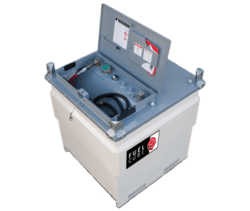
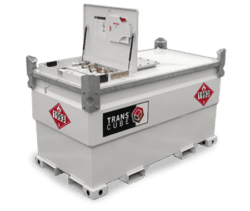
Star Oilco provides you with single wall 275 gallon and 550 gallon tanks with 110% containment for your short-term construction product at no cost. 550 gallon UL142 Fuel Cubes are also available for longer-term projects or projects requiring the ability to crane a tank. Bigger tanks and card control options are available, too. Whatever your tank need is, we’ll find solutions and make construction fueling easy.

For more information call 503-283-1256, email Dispatch@StarOilco.net or let us know below.


Contact Form

  • This field is for validation purposes and should be left unchanged.


Star Oilco also can provide fleet cards and wet-hose fueling service for your next project.

Star Oilco’s 6 Reasons to Use Wet Hose Fueling

Star Oilco’s 7 Ways to Stop Fuel Theft Before it Happens

Prepaid and Preset Fuel Cards for Your Small Business 

How to Eliminate Fuel Theft an Save Money

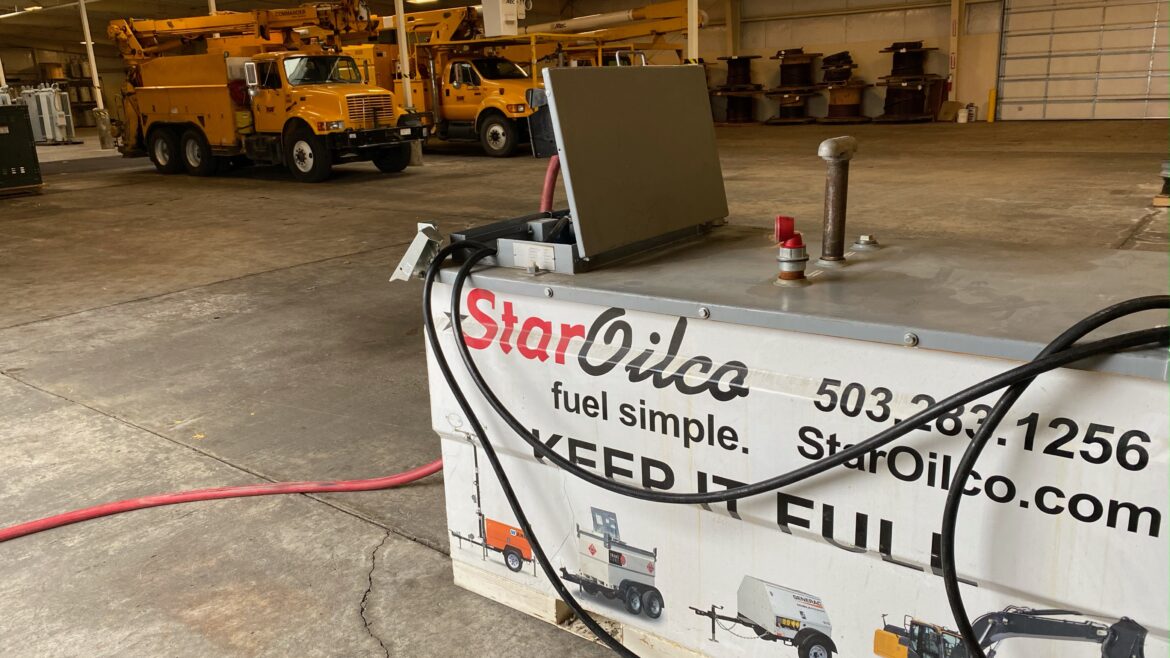
Star Oilco fuel tank and fueling system in a warehouse
Diesel storage tanks UL-2085 needed for modern Fire Code 1024 768 Star Oilco

Diesel storage tanks UL-2085 needed for modern Fire Code

What is required to install a fuel tank in Oregon?

A Tank that meets International Fire Code is a 2 Hour Fire Guard labeled tank.

In recent years Oregon and Washington have been moving to International Fire Code as their adopted standard. Following California with this higher standard of safety as it relates to liquid fuels.  The new standards are far more involved in their construction and therefore their installation as well. Heavy and far more expensive is the most notable standard of a modern Fire Marshall approved tank.

UL 142 – Double Wall Tanks

The old standard for diesel storage was UL-142 (commonly referred to as double wall or “diked tanks” by fleet managers).  These tanks are still made and extremely common throughout the US. If you see one of these tanks for sale and it looks like a great deal it’s probably because of an upgrade requirement causing them to sell it.  Be aware to check code in your local jurisdiction. These tanks still have a wide market for use especially for agricultural zones as well as temporary use with construction sites.

UL 2085 – 2 Hour Fire Guard and Double Wall Tanks

The new standard for storing diesel for refueling vehicles is the UL-2085. This code has been around for gasoline, it is only new in the way that Fire Marshall’s and local municipalities will require it for diesel fuels.

This standard has been around for a long time but typically was used when storing gasoline or more flammable liquids. That standard now applies to diesel fuels as well if they are being installed to refuel equipment, trucks or any other service.  Its worth noting that boilers, HVAC oil furnaces, and other plumbed stationary applications can still use the UL-142 code. Similarly agricultural use in Oregon is allowed a UL-142 use in most applications.  But for fleet fueling even if only a 100 gallon tank the Fire Marshall’s new standard is the UL-2085 concrete lined fire guard tank. It is also worth noting that if you have an installed UL-142 tank in a commercial or industrial zoned property you probably are okay with grandfathered use. But if you want to change anything the Fire Marshall and local Code Enforcement are going to be looking at the newer and safer standard.

Ask your local Fire Marshall to be sure of what the requirements are.

When discussing diesel storage tank options with your local Fire Marshall it helps to see the reason they have the standards they demand. Also be aware of other requirements that local jurisdiction may have. For instance Portland, Oregon’s Bureau of Environmental Services will often demand a cover be placed over the fueling area, an engineered concrete pad beneath it, as well as a potential oil water separator.  Usually there can be an additional permit and process associated with a tank install to meet the needs of a local Fire Marshall as well.

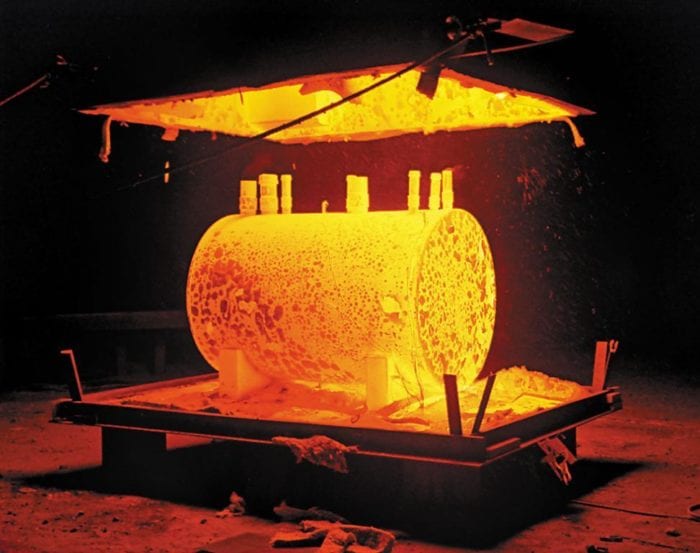
Two hour fire guard or UL-2085 rated tanks are the new standard in Oregon as we have adopted the International Fire Code. and the picture below says a thousand words. It will protect your property from a lake of fire preventing your diesel fuel from feeding disaster.

This is a great picture of a tank being tested for a two hour fire rating by a vendor of Star Oilco’s. Its speaks to why and what is the concern of your local regulator.

Modern Weld Company is a tank manufacturer out of California that makes great tanks to order exactly perfect for your site.

As they make what you need to the specifications you need you can make the Fire Marshall, local City Code enforcement, and your CFO happy at the same time.  If you have questions about installing a bulk diesel fuel tank to either UL-142 or UL-2085 standards give Star Oilco a call. We can help you meet UL codes for diesel, gasoline, biodiesel, or other storage needs.

Star Oilco white fuel truck with flammable fuel placard parked at a fueling facility
Renewable Diesel as a Major Transportation Fuel in California 1024 768 Star Oilco

Renewable Diesel as a Major Transportation Fuel in California

RENEWABLE DIESEL IS AVAILABLE

STAR OILCO HAS RENEWABLE DIESEL FOR YOUR FLEET

In the Pacific Northwest we have gone from a complete scarcity of Renewable Diesel availability to several players having terminal positions and this next generation sustainable fuel being readily available.  Star Oilco is ready to serve you with renewable diesel in several blends to meet both your fleet’s financial and carbon budgets.

For years California has lead the west coast with availability of renewable diesel and various blends with both petroleum diesel and biodiesel fuels. This experience is available in the research paper below to help inform your fleet in making decisions about de-carbonizing your fleets.

IS RENEWABLE DIESEL WORTH THE ADDED COST?

Fleet managers fell in love with this exceptionally high quality synthetic diesel fuel. Cleaner and drier than your typical petroleum diesel quite  a few believers are willing to pay a large premium for this fuel.  There are hardcore supporters of this fuel and it’s overall ability to reduce operational cost in far excess of it’s added cost. Which raises the next question.  Is it superior to petroleum diesel?

Caravan of white trucks on country highway under blue sky
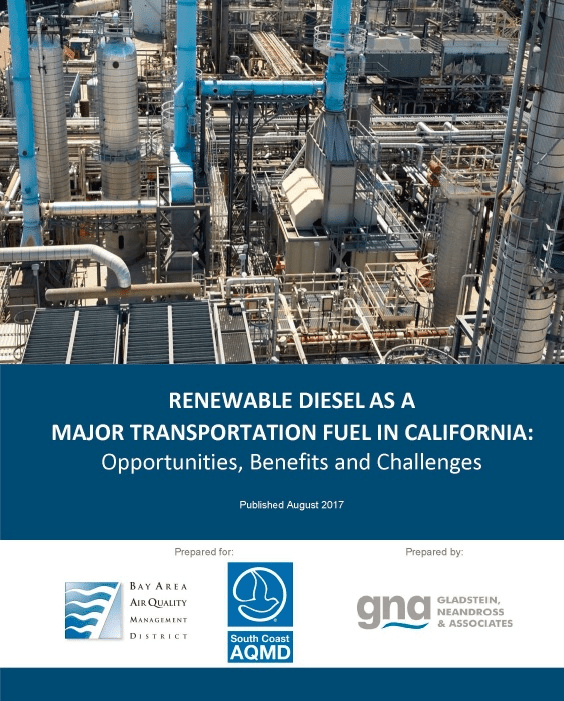
Report cover on renewable diesel as a major transportation fuel in California

IS RENEWABLE DIESEL SUPERIOR TO PETROLEUM DIESEL?

The answer points to yes based on initial experience rating the fuel on real world performance, fuel mileage, emissions system maintenance costs, and the much lower CO2 emissions.

The whitepaper shown is probably the most in depth resource for a fleet seeking to understand the potential of renewable diesel for its own use.

Renewable diesel is a next generation diesel fuel.  It has a low CO2 footprint similar to biodiesel, yet it is a high performance fuel that reduces down time and maintenance in urban stop-and-go fleet use.  Long story short, it is an impressive fuel solving many problems associated with modern clean diesel engines.

Given the newness of this fuel along, with the few producers of it, there is a real lack of in depth research on the subject.

If you have any questions about Renewable Diesel please feel free to contact us.

RENEWABLE DIESEL AS A MAJOR TRANSPORTATION FUEL

This white paper is the most in depth examination of Renewable Diesel operating in the real world. It covers a complete view of the product from the perspective of both fleets operating it and regulators seeking to reduce emissions. In our experience this is the most complete document you are going to find to advise a fleet considering using R99 Renewable Diesel.

Whitepaper – Renewable Diesel as a Major Transportation in California: Opportunities, Benefits, and Challenges.
Whitepaper that Gladstein, Neandross and Associates produced for the Bay Area Air Quality Management District and South Coast AQMD.

This report reinforces the manufacturers of renewable diesel’s statements and many anecdotal statements from fleets using the fuel. Renewable diesel sees superior performance in both emission reduction and performance in existing diesel technology. It is a cleaner burning and lower CO2 fuel that also contributes to a lower cost of vehicle maintenance.

According to this August 2017 report, California was on course to see approximately 250,000,000 gallons of R99 fuel sold in the state that year. This is a world-shaking volume of a next generation biofuel. With these readily adopted volumes, no doubt more product will be finding its way into the marketplace. The report cites a CARB expectation of the California Renewable Diesel market growing to over 2,000,000,000 (that’s BILLION) gallons in the next decade.

Portland city skyline with Mount Hood in the background
Diesel Fuel in Portland, Oregon 1024 683 Star Oilco

Diesel Fuel in Portland, Oregon

What is the difference between diesel fuel in Portland, Oregon and the rest of the Pacific Northwest?

Oregon Diesel Fuel

Star Oilco delivers and sells diesel fuel in Portland, Oregon.

We are ready for your diesel needs be they off-road, on-road, biodiesel, renewable diesel, or anything else you want.

Star Oilco has simple fuel solutions to keep your business moving.

On the West Coast, expect biodiesel blends to be in all diesel fuel. B5 biodiesel being the most commonly found fuel. Be aware though, in Oregon,  B20 biodiesel (a 20% blend of biodiesel mixed with petroleum diesel) is extremely common at retail throughout the state. B5 through B20 blends of biodiesel are becoming more common as Oregon’s legal framework regulates CO2 emissions requiring diesel sellers to blend biodiesel or charge substantially more for every gallon they sell.

On top of that, Oregon has a 5% biofuel blend mandate that can include a number of fuels, most commonly biodiesel and renewable diesel. Washington state also has a mandate for 5% biodiesel though it isn’t as specific as the Oregon mandate.

That’s Oregon Diesel. What about Portland?

The city of Portland has a stand-along city fuel tax due to its policy goals (which cause it to codify rules for low CO2 fuels and the sources of diesel in particular), as well as its own budget needs.

Portland, Oregon Diesel Fuel Mandates

A little known fact is that Portland, Oregon has its own biofuels mandate and fuel tax structure on diesel. This mandate affects all diesel equipment both on and off-road use. It does not affect boilers or HVAC systems though most people selling heating oil and boiler fuel are still handling a 5% biodiesel product to ensure they don’t cross fuel in violation of the law.

Functionally, the city of Portland’s mandate and Oregon’s specific mandate do not make a huge difference. Your biggest noticeable difference is the higher price due to the diesel fuel tax, given that Portland’s biofuel mandate now overlaps with Oregon state’s fuel mandates.

For more on the actual code for biofuel mandates in Portland, see the Portland City Code.

Until 2019, Portland had a 5% biodiesel “methylester” mandate. This meant that Portland mandated that all diesel fuel sold inside the city must contain 5% of biodiesel or sellers of fuel inside city limits would face a fine. For years, Portland actually checked every seller of diesel for a 5% biodiesel blend in person annually. This mandate also included feedstocks and did not allow for palm oil sourced biodiesel, as palm oil is responsible for a large amount of deforestation in Indonesia and other places. The Portland mandate required that half of all biodiesel blended to meet the 5% mandate must be derived from canola and waste vegetable oil sources, as Oregon can produce them.

In 2019, the city of Portland suddenly lined up their mandate to match the state of Oregon’s, which allows for renewable diesel to be used as a feedstock. Anything derived from palm is still a barred feedstock for the fuel to meet Portland mandate requirements (which is distinctly different than Oregon’s biofuel mandate).

Onsite Diesel wethose service Portland
Portland, Oregon Diesel Fuel Taxes

(NOTE: Read this article by Star Oilco for more on Oregon Fuel Taxes Explained.

In 2016, the city of Portland, Oregon created its own diesel tax of $.10 a gallon. This tax is on both gasoline and diesel fuels sold at retail or commercially.  If you are operating vehicles over 26,000 GVW that are exempt from Oregon road tax, Portland also has a weight mile for those tax exempt vehicles.

If you are fueling inside the Portland city limits, that diesel tax will be charged at the pump when you fill up unless you are a P.U.C. tax exempted vehicle in Oregon.

Find a list of every diesel and gasoline tax by city and municipalities in Oregon see the Oregon Fuel Tax Group.

If you have any questions about Portland, Oregon diesel fuel standards please feel free to call or message Star Oilco for more information.

Star Oilco is here to be your Bulk Fuel Supplier in Portland, Oregon.

Contact Form

  • This field is for validation purposes and should be left unchanged.


For more on the subject of Diesel fuel please read these other posts by Star Oilco on the subject:

Every Question Star Oilco has been asked about Biodiesel

Every Question Star Oilco has been asked about Off Road Diesel

About Diesel Fuel – Star Oilco’s Diesel Fuel FAQ

Oregon Biodiesel Tax Breaks for Retail Stations

Gas pump fueling a car with biofuel in front of a green farm field under a blue sky
B20 Biodiesel, a Proven Fuel 1024 408 Star Oilco

B20 Biodiesel, a Proven Fuel

Using Biodiesel in the Pacific Northwest.

(NOTE: B20 refers to 20% biodiesel blended with an 80% petroleum diesel percentage. B5 refers to 5% biodiesel blended with petroleum diesel which is the legally required blend percentage in Oregon state. For more on biodiesel basics, visit the US DOE.)

Biodiesel is the “Drop In Solution” used in the Pacific Northwest to reduce CO2 emissions in diesel equipment.

If you are looking to use Biodiesel in a fleet or a personal vehicle it is as easy as just asking for it.  In Oregon the fuel is everywhere.  From an Oregon and Washington state requirement for a minimum 5% of biodiesel blended with every gallon to large financial incentives this low carbon diesel fuel is ready for you if you want it.

It’s not just the Pacific Northwest.  For years B20 has been a defacto blend at some of the biggest names in fuel. When you pull up to the pump on the west coast you are likely getting B5 or B20 as a blend. In Oregon, B5 biodiesel is the required fuel by law. Oregon also has a B20 incentive for a waiver of state on road taxes.  Washington as well has requirements that biodiesel finds its way into retail and commercial diesel throughout the state.   Additionally, Oregon and California have “Clean Fuel Standard” programs which heavily incentivize low CO2 fuels like biodiesel.  Washington state is expected to pass their own Clean Fuel Standard as well this year.  Biodiesel has been a fact of life in fuel for over a decade in the United States and Pacific NW and it is not going away.

Due to a mix of federal and state incentives to use biodiesel, there can also be financial advantages for a fleet dedicated to making B20 biodiesel its fuel of choice. You can see evidence of this at truck stops and other retailers making B20 available in Oregon and Washington, as well as in the trucking lanes of the United States. America’s largest fleets are choosing B20 biodiesel in order to reduce their cost per mile. So can you.

In an effort to deliver the best value to truckers, many U.S. truck stops are blending biodiesel up to 20% when the market enables them to pass along a lower cost yet high quality ASTM specified diesel fuel to their customers. Most prominent is Pilot/Flying J, who lists where and when their sites are serving up B20 or lower blends. Pilot/Flying J buys biodiesel directly and blends on site in order to give their customers the best value possible. Loves Travel Centers also sell biodiesel blends around the U.S.

In Oregon, due to a diesel road tax waiver on B20 sales, gas station retailers Safeway, Leathers Fuel, Spaceage, and others are offering B20 biodiesel as their retail diesel offering. Oregon’s system requires the biodiesel be sourced from used vegetable oil refined biodiesel products. Biodiesel has been in Oregon’s fuel supply since 2006 when the city of Portland mandated B5 biodiesel blends within its city limits. The state of Oregon followed Portland with its own statewide mandate not long after.

(NOTE: If you operate a retail gas station and are curious about Oregon’s fuel tax breaks for biodiesel blends here is a more in depth article Oregon Biodiesel Tax Breaks for Retail Fuel Stations that explains these rules for retailers of fuel).

Biodiesel has been in our fuel system since 2006 and the technology that goes into making it has vastly improved. It is proven in diesel engine performance while also creating a diversified supply for energy and significantly reducing emissions from the working fleets of the world. Biodiesel substantially reduces emission coming out of your stack without a major impact on price because it helps to offset high diesel prices.

B20 Biodiesel A PROVEN FUEL

If you want to look at using B20 blends in your fleet, we are here to help. Star Oilco carries B20 blends for mobile onsite refueling every day of the week. We also have dyed/off-road/heating oil blends of B20. If you are an over the road fleet we can provide B20 at our cardlocks as well as help you procure it with a fleetcard over the road. Let us know if we can be of help.

Contact Form

  • This field is for validation purposes and should be left unchanged.