

Posts Tagged :

biodiesel

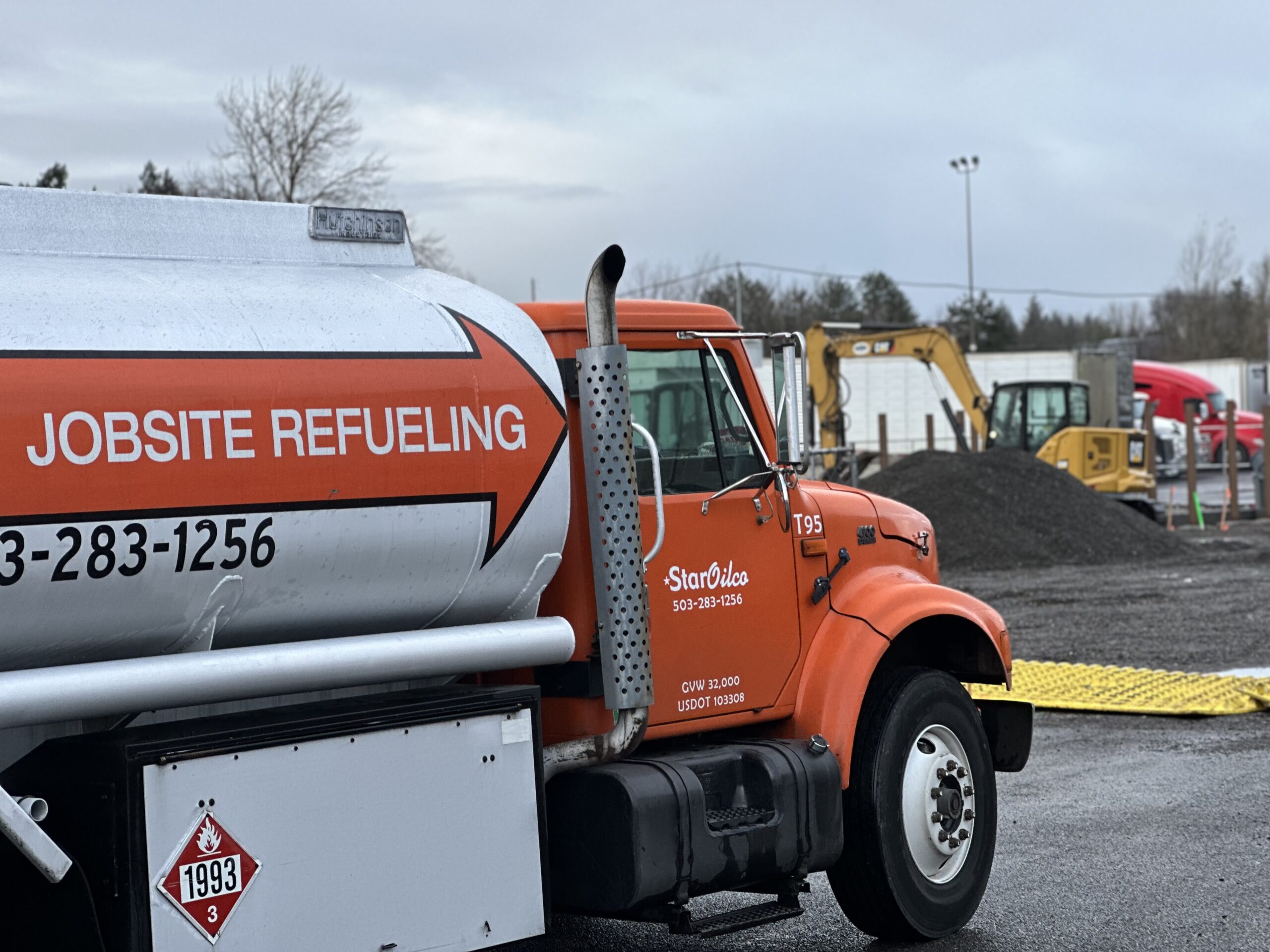
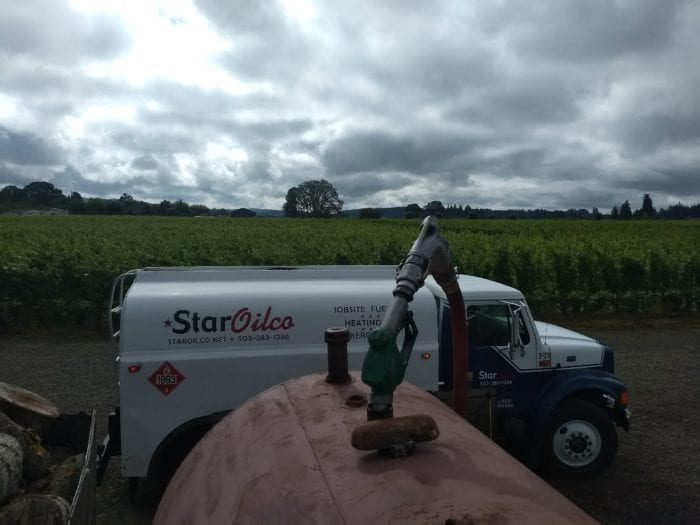
Star Oilco fuel truck delivering to a construction jobsite in Portland
Easy Construction Jobsite Fueling 1024 768 Star Oilco

Easy Construction Jobsite Fueling

Diesel Fueling for Construction Projects in Oregon

Construction Site Fuel in Portland

Get a Star Oilco account and make your jobsite fueling easy.

Star Oilco is on the road fueling construction, jobsites and generators.

Star Oilco is here to serve your diesel fueling needs.

Fueling in the Portland, Oregon and Vancouver, Washington service areas.

We are now Serving Salem, OR and Surrounding areas.

Regardless if your project is for one day or a few years, we are here to keep that equipment topped off and running. Star Oilco does wet hose fueling construction jobsites in Vancouver, Washington and Portland, Oregon.  We have also expanded in the Salem, Oregon and the surrounding areas with fleet fueling and On-site fueling.   Our dyed diesel, clear diesel, or gas construction refuelers are on the road ready for your order.

We fill your equipment with diesel and we can deliver DEF as well.

Whether it’s backhoes and loaders or lightsets, generators, refrigerated trailers, and pumping equipment.  Star Oilco is there with regular on-time, off-road diesel fuel in the Portland and Vancouver markets. If you have a need for gasoline in small volumes on your site, we can help with that as well. If you need fuel and want it there on time, we are here to keep you up and running.  We keep your equipment full so you can focus on the project.

We loan diesel and gasoline tanks to simplify your project fueling needs.

Loaner tanks are also immediately available for your project to keep fuel costs down. Avoid the recurring rental costs and go with a vendor who truly cares about your up time and schedule needs. Whether it is high service hands on wet hosing fueling or bulk drops, Star Oilco makes fueling your construction project easy.

Save money, time and labor with a better construction fueling partner.

Sending your scarce and expensive human resources to gas stations to pay retail prices for diesel eats up far more money than you think. Make fueling your project an afterthought and keep the equipment making you money moving. Star Oilco is here to make your project management easier. Keep your equipment moving and on the job and kick those fuel cans.

Let us know if we can be of help. We keep it full!

On-Site Fueling and Fleet Cards: Combine your construction fueling with Pacific Pride fuel cards to improve your operational efficiency as well as save on your cost of fuel.  Get away from those credit card fees while increasing your security from fuel theft with Star Oilco. 

How to use secure gas cards to protect your business from fuel theft:  Star Oilco can also pair your construction fueling account with a Pacific Pride card.  We approach Commercial Cardlock and Fleet Cards differently. With an easy to implement system to ensure you are not seeing fuel theft.

Close-up abstract image of diesel fuel with suspended droplets and fluid motion
What is Heating Oil? 1024 512 Star Oilco

What is Heating Oil?

                In the Pacific Northwest heating oil is diesel

New heating oil customers often ask us, “What is heating oil?” Heating oil is diesel fuel and there are several grades and types. For Star Oilco our standard heating oil product is a ultra low sulfur diesel with a 5% biodiesel blend in order to meet Oregon mandates for off-road diesel fuel. That way our heating oil trucks can also serve construction fueling, emergency back up generators, and other common off-road diesel uses.

Star Oilco has a simple Heating Oil FAQ available.

For full on fuel nerds though, check out this more in depth deeper technical dive below.  If we leave anything out please don’t hesitate to ask for those seeking a nerd-level understanding of heating oil, kerosene and bioheat.

There are three typically grades of heating oil you can order

Number 1 Diesel

Number 1 diesel is also called Kerosene or Stove Oil. This fuel has a lighter specification than typical heating oil which enables it to burn better in a “pot burner” or wick heater. Kerosene has its own specification as the fuel used by wick heaters. Kerosene is typically Number 1 diesel but not all Number 1 diesel’s are kerosene due to the need to be taken up by a wick heater. Any biodiesel content in a kerosene product WILL NOT work in a wick kerosene heater. So be very aware of confirming that your kerosene has never come into any contact with a biodiesel blend of fuel.

Red Number 2 Diesel

Red dyed diesel also called Heating Oil, Dyed Diesel, Off-Road Diesel is the default heating oil fuel. The fuel is dyed red to denote no on-road fuel taxes are attached to it. When you call and ask for heating oil, this is the fuel you are requesting. Clear or Green Number 2 Diesel is the fuel sold at retail gas stations and truck stops. That fuel will also work in your furnace, you just are paying for on-road taxes attached to that fuel.

Bioheat or Biodiesel Heating Oil

“Bioheat” is a blend of biodiesel and petroleum diesel to make a lower emission and lower CO2 heating fuel.  Typically Bioheat is Number 2 Heating Oil with a 20% blend of biodiesel or higher in it. It is a drop-in fuel for your heating oil furnace. There is no change other than routine maintenance is required. It is a cleaner burning fuel with a significant drop in CO2 emissions associated with your heating oil fuel consumption.  If you would like more information on biodiesel as a heating oil you can follow this link.

B20 Biodiesel Heating oil provider

Where do heating oil companies get their fuel?

In the Portland, Oregon market, diesel is fungible. Everyone buys or is expected to mix their fuel from each other in some way. Primarily this is due to the Portland/Vancouver market receiving most of its fuel down the Kinder Morgan-operated Olympic Pipeline. Which means all the refiners transporting fuel are mixing their product in transit. Additionally, there are shared terminal locations, which also have co-mingled owned diesel products.

Every refiner is typically expecting to mix their diesel and gasoline products. The difference is in the care a vendor takes to filter the fuel, using additives and continuously check their fuel quality. If you are buying at the absolute lowest price possible, know that there is an incentive to skip any added value of quality assurance.

Star Oilco buys our diesel products from a variety of vendors. The source refiner typically being either BP, Shell, Marathon(formerly Tesoro), Phillip 66, or a number of other refiners.

Portland, Oregon and Vancouver, Washington are not unique in in having fungible diesel and heating oil fuel specifications. Through its Pacific Operations unit, Kinder Morgan operates approximately 3,000 miles of refined products pipeline that serves Arizona, California, Nevada, New Mexico, Oregon, Washington and Texas. With roots dating back to 1956, it is the largest products pipeline in the Western U.S., transporting more than one million barrels per day of gasoline, jet fuel and diesel fuel to our customers. The company-owned terminals also provide additional services, such as liquid petroleum product storage and loading facilities for delivery trucks.

The heating oil and biofuel blends Star Oilco sells its customers

Heating oil is essentially off-road diesel. You can legally use a higher sulfur content for boilers and heating systems than you can off-road equipment and back-up generators. Regardless, we sell the lowest sulfur fuel available and optimize our fuel to be as versatile to our customers as possible. Construction equipment, back up generators and a host of others systems use off-road diesel, as do heating oil systems. Star Oilco sells the same diesel fuel specification for all of our off-road uses.

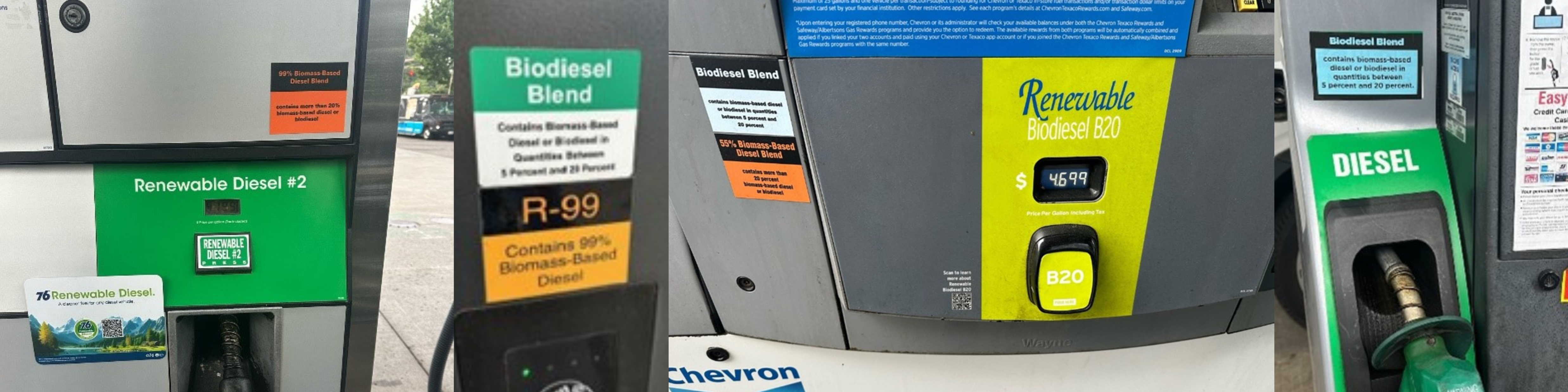
We also blend this fuel with biodiesel for our customers that want higher blends of low CO2 biodiesel fuels and heating oil. Star Oilco carries nothing but ultra low sulfur diesel fuels. In fact, our minimum blend of biodiesel is a B5 biodiesel blend (5% biodiesel and 95% petroleum diesel) and we also offer B20 (20% biodiesel blend) and B99 (99% pure biodiesel) for our customers.

About Diesel Fuels Specifications 

In the United States, diesel fuel is controlled according the American Society for Testing and Materials Standard D975-97. This standard describes a limited number of properties that diesel fuels must meet. It should be noted that the requirements are all performance-based, meaning they do not mandate the composition of the fuel, only the specific performance related requirements demanded of a fuel for a diesel engine. The requirements of D975 are described below.

ASTM Specifications for Diesel Fuel Oils (D975)*

*More info on ASTM specifications

Diesel fuel is characterized in the United States by the ASTM standard D975, which identifies five grades of diesel fuel. We are only going to talk about the two most popular commercially diesel fuel used — No 1 and No. 2 diesel. The ASTM D975 standard is made up of a series of different tests that check the characteristic ranges of a fuel to confirm it is adequate to operate in your equipment.

In simple terms, they are checking for specific gravity, the vapor point (when it turns into a gas), the flash point (when it catches fire), the dirt content, water content (how much microscopic entrained water) and a host of other requirements diesel must meet in order to be legal to be sold for use in your engine.

Grade No. 1-D and Ultra-Low Sulfur 1-D:

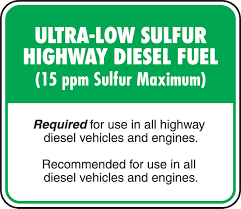
This is a light distillate fuel for applications requiring a higher volatility fuel to accommodate rapidly fluctuating loads and speeds, as in light trucks and buses. The specification for this grade of diesel fuel overlaps with kerosene and jet fuel, and all three are commonly produced from the same base stock. One major use for No. 1-D diesel fuel is to blend with No. 2-D during winter to provide improved cold flow properties. Ultra-low sulfur fuel is required for on-highway use with sulfur level < 0.05%. 

Grade No. 2-D and Ultra-Low Sulfur 2-D:

This is a middle- or mid-grade distillate fuel for applications that do not require a high volatility fuel. Typical applications include high-speed engines that operate for sustained periods at high load. Ultra-low sulfur fuel is required for on-highway use with sulfur level < 0.05%.

Biodiesel Fuels for Heating Oil

Biodiesel is a renewable fuel produced from oil seed crops, used cooking oil, and/or animal fat waste. It is chemically similar to petroleum diesel, and is produced by combining the oil stock with catalysts and then heating it. Biodiesel is not the same as vegetable oil or SVO (straight vegetable oil) and can be used in any diesel engine.

Biodiesel and biodiesel blends significantly reduce tailpipe emissions, especially carbon dioxide, carbon monoxide, sulfur dioxide and particulates (black smoke). ASTM D975 standard, as of 2008, allowed up to 5 percent biodiesel to be blended into the fuel. This is the called B5 — the ‘B’ stands for biodiesel and 5 stands for up to 5 percent biodiesel.

B6 to B20 – ASTM D7467-17:

Diesel blends up to 20% and more than 6% are referred to as B20. Biodiesel is a cleaner burning fuel than petroleum diesel. Using biodiesel can help reduce the amount of harmful emissions released into the air. Emissions such as sulfur dioxide, carbon monoxide, polycyclic aromatic hydrocarbons and other compounds found in diesel exhaust. Read the ASTM D7467-17 standards.

B99 & B100 –  ASTM D6751-15ce1:

These are fuels made of up to 100% biodiesel. Due to environmental regulations, most retailers will carry a maximum of B99. The standards for B99 and B100 are identical. Unlike gasoline, biodiesel can gel at cold temperatures. This can cause stress on fuel pumps and fuel injection systems, or can clog filters or even become too thick to pump to the engine. B99 has a higher temperature gel rate – meaning that it begins to cloud and thicken at higher temperatures – than conventional diesel.

“The cloud point of soybean biodiesel is about 34°F (1°C), whereas the cloud point for No. 1 diesel is about – 40°F (-40°C) and for No. 2 diesel between -18°F (-28°C) and +20°F (-7°C).” (Biodiesel Cloud Point and Cold Weather Issues) The solutions for cold weather involve additives and lower blends to ensure continuous operations. Read the ASTM D6751-15ce1 standards.


FURTHER READING ON DIESEL FUEL:

For a question and answer format about heating oil please see: Every question Star Oilco has been asked about Heating Oil

Here is an article about: an In-depth look at Biodiesel as a heating fuel 

Read about Star Oilco’s approach to Fuel Quality Assurance: Star Oilco – Precision Fuel Management

Read about dealing with biological growth in your diesel tank: Bioguard Plus 6 biocide treatment for diesel

Get Chevron’s Technical Manual to Diesel Fuel (essentially an easy to read text book on diesel): Chevron’s Fuel Technical Review

Get a white paper from Donaldson Filtration on tier 4 engines and fuel cleanliness: Donaldson on Tier 4 Engine Fuel Contamination

Read more about Donaldson Desiccant Breathers for bulk diesel tanks: Why use a Donaldson Desiccant Breather for a bulk diesel storage tank.

Bio-diesel and Feed-stock samples at REG
What Types of Feedstock Can Be Used To Make Biodiesel? 700 525 Star Oilco

What Types of Feedstock Can Be Used To Make Biodiesel?

               What Types Of Feedstock Can Be Used To Make Biodiesel?

        To answer what feedstocks can be used to make biodiesel we need to first answer:  What is Biodiesel?

Biodiesel is created through a process called transesterification.  Transecterification is when an alcohol such as methanol or ethanol is added to an oil or fat.  This creates methyl esters and glycerin.  Methyl esters is the scientific name of Biodiesel.  Because biodiesel needs a fat or an oil to start with, this fuel can can be created with any number of feedstocks.  If you would like to learn more about Biodiesel check out this for more questions about biodiesel.

According to the U.S. Office of Energy Efficiency & Renewable Energy:

“A feedstock is defined as any renewable, biological material that can be used directly as a fuel, or converted to another form of fuel or energy product. Biomass feedstocks are the plant and algal materials used to derive fuels like ethanol, butanol, biodiesel, and other hydrocarbon fuels. Examples of biomass feedstocks include corn starch, sugarcane juice, crop residues  such as corn stover and sugarcane bagasse, purpose-grown grass crops, and woody plants. “

Renewable Energy Group (REG) performed a study in 2009 with the support of the Iowa Power Fund Board and the Iowa Office of Energy Independence that tested 36 individual feed-stocks.  Star Oilco will be spotlighting these feedstocks through our blog and our social media. The full report can be found on their site if you would like to read ahead or explore the results in more depth. We hope you find these as interesting as we did!

Bio-diesel and Feed-stock samples at REG

Above photo taken at REG headquarters in Ames, Iowa.

This first blog highlights the following 2 types of feed-stock:

                                                            Babussa Oil & Beef Tallow

Babassu Oil

Attalea speciosa

Babassu oil is extracted from the seeds of the babassu palm tree, Attalea speciosa, an evergreen tree growing to 30 m (98ft) by 20 m (65ft) at a slow rate. It is hardy to zone (UK) 10 and is not frost tender. The flowers are pollinated by bees and other insects. The tree is common in Brazil, Mexico, and Honduras; it grows well in areas typically cultivated for coconut or palm. The kernels contain 60-70% oil, appear transparent, and smell like walnuts. In its natural form the oil is liquid at 20-30°C (68 – 86°F). The seeds are edible and the oil is used in margarine, soaps, detergents, lamp oil and skin products. Oil extraction results in a cake containing 15-25% protein (depending on the shell content), which is a valuable feedstuff.

In February 2008, Babassu palm oil and coconut oil were blended with jet fuel to power a Virgin Atlantic Boeing 747 during a test flight from London’s Heathrow to Amsterdam.

Babassu oil is extracted from the seeds of the babassu palm treeBabassu Oil Chart

Beef Tallow

Tallow is a rendered form of the waste fats and greases from processing beef. Rendering is a process by which lipid material is separated from meat tissue and water under heat and pressure. Beef tallow is primarily made up of triglycerides and it is solid at room temperature. The B100 that is created from this source has a very high cloud point. “Cloud point is the temperature at which wax (paraffin) begins to separate when oil chilled to a low temperature, and it serves as an important indicator of practical performance in automotive applications in low temperatures.”  (Source)  The other uses for tallow include animal feed, soap, cooking and in the past, candles.

Beef Tallow Animal tissue is converted to tallow using rendering; a process by which lipid material is separated from meat tissue and water under heat and pressure.Beef Tallow Chart


Article 2 Feedstock : Borage Oil & Camelina Oil

Article 3 Feedstock : Algae Oil & Canola Oil.

Article 4 Feedstock : Castor Oil and Choice White Grease

Article 5 Feedstock : Coconut Oil and Coffee Oil

Article 6 Feedstock : Evening Primrose Oil and Fish Oil

Article 7 Feedstocks : Hemp Oil & High IV and Low IV Hepar

Article 8 Feedstocks : Jatropha Oil, Jojoba Oil, & Karania Oil

Article 9 Feedstocks : Lesquerella Oil & Linseed Oil

Article 10 Feedstocks – Moringa Oil & Neem Oil

Article 11 Feedstocks – Palm Oil & Perilla Seed Oil

Article 12 Feedstocks – Poultry Fat & Rice Bran Oil

Article 13 Feedstocks – Soybean Oil & Stillingia Oil

Article 14 Feedstocks – Sunflower Oil & Tung Oil

Industrial backup generator installed outside a commercial building
Emergency Back-up Diesel Fuel 1024 683 Star Oilco

Emergency Back-up Diesel Fuel

In an emergency, how often will your Emergency Back-up Diesel Fuel tank need to be filled?

We deliver dyed diesel seven days a week and will keep your equipment full for you.

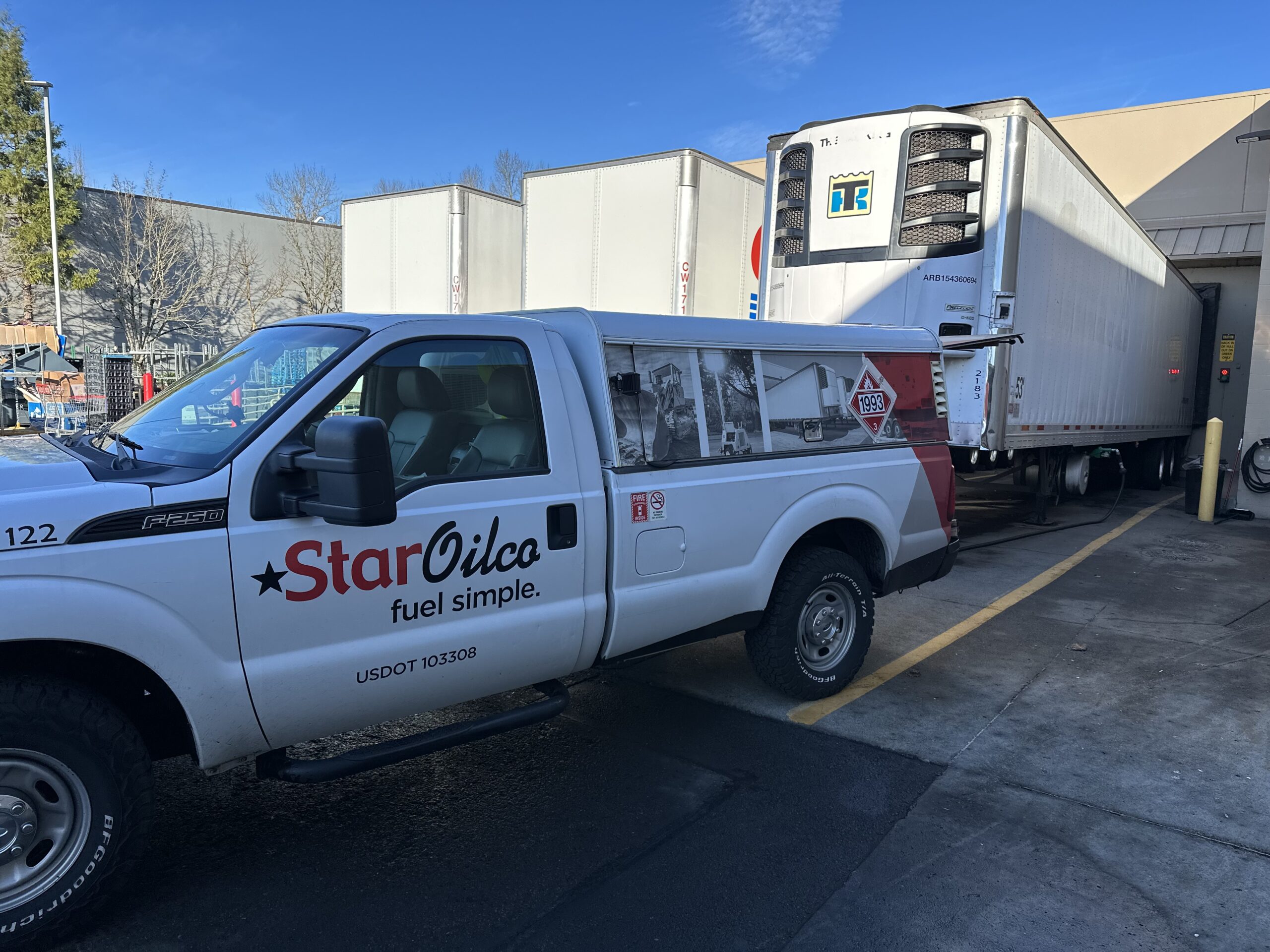
Emergency Back-up diesel fuel delivered in Portland, Oregon

What is the condition of your Emergency Back-up Diesel Fuel in your generator tank?
When the Power goes out, we have diesel ready to keep your backup generator fueled.  We can also set up automatic fueling and DEF top off service with confirmation for your facility team’s needs. Whether you want long term stabilized diesel, dyed R99 renewable diesel, or B20 biodiesel blends we have you covered with your fuel specification needs.

Emergency Back-up diesel fuel tank avaialble.

Star Oilco has 250 gallon and 500 gallon tanks available to increase the onsite supply for an emergency back-up diesel need in the Pacific Northwest.

We have drivers on the road today with diesel.

When was the last time you had your generator filled with stabilized diesel?  We deliver off road diesel treated for long term storage.

Open an account with Star Oilco today and prepare for the next power outage.

Recent heat waves might have caused power outages.  Make sure your generators are full for this winter now.  With dynamic changes in the way power is used in the Pacific Northwest power outages have become more common than ever before.


Are you prepared for the next emergency?
Have you filled up since the last time?
Would you want to test your diesel fuel oxidative stability to make sure it is still good?

Keeping your back-up generator fueled could be the difference between an inconvenience and a disaster.  Stay ahead of the next emergency and re-fuel now.


Remember that ordering diesel for your generator is a specialized service, we will make it easy for you.

Getting the fuel for your generator or emergency equipment is only one part of the problem.  How you store it can be just as important.  This is why its important to work with a company that can help you.

You want to stabilize and treat your diesel for generators and other back up equipment.

Order fuel treated for long term storage!

Star Oilco is an expert at fueling back-up generators, emergency water pumps, and other long term off-road diesel storage requirements. We understand, that in the Pacific Northwest, biodiesel blending is required by state laws. Biodiesel needs an extra layer of care when stored as a back-up diesel fuel.Filling a Generator in the Snow

Most off-road diesels and heating oils are ultra-low sulfur diesel containing at least 5% quantity of biodiesel.  This means long term storage requires a proactive approach.  You can’t just hope it works or wait to see if the fuel will burn after years of storage.

Emergency back-up generator diesel fuel is a specially treated oxidative stabilized off-road fuel designed to store for years.

Fueling a backup generator is a specialized product. The fueling service requires a vendor who understands your needs and keeps you up and running in an emergency.

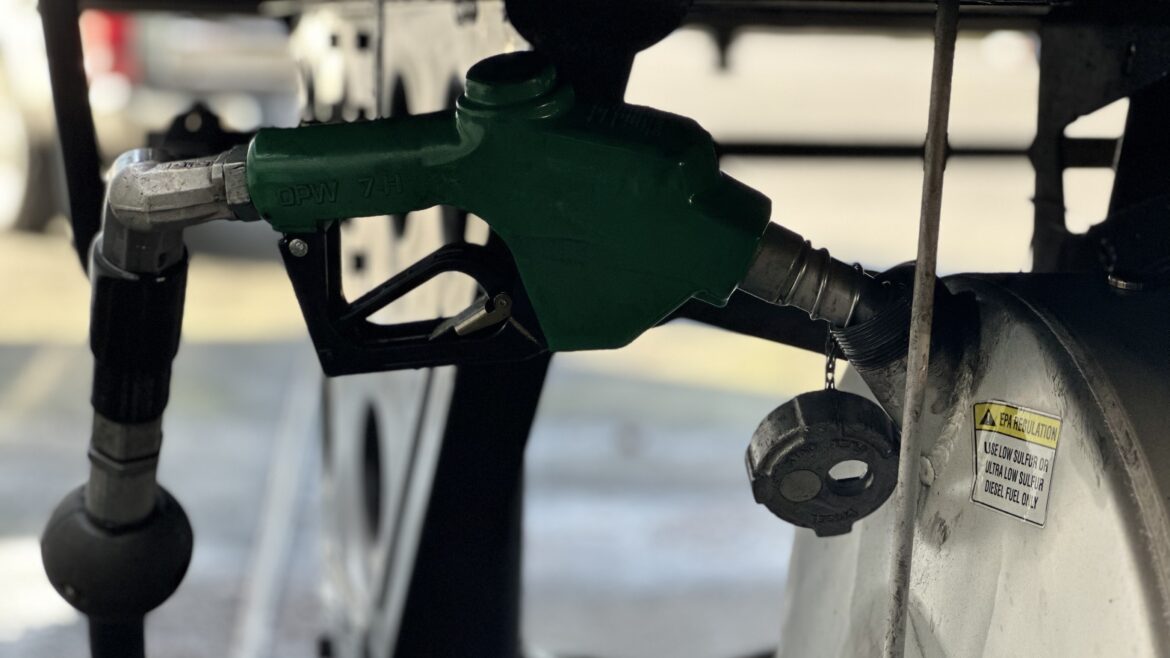
Generators take off-road diesel, of course, but you want an ultra-low sulfur diesel to ensure it works with modern emission systems. Some companies deliver higher sulfur product that look the same but foul the emission systems of your equipment.

Beyond the service provided, you also want a vendor who offers a fuel stabilizer and biocide for the special long term storage needs of your backup generator. Star Oilco recommends you add a biocide and long-term storage stabilizer to your fuel to ensure it is good whenever you need it.

Use additives designed to prolong the life of your emergency diesel fuel.

Biocides prevent the growth of biological activity in the tank. In scenarios where micro-organisms like algae, bacteria, yeasts, and other bugs are growing in your fuel, biocides kill this growth. It is still important to remove the residual grit and other contaminants that are the hallmark of bugs growing in your tank. Usually, turning over the fuel or using a filtration can remove this.

If your tank absolutely has to be clean, you can contract a tank professional to enter the tank and physically clean the tank bottom or reline the tank with either fiberglass or an epoxy resin. We use Valvtect Bioguard Plus 6 for generators, emergency water pumps, backup boiler fuel, and other long term storage purposes. This product kills any existing biological growth and stabilizes your fresh diesel fuel for long term storage. Make sure your diesel is ready the next time you need backup power.

Water in diesel destroys fuel quality rapidly.

Check your tank for water every fall and spring.

Pumping the tank bottom removes water if it ever finds its way into your storage tank. Additionally, you want to put in an absorbent material designed to absorb water and not fuel. If your long-term storage tank has water and you are not planning to burn 100% of the fuel in the near future, DO NOT add anything that removes water by distributing into the fuel. Adding a “fuel drier” that actually pushes the water into solution with the diesel will worsen the long-term quality of your fuel, not improve it. That water is where bugs find their home to grow in fuel.

Star Oilco will test your fuel at no charge if you have an open account.

Feel free to call us with any questions you may have about long term storage of diesel. Star Oil can also deliver treated diesel ready for long term storage complete with Premium Diesel additive to improve the long-term storage quality of your fuel. For biocide, we use Valvtect BioGuard fuel microbiocide to kill any possible biological activity and prevent any chance of it starting.

Diesel Testing and Storage in Portland

If you have a long-term diesel storage tank and you are in the Portland, Oregon area, we are here to test your fuel.  Make sure your diesel is there for you when disaster strikes.

Tank Testing Form

  • This field is for validation purposes and should be left unchanged.


For more reading on diesel fuel quality assurance:

Fight Humbug in your Diesel Tank (using Valvtect Bioguard Plus 6 to stabilize your stored diesel)

Emergency Back Up Generator Fuel Quality (designed to provide a checklist to help Facility Managers keep those backup generators ready for emergency action)

Using Dessicant Breathers to keep diesel fuel dry and clean (an introductory primer on desiccant breathers and how they can be used to keep long term diesel storage drier and cleaner)

Using Diesel Filters to clean up your diesel fuel quality (an introductory primer on using aggressive filtration in line with diesel fuel dispensing for fuel quality assurance)

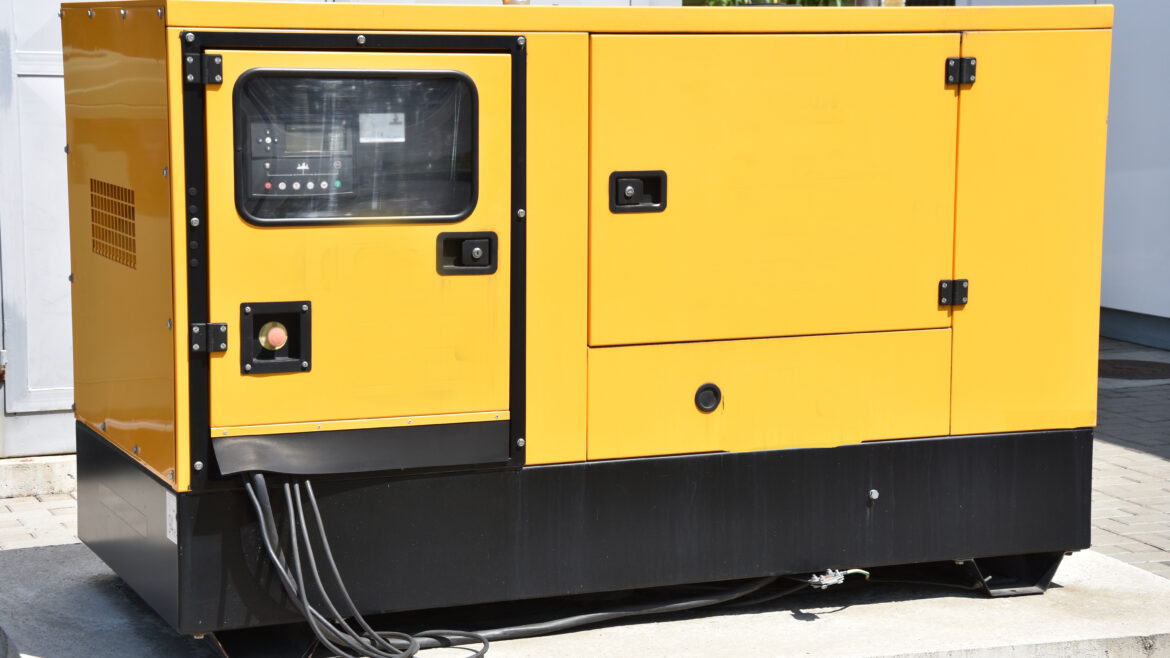
Yellow diesel backup generator for emergency power
Fuel Quality In An Emergency Back-Up Generator Matters – Find Out Why 1024 683 Star Oilco

Fuel Quality In An Emergency Back-Up Generator Matters – Find Out Why

                      Emergency Back Up Generator Diesel Fuel Quality

The fuel in your generator is the single most overlooked item in maintaining a back up generator.  Be prepared and know your back up generator diesel fuel quality is ready with these best practices.

When the power goes out, don’t let a decade old tank of diesel be your weak link.


Diesel Generator Fueling Service

As a provider of back up generator fueling services we know how critical fuel is in an emergency.

Back up generators are everywhere when you start looking for them.  Rarely needed but when a storm or disaster strikes their failure to fire will be extremely conspicuous. In the Pacific Northwest where resilience planning around a major subduction zone earthquake is a monthly subject of talk.  Back up diesel will be the only immediately power source after a quake.  Diesel generators are taking center stage for emergency preparedness, placing those who maintain them in some high level policy discussions.

Avoid a double emergency when the back up power isn’t there for your need by focusing on the diesel fuel quality.

The worst case scenario for fuel quality is water getting into your diesel fuel reservoir as well as biological growth occurring in that water logged diesel. If water is present in diesel, and that diesel is in a warm dark place, bacteria will start growing in your tank. So first preventive step is watch for water.  The most likely problem with fuel you will see is the fuel aging and degrading in place over years of not being used.  That can be addressed with your routine maintenance on the tank.

CIM-TEK water absorber

NOTE: To get a small amount of water or to ensure a dryer tank of fuel, CIM TEK makes a Tank Dryer which absorbs a small amount of water in a tank. Handy similar to adding a desiccant into a closet with a slight condensation issue. 

Back up power generator diesel fuel quality.

The big rule for storing back up generator fuel is to make sure the diesel you use is clean and dry.

First ensure you are testing the generator by running it once a month.  Move fuel through the system and ensure the generator is starting right up. Run the generator for a while to use up fuel and be prepared to order a regular top off when you get below 3/4th of a tank. When checking the fluids on the generator prior to start up see if the fuel filter has a visual transparent bottom where you can see what the fuel looks like there. If it looks like dirty fuel or there is evidence of water take notice.  After cycling the generator take a peek and make sure the fuel it’s pulling into the generator is bright (not dark and degraded).  If you are seeing any water (even a small drop) that is an indication of real concerns.

If you are using up half a tank a year and adding to it, the fuel quality will usually stay within specification.  If you have worries the easiest way is to just start over. With older generators sometimes it’s a good idea to just evacuate the tank (empty all the older diesel fuel) and replace it with fresh diesel treated and stabilized for long term storage.

Most back up generators are seeing routine annual maintenance where the mechanical needs of the equipment are walked through. If this is occurring ask for a bottom sample from the back up generators fuel tank. Also ask to see what the fuel in the bottom of the fuel filter (assuming they are changing that) would give an indication if problems might exist deep in the fuel tank.

Back Up Diesel Generator Fuel Service

Sampling and Onsite Testing of Fuel from Generator Diesel Tank:

  1. Pull sample from tank bottom
    1. Use a professional “Bacon-Bomb Sampler” (google it to see one) or a small fuel transfer pump available at any auto parts store.
  2. Visually inspect it by swirling it in a beaker or mason jar.
    • Look for water and dirt fall out as you swirl.  If you see a few drops of water form you’ve got a water problem. If you are seeing coffee ground type material in the fuel, that’s biological growth. If an algal or gunk type slime appears, that’s also biological growth.
    • If clear like cranberry juice and bright – your fuel is in good shape.  If a darker cherry color yet still clear, your fuel is aging and you should consider swapping or burning fuel off in the next year.
  3. If fuel is dark in color (showing that it is aging in the tank) you can send that sample to a lab to test it. You want to ensure you are confirming the following:
    • Oxidation Stability (or Accelerated Stability)
    • Water Content in PPM (under 50 PPM is what you want, under 100 PPM is not uncommon, and over 100 PPM there is probably water in the fuel and you want to pursue remedial action.)
    • Make sure the fuel testing lab you are using (your current fuel vendor should have a recommendation or do it for free for you) is checking for:
      • oxidative stability (if it’s aging out of specification),
      • biological growth (if bugs are growing in it),
      • water content (indicating a puddle someplace in the tank causing higher water content in the fuel) and,
      • dirt content of the fuel (if there is dirt, there is probably biological growth or some other problem).
  4. Set aside sample in a warm dark place for a month and check it for biological growth occurring which will confirm if you have fuel growing inside the tank.
    • How to test diesel for biological growth In-House:
      • Take your sample that appears to be in great condition and set it aside in a warm dark place for a month (day light kills most biological growth in fuel, though day light ages your diesel in other ways).
      • When you come back to look at the sample, if a film or layer of darker color is appearing in the fuel, this is biological growth occurring.
      • If you see nothing and want to experiment further, add a slight amount of water to this sample, shake it up, and put it back in a warm dark place.
      • When you check back if there is a a new layer of darker color on the surface of where the water contacts the fuel, that’s what grows in your tank.
      • If nothing grows, your fuel is safely stabilized for storage this year. Even if water is finding its way into your fuel tank, the fuel is safe and will be ready to start.
        • NOTE: Do not leave water in your tank, even if the fuel looks good. Eventually it will be a major problem and something will grow. If you are putting biocide in your tank regularly and their is an environment for growth, something resistant to that biocide will take root and you WILL NOT be able to get it out of the tank without serious effort.

NOTE: If you are curious to see a fuel lab analysis of the diesel this is an example.  This is a lab analysis from Hydrotex, Star Oilco’s premium diesel additive provider.  They are very supportive in testing everything we send them for quality assurance. 


Do you have questions about generator diesel fuel storage?

If you have questions about fuel storage, Star Oilco has answers.  Star Oilco does not do tank cleaning, we still will help you figure out what you need to do in order to have the result you need.

Contact Form

  • This field is for validation purposes and should be left unchanged.


For more on Diesel Fuel Quality Assurance please see these other Star Oilco articles:

Desiccant breathers, dry diesel, and keeping your diesel fuel clean.

Every question Star Oilco has been asked about dyed diesel.

Keep and make your diesel fuel cleaner. 

Bioguard Plus 6, Kill and prevent biological growth in your diesel fuel storage tank.


Star Oilco truck fueling a large generator during winter conditions
Diesel Backup Tanks – Treating and Refilling 1024 768 Star Oilco

Diesel Backup Tanks – Treating and Refilling

Here’s good advice if you are relying on diesel as a back up fuel in the Pacific NW.

Now is the time to refill and treat your back up fuel tanks.

Diesel as a back up fuel

Quite a bit of our business at Star Oilco is fueling back-up generators, emergency water pumps, refrigerated trailers and other long term off-road diesel storage requirements. In the Pacific Northwest, biodiesel blending is required by state laws and you need to take an extra duty of care when storing diesel as a back-up fuel.

This means that most off-road diesels and heating oils are ultra low sulfur diesel containing a small quantity of biodiesel.  That means long term storage requires a proactive approach.  You can’t just hope and wait to see what the fuel begins to look after years of storage.

Technical advice from Government Fleet Magazine to help you with storing diesel fuel.

Here is an article from Government Fleet Magazine on the subject which runs through the specifics of long term storage and what causes fuel to degrade when stored.  Government Fleet Magazine – How to Maintain Stored Diesel Fuel.

Star Oilco has also worked up a PDF check list on how to verify if your fuel is in need of freshening or is still in emergency ready shape.  If you are a customer of ours, we will deliver a laminated card version to keep next to your back up generator. If you are not a customer (or outside of our service area) drop us a message below and we will gladly email you the PDF.

For our customers, we recommend that you check the tank bottom fuel quality on an annual basis to make sure the product looks good. If the tank has sat for years and is dark in color (good diesel is bright and transparent – you will notice if it is in bad shape), we recommend pumping the tank out at least partially and replacing with fresh fuel. Often you can also hugely improve the quality of the fuel by polishing the fuel. Polishing is when you circulate fuel from the bottom of the tank through a pump, filter repeatedly in order to remove any sediment or growth from the fuel, and then place this fuel back in the same tank.

Look at your fuel for a bright and clear color.

For stored fuel, you also want to make sure it is stabilized and contains a biocide. Stabilizers prevent the oxidation of the fuel and prevent the effect of metals like lead, copper and zinc, which can react and degrade fuel. For heating oil systems with a return line, for instance, the fuel is flowing through a copper line to the furnace and then back to the tank in a return line.

Use additives designed to prolong the life of your emergency diesel fuel.

Biocides prevent the growth of biological activity in the tank. In scenarios whcontaminated_dieselere micro-organisms like algae, bacteria, yeasts, and other bugs are growing in your fuel, biocides can kill this growth. It is still important to remove the residual grit and other contaminants that are the hallmark of bugs growing in your tank. Usually you remove them by filtration or total turn over of the fuel. If your tank absolutely has to be clean, you can contract a tank professional to enter the tank and physically clean the tank bottom or reline the tank with either fiberglass or an epoxy resin.

Water in diesel destroys fuel quality rapidly. Check your tank for water every fall and spring.

In events where water finds its way into your storage tank, that can also be corrected by pumping the tank bottom. Additionally, you want to put in an absorbent material designed to absorb water and not fuel. If your long term storage tank has water and you are not planning to burn 100% of the fuel in the near future, DO NOT add anything that removes water by distributing into the fuel. Adding a “fuel drier” that actually pushes the water into solution with the diesel will worsen the long term quality of your fuel, not improve it. That water is where bugs find their home to grow in fuel.

Star Oilco will test your fuel at no charge if you have an open account.

Feel free to call us with any questions you may have about long term storage of diesel. Star Oil can also deliver treated diesel ready for long term storage complete with Hydrotex PowerKleen Premium Diesel additive to improve the long term storage quality of your fuel. For biocide, we use Valvtect BioGuard fuel microbiocide to kill any possible biological activity and prevent any chance of it starting.

Diesel Testing and Storage in Portland

If you have a long term diesel storage tank and you are in the Portland, Oregon area, we are here to test your fuel.  Make sure your diesel is there for you when disaster strikes.

Tank Testing Form

  • This field is for validation purposes and should be left unchanged.


For more reading on diesel fuel quality assurance:

Fight Humbug in your Diesel Tank (using Valvtect Bioguard Plus 6 to stabalize your stored diesel)

Diesel Fuel Technical Review (an easy to read and free text book on diesel fuel)

Emergency Back Up Generator Fuel Quality (designed to provide a checklist to help Facility Managers keep those back up generators ready for emergency action)

Using Desicant Breathers to keep diesel fuel dry and clean (an introductory primer on desicant breathers and how they can be used to keep long term diesel storage drier and cleaner)

Using Diesel Filters to clean up your diesel fuel quality (an introductory primer on using aggressive filtration in line with diesel fuel dispensing for fuel quality assurance)

greenhouse gas emissions reduction graphic by Star Oilco
Why diesel fuel in Oregon may go up in 2025 940 788 Star Oilco

Why diesel fuel in Oregon may go up in 2025

What are the market forces impacting diesel in Oregon for 2025?

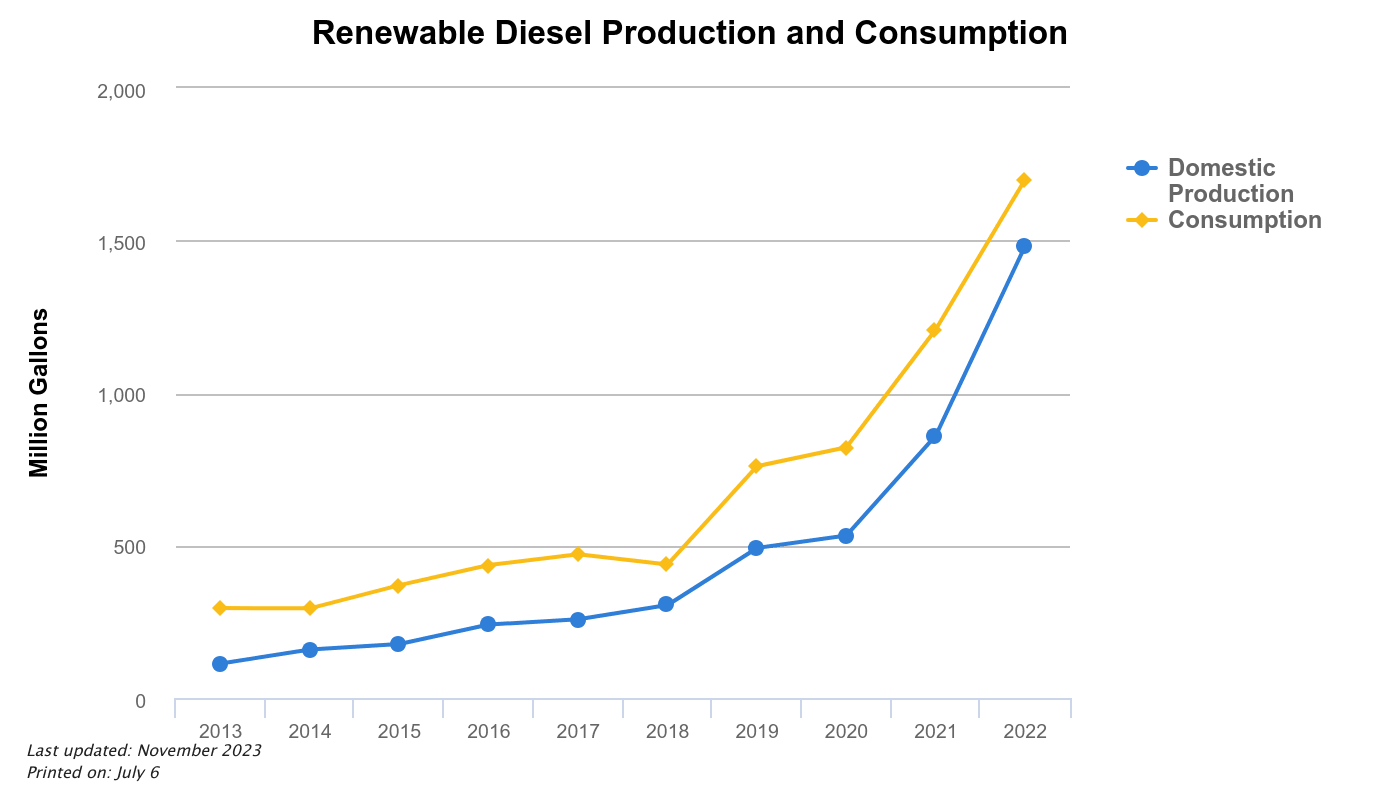
There are some big changes coming for diesel fuel in Oregon and it is not widely reported. The biggest likely change being a smaller supply of renewable diesel in the first quarter of 2025.  Renewable Diesel is expected to see a shorter supply than in recent years as imports drop off with the removal of subsidies.

Oregon is going to see several major market forces impacting the wholesale, as well as retail cost of diesel to those that buy it.   To list them simply, the following events will converge on New Years Eve:
The end of the $1 a gallon US Blenders Tax Credit (BTC) subsidy on biodiesel and renewable diesel.
– The subsidy replacing the BTC, the Producers Tax Credit (PTC), blocks imported biofuels such as Neste Renewable Diesel.
– Oregon is relaunching its Climate Protection Program which will cap the market allowance for fossil fuels.
Portland has a Renewable Fuels Program that requires the blending of Biodiesel and Renewable Diesel under a 60% reduction in CO2 emissions from petroleum diesel (biofuels sold in Portland must be below a 40CI under Oregon’s Clean Fuels Program).
California has mandates for Renewable Diesel in many uses raising the cost of R99 renewable diesel throughout the US.

These forces will raise the cost of fossil fuel diesel, renewable diesel and biodiesel while at the same time Oregon and Portland are requiring the use of these biofuels.  This will mean a higher retail and wholesale price inside Oregon compared to the rest of the United States. We cover the details of these trends below in depth.

THE OREGON CLIMATE PROTECTION PROGRAM

The biggest change impacting the price for on-road diesel is the return of Oregon’s Climate Protection Program (CPP). The program’s more common name is Cap and Invest, in fuel pricing it is referred to as “Cap at the Rack” as its allowance requirements are priced on a gallon of fossil fuel.  The program caps the total fossil fuel allowed to be sold inside Oregon. Then, revenue generated from selling the allowances to import CO2 contributing fossil fuels into the state, is invested to reduce future needs for these fuels.  In 2025, this program will return and fuel importers into the state of Oregon will have to capture the cost of reducing their CO2 emissions under this program.

Oregon previously had a “Cap and Invest” program limiting the total market share allowed for petroleum diesel fuels.  This created a higher cost for diesel fuels refined from petroleum compared to renewable diesel and biodiesel. This program was stopped by an Oregon court decision in 2023. The Oregon Department of Environmental Quality (DEQ) just finished and published the new rules for this program correcting the issues the court had with the program.

The way the Oregon Cap and Invest works on the market is similar to musical chairs. If you imagine the market for diesel is limited just like seats in musical chairs, every year they will take a few of the fossil fuel chairs away.  That means that anyone maintaining their existing customer gallons or trying to grow their volumes must meet this demand with renewable diesel, biodiesel or some other fuel.  The limited market for fossil fuels is represented by “Allowances” provided by the Oregon DEQ.  If a fuel seller cannot reduce their fossil fuel dependency, they need to buy a CPP Allowance in an Oregon DEQ curated market for them.

The value of these CPP Allowances is actually charged on each gallon of fuel sold by the regulated parties.  It is commonly called “Cap at the Rack” and can range in cost from nothing to over $.50 a gallon depending on how hard it is to meet the need of the program.  The biggest impact on the Cap at the Rack cost is how much renewable diesel or biodiesel is being used by those selling fuel.   Prior to the stoppage of Oregon’s CPP program, the Cap at the Rack cost usually ran around $.05 to $.30 a gallon.  It is expected we will see a return to this cost starting January 1st, 2025.  OPIS reports have an adjusted and non-adjusted option to capture the cost of this program.

The way the CPP program is designed is that if a fuel seller brings in a lower CO2 fuel like renewable diesel or biodiesel into the state of Oregon those gallons do not count towards the fossil fuel market cap.  So a R99 seller has no CPP Allowance obligations for those gallons.  A B20 biodiesel blender, as well, picks up 20% more gallons available to sell as those biodiesel gallons do not count against their CPP Allowances.  This facet of the CPP is why the market of renewable diesel in particular is a big deal for diesel prices.

The intent of Oregon is for consumers, fleets, farmers, municipalities, and industry in Oregon to grow their energy needs, they will need to use more low carbon energy.  If this energy use is a fleet running over 32,000 GVW this will mean low CO2 biomass based diesel fuels.   At the same time, the CPP program is kick-starting back into existence, the world of these biofuels is seeing some major market changes.

OREGON CLEAN FUELS PROGRAM

Oregon has another program to reduce the CO2 of the liquid fuels sold inside the state.  This program is additional and works in conjunction with the CPP.  It is the Clean Fuels Program (CFP) and is extremely similar to the California Low Carbon Fuel Standard (LCFS).  This program creates a market for Carbon Credits that are traded and required by fuel importers into Oregon.  OPIS also shows this program’s cost per gallon on their reporters.

Where the Climate Protection Program is like musical chairs with market share as the allowed market for fossil fuel shrinks year over year, the Clean Fuels Program is like a coupon required with sales of fossil fuel.  The major importers of fossil fuels into Oregon must show they are blending lower CO2 biofuels by presenting CO2 credit generated under the CFP program.  Users of fuel inside Oregon also see a benefit for bringing in low CO2 fuels when the market needs the credits so that voluntary users of high blend biofuels like R99, B99, B20 or E85 (85% ethanol) get financial support via a reduced final cost per gallon if using those fuels.

The reason we see renewable diesel in Oregon compared to the rest of the United States is because of this program.  This value of a Carbon Credit is usually taken to buy down the competitive price of these biofuels.  The concept is that if a fuel importer is bringing low CO2 fuels into Oregon, the reduction in CO2 these fuels represent can generate a CO2 credit.  That credit being sold on an open market to help reduce the cost of a low CO2 fuel compared to a fossil fuel.  The market for these credits is banked and has been building for years. Currently, the CO2 value is low as there are plenty of credits.

If the market availability of renewable diesel and biodiesel is dropping, the value of these credits should be rising.  The overall market will be bearing this cost though consumers will likely never see it.  In effect these regulatory market impacts of less renewable diesel in Oregon will mean a higher Carbon Credit price under the CFP program.  That will help lower the blended or delivered costs of B99 biodiesel and R99 renewable diesel hitting the end consumer.

RENEWABLE DIESEL AND BIODIESEL SUPPLY IN OREGON

Biodiesel and renewable diesel are called “Biomass Based Diesel” as a respective class of biofuels.  Where fossil fuel diesel is made from crude petroleum, biomass based diesels are diesel fuels made by several technologies from biomass feedstocks. The most widely used feedstock being fats, oils, and greases from virgin vegetable seed oils (soy and canola) or waste streams like recycled deep fryer oils, meat processors rendering fats, recovered trap greases, and many other sources of fat waste streams.

The 2025 Oregon Fuels Forecast for Oregon predicts a 199+ million gallon need for R99

The Oregon Department of Administrative Services Office of Economic Analysis produces a Clean Fuels Forecast which describes the size of the market need in Oregon.  In 2023, Oregon used 133.3 million gallons of R99 inside the state. The fossil fuel diesel used in 2023 was 577.6  million gallons by comparison.  So R99 and B99 blended with those gallons is a substantial 26% of the diesel burned in Oregon by the most recent total data.  The forecast for 2024 Renewable Diesel is 46.6 million gallons of R99, which appears to be exceeded by quite a bit.

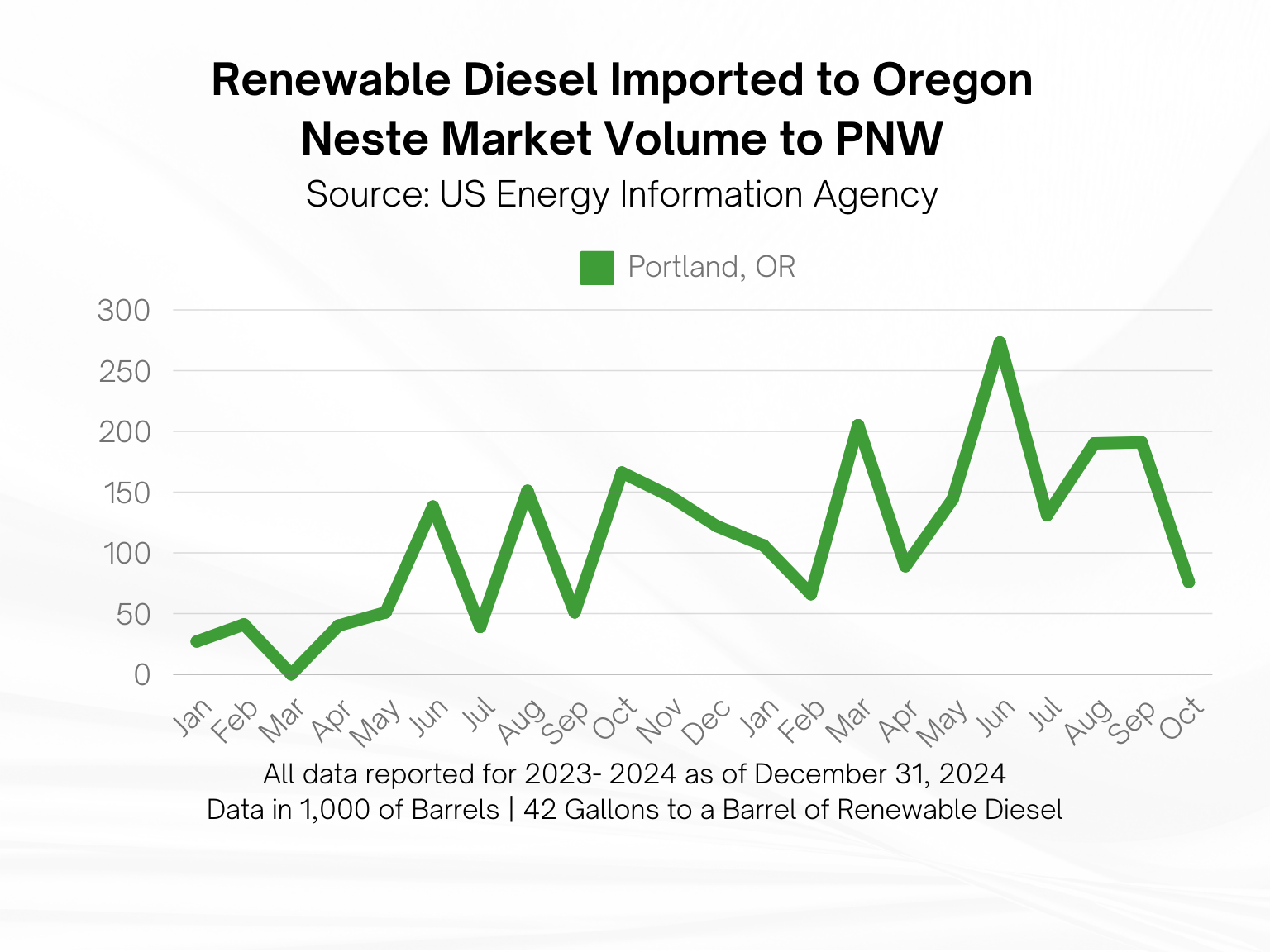
We do not have total consumption numbers for 2024 yet, but we do know thanks to the US Energy Information Agency, that imported R99 from Neste Singapore by itself through October was roughly 62 million gallons rounding up.  The Oregon Clean Fuels Forecast expects 199.5 million gallons of renewable diesel in 2025.  As the program ramps up with this expectation, the imports of previous years will be far less competitive without subsidies.  This means the price of renewable diesel will be higher, unless US production scales to not only fill this market void but also add tens of millions of gallons into the state.

Of that 133.3 million gallons of R99 used in 2023 in Oregon, a third, more than 40 million gallons of it was imported Neste Renewable Diesel.  973,000 barrels of renewable diesel was shipped from Singapore to Oregon that year.  Other renewable diesel refiners such as Diamond Green, HF Sinclair, Marathon, Montana Renewables, Phillips 66 and Chevron also had R99 product sold into Oregon.  Regardless of the expansion of US domestic Renewable Diesel production in recent years, the Neste product no longer receiving subsidies will have a real impact to maintain these 133+ million gallons of R99 inside Oregon.

This same projection reports that Oregon’s B99 Biodiesel use inside the state in 2023 was 78.8 million gallons.  With a projection of Biodiesel to rise 83.8 million gallons in 2025.  Given these market needs, Star Oilco predicts R99 to be expensive compared to petroleum diesel. Biodiesel will be more competitive given the available product and no substantial change in suppliers.  Biodiesel will also need to be used to replace R99 gallons under the CO2 reduction programs of Oregon. Due to these market forces Star Oilco has contracts for supply at reasonable prices for our existing customers.

R99 is mandated in certain diesel uses in California by the California Air Resource Board (CARB) which make for an inelastic price.  Diesel equipment operators in California will have to buy R99 at any price.  This will raise the prices we in Oregon can expect to see renewable diesel at.  The other low CO2 diesel fuel biodiesel will not be impacted by CARB the same way and we can expect to see B20 become more widely sold because of its more competitive price.

Biodiesel has a much more widely used market development around the US, especially in over-the-road trucking.  The plants that make biodiesel also tend to be co-located, owned in collaboration with feedstock producers, and integrated within the Soy industry that produces the feedstock.  Expect that biodiesel will continue to be more competitive with diesel than renewable diesel if price is the concern.

It is worth mentioning that the CARB mandates for R99 use in California will have impact to set the price for renewable diesel in other states.  If the market demand mandated by CARB continues and the market is short, the price can be expected to rise to meet this demand.  So unsubsidized imported R99 will likely continue to flow into California and other states but it will be at a full cost to make up the subsidy.  This will likely mean that incremental gallons of R99 needed to meet the market growth projected in Oregon will be at a premium over Oregon diesel to match California’s diesel market.

US BLENDERS TAX CREDIT EXPIRATION IMPACTING OREGON

The biggest unknown on how expensive diesel will be for Oregonians relates to Federal biofuel policy.  For the last twenty years the US Government has had an on-again/off-again subsidy on biodiesel and more recently renewable diesel.  There have been years the subsidy was not renewed which informs us of what probably will happen with prices on biodiesel.  Renewable diesel though is a stickier market.  The reaction of R99 renewable diesel prices in California, Washington and Oregon market is the big question and it comes down to an issue of production.  Two big issues at play are how much renewable diesel will these states continue to see from Neste’s Singapore plant and how much new US production for renewable diesel comes online to feed the market need.

The Blenders Tax Credit will be replaced with the Producers Tax Credit

The Blenders Tax Credit expired December 31st.  There are those that hope that in January the new Congress will take up an extension of this but most experts in the industry do not expect and are not betting an extension will not occur.  Meanwhile there is subsidy regime named the “Clean Fuels Production Credit” or the slang term preferred by industry the Producers Tax Credit (PTC) which ranges from $.20 a gallon to $.80 a gallon depending on how low CO2 the fuel as well as some labor practices.  The PTC also bars imported renewable diesel and biodiesels from getting any money at import.  Approximately more than 40,000,000 gallons a month of renewable diesel flows from Neste Singapore to the west coast, this will have a huge impact on Oregon.  For those accustomed to that fuel at the same price as fossil fuel diesel, the expiration of this subsidy will raise our prices for those demanding R99 renewable diesel which was already in short supply prior to this change.

There is also another wrinkle in the subsidy policy of the US with this.  The subsidy on Sustainable Aviation Fuel (SAF), basically renewable diesel meeting the Jet A fuel specification, is still in place for imported product for another year.  Europe also has some significant incentives and mandates for SAF.  Renewable diesel refiners, both domestic as well as foreign have a huge financial incentive to make renewable jet fuel over renewable diesel. This reality probably means that if a gallon of fuel can go to a jet fuel market over a transportation market it will.

So the market forces for renewable diesel in particular probably means less R99 available nationwide in the US.  While that is happening, the state of California has mandated that all off road equipment run R99 Renewable Diesel.  So regardless of what the price of this fuel is, California will have to use it in huge volumes.  Markets being what they are, for high volume fleets demanding R99 they can expect the R99 price in Oregon will track the price paid in California.  There will be exceptions of contract relationships for supply of R99 as well as retail brands moving renewable diesel blends to meet their strategic CPP requirements.  This will definitely mean anyone wanting R99 will want to line up a contractual supply agreement or can expect a higher price than in 2024.

THE FEDERAL RFS AND RINS

It should also be mentioned that the US EPA has a Renewable Fuel Standard of its own. It is a completely different regulatory system compared to the Portland RFS.  This program requires gasoline refiners as well as importers to use so much biofuel in their sales inside the United States.  Federally refiners and importers must prove they blended specifically assigned amounts of ethanol, and biomass based diesel fuels.

This program attaches a Renewable Industry Number (RIN) on every gallon of biofuel sold in the US.  As there are many unobligated users of this biofuel in the US those blending their own biodiesel, renewable diesel and ethanol generate RINs that can be sold to the refiners and importers of gasoline inside the US.

The RIN value has been low compared to historic values for biomass based diesels.  As Biodiesel and Renewable Diesel generate the same type of RIN, the reduction in imported R99 might raise the value of these RINs.  This value increase for the Renewable Industry Number is expected to slightly off set the hard subsidy.  It will be a market based value so it can not be relied upon for lowering the cost of biofuels, but can be expected to help with price.

As more US produced renewable diesel is coming online, hopefully enough to replace the lost imported gallons before the busy summer diesel season, these RIN values may not have a major contribution to the wholesale price of R99.

CONCLUSION

We predict diesel prices to rise in Oregon compared to the US in the first quarter of 2025

Star Oilco’s team saw these market conditions coming during the summer of 2024.  We have locked in contractual supply of R99 renewable diesel for our existing customers and have additional supply for customers seeking R99 renewable diesel by Star Oilco owned cardlock sites, mobile onsite fueling or smaller volume bulk delivery.

Star Oilco expects a Cap at the Rack price from the Oregon CPP to be between $.10 and $.40 a gallon by the end of January depending on biofuel supply. With unofficial conversational predictions with several large fossil fuel refiners and brokers, there is an expectation of over $.25 a gallon as a Cap at the Rack price.  We think it will be higher than that with the removal of millions of gallons of R99 from Oregon’s market.  In the first quarter with the removal of imported R99 hitting the state we expect the Cap at the Rack price to start in the higher $.30 a gallon range where it left off when the program was ended by a court. As the low CO2 exempt renewable diesel gallons shrink in the first quarter a heavier reliance on fossil diesel will be required.

We expect quite a bit of biodiesel to be loaded up ahead of the $1 a gallon subsidy being ended on December 31st.  Renewable diesel will be in short supply due to disruptions in supply of imported product.  So first quarter R99 will be at a premium and B99 for blending with diesel will be a deal to be had as fossil fuel diesel prices rise.  Expect to see far more B10 and B20 offered in the market place as either a more common than not fuel at retail gas stations, truck stops, and most cardlock stations, especially in Portland.  Star Oilco will have options for our customers of either B20, R99, or R20 blends of diesel all complying with the City of Portland Renewable Fuel Standard inside the city.  Star Oilco’s Portland CFN and Pacific Pride locations will have both R99 and B20 hoses available for customers.

California will continue to demand any and all R99.  If the market is short R99 because of a removal of imported renewable diesel, the value of R99 in California will rise to justify foreign R99 to enter the market without a subsidy.  Star Oilco presumes that number will be between $.40 to $.80 a gallon.  If R99 in California is able to demand a premium, Oregon will have to pay that price for incremental gallons.  Oregon has a specific need for R99 and B99 for retail gasoline sellers to meet the Climate Protection Program (if you sell so much gasoline you must reduce your market share someplace and R99 diesel is the easiest way to do that).  Oregon retailers will be seeking to move a budgeted amount of renewable diesel and biodiesel to meet their fossil fuel allowance budgets under the CPP.  Each gallon beyond that will have to compete with California at a high price.

R99 will still be available but we expect incremental gallons to be at a premium.  Contractual gallons direct with a refiner of renewable diesel will have a consistent price that a business can manage fuel surcharges against diesel.  Outside of a contract for volumes, the wholesale rack price of R99 may vary wildly compared to a B5 ULSD fossil fuel diesel prices depending on how high diesel is going for are as well as the CPP and CFP values of a Carbon Credit and Cap at the Rack.

The big unknown to price is how one key importer of R99 will respond to the market without a subsidy.  It is the assumption of Star Oilco that California will continue to buy imported R99 without a subsidy for it’s off-road mandated market. If the economics of Neste are such, they can compete and open the floodgates of R99 and this could change.  This open flood of product is not expected especially given the economics of Sustainable Aviation Fuel which renewable diesel plants are expected to make more of in 2025.

The Oregon and Washington market will see a flow of new capacity of R99 for retailers mandated to reduce their fossil fuel volumes.  US production of R99 is expected to more than compensate by 2026, but 2025 will be a chasm to jump.  Chevron, HF Sinclair, Marathon, and Phillips 66 will be procuring and supplying US made biomass based diesel to the Pacific NW for their retail gas station needs.  We would expect to see R99 or blends of it sold at parity with branded diesel in the retail market in Oregon.

Commercial sellers of wholesale unbranded diesel will have a tougher time lining up R99 at a price in line with wholesale B5 or B20 ULSD.  No doubt with these higher prices we will be seeing an evolution of R20 (20% renewable diesel) as well as blends of biodiesel with renewable diesel available inside the City of Portland for it’s Renewable Fuel Standard as a premium fuel at a competitive price with diesel.

Star Oilco has R99 and R20 blends for commercial customers in the Portland, Oregon area.  We also have R99 available for Clark County Washington commercial and municipal fleets.  Star Oilco also has biodiesel blends and can support fleets seeking to succeed with it.  Call us if you would like to talk about your fuel supply in 2025.

If your fleet has an interest in a consistent and contractual supply of R99 renewable diesel or wants to develop a relationship that prioritizes a 20% of renewable diesel blended to meet Portland’s Renewable Fuel Standard compliance please feel free to reach out to Star Oilco.

Reach Out To Our Team

Our team of fuel experts would be happy to work with you and help you understand how this affects your operations

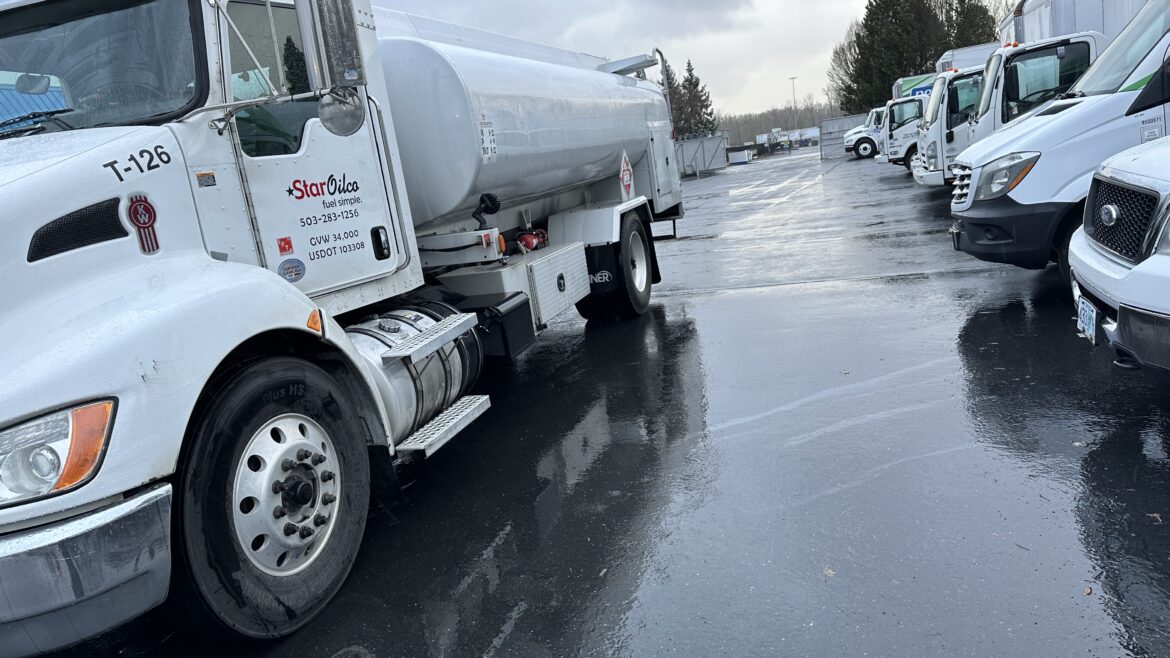
Star Oilco fuel delivery truck parked beside commercial fleet vehicles on a wet asphalt lot
Star Oilco Speaks On Decarbonizing Heavy Duty Trucks 1024 768 Star Oilco

Star Oilco Speaks On Decarbonizing Heavy Duty Trucks

Decarbonizing Heavy Duty Fleets By Using B99 Biodiesel.

Mark Fitz joined the Clean Cities Coalition Mindful Mobility Tech Talk series for their High GHG Reductions webinar. Mark spoke on the benefits of B99 and how fleets can begin decarbonizing their emissions today!
On September 28th, 2022, three representatives were invited to speak on how they are not only saving large amounts of energy but are also having a big impact on reducing greenhouse gas emissions.

B99 Biodiesel reduces CO2 footprint of a 105,500 GVW truck and trailer by more than half at a lower cost than petroleum diesel.

How Can I Utilize B99 or B100 for Decarbonizing My Own Fleet?

Star Oilco uses The Vector System developed by Pittsburgh-based Optimus Technologies. The Vector System allows upgrades for any medium or heavy-duty engine to operate on 100% biodiesel. This is the only EPA-compliant biodiesel engine system and can be installed in as little as 12 hours. Contact Optimus Technologies or reach out to Star Oilco locally to learn more about The Vector System.

Star Oilco’s Field Test

Star Oilco fielded the Optimus Technologies system on our 105,500 GVW truck and trailers.  We began with a single Freighliner truck and trailer operating a Cummins ISX as a trial.  This truck’s typical route was approximately 305 miles round trip from Portland, Oregon to Grays Harbor, Washington.

Over the last year and a half this truck has performed amazingly well. The only maintenance concern is swapping the fuel filters more regularly with every oil change.  Neither drivers nor our Elog system noticed differences in mileage and power.  On a few occasions a loss of power was experienced requiring an in between service fuel filter swap.

Follow the links below for more information on B99 Biodiesel and Star Oilco’s field test of the Optimus Technologies System:

B99 Biodiesel As A Heavy Duty Fuel

Biodiesel As A Heavy Duty Low Co2 Solution

This event is part of the Columbia Willamette Clean Cities Coalition’s Mindful Mobility Tech Talk series.  A series designed to educate and expand on the evolving trends in fleet technology relevant to fleets seeking to decarbonize their miles traveled.

Golden diesel fuel swirling in abstract motion
Every question Star Oilco has been asked about heating oil 1024 574 Star Oilco

Every question Star Oilco has been asked about heating oil

Heating Oil FAQ (and not so FAQ)

Every Question Star Oilco has been asked about Heating Oil

It’s getting cold again in the Pacific Northwest, so it is time to take a look at some common questions we have been asked about Heating Oil.  If you don’t see an answer to a question you have, please feel free to call, email, or message Star Oilco and we will gladly answer. We especially welcome questions  that require research.

What is Heating Oil in Oregon?

Heating Oil in Oregon is diesel and can have a biodiesel blend as well.  Diesel fuel has several grades either #1 or #2 Diesel.  The number refers to the grade with #1 being called either “stove oil” or “Kerosene” as another term for it.  Typically when someone is requesting or talking about heating oil they are talking about #2 Diesel dyed red to denote there are no on-road fuel taxes associated with the fuel.

How Does a Furnace Work?

There are several types of oil furnaces.  The most common is a vaporizing burner.  These furnaces typically work by taking a liquid combustible fuel, vaporizing it into a fine mist through a fuel oil nozzle, and igniting that mist into fire. That fire heats either air or water for your home’s comfort.

Heating Oil Fired Air Furnaces

Air furnaces usually move the air through a heat exchanger where a blower then moves air over the heat generated by your furnace, and finally the air is pushed through your home’s vents. 

Heating Oil Fired Water Furnaces and Boilers

Boilers and Water furnaces heat a tank of water which is then distributed several different ways to heat your home.  Either by moving hot water to radiators, radiant plumbing under your floor, or to a heat exchanger and blower which transfers the heat from the hot water into vents blown throughout your home. 

Heating Oil System prior to the combustion system

The parts leading up to the Burner of of an oil furnace system are simple. There is a tank to hold a reservoir of oil, a line from that tank (and sometimes a line back to it), a fuel filter, a fuel pump, and a vaporizing burner that combusts the heating oil into fire. Combustion of the fuel takes place in a fire box next to the heat exchanger. The heat exchanger takes on the heat of the flames to heat either air or water. In an oil furnace, the heat exchanger is assisted with a blower that pushes the hot air throughout your home to keep you comfy.

How Do I Check the Volume of Fuel in My Tank?

If you have an above or below ground heating oil tank you can confirm your fuel volume by the inches of fuel in the tank.  If you have an above ground tank there is probably a tank gauge that can tell you an approximate volume in the tank.  If you have an below ground tank you can confirm how many gallons are in the tank by putting  a measuring stick or tape-measure into the tank.

You will want to confirm the size of the tank you have. Your oil provider will probably have an idea of what size your tank is by looking or historic deliveries. Star Oilco has a tank chart which will help.  If you place a stick or tape measure into your tank and see how much fuel is in it you can compare that to a tank chart found on Star Oilco’s website.  When delivering fuel you can “stick” measure the tank before and after the delivery. Compare these volumes with the delivery and you can often figure out your tank size based on the before and after volume lining up with how much fuel filled your tank.

To view Star Oilco’s Tank Chart please click HERE. 

What is “Home Heating Oil” or “Residential Heating Oil?”

Home heating oil can be either a petroleum diesel fuel, bio-synthetic diesel fuel, or biodiesel fuel. In Oregon and Washington, home heating oil is typically ultra-low sulfur diesel fuel often containing between 5% and 20% biodiesel. Star Oilco’s standard home heating oil fuel is B5 dyed ultra-low sulfur diesel. Oregon mandates require that all diesel fuel sold contain a minimum 5% biodiesel. For that reason Star Oilco carries B5 or 5% biodiesel blends in our heating oil.

(NOTE: Kerosene sold by Star Oilco contains no biodiesel due to the reality that wick heaters cannot handle even a minute amount of biodiesel in them.) Star Oilco also carries a 20% biodiesel blend, called B20 Bioheat, for customers who want a cleaner burning low carbon fuel for their home.

What is Kerosene?

Kerosene is a heating oil product that is capable of being picked up and fed consistently by a wick heater. Kerosene is a diesel product that is very similar to the fuel used for over the road trucks. The big difference is that kerosene is a “lighter end” distillate fuel, which means it has a lighter specific gravity. This lighter characteristic means that it also works better in certain systems like wick heaters, pressure washers, and pot burner stoves.

Can Heating Oil be Used in a Kerosene Heater?

It depends on what type of system the kerosene heater is operating with. If you have a wick heater it will not work with heating oil. You will likely have to replace the wick to get it to work again as diesel will not readily drawn into the wick. Even if it does, it will burn far dirtier. If it is a pot burning system like a Toyostove or Monitor heater, then it will burn ultra low sulfur heating oil. Increased maintenance is to be expected on the pot burner, as there is a likelihood of more coking (crusty black soot build up) to occur inside that system.

What is “Bio Heating Oil” or Bioheat?

Bio heating oil and bioheat refer to heating oil products with a blend of biodiesel in them. Typically bioheat is a blend between 5% to 20% biodiesel with ultra low sulfur diesel for a clean burning and low CO2 heating fuel.

For a really in-depth look at biodiesel used as a heating oil check out this article. 

Will Heating Oil Run a Diesel Engine?

Yes, heating oil will run in a diesel engine. Heating oil is diesel. Be aware though that on-road vehicles must only run clear diesel fuels. If caught using heating oil in an on-road vehicle in Oregon and Washington, the fines can run in the tens of thousands of dollars. Heating oil can also be dyed to signify it isn’t for on-road use. 

Also be aware that even many off-road pieces of equipment and generators need ultra low sulfur diesel to operate without very expensive maintenance. Heating oil can have low sulfur or even high sulfur contents that could cause real issues for modern clean diesel engines. Some consideration is needed prior to burning a fuel marked “heating oil” in a diesel engine.

What Fuel Do I Need?

Consult your furnace, stove, boiler or water heater’s factory recommended specification. Typically it’s Number 2 Diesel unless it is a stove pot or wick heated system. If you have a furnace or a boiler in your basement, you can assume it’s heating oil. Call a licensed and bonded heating oil furnace technician to tune up your furnace to confirm for sure. If you do not have one, Star Oilco can refer you to a number of reputable long-time firms who can help.

What Are Additives and Are They Worth it?

Heating oil additives are added to fuel in order to improve it’s long term storage and performance.  They are worth it and most reputable heating oil providers additize their fuel without an extra charge.  This is because most heating oil customers store their fuel for long periods of time.  If you are planning on storing heating oil for years you will need a fuel additive to keep that fuel in the quality needed for your furnace.

Star Oilco provides a premium diesel additive called Hydrotex PowerKleen to every gallon of heating oil we sell.  Beyond this stabilizers, if you are planning on storing fuel for years we recommend ValvTect Plus 6.  You will want to treat your fuel with a biocide like ValvTect Plus 6 to will kill any bacteria, yeast, algae, or other biological organism that can grow inside your heating oil tank.

For more on storing diesel or heating oil for long periods of time please read this article on long term fuel storage.

What Does Heating Oil Smell Like?

Heating oil smells like diesel. It is a diesel product and often, depending on location, it is the same as on-road diesel. It may be dyed to denote that it is an off-road fuel with a untaxed use. Heating oil is dyed red in the Pacific NW to show it is off-road diesel.

What is Heating Oil #2?

Heating Oil #2 is number 2 diesel or the standard diesel sold in most places for on-road diesel use. Heating Oil #2 is a slightly different specification than on-road diesel that allows for more sulfur. That is a big difference as far as the EPA is concerned. On-road and off-road vehicles in the U.S. are required to use ultra-low sulfur diesel. Heating oil systems can use low or high sulfur diesel fuels. Ultra low-sulfur diesel is the most common Heating Oil #2 fuel that is delivered by Star Oilco since it is a superior and cleaner burning fuel, in our opinion.

Where can I buy heating oil at the pump?

In the Pacific NW heating oil is ultra low sulfur diesel. Therefore, you can buy any diesel sold at a retail gas station, truckstop, farm supply or other liquid fuel seller.  Heating oil is dyed red to show that it is not taxed for on-road fuel use.  Other than that red dye, typical auto-diesel will work in your oil furnace if you need to supply it from a diesel can.

At What Temperature Does Heating Oil Freeze?

Heating Oil Gel Point:

In the Pacific NW we expect number 2 diesel heating oils to be operable beyond -10 degrees. The record cold weather in the Willamette Valley is above 0 degrees (recent decades 16 degrees was our record low in Portland). We do test and add additives to our fuels to ensure they meet this specification even if they contain 5% biodiesel blended into heating oil.

Kerosene Gel Point:

Kerosene fuels (Number 1 Diesel, Number 1 Stove Oil, and Kerosene labeled fuels) are expected to be good below -30 degrees and are designed to be used in high altitude applications. (Kerosene and jet fuels are often the same specification in the Pacific NW.)

B20+ Biodiesel Gel Point:

Biodiesel blends of B20 and above are assumed to be good to 20 degrees but if Star Oilco expects below-freezing weather, we highly recommend B5 as your delivered fuel. B99 biodiesel typically gels at 40 degrees, so it’s not a winter fuel unless you have a system designed to keep the fuel warm in the middle of winter.

What do “Oil Heating,” “Oil Fired Heater,” or “Oil Furnace” Mean When Referring to a House?

“Oil Heat” or “Oil Fired” refers to a heating system reliant on burning heating oil. Typically this is by use of a vaporizing burner that takes the combustible liquid that is heating oil and vaporizes it through a nozzle into an igniter that causes it to burn.  This system burns the heating oil, creating a great deal of heat that can warm air, water, or both to heat a home or commercial space.

Can Heating Oil Fumes Make You Sick?  Are the Fumes Harmful, Dangerous, or Toxic?

NOTE: IF HEATING OIL HAS BEEN INGESTED PLEASE SEE A MEDICAL PROFESSIONAL!

Heating oil by itself is not dangerous or toxic if it come in contact with your skin.  It is easily washed off with soap and water.  A small amount of diesel spilled on the surface of the ground, typically will break down on it’s own in the presence of the environment.  A small amount spilled on concrete or asphalt can be cleaned up easily with dish soap and water. If your tank leaks and heating oil is soaked below ground this will not break down easily and will take professional help to treat.

The exhaust from heating oil systems contains carbon monoxide and carbon dioxide as well as particulates.  Heating oil and other diesel exhausts are very dangerous and toxic and should be avoided.  Do not allow exhausts of any kind to collect in an enclosed space.

Can Heating Oil Evaporate?

Heating Oil’s vapor point (the temperature it turns to vapor and evaporates) is around 140 degrees Fahrenheit.  Heating oil ignites at 160 degrees.  Typically in the Pacific NW the temperature (especially outside) is well below the vapor and flash point of diesel fuels including heating oil and kerosene. If spilled it will not usually evaporate. You can clean heating oil and diesel up with regular dish soap and water.

Can Heating Oil Vapor Explode? Can They Ignite?

Heating oil ignites at 160 degrees.  So unless the temperature is that high an explosion is not a risk.  Fire Code regulating heating oil tanks and placement takes this concern into account.  So typically except in extreme scenarios heating oil vapor does not pose an explosion risk.

If you drop a match into a cup of heating oil at room temperature it will go out.  If you hold a match to the surface of the heating oil in that cup the flame will get large and bright but the heating oil itself will not ignite.  Heating oil needs to be vaporized before it will ignite. It is a combustible fuel so it must be in a vapor form to light.  The vaporizing nozzle of your heating oil furnace turns diesel into a vapor mist easily ignitable.

Can Heating Oil Go Bad?  How Long Can I Store Heating Oil?

Yes, heating oil can go bad. If you are planning to store heating oil for longer than a year, you should use a diesel additive that stabilizes fuel for long term storage. If you are storing the fuel as a back-up where you might go years without using it, you should also consider adding a biocide to ensure nothing grows in your tank. The two biggest threats to your fuel staying in specification are water and biological growth. Biological growth occurs inside the water that can collect in your tank bottom naturally through condensation over time.

Star Oilco treats 100% of our dyed fuels with Hydrotex Powerkleen to ensure that it is stable for storage for over a year. If you need to store it longer than that, we further recommend adding a desiccant breather to scrub moisture out of the air when your tank breaths, which protects it from additional water.

  For more on additizing your heating oil for long term storage please follow THIS link.

Can a Heating Oil Tank be Outside?

Yes, heating oil tanks properly installed outside are perfectly safe and capable of ensuring your fuel stays clean and dry.

Are Oil Tanks Regulated?

Yes, at several different levels. With residential use, there are local jurisdictions’ building permit requirements for installation and safety. With commercial use, there is the same building permit regulation and usually an added level of Fire Marshall sign-off for siting of any tanks. In rural areas, regulations are different if the tank is associated with an agricultural use.

In Oregon and Washington, a 90 day temporary tank for construction purposes (to move from one tank to another in a formal process) is usually allowed, but you should ensure the temporary tank is a double wall tank and is in a safe place. If your tank leaks (or even if there is a suspicion of a leak), the Oregon Department of Environmental Quality and Washington Department of Ecology have an involved process to close out a leaking oil tank.  

Do I Need to do Maintenance on My Furnace? How Often?

Yes, you need to ensure you maintain your oil furnace. Star Oilco recommends getting a tune up annually or at least every other year.  If you are seeking a referral to a HVAC company that specializes in oil heat, call Star Oilco’s office 503-283-1256 and ask for a list of qualified license and bonded companies we recommend. You also want to check your oil furnace for water annually. Star Oilco can stick your tank for water at no charge upon request with a fuel delivery.

One of the great benefits of oil heat is that oil furnaces are known to last for over fifty years if maintained properly. Natural gas and propane furnaces typically wear out every ten to twenty years dependent on their construction. The primary wear consideration on any furnace is the heat exchanger. The heavy steel part takes the flame of burning fuel, transmits this heat to the air, and is then pushed to heat your home. Oil furnaces must be tuned up every year or two to ensure the heat exchanger is cleaned.

If you do not service the heat exchanger, it will collect soot. Soot insulates the heat exchanger unevenly and causes wear that will eventually lead to a crack. If a heat exchanger is cracked, the furnace is no longer safe to operate. Additionally, an annual tune-up will pay for itself by ensuring your furnace is burning at peak efficiency. You will want to replace your furnace air filter regularly on an annual basis.  

How Do I Reduce My Consumption of Heating Oil?

Tuning your furnace annually or every other year is highly recommended. Adjusting the fuel air mixture for the most efficient combustion goes a long way to ensure you use as little heating oil as possible. Star Oilco has witnessed fifty and even seventy year oil furnaces operate at modern efficiencies when maintained regularly over their lives. Today, there are a host of high efficiency oil furnaces manufactured and supported to reduce your cost of fuel.  Additionally, confirming the envelope of your home is not drafty or needlessly wasting heat can go a long way in reducing your heating expenses.

How Can I Reduce the Cost of My Heating Oil?

The price of heating oil fluctuates frequently due to market conditions. Comparison shopping is your best way to ensure you pay the best possible price. One web based tool we have heard customers like to use to save time while shopping for heating oil is Fuelwonk.com.  It is free and easy to use.

Best Practices with a Fuel Tank

Even though the cost of fuel is dependent on the market and out of our control, there are best practices to reduce the amount of oil you’ll need. The temperature you keep your house will affect how much oil you go through. Keeping your temperature higher will lead to more oil burned during the winter months. How insulated your home is will also affect the amount of oil you burn. Having poor insulation will result in having your furnace running hotter for longer periods of time, increasing fuel use. Annual maintenance of your furnace will keep your furnace operating at top efficiencies. Having a well working and operating furnace will keep costs down by not wasting oil on an underperforming unit.

Discounts

Star Oilco also has a number of discounts and programs for price reduction. We offer $.05/gallon veteran and senior citizen discount. We frequently have discounts on Google and our social media pages so make sure to check those out. Mention where you saw it to receive the discount.

Heating oil customers at Star Oilco have the opportunity to enroll in our Equal Pay program. The program allows you to make equal monthly payments on future heating oil deliveries. As an Equal Pay customer, you will receive a discount of .20 cents per gallon on all heating oil deliveries. We also have an Autofill program which dictates you receive our best price as well as automatic deliveries. You don’t have to keep track of your fuel or when you need a delivery. We do the work for you!

If you do not like our price and someone else is cheaper let us know.  We will match their price.

Will Heating Oil be Phased Out?

Heating Oil is a modern fuel that uses today’s heating oils and biofuels.  The investments in research and development for heating oil furnace by the National Oil Research Alliance to use a wider variety of biofuels in higher lower CO2 blends have kept heating oil relevant in many applications.  As a heating fuel, it’s use will become more rural than urban rather than a phase out. As it is today, the use of heating oil will be used where natural gas is not available especially if the temperatures get below zero. Urban adoption of natural gas has increased, as it’s cheaper than heating oil due to increased fracking development of petroleum.

What are “Degree Days?”

Star Oilco uses a Degree Day system for our customers on Automatic Keep-Full Service.  We fill your tank before it needs it automatically. A statistical regression analysis correlates your typical use of heating oil in your home and the weather.  Our systems will track your usual fuel usage and we automatically schedule delivery to keep your tank full.

What is The Energy Content or “BTU’s”?

The technical term “BTUs” refers to “British Thermal Units” which is a measure of energy content of a fuel. The energy content of diesel fuels can vary slightly by regions and specifications of those regions.  In the Pacific Northwest, heating oil is typically Ultra Low Sulfur Diesel with a blend of biodiesel content. This can range from 5% to 20% biodiesel added to the fuel. This means the exact BTU measured for a gallon of heating oil an slightly vary.

Source: US Alternative Fuel Data Center Fuel Properties Comparisons
Ultra Low Sulfur Diesel: 128,488 BTUs to 138,490 BTUs per gallon.
B5 Biodiesel is presumed to be about the same BTUs as ULS Diesel.
B100 Biodiesel: 119,550 BTUs to 127,960 BTUs per gallon.
B20 Biodiesel: 126,700 BTUs to 136,384 BTUs per gallon.

Lush farmland with homes and rolling hills in rural Oregon
Farm diesel and gasoline fueling delivery service 1024 417 Star Oilco

Farm diesel and gasoline fueling delivery service

Fueling of a Farm Tank with a Star Oilco Truck.

Diesel and Gasoline Rural Fuel Delivery Service.

Fill your farm, nursery, or homestead fuel tanks now.

Now is the time to order gasoline or diesel for your rural operation.  In Oregon and Washington diesel and gasoline prices risen to a recent high.  Off-road diesel and farm gasoline prices in particular can benefit from a bulk delivery order before the upcoming hurricane season causes fuel price volatility.  Hurricane season usually spikes prices in the Pacific Northwest because they cause national petroleum supply interruptions going into Fall.  Get ahead of the need for fuel.

This is the time to fill your farm fuel tank.

If you have a bulk tank now is the time to order as we are seeing stable prices for diesel and gasoline in the Pacific Northwest.  Order your fuel now, and get a great price before the market changes.  Call us and discuss your need.   We are here to help and make keeping your equipment going when you need the fuel there without a hassle.

Rural Gasoline and Diesel delivery.

Agricultural fuels for farm use.

Call Star Oilco to keep your farm’s tank full.  Whether it’s a 100 to 500 gallons of gasoline and dyed diesel or a 25,000 order of B20 biodiesel.  We are there to serve you to make things easy.  With what is going on, you will not regret having plenty of fuel next to your barn at these market prices.

Star Oilco Crest

Star Oilco is a locally owned Oregon business serving Willamette Valley farms and businesses since 1936.  Veteran owned, locally operated, and committed to your needs here in Oregon and Washington. 

Contact Form

  • This field is for validation purposes and should be left unchanged.

Please see these other posts if you are curious about off-road fuels:

If you have questions about Off Road or Dyed Diesel please see our FAQ

What you need to know about long term diesel storage 

How to fight “Humbug” growing in your diesel tank.