

• 232 NE Middlefield Rd, Portland, OR 97211

Uncategorized

If you don’t see an answer to a question you have, please feel free to call, email, or message Star Oilco and we will gladly answer. We especially welcome questions that require research.

Close-up of golden liquid waves symbolizing fuel energy in motion
Oregon Dyed Diesel Laws: Who Can Use It? 1024 585 Star Oilco

Oregon Dyed Diesel Laws: Who Can Use It?

If you run construction equipment, generators, farm machinery, pumps, or other diesel-powered equipment in Oregon, you may be able to use dyed diesel.

You may also hear it called off-road diesel or red diesel.

The important thing to understand is that dyed diesel is not meant for just any diesel-powered vehicle. Whether you can legally use it depends on where and how the fuel is being used.

In Oregon, diesel used to power vehicles traveling on public roads is generally subject to fuel taxes. Dyed diesel is intended for qualifying off-road and other nontaxable uses.

What Is Dyed Diesel?

Dyed diesel is diesel fuel that contains a red dye to identify it as fuel intended for qualifying nontaxable uses.

The red color does not mean the fuel is completely different from regular diesel. The dye is there so regulators can tell the difference between fuel sold for qualifying off-road use and clear diesel intended for highway vehicles.

You may also hear dyed diesel called:

  • Red diesel
  • Off-road diesel
  • Dyed off-road diesel
  • Dyed fuel
  • Non-highway diesel
Hawthorne Bridge over the Willamette River in Portland, Oregon

For Oregon businesses, the most important question is not simply what kind of equipment you own. What matters is how that equipment is being used.

Why Is Dyed Diesel Red?

The red dye makes the fuel easy to identify.

Federal fuel-tax rules require qualifying untaxed diesel to contain dye so regulators can distinguish it from fuel intended for taxable highway use. That is why using dyed diesel in a highway vehicle is not simply a matter of trying to save money on fuel.

If fuel is inspected, the red dye can show that dyed diesel was placed in a vehicle or tank where it may not legally belong.

Who Can Legally Use Dyed Diesel in Oregon?

Dyed diesel is commonly used in equipment that operates off public roads or is used for another qualifying nontaxable purpose.
Some of the most common examples include construction equipment, generators, agricultural machinery, industrial equipment, and other stationary diesel-powered equipment.

Stationary and backup generators are another common use for dyed diesel.

Examples include:

  • Emergency generators
  • Commercial backup generators
  • Construction-site generators
  • Temporary power systems
  • Data and communications facilities

Because generators use diesel to produce electricity rather than move a vehicle down a public road, they can generally qualify for dyed diesel.

Construction companies are some of the biggest users of dyed diesel.

Common equipment includes:

  • Excavators
  • Bulldozers
  • Loaders
  • Cranes
  • Pavers
  • Compressors
  • Skid steers
  • Trenchers
  • Other non-highway construction equipment

If the equipment is working on a jobsite and is not being used as a normal highway vehicle, dyed diesel may be the right fuel.

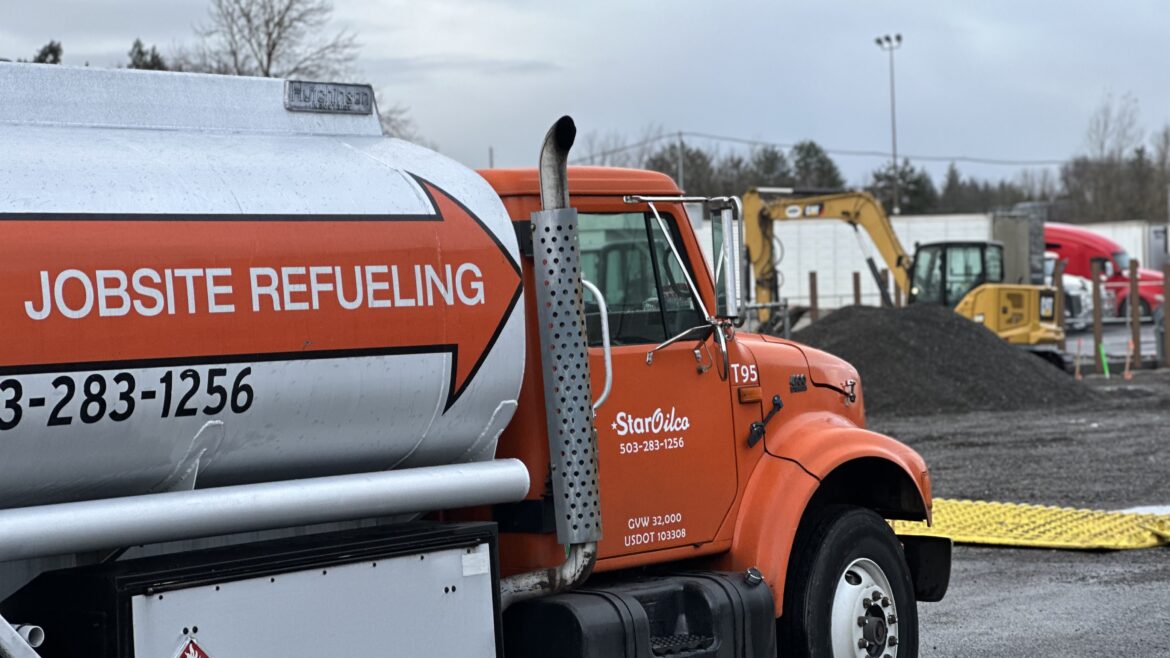
Star Oilco regularly provides diesel fueling for construction projects throughout the Portland area, including direct-to-equipment fueling and onsite fuel tanks.

Many types of farm equipment may also qualify for dyed diesel.

Examples include:

  • Tractors
  • Combines
  • Harvesting equipment
  • Irrigation equipment
  • Other agricultural machinery

Oregon also has specific rules for certain farm tractors and implements of husbandry that may occasionally travel on public roads.

If your farm equipment regularly travels on public roads, it is a good idea to check the current Oregon rules before deciding which fuel to use.

Many industrial businesses use diesel engines that never operate as normal highway vehicles.

Examples can include:

  • Pumps
  • Compressors
  • Stationary engines
  • Material-handling equipment
  • Industrial machinery
  • Certain yard equipment

These types of applications may be able to use dyed diesel when they meet the requirements for nontaxable use.

Diesel is also used for some heating systems and other stationary applications.

Again, the main issue is how the fuel is being used. Dyed diesel must be used for a qualifying purpose and should not be treated as a cheaper alternative to highway diesel.

Need Dyed Diesel for Your Equipment?

Whether you’re fueling construction equipment, generators, agricultural machinery, or industrial equipment, Star Oilco can deliver dyed diesel directly to your site or equipment.

What Happens If You Use Dyed Diesel Illegally?

Using dyed diesel for a taxable highway purpose can result in serious penalties.

Federal penalties for knowingly misusing dyed diesel can start at the greater of $1,000 or $10 per gallon of fuel involved, depending on the situation.

Additional taxes and penalties may also apply.

For a business, the potential savings from illegally using dyed diesel in highway vehicles are nowhere near worth the risk.

A good rule for your employees is simple:

Use dyed diesel in qualifying off-road equipment and clear diesel in vehicles that operate on public roads.

Businesses that use both types of fuel should also have a clear fueling process so employees know which fuel belongs in which piece of equipment.

This is one of the most common questions we hear

Can You Use Dyed Diesel in a Truck in Oregon?

The short answer is that you should not put dyed diesel into a normal truck that is being driven on public roads.

That includes work trucks.

Just because a pickup or service truck belongs to a construction company, farm, or industrial business does not automatically mean it can use dyed diesel.

A simple way to think about it is:

Excavator working on a construction site:

Dyed diesel may be appropriate.

Pickup truck driving employees to the construction site:

Highway diesel rules apply.

Stationary generator at the jobsite:

Dyed diesel may be appropriate.

Dump truck driving on Oregon public highways:

Highway diesel rules apply.

A construction company can easily need both dyed diesel and clear diesel on the same jobsite.

Can Equipment Using Dyed Diesel Ever Cross a Public Road?

Sometimes the answer is more complicated than a simple yes or no.

Certain pieces of equipment may occasionally cross or travel a short distance on a public road without being treated the same way as a normal highway vehicle.

Oregon has specific rules covering certain farm tractors and implements of husbandry that are only occasionally operated or moved over public highways.

That does not mean every piece of off-road equipment can travel on public roads while using dyed diesel.

If your equipment regularly operates on public roads, or you are not sure whether your situation qualifies, check with the Oregon Department of Transportation or a qualified tax professional before using dyed fuel.

Red dyed diesel fuel being poured into a clear sample container

Is Dyed Diesel Cheaper Than Clear Diesel in Oregon?

Usually, yes.

Dyed diesel is often less expensive because certain highway-related fuel taxes do not apply when the fuel is being used for a qualifying purpose.

The actual price difference will depend on current fuel prices, taxes, delivery location, fuel specifications, and the amount of fuel being delivered.

For companies that use large amounts of diesel in off-road equipment, the savings can add up quickly.

The important part is making sure the equipment actually qualifies for dyed diesel.

In the quest for a greener future, renewable diesel has firmly taken the lead. Its remarkable reduction in emissions, better fuel economy, and seamless integration into existing diesel infrastructure make it the go-to choice for heavy-duty truck operators. While standard biodiesel has made commendable progress in reducing emissions, renewable diesel emerges as the winner in the arena of cleaner and more efficient fuels. 

The studies quoted in this blog are just the tip of the iceberg, illustrating the overwhelming evidence in favor of renewable diesel. As we move forward in our pursuit of sustainable transportation, it’s clear that renewable diesel will play a pivotal role in driving us toward a cleaner, more environmentally friendly tomorrow. 

Is Dyed Diesel the Same as Off-Road Diesel?

In everyday conversation, yes.

The terms dyed diesel, red diesel, and off-road diesel are commonly used to describe diesel fuel that has been dyed red and is intended for qualifying nontaxable uses.

That said, there can still be differences between the actual fuel products available.

Depending on your operation, you may need to think about:

  • Diesel grade
  • Biodiesel content
  • Renewable diesel content
  • Seasonal treatment
  • Cold-weather performance
  • Storage
  • Additives
  • Equipment requirements

If you are buying fuel in bulk, it is worth talking with your supplier about both the legal use of the fuel and the type of diesel that makes the most sense for your equipment.

Not Sure Which Diesel Product Is Right for Your Operation?

Talk with Star Oilco about your equipment, fuel usage, storage needs, and delivery options.

In the quest for a greener future, renewable diesel has firmly taken the lead. Its remarkable reduction in emissions, better fuel economy, and seamless integration into existing diesel infrastructure make it the go-to choice for heavy-duty truck operators. While standard biodiesel has made commendable progress in reducing emissions, renewable diesel emerges as the winner in the arena of cleaner and more efficient fuels. 

The studies quoted in this blog are just the tip of the iceberg, illustrating the overwhelming evidence in favor of renewable diesel. As we move forward in our pursuit of sustainable transportation, it’s clear that renewable diesel will play a pivotal role in driving us toward a cleaner, more environmentally friendly tomorrow. 

Do I Need a Permit to Buy Dyed Diesel in Oregon?

It depends on what your business is doing with the fuel.

Oregon has different fuel-tax rules for fuel users, sellers, dealers, distributors, and other businesses involved in the fuel supply chain.

A contractor buying dyed diesel for equipment at a jobsite is not necessarily subject to the same requirements as a company that distributes or resells fuel.

If you are unsure whether your business needs a license, registration, or specific tax reporting, check with the Oregon Department of Transportation Fuels Tax Group or your tax professional.

How Should Businesses Keep Dyed and Clear Diesel Separate?

If your company uses both highway vehicles and off-road equipment, it is important to keep your fueling process organized.

A few simple steps can help:

  • Clearly label dyed-diesel storage tanks
  • Clearly label pumps and dispensing equipment
  • Train employees on which equipment can use dyed diesel
  • Keep delivery and fueling records
  • Separate dyed and clear diesel tanks when possible
  • Limit access to onsite fuel
  • Work with a fuel supplier that understands commercial and construction fueling

These steps can help prevent accidental misfueling and make it easier for employees to know which fuel they should be using.

Dyed Diesel Delivery in Portland and Northwest Oregon

Star Oilco supplies businesses throughout the Portland metro area with dyed off-road diesel and commercial fuel delivery.

We fuel construction sites, generators, industrial equipment, and bulk fuel tanks. We also work with businesses that need both dyed diesel for equipment and clear diesel for highway vehicles.

If you need fuel delivered directly into your equipment or want an onsite fuel tank for an ongoing project, we can help set up a fueling plan that fits the way your operation works.

Need Dyed Diesel for Your Oregon Operation?

Not sure whether your equipment should be using dyed diesel or clear diesel? Talk with Star Oilco about what you are fueling, where the equipment operates, and how much diesel you use.

Common Questions About Dyed Diesel in Oregon

Yes, qualifying construction equipment operating off public roads can generally use dyed diesel. Excavators, loaders, generators, and similar jobsite equipment are common examples.

If the pickup is being driven on public roads, you generally should not use dyed diesel in it. A work truck is still a highway vehicle when it is traveling on public roads.

Yes. Stationary and backup generators are common uses for dyed diesel because the fuel is being used to produce power rather than propel a highway vehicle.

Yes, qualifying agricultural and off-road farm equipment can use dyed diesel. Some situations involving farm equipment traveling on public roads have additional rules, so it is worth checking current Oregon requirements if you are unsure.

No. In this context, red diesel is simply another common name for dyed diesel.

Often, but private property by itself is not the only thing that determines whether the fuel qualifies.

The type of equipment and how it is being used also matter. If a vehicle operates both on private property and public roads, it is a good idea to confirm the rules before using dyed diesel.

Sign up for our newsletter to stay up to date

Name(Required)

This page provides general information about dyed diesel and fuel-tax rules. It is not tax or legal advice. Rules can depend on the specific equipment and how it is being used. For questions about your specific situation, consult current Oregon Department of Transportation guidance, IRS guidance, or a qualified tax professional.

Star Oilco technician testing off-road diesel fuel quality with a funnel and filter on-site in Portland OR
Off-Road Diesel – When To Use And The Benefits 1024 768 Star Oilco

Off-Road Diesel – When To Use And The Benefits

What are the benefits and when can you use off-road diesel 

Off-road diesel excels with a higher cetane rating, enhancing engine performance and offering cost savings without taxes. However, it’s strictly for off-road vehicles like tractors and construction machinery. Using it in regular on-road cars is illegal, leading to fines and potential imprisonment. 

Green fuel nozzle for off-road diesel fueling

Advantages of off-road diesel 

Higher Cetane Rating: Igniting Efficiency 

Off-road diesel takes the lead with a significantly higher cetane rating. With quicker ignition, 20% fewer emissions, and an impressive 15% reduction in engine downtime. It’s not just fuel; it’s a performance booster. 

Engine Performance and Durability 

Crafted for off-road adventures, this fuel has specialized additives that provide extra lubrication and deliver approximately 12% improvement in engine efficiency. Better performance isn’t just a promise; it’s a measurable reality with a 10% boost in fuel economy. 

No Tax, More Savings 

On-road diesel carries higher taxes, supporting highway maintenance. The federal tax is the same across the U.S., but states can add charges based on volume or spending. In contrast, off-road fuel sidesteps federal and state excise taxes due to non-road use, as it causes no wear and tear on the roads, saving you more with each gallon. 

Cost-Effective Fueling 

Brace yourself for the financial magic – lower tax rates. Off-road diesel translates into tangible savings, averaging 25 to 50 cents per gallon. For businesses on the off-highway path, it’s not just about fuel; it’s about a budget-friendly journey with an estimated annual savings of $5,000 to $10,000. 

Legal Ease: Staying Compliant 

Dyed in red for a reason, off-road diesel isn’t just a visual standout; it’s a regulatory lifesaver. If you follow standard rules, avoid penalties, choose a fuel that aligns with the law while boasting a 0% penalty rate for unauthorized use. It’s your ticket to smooth, trouble-free operations. 

Dyed Diesel: A Dual Role in Heating 

Expand the use of dyed diesel beyond the road. If your furnace can run on heating oil, embrace dyed diesel for a potential 20% savings on heating costs. It’s not just a fuel choice; it’s a strategy for financial warmth. 

Off-road vehicle tire tracks in remote open terrain

On-Road Diesel vs Off-Road Diesel: Key Differences 

Let’s simplify the diesel dilemma. Both on-road and off-road options share the same chemical makeup, but here’s the twist.

Legal Roads: 

On-road Diesel: Legal for road vehicles, dispensed at gas stations. 

Off-road Diesel: Reserved for non-road machines (tractors, generators).  

Legal Boundaries: 

On-road Diesel: Mandatory for licensed road vehicles in the U.S. 

Off-road Diesel: Illegal for on-road vehicles; hefty fines ($100 to more than $1,000 for one gallon) for misuse, or you may lose your job. 

Color Code: 

On-road Diesel: Clear, available at local gas stations, often called clean or green fuel due to eco-friendliness. 

Off-road Diesel: Red-tinted, dyed for off-road identification. 

Sulfur Content: 

On-road Diesel: Adheres to low sulfur content standards set by the EPA ( (15 ppm sulfur). 

Off-road Diesel is intended for off-road machinery and may have a higher sulfur content (maximum 3000-5000 mg/kg). 

Tax Terrain: 

On-road Diesel: Subject to state excise and federal taxes, generally pricier. 

Off-road Diesel: Tax-exempt, cost-effective for industries like construction and agriculture. 

Availability Channels: 

On-road Diesel: Available for purchase at gas stations. 

Off-road Diesel: Sold through bulk distributors for industrial use. 

Diesel fuel flowing into a dark reflective liquid surface

Off-road Diesel: Who Qualifies? 

Off-road diesel isn’t for everyone, but it could be your fuel hero if you’re in specific industries. 

Who Can Use? 

  • Construction Industry: Heavy-duty champions like cranes, loaders, and excavators 
  • Agriculture Realm: From tractors to harvesters, it fuels the farm force. 
  • Specialty Equipment: Generators, heaters, and more, amplifying productivity. 

Exceptions: 

  • Separate Tanks for Equipment: If your vehicle has a dedicated tank for extra gear, like in reefer trucks, and it doesn’t power the motor, you’re in. 
  • Emergency Saviors: In state-declared emergencies (severe weather or disasters), using off-road diesel on public roads might get a temporary nod. Rules vary, so check your state’s stance.  

Who Are Not Allowed To Use? 

  • Regular On-road Vehicles: Cars, SUVs, and standard trucks hitting public roads or any vehicle having the license to move on the road. 

Ultimately, on-road powers our daily commute, but off-road, dyed in red, proves the unsung hero for industries, offering substantial savings. Portland’s and Pacific Northwest’s off-road fuel suppliers have trustworthy reputations as fuel suppliers.  

Legal boundaries are crucial – fines loom for misusing off-road diesel. So, whether on legal roads or off, choose wisely, stay compliant, and drive on with informed decisions and smoother rides ahead! 

Sign up to receive our fuel market report for your weekly FILL of updates!

Name

Weekly Fuel Market Report – Aug 2nd – Aug 8th, 2026 150 150 Star Oilco

Weekly Fuel Market Report – Aug 2nd – Aug 8th, 2026

Fuel Market Report by Star Oilco Banner
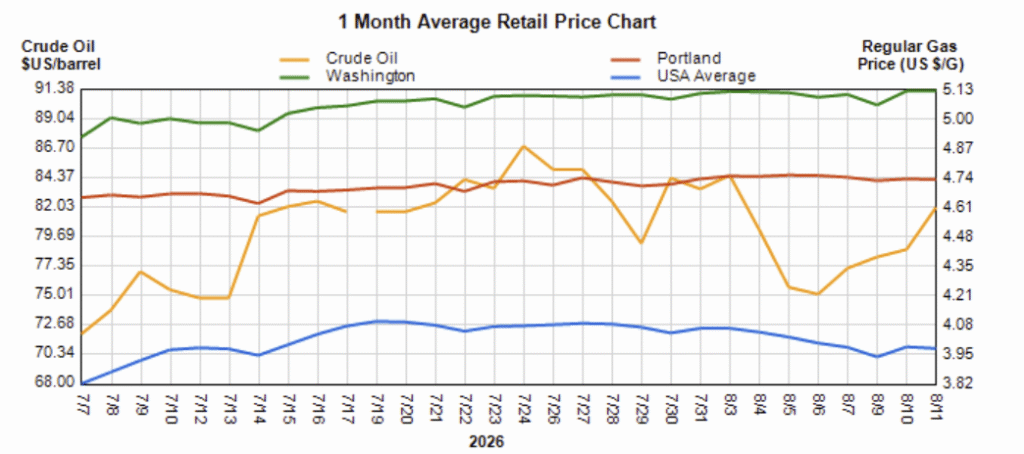
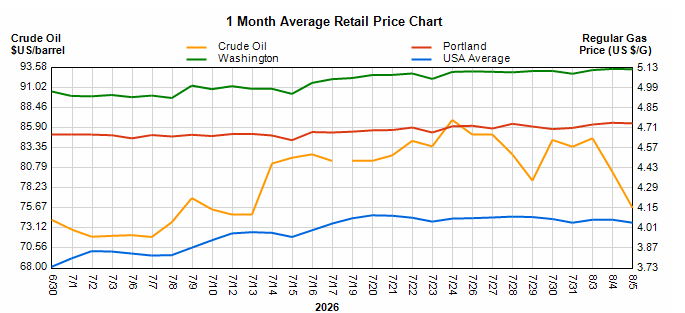
Portland and Washington gas price trends compared with U.S. average and crude oil prices, July to August 2026

Did You Know That R99 Is The Same Cost As Diesel Currently?

Call to set up R99 Mobile Fueling Onsite Service in Portland at the same cost of retail diesel. Dyed untaxed R99 is also available. Give us a call today to schedule your delivery.

Wholesale Price Average 8/8/26

Wholesale LowWholesale Avg
E10$3.47$3.56
B5$3.78$3.91
B20$3.73$3.82
R99$3.51$3.60

Average Retail Prices 8/8/26

NationalOregonWashington
Regular Gasoline$4.01$4.67$5.14
Diesel$5.32$5.49$6.15

Taxes

FederalState: ORLocalState: WA
Gas$0.184$0.40$0-.13$0.554
Diesel$0.244$0.40$0-.13$0.584

Portland Retail Fuel Price Variance

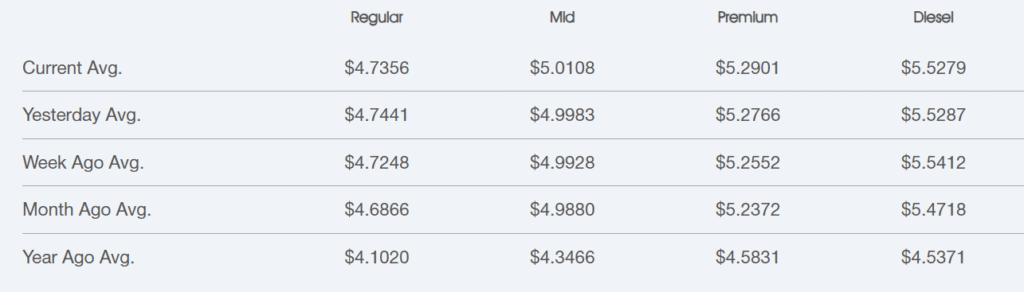
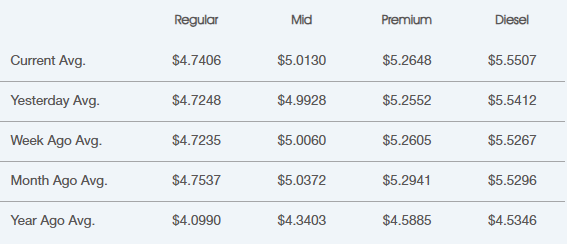
Average fuel prices for regular, midgrade, premium gasoline and diesel in Oregon, August 2026

Fuel Market News

Fuel prices were in a state of stagnation with slight upticks this past week as crude oil prices closed the week at the same price it opened five days prior. WTI opened on Monday around $80.34/barrel and closed Friday around $79.94. Drivers in the Portland area are still seeing gas around $4.70/gal & diesel over $5.62/gal, $0.55/gal higher than they were last August. In Seattle, gas prices are $5.42/gal with diesel hovering around $6.37/gal, $0.65/gal higher than they were last August. When compared to their state averages, both Seattle and Portland are over $0.45/gal higher.

At the pump, the national gas price averages have actually declined from $4.09 to $4.01 over the past week, but the PNW remains considerably higher. Oregon averages $4.67, while Washington sits near $5.14. National diesel remains elevated around $5.32.

WTI Crude is trading around $81.86/barrel as of the 11th. There have been no announced military strikes occurring within the last 14 days between the U.S & Iran. Although much still remains unclear about the timeline of the war and the future of geopolitical climates in the near future.

fuel-market-report-star-oilco-5-18-24

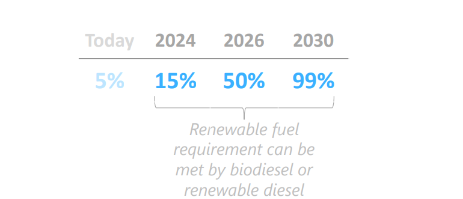
Important Note: Per the City Of Portland, “Distributors in the City of Portland are required to meet the minimum biofuel content requirements for all fuel they distribute beginning on May 15, 2024. All diesel fuel distributed to retail stations, non-retail dealers, or wholesale purchaser-consumers must include a minimum of 15% biofuel content, from either renewable diesel or biodiesel. This requirement increases to 50% on May 15, 2026, and 99% on May 15, 2030”.

Crude oil is currently hovering just below $82/barrel, at a current price of  $81.86/barrel.

Crude oil is the main ingredient for gasoline and diesel. Per AAA, on average about 50% of what you pay at the pump is the price of crude oil, breaking down as 25% refining, 11% distribution & marketing, and 14% taxes – a helpful breakdown for consumers wondering why they are paying the prices that they pay. Crude Oil is currently trading at $81.86/barrel compared to $80.41/barrel last week and $79 a year ago.

It’s essential to recognize that fuel prices result from a complex interplay of the factors mentioned above and other regional factors. Additionally, prices may vary by specific regions within Oregon and Washington. For the most precise and up-to-date information on fuel prices and the causes for these price changes within your area, use the links below for AAA & GasBuddy.

If you have any questions, feel free to contact Star Oilco and speak to one of our fuel market advisors to discuss how the market can impact your business.

Set up your R99 Mobile Fueling Onsite Service in Portland Today Including Dyed Untaxed R99.

Give Us A Call Today

For other news in the fuel market:

● https://gasprices.aaa.com/?state=OR

● https://www.gasbuddy.com/charts

Join the Fuel Market Report newsletter for your weekly fill of updates!

Weekly Fuel Market Report – July 27th-31st, 2026 150 150 Star Oilco

Weekly Fuel Market Report – July 27th-31st, 2026

Fuel Market Report by Star Oilco Banner
Portland and Washington gas price trends compared with U.S. average and crude oil prices in 2026

Did You Know That R99 Is The Same Cost As Diesel Currently?

Call to set up R99 Mobile Fueling Onsite Service in Portland at the same cost of retail diesel. Dyed untaxed R99 is also available. Give us a call today to schedule your delivery.

Wholesale Price Average 7/31/26

Wholesale LowWholesale Avg
E10$3.45$3.58
B5$3.79$3.92
B20$3.71$3.83
R99$3.53$3.62

Average Retail Prices 7/31/26

NationalOregonWashington
E10$4.08$4.68$5.13
B5$5.36$5.54$6.19

Taxes

FederalState: ORLocalState: WA
Gas$0.184$0.40$0-.13$0.554
Diesel$0.244$0.40$0-.13$0.584

Portland Retail Fuel Price Variance

Oregon average gasoline and diesel prices for regular, midgrade, premium and diesel fuel in 2026

Fuel Market News

This past week brought higher crude oil prices followed by higher diesel prices and fairly stagnant gas prices. From 07/27 – 07/31, WTI Crude jumped $5.41/barrel. This was reflected in diesel prices jumping over $0.09/gal. Drivers in the Portland area are still seeing gas around $4.900/gal & diesel over $5.65/gal, both over $0.60/gal higher than they were last August. In Seattle, gas prices are $5.43/gal with diesel hovering around $6.41/gal, both over $0.70/gal higher than they were last August. 

As of 08/03/26 WTI Crude is trading around $80.41/barrel, down from the previous week. Tensions between Iran & the U.S have tapered off slightly this week, with no announced military strikes occurring within the last 9 days. The Strait of Hormuz is still closed. The Trump administration has yet again said it will announce new details of renewed peace talks within the next 48 hrs. Crude prices have flattened out the past few days and may continue to this week, fuel prices should remain mostly stagnant this week if tempers remain calm between the U.S & Iran.

fuel-market-report-star-oilco-5-18-24

Important Note: Per the City Of Portland, “Distributors in the City of Portland are required to meet the minimum biofuel content requirements for all fuel they distribute beginning on May 15, 2024. All diesel fuel distributed to retail stations, non-retail dealers, or wholesale purchaser-consumers must include a minimum of 15% biofuel content, from either renewable diesel or biodiesel. This requirement increases to 50% on May 15, 2026, and 99% on May 15, 2030”.

Crude oil is currently hovering just above $80/barrel, at a current price of  $80.41/barrel.

Crude oil is the main ingredient for gasoline and diesel. Per AAA, on average about 50% of what you pay at the pump is the price of crude oil, breaking down as 25% refining, 11% distribution & marketing, and 14% taxes – a helpful breakdown for consumers wondering why they are paying the prices that they pay. Crude Oil is currently trading at $80.41/barrel compared to $85.56/barrel last week and $78 a year ago.

It’s essential to recognize that fuel prices result from a complex interplay of the factors mentioned above and other regional factors. Additionally, prices may vary by specific regions within Oregon and Washington. For the most precise and up-to-date information on fuel prices and the causes for these price changes within your area, use the links below for AAA & GasBuddy.

If you have any questions, feel free to contact Star Oilco and speak to one of our fuel market advisors to discuss how the market can impact your business.

Set up your R99 Mobile Fueling Onsite Service in Portland Today Including Dyed Untaxed R99.

Give Us A Call Today

For other news in the fuel market:

● https://gasprices.aaa.com/?state=OR

● https://www.gasbuddy.com/charts

Join the Fuel Market Report newsletter for your weekly fill of updates!

Stack of hundred dollar bills representing fuel tax savings
How to Save on Fuel Taxes in Oregon 1024 683 Star Oilco

How to Save on Fuel Taxes in Oregon

A Guide To Fuel Tax Advantages And Wholesale vs Retail Prices 

Wholesale prices from direct deals cut costs for businesses buying in bulk. Retail prices, including taxes and operational fees, determine your pump price. Opting for fuel supplier purchases gives businesses constant supply, stable prices, and a boost in productivity. 

Discover the layers of federal, state, and sales taxes shaping retail diesel costs and we will also discuss the exlusive advantages of choosing a local fuel supplier.  

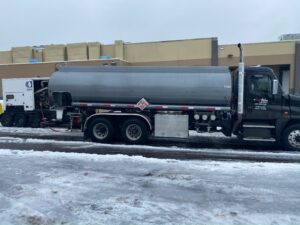
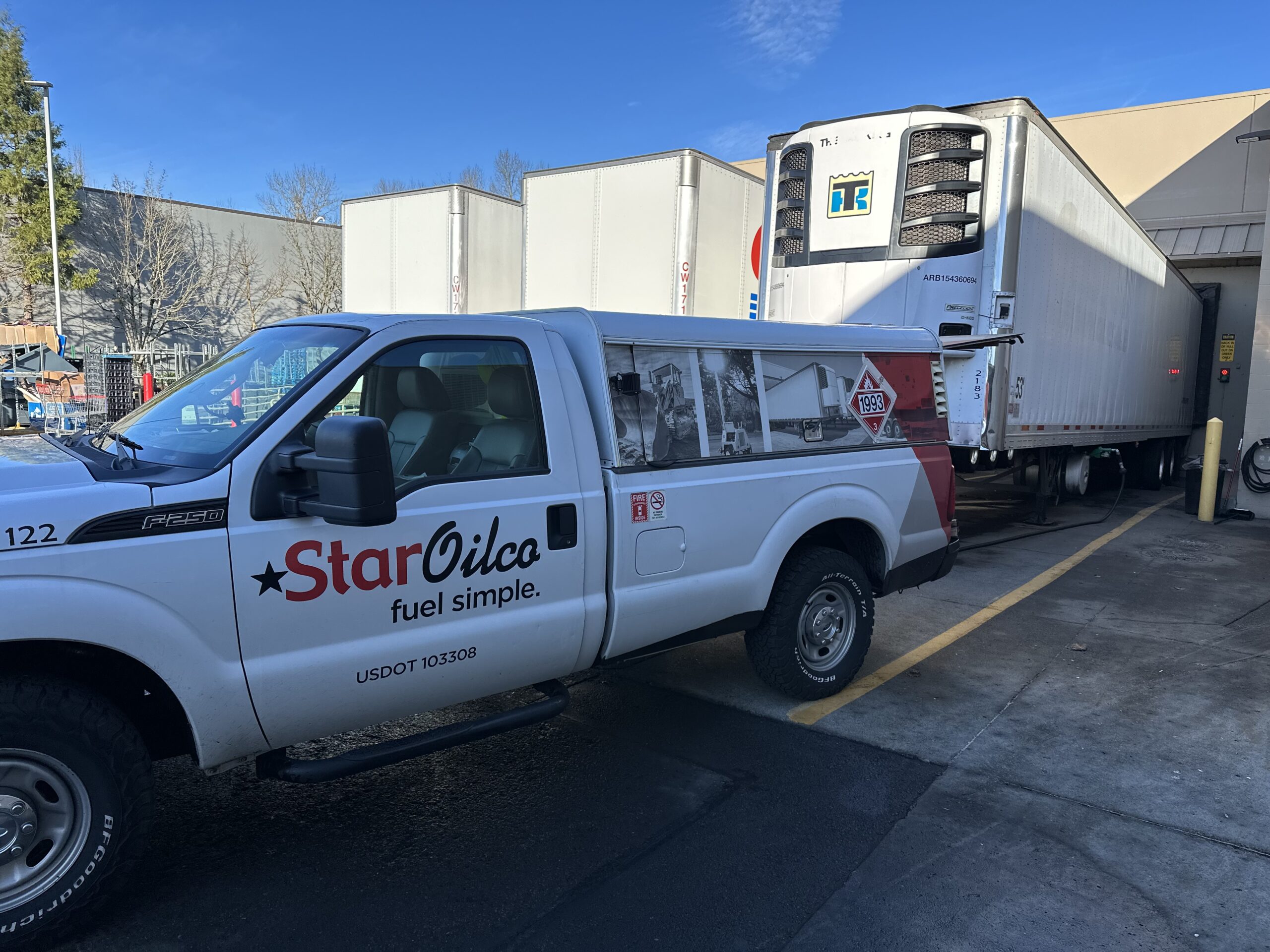
Star Oilco fuel tanker truck delivering diesel to refrigeration unit during icy winter conditions

The Difference Between Wholesale vs Retail Prices 

In fuel commerce, the distinction between wholesale and retail prices plays a crucial role in shaping business strategies and consumer choices. If we dive into the key differences that define these pricing models:

Wholesale Fuel Prices 

It represents the fuel cost at the initial point of sale between the fuel supplier and business entities. This transaction is pivotal for businesses that require fuel in substantial quantities. Here’s a breakdown of the key points: 

Transaction Dynamics 

  • Wholesale fuel prices are decided through direct transactions between fuel suppliers and businesses. 
  • These transactions typically involve bulk purchases, allowing businesses to acquire fuel in larger quantities. 

Bulk Purchase Advantage 

  • One of the primary features of wholesale fuel prices is the cost advantage associated with bulk purchases, such as consistent prices and no price inversion according to market demands. 
  • Businesses buying fuel in larger quantities can negotiate lower prices per unit, resulting in significant cost savings. 

Retail Fuel Prices 

This is the total cost consumers bear at gas stations or retail outlets. It’s essential to recognize the elements contributing to retail prices, providing a transparent view for consumers. 

Tax Inclusions 

A notable component of retail fuel prices is taxes. These taxes are imposed at federal, state, and local levels, contributing to government funds for infrastructure and transportation projects. 

Retailer Margins and Operational Costs 

  • It incorporates the profit margin of the fuel retailer. 
  • Operational costs, such as maintenance, staffing, and other overheads related to running a retail outlet, are also factored into the final retail price. 

Taxes Associated with Retail Fuel Prices 

Understanding fuel taxes is crucial for businesses and consumers alike, as these levies play a vital role in government revenue and impact the final pump price. Here’s a concise breakdown: 

Person calculating taxes and expenses with receipts and a calculator

Federal Excise Tax: 

The nature of this tax is a fixed amount applied to each gallon of fuel, covering both gasoline and diesel. It primarily funds essential national projects, especially those linked to highways and commuting infrastructure. 

State Excise Tax: 

This fuel tax varies by state, leading to diverse fuel prices. Revenues go directly to state transportation funds, supporting local projects like road maintenance. Higher tax rates in some states mean higher fuel prices at the pump. 

Sales Tax: 

This tax is a percentage of the total sale price, including the base fuel price and applicable excise taxes.  

Structures vary, with some states applying the percentage to the sum of the base price and excise taxes from federal and state authorities. The revenues fund general state services beyond conveyance projects. 

The Business Benefits of Bulk Fuel Purchases From Fuel Suppliers 

Buying fuel at wholesale prices is a strategic move that can uplift your business more than you think. These benefits are particularly relevant for large-scale operations in both industrial and governmental sectors and fuel sellers who acquire wholesale fuel for end-customer distribution. 

1. All-Time Availability:

Annual contracts with bulk fuel suppliers ensure a consistent and reliable fuel supply, eliminating the risk of interruptions during emergencies and providing specific machinery with a steady source. 


2. Consistent Pricing and Time Savings:

Locking in a contract guarantees compatible fuel prices, allowing for budgetary planning. This streamlined process saves time, eliminating the need for market price research, negotiations, and interruptions to operations. 


3. Continual Supply and Price Protection:

Bulk fuel contracts offer a constant and uninterrupted fuel supply, shielding businesses from market fluctuations. Additionally, they prevent the impact of rare occurrences like price inversions, ensuring stability in fuel costs and availability. 


4. Increased Productivity:

Immediate access to fuel minimizes route deviations for delivery vehicles, streamlining operations and enhancing fleet competitiveness. On-site fuel storage eliminates concerns about station closures during off-hours, weekends, or holidays, reducing logistical complexities for 24/7 operations. 

Sign up to receive our fuel market report for your weekly fill of updates!

Name
B99 Biodiesel for Fleets & Heavy Equipment 150 150 Star Oilco

B99 Biodiesel for Fleets & Heavy Equipment

Using B99 Biodiesel in a Tier 4 Heavy Duty Diesel

B99 Biodiesel reduces CO2 footprint of a 105,500 GVW truck and trailer by more than half at a lower cost than petroleum diesel.

What is B99 Biodiesel?

B99 Biodiesel is as pure of blend of Biodiesel you can get in the United States and still participate in the incentives associated with this alternative fuel.  B99 is the product received by petroleum refiners, terminals, and truck stops to blend with petroleum diesel.  Biodiesel is a renewable, clean-burning diesel replacement.  B99 Biodiesel is a common blendstock with petroleum diesel (being 99% biodiesel).  It can be presumed that nearly every major truck stop throughout the US is consistently using either a blend of 5%, 10% or 20% of biodiesel   The reason for this is both due to its price advantage against petroleum currently as well as Federal/State laws requiring it’s use.

Why Higher Blends of Biodiesel Matter?

Biodiesel is a low CO2, net energy positive fuel.  Depending on the feedstock Biodiesel is made from a CO2 reduction of 30% to 80%+ can be expected compared to petroleum diesel.  As the West Coast (Oregon, Washington and California) ramps up CO2 regulations that charge an additional cost for carbon emissions associated with petroleum diesel the financial case for Biodiesel becomes obvious.  Early adopters will see direct financial benefit.

B99 Biodiesel for Fleets & Heavy Equipment

Star Oilco has fielded the Optimus Technologies system on our 105,500 GVW truck and trailers.  Star Oilco began with a single Freighliner truck and trailer operating a Cummins ISX as a trial.  This truck’s typical route was approximately 305 miles round trip from Portland, Oregon to Grays Harbor, Washington.  This run is from Star Oilco in Portland, Oregon to the Grays Harbor REG Biodiesel plant and back to the Portland terminals for delivery of this product.    Over the last year and a half this truck has performed amazingly well, the only maintenance concern is swapping the fuel filters more regularly with every oil change.  Mileage and power difference are negligible as noticed by drivers or our Elog system.  On a few occasions a loss of power was experienced requiring an in between service fuel filter swap.

This field trial of the Optimus Technologies system Star Oilco has regularly saved between $15 and $75 a day when running this dedicated route, depending on the cost of B99 Biodiesel versus petroleum ultra low sulfur diesel.  Consistently the price of B99 Biodiesel has been below petroleum diesel in the Portland, Oregon market. This has been due to a combination (or is effected by) RIN values, a Blender’s Tax Credit on biodiesel, and Oregon’s Clean Fuels Program which also prices the CO2 reduction value of B99 Biodiesel.   We see this trend continuing as an assumed market reality for biodiesel.

What is the business case for our deploying B99 Biodiesel Optimus Tech upfit kits?

The systems increase the intelligence of our late model trucks with their very complicated Tier 3 and Tier 4 emissions systems.   The Optimus Kit enables two saddle tanks to operate with the duty cycle of the truck. One tank (which we will be running B5 ULSD or R99 through) is dedicated to fuel the particulate trap and SCR systems.  These systems have extremely tight tolerances and tend to choke on higher blends of biodiesel.  By dedicating a tank with a smart controlling system we reduce the maintenance and concern with these after treatment systems hopefully extending the maintenance cycle on these traps by years while reducing inconvenient efficiency killing regens.

The Optimus Kit also enables a modern diesel engine to run B99 Biodiesel.  It does this by controlling the temperature of the fuel in it’s dedicated saddle tank and routing B99 to the engine when the RPMs and operating temperatures are best for this fuel. Upon start up and shut down the Optimus Technology kit will flush the engine, fuel rail, and injectors with the petroleum/R99 tank ensuring easy start up and no cold weather effects.  The B99 saddle tank is temperature controlled as well to enable performance in extreme weather.  When operating under load the Optimus Kit will move to B99 as the fuel into the engine.  As B99 Biodiesel has a substantial reduction of emissions, particulate, and other compounds when combusted; this further reduces the impact of miles on a truck to the particulate trap and it’s service needs.

Beyond this maintenance experience, the performance and function of the system has been indistinguishable to our other trucks running the same route.

Biodiesel Mandates in the Pacific Northwest

Oregon and Washington have passed legislation which puts a price on the CO2 emissions associated with petroleum diesel.   These laws mean that petroleum fuel costs more than biofuels with a low CO2 footprint.  These laws are also added on top of other mandates and incentives for biofuels.  Biodiesel blends between 5% and 20% are common on the west coast at every gas station, cardlock, and truckstop.

How Can I Utilize B99 or B100 in My Own Fleet? 

Star Oilco uses The Vector System developed by Pittsburgh-based Optimus Technologies. The Vector System is the only EPA-compliant biodiesel engine system and upgrades any medium or heavy-duty engine to operate on 100% biodiesel. It can be installed in as little as 12 hours. Learn more about The Vector System by contacting Optimus Technologies here directly or by reaching out to Star Oilco locally. 


Contact Form

  • This field is for validation purposes and should be left unchanged.


For more on Biodiesel, Renewable Diesel or Low CO2 fuels please see these other Star Oilco articles:

Every Question Star Oilco has been asked about Biodiesel

Every Question Star Oilco has been asked about Renewable Diesel 

Do you have questions about Renewable Diesel in Oregon 

Wet Hose Fueling Service in Portland, Oregon

About Diesel Fuel 

Biodiesel Use and Handling Guide 

Star Oilco fuel delivery truck parked near Multnomah Falls Lodge in the Columbia River Gorge
Benefits of an Automatic Fuel Delivery Service 461 1024 Star Oilco

Benefits of an Automatic Fuel Delivery Service

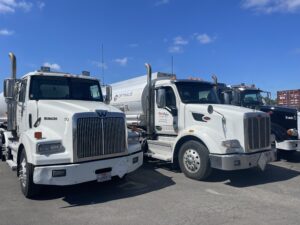
Star Oilco fuel trucks staged for mobile on-site fueling

Benefits of an Automatic Fuel Delivery Service

Automatic Fuel Delivery Provides Convenience.

Fuel delivery services take the hassle out of managing your fuel needs. You don’t have to check your fuel levels or schedule deliveries anymore. Fuel providers monitor your usage and deliver fuel before you run out.


Automatic Fuel Delivery Allows More Peace of Mind.

With automatic fuel delivery, you can rest assured knowing that you will always have the fuel you need to keep your business running smoothly. This is especially important during cold weather months.

Automatic Fuel Delivery Can Provide Potential Savings.

Automatic delivery is offered by many fuel providers at a discount. A run-out charge and other emergency fees may also save you money on fuel costs. It also saves money through the time and convenience that automatic fuel delivery offers by avoiding drivers having to go off of their route to sit and wait in line to fill up their tanks. This also provides less risk on potential fuel theft. There are a variety of ways directly, and indirectly that provide cost savings for your business’ bottom line.


Automatic Fuel Delivery Will Help With Environmental Benefits.

Automatic fuel delivery services (or on-site fueling) can help to reduce your environmental impact by reducing the number of fuel deliveries that need to be made. As a result, emissions can be reduced and traffic congestion can be reduced. With Portland’s Climate Action Plan and their roadmap to achieve 80% reduction in carbon emissions by 2050, with 40% reduction by 2030, reducing the number of stops and idle time on the roads will reduce this number significantly. If you consider adding renewable diesel to your tanks as a drop-in solution for your trucks, then you will continue to reduce your emission’s even further.

Star Oilco diesel service truck delivering heating fuel to a snow-covered mountain cabin

Here are some additional benefits of automatic fuel delivery services: 

Priority service:

Automatic fuel delivery (or wet-hosing) customers often receive priority service during peak demand periods. This means that you are less likely to run out of fuel during cold weather or other busy times where fuel may be more difficult to get. 

Emergency service:

If you do run out of fuel, automatic delivery customers may be eligible for emergency service at a discounted rate depending on the customer and location. Seek your fuel provider for more information.

More Consistent Billing:

Budgeting your fuel costs through a payment plan system offers more consistent billing and less invoices and receipts. This allows for a cleaner paper trail for your bookkeeping. 

If you are looking for a convenient and reliable way to manage your fuel needs, automatic fuel delivery services through Star Oilco are a great option to consider. 

An automatic fuel delivery service is a service that delivers fuel to your on-site location to top off your trucks on a regular basis, without you having to schedule deliveries ahead of time. Your fuel provider will monitor your usage and deliver fuel to you before you run out on a regular basis.

Automatic fuel delivery services are available for a variety of fuels and are especially beneficial in cold weather climates, where it is important to have a reliable supply of fuel to keep your trucks running and business efficient. Automatic fuel delivery services offer a number of benefits and when it comes to fueling your fleet, your fuel provider will take care of everything for you! Contact Star Oilco to find out more about the benefits your specific business will receive through our automatic fueling services. 

JOIN THE FUEL MARKET REPORT NEWSLETTER FOR YOUR WEEKLY FILL OF UPDATES!

Name

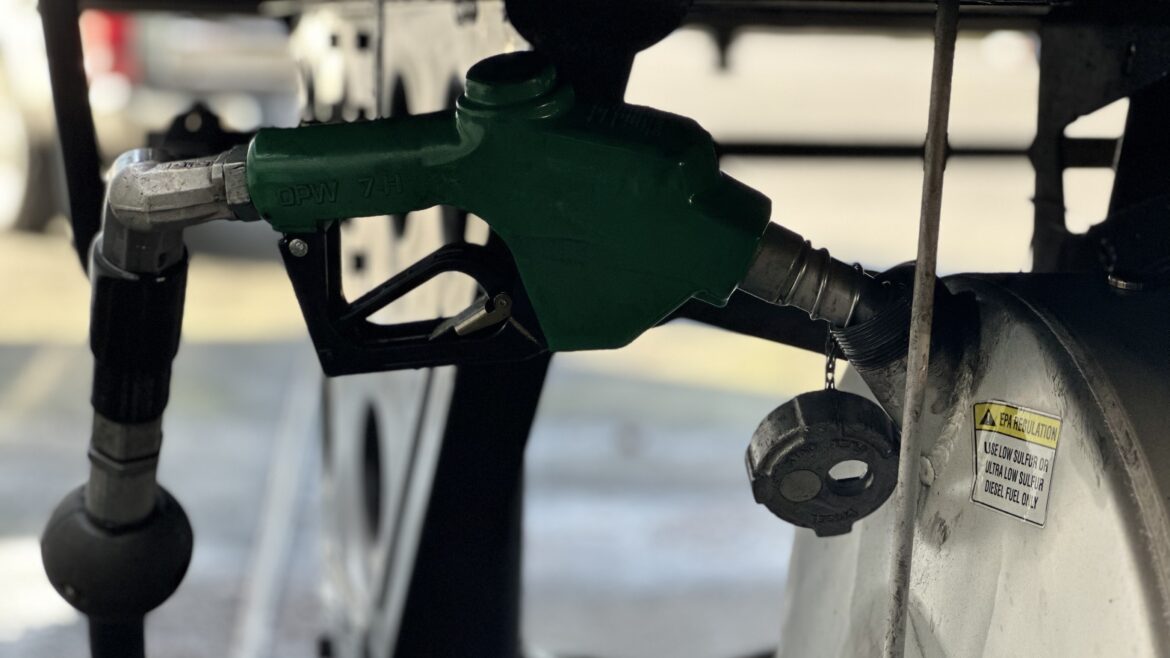
Green diesel nozzle filling off-road fuel tank labeled for ultra low sulfur diesel
Every Question About Off-Road Diesel 1024 768 Star Oilco

Every Question About Off-Road Diesel

Got questions about red dyed diesel? We have answers!

If you don’t find the answer you’re looking for related to red dyed diesel (or off-road diesel) reach out to us directly and we’d be happy to help answer your questions.

Red Diesel is off-road diesel, in the United States this fuel is denoted with a red dye. The dye marks this as fuel for off-road equipment and vehicles and as such it doesn’t have road fuel taxes included in the price.  This dye takes a great deal of clear fuel to dilute so it makes it very obvious if an on-road vehicle has been using off-road untaxed fuel. Tax authorities can and do check for vehicles using off-road red diesel in on-road vehicles. They do this by using a black light to spot any residual presence of dye in the fuel as well as at key places in the engine compartment.

On-road diesel is clear or slightly green. Refineries place a green dye into diesel fuel which is obvious if fuel is freshly dispensed into a bottle to observe its color. As fuel ages this dye fades to yellow or darker colors. Part of a visual observation to inspect diesel fuel quality is to check the fuel for a “bright” appearance with the slight green dye being a giveaway that the diesel is fresh and in good condition.

Nearly all diesel has dye in it. Typically when talking about dyed diesel, we’re referring to a red dye added to off-road diesel. Off-road diesel is normally used for heating oil, construction fueling, agricultural use, and other off-road equipment not used on the highway system where fuel taxes would be required by law.

comparison chart showing difference between off-road diesel and on-road diesel fuel in Portland OR

Why is diesel dyed?

Diesel is dyed in order to denote if it has paid road tax or not. On-road diesel in the United States usually has a light green tint to it. Off-road diesel has a red dye to denote it has not paid road taxes as required by all states and the Federal government.

What is off-road diesel?

Off-road diesel is diesel fuel dyed red to show it is untaxed and available only for off-road fuel uses such as construction fueling, equipment never used on a public road, agricultural use, heating oil, boiler fuel, and other non-taxed diesel fuel uses under state and Federal fuel tax law. In Oregon, with proper paperwork, some off-road uses can buy on-road fuel with the Oregon state tax exemption.

What is farm diesel?

Farm or diesel for agricultural use is off-road diesel that is not charged on-road fuel taxes. Agricultural use fuel is a tax-exempt use of diesel fuel. If diesel is burned on a farm and can be tracked for such, taxes can be avoided. Farms are allowed to receive clear diesel without road taxes charged on it in Oregon. Often it is dyed red to denote it is tax free. In Oregon, where P.U.C. for trucks over 26,000 GVW pay a weight mile tax instead of a per gallon state road tax, some farms will track their use of clear diesel so they can file for Federal road taxes on off-road usage.

Contact Us Today To Order Your Off-Road Diesel

Star Oilco technician testing off-road diesel fuel quality with a funnel and filter on-site in Portland OR

All diesel sold in the United States typically has some dye in it. On-road diesel usually has a slight green tint to it. This is a dye added by either the refiner or terminal provider with the fuel. Off road diesels are dyed red to denote that the fuel is untaxed and is for use in off-road purposes only.

Solvent Red 26 and Solvent Red 164 are the allowed dyes prescribed by the United States Internal Revenue Service for marking diesel as for un-taxed off-road use only.

Off-road diesel is classified as a Class II combustible liquid by the National Fire Code. A flammable fuel is one with a flash point below 100 degrees F. Diesel’s flash point is between 126 and 205 degrees F (typically assumed to be about 160 degrees F).  That classifies it as a Class II combustible.

Fuel taxes charged is the big difference between the two fuels. All on-road diesel is clear or greenish in color to denote it is both ultra-low sulfur diesel and the on-road fuel taxes associated with using it to power a highway vehicle have been paid. Dyed fuel means that fuel taxes are not paid and that the fuel can not be used to power a vehicle on a public road.

It depends on the sulfur content of the fuel and the year/engineering of the truck.  If your dyed fuel is ultra low sulfur it is typically the exact fuel as on road diesel with an added injected red dye to denote it is untaxed for off road use only.

Red Dyed fuel can occasionally be low sulfur or high sulfur content.  That sulfur content will create real issues with a  post 2007 pick up or commercial diesel truck with a tier 3 or tier 4 emission system.  Most diesel in the US today including off-road diesel is ultra low sulfur (under 15 ppm sulfur). Low sulfur diesel is over 15 parts per million and can be as high as 500 ppm.  High sulfur diesel is over 500 ppm and can range in the thousands of parts per million.  That sulfur means far more soot and black smoke out of your tail pipe.  If you are “rolling coal” out of a modern diesel that’s bad for the truck as well as violates emissions laws in the US.  Similarly if you are using a 2007 or newer truck it will have very tight tolerances on the fuel injectors which can more easily coke up if running a higher sulfur or even dirtier specification diesel.  It is recommended to use ultra low sulfur fuel in all equipment.

It is illegal because diesel used for on-road use has taxes to pay for those roads. These taxes are charged at a federal, state, and municipal level depending on where you are at.  Off road diesel has a red dye injected into it at the time of loading the fuel delivery truck.  This loading of a fuel truck at a terminal is the point of taxation and tracking for diesel down stream in the economy.  If you see a fuel with a red dye, it is untaxed.  To use this in an on-road vehicle if you get caught can result in huge fines. In Oregon it could be as much as $10,000 a day for use of red dyed diesel in an on road use.  It is not uncommon for scale stops of commercial tanks to flashlight a saddle tank and check for any evidence of dye in fuel at a DOT scale stop.

Is off-road diesel or dyed diesel high sulfur diesel?

Dyed diesel (or off-road diesel) can be high sulfur fuel. High sulfur diesel is defined as diesel fuel with over 500 parts per million of sulfur content.

Is off-road diesel or dyed diesel ultra-low sulfur diesel?

Off-road and dyed diesel fuels can be ultra-low sulfur but are not guaranteed to be. There has been a consistent push to reduce sulfur in all fuels in the United States as led by EPA regulation. In recent years, EPA standards require off-road construction and agricultural equipment to have an emissions system that allow ultra-low sulfur to operate without major problems. So today’s off-road diesel being delivered is ultra-low sulfur. If you have a tank with old stored dyed red diesel fuel in it, you can assume it has a higher than ultra-low sulfur content.

What is dyed ULSD fuel?

Dyed ULSD fuel is ultra-low sulfur diesel with a red dye in it to denote that it is for off-road or untaxed purposes only. These purposes are typically for heating oil, construction fuel, agricultural fuel, generator fuel or other off-road uses. The “ULSD” is an acronym for ultra-low sulfur diesel.

Dyed diesel can be either #1 or #2 diesel. Both fuels require a red dye in them to confirm they are untaxed and cannot be used for on road fuels.

Dyed diesel and off-road diesel can be kerosene (which crosses as #1 diesel fuel), but not necessarily. Do not assume a dyed fuel is kerosene, which is a rarer fuel. Kerosene is different than #1 diesel for one characteristic: its confirmed ability to be absorbed and taken up by a wick. All kerosene is #1 diesel.  Not all #1 diesel fuels are kerosene. The same goes for dyed diesels and off-road fuels. All dyed kerosene is dyed and off-road diesel. Not all dyed fuel is kerosene.

Yes, dyed diesel and off-road diesel are stove oil. Typically a #1 stove oil or #2 stove oil, similar to diesel. Historically stove oils had a slightly different set of specification concerns which is why they were called “stove oils” versus diesel. When petroleum refineries distilled crude oils to get diesel range fuels, it was less exact than it is today with hydrocracking technology. Today with both oil refinery technologies and the EPA emission regulations, the number of distillate range fuel specifications is far more consolidated in order to ensure compliance with EPA and state rules. If your heating appliance is demanding stove oil, it typically needs a #1 stove oil or #1 kerosene product. This product is expected to produce less soot and therefore to work better in a pot stove type of application. The most modern stove oil appliance in the U.S. are Monitor and Toyostove thermostatically controlled direct vent heaters.

Depends on the year of your truck, and we assume you mean red dyed diesel fuel.  First, using dyed diesel, off road diesel, or heating oil in an on-road vehicle is against the law.  If you are caught in Oregon the fine can be as big as $10,000 and the State of Oregon does aggressively pursue this type of tax avoidance.  Beyond the legal use of off-road fuel.  Typically on the west coast dyed diesel is ultra low sulfur diesel. Which means it will not cause maintenance issues if burned in your engine.  Dependent on the age of the dyed fuel, or if it is actually a heating oil, it might be high sulfur or low sulfur fuel. If you use that in a post 2007 engine with a particulate trap it will have serious maintenance issues if you use that fuel.

Yes, dyed diesel and off-road diesel are acceptably used as heating oil. Dyed diesel and off-road diesel these days are typically ultra-low sulfur diesel. Heating oil can be low sulfur or high sulfur in content under EPA and most state laws. So heating oil sometimes cannot be dyed diesel (when used for off-road equipment or agricultural use) but dyed/off-road diesel can always be used for heating oil and conform to the necessary specification required by heating oil furnaces.

Yes! But in today’s ultra-low sulfur market, most off-road diesel is below 15 parts per million. If your equipment requires ultra-low sulfur diesel, it is a good practice to confirm that is what fuel you are getting. Some low sulfur diesel (under 500 parts per million sulfur fuel) and high sulfur diesel (over 500 parts per million sulfur) is still in the marketplace used by heating oil, boiler systems, locomotive, and marine applications.

Off-road diesel gels at cold temperatures. At colder temperatures, wax crystals begin to form and fall out of the diesel, clogging filters and gelling up the fuel. Also, the water and naturally held-in diesel will ice up and obstruct filters. This phenomenon is called diesel gelling.

All diesel fuels will gel if it gets cold enough. Both a formation of wax crystals and ice forming in your fuel will obstruct filters and take your equipment down. Rule of thumb: with no treatment your diesel fuel should operate without any issues above 20 degrees Fahrenheit. Below 20 degrees Fahrenheit, you will want to ensure your vendor is treating the fuel for winter use to ensure it will operate down to -20 degrees Fahrenheit.  If you are facing temperatures below that, you will want to confirm with your vendor that they are testing that fuel to operate below -20 degrees Fahrenheit.

Why does the government require diesel be dyed red?

From a informational pamphlet from the US IRS on untaxed fuel: 

“The federal government requires dyeing of untaxed diesel fuel and kerosene for two reasons. To help reduce tax evasion by identifying fuel on which excise taxes have not been paid, and to help reduce air pollution by identifying fuel not suitable for use in highway vehicles.”

Does off-road diesel go bad?

Off-road and dyed diesel do age and can go bad. All diesel fuels adhering to ASTM specification should be safe for storage up to a year without additional treatment and testing. If you are storing diesel for long term use, it is a good best practice to treat the fuel with a biocide and oxidative stabilizer to ensure that the fuel stays within specification and nothing will begin to grow in your fuel tank. The biggest enemy of long term diesel storage is water and dirt entering the fuel through a tank vent. As temperatures change a tank will breath pulling in air and moisture from outside. Ensuring there is no water in the tank and that outside contaminants can’t get into a tank are how keep your fuel within specification.

Untreated, you can assume that diesel fuel is good for a year. If treated with a biocide to prevent biological growth from growing in the tank, you can expect diesel to be good for two to three years. After two to three years, diesel begins to show age as it loses its brightness when sampled. After three years you will want to sample and test the fuel to ensure it is within specification for reliable use.

Fuel taxes vary by state and sometimes even local municipality. With off-road diesel, usually the only taxes to consider are sales taxes on the fuel. In Oregon there are no taxes on dyed off-road fuel. In Washington state there are sales taxes for dyed-diesel charged on top of the sale price of the fuel. (NOTE: If you use clear diesel in Washington state there is no sales tax as the road tax is being charged.)  If you are curious for a more in depth answer Star Oilco has a full explanation of Oregon Diesel Taxes (a unique system in the United States for local fuel tax collection of trucks over 26,000 GVW).

Yes. If you are consuming dyed diesel and are not paying for the on-road fuel taxes in Washington state, the sales tax is charged. If you use clear fuel with road taxes attached to the fuel, the sales tax is not charged. For more on Washington fuel taxes see the Washington Department of Revenue. 

Your petroleum distributor has some small taxes (under $.01) attached to the fuel they buy at the wholesale terminal level. Those taxes being the U.S. EPA Superfund cleanup and the “LUST” or Leaking Underground Storage Tank cleanup fund. Beyond that, there are no taxes (Federal, state or local municipality) on fuel used for off-road diesel in Oregon state.

In Oregon you can buy clear fuel exempt of Oregon’s state road taxes. The qualifications for using clear diesel Oregon State tax exempt are the following: 

vehicles issued a valid ODOT Motor Carrier permit or pass (weight receipt) 

vehicles issued a valid Use Fuel User emblem by the ODOT Fuels Tax Group 

vehicles registered to a US government agency, Oregon state agency, Oregon county or city, and displays a valid Oregon “E” plate 

vehicles, or farm tractors/equipment only incidentally operated on the highway as defined in ORS 319.520 

vehicles or equipment that are unlicensed and/or used exclusively on privately owned property 

What happens if I use dyed diesel in an on-road vehicle?

If you get caught in Oregon, a $10,000 a day fine can be levied. We have seen fuel tax cheats get caught repeatedly so be aware Oregon is on the look out for any amount of dye in the saddle tank of an on-road vehicle. If the fuel you use is low sulfur or high sulfur fuel and your vehicle has a particulate trap, you will have maintenance issues with the emission system of your vehicle.

Only if that pickup is dedicated to an off-road use. If you plan to ever use that truck on a public road (even to cross a street), and dyed fuel is found in that vehicle, fines up to $10,000 per occurrence can (and are) levied by state regulators. If you have a closed facility or large farm and are not registering the vehicle for on-road use (so the pickup must not leave the site), you can use off-road diesel as the vehicle’s fuel. If you have license plates and it’s permitted for on-road use, any regulator spotting dyed fuel in that truck will presume it is an on-road pickup.

Typically when checking for illegal use of dyed fuel, regulators will sample from the tank or spin the fuel filter and observe for obvious dyed fuel. If the fuel is clear (or even slightly pink) and they suspect dyed fuel was used in the vehicle, they can apply a special black light that will glow an obvious color denoting dyed fuel had been in contact with the vehicle. They will shine that light on the filter, fuel tanks, and various parts in the engine compartment that would have come into contact with the fuel. If those areas denote even a mild trace of the red-dye used in off-road diesel, they will cite the vehicle operator. There are kits sold online for filtering dye out of fuel to remove the color.  Those kits will not remove enough dye to avoid detection by these lights.

Off road diesel is dyed red to show that the on-road fuel taxes are not paid or that it is a tax-free fuel.  The Federal Government and State Government’s have fuel taxes for on-road fuel usage to help pay for the roads we all drive on.  If you are using diesel for a non-road equipment, machinery, or heating/boiler applications the fuel taxes are exempt and the fuel is dyed to ensure it’s tax free status is immediately seen.  Regulators in a road side or site level inspection can also shine a black light on specific places in a vehicles system to denote if dyed fuel is being used in violation of the law as well.

In the Pacific Northwest at the current moment? Usually nothing. Heating oil is dyed diesel. Most petroleum distributors are selling the mainstream dyed diesel specification for use as heating oil in order to lower the overall cost of the fuel. There are different ASTM specifications for heating oil and dyed diesel dependent on the state you buy it in. Heating oil’s specification has wider tolerances than diesel specifications as furnaces and boilers can handle dirtier, lower quality fuels than off-road equipment with a particulate trap. Heating oil is always a diesel fuel, but sometimes dyed diesel for off-road equipment has a different specification than heating oil. For example, in Oregon a 5% biodiesel or 5% renewable diesel mandate exists for any dyed diesel fuel used in off-road equipment. This biofuel mandate exempts heating oil and boilers. So heating oil can be biodiesel free but off-road diesel for equipment cannot.

Get Your Off-Road Diesel Delivered Today

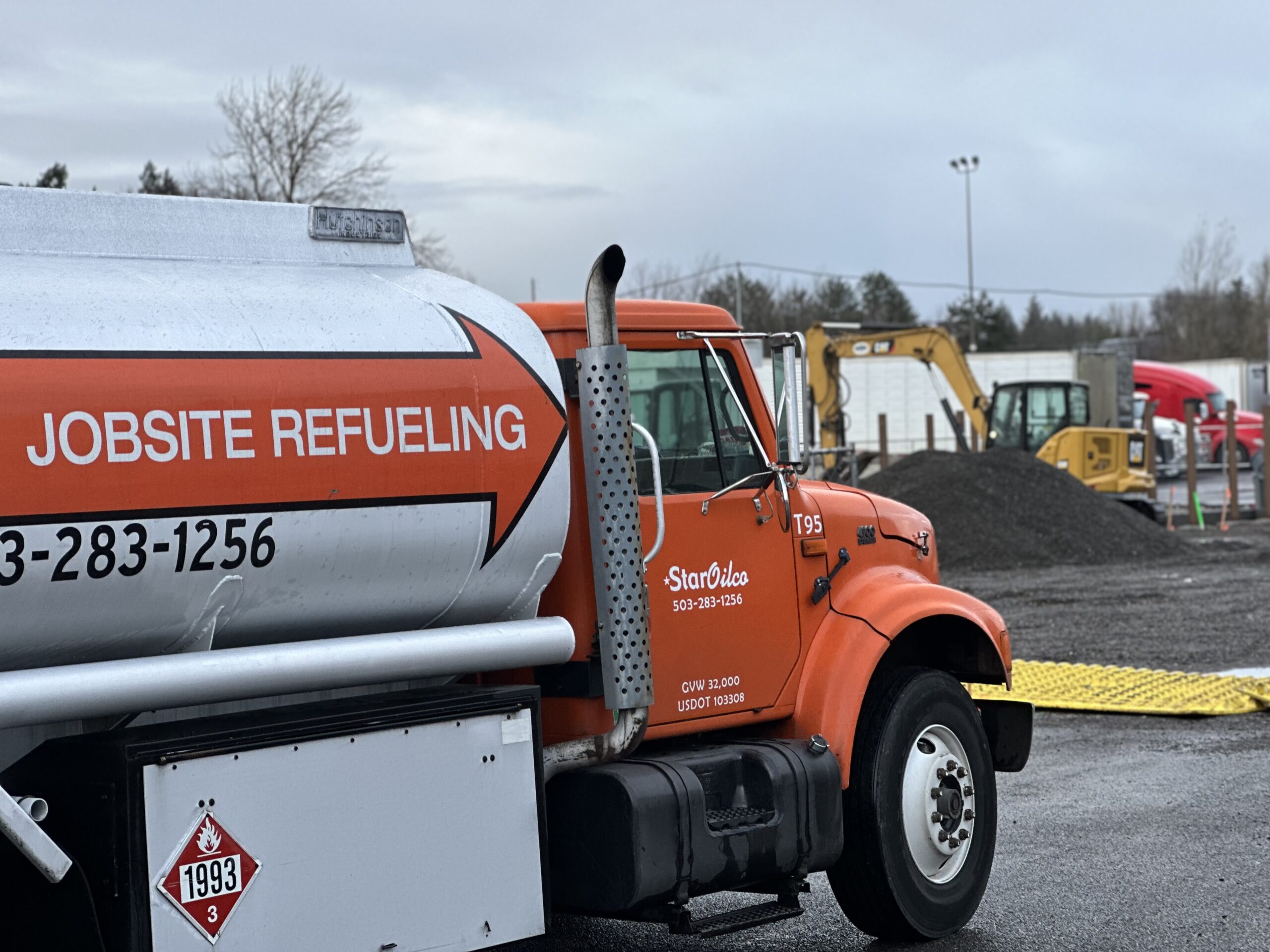
Star Oilco truck refueling off-road diesel at a job site in Portland OR

Can refrigerated trailers or “reefers” use dyed diesel even if they are attached to a truck moving it on the highway?

Yes, refrigerated trailers are off-road equipment. The diesel fueled refrigeration trailer is off-road equipment as its engine is not powering something actually driving down the road. These trailers can use any ultra-low sulfur diesel fuel (dyed or clear). If using on-road clear fuel in a refrigerated trailer, if you track and keep proof of the on-road fuel being used in the off-road piece of equipment, you can file for those fuel taxes back. Proof is required though so consult with your CPA or accountant.

The first step is to set up an account with Star Oilco. It’s easy to pay through a simple credit application or by placing a credit card on the account. Oregon and Washington are highly regulated when it comes to fuels such as diesel. We need to account for who is ordering and getting fuel (yes, Oregon even checks sometimes as the DEQ tracks every gallon of diesel moving into the state). Determine if you want a loaner tank onsite or a keep-full service plan. Star Oilco will deliver bulk or wet hose fuel your job site on a regular schedule. We are here to make it as easy as possible for you to focus on your project, not fueling. Let us know what you want: we will keep it simple and make it easy for you.

If you are storing off-road or dyed diesel for longer than six months you will want to make sure it is stabalized. Star Oilco recommends Valvtect Plus Six as the fuel additive you want to use.  Our recommended fuel additive is a fuel microbiocide with stability additives made for diesel long term storage.  This kills and prevents the growth of biological “hum-bugs” in your tank.  Bacteria, yeast, and algae can grow in your fuel tank. Usually in a small amount of water that collects in the bottom of the fuel storage tank (be it the bulk tank you  fuel out of or the saddle tank on your equipment).

There are several ways to do this.  What you will want to do varies based on how much water and what it is in.  If you are dealing with a large bulk fuel tank you want to definitely pump the tank bottom to get the water out.  If you are seeing extreme biological activity (Hum-Bug growing in your tank) you want to do a kill dose treatment on that tank. It might not be a bad idea to also spend a few thousand dollars to have a professional tank cleaning company come in and manually clean the tank prior to adding the kill dose to kill anything growing in your tank.  If it’s the tank on your equipment usually the best route is to drain the tank, flush the tank, and also put a kill dose of  a fuel microbiocide to make sure nothing continues to grow.  If you want to talk to someone feel free to call Star Oilco, you do not need to be our customer for us to walk through some solutions you can do yourself. 

There are a very few rural gas stations that provide this fuel.  Some Pacific Pride or CFN cardlock locations also have pump available for this fuel.  The easiest way to acquire this fuel is through a fuel company.  Star Oilco is one such company that can deliver dyed diesel for it’s customers, or provide cardlock cards for its customers.

Contact Us Today To Get Your Off-Road Diesel Delivered To Your Location

  • This field is for validation purposes and should be left unchanged.
Ceramic house with red winter hat and pinecones
Heating Oil FAQ: Common Questions Answered 1024 683 Star Oilco

Heating Oil FAQ: Common Questions Answered

Heating Oil FAQ (and not so FAQ)

heating-oil-tank

When it gets cold in the Pacific Northwest, it’s time to take a look at some common questions we have been asked about Heating Oil.  If you don’t see an answer to a question you have, please feel free to call, email, or message Star Oilco and we will gladly answer. We especially welcome questions  that require research.

What is Heating Oil in Oregon?

Heating Oil in Oregon is diesel and can have a biodiesel blend as well.  Diesel fuel has several grades either #1 or #2 Diesel.  The number refers to the grade with #1 being called either “stove oil” or “Kerosene” as another term for it.  Typically when someone is requesting or talking about heating oil they are talking about #2 Diesel dyed red to denote there are no on-road fuel taxes associated with the fuel.

There are several types of oil furnaces.  The most common is a vaporizing burner.  These furnaces typically work by taking a liquid combustible fuel, vaporizing it into a fine mist through a fuel oil nozzle, and igniting that mist into fire. That fire heats either air or water for your home’s comfort.

Air furnaces usually move the air through a heat exchanger where a blower then moves air over the heat generated by your furnace, and finally the air is pushed through your home’s vents. 

Boilers and Water furnaces heat a tank of water which is then distributed several different ways to heat your home.  Either by moving hot water to radiators, radiant plumbing under your floor, or to a heat exchanger and blower which transfers the heat from the hot water into vents blown throughout your home. 

The parts leading up to the Burner of of an oil furnace system are simple. There is a tank to hold a reservoir of oil, a line from that tank (and sometimes a line back to it), a fuel filter, a fuel pump, and a vaporizing burner that combusts the heating oil into fire. Combustion of the fuel takes place in a fire box next to the heat exchanger. The heat exchanger takes on the heat of the flames to heat either air or water. In an oil furnace, the heat exchanger is assisted with a blower that pushes the hot air throughout your home to keep you comfy.

If you have an above or below ground heating oil tank you can confirm your fuel volume by the inches of fuel in the tank.  If you have an above ground tank there is probably a tank gauge that can tell you an approximate volume in the tank.  If you have an below ground tank you can confirm how many gallons are in the tank by putting  a measuring stick or tape-measure into the tank.

You will want to confirm the size of the tank you have. Your oil provider will probably have an idea of what size your tank is by looking or historic deliveries. Star Oilco has a tank chart which will help.  If you place a stick or tape measure into your tank and see how much fuel is in it you can compare that to a tank chart found on Star Oilco’s website.  When delivering fuel you can “stick” measure the tank before and after the delivery. Compare these volumes with the delivery and you can often figure out your tank size based on the before and after volume lining up with how much fuel filled your tank.

To view Star Oilco’s Tank Chart please click HERE. 

Home heating oil can be either a petroleum diesel fuel, bio-synthetic diesel fuel, or biodiesel fuel. In Oregon and Washington, home heating oil is typically ultra-low sulfur diesel fuel often containing between 5% and 20% biodiesel. Star Oilco’s standard home heating oil fuel is B5 dyed ultra-low sulfur diesel. Oregon mandates require that all diesel fuel sold contain a minimum 5% biodiesel. For that reason Star Oilco carries B5 or 5% biodiesel blends in our heating oil.

(NOTE: Kerosene sold by Star Oilco contains no biodiesel due to the reality that wick heaters cannot handle even a minute amount of biodiesel in them.) Star Oilco also carries a 20% biodiesel blend, called B20 Bioheat, for customers who want a cleaner burning low carbon fuel for their home.

Kerosene is a heating oil product that is capable of being picked up and fed consistently by a wick heater. Kerosene is a diesel product that is very similar to the fuel used for over the road trucks. The big difference is that kerosene is a “lighter end” distillate fuel, which means it has a lighter specific gravity. This lighter characteristic means that it also works better in certain systems like wick heaters, pressure washers, and pot burner stoves.

It depends on what type of system the kerosene heater is operating with. If you have a wick heater it will not work with heating oil. You will likely have to replace the wick to get it to work again as diesel will not readily drawn into the wick. Even if it does, it will burn far dirtier. If it is a pot burning system like a Toyostove or Monitor heater, then it will burn ultra low sulfur heating oil. Increased maintenance is to be expected on the pot burner, as there is a likelihood of more coking (crusty black soot build up) to occur inside that system.

Bio heating oil and bioheat refer to heating oil products with a blend of biodiesel in them. Typically bioheat is a blend between 5% to 20% biodiesel with ultra low sulfur diesel for a clean burning and low CO2 heating fuel.

For a really in-depth look at biodiesel used as a heating oil check out this article. 

Yes, heating oil will run in a diesel engine. Heating oil is diesel. Be aware though that on-road vehicles must only run clear diesel fuels. If caught using heating oil in an on-road vehicle in Oregon and Washington, the fines can run in the tens of thousands of dollars. Heating oil can also be dyed to signify it isn’t for on-road use. 

Also be aware that even many off-road pieces of equipment and generators need ultra low sulfur diesel to operate without very expensive maintenance. Heating oil can have low sulfur or even high sulfur contents that could cause real issues for modern clean diesel engines. Some consideration is needed prior to burning a fuel marked “heating oil” in a diesel engine.

Consult your furnace, stove, boiler or water heater’s factory recommended specification. Typically it’s Number 2 Diesel unless it is a stove pot or wick heated system. If you have a furnace or a boiler in your basement, you can assume it’s heating oil. Call a licensed and bonded heating oil furnace technician to tune up your furnace to confirm for sure. If you do not have one, Star Oilco can refer you to a number of reputable long-time firms who can help.

Heating oil additives are added to fuel in order to improve it’s long term storage and performance.  They are worth it and most reputable heating oil providers additize their fuel without an extra charge.  This is because most heating oil customers store their fuel for long periods of time.  If you are planning on storing heating oil for years you will need a fuel additive to keep that fuel in the quality needed for your furnace.

Star Oilco provides a premium diesel additive called Hydrotex PowerKleen to every gallon of heating oil we sell.  Beyond this stabilizers, if you are planning on storing fuel for years we recommend ValvTect Plus 6.  You will want to treat your fuel with a biocide like ValvTect Plus 6 to will kill any bacteria, yeast, algae, or other biological organism that can grow inside your heating oil tank.

For more on storing diesel or heating oil for long periods of time please read this article on long term fuel storage.

Heating oil smells like diesel. It is a diesel product and often, depending on location, it is the same as on-road diesel. It may be dyed to denote that it is an off-road fuel with a untaxed use. Heating oil is dyed red in the Pacific NW to show it is off-road diesel.

Heating Oil #2 is number 2 diesel or the standard diesel sold in most places for on-road diesel use. Heating Oil #2 is a slightly different specification than on-road diesel that allows for more sulfur. That is a big difference as far as the EPA is concerned. On-road and off-road vehicles in the U.S. are required to use ultra-low sulfur diesel. Heating oil systems can use low or high sulfur diesel fuels. Ultra low-sulfur diesel is the most common Heating Oil #2 fuel that is delivered by Star Oilco since it is a superior and cleaner burning fuel, in our opinion.

In the Pacific NW heating oil is ultra low sulfur diesel. Therefore, you can buy any diesel sold at a retail gas station, truckstop, farm supply or other liquid fuel seller.  Heating oil is dyed red to show that it is not taxed for on-road fuel use.  Other than that red dye, typical auto-diesel will work in your oil furnace if you need to supply it from a diesel can.

Heating Oil Gel Point:

In the Pacific NW we expect number 2 diesel heating oils to be operable beyond -10 degrees. The record cold weather in the Willamette Valley is above 0 degrees (recent decades 16 degrees was our record low in Portland). We do test and add additives to our fuels to ensure they meet this specification even if they contain 5% biodiesel blended into heating oil.

Kerosene Gel Point:

Kerosene fuels (Number 1 Diesel, Number 1 Stove Oil, and Kerosene labeled fuels) are expected to be good below -30 degrees and are designed to be used in high altitude applications. (Kerosene and jet fuels are often the same specification in the Pacific NW.)

B20+ Biodiesel Gel Point:

Biodiesel blends of B20 and above are assumed to be good to 20 degrees but if Star Oilco expects below-freezing weather, we highly recommend B5 as your delivered fuel. B99 biodiesel typically gels at 40 degrees, so it’s not a winter fuel unless you have a system designed to keep the fuel warm in the middle of winter.

“Oil Heat” or “Oil Fired” refers to a heating system reliant on burning heating oil. Typically this is by use of a vaporizing burner that takes the combustible liquid that is heating oil and vaporizes it through a nozzle into an igniter that causes it to burn.  This system burns the heating oil, creating a great deal of heat that can warm air, water, or both to heat a home or commercial space.

NOTE: IF HEATING OIL HAS BEEN INGESTED PLEASE SEE A MEDICAL PROFESSIONAL.

Heating oil by itself is not dangerous or toxic if it come in contact with your skin.  It is easily washed off with soap and water.  A small amount of diesel spilled on the surface of the ground, typically will break down on it’s own in the presence of the environment.  A small amount spilled on concrete or asphalt can be cleaned up easily with dish soap and water. If your tank leaks and heating oil is soaked below ground this will not break down easily and will take professional help to treat.

The exhaust from heating oil systems contains carbon monoxide and carbon dioxide as well as particulates.  Heating oil and other diesel exhausts are very dangerous and toxic and should be avoided.  Do not allow exhausts of any kind to collect in an enclosed space.

Heating Oil’s vapor point (the temperature it turns to vapor and evaporates) is around 140 degrees Fahrenheit.  Heating oil ignites at 160 degrees.  Typically in the Pacific NW the temperature (especially outside) is well below the vapor and flash point of diesel fuels including heating oil and kerosene. If spilled it will not usually evaporate. You can clean heating oil and diesel up with regular dish soap and water.

Heating oil ignites at 160 degrees.  So unless the temperature is that high an explosion is not a risk.  Fire Code regulating heating oil tanks and placement takes this concern into account.  So typically except in extreme scenarios heating oil vapor does not pose an explosion risk.

If you drop a match into a cup of heating oil at room temperature it will go out.  If you hold a match to the surface of the heating oil in that cup the flame will get large and bright but the heating oil itself will not ignite.  Heating oil needs to be vaporized before it will ignite. It is a combustible fuel so it must be in a vapor form to light.  The vaporizing nozzle of your heating oil furnace turns diesel into a vapor mist easily ignitable.

Yes, heating oil can go bad. If you are planning to store heating oil for longer than a year, you should use a diesel additive that stabilizes fuel for long term storage. If you are storing the fuel as a back-up where you might go years without using it, you should also consider adding a biocide to ensure nothing grows in your tank. The two biggest threats to your fuel staying in specification are water and biological growth. Biological growth occurs inside the water that can collect in your tank bottom naturally through condensation over time.

Star Oilco treats 100% of our dyed fuels with Hydrotex Powerkleen to ensure that it is stable for storage for over a year. If you need to store it longer than that, we further recommend adding a desiccant breather to scrub moisture out of the air when your tank breaths, which protects it from additional water.

For more on additizing your heating oil for long term storage please follow THIS link.

Yes, heating oil tanks properly installed outside are perfectly safe and capable of ensuring your fuel stays clean and dry.

Yes, at several different levels. With residential use, there are local jurisdictions’ building permit requirements for installation and safety. With commercial use, there is the same building permit regulation and usually an added level of Fire Marshall sign-off for siting of any tanks. In rural areas, regulations are different if the tank is associated with an agricultural use.

In Oregon and Washington, a 90 day temporary tank for construction purposes (to move from one tank to another in a formal process) is usually allowed, but you should ensure the temporary tank is a double wall tank and is in a safe place. If your tank leaks (or even if there is a suspicion of a leak), the Oregon Department of Environmental Quality and Washington Department of Ecology have an involved process to close out a leaking oil tank.  

Yes, you need to ensure you maintain your oil furnace. Star Oilco recommends getting a tune up annually or at least every other year.  If you are seeking a referral to a HVAC company that specializes in oil heat, call Star Oilco’s office 503-283-1256 and ask for a list of qualified license and bonded companies we recommend. You also want to check your oil furnace for water annually. Star Oilco can stick your tank for water at no charge upon request with a fuel delivery.

One of the great benefits of oil heat is that oil furnaces are known to last for over fifty years if maintained properly. Natural gas and propane furnaces typically wear out every ten to twenty years dependent on their construction. The primary wear consideration on any furnace is the heat exchanger. The heavy steel part takes the flame of burning fuel, transmits this heat to the air, and is then pushed to heat your home. Oil furnaces must be tuned up every year or two to ensure the heat exchanger is cleaned.

If you do not service the heat exchanger, it will collect soot. Soot insulates the heat exchanger unevenly and causes wear that will eventually lead to a crack. If a heat exchanger is cracked, the furnace is no longer safe to operate. Additionally, an annual tune-up will pay for itself by ensuring your furnace is burning at peak efficiency. You will want to replace your furnace air filter regularly on an annual basis.

Tuning your furnace annually or every other year is highly recommended. Adjusting the fuel air mixture for the most efficient combustion goes a long way to ensure you use as little heating oil as possible. Star Oilco has witnessed fifty and even seventy year oil furnaces operate at modern efficiencies when maintained regularly over their lives. Today, there are a host of high efficiency oil furnaces manufactured and supported to reduce your cost of fuel.  Additionally, confirming the envelope of your home is not drafty or needlessly wasting heat can go a long way in reducing your heating expenses.

The price of heating oil fluctuates frequently due to market conditions. Comparison shopping is your best way to ensure you pay the best possible price. One web based tool we have heard customers like to use to save time while shopping for heating oil is Fuelwonk.com.  It is free and easy to use.

Even though the cost of fuel is dependent on the market and out of our control, there are best practices to reduce the amount of oil you’ll need. The temperature you keep your house will affect how much oil you go through. Keeping your temperature higher will lead to more oil burned during the winter months. How insulated your home is will also affect the amount of oil you burn. Having poor insulation will result in having your furnace running hotter for longer periods of time, increasing fuel use. Annual maintenance of your furnace will keep your furnace operating at top efficiencies. Having a well working and operating furnace will keep costs down by not wasting oil on an underperforming unit.

Star Oilco also has a number of discounts and programs for price reduction. We offer $.05/gallon veteran and senior citizen discount. We frequently have discounts on Google and our social media pages so make sure to check those out. Mention where you saw it to receive the discount.

Heating oil customers at Star Oilco have the opportunity to enroll in our Equal Pay program. The program allows you to make equal monthly payments on future heating oil deliveries. As an Equal Pay customer, you will receive a discount of .20 cents per gallon on all heating oil deliveries. We also have an Autofill program which dictates you receive our best price as well as automatic deliveries. You don’t have to keep track of your fuel or when you need a delivery. We do the work for you!

If you do not like our price and someone else is cheaper let us know.  We will match their price.

Heating Oil is a modern fuel that uses today’s heating oils and biofuels.  The investments in research and development for heating oil furnace by the National Oil Research Alliance to use a wider variety of biofuels in higher lower CO2 blends have kept heating oil relevant in many applications.  As a heating fuel, it’s use will become more rural than urban rather than a phase out. As it is today, the use of heating oil will be used where natural gas is not available especially if the temperatures get below zero. Urban adoption of natural gas has increased, as it’s cheaper than heating oil due to increased fracking development of petroleum.

Star Oilco uses a Degree Day system for our customers on Automatic Keep-Full Service.  We fill your tank before it needs it automatically. A statistical regression analysis correlates your typical use of heating oil in your home and the weather.  Our systems will track your usual fuel usage and we automatically schedule delivery to keep your tank full.

The technical term “BTUs” refers to “British Thermal Units” which is a measure of energy content of a fuel. The energy content of diesel fuels can vary slightly by regions and specifications of those regions.  In the Pacific Northwest, heating oil is typically Ultra Low Sulfur Diesel with a blend of biodiesel content. This can range from 5% to 20% biodiesel added to the fuel. This means the exact BTU measured for a gallon of heating oil an slightly vary.

Source: US Alternative Fuel Data Center Fuel Properties Comparisons
Ultra Low Sulfur Diesel: 128,488 BTUs to 138,490 BTUs per gallon.
B5 Biodiesel is presumed to be about the same BTUs as ULS Diesel.
B100 Biodiesel: 119,550 BTUs to 127,960 BTUs per gallon.
B20 Biodiesel: 126,700 BTUs to 136,384 BTUs per gallon.

Get A Heating Oil Quote Today

  • This field is for validation purposes and should be left unchanged.
Fuel gauge on empty with red backlight warning
Emergency Fuel Delivery Near You 1024 683 Star Oilco

Emergency Fuel Delivery Near You

What to Do When You Run Out of Fuel

Full fuel gauge with red jerrycan symbolizing emergency fuel delivery

Fuel is a necessity for many businesses to be able to operate effectively. Companies such as construction, fleets and delivery companies, they all need fuel in order to operate their business. Fuel is also a major cost for businesses, and prices can fluctuate significantly. Companies must therefore carefully monitor fuel usage and prices and there are strategies to keep fuel costs low as well as convenience and reduced labor costs by running out of fuel. Star Oilco is Portland’s preferred fuel supplier and works with many businesses to keep their businesses running by providing fuel deliveries.  

Impact of Fuel Shortage On Businesses 

Fuel shortages can lead to many issues if the fuel is unavailable. Employees have to take time while on the clock to go refuel or productivity simply stops because of the need for fuel to run equipment. It can pause construction, delay deadlines, and result in severe financial loss. In the event of fuel shortage, having a reliable source to refuel can make a difference.

Fuel shortages can lead to many issues if the fuel is unavailable. Employees have to take time while on the clock to go refuel or productivity simply stops because of the need for fuel to run equipment. It can pause construction, delay deadlines, and result in severe financial loss. In the event of fuel shortage, having a reliable source to refuel can make a difference.  

Downtime in Construction

Diesel fuel plays a lifeblood in construction. Heavy construction equipment constantly consumes fuel. Without fuel, all the construction equipment is useless. The need for more fuel can standstill the whole process of construction. That results in downtime, missing the deadline, and could potentially affect the reputation of the construction business.  Therefore, it is important to plan fuel logistics carefully in order to ensure that the construction equipment has adequate fuel supply. This can be achieved by having an efficient fuel storage and distribution system. Moreover, it is important to monitor the fuel levels regularly to ensure that the construction equipment has adequate fuel. Many construction companies will use fuel cans for their projects, would leads to empty or half-full cans laying around the job site, employees running into town to fill up the empty cans frequently, and potentially spillage each time a fuel can is being used or filled up. We suggest using a company such as ourselves that can provide a fuel delivery service and keep your employees working. Whether we provide fuel directly to your equipment, or you have one of our fuel cubes on site, we can deliver fuel to your job sites and keep your business in operation. 

Concern of Perishable Items in Grocery Stores 

Grocery stores keep perishable products in refrigerated trailers to ensure freshness. If the fuel runs out, the required temperature cannot be maintained, which can affect the quality of the products. This results in a bad impact on the grocery store business. Having a fuel supplier come out routinely to fill up your refrigerated trailers allows you to focus on other aspects of your business and not worry about whether or not your reefer will run out of fuel. By eliminating the possibility of running out of fuel, you also decrease the chances of having to get emergency fuel on nights or weekends when there could be other fee’s in order to delivery during off hours. 

Logistical Nightmares For Truck Fleets 

Shortage of fuel for truck fleets can disrupt delivery schedules. Fuel shortage is challenging for truck fleets and disturbs any company’s supply process.  Companies should plan ahead and make alternative arrangements to ensure their fuel needs are met. They should also develop strategies for managing fuel demand and budgeting for fuel-related expenses. Additionally, truck fleets should be aware of potential fuel shortages and plan accordingly by having a company like Star Oilco come out and either fuel up their trucks on a routine basis, or top off one of our fuel cubes that you can have right on your property. Either way, Star Oilco is a local fuel supplier that looks forward to being the solution for businesses across the Pacific Northwest. 

Advantages of Emergency Fuel Delivery 

Many fuel companies claim to deliver fuel in an emergency but there are questions to ask before considering who you should use as a fuel supplier. There are several benefits with using Star Oilco as an emergency fuel delivery company.  Star Oilco guarantees prompt service and competitive prices. We also have an experienced team to handle any fuel-related issues that may arise. We provide fuel on-site whether directly to your fleets or in one of our fuel cubes that you can have on-site. We provide a hassle-free service to save your staff time in refueling. We will be out there even when the temperatures decrease and there is cold weather. We provide peace of mind knowing that your operations can still continue and allow for productivity everyday. 

Star Oilco Emergency Fuel Services 

Star Oilco is Portland, Oregon’s preferred fuel supplier for many reasons, including…  

  • Highly Professional Drivers: We have highly professional and trained drivers who refuel on time
  • Refuels when you need it: We deliver fuel directly to your fleet’s fuel tanks and equipment on the work site
  • Fleet trucks fueling: We are available to refuel at convenient times for fleet fueling
  • Emergency service in bad weather: We keep your fuel tanks full in cold weather conditions and respond quickly when in an emergency
  • Refrigerator trailers: Star Oilco also provides fuel for refrigerator trailers
  • Easy billing: Reduce your invoices and work through one fuel supplier
  • Fulfills off-road diesel requirements: Star Oilco cares about your needs and provides quality diesel for emergency backup generators and off-road diesel equipment
  • According to the law: We refuel diesel according to the local state law of blending biodiesel 

If your business uses diesel to fuel your business in one way or another, Star Oilco can be of service. Whether you’re in need of a cardlock account to access discounts directly at the pump when traveling, or you could benefit from a fuel supplier devliering fuel to your workplace or jobsite, Star Oilco can be a quality solution for Portland, Oregon’s commercial operations.  

Sign up to receive our Fuel Market Report to get your weekly fill of updates!

Name