
Cardlock

Take a look at what a small business can gain with cardlock over giving their drivers unsecured credit cards. Call Star Oilco and ask our fuel experts for a quote.

Icons representing fuel, savings, and driver control for fleet card security
Upgrade your Fleet Card’s Security Features 1024 653 Star Oilco

Upgrade your Fleet Card’s Security Features

Human Resource strategies to stop employees from stealing gas and diesel in your  business with these best practices.


Upgrade the security features on your Pacific Pride fuel cards with Star Oilco.

Star Oilco is an independent Franchisee of Pacific Pride

Are you looking to use a corporate fleet card to simplify your fuel buying while also knocking out your exposure to employee gas theft?
Star Oilco can make that easy for you.

Regardless of what system you choose, there are some organizational best practices, that when implemented, will be self-reinforcing in your organization. Simple little changes to how you approach fuel cards will greatly reduce any opportunity for theft.

Whether you use a Pacific Pride, Voyager, WEX, Comdata, Fuelman, or CFN corporate fleet card, you can take inventory of what you are currently doing and upgrade that process with these best practices.

Fleet Card Best Practice #1: Your current vendor should be able to assist you with securing your fleet card.  Call your current card provider and ask for a list of every active card, the last time it was used, the PINs associated with these cards, and security features associated. Check these against your next bill to see what cards aren’t being used.  Turn off a card not being used.

Fleet Card Best Practice #2: Annually take inventory of what cards you have and who is using them. Line up this list of active cards with your employees and make sure there isn’t a lost card out there.  Often a card policy implemented by Human Resources or your Dispatcher is a good way to track what employees have what cards.

On a regular basis, pass a clip board around asking each employee with a fleet card to confirm they still have that card and initial a confirmation that the card is still in their possession.  You would be surprised how individual cards can float between employees as it is easier than asking for a new card.

Fleet Card Best Practice #3: Audit your transactions regularly. This is a great project for your Account’s Payable to look through. Check against the card list of active cards looking for transactions that occur outside of normal business hours and days. Look for locations outside of your service area as well.  Also look for cards with more than one transaction in a day or large volumes as often that’s theft.

Fleet Card Best Practice #4: Put your Fleet Cards on the key ring dispatched with the vehicle, not with the driver. To limit a risk of a stolen card, restrict card ownership to management and maintenance. Everyone else should have cards directly connected with a vehicles license plate, so if that card goes missing it is obvious.

Fleet Card Best Practice #5: Program your cards for the vehicles they are attached to. You do this by connecting the card to the vehicle with a key ring. Then program the Fleet Card to only allow a specific fuel for that vehicle (regular, premium or diesel), limit the fill volume needed for that vehicle’s tank, and also limit the times of day that vehicle can get fuel. This reduces the opportunity for theft to exceed a small minimum and also makes theft obvious when the limits are hit.

Fleet Card Best Practice #6: it’s the 21st Century so manage in real time.  Make sure your Fleet Card provider can send an email to your Dispatch or fleet management in real time as the fuel cards are being used. Mistakes relating to efficiency or theft will be far more obvious and trainable if the transaction is observed the day of rather than a week. Instant feedback and communication is critical to change bad behavior of driver’s who mean to do well but may just have mad ea simple mistake.

Fleet Card Best Practice #7: Buy fuel by your vehicle not by an individual.  Move your Fleet Card program to a “Floating PIN” system. All modern Fleet Cards should offer this option. It enables you to attach the Fleet Card to the vehicle (all costs are tracked by the vehicle number and/or license plate on your invoices) and provide a unique and secret PIN to each of your driving employees.

If they use the card, their name appears on the bill next to their transaction. If PINs are kept secret and this is enforced, any theft or inappropriate fuel usage will be extremely obvious and accountable.

Fleet Card Best Practice #8: Adopt a “No Tolerance Fuel Theft Policy” as part of your hiring process, as well as every time you replace or issue new Fleet Cards. This is a policy managed by your Human Resources or Driver Compliance department. It is a form disclosing that any fuel cards or PINs related with cards are confidential and assigned to a person or vehicle.

Any use of a PIN will be the responsibility of the person who that PIN is associated with. A personal private PIN is their responsibility. If it is used, they are responsible and any observed fuel theft will be a first-time fire/termination offense. PINs are to be kept secret and if the PIN is known by someone else, it is their responsibility to let management know and get that personal PIN changed.

Fleet Card Best Practice #9: Negotiate a Cost-Plus basis for your fleet fueling costs. You should be able to have a frank conversation with your commercial fueling provider about where prices come from and how much margin they charge you. In many markets, fuel providers can even get a wholesale cost plus basis for fuel that beats the retail street mark ups. Pacific Pride and CFN stand alone commercial cardlocks are focused on this type of need. Often the savings for diesel customers is very substantial due to this model of pricing.

Fleet Card Best Practice #10: Negotiate the terms you need for the way you buy fuel. If you have a frank conversation about the terms and costs related with buying fuel, you’ll have more options that are available but not advertised. Industry standard for fuel sellers is either ten day terms with twice monthly or monthly billing. If you have the ability to pay faster, often deeper discounts are provided.

For extremely large customers daily billing could net thousands of dollars in savings a month. For operations relying on 45-day fuel charge reimbursements, talking to a fuel vendor about matching your fuel bill with a fleet’s Accounts Receivable can prevent huge cash-flow crunches.

Need to secure your fleet from fuel theft?

Call Star Oilco, we can make it easy.

Star Oilco can help you field all of these Best Practices. Our motto is “Keep it Simple” and we are there to make this easy. Feel free to reach out and see what Star Oilco can do for your fleet to upgrade it’s fleet fueling security.

To download a white paper on these Pacific Pride fuel card security feature best practices go HERE to our Stop Fuel Theft page.


Star Oilco is an independent Franchisee of Pacific Pride

Contact Form

  • This field is for validation purposes and should be left unchanged.
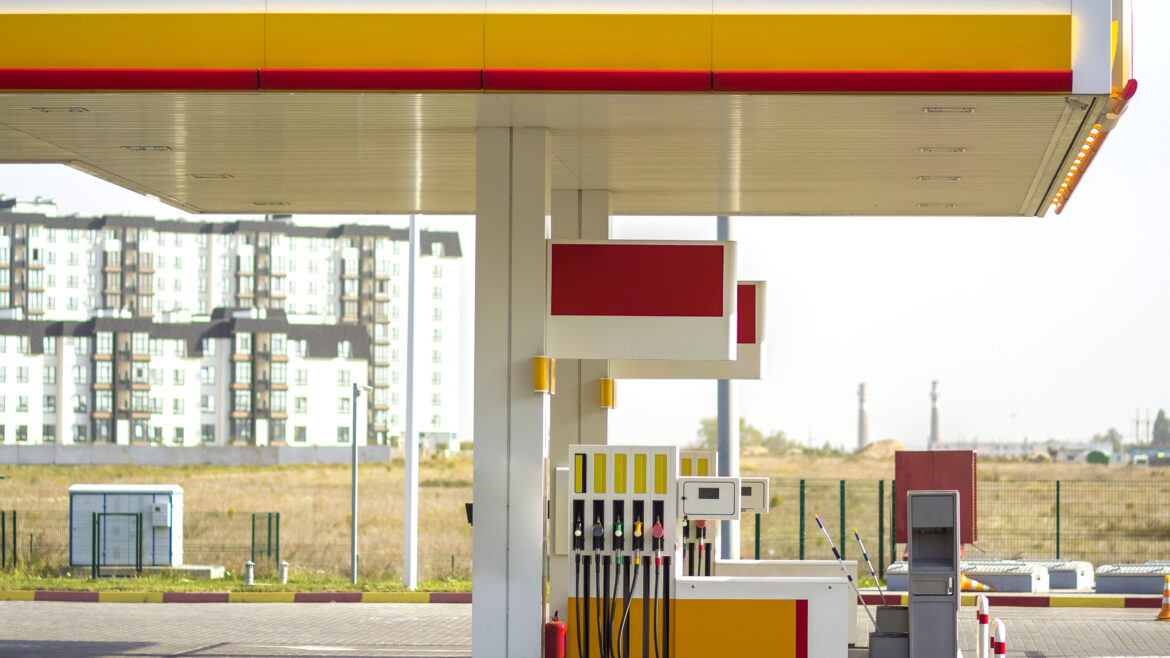
Empty Pacific Pride fueling station with modern fuel dispensers
Why should my fleet use Pacific Pride fuel cards? 1024 683 Star Oilco

Why should my fleet use Pacific Pride fuel cards?

Star Oilco Pacific Pride corporate fuel card

Pacific Pride Fleet Fuel card by Star Oilco


                      A prospective customer asked recently:

          “Why should I use a Pacific Pride fleet card over a gas station credit card?”

Here’s our answer:

There are many reasons to use a commercial cardlock solution for your fleet. The biggest reason why you should use Star Oilco for your cardlock needs is that we are a locally owned and operated business that will take the time to tailor a card program to your specific fleet’s needs by asking questions like:

  • What is the greatest risk of theft that we can secure against?
  • Where is the greatest opportunity for savings in how you fuel?

Fleet card sellers and the larger cardlock companies are often focused on making your needs fit their product. Star Oilco focuses on YOU.  That’s a big difference.

          With Star Oilco, you don’t have to choose between price or convenience

PRICE: Cardlock locations do not use a credit card satellite to run transactions. This means you’re saving 2% to 4% right off the bat by using Pacific Pride or CFN, because cardlock operators taking are not charging you to run your bill through a Visa or other network. Plus, by pulling into a gas station to buy fuel, you’re often forced to pay $.10 a gallon more to use a Comdata, WEX, Voyager, Mastercard or Visa backed fleet card.

With Pacific Pride, you won’t face this charge because it’s on Fleetcor’s network. And by working with a local Pacific Pride franchisee who owns the location, you’ll benefit from their ability to offer additional savings at their location that are not available to anyone else. They own the fuel and therefore have ultimate control on saving you money.

CONVENIENCE: With convenience, comes risk. With Star Oilco’s modern cardlock offering, we can secure your risk and still enable several levels of convenience and access, dependent on your customized fleet need.

                                                     We keep things simple


24-7 Convenience with Easy to Access Fueling Facilities

Clean, well-lit and large truck friendly cardlock facilities. Cardlock is made for business and if you are operating doubles and triples, we can work with your staff to map out the easy in-and-out high-flow diesel fueling options for your drivers.

Industry-Leading Card Security

We offer a wide range of solutions that allow you, as a fleet manager, to lock down and protect your fleet from theft. If you only operate in specific areas, we can turn off whatever cards you want to not operate outside of where you want your trucks. If you don’t operate after a certain time of day we can turn non-management cards off to guard against after-hours sales fuel theft.

Email Notification for Total Control

See fuel transactions in real time. When your drivers make a fuel purchase at Pacific Pride or other affiliate fueling locations, an email will notify you or your dispatch. If your drivers are following your processes and procedures for fuel procurement, it will be easy for you to immediately reinforce the rules instead of waiting for a bill. Better yet, if something is wrong with the fuel purchase (out of area/time/product), you will know immediately a problem has occurred and can respond accordingly.

Flexibility or Structured Control.  We offer both!

Whether you want your drivers to be able to get fuel and get on the road as fast as possible or stay locked into a specific zip code of only the lowest-cost commercial cardlock locations, we can make that happen. And not only do we make it easy, we can shift gears quickly to stay ahead of your evolving business needs.

Total Accountability for Fuel Usage

Total accountability means added convenience for your controller, CPA and HR manager. Beyond designing simple security features, we can:

  • Align fuel usage with your vehicle license plates by providing a private PIN to your employees.
  • Track miles per gallon in the vehicles to confirm if the fuel actually went into that vehicle or not.
  • Customize billing to link employee names to card usage.

Bottom line: You will know which vehicle took what fuel and who the person was who fueled it. And when an unlikely fueling occurs, you will have evidence of the person who did it and that the vehicle’s mileage is off, providing proof if needed. Combine Pacific Pride’s total control with a “No Tolerance Fuel Theft Policy” for additional authority to fire fuel thieves under any state’s employment laws.

Simple and Accurate Fuel Management and Reporting

Star Oilco’s system enables easy reports anytime you want them. If you require a CSV file or other report for your operation, tax reports, budgeting or other business needs we are there for you to make this easy.

Commercial Diesel Pricing with Volume Discounts

Pacific Pride commercial cardlocks are priced from the wholesale market rate. Our price is straightforward and based a daily OPIS Wholesale Rack report from your local market.  Instead of retail posted price signs where the corner gas station is trying to get as much as they can, our diesel fuel is priced on a cost plus basis. This is far more transparent and will save you money compared to retail on diesel fuel. When prices are high, our prices are far more fair. When prices fall, we fall with the wholesale market from the OPIS Average the day the market starts moving down. Pacific Pride locations are also designed with high speed diesel pumps that save large trucks time.

Try Pacific Pride to see for yourself!

To sign up for Star Oilco’s Pacific Pride fleet card or ask questions:

Contact Form

  • This field is for validation purposes and should be left unchanged.

Star Oilco is an independent franchisee of Pacific Pride

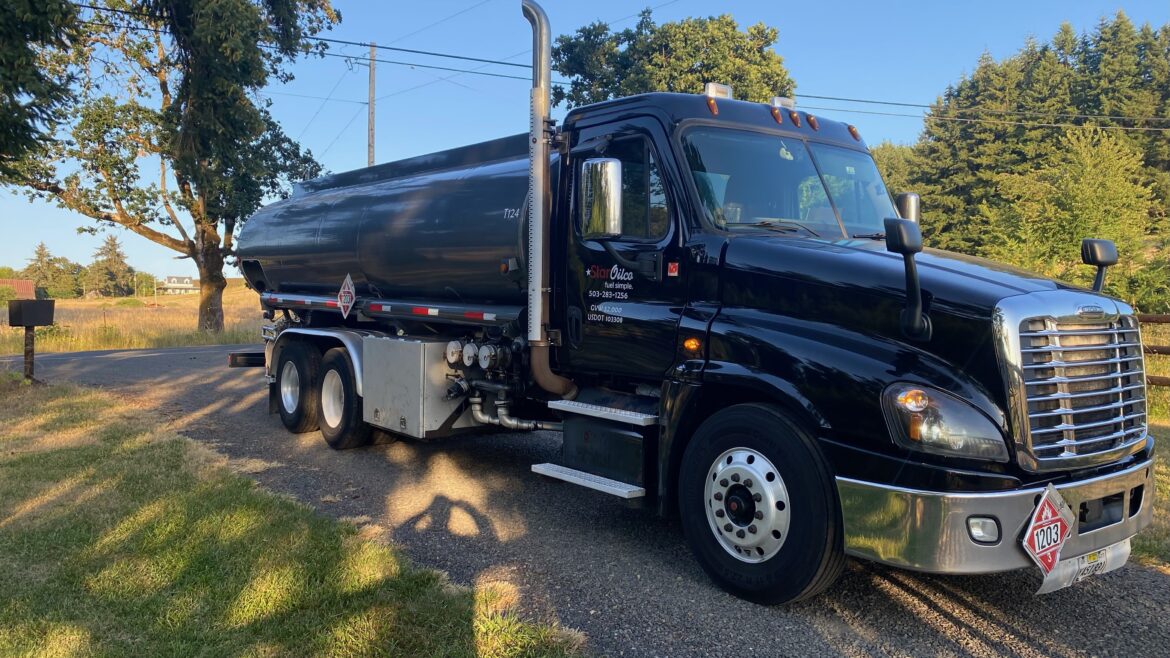
Star Oilco black fuel truck parked on rural road with trees in background
How to save money while fueling your fleet. 1024 768 Star Oilco

How to save money while fueling your fleet.

With recent high diesel and gas prices, saving money on fuel is a priority for many fleets.  Star Oilco is here to help you contain the hidden costs of fuel with our fleet card solutions. 

If you are a fleet manager or in charge of corporate fueling and you use retail gas stations, this article is designed to talk you out of it.

Every year, Star Oilco helps small businesses save labor and protect themselves from theft. It’s the little costs we don’t watch that can add up and really cost a business. We help businesses keep a complicated fuel bill easy to manage.  Be it moving to mobile-onsite fueling, a totally secure fleet card solution, or a combination of the two consolidated onto one bill Star Oilco is here to make things easy.

With wages and fuel costs rising together containing those costs is a priority for every fleet.  Both the labor cost sunk in fueling your own fleet as well as the actual cost of the fuel bought, many of our conversations are around how to structure a clear view of this.  We have solutions and can provide a clear view of your fuel costs via Star Oilco’s Keep it Simple Fuel Audit.

Usually the only time a fuel bill is really examined is after a record setting month for overtime, a huge jump up in the commodity cost of fuel, or a giant volume of fuel theft was discovered.  Essentially, when costs have ballooned out of what they should be that is when businesses dig in and pay attention.

If that describes your need, Star Oilco has a proven system to bring your fuel cards under control and return honest employees to the straight and narrow or document the thieves so you have red-handed proof.  If you are local to Oregon and Washington we can also combine this with the labor savings of wet-hose fueling of your fleet.

Whether it’s with a secured cardlock program or on-site fleet fueling at your business location we can make fuel secure, simple, and at a lower cost than retail. We do this by tailoring your fuel cards to your actual business needs.

If you don’t operate on weekends and after 9pm at night, we make sure the fuel cards that serve that part of the business are not usable during those times. We also attach the name of the person fueling to the bill so you don’t have to research or wonder–you always know who it is. Additionally, we can send an e-receipt to your dispatch the moment anyone buys fuel. This ensures you are managing fuel buying habits in real time, not at the end of the month after the bill arrives.  Also every transaction on your bill can show the name of the human being who got fuel to really shine a light on who is doing what.

At the end of every month most businesses are looking at their bottom line and considering how to control the expense side of the equation. With retail gas station fuel, it can be tricky trying to control cost. If you focus solely on the cost of fuel itself, savings can be allusive in the long run. In fact the greatest tragedies in business usually are the things you don’t see in any statistic, especially the price you pay up front versus over all. The two largest controllable fuel expenses we consistently see are labor and avoiding theft.

If you are curious after reading this, the first step with Star Oilco is a Keep it Simple Fuel Audit performed by our team. Call us if you want to audit your fuel process.

What’s in the price of a gallon of gas or diesel? At Star Oilco we Keep it Simple.

Keep it simple when looking at your bill. There are only a few things in the cost of a gallon of gas or diesel: the commodity cost of fuel, the taxes on fuel, and the margin of the person selling fuel to you. Regardless of where you buy or how high or low the cost, that is what influences your fuel cost. If they call it something else, it’s really marginal and you should negotiate as such. The commodity cost is about the same no matter what. Even the largest buyers in a market are only saving a few pennies and your price per gallon will not be influenced more than a few pennies by this. Taxes should be the same and are easy to verify on Google. Margin is all that’s left. So if you ask your vendor to provide you a cost plus basis it should be very doable. All businesses have cost including oil companies, but they should be able to clearly describe what it costs for them to deliver or supply a gallon of fuel to you.

The cheaper the retail price the longer the wait.

The cheaper the retail price the longer the wait.

Focus on your business’s labor, not on the price per gallon.

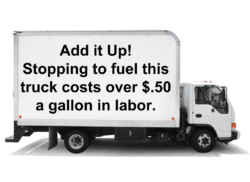
If you analyze it, usually your cost of labor to fill up your own vehicles costs more than what the local gas station makes selling you fuel. Add up your cost of labor and the vehicle and know that you are losing probably twenty minutes to a half hour to pull out of route, pull over, and fill up. If you are routing your drivers to save money on a retail street price, you are paying far more for your driver’s to chase savings than you will ever see in savings. The bigger the posted retail savings the longer the line your drivers will wait in as well, making it even more costly to your bottom line.

Remember that if a convenient excuse exists, some will use it. If the answer to why it took so long is consistently because they had to stop and get diesel. Fix that permanently with a fleet fueling company that provides on-site   refueling.

Pride Advantage Sample Card

Prevent theft and keep honest people honest.  

As fuel prices jump from time to time, fuel theft takes off as well. For some people, stealing fuel for their personal vehicles can be almost irresistible. Make it very clear that you do not tolerate theft and that you can verify it clearly. With a “Zero Tolerance Fuel Theft Policy” you can get ahead of this eventuality and stop it long before it starts. There are thousands of stories of thousands of dollars in fuel stolen by seemingly good people. It always starts with one person doing it and influencing other employees to think it’s okay. Make sure it is clear that it is not only not-okay, but will be seen and punished. A few years ago a $2.4 Million theft occurred by an unsecured fleet card policy. Though the size of this theft is unbelievable, know if you aren’t tracking fuel purchases with a secret PIN that attaches the name of who did it to the fuel bill, you might be positioning yourself for the same exposure.

As you look at your month end P&L Statement, think about the bigger picture, the bigger costs in your business and that you can engineer systems that give you more control over these costs. Though Star Oilco accepts Voyager, WEX and Comdata cards, we are passionate and feel the Pacific Pride’s solutions are the best for a small business seeking to control their fuel purchase and knocking out theft. If you have questions about how to save on labor and stop theft before it starts, call Star Oilco for a tailored examination of how you buy fuel and how you can save money. We provide Pacific Pride and Fuel Management solutions nation wide in the United States. We can help you get your fuel under control.

Contact Star Oilco to save money on gas and diesel.

Star Oilco is a proud independent Franchisee of Pacific Pride

Pacific Pride Cardlock Fuel Security


Contact Form

  • This field is for validation purposes and should be left unchanged.
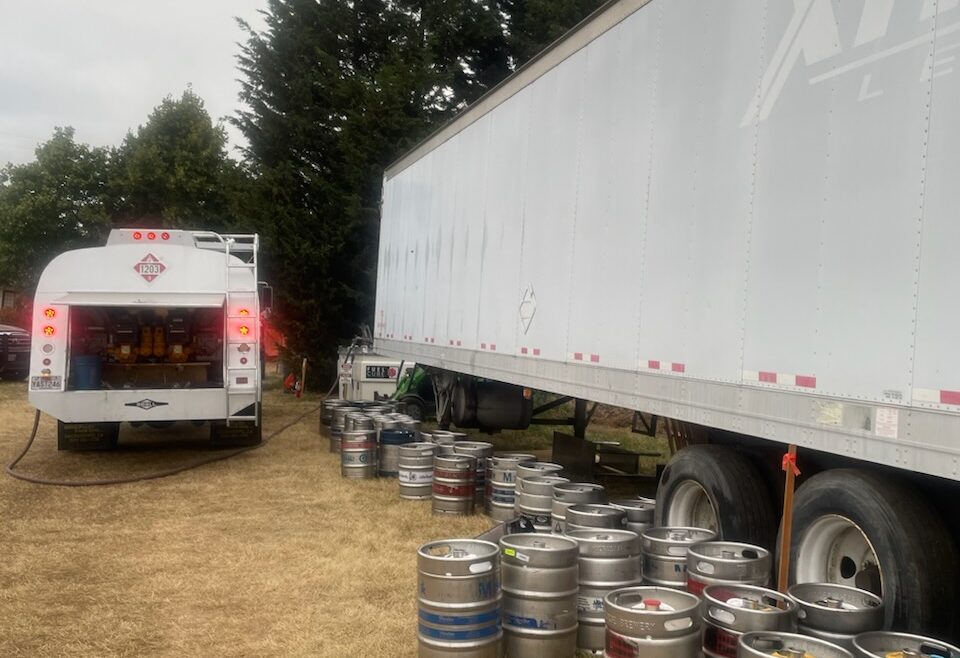
Star Oilco fuel truck delivering diesel to a refrigerated trailer at an outdoor event with beer kegs stacked alongside
Documenting Fuel Theft – A Wex Article 4 Step Approach 768 1024 Star Oilco

Documenting Fuel Theft – A Wex Article 4 Step Approach

Wright Express Fuel Cards versus Fuelman Fleet Cards for small business

Wright Express  (also known as WEX) has a great article for corporate fuel buyers on the best practices when documenting and confronting fuel theft.

WEX: Tips for enforcing proper fuel card usage and preventing employee theft.

A few things they left out that Star Oilco would include. As a Pacific Northwest Commercial Cardlock provider serving Oregon and Washington, we approach things a little differently than a credit card concept like WEX. We accept and love working with WEX, Voyager, Comdata and other fleet cards but still like personalizing the security of a fuel card to the use of it.  Call your current fuel vendor (or call Star Oilco) and review your security features.  If you suspect there is fuel theft, rather than watch it happen just eliminate the places it can occur. With either CFN or Pacific Pride networks the features are inherit and we can help you guarantee they are being used correctly.

Get out of the gas line

The Four Step Approach to Fuel Card Management

When a customer tells us they suspect fuel theft this is what we recommend to do with either CFN or Pacific Pride cards:

  1. Establish a no tolerance fuel theft policy and have every employee sign it.  This policy includes an acknowledgement by them they have a secret PIN unique to them and if it is used they are responsible for it. So if there is theft with their PIN they can be fired for that theft.
  2. Now that all users of your company vehicles have a unique PIN code. Attache their name to the use of that PIN.  So when you get your fuel bill, the actual names of the users of the cards is there next to the transaction. Just this best practice (and sharing this evidence with your team) will keep honest people honest. If they know their name appears to the transaction they will think about ownership of their actions.
  3. Ensure you have set limits on the cards to line up with the needs of the business.  Attach the fuel cards to the vehicle that uses them.  Then make sure the fuel type and volumes allowed line up with that vehicle. If a vehicle is diesel, that fuel should be the only fuel allowed to be used.  If that vehicle has a 30 gallon or 100 gallon tank set limits so no more than that can be fueled in a given day.  Just limiting the fuel volume to the tank size of a vehicle can eliminate most of the fuel theft that would occur.  Also you can limit the time of day as well as weekends. If a fleet isn’t on the road after 6pm, you can guarantee no fuel theft occurs after 6pm.
  4. Turn over the cards by having all drivers/staff turn in their old cards. Then re-issue those cards attached to the key-rings of the fleet keys.  Star Oilco can provide a card older designed to go on the vehicle key-ring to make this a no cost easy reform.By doing those things which is an easy project you will knock out most of the opportunity for theft as well as send a strong signal to your team that fuel theft is not okay. Honest employees will understanding clearly that theft is occurring and is not okay, the dishonest employees will know to immediately stop.  If theft continues it will also be very easy to spot as the name of the thief will appear on the bill alongside the transaction. That combined with a No Tolerance Fuel Theft policy will make removing the fuel thief an easy proposition for you regardless of your state of operation.If you do business in Oregon and Washington and have questions about securing your fuel purchases.

For more on how to stop fuel theft in your small business please see the Star Oilco whitepaper on securing your fleet cards at StarOilco.com/Stop-Fuel-Theft/ for a strategy on saving your business from the pain of managing drivers from stealing.

Call Star Oilco’s Sales Team at 503-283-1256 for an complementary audit of your processes and how we can give you peace of mind and less to worry about in your business.

Contact Form

  • This field is for validation purposes and should be left unchanged.
Portland-Oregon-Pacific-Pride-Location-Map
How does mobile cardless pay work with Pacific Pride & CFN? 349 335 Star Oilco

How does mobile cardless pay work with Pacific Pride & CFN?

Pacific Pride offers a mobile cardless pay option through their app, PRIDE PAY.

With PRIDE PAY, drivers can initiate fueling directly from the app at participating Pacific Pride locations without a physical card.

Here’s how it works: 

Download and install the PRIDE PAY app on your mobile device.

Pride Pay App Icon
Pacific-Pride-Login-credentials

Sign in using your Pacific Pride account credentials.

Locate a participating Pacific Pride station within the app.

Portland-Oregon-Pacific-Pride-Location-Map
Driver using Pacific Pride app on smartphone to activate fuel pump from inside vehicle

Once at the station, initiate fueling through the app, responding to any prompts for authorization.

Fuel your vehicle and complete the transaction directly through the app.

Mobile phone screen showing fuel card transaction history with Pacific Pride

There are many Pacific Pride fueling locations throughout the United States and Canada. There are over 1,400 locations in total, and that number is still growing. You can find Pacific Pride stations in a variety of places, including truck stops, convenience stores, and travel plazas. Since Pacific Pride locations are independently owned and operated, not all services are available at all locations. It’s always a good idea to call ahead to confirm amenities offered at a station.   

PRIDE PAY offers many benefits like convenience, security, and potential fuel discounts. Remember to check with your Pacific Pride account manager for details and ensure your company account is enrolled in the program. 

An additional bonus is the ability to track multiple drivers, companies can gain insights into their routes, driving behavior, and travel times. This allows for better coordination, improved time management, and reduced fuel consumption. Additionally, tracking helps to identify inefficiencies and areas for improvement in the overall transportation process, leading to cost savings and reduced paperwork through automated reporting. 

In the end, this advanced tracking system goes beyond simple location monitoring, transforming fleet management into a data-driven operation that optimizes efficiency, cuts costs, and streamlines the entire transportation process. 

JOIN THE FUEL MARKET REPORT NEWSLETTER FOR YOUR WEEKLY FILL OF UPDATES!

Name
Two Pacific Pride fuel cards on a country road background
Stop fuel theft- Pacific Pride fleet cards 512 440 Star Oilco

Stop fuel theft- Pacific Pride fleet cards

Fuel Cards that stop fuel theft with easy to use security controls.

Fuel theft is a very real expense fleets should be thinking about how to avoid.  Every fleet is experience more turn over in their driver pool than they want.  This can cost your business in more than just training expense and overtime.  Add in rising gas prices impacting your entry level employees and an unlocked fuel card is a huge temptation.  Remove the temptation of fuel theft and keep honest drivers honest with Star Oilco’s secure fleet card solution.

Get real time e-receipts when your employees buy fuel with your fleet card.

Having control and real time awareness of what is happening in your small business is a critical piece for growing a successful business. With Star Oilco’s Fleet Cards you can control your fuel cards by only turning them on in the zip codes or states you want to operate in. You can also shut the cards off for weekends and evenings so that when your business isn’t open either is the ability for a dishonest employee to steal fuel.  Our cards also offer real time e-receipts emailing you who is buying fuel where and when enabling your team to reinforce you fuel policies at the moment someone violates it.

Control where, when, and what product can be purchased with your business fleet card.

In Pamona, California two men altered a van to steal thousands of gallons of gas with a stolen credit card.  Credit cards are not designed to secure a business or an individual from fuel theft. Pacific Pride fleet cards are. Especially for corporate or small business fueling.

Similarly in St. Petersberg, Florida an employee used a company fuel card without security controls to steal over $3,000 in gasoline.  Pacific Pride’s controls make this type of theft extremely transparent and easy to get ahead of.

Star Oilco’s Pacific Pride fuel cards can secure your small business from this kind of threat. Be it a special van altered with a giant tank or an employee fueling up his wife’s car while fueling his own company vehicle we can prevent the risk of huge theft.

Pacific Pride Fueling Network Provider

Use a fleet card that sets controls on the gallons that can be bought, time of day, and area of town a card can be used in.

How we do this is with the designed Pacific Pride system which limits your fleet cards to total gallons per transaction, number of transactions a day, time of day, and locations you would actually need fuel. An ounce of prevention is worth a pound of cure. A gallon of restriction literally might be worth tens of thousands of dollars of possible theft. Call us for more information. 503-283-1256

Star Oilco is an Independent Franchisee of Pacific Pride. We are there to make commercial fueling simple for you.  For more information on preventing fuel theft, saving money on fuel, or simplifying your fuel management all you have to do is ask. We want to help.

For Star Oilco’s Whitepaper on stopping fuel theft please go to www.NoMoreFuelTheft.com page to download it.

Fuel bill audit best practices

Contact Form

  • This field is for validation purposes and should be left unchanged.
Pacific Pride commercial fueling station with text highlighting cost-saving benefits of using cardlock fuel cards.

Using a Pacific Pride cardlock fuel card helps businesses save through wholesale pricing, detailed fuel usage reports, enhanced security, and real-time e-receipts.

Person looking through binoculars in an autumn forest with vibrant fall colors reflected in both lenses, symbolizing focus on Oregon’s diesel and CO2 credit market conditions.
Fall Diesel Outlook for 2025 – the Oregon Market 1024 1024 Star Oilco

Fall Diesel Outlook for 2025 – the Oregon Market

What market forces are impacting the Oregon diesel outlook?

The US market is short diesel in storage while the Oregon market is short CO2 credits causing a unique market condition as we head into fall.

Diesel prices in the Pacific Northwest have not been following National trends for diesel.  The west coast is paying a premium compared to other nearby states.  Diesel in Oregon is significantly higher than the national average.  More to the point, the carbon credits associated with biodiesel and renewable diesel in Oregon are trading at recent record high prices. Higher than California’s CO2 credit prices. What’s going on?

Well for once it isn’t the price of crude oil causing this, or the amount of biofuels. Its all about todays Oregon diesel and carbon markets.  The story starts a few weeks before Memorial day.

Memorial day is often cited as the kick off to the driving season.  It also is when we usually see construction and trucking pick up with the summer weather.  A few weeks before Memorial day the Olympic pipeline went down unexpectedly.  The Olympic pipeline serves Portland and Eugene with their diesel and gasoline fuels from the refineries in northwest Washington state.

That pipeline had an unexpected outage.  Those happen for plenty of reasons usually safety checks or repairs. When the pipeline went down the market was notified it would probably be a week and open again the Monday before memorial day.  That Monday, the Monday before one of the bigger fuel weekends of the year, came and notice went out the pipeline would still be down for another week.

At that moment supply was already short for gas and diesel. Especially diesel.  The Portland and Eugene market saw diesel like a dollar cheaper in states like Idaho, Utah and others. So guess where diesel started flowing from? Markets responded as the bigger players on the ground in Oregon started moving diesel from those states.  Your local truck stops, gas stations, and cardlocks didn’t run out of fuel in several parts of Oregon because of these efforts.

In a US diesel market that was already tight for diesel supply, Portland, Oregon had an event that made it even tighter demanding diesel from around the region. Markets responded sending higher price offers to bring diesel into Oregon. Source is US EIA.

Oregon does not have any petroleum refineries or even biofuel plants.  It can only be supplied by pipeline, barge, rail or truck from outside the state.  When the pipeline came back online quite a bit of outside diesel had flowed into the state from nontraditional sources by rail and truck.

The people who moved that diesel are regulated in Oregon with two programs for CO2 emissions.  One is called the Clean Fuels Program which requires anyone importing diesel into Oregon to come up with a CO2 reductions by either blending low carbon biofuels or buying CO2 credits from others that use those fuels in the state.  Oregon also has a Cap and Invest program which only allows so much fossil fuel to be sold inside Oregon in a calendar year.  Oregon caps the total market for fossil fuels sold at retail stations as part of it’s carbon reducing strategy.

Guess what happens when a bunch of suppliers start bringing in gas and diesel to meet the market need?  They have to come up with Carbon credits and allowances to meet those carbon reduction programs for liquid fuels.  When unexpected volumes of diesel get imported into Oregon the CO2 market dynamics change.

For diesel, they need to start blending biofuels such as renewable diesel and biodiesel.  So since that Memorial Day pipeline outage the people who imported diesel from other states need CO2 credits under Oregon Clean Fuels Program as well as to ensure they done sell to many additional gallons of fossil fuel diesel to exceed the allowance of Oregon’s cap and invest regime.

Therefore CO2 credits are high, people are trying to blend more biofuels to catch up to the unexpected volumes of diesel they moved into Oregon.  Prices are higher than the rest of the US for diesel as a hangover to the supply disruption.

Upside for the first summer in a few years there is plenty of Renewable Diesel in the Portland, Oregon market as the CO2 credit prices are higher than California and the diesel prices are also high to help.  In the last month we have seen a huge amount of Renewable Diesel show up into the terminals in Portland.  So hopefully we will see lower prices heading into fall as all this works itself out.  As we pass by Labor Day the market cost of diesel should normalize and return to a much more affordable price.

The one downside of high diesel prices is that it makes Renewable Diesel the same price as fossil diesel.  If you want to try it, now is a good time where you can get it affordably and field test it for results with your fleet.  Want to see how it performs in reducing truck regens, EGR services, and see if fuel economy improves with a cleaner burning synthetic diesel running in your fleet.  This fall is a good time to experiment with it.

If you want to try Renewable Diesel in your fleet.  Star Oilco has it immediately available.  Please reach out to give it a try at either our Cardlock locations, with Mobile Onsite Refueling in your yard, or a Loaner Bulk Tank trial of the fuel in a few trucks.

Star Oilco has Renewable Diesel seven days a week for your fleet: Mobile Onsite Fueling, Cardlock, and Bulk Delivery.
Call us at 503-283-1256 or email at OrderDesk@StarOilco.net.

Renewable Diesel in Oregon

Star Oilco black fuel truck parked on rural road with trees in background
Understanding The Renewable Fuel Standard In Portland 1024 768 Star Oilco

Understanding The Renewable Fuel Standard In Portland

Diesel Fuel Is Changing In Portland With The Renewable Fuel Standard (RFS)

Portland Old Town sign representing the city’s commitment to renewable fuel standards

Figuring out what this means for you or your business can be challenging. We have shared many questions that we have been asked already, to help provide more clarity on what this Renewable Fuel Standard (RFS) means for Wholesale Purchaser-Consumers. If your question isn’t listed below, please reach out to Star Oilco so we can make sure your questions are answered!

Choose Star Oilco As Your Preferred Fuel Delivery Company

The Renewable Fuel Standard (RFS) is Portland City Council’s response to the City’s 2022-2025 Climate Emergency Workplan,  which lists the City’s priority actions over the next three years.

On Dec. 7, 2022, City Council unanimously adopted amendments to the Renewable Fuel Standard, Portland City Code Chapter 16.60, which reduces dependence on nonrenewable fossil fuels, by increasing the required percentage of renewable fuels blended with petroleum diesel sold in the city of Portland.

This policy increases low-carbon biofuel blends, moving Portland’s diesel fuel mix to 99% renewable by 2030. This policy includes a carbon intensity standard to shift to fuels that are lower carbon across their entire lifecycle.

Portlands Renewable Fuel Standard Requirements

 July 1, 2024, Portland required that all diesel fuel sold contain a minimum 15% blend of biodiesel or renewable diesel. This percentage will increase steadily over the next few years, reaching a minimum 99% renewable fuel requirement by July 1, 2030.

There are no reporting requirements for retailers to comply with this mandate. Instead, the city enforces compliance through random on-site inspections and by requiring retailers to maintain records of the biofuel content of the diesel they sell.

  • The policy speaks to “Covered Entities
  • Diesel Fuel Transaction within the City of Portland Oregon
  • Fuel distributors, resellers, retailers, nonretail dealers, terminals, importers and wholesale purchaser-consumers are directly regulated by PCC Chapter 16.60 and referred to as “covered entities.”
  • Wholesale Purchaser-Consumers​: also know as WPCs are directly regulated by PCC Chapter 16.60 and referred to as “covered entities.”

Wholesale purchaser-consumer (WPC) is a category of entities that own or utilize diesel vehicle fleets and purchase fuel in bulk for delivery into a storage tank at their facility or directly into a vehicles fuel tank. WPCs are required to register with the RFS program.

A fuel distributor or common carrier delivers on road diesel to your facilities on-site tank such as: 

  • Bulk Tank
  • Aboveground Storage Tank (AST)
  • Underground Storage Tank (UST)

A fuel distributor delivers on road diesel directly into your vehicles also known as:

  • On-Site Fleet Fueling
  • Wet Hose Fueling

Yes, these rules apply to fuel for on-road motor vehicles. Fuels used for the following purposes are not covered by these rules

  1. Railroad locomotives, watercraft, aircraft, and emergency equipment
  2. Dyed diesel for off-road vehicles
  3. Dyed diesel for furnaces, boilers, generators
  4. Propane and liquefied natural gas for vehicles

Wholesale Purchaser-Consumers are required to meet three primary components of the RFS:

  1. Biofuel Minimum Content Requirements,
  2. Carbon Intensity standard,
  3. Selecting a compliance option, and
  4. Record keeping.

Biofuel Minimum Content Requirements for Wholesale Purchaser-Consumers

  • WPCs in the City of Portland are required to meet the minimum biofuel content requirements for all fuel they purchase for their vehicle fleet. Beginning July 1, 2024, all diesel purchased must include 15% biofuel content, from either renewable diesel or biodiesel. This requirement increases to 50% on July 1, 2026, and 99% on July 1, 2030.
  • The biofuel content requirements will be enforced through random inspections of fleet facilities to see that they (1) have a contract in place with fuel suppliers that specifies that fuel meets the minimum blend requirements, or (2) verification of actual products purchased through testing or review of product transfer documents.
  • All WPCs also need to be aware of the Carbon Intensity Standard in PCC Chapter 16.60.
  • All biodiesel and renewable diesel sold in the City of Portland must have a carbon intensity equal to or less than 40g CO2e/MJ as certified by DEQ’s Clean Fuels Program, Approved Carbon Intensity Values.
  • Carbon intensity requirements apply to biofuel blendstock, not the final blended products, which may contain a portion of petroleum-based diesel fuel at a higher carbon intensity.

Selecting a compliance option for Wholesale Purchaser-Consumers

  • WPCs will need to select a compliance option by the start of the compliance period, July 1, 2024.
  • Portland Bureau of Planning & Sustainability (BPS) will provide notification about selecting compliance options by May 31, 2024.
  • To receive notification, covered entities must be registered with the RFS Program

*Compliance option selection may be changed at any time during the compliance period after consulting with BPS. If a covered entity decides to change the compliance option during the compliance period, they are responsible for compliance under the new option for the full compliance period.

Record Keeping Requirements for Wholesale Purchaser-Consumers

Portland City Code (PCC) Chapter 16.60 and administrative rules requires that an invoice, bill of lading, shipping paper, or other documentation, referred to as “Product Transfer Documents” (PTD) must accompany each fuel delivery in the city of Portland. The administrative rules specify that:

  1. PTDs must include the type of renewable fuel, including biodiesel, renewable diesel, ethanol, or any blends of these fuels, and declare the volume percent of such renewable fuel.
  2. PTDs must comply with OAR 603-027-0430 (1) (a) which includes identifying the quantity, the name of the product, the name and address of the seller and buyer, and the date and time of the sale.
  3. WPCs using the Product Transfer Document compliance pathway must also ensure that fuel pathway codes issued by Oregon Clean Fuels Program are also included on a PTD associated with each delivery received by the WPC or have a contract with a fuel supplier specifying the carbon intensity requirements of PCC Chapter 16.60.

Contact Us Today To Learn More About The RFS For Your Operations

JOIN THE FUEL MARKET REPORT NEWSLETTER FOR YOUR WEEKLY FILL OF UPDATES!

Construction Loaner Diesel Tanks
Diesel Fueling for Construction Jobsites 720 720 Star Oilco

Diesel Fueling for Construction Jobsites

Diesel fueling for construction jobsites in Portland, Oregon.

Keep full service for construction jobsites with R99 Renewable Diesel available.

Diesel Fuel for Construction


If you are managing a project we will keep that jobsite full.

Diesel fueling for construction jobsites seven days a week in the Portland metro region.  We have a variety of diesels accompanied with DEF top off to keep your operation running without interruption. We can provide a consistent schedule to keep going seven days a week.  If you are running generators, blowers, heaters and other 24-7 equipment we can keep those running through the weekends.  Our autofill construction service can provide the fuel you need, tanks for your project, and regular scheduled service to guarantee uptime.

Does your diesel fueling for construction needs call for a guaranteed stops on a schedule? Do your projects sometime require every 12 hour or 6 hour fueling? Does you fueling project needs call for generators, heaters, reefer-trailers, light sets, and yellow iron?  Star Oilco can do a few gallons wet hose fueled into your equipment to 100,000+ supply contracted for your project.  We have trucks dispatched seven days a week with several shifts.  Star Oilco can do twice a day fueling if needed for your project including regular 0 gallon stop by visits to confirm your equipment is running.

We can keep your generators running, your heaters blowing hot air, your pumps pumping, and your crew running without having to stop for fuel or DEF!


Fueling Back Hoe on construction site

Jobsite fueling service to meet the needs of your project management.

Off Road Diesel, Dyed Renewable Diesel and DEF available for your project need.


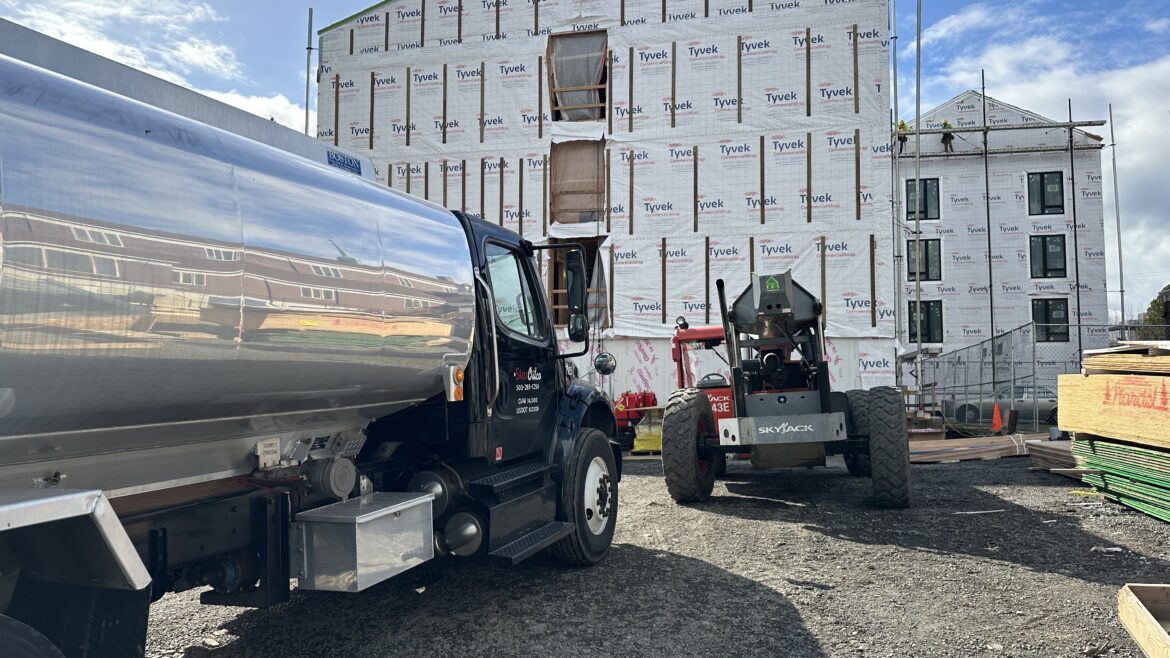
Mobile Fueling of Construction site in Portland, Oregon

Keep Full Mobile Onsite Fueling

Star Oilco can provide scheduled mobile fueling to your jobsite seven days a week.  Our diesel construction fuel service includes onsite tanks as well as DEF equipment for your project needs. At start of shift and end of shift schedule is also available for delivery.


Tight Access Diesel Construction Fueling Available.

Star Oilco’s fleet includes smaller fuel trucks able to access tight to reach areas in parking garages, active facilities, back alleys, inside buildings, and other hard to reach areas required by a project.


DEF Delivery Included with your Diesel Fueling.

Diesel Exhaust Fluid (DEF) keep full and bulk delivery service to your jobsite.  We have DEF bulk equipment as well as boxes available for your project.  What you want for your operations is what we want. Keeping those small DEF tanks full and generators running is what we can do for you.  We are here to make it easy.


Renewable Diesel in Oregon

Dyed Renewable Diesel for your Diesel Construction Fueling needs.

Does your project require a lower CO2 footprint?  We have off-road R99 Renewable Diesel on our trucks daily.  Star Oilco also has multiple sources for R99 in the Pacific Northwest for your needs to guarantee supply. If large volumes are needed for Renewable Diesel for a project in the future we can enable a contract to meet these needs.


Construction Loaner Diesel Tanks


Diesel Fueling Construction Tanks available.

Star Oilco has fuel tanks available for your project.  Our typical inventory of tanks sizes are 250 and 500 gallon UL142 double wall thanks.  We have 100 and 50 gallon fuel cells for moving fuel around a jobsite in the back of a fuel truck. Larger sizes available for longer term and larger projects with advance planning.


Wet Hose Fueling Service in Vancouver, WashingtonStar Oilco can provide your project with the fuel you request.
– B5 ULSD Dyed Diesel
– B20 ULSD Dyed Diesel
– Dyed R99 Renewable Diesel
– E10 Gasoline
– Non-Ethanol Premium Gasoline
– Kerosene, and others if the project calls for it.

Schedule Your Fuel Delivery Today

  • This field is for validation purposes and should be left unchanged.
comparison chart showing difference between off-road diesel and on-road diesel fuel in Portland OR
The Future of Diesel Fuel 940 788 Star Oilco

The Future of Diesel Fuel

Retail Diesel Dispenser Example
Retail Diesel Pumps with a variety of blends of diesel. Biodiesel, Renewable Diesel, and Fossil Diesel blends shown in Portland, Oregon.

The Future of Diesel is Low CO2 Synthetic Fuels

The stew of molecules your diesel is made of has been changing. A next level technology in chemistry is enabling garbage to be transformed into hydrocarbon fuels like diesel, jet fuel, naphtha, and propane as well as other high value chemicals. These technologies enable petroleum refineries in the United States to retool themselves and move into making biofuels with the very technology used to refine modern gasoline and diesel fuels from crude oil.  Currently oil refineries take crude petroleum and crack the molecules and reform them with a hydrotreater.  This hydrogenation is what makes renewable diesel from fats, oils and greases.

If you have ever worked under your sink at home. Remember the greasy mess inside the pipes below your kitchen sink.  These renewable hydrogenation technologies can turn that trash into a super clean high performance synthetic diesel fuel.  That waste stream along with used deep fryer oil, the animal fats from rendering and other sources is the feedstock for renewable diesel.  It is exciting and this will be the future of our diesel and jet fuels.  These fuels also have a fraction of the CO2 footprint of a fossil fuel equivalent as measured by Oregon, Washington or California’s rules to measure the carbon intensity of fuels.

Diesel Fuel in Oregon and Washington

Star Oilco has been getting questions on the changes of diesel in Portland, Oregon.  If you have not noticed, many diesel pumps at retail gas stations and cardlock have seen changing stickers on the face of the fuel pumps.  As of July 1st, 2024 the City of Portland requires a minimum 15% biofuel content of all diesel sold.  This policy is called the Portland Renewable Fuel Standard.  Portland currently plans to ramp up this requirement to a 50% biofuel blend in May of 2026.  So that every gallon of diesel sold inside the City of Portland must be half biomass based diesel products blended with fossil diesel.

This has caused quite a few changes in what fuel pumps have as their fuel for sale.  Usually people notice this change with teh color of the diesel coming out of the retail nozzle.  Diesel fuel buyers are noticing the bright yellow color of B20 biodiesel, the fully clear color of Renewable Diesel or a mix of several fuels tinting the color of their diesel.  This trend is bigger than just Portland.

Today on the west coast there are a variety of product label stickers you will see on diesel pumps.  These show the variety of diesel fuel specifications that are being sold to diesel vehicles today. Blends of petroleum ultra low sulfur diesel, R99 (99%) renewable diesel, and B99 (99%) Biodiesel are combined to meet the market needs of the diesel we all buy.

This change is because of a combination of pure market forces, government rules and local decisions by fuel haulers.  Today’s diesel not only has a commodity market for the fuel it also has a market for CO2 credit value and a cap of total petroleum diesel fuel that can be sold into a west coast state with a “Cap and Investprogram requiring blends of low CO2 biofuels, the liquid fuels sold for vehicles.

Add on top of these market forces, advances in technology used to make the liquid diesel fuel.  The diesel arriving at truck stops, gas stations, cardlock or out of a hose from a bulk truck has been changing and it’s often in good ways.  Knowing how can be helpful in navigating why diesel may cost one price or another and may have a need or maintenance that another fuel does not.

THE RISE OF RENEWABLE DIESEL

Renewable diesel, also called R99 as in 99% renewable diesel, is a synthetic diesel fuel made from the same feedstock as biodiesel. The big difference though is that renewable diesel’s finished product is hydrocarbon diesel.  Biodiesel chemically is not a hydrocarbon or made up of diesel molecules.  Renewable diesel is a biofuel, but it is also chemically diesel on a molecular level. For fuel regulation they refer to it (as well as biodiesel) as “Biomass Based Diesel” for labeling at the fuel pump.

There have been billions of plant capacity brought online in the United States for renewable diesel.  During the COVID market drop in fuel prices a number of petroleum refineries shut down, then upgraded their technology to make hydrocarbon diesel fuels out of the very biobased fats, oils, and greases biodiesel is made from.  These refineries use hydrotreating technology just like they do with a crude petroleum to make an actual hydrocarbon diesel molecule.   With this technology adoption to make diesel and jet fuels from vegetable oils and animal fats billions of gallons of low CO2 diesel fuels are coming on the market and governments are requiring it’s use, such as Portland’s Renewable Fuel Standard.

Renewable Diesel Consumption it the US Source: Alternative Fuels Data Center

THE AVAILABILITY OF BIODIESEL

The US makes billions of gallons of biodiesel.  A fuel that’s quality and performance continues to improve.  If you are not a fan of biodiesel in your fuel thinking strategically about the fuel will likely benefit your fleet operation.  The big concern with diesel fuel in a ultra low sulfur world is water and dirt suspended in the fuel affecting the performance of diesel emission systems.  With clean and drier quality specifications of B99 blend stocks today versus a decade ago the use of this fuel has grown substantially especially in the truck stop market.

When crude petroleum prices are high and therefore refined diesel prices are equally as high biodiesel is often an extremely competitive fuel.  Recently changes in Federal subsidies on biodiesel have changed this market dynamic a bit but you can presume that biodiesel will often be sold at a discount against fossil fuel diesel.  If a large seller of diesel (including petroleum refiners) can pick up pennies per gallons on millions of gallons sold they will do so.  Therefore Biodiesel is often seen in diesel in small blends even if you do not see a label on retail pump.  For blends above 5% a label is required for retail fuel sales.

R99 Renewable Diesel label indicating 99% biomass-based diesel content
Ultra Low Sulfur Retail Diesel Label
Biodiesel Blend Percentage label for retail diesel dispenser

Above are a variety of labels used to denote what fuel blend is coming out of a retail diesel dispenser. Feel free to call Star Oilco at 503-283-1256 if this confuses you and you want it explained.  We would be glad to do so.

These labels can be found together often at one pump.  All state and Federal standards require ultra low sulfur diesel for any on-road diesel sale.  The Federal standards also adopted by the states require a disclosure at the fuel pump if a blend is above 5% biodiesel.  The max allowable blend of biodiesel for diesel truck manufactures is a 20% blend.  If a truck dealership says that you cannot blend biodiesel up to 20% they need to take that up with the Federal Government because they need to support it.  This is why the label shows a blend may contain between 5% and 20% biodiesel content.

Renewable diesel is a hydrocarbon diesel. 


It is diesel meeting the ASTM D975 specification for diesel. 

Retailers selling blends of R99 in their fuel do not need to label it given this.  They still do label it given the benefits of the fuel’s performance and that customers are seeking that fuel.

Contact Us Today To Schedule Your Next Bulk Fuel Delivery

Many retail places will have stacked labels showing they may be blending 5% to 20% biodiesel as well as may be adding R99 Renewable Diesel to the fuel as market conditions dictate it is the more cost competitive fuel.  When seeing a label like this it can usually be assumed they are blending a R80 (80% Renewable Diesel) and a B20 (20% Biodiesel) blend of fuel.  This blend is actually believed by some to be a higher performing fuel seeing better performance that a R99 or B20 fossil fuel blend.

Fossil fuel diesels are being replaced or blended with biomass based diesels.  Be it Renewable Diesel or Biodiesel.  These blends are driven by more than one industry requirements, government rules, or other market forces. One of these being Portland’s banned on petroleum diesel through the Renewable Fuel Standard (RFS). This is resulting in an increase of low-carbon biofuel blends that will ultimately move to a mix of 99% renewable fuel requirement by 2030.

Renewable Diesel and Biodiesel Blend fuel dispenser label.

The big drivers are industry specification for fuels (both labeling as well as chemical characteristics), state rules on selling these fuels, their quality assurance as well as CO2 content, and of course the market forces.  Market forces being the supply and demand availability of fuel needed to meet customers.  Less fuel available to sell means higher prices for customers.

A decade ago the market for diesel was far simpler. Though you had biofuels and some blend mandates basically you had a diesel specification accepted and the daily price as tracked by a lighted retailers sign, a wholesale market average or spot buying by some customers.   Today this market is far more complicated by government regulation on the west coast.  There are three big programs at state levels impacting this.

State Fuel Rules cause a unique need for one state or another. Whereas twenty years ago if Oregon or Washington fuel was selling for more than the Gulf Coast you might see brokers bring fuel into the region then driving down high prices.  With the creation of various complex and unique rules on diesel, imports of fuel to these low CO2 fuel states has dropped.  The amount of people moving product into west coast states has dropped.  The big rules causing this are the Cap and Invest programs of the West Coast states, the Low CO2 Fuel Standards of the states, and the fuel blend mandates of various jurisdictions of these states. For instance California now requires all off-road diesels but 99% renewable diesel.  Portland, Oregon also has a CO2 requirement and minimum 15% blend of biomass based diesel on all fuel sold in the state.

WHAT ARE THE DIESEL FUELS AND THEIR SPECIFICATIONS

Petroleum Diesel:
ASTM D975 Specification.

The ASTM D975 is a series of tests used to maintain consistent industry standard product performance for diesel fuel.  It includes among several tests cloud point, cold filter plug point (CFPP), several masurements of diesel fuel operability performance, intrained water content, sediment, carbon residue, ash, distillation, viscosity, sulfur, copper corrosion, cetane number, cetane index, aromaticity, and conductivity.

Renewable Diesel:
ASTM D975 Specification.

Renewable Diesel is following the same series of tests as petroleum refined diesel fuels.  It is the same ASTM D975 specification. Though Renewable Diesel has some different properties that exceed the ASTM specification of diesel.  Renewable Diesel is highly prized as a fuel because it typically is a cleaner and drier diesel fuel than petroleum diesel. This being seen by the tests on sediment and water content in a parts per million level.  Renewable Diesel content in diesel fuel can also be tested for looking for a C14 molecule (the chain typically created in a Hydrotreated Diesel process from fats, oils and greases.

Biodiesel (Methyl Esther):
ASTM D6751 Specification.

The ASTM for Biodiesel tests a mono-alkyl esters of long chain fatty acids derived from vegetable oils and animal fats. The testing for quality assurance covers an analysis for flash point, methanol, water and sediment, kinematic viscosity, sulfated ash, oxidation stability, sulfur, copper strip corrosion, cetane number, cloud point, acid number, carbon residue, total and free glycerin, phosphorus, reduce pressure distillation temperature, atmospheric equivalent temperature, combined calcium and magnesium, and combined sodium and magnesium.

For more on Biodiesel Use and Handling the National Renewable Energy Laboratory has a great book on the subject.

THE HISTORY OF DIESEL FUEL SPECIFICATIONS IN THE UNITED STATES

In the 1990’s the US EPA passed rules that demanded a phase out of sulfur in diesel fuel.  The presence of sulfur was very good for the fuel’s storage stability as well as fuel lubricity, but was horrible for air quality.   Additionally the big smog contributor was NOx (nitrous oxide) which was one of the EPA’s reason’s for pulling sulfur out of diesel.  For the EPA to get engine manufacturers to treat the NOx emissions at the tailpipe they needed all the sulfur gone (ultra low sulfur diesel) for modern diesel emission systems to be able to eliminate NOx as well as a host of other pollutants including particulates.

The story of changing diesel fuel standards in the US under the EPA is one of removing sulfur from our diesel fuel.  In 1996 the fuel refiners and sellers of diesel had to move the sulfur content of the fuel sold for on-road purposes to below a 500 parts per million standard. Commonly referred to as Low Sulfur Diesel fuel.   In 2006 the standard moved to a maximum of 15 parts per million of sulfur for all on road fuels.

In 2006 while the sulfur content of fuel was dropping the City of Portland released the first mandated blend of biodiesel content.  This being a 5% biodiesel blend.  The next year, the State of Oregon followed with its own Renewable Fuel Standard requiring this throughout the state.  This began the expectation of biodiesel in most diesel fuel in the Portland, Oregon area.  Washington also passed a similar policy for blending biodiesel but the enforcement and need for the fuel is less specific at Washington fuel pumps.

Sign Up To Receive Our Fuel Market Report For Your Weekly Fill Of Updates!

Name