
Biodiesel

Biodiesel is a domestic, renewable and low CO2 fuel with benign tail pipe emissions. In the Pacific Northwest, B99 was the fuel of choice for dozens of fleets.

B99 Biodiesel as a Heavy Duty Fuel 150 150 Star Oilco

B99 Biodiesel as a Heavy Duty Fuel

Using B99 Biodiesel in a Tier 4 Heavy Duty Diesel

B99 Biodiesel reduces CO2 footprint of a 105,500 GVW truck and trailer by more than half at a lower cost than petroleum diesel.

What is B99 Biodiesel?

B99 Biodiesel is as pure of blend of Biodiesel you can get in the United States and still participate in the incentives associated with this alternative fuel.  B99 is the product received by petroleum refiners, terminals, and truck stops to blend with petroleum diesel.  Biodiesel is a renewable, clean-burning diesel replacement.  B99 Biodiesel is a common blendstock with petroleum diesel (being 99% biodiesel).  It can be presumed that nearly every major truck stop throughout the US is consistently using either a blend of 5%, 10% or 20% of biodiesel   The reason for this is both due to its price advantage against petroleum currently as well as Federal/State laws requiring it’s use.

Why Higher Blends of Biodiesel Matter?

Biodiesel is a low CO2, net energy positive fuel.  Depending on the feedstock Biodiesel is made from a CO2 reduction of 30% to 80%+ can be expected compared to petroleum diesel.  As the West Coast (Oregon, Washington and California) ramps up CO2 regulations that charge an additional cost for carbon emissions associated with petroleum diesel the financial case for Biodiesel becomes obvious.  Early adopters will see direct financial benefit.

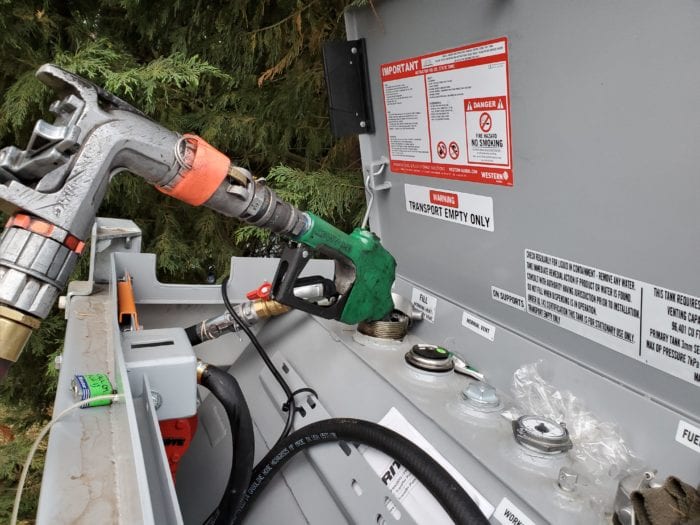
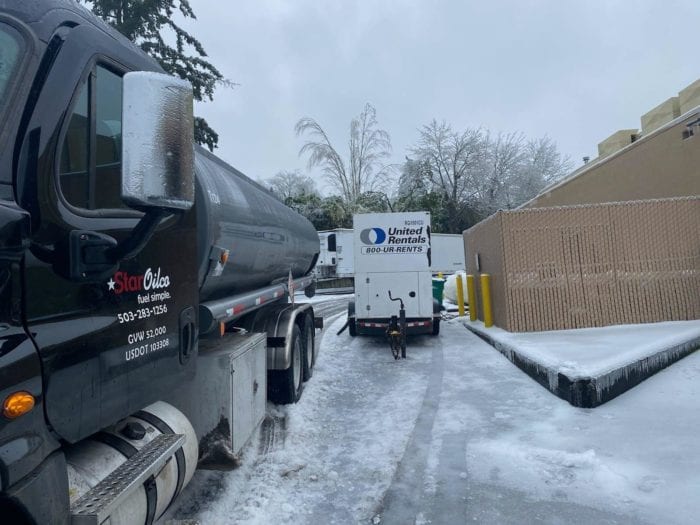
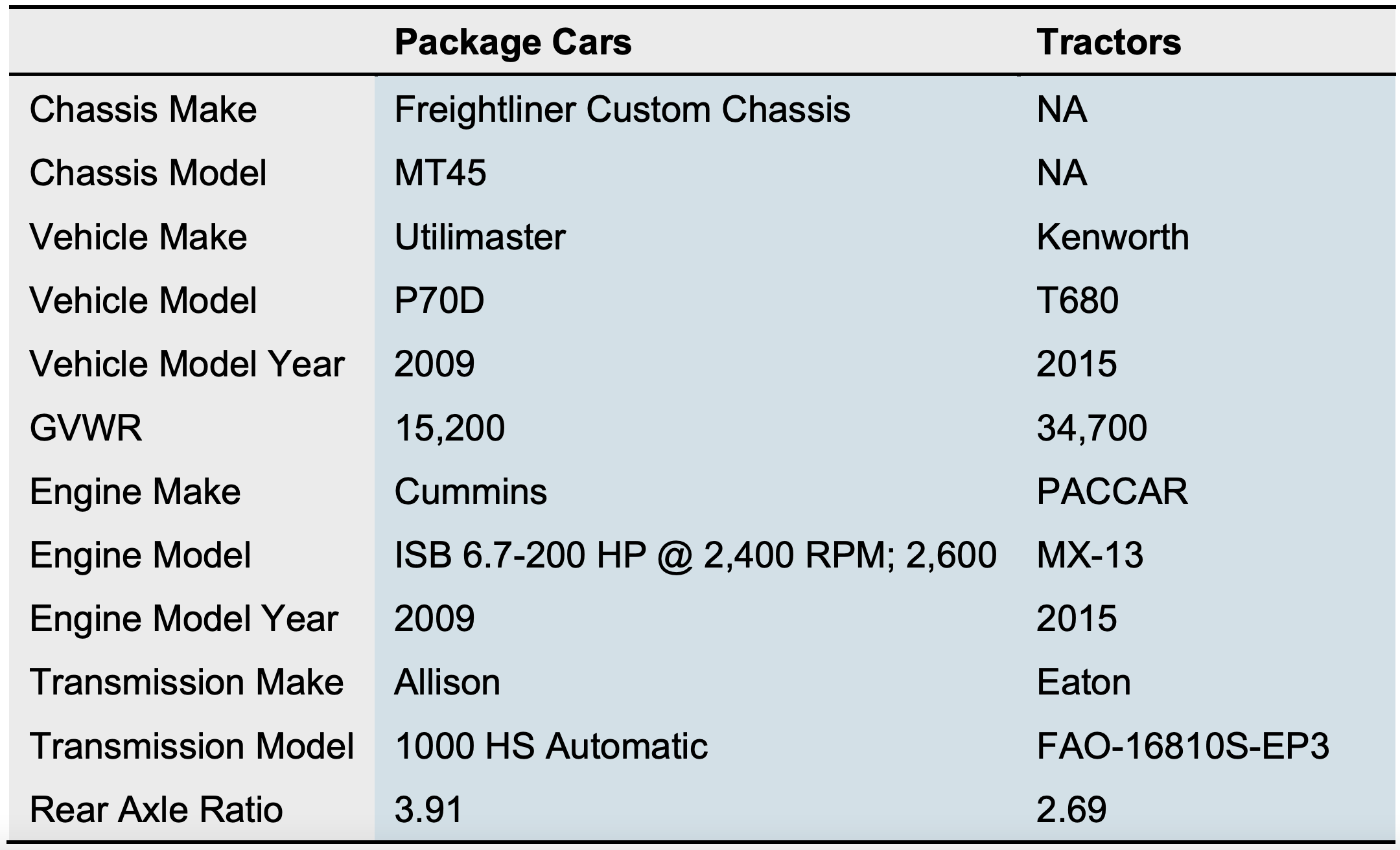
Star Oilco has fielded the Optimus Technologies system on our 105,500 GVW truck and trailers.  Star Oilco began with a single Freighliner truck and trailer operating a Cummins ISX as a trial.  This truck’s typical route was approximately 305 miles round trip from Portland, Oregon to Grays Harbor, Washington.  This run is from Star Oilco in Portland, Oregon to the Grays Harbor REG Biodiesel plant and back to the Portland terminals for delivery of this product.    Over the last year and a half this truck has performed amazingly well, the only maintenance concern is swapping the fuel filters more regularly with every oil change.  Mileage and power difference are negligible as noticed by drivers or our Elog system.  On a few occasions a loss of power was experienced requiring an in between service fuel filter swap.

This field trial of the Optimus Technologies system Star Oilco has regularly saved between $15 and $75 a day when running this dedicated route, depending on the cost of B99 Biodiesel versus petroleum ultra low sulfur diesel.  Consistently the price of B99 Biodiesel has been below petroleum diesel in the Portland, Oregon market. This has been due to a combination (or is effected by) RIN values, a Blender’s Tax Credit on biodiesel, and Oregon’s Clean Fuels Program which also prices the CO2 reduction value of B99 Biodiesel.   We see this trend continuing as an assumed market reality for biodiesel.

What is the business case for our deploying B99 Biodiesel Optimus Tech upfit kits?

The systems increase the intelligence of our late model trucks with their very complicated Tier 3 and Tier 4 emissions systems.   The Optimus Kit enables two saddle tanks to operate with the duty cycle of the truck. One tank (which we will be running B5 ULSD or R99 through) is dedicated to fuel the particulate trap and SCR systems.  These systems have extremely tight tolerances and tend to choke on higher blends of biodiesel.  By dedicating a tank with a smart controlling system we reduce the maintenance and concern with these after treatment systems hopefully extending the maintenance cycle on these traps by years while reducing inconvenient efficiency killing regens.

The Optimus Kit also enables a modern diesel engine to run B99 Biodiesel.  It does this by controlling the temperature of the fuel in it’s dedicated saddle tank and routing B99 to the engine when the RPMs and operating temperatures are best for this fuel. Upon start up and shut down the Optimus Technology kit will flush the engine, fuel rail, and injectors with the petroleum/R99 tank ensuring easy start up and no cold weather effects.  The B99 saddle tank is temperature controlled as well to enable performance in extreme weather.  When operating under load the Optimus Kit will move to B99 as the fuel into the engine.  As B99 Biodiesel has a substantial reduction of emissions, particulate, and other compounds when combusted; this further reduces the impact of miles on a truck to the particulate trap and it’s service needs.

Beyond this maintenance experience, the performance and function of the system has been indistinguishable to our other trucks running the same route.

Biodiesel Mandates in the Pacific Northwest

Oregon and Washington have passed legislation which puts a price on the CO2 emissions associated with petroleum diesel.   These laws mean that petroleum fuel costs more than biofuels with a low CO2 footprint.  These laws are also added on top of other mandates and incentives for biofuels.  Biodiesel blends between 5% and 20% are common on the west coast at every gas station, cardlock, and truckstop.

How Can I Utilize B99 or B100 in My Own Fleet? 

Star Oilco uses The Vector System developed by Pittsburgh-based Optimus Technologies. The Vector System is the only EPA-compliant biodiesel engine system and upgrades any medium or heavy-duty engine to operate on 100% biodiesel. It can be installed in as little as 12 hours. Learn more about The Vector System by contacting Optimus Technologies here directly or by reaching out to Star Oilco locally. 


Contact Form

  • This field is for validation purposes and should be left unchanged.


For more on Biodiesel, Renewable Diesel or Low CO2 fuels please see these other Star Oilco articles:

Every Question Star Oilco has been asked about Biodiesel

Every Question Star Oilco has been asked about Renewable Diesel 

Do you have questions about Renewable Diesel in Oregon 

Wet Hose Fueling Service in Portland, Oregon

About Diesel Fuel 

Biodiesel Use and Handling Guide 

comparison chart showing difference between off-road diesel and on-road diesel fuel in Portland OR
The Future of Diesel Fuel 940 788 Star Oilco

The Future of Diesel Fuel

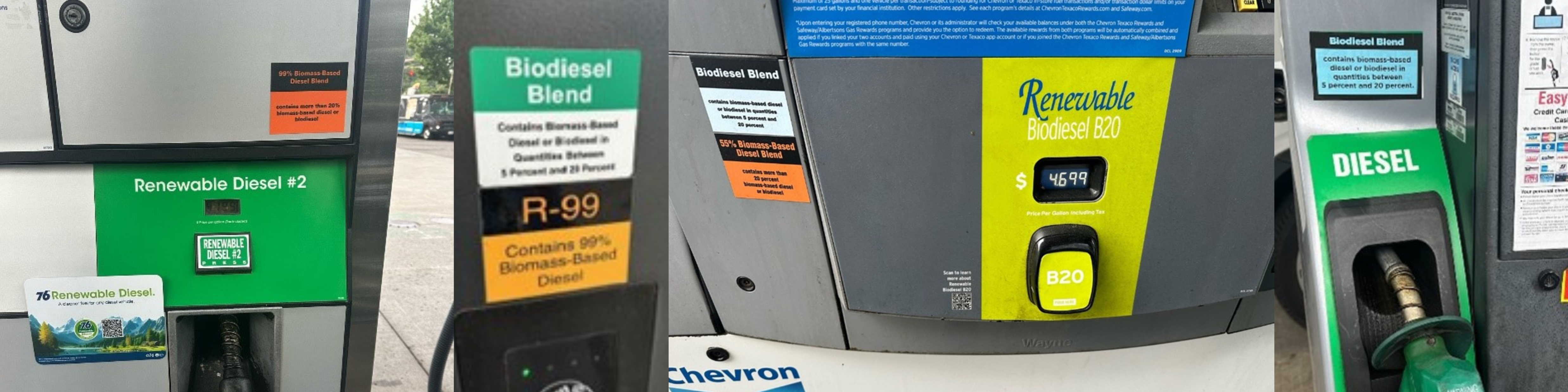
Retail Diesel Dispenser Example
Retail Diesel Pumps with a variety of blends of diesel. Biodiesel, Renewable Diesel, and Fossil Diesel blends shown in Portland, Oregon.

Diesel Fuel In Oregon and Washington

Star Oilco has been getting questions on the changes of diesel in Portland, Oregon.  If you have not noticed, many diesel pumps at retail gas stations and cardlock have seen changing stickers on the face of the fuel pumps.  As of July 1st, 2024 the City of Portland requires a minimum 15% biofuel content of all diesel sold.  This policy is called the Portland Renewable Fuel Standard.

This has caused quite a few changes in what fuel pumps have for fuel.  Diesel fuel buyers are noticing the bright yellow color of B20 biodiesel, the water clear color of Renewable Diesel or a a mix of several fuels tinting the color of their diesel.  This trend is bigger than just Portland.

Today on the west coast there are a variety of product label stickers you will see on diesel pumps.  These show the variety of diesel fuel specifications that are being sold to diesel vehicles today. Blends of petroleum ultra low sulfur diesel, R99 (99%) renewable diesel, and B99 (99%) Biodiesel are combined to meet the market needs of the diesel we all buy.

This change is because of a combination of pure market forces, government rules and local decisions by fuel haulers.  Today’s diesel not only has a commodity market for the fuel it also has a market for CO2 credit value and a cap of total petroleum diesel fuel that can be sold into a west coast state with a “Cap and Investprogram requiring blends of low CO2 biofuels, the liquid fuels sold for vehicles.

Add on top of these market forces, advances in technology used to make the liquid diesel fuel.  The diesel arriving at truck stops, gas stations, cardlock or out of a hose from a bulk truck has been changing and it’s often in good ways.  Knowing how can be helpful in navigating why diesel may cost one price or another and may have a need or maintenance that another fuel does not.

THE RISE OF RENEWABLE DIESEL

Renewable diesel is a synthetic diesel fuel made from the same feedstock as biodiesel, but the finished product is hydrocarbon diesel.  Though it is a biofuel, it is also diesel. For fuel regulation they refer to it (as well as biodiesel) as “Biomass Based Diesel” for labeling at the fuel pump.

There have been billions of plant capacity brought online for renewable diesel.  During the COVID collapse of fuel prices a number of petroleum refineries shut down, then upgraded their technology to make hydrocarbon diesel fuels out of the very biobased fats, oils, and greases biodiesel is made from.  These refineries use hydrotreating technology just like they do with a crude petroleum to make an actual hydrocarbon diesel molecule.   With this technology adoption to make diesel and jet fuels from vegetable oils and animal fats billions of gallons of low CO2 diesel fuels are coming on the market and governments are requiring it’s use, such as Portland’s Renewable Fuel Standard.

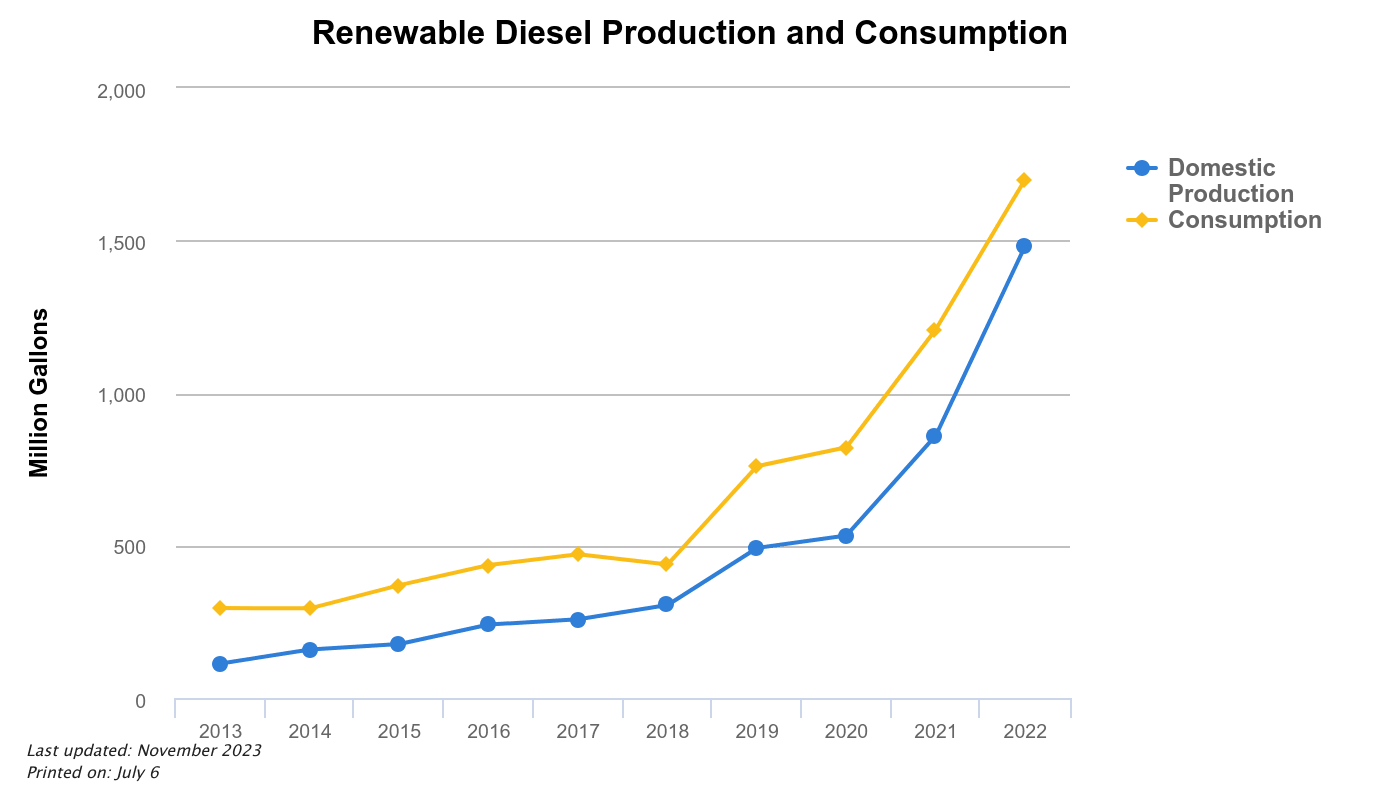
Renewable Diesel Consumption it the US Source: Alternative Fuels Data Center

THE AVAILABILITY OF BIODIESEL

The US makes billions of gallons of biodiesel.  A fuel that’s quality and performance continues to improve.  If you are not a fan of biodiesel in your fuel thinking strategically about the fuel will likely benefit your fleet operation.  The big concern with diesel fuel in a ultra low sulfur world is water and dirt suspended in the fuel affecting the performance of diesel emission systems.  With clean and drier quality specifications of B99 blend stocks today versus a decade ago the use of this fuel has grown substantially especially in the truck stop market.

When crude petroleum prices are high and therefore refined diesel prices are equally as high biodiesel is often an extremely competitive fuel.  If a large seller of diesel (including petroleum refiners) can pick up pennies per gallons on millions of gallons sold they will do so.  Therefore Biodiesel is often seen in diesel in small blends even if you do not see a label on retail pump.  For blends above 5% a label is required for retail fuel sales. RTHWEST?

R99 Renewable Diesel label indicating 99% biomass-based diesel content
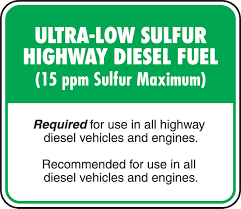
Ultra Low Sulfur Retail Diesel Label
Biodiesel Blend Percentage label for retail diesel dispenser

Above are a variety of labels used to denote what fuel blend is coming out of a retail diesel dispenser. Feel free to call Star Oilco at 503-283-1256 if this confuses you and you want it explained.  We would be glad to do so.

These labels can be found together often at one pump.  All state and Federal standards require ultra low sulfur diesel for any on-road diesel sale.  The Federal standards also adopted by the states require a disclosure at the fuel pump if a blend is above 5% biodiesel.  The max allowable blend of biodiesel for diesel truck manufactures is a 20% blend.  If a truck dealership says that you cannot blend biodiesel up to 20% they need to take that up with the Federal Government because they need to support it.  This is why the label shows a blend may contain between 5% and 20% biodiesel content.

Renewable diesel is a hydrocarbon diesel. 


It is diesel meeting the ASTM D975 specification for diesel. 

Retailers selling blends of R99 in their fuel do not need to label it given this.  They still do label it given the benefits of the fuel’s performance and that customers are seeking that fuel.

Contact Us Today To Schedule Your Next Bulk Fuel Delivery

Many retail places will have stacked labels showing they may be blending 5% to 20% biodiesel as well as may be adding R99 Renewable Diesel to the fuel as market conditions dictate it is the more cost competitive fuel.  When seeing a label like this it can usually be assumed they are blending a R80 (80% Renewable Diesel) and a B20 (20% Biodiesel) blend of fuel.  This blend is actually believed by some to be a higher performing fuel seeing better performance that a R99 or B20 fossil fuel blend.

Fossil fuel diesels are being replaced or blended with biomass based diesels.  Be it Renewable Diesel or Biodiesel.  These blends are driven by more than one industry requirements, government rules, or other market forces. One of these being Portland’s banned on petroleum diesel through the Renewable Fuel Standard (RFS). This is resulting in an increase of low-carbon biofuel blends that will ultimately move to a mix of 99% renewable fuel requirement by 2030.

Renewable Diesel and Biodiesel Blend fuel dispenser label.

The big drivers are industry specification for fuels (both labeling as well as chemical characteristics), state rules on selling these fuels, their quality assurance as well as CO2 content, and of course the market forces.  Market forces being the supply and demand availability of fuel needed to meet customers.  Less fuel available to sell means higher prices for customers.

A decade ago the market for diesel was far simpler. Though you had biofuels and some blend mandates basically you had a diesel specification accepted and the daily price as tracked by a lighted retailers sign, a wholesale market average or spot buying by some customers.   Today this market is far more complicated by government regulation on the west coast.  There are three big programs at state levels impacting this.

State Fuel Rules cause a unique need for one state or another. Whereas twenty years ago if Oregon or Washington fuel was selling for more than the Gulf Coast you might see brokers bring fuel into the region then driving down high prices.  With the creation of various complex and unique rules on diesel, imports of fuel to these low CO2 fuel states has dropped.  The amount of people moving product into west coast states has dropped.  The big rules causing this are the Cap and Invest programs of the West Coast states, the Low CO2 Fuel Standards of the states, and the fuel blend mandates of various jurisdictions of these states. For instance California now requires all off-road diesels but 99% renewable diesel.  Portland, Oregon also has a CO2 requirement and minimum 15% blend of biomass based diesel on all fuel sold in the state.

WHAT ARE THE DIESEL FUELS AND THEIR SPECIFICATIONS

Petroleum Diesel:
ASTM D975 Specification.

The ASTM D975 is a series of tests used to maintain consistent industry standard product performance for diesel fuel.  It includes among several tests cloud point, cold filter plug point (CFPP), several masurements of diesel fuel operability performance, intrained water content, sediment, carbon residue, ash, distillation, viscosity, sulfur, copper corrosion, cetane number, cetane index, aromaticity, and conductivity.

Renewable Diesel:
ASTM D975 Specification.

Renewable Diesel is following the same series of tests as petroleum refined diesel fuels.  It is the same ASTM D975 specification. Though Renewable Diesel has some different properties that exceed the ASTM specification of diesel.  Renewable Diesel is highly prized as a fuel because it typically is a cleaner and drier diesel fuel than petroleum diesel. This being seen by the tests on sediment and water content in a parts per million level.  Renewable Diesel content in diesel fuel can also be tested for looking for a C14 molecule (the chain typically created in a Hydrotreated Diesel process from fats, oils and greases.

Biodiesel (Methyl Esther):
ASTM D6751 Specification.

The ASTM for Biodiesel tests a mono-alkyl esters of long chain fatty acids derived from vegetable oils and animal fats. The testing for quality assurance covers an analysis for flash point, methanol, water and sediment, kinematic viscosity, sulfated ash, oxidation stability, sulfur, copper strip corrosion, cetane number, cloud point, acid number, carbon residue, total and free glycerin, phosphorus, reduce pressure distillation temperature, atmospheric equivalent temperature, combined calcium and magnesium, and combined sodium and magnesium.

For more on Biodiesel Use and Handling the National Renewable Energy Laboratory has a great book on the subject.

THE HISTORY OF DIESEL FUEL SPECIFICATIONS IN THE UNITED STATES

In the 1990’s the US EPA passed rules that demanded a phase out of sulfur in diesel fuel.  The presence of sulfur was very good for the fuel’s storage stability as well as fuel lubricity, but was horrible for air quality.   Additionally the big smog contributor was NOx (nitrous oxide) which was one of the EPA’s reason’s for pulling sulfur out of diesel.  For the EPA to get engine manufacturers to treat the NOx emissions at the tailpipe they needed all the sulfur gone (ultra low sulfur diesel) for modern diesel emission systems to be able to eliminate NOx as well as a host of other pollutants including particulates.

The story of changing diesel fuel standards in the US under the EPA is one of removing sulfur from our diesel fuel.  In 1996 the fuel refiners and sellers of diesel had to move the sulfur content of the fuel sold for on-road purposes to below a 500 parts per million standard. Commonly referred to as Low Sulfur Diesel fuel.   In 2006 the standard moved to a maximum of 15 parts per million of sulfur for all on road fuels.

In 2006 while the sulfur content of fuel was dropping the City of Portland released the first mandated blend of biodiesel content.  This being a 5% biodiesel blend.  The next year, the State of Oregon followed with its own Renewable Fuel Standard requiring this throughout the state.  This began the expectation of biodiesel in most diesel fuel in the Portland, Oregon area.  Washington also passed a similar policy for blending biodiesel but the enforcement and need for the fuel is less specific at Washington fuel pumps.

Sign Up To Receive Our Fuel Market Report For Your Weekly Fill Of Updates!

Name
lose-up of a red fuel nozzle at a green diesel pump
Renewable Diesel vs Biodiesel 683 1024 Star Oilco

Renewable Diesel vs Biodiesel

What’s the difference and how do they compare in price? 

If you are looking for a cleaner and greener alternative to diesel fuel, you might have come across two options: renewable diesel and biodiesel. Both fuels are made from organic sources, such as vegetable oils and animal fats, but they have different production processes and properties. In this blog post, we will compare renewable diesel and biodiesel in terms of their pros and cons, as well as their prices and incentives in Oregon. 

What is Renewable Diesel? 

Renewable diesel is a fuel that is chemically identical to petroleum diesel, but it is made from renewable raw materials through a process called hydrotreating. Hydrotreating removes impurities and oxygen from the feedstock, resulting in a pure and refined fuel that can be used in any diesel engine without modifications or blending. Renewable diesel (R99) has a high cetane number, which means it ignites easily and burns efficiently. It also has a low cloud point, which means it can withstand cold temperatures without gelling or clogging filters. 

What is Biodiesel? 

Biodiesel is a fuel that is made from renewable raw materials through a process called transesterification. Transesterification converts the feedstock into fatty acid methyl esters (FAME), which are then blended with petroleum diesel at various ratios. Biodiesel can be used in most diesel engines, but it may require some modifications or adjustments depending on the blend level and the engine type. Biodiesel has a lower cetane number than renewable diesel, which means it may not ignite or burn as well. It also has a higher cloud point than renewable diesel, which means it may gel or clog filters in cold weather. 

The cost of renewable diesel and biodiesel depends on various factors, such as the type and availability of feedstock, the production process, the market demand, and the government incentives. In general, renewable diesel is more expensive than biodiesel, as it requires more complex processing and higher quality feedstock. According to the U.S. Energy Information Administration (EIA), the average wholesale price of renewable diesel in California was $3.06 per gallon in October 2021, while the average wholesale price of biodiesel was $2.76 per gallon in the same month. However, both renewable diesel and biodiesel can benefit from federal RIN’s and state credits such as the low carbon fuel standards, which can lower their effective prices and make them more competitive with petroleum diesel. As of July 10th of 2023 renewable diesel (R99) in Portland Oregon was 60 cents higher than biodiesel (B99). 

 Renewable Diesel vs Biodiesel Carbon Intensity 

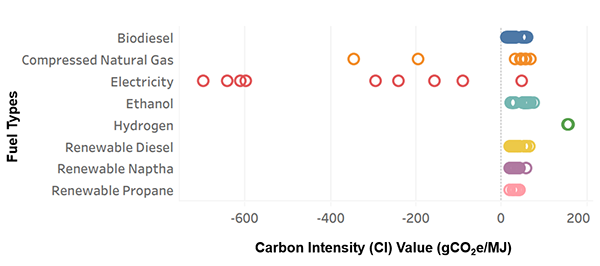
According to CARB, the carbon intensity of biodiesel ranges from 14.85 to 67.45 gCO2e/MJ and, renewable diesel ranges from 15.84 to 62.86 gCO2e/MJ, depending on the feedstock and production pathway. The lowest carbon intensity for biodiesel is achieved by using waste cooking oil as the feedstock and renewable methanol as the transesterification agent. The highest carbon intensity is associated with using soybean oil as the feedstock and fossil-based methanol as the transesterification agent. The lowest carbon intensity for renewable diesel is achieved by using waste cooking oil as the feedstock and renewable hydrogen as the hydrotreating agent. The highest carbon intensity is associated with using soybean oil as the feedstock and fossil-based hydrogen as the hydrotreating agent. 

Fuel-Pathways-Carbon-Intensity-Values

Pros and Cons of Renewable Diesel and Biodiesel 

Both renewable diesel and biodiesel have some advantages and disadvantages compared to petroleum diesel. Here are some of the main pros and cons of each fuel:  

Renewable Diesel Pros: 

– Reduces greenhouse gas emissions by up to 75% compared to petroleum diesel 

– Reduces tailpipe emissions of particulate matter, nitrogen oxides, carbon monoxide, and hydrocarbons 

– Improves engine performance and efficiency with fewer regeneration cycles of the emissions system 

– Compatible with existing infrastructure and vehicles 

– Biodegradable and nontoxic 

Renewable Diesel Cons: 

– More expensive than petroleum diesel 

– Limited availability and supply 

– May increase emissions of sulfur dioxide 

Biodiesel Pros: 

– Reduces greenhouse gas emissions by up to 78% compared to petroleum diesel 

– Reduces tailpipe emissions of particulate matter, carbon monoxide, and hydrocarbons 

– Biodegradable and nontoxic 

– Supports domestic agriculture and energy security 

 Biodiesel Cons: 

– May increase emissions of nitrogen oxides 

– May cause engine problems such as injector coking, filter plugging, corrosion, and reduced lubricity 

– May degrade over time or when exposed to water or microbes 

Oregon Prices and Incentives for Renewable Diesel and Biodiesel 

Oregon is one of the states that has adopted a Clean Fuels Program (CFP), which aims to reduce the carbon intensity of transportation fuels by 10% by 2025. The CFP creates a market for low-carbon fuels such as renewable diesel and biodiesel by requiring fuel suppliers to either blend them with petroleum diesel or buy credits from low-carbon fuel producers. The CFP also provides incentives for consumers to use low-carbon fuels by reducing their fuel taxes. 

According to the Oregon Department of Environmental Quality (DEQ), the average price of diesel in Oregon as of November 2021 was $3.87 per gallon. The average price of biodiesel blends ranged from $3.88 per gallon for B5 (5% biodiesel) to $4.01 per gallon for B20 (20% biodiesel). The average price of renewable diesel was $4.05 per gallon. As of July 2023 the price of renewable diesel (R99) in Oregon was 50 to 60 cents higher than biodiesel (B99). 

The DEQ also provides a Fuel Cost Calculator that allows consumers to compare the costs and benefits of different fuels based on their vehicle type, fuel efficiency, annual mileage, fuel price, carbon intensity, and tax rate. According to the calculator, using renewable diesel instead of petroleum diesel would save an average consumer $34 per year in fuel costs and reduce their carbon emissions by 1.6 metric tons per year. Using biodiesel instead of petroleum diesel would save an average consumer $12 per year in fuel costs and reduce their carbon emissions by 0.8 metric tons per year. 

Renewable diesel and biodiesel are both viable alternatives to petroleum diesel that can help reduce greenhouse gas emissions and support renewable energy sources. However, they also have some trade-offs in terms of cost, availability, performance, and emissions. Consumers should consider their vehicle type, driving habits, fuel preferences, and environmental goals when choosing between these fuels. Oregon offers some incentives and programs to encourage the use of low-carbon fuels such as renewable diesel and biodiesel, which can help consumers save money and reduce their carbon footprint. 

Ceramic house with red winter hat and pinecones
Every question Star Oilco has been asked about heating oil 1024 683 Star Oilco

Every question Star Oilco has been asked about heating oil

Heating Oil FAQ (and not so FAQ)

heating-oil-tank

When it gets cold in the Pacific Northwest, it’s time to take a look at some common questions we have been asked about Heating Oil.  If you don’t see an answer to a question you have, please feel free to call, email, or message Star Oilco and we will gladly answer. We especially welcome questions  that require research.

What is Heating Oil in Oregon?

Heating Oil in Oregon is diesel and can have a biodiesel blend as well.  Diesel fuel has several grades either #1 or #2 Diesel.  The number refers to the grade with #1 being called either “stove oil” or “Kerosene” as another term for it.  Typically when someone is requesting or talking about heating oil they are talking about #2 Diesel dyed red to denote there are no on-road fuel taxes associated with the fuel.

There are several types of oil furnaces.  The most common is a vaporizing burner.  These furnaces typically work by taking a liquid combustible fuel, vaporizing it into a fine mist through a fuel oil nozzle, and igniting that mist into fire. That fire heats either air or water for your home’s comfort.

Air furnaces usually move the air through a heat exchanger where a blower then moves air over the heat generated by your furnace, and finally the air is pushed through your home’s vents. 

Boilers and Water furnaces heat a tank of water which is then distributed several different ways to heat your home.  Either by moving hot water to radiators, radiant plumbing under your floor, or to a heat exchanger and blower which transfers the heat from the hot water into vents blown throughout your home. 

The parts leading up to the Burner of of an oil furnace system are simple. There is a tank to hold a reservoir of oil, a line from that tank (and sometimes a line back to it), a fuel filter, a fuel pump, and a vaporizing burner that combusts the heating oil into fire. Combustion of the fuel takes place in a fire box next to the heat exchanger. The heat exchanger takes on the heat of the flames to heat either air or water. In an oil furnace, the heat exchanger is assisted with a blower that pushes the hot air throughout your home to keep you comfy.

If you have an above or below ground heating oil tank you can confirm your fuel volume by the inches of fuel in the tank.  If you have an above ground tank there is probably a tank gauge that can tell you an approximate volume in the tank.  If you have an below ground tank you can confirm how many gallons are in the tank by putting  a measuring stick or tape-measure into the tank.

You will want to confirm the size of the tank you have. Your oil provider will probably have an idea of what size your tank is by looking or historic deliveries. Star Oilco has a tank chart which will help.  If you place a stick or tape measure into your tank and see how much fuel is in it you can compare that to a tank chart found on Star Oilco’s website.  When delivering fuel you can “stick” measure the tank before and after the delivery. Compare these volumes with the delivery and you can often figure out your tank size based on the before and after volume lining up with how much fuel filled your tank.

To view Star Oilco’s Tank Chart please click HERE. 

Home heating oil can be either a petroleum diesel fuel, bio-synthetic diesel fuel, or biodiesel fuel. In Oregon and Washington, home heating oil is typically ultra-low sulfur diesel fuel often containing between 5% and 20% biodiesel. Star Oilco’s standard home heating oil fuel is B5 dyed ultra-low sulfur diesel. Oregon mandates require that all diesel fuel sold contain a minimum 5% biodiesel. For that reason Star Oilco carries B5 or 5% biodiesel blends in our heating oil.

(NOTE: Kerosene sold by Star Oilco contains no biodiesel due to the reality that wick heaters cannot handle even a minute amount of biodiesel in them.) Star Oilco also carries a 20% biodiesel blend, called B20 Bioheat, for customers who want a cleaner burning low carbon fuel for their home.

Kerosene is a heating oil product that is capable of being picked up and fed consistently by a wick heater. Kerosene is a diesel product that is very similar to the fuel used for over the road trucks. The big difference is that kerosene is a “lighter end” distillate fuel, which means it has a lighter specific gravity. This lighter characteristic means that it also works better in certain systems like wick heaters, pressure washers, and pot burner stoves.

It depends on what type of system the kerosene heater is operating with. If you have a wick heater it will not work with heating oil. You will likely have to replace the wick to get it to work again as diesel will not readily drawn into the wick. Even if it does, it will burn far dirtier. If it is a pot burning system like a Toyostove or Monitor heater, then it will burn ultra low sulfur heating oil. Increased maintenance is to be expected on the pot burner, as there is a likelihood of more coking (crusty black soot build up) to occur inside that system.

Bio heating oil and bioheat refer to heating oil products with a blend of biodiesel in them. Typically bioheat is a blend between 5% to 20% biodiesel with ultra low sulfur diesel for a clean burning and low CO2 heating fuel.

For a really in-depth look at biodiesel used as a heating oil check out this article. 

Yes, heating oil will run in a diesel engine. Heating oil is diesel. Be aware though that on-road vehicles must only run clear diesel fuels. If caught using heating oil in an on-road vehicle in Oregon and Washington, the fines can run in the tens of thousands of dollars. Heating oil can also be dyed to signify it isn’t for on-road use. 

Also be aware that even many off-road pieces of equipment and generators need ultra low sulfur diesel to operate without very expensive maintenance. Heating oil can have low sulfur or even high sulfur contents that could cause real issues for modern clean diesel engines. Some consideration is needed prior to burning a fuel marked “heating oil” in a diesel engine.

Consult your furnace, stove, boiler or water heater’s factory recommended specification. Typically it’s Number 2 Diesel unless it is a stove pot or wick heated system. If you have a furnace or a boiler in your basement, you can assume it’s heating oil. Call a licensed and bonded heating oil furnace technician to tune up your furnace to confirm for sure. If you do not have one, Star Oilco can refer you to a number of reputable long-time firms who can help.

Heating oil additives are added to fuel in order to improve it’s long term storage and performance.  They are worth it and most reputable heating oil providers additize their fuel without an extra charge.  This is because most heating oil customers store their fuel for long periods of time.  If you are planning on storing heating oil for years you will need a fuel additive to keep that fuel in the quality needed for your furnace.

Star Oilco provides a premium diesel additive called Hydrotex PowerKleen to every gallon of heating oil we sell.  Beyond this stabilizers, if you are planning on storing fuel for years we recommend ValvTect Plus 6.  You will want to treat your fuel with a biocide like ValvTect Plus 6 to will kill any bacteria, yeast, algae, or other biological organism that can grow inside your heating oil tank.

For more on storing diesel or heating oil for long periods of time please read this article on long term fuel storage.

Heating oil smells like diesel. It is a diesel product and often, depending on location, it is the same as on-road diesel. It may be dyed to denote that it is an off-road fuel with a untaxed use. Heating oil is dyed red in the Pacific NW to show it is off-road diesel.

Heating Oil #2 is number 2 diesel or the standard diesel sold in most places for on-road diesel use. Heating Oil #2 is a slightly different specification than on-road diesel that allows for more sulfur. That is a big difference as far as the EPA is concerned. On-road and off-road vehicles in the U.S. are required to use ultra-low sulfur diesel. Heating oil systems can use low or high sulfur diesel fuels. Ultra low-sulfur diesel is the most common Heating Oil #2 fuel that is delivered by Star Oilco since it is a superior and cleaner burning fuel, in our opinion.

In the Pacific NW heating oil is ultra low sulfur diesel. Therefore, you can buy any diesel sold at a retail gas station, truckstop, farm supply or other liquid fuel seller.  Heating oil is dyed red to show that it is not taxed for on-road fuel use.  Other than that red dye, typical auto-diesel will work in your oil furnace if you need to supply it from a diesel can.

Heating Oil Gel Point:

In the Pacific NW we expect number 2 diesel heating oils to be operable beyond -10 degrees. The record cold weather in the Willamette Valley is above 0 degrees (recent decades 16 degrees was our record low in Portland). We do test and add additives to our fuels to ensure they meet this specification even if they contain 5% biodiesel blended into heating oil.

Kerosene Gel Point:

Kerosene fuels (Number 1 Diesel, Number 1 Stove Oil, and Kerosene labeled fuels) are expected to be good below -30 degrees and are designed to be used in high altitude applications. (Kerosene and jet fuels are often the same specification in the Pacific NW.)

B20+ Biodiesel Gel Point:

Biodiesel blends of B20 and above are assumed to be good to 20 degrees but if Star Oilco expects below-freezing weather, we highly recommend B5 as your delivered fuel. B99 biodiesel typically gels at 40 degrees, so it’s not a winter fuel unless you have a system designed to keep the fuel warm in the middle of winter.

“Oil Heat” or “Oil Fired” refers to a heating system reliant on burning heating oil. Typically this is by use of a vaporizing burner that takes the combustible liquid that is heating oil and vaporizes it through a nozzle into an igniter that causes it to burn.  This system burns the heating oil, creating a great deal of heat that can warm air, water, or both to heat a home or commercial space.

NOTE: IF HEATING OIL HAS BEEN INGESTED PLEASE SEE A MEDICAL PROFESSIONAL.

Heating oil by itself is not dangerous or toxic if it come in contact with your skin.  It is easily washed off with soap and water.  A small amount of diesel spilled on the surface of the ground, typically will break down on it’s own in the presence of the environment.  A small amount spilled on concrete or asphalt can be cleaned up easily with dish soap and water. If your tank leaks and heating oil is soaked below ground this will not break down easily and will take professional help to treat.

The exhaust from heating oil systems contains carbon monoxide and carbon dioxide as well as particulates.  Heating oil and other diesel exhausts are very dangerous and toxic and should be avoided.  Do not allow exhausts of any kind to collect in an enclosed space.

Heating Oil’s vapor point (the temperature it turns to vapor and evaporates) is around 140 degrees Fahrenheit.  Heating oil ignites at 160 degrees.  Typically in the Pacific NW the temperature (especially outside) is well below the vapor and flash point of diesel fuels including heating oil and kerosene. If spilled it will not usually evaporate. You can clean heating oil and diesel up with regular dish soap and water.

Heating oil ignites at 160 degrees.  So unless the temperature is that high an explosion is not a risk.  Fire Code regulating heating oil tanks and placement takes this concern into account.  So typically except in extreme scenarios heating oil vapor does not pose an explosion risk.

If you drop a match into a cup of heating oil at room temperature it will go out.  If you hold a match to the surface of the heating oil in that cup the flame will get large and bright but the heating oil itself will not ignite.  Heating oil needs to be vaporized before it will ignite. It is a combustible fuel so it must be in a vapor form to light.  The vaporizing nozzle of your heating oil furnace turns diesel into a vapor mist easily ignitable.

Yes, heating oil can go bad. If you are planning to store heating oil for longer than a year, you should use a diesel additive that stabilizes fuel for long term storage. If you are storing the fuel as a back-up where you might go years without using it, you should also consider adding a biocide to ensure nothing grows in your tank. The two biggest threats to your fuel staying in specification are water and biological growth. Biological growth occurs inside the water that can collect in your tank bottom naturally through condensation over time.

Star Oilco treats 100% of our dyed fuels with Hydrotex Powerkleen to ensure that it is stable for storage for over a year. If you need to store it longer than that, we further recommend adding a desiccant breather to scrub moisture out of the air when your tank breaths, which protects it from additional water.

For more on additizing your heating oil for long term storage please follow THIS link.

Yes, heating oil tanks properly installed outside are perfectly safe and capable of ensuring your fuel stays clean and dry.

Yes, at several different levels. With residential use, there are local jurisdictions’ building permit requirements for installation and safety. With commercial use, there is the same building permit regulation and usually an added level of Fire Marshall sign-off for siting of any tanks. In rural areas, regulations are different if the tank is associated with an agricultural use.

In Oregon and Washington, a 90 day temporary tank for construction purposes (to move from one tank to another in a formal process) is usually allowed, but you should ensure the temporary tank is a double wall tank and is in a safe place. If your tank leaks (or even if there is a suspicion of a leak), the Oregon Department of Environmental Quality and Washington Department of Ecology have an involved process to close out a leaking oil tank.  

Yes, you need to ensure you maintain your oil furnace. Star Oilco recommends getting a tune up annually or at least every other year.  If you are seeking a referral to a HVAC company that specializes in oil heat, call Star Oilco’s office 503-283-1256 and ask for a list of qualified license and bonded companies we recommend. You also want to check your oil furnace for water annually. Star Oilco can stick your tank for water at no charge upon request with a fuel delivery.

One of the great benefits of oil heat is that oil furnaces are known to last for over fifty years if maintained properly. Natural gas and propane furnaces typically wear out every ten to twenty years dependent on their construction. The primary wear consideration on any furnace is the heat exchanger. The heavy steel part takes the flame of burning fuel, transmits this heat to the air, and is then pushed to heat your home. Oil furnaces must be tuned up every year or two to ensure the heat exchanger is cleaned.

If you do not service the heat exchanger, it will collect soot. Soot insulates the heat exchanger unevenly and causes wear that will eventually lead to a crack. If a heat exchanger is cracked, the furnace is no longer safe to operate. Additionally, an annual tune-up will pay for itself by ensuring your furnace is burning at peak efficiency. You will want to replace your furnace air filter regularly on an annual basis.

Tuning your furnace annually or every other year is highly recommended. Adjusting the fuel air mixture for the most efficient combustion goes a long way to ensure you use as little heating oil as possible. Star Oilco has witnessed fifty and even seventy year oil furnaces operate at modern efficiencies when maintained regularly over their lives. Today, there are a host of high efficiency oil furnaces manufactured and supported to reduce your cost of fuel.  Additionally, confirming the envelope of your home is not drafty or needlessly wasting heat can go a long way in reducing your heating expenses.

The price of heating oil fluctuates frequently due to market conditions. Comparison shopping is your best way to ensure you pay the best possible price. One web based tool we have heard customers like to use to save time while shopping for heating oil is Fuelwonk.com.  It is free and easy to use.

Even though the cost of fuel is dependent on the market and out of our control, there are best practices to reduce the amount of oil you’ll need. The temperature you keep your house will affect how much oil you go through. Keeping your temperature higher will lead to more oil burned during the winter months. How insulated your home is will also affect the amount of oil you burn. Having poor insulation will result in having your furnace running hotter for longer periods of time, increasing fuel use. Annual maintenance of your furnace will keep your furnace operating at top efficiencies. Having a well working and operating furnace will keep costs down by not wasting oil on an underperforming unit.

Star Oilco also has a number of discounts and programs for price reduction. We offer $.05/gallon veteran and senior citizen discount. We frequently have discounts on Google and our social media pages so make sure to check those out. Mention where you saw it to receive the discount.

Heating oil customers at Star Oilco have the opportunity to enroll in our Equal Pay program. The program allows you to make equal monthly payments on future heating oil deliveries. As an Equal Pay customer, you will receive a discount of .20 cents per gallon on all heating oil deliveries. We also have an Autofill program which dictates you receive our best price as well as automatic deliveries. You don’t have to keep track of your fuel or when you need a delivery. We do the work for you!

If you do not like our price and someone else is cheaper let us know.  We will match their price.

Heating Oil is a modern fuel that uses today’s heating oils and biofuels.  The investments in research and development for heating oil furnace by the National Oil Research Alliance to use a wider variety of biofuels in higher lower CO2 blends have kept heating oil relevant in many applications.  As a heating fuel, it’s use will become more rural than urban rather than a phase out. As it is today, the use of heating oil will be used where natural gas is not available especially if the temperatures get below zero. Urban adoption of natural gas has increased, as it’s cheaper than heating oil due to increased fracking development of petroleum.

Star Oilco uses a Degree Day system for our customers on Automatic Keep-Full Service.  We fill your tank before it needs it automatically. A statistical regression analysis correlates your typical use of heating oil in your home and the weather.  Our systems will track your usual fuel usage and we automatically schedule delivery to keep your tank full.

The technical term “BTUs” refers to “British Thermal Units” which is a measure of energy content of a fuel. The energy content of diesel fuels can vary slightly by regions and specifications of those regions.  In the Pacific Northwest, heating oil is typically Ultra Low Sulfur Diesel with a blend of biodiesel content. This can range from 5% to 20% biodiesel added to the fuel. This means the exact BTU measured for a gallon of heating oil an slightly vary.

Source: US Alternative Fuel Data Center Fuel Properties Comparisons
Ultra Low Sulfur Diesel: 128,488 BTUs to 138,490 BTUs per gallon.
B5 Biodiesel is presumed to be about the same BTUs as ULS Diesel.
B100 Biodiesel: 119,550 BTUs to 127,960 BTUs per gallon.
B20 Biodiesel: 126,700 BTUs to 136,384 BTUs per gallon.

Get A Heating Oil Quote Today

  • This field is for validation purposes and should be left unchanged.
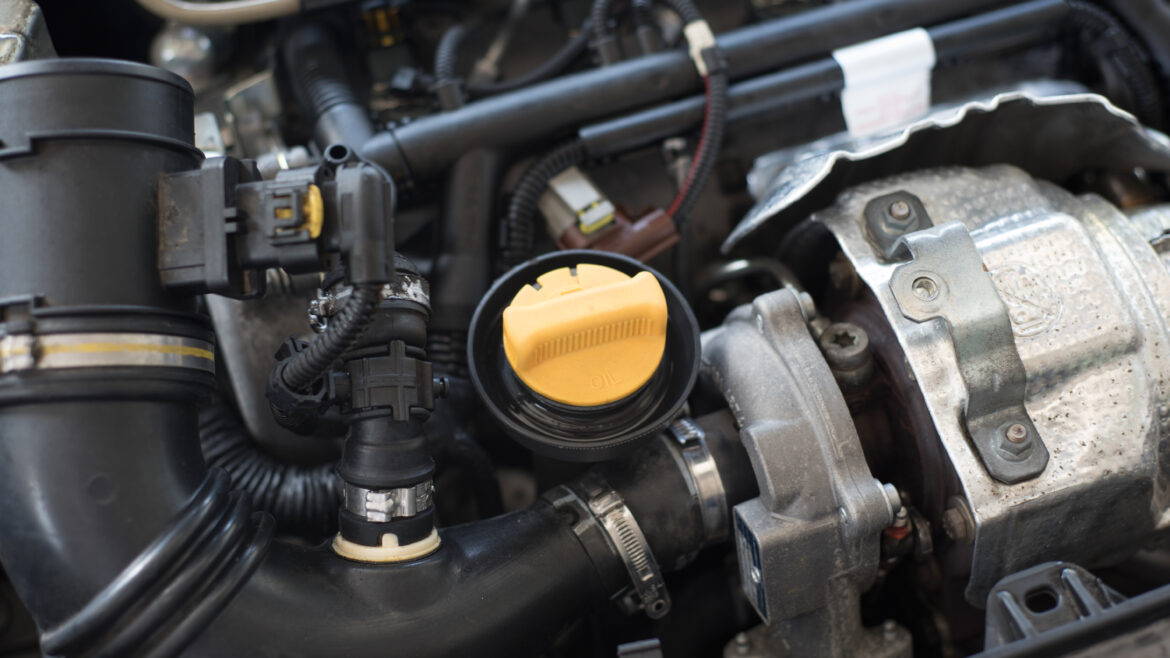
Close-up of diesel engine with visible oil cap, piping, and metal components
Bulk diesel desiccant filters, dry fuel, and keeping your diesel fuel clean. 1024 684 Star Oilco

Bulk diesel desiccant filters, dry fuel, and keeping your diesel fuel clean.

Bulk diesel fuel delivery and storage best practice.

Use Desiccant Breathers and Premium Diesel additives to improve your diesel performance and reduce maintenance cost.

Save tens of thousands on fleet maintenance costs!

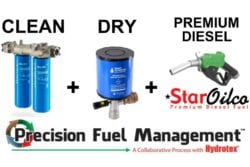
How? Clean, dry, and premium-treated diesel.

Reduce injector wear and particulate trap service needs with simple steps focused on fuel quality. Get the water and dirt out of your fuel with aggressive filtration and then upgrade the fuel’s lubricity, detergency, cetane, and performance with Hyrdrotex Power Kleen premium diesel.

Call Star Oilco if you want to permanently solve bulk diesel quality issues with our Precision Fuel Management program.

Do you have a bulk diesel storage tank?

Does that tank seem to have water in the bottom of it and you can’t seem to figure out where it’s coming from?

You call your diesel supplier and they say they know it isn’t them. If that’s your experience, Star Oilco can explain where that water is probably coming from. With the help of Hydrotex, Star Oilco can also lab test your fuel quality and prove we are in improving it as well.

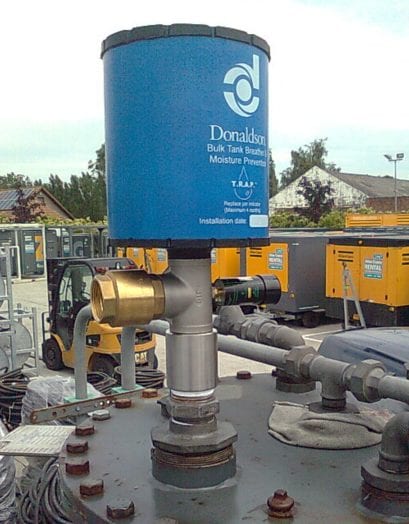
desiccant filter in field

All storage tanks are different. But for the most part, if your tank seems to take on water randomly. It’s probably from the tank breathing. Especially if you have a large above ground tank. In fact, if you tracked it on a calendar it probably happens the same time of year in conjunction with a weather pattern your tank responds to.

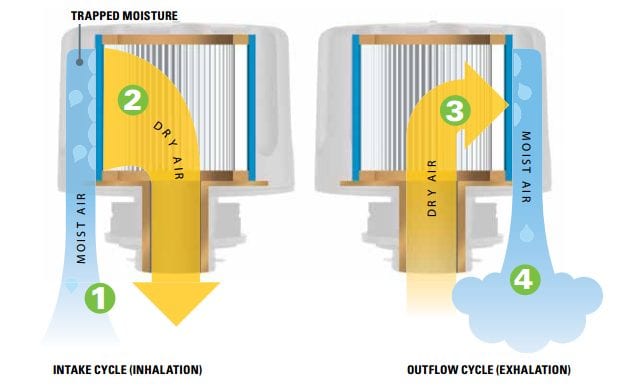
How it works is as the temperature changes the tank’s space that is not filled with fuel will breathe in and out. The temperature and air pressure move air in and out of the tank. As does dispensing fuel out of the tank and then refilling the tank. When that happens, especially if you have a significant amount of humidity in the air or misting rain, water makes it’s way into your fuel supply. As temperatures change, moisture is drawn into the tank, condenses on the inner wall of the tank, and then deposits itself on the bottom of the tank.

This water not only poses a risk to your engines, but if your fuel isn’t treated for stability and performance, that fuel is guaranteed to start growing bugs and algae that will spread throughout your fleet and will have your mechanics spinning filters and dealing with random problems due to this diesel biological growth.

This problem is also exacerbated by ineffective fuel additives trying to keep your fuel dry, clean and safe for your injectors to process, which ensures that water does not get absorbed by your diesel. A single drop of water falling out of solution in today’s high pressure fuel rails and your engine can blow an injector.

HOW DO YOU SOLVE WATER IN YOUR DIESEL TANK?

ANSWER: DESICCANT BREATHERS ON YOUR VENTS

Desiccant diagram

Star Oilco recommends Donaldson desiccant filters, given their excellent full line of products and support. More on the full Donaldson Clean Dry Fuel program here: Donaldson Clean Diesel Kits Brochure.

The Donaldson desiccant breaker mounts to the top of a tank at it’s vent point. This addition seals the point of failure for water to get into your tank. Though in some cases it doesn’t stop 100% of water from ending up in your fuel tank, it definitely guarantees you know where it won’t be coming from, the environment around your tank.

(NOTE: If dealing with underground storage tanks also be aware that if you seal the vent with a desiccant filter and you still have incident’s of water, it might be a leak in the bottom of the tank where rain water is making its way into the tank.)

By using Donaldson filters, Star Oilco also gains the benefit of support from Hydrotex PowerKleen diesel fuel lab to analyze fuel to guarantee that the before and after samples of the fuel are moving as expected and the problem is solved. Running diesel samples can cost as much as $200 each time–having a partner that backs up our solutions with ASTM and ISO measured verification is a must.

The first step in getting better performance from your diesel fuel is to test your bulk diesel storage tank.

To get a complementary ASTM diesel fuel test, contact Star Oilco for assistance.

Clean, dry, premium diesel

Tank Testing Form

  • This field is for validation purposes and should be left unchanged.
home insulation representing energy efficiency for renewable fuel standard compliance in Portland Oregon
What Is The Renewable Fuel Standard In Portland? 1024 683 Star Oilco

What Is The Renewable Fuel Standard In Portland?

Did you hear about the time Portland banned fossil fuel diesel?

Portland is making a big move to provide cleaner air and reduce greenhouse gas emissions. Portland has implemented what’s called the Renewable Fuel Standard (RFS) beginning  its first phase on May 15th, 2024. The RFS policy in Portland mandates that there has to be an increase of use of low-carbon biofuels in diesel within city limits of Portland. This is part of the ultimate Climate Emergency plan. This RFS mandate was first implemented in 2006 as a B5 (5%) Biodiesel blend mandate with the goal of mandating a 20% blend. The RFS is the first of its kind not only in Oregon but in the entire United States. Portland’s reputation as a leader in environmental sustainability efforts continues. 

Portland’s Phases To Implement Almost 100% Renewable Diesel

What makes Portland’s mandate unique is the requirement that the biofuels have a CO2 value so low it bars most American made biodiesels. The blending requirement starts at 15% in 2024, and then it will steadily increase to 50% by 2026 and will reach 99% by 2030. This schedule demonstrates how Portland’s low-carbon ambition is present to transition away from fossil fuels and promote alternative energy sources.

This policy is expected to reduce air pollution and carbon emissions. It will also create new markets for biofuels, which will lead to increased economic opportunities. This will ultimately help the city become a more sustainable and environmentally friendly place to live as Portland has taken the lead in striving for sustainability over the years.

The policy will also help create jobs in the biofuel industry and provide opportunities for businesses to switch to renewable energy sources. It will also help reduce the city’s dependence on fossil fuels and protect the environment for future generations.

Want to learn more about meeting Portland’s requirements for the Renewable Fuel Standard mandate?

landscape view of Mount Hood representing Star Oilco’s fuel delivery service area in Oregon

Focus on Lower-Emission Biofuels

Uniquely, Portland’s RFS goes beyond just the biofuel blend. It also sets a strict carbon intensity (CI) standard for the biofuels themselves. This ensures the biodiesels used have a significantly lower carbon footprint compared to traditional options. Biodiesels produced domestically often fall short of this CI requirement, prompting many suppliers to look to renewable diesel sources. This focus on biofuels with a lower lifecycle carbon footprint makes Portland’s RFS even more impactful in reducing greenhouse gas emissions.

Iconic Portland sign on Broadway at dusk with city buildings in the background

Exemptions and Implementation Details

The initial phase of the RFS targets on-road diesel sales. This applies to diesel purchased at gas stations, by mobile fueling companies, and for use in large stationary tanks. However, the long-term goal includes all diesel use within the city. Some temporary exemptions apply to off-road diesel uses such as heating oil, generator fuel, aircraft fuels, watercraft fuels, and other dyed fuel users. One local truck stop, Jubitz Truckstop, was granted a temporary exemption. This is likely due to concerns about disrupting critical transportation operations. Daimler (the manufacturer of Freightliner and Western Star trucks) has a research facility in Portland. Daimler was also granted an exemption to meet their specific fuel needs for testing purposes. 

The RFS enforces compliance through fuel sampling and requires documentation proving the fuel meets the minimum biofuel content and CI standards. Businesses that purchase diesel need to be able to show their compliance through bills of lading (BOLs) or similar records from their fuel provider, like Star Oilco. If a business does not comply and provide this documentation, it can result in pretty hefty fines. First offenses can be a fine of $10,000 per day. Repeat offenders will end up facing even bigger penalties of up to $15,000 per day. These fines can really show the impact of how serious Portland is taking this initiative. 

Impact on Businesses and Consumers

While residential consumers who don’t purchase diesel directly are not directly impacted, businesses purchasing diesel, especially in bulk, will need to adapt to the new regulations. This may involve acquiring documentation from fuel suppliers or entering into contracts guaranteeing compliant fuel blends. Wholesale fuel distributors, who sometimes purchase from multiple vendors and blend fuel mid-route, may face additional challenges in tracking the biofuel content and CI of their product. However, as the program matures, the industry is expected to adapt and streamline these compliance procedures.

Contact Us Today To Discuss What This Means For Your Business

A Step Forward for Cleaner Transportation

Portland’s ambitious RFS sets a new expectation for sustainable transportation. Promoting low-carbon biofuels allows Portland to aim to significantly reduce its reliance on fossil fuels and be able to contribute to cleaner air for its residents. The RFS program will be able to serve as a model for other cities that are looking at implementing similar initiatives. Great job Portland for paving the way to a sustainable future for other cities! Although challenges will remain, as businesses adapt to this new norm, Portland’s RFS represents a significant step forward in creating a more sustainable transportation sector.

The RFS program is an important step in the fight towards sustainability and lower carbon fuels. It sends a clear message that cities are willing to take action to reduce emissions and protect the environment. We anticipate that other cities will follow Portland’s lead and create similar initiatives. This will have a significant impact in reducing emissions and helping to protect the environment.

It is a positive step towards a more sustainable future. Alternative fuels have become more and more readily available. Investing in alternative fuels and reducing carbon emissions is essential for protecting the planet for future generations. Governments should prioritize investing in renewable energy sources and incentivize communities to switch to alternative fuel solutions.

Thank you for choosing Star Oilco as your preferred fuel provider in Portland and Vancouver, Washington. Give us a call to discuss how the RFS mandate can affect your business and one of our team members would be happy to discuss this with you.

JOIN THE FUEL MARKET REPORT NEWSLETTER FOR YOUR WEEKLY FILL OF UPDATES!

Name
Close-up abstract image of diesel fuel with suspended droplets and fluid motion
What is Heating Oil? 1024 512 Star Oilco

What is Heating Oil?

                In the Pacific Northwest heating oil is diesel

New heating oil customers often ask us, “What is heating oil?” Heating oil is diesel fuel and there are several grades and types. For Star Oilco our standard heating oil product is a ultra low sulfur diesel with a 5% biodiesel blend in order to meet Oregon mandates for off-road diesel fuel. That way our heating oil trucks can also serve construction fueling, emergency back up generators, and other common off-road diesel uses.

Star Oilco has a simple Heating Oil FAQ available.

For full on fuel nerds though, check out this more in depth deeper technical dive below.  If we leave anything out please don’t hesitate to ask for those seeking a nerd-level understanding of heating oil, kerosene and bioheat.

There are three typically grades of heating oil you can order

Number 1 Diesel

Number 1 diesel is also called Kerosene or Stove Oil. This fuel has a lighter specification than typical heating oil which enables it to burn better in a “pot burner” or wick heater. Kerosene has its own specification as the fuel used by wick heaters. Kerosene is typically Number 1 diesel but not all Number 1 diesel’s are kerosene due to the need to be taken up by a wick heater. Any biodiesel content in a kerosene product WILL NOT work in a wick kerosene heater. So be very aware of confirming that your kerosene has never come into any contact with a biodiesel blend of fuel.

Red Number 2 Diesel

Red dyed diesel also called Heating Oil, Dyed Diesel, Off-Road Diesel is the default heating oil fuel. The fuel is dyed red to denote no on-road fuel taxes are attached to it. When you call and ask for heating oil, this is the fuel you are requesting. Clear or Green Number 2 Diesel is the fuel sold at retail gas stations and truck stops. That fuel will also work in your furnace, you just are paying for on-road taxes attached to that fuel.

Bioheat or Biodiesel Heating Oil

“Bioheat” is a blend of biodiesel and petroleum diesel to make a lower emission and lower CO2 heating fuel.  Typically Bioheat is Number 2 Heating Oil with a 20% blend of biodiesel or higher in it. It is a drop-in fuel for your heating oil furnace. There is no change other than routine maintenance is required. It is a cleaner burning fuel with a significant drop in CO2 emissions associated with your heating oil fuel consumption.  If you would like more information on biodiesel as a heating oil you can follow this link.

B20 Biodiesel Heating oil provider

Where do heating oil companies get their fuel?

In the Portland, Oregon market, diesel is fungible. Everyone buys or is expected to mix their fuel from each other in some way. Primarily this is due to the Portland/Vancouver market receiving most of its fuel down the Kinder Morgan-operated Olympic Pipeline. Which means all the refiners transporting fuel are mixing their product in transit. Additionally, there are shared terminal locations, which also have co-mingled owned diesel products.

Every refiner is typically expecting to mix their diesel and gasoline products. The difference is in the care a vendor takes to filter the fuel, using additives and continuously check their fuel quality. If you are buying at the absolute lowest price possible, know that there is an incentive to skip any added value of quality assurance.

Star Oilco buys our diesel products from a variety of vendors. The source refiner typically being either BP, Shell, Marathon(formerly Tesoro), Phillip 66, or a number of other refiners.

Portland, Oregon and Vancouver, Washington are not unique in in having fungible diesel and heating oil fuel specifications. Through its Pacific Operations unit, Kinder Morgan operates approximately 3,000 miles of refined products pipeline that serves Arizona, California, Nevada, New Mexico, Oregon, Washington and Texas. With roots dating back to 1956, it is the largest products pipeline in the Western U.S., transporting more than one million barrels per day of gasoline, jet fuel and diesel fuel to our customers. The company-owned terminals also provide additional services, such as liquid petroleum product storage and loading facilities for delivery trucks.

The heating oil and biofuel blends Star Oilco sells its customers

Heating oil is essentially off-road diesel. You can legally use a higher sulfur content for boilers and heating systems than you can off-road equipment and back-up generators. Regardless, we sell the lowest sulfur fuel available and optimize our fuel to be as versatile to our customers as possible. Construction equipment, back up generators and a host of others systems use off-road diesel, as do heating oil systems. Star Oilco sells the same diesel fuel specification for all of our off-road uses.

We also blend this fuel with biodiesel for our customers that want higher blends of low CO2 biodiesel fuels and heating oil. Star Oilco carries nothing but ultra low sulfur diesel fuels. In fact, our minimum blend of biodiesel is a B5 biodiesel blend (5% biodiesel and 95% petroleum diesel) and we also offer B20 (20% biodiesel blend) and B99 (99% pure biodiesel) for our customers.

About Diesel Fuels Specifications 

In the United States, diesel fuel is controlled according the American Society for Testing and Materials Standard D975-97. This standard describes a limited number of properties that diesel fuels must meet. It should be noted that the requirements are all performance-based, meaning they do not mandate the composition of the fuel, only the specific performance related requirements demanded of a fuel for a diesel engine. The requirements of D975 are described below.

ASTM Specifications for Diesel Fuel Oils (D975)*

*More info on ASTM specifications

Diesel fuel is characterized in the United States by the ASTM standard D975, which identifies five grades of diesel fuel. We are only going to talk about the two most popular commercially diesel fuel used — No 1 and No. 2 diesel. The ASTM D975 standard is made up of a series of different tests that check the characteristic ranges of a fuel to confirm it is adequate to operate in your equipment.

In simple terms, they are checking for specific gravity, the vapor point (when it turns into a gas), the flash point (when it catches fire), the dirt content, water content (how much microscopic entrained water) and a host of other requirements diesel must meet in order to be legal to be sold for use in your engine.

Grade No. 1-D and Ultra-Low Sulfur 1-D:

This is a light distillate fuel for applications requiring a higher volatility fuel to accommodate rapidly fluctuating loads and speeds, as in light trucks and buses. The specification for this grade of diesel fuel overlaps with kerosene and jet fuel, and all three are commonly produced from the same base stock. One major use for No. 1-D diesel fuel is to blend with No. 2-D during winter to provide improved cold flow properties. Ultra-low sulfur fuel is required for on-highway use with sulfur level < 0.05%. 

Grade No. 2-D and Ultra-Low Sulfur 2-D:

This is a middle- or mid-grade distillate fuel for applications that do not require a high volatility fuel. Typical applications include high-speed engines that operate for sustained periods at high load. Ultra-low sulfur fuel is required for on-highway use with sulfur level < 0.05%.

Biodiesel Fuels for Heating Oil

Biodiesel is a renewable fuel produced from oil seed crops, used cooking oil, and/or animal fat waste. It is chemically similar to petroleum diesel, and is produced by combining the oil stock with catalysts and then heating it. Biodiesel is not the same as vegetable oil or SVO (straight vegetable oil) and can be used in any diesel engine.

Biodiesel and biodiesel blends significantly reduce tailpipe emissions, especially carbon dioxide, carbon monoxide, sulfur dioxide and particulates (black smoke). ASTM D975 standard, as of 2008, allowed up to 5 percent biodiesel to be blended into the fuel. This is the called B5 — the ‘B’ stands for biodiesel and 5 stands for up to 5 percent biodiesel.

B6 to B20 – ASTM D7467-17:

Diesel blends up to 20% and more than 6% are referred to as B20. Biodiesel is a cleaner burning fuel than petroleum diesel. Using biodiesel can help reduce the amount of harmful emissions released into the air. Emissions such as sulfur dioxide, carbon monoxide, polycyclic aromatic hydrocarbons and other compounds found in diesel exhaust. Read the ASTM D7467-17 standards.

B99 & B100 –  ASTM D6751-15ce1:

These are fuels made of up to 100% biodiesel. Due to environmental regulations, most retailers will carry a maximum of B99. The standards for B99 and B100 are identical. Unlike gasoline, biodiesel can gel at cold temperatures. This can cause stress on fuel pumps and fuel injection systems, or can clog filters or even become too thick to pump to the engine. B99 has a higher temperature gel rate – meaning that it begins to cloud and thicken at higher temperatures – than conventional diesel.

“The cloud point of soybean biodiesel is about 34°F (1°C), whereas the cloud point for No. 1 diesel is about – 40°F (-40°C) and for No. 2 diesel between -18°F (-28°C) and +20°F (-7°C).” (Biodiesel Cloud Point and Cold Weather Issues) The solutions for cold weather involve additives and lower blends to ensure continuous operations. Read the ASTM D6751-15ce1 standards.


FURTHER READING ON DIESEL FUEL:

For a question and answer format about heating oil please see: Every question Star Oilco has been asked about Heating Oil

Here is an article about: an In-depth look at Biodiesel as a heating fuel 

Read about Star Oilco’s approach to Fuel Quality Assurance: Star Oilco – Precision Fuel Management

Read about dealing with biological growth in your diesel tank: Bioguard Plus 6 biocide treatment for diesel

Get Chevron’s Technical Manual to Diesel Fuel (essentially an easy to read text book on diesel): Chevron’s Fuel Technical Review

Get a white paper from Donaldson Filtration on tier 4 engines and fuel cleanliness: Donaldson on Tier 4 Engine Fuel Contamination

Read more about Donaldson Desiccant Breathers for bulk diesel tanks: Why use a Donaldson Desiccant Breather for a bulk diesel storage tank.

Close-up of diesel engine components and fuel system
Make And Keep Your Diesel Fuel A Lot More Clean 1024 768 Star Oilco

Make And Keep Your Diesel Fuel A Lot More Clean

                               Make And Keep Your Diesel Fuel A Lot More CleanClean, dry, premium diesel

What is Clean Diesel? 

Clean diesel is free of the contaminants that harm modern diesel engines. Today, there is a gap between ASTM diesel standards and the ISO cleanliness standards needed for use in high pressure common rail engines. Anyone operating a modern clean diesel engine is seeing the effect, including injector replacement, DPF regeneration, and a host of other fuel quality related maintenance concerns we never saw twenty years ago. On top of all of that, today’s refined diesel fuels are less storage stable than ever before. What is on the bottom of your bulk tank can also complicate matters further. When diesel is bought wholesale, it typically meets and exceeds ASTM required industry standards, but almost always requires additional filtration to avoid excessive engine wear and premature part failures.

Having clean diesel requires an additional amount of care. Namely, you need to make sure that the fuel is aggressively filtered at 4 microns to catch the microscopic particles that are big enough to damage your modern diesel engine’s high pressure fuel rail system. Furthermore, clean diesel is fuel that is free of water and stabilized with Premium Diesel to guarantee no bacteria, yeast and other creatures can grow and further contaminate the saddle tanks on your trucks.

For more on clean diesel, see Donaldson’s description of “The New Clean” for an in-depth explanation of what ISO cleanliness and filtration mean for your diesel fleet.

Making Diesel Cleaner!

Knowing the quality of your fuel is the first step. This is done by taking samples off of the bottom of your bulk storage, as well as a representative sample from your fuel dispenser. Lab tests of those samples will tell you if you have water, biological growth, or dirt issues with your storage. The contaminants in the tank being sampled are almost always visible, which is to say that they look horribly ugly. If your fuel quality assurance has been on autopilot, do not be surprised if you find this. After gathering knowledge about your fuel, the next step is to get your fuel quality clean.

Filtration and tank bottom sampling is the start. Beyond that, the only way to improve your fuel quality performance is to filter your fuel, ensure water is not getting into the tank through condensation, and additize it with a Premium Diesel additive to upgrade the performance of the fuel. Many fleets today are seeing injector wear and continual problems with particulate trap maintenance. This is a combination of water in fuel and microscopic particles not captured by a 10 or 30 micron filter used at most diesel dispensers. You have to filter more aggressively than this.

Clean, Dry, and Premium Diese

Where To Start?

The first step is sampling your bulk diesel tank. We check your bulk tank for water and dirt to make sure and meet the specifications your engine is built for. Star Oilco can help by providing a complementary diesel test for those fleets interested in taking control of their fuel quality assurance. Usually when testing fuel, we take a sample off of the tank bottom as well as a representative sample out of the fuel dispensing nozzle.

What we usually find is ASTM specification diesel fuel (it meets ASTM spec) that is higher than you’d want (still in spec) for water with far more dirt than the OEM’s would want to see in your engine. This dirt fails to be within the “ISO Cleanliness” specifications recommended by engine manufacturers. Usually, we also see water on the bottom of the fuel tank, which is a likely source for future or current biological growth in your fuel tank.

Star Oilco can help you fix this! The first step is to sample your fuel tank.

NOTE: If you have a current biological growth problem in your bulk fuel tank or fleet, your first step is to treat that effected fuel with a diesel microbiocide to kill the bugs growing in your tank. For more on this, see our Valvtect Plus 6 Diesel Microbiocide page.

Tank Testing Form

  • This field is for validation purposes and should be left unchanged.
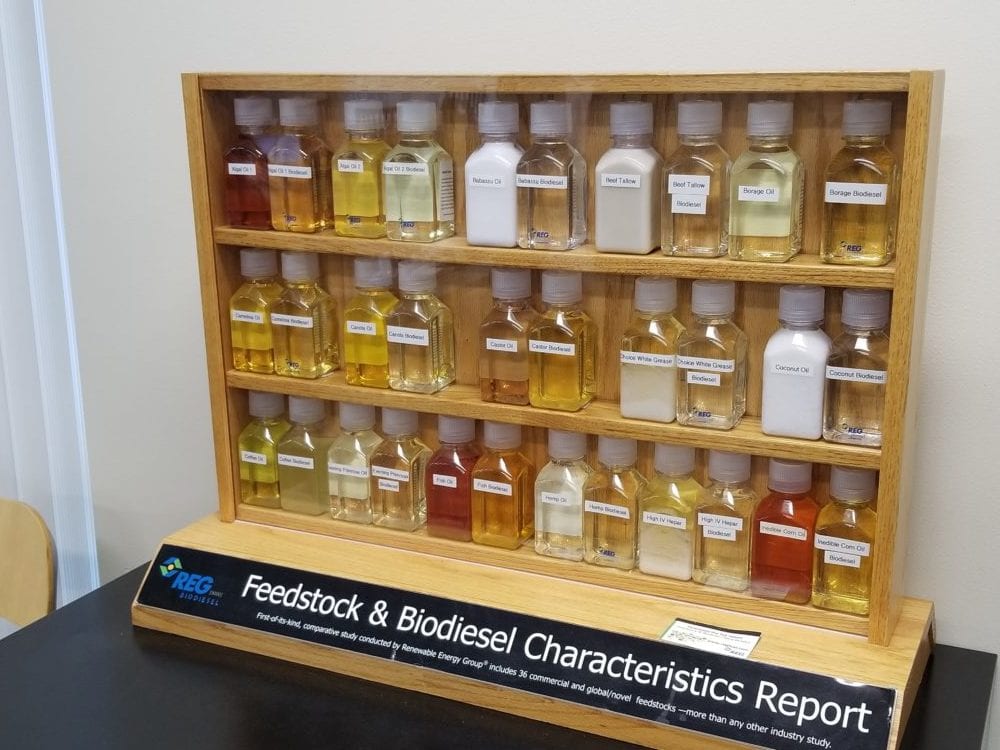
Bio-diesel and Feed-stock samples at REG
What Types of Feedstock Can Be Used To Make Biodiesel? 700 525 Star Oilco

What Types of Feedstock Can Be Used To Make Biodiesel?

               What Types Of Feedstock Can Be Used To Make Biodiesel?

        To answer what feedstocks can be used to make biodiesel we need to first answer:  What is Biodiesel?

Biodiesel is created through a process called transesterification.  Transecterification is when an alcohol such as methanol or ethanol is added to an oil or fat.  This creates methyl esters and glycerin.  Methyl esters is the scientific name of Biodiesel.  Because biodiesel needs a fat or an oil to start with, this fuel can can be created with any number of feedstocks.  If you would like to learn more about Biodiesel check out this for more questions about biodiesel.

According to the U.S. Office of Energy Efficiency & Renewable Energy:

“A feedstock is defined as any renewable, biological material that can be used directly as a fuel, or converted to another form of fuel or energy product. Biomass feedstocks are the plant and algal materials used to derive fuels like ethanol, butanol, biodiesel, and other hydrocarbon fuels. Examples of biomass feedstocks include corn starch, sugarcane juice, crop residues  such as corn stover and sugarcane bagasse, purpose-grown grass crops, and woody plants. “

Renewable Energy Group (REG) performed a study in 2009 with the support of the Iowa Power Fund Board and the Iowa Office of Energy Independence that tested 36 individual feed-stocks.  Star Oilco will be spotlighting these feedstocks through our blog and our social media. The full report can be found on their site if you would like to read ahead or explore the results in more depth. We hope you find these as interesting as we did!

Bio-diesel and Feed-stock samples at REG

Above photo taken at REG headquarters in Ames, Iowa.

This first blog highlights the following 2 types of feed-stock:

                                                            Babussa Oil & Beef Tallow

Babassu Oil

Attalea speciosa

Babassu oil is extracted from the seeds of the babassu palm tree, Attalea speciosa, an evergreen tree growing to 30 m (98ft) by 20 m (65ft) at a slow rate. It is hardy to zone (UK) 10 and is not frost tender. The flowers are pollinated by bees and other insects. The tree is common in Brazil, Mexico, and Honduras; it grows well in areas typically cultivated for coconut or palm. The kernels contain 60-70% oil, appear transparent, and smell like walnuts. In its natural form the oil is liquid at 20-30°C (68 – 86°F). The seeds are edible and the oil is used in margarine, soaps, detergents, lamp oil and skin products. Oil extraction results in a cake containing 15-25% protein (depending on the shell content), which is a valuable feedstuff.

In February 2008, Babassu palm oil and coconut oil were blended with jet fuel to power a Virgin Atlantic Boeing 747 during a test flight from London’s Heathrow to Amsterdam.

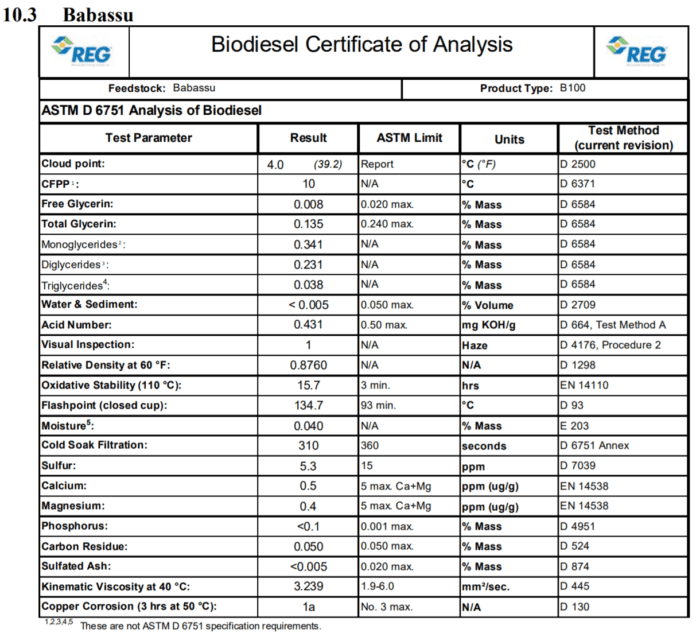
Babassu oil is extracted from the seeds of the babassu palm treeBabassu Oil Chart

Beef Tallow

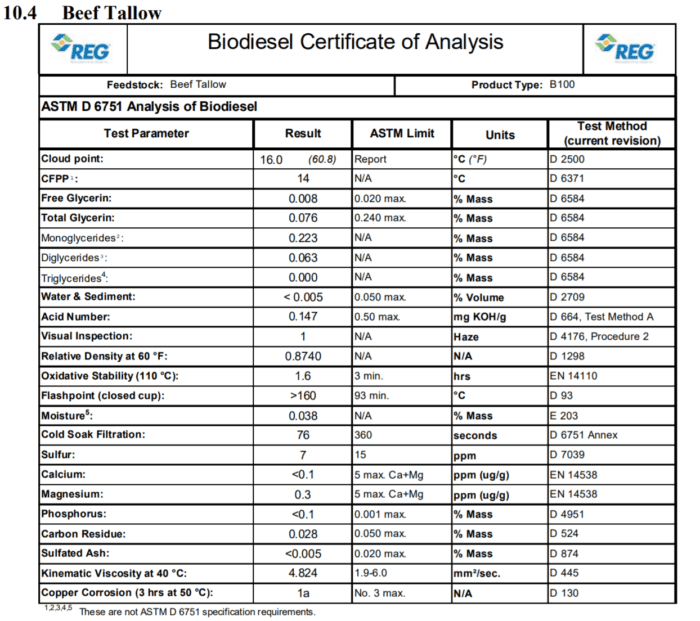
Tallow is a rendered form of the waste fats and greases from processing beef. Rendering is a process by which lipid material is separated from meat tissue and water under heat and pressure. Beef tallow is primarily made up of triglycerides and it is solid at room temperature. The B100 that is created from this source has a very high cloud point. “Cloud point is the temperature at which wax (paraffin) begins to separate when oil chilled to a low temperature, and it serves as an important indicator of practical performance in automotive applications in low temperatures.”  (Source)  The other uses for tallow include animal feed, soap, cooking and in the past, candles.

Beef Tallow Animal tissue is converted to tallow using rendering; a process by which lipid material is separated from meat tissue and water under heat and pressure.Beef Tallow Chart


Article 2 Feedstock : Borage Oil & Camelina Oil

Article 3 Feedstock : Algae Oil & Canola Oil.

Article 4 Feedstock : Castor Oil and Choice White Grease

Article 5 Feedstock : Coconut Oil and Coffee Oil

Article 6 Feedstock : Evening Primrose Oil and Fish Oil

Article 7 Feedstocks : Hemp Oil & High IV and Low IV Hepar

Article 8 Feedstocks : Jatropha Oil, Jojoba Oil, & Karania Oil

Article 9 Feedstocks : Lesquerella Oil & Linseed Oil

Article 10 Feedstocks – Moringa Oil & Neem Oil

Article 11 Feedstocks – Palm Oil & Perilla Seed Oil

Article 12 Feedstocks – Poultry Fat & Rice Bran Oil

Article 13 Feedstocks – Soybean Oil & Stillingia Oil

Article 14 Feedstocks – Sunflower Oil & Tung Oil

Person looking through binoculars in an autumn forest with vibrant fall colors reflected in both lenses, symbolizing focus on Oregon’s diesel and CO2 credit market conditions.
Fall Diesel Outlook for 2025 – the Oregon Market 1024 1024 Star Oilco

Fall Diesel Outlook for 2025 – the Oregon Market

What market forces are impacting the Oregon diesel outlook?

The US market is short diesel in storage while the Oregon market is short CO2 credits causing a unique market condition as we head into fall.

Diesel prices in the Pacific Northwest have not been following National trends for diesel.  The west coast is paying a premium compared to other nearby states.  Diesel in Oregon is significantly higher than the national average.  More to the point, the carbon credits associated with biodiesel and renewable diesel in Oregon are trading at recent record high prices. Higher than California’s CO2 credit prices. What’s going on?

Well for once it isn’t the price of crude oil causing this, or the amount of biofuels. Its all about todays Oregon diesel and carbon markets.  The story starts a few weeks before Memorial day.

Memorial day is often cited as the kick off to the driving season.  It also is when we usually see construction and trucking pick up with the summer weather.  A few weeks before Memorial day the Olympic pipeline went down unexpectedly.  The Olympic pipeline serves Portland and Eugene with their diesel and gasoline fuels from the refineries in northwest Washington state.

That pipeline had an unexpected outage.  Those happen for plenty of reasons usually safety checks or repairs. When the pipeline went down the market was notified it would probably be a week and open again the Monday before memorial day.  That Monday, the Monday before one of the bigger fuel weekends of the year, came and notice went out the pipeline would still be down for another week.

At that moment supply was already short for gas and diesel. Especially diesel.  The Portland and Eugene market saw diesel like a dollar cheaper in states like Idaho, Utah and others. So guess where diesel started flowing from? Markets responded as the bigger players on the ground in Oregon started moving diesel from those states.  Your local truck stops, gas stations, and cardlocks didn’t run out of fuel in several parts of Oregon because of these efforts.

In a US diesel market that was already tight for diesel supply, Portland, Oregon had an event that made it even tighter demanding diesel from around the region. Markets responded sending higher price offers to bring diesel into Oregon. Source is US EIA.

Oregon does not have any petroleum refineries or even biofuel plants.  It can only be supplied by pipeline, barge, rail or truck from outside the state.  When the pipeline came back online quite a bit of outside diesel had flowed into the state from nontraditional sources by rail and truck.

The people who moved that diesel are regulated in Oregon with two programs for CO2 emissions.  One is called the Clean Fuels Program which requires anyone importing diesel into Oregon to come up with a CO2 reductions by either blending low carbon biofuels or buying CO2 credits from others that use those fuels in the state.  Oregon also has a Cap and Invest program which only allows so much fossil fuel to be sold inside Oregon in a calendar year.  Oregon caps the total market for fossil fuels sold at retail stations as part of it’s carbon reducing strategy.

Guess what happens when a bunch of suppliers start bringing in gas and diesel to meet the market need?  They have to come up with Carbon credits and allowances to meet those carbon reduction programs for liquid fuels.  When unexpected volumes of diesel get imported into Oregon the CO2 market dynamics change.

For diesel, they need to start blending biofuels such as renewable diesel and biodiesel.  So since that Memorial Day pipeline outage the people who imported diesel from other states need CO2 credits under Oregon Clean Fuels Program as well as to ensure they done sell to many additional gallons of fossil fuel diesel to exceed the allowance of Oregon’s cap and invest regime.

Therefore CO2 credits are high, people are trying to blend more biofuels to catch up to the unexpected volumes of diesel they moved into Oregon.  Prices are higher than the rest of the US for diesel as a hangover to the supply disruption.

Upside for the first summer in a few years there is plenty of Renewable Diesel in the Portland, Oregon market as the CO2 credit prices are higher than California and the diesel prices are also high to help.  In the last month we have seen a huge amount of Renewable Diesel show up into the terminals in Portland.  So hopefully we will see lower prices heading into fall as all this works itself out.  As we pass by Labor Day the market cost of diesel should normalize and return to a much more affordable price.

The one downside of high diesel prices is that it makes Renewable Diesel the same price as fossil diesel.  If you want to try it, now is a good time where you can get it affordably and field test it for results with your fleet.  Want to see how it performs in reducing truck regens, EGR services, and see if fuel economy improves with a cleaner burning synthetic diesel running in your fleet.  This fall is a good time to experiment with it.

If you want to try Renewable Diesel in your fleet.  Star Oilco has it immediately available.  Please reach out to give it a try at either our Cardlock locations, with Mobile Onsite Refueling in your yard, or a Loaner Bulk Tank trial of the fuel in a few trucks.

Star Oilco has Renewable Diesel seven days a week for your fleet: Mobile Onsite Fueling, Cardlock, and Bulk Delivery.
Call us at 503-283-1256 or email at OrderDesk@StarOilco.net.

Renewable Diesel in Oregon