

Posts Tagged :

renewable

comparison chart showing difference between off-road diesel and on-road diesel fuel in Portland OR
The Future of Diesel Fuel 940 788 Star Oilco
The Future of Diesel Fuel

Retail Diesel Dispenser Example
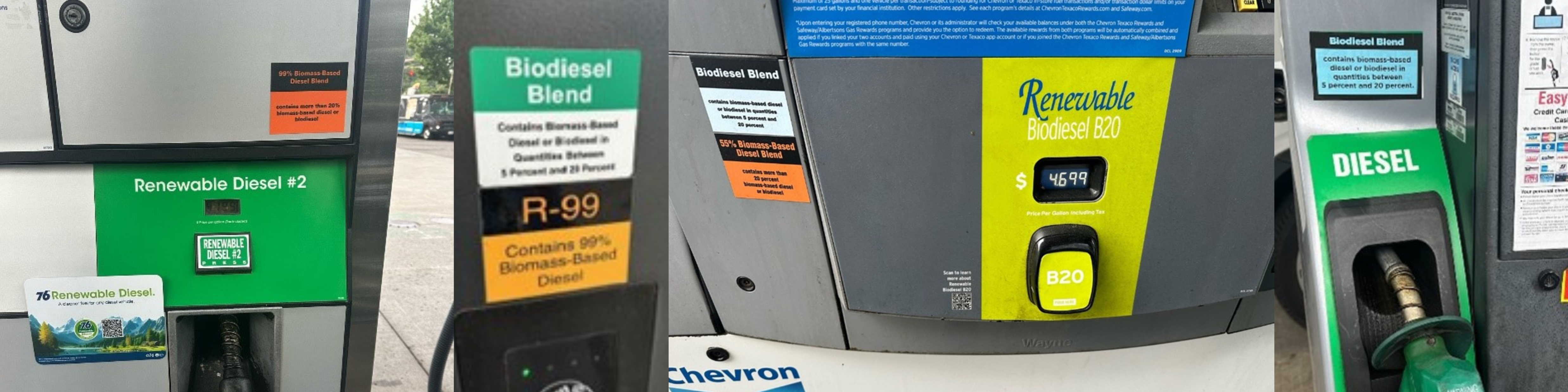
Retail Diesel Pumps with a variety of blends of diesel. Biodiesel, Renewable Diesel, and Fossil Diesel blends shown in Portland, Oregon.

Diesel Fuel In Oregon and Washington

Star Oilco has been getting questions on the changes of diesel in Portland, Oregon.  If you have not noticed, many diesel pumps at retail gas stations and cardlock have seen changing stickers on the face of the fuel pumps.  As of July 1st, 2024 the City of Portland requires a minimum 15% biofuel content of all diesel sold.  This policy is called the Portland Renewable Fuel Standard.

This has caused quite a few changes in what fuel pumps have for fuel.  Diesel fuel buyers are noticing the bright yellow color of B20 biodiesel, the water clear color of Renewable Diesel or a a mix of several fuels tinting the color of their diesel.  This trend is bigger than just Portland.

Today on the west coast there are a variety of product label stickers you will see on diesel pumps.  These show the variety of diesel fuel specifications that are being sold to diesel vehicles today. Blends of petroleum ultra low sulfur diesel, R99 (99%) renewable diesel, and B99 (99%) Biodiesel are combined to meet the market needs of the diesel we all buy.

This change is because of a combination of pure market forces, government rules and local decisions by fuel haulers.  Today’s diesel not only has a commodity market for the fuel it also has a market for CO2 credit value and a cap of total petroleum diesel fuel that can be sold into a west coast state with a “Cap and Investprogram requiring blends of low CO2 biofuels, the liquid fuels sold for vehicles.

Add on top of these market forces, advances in technology used to make the liquid diesel fuel.  The diesel arriving at truck stops, gas stations, cardlock or out of a hose from a bulk truck has been changing and it’s often in good ways.  Knowing how can be helpful in navigating why diesel may cost one price or another and may have a need or maintenance that another fuel does not.

THE RISE OF RENEWABLE DIESEL

Renewable diesel is a synthetic diesel fuel made from the same feedstock as biodiesel, but the finished product is hydrocarbon diesel.  Though it is a biofuel, it is also diesel. For fuel regulation they refer to it (as well as biodiesel) as “Biomass Based Diesel” for labeling at the fuel pump.

There have been billions of plant capacity brought online for renewable diesel.  During the COVID collapse of fuel prices a number of petroleum refineries shut down, then upgraded their technology to make hydrocarbon diesel fuels out of the very biobased fats, oils, and greases biodiesel is made from.  These refineries use hydrotreating technology just like they do with a crude petroleum to make an actual hydrocarbon diesel molecule.   With this technology adoption to make diesel and jet fuels from vegetable oils and animal fats billions of gallons of low CO2 diesel fuels are coming on the market and governments are requiring it’s use, such as Portland’s Renewable Fuel Standard.
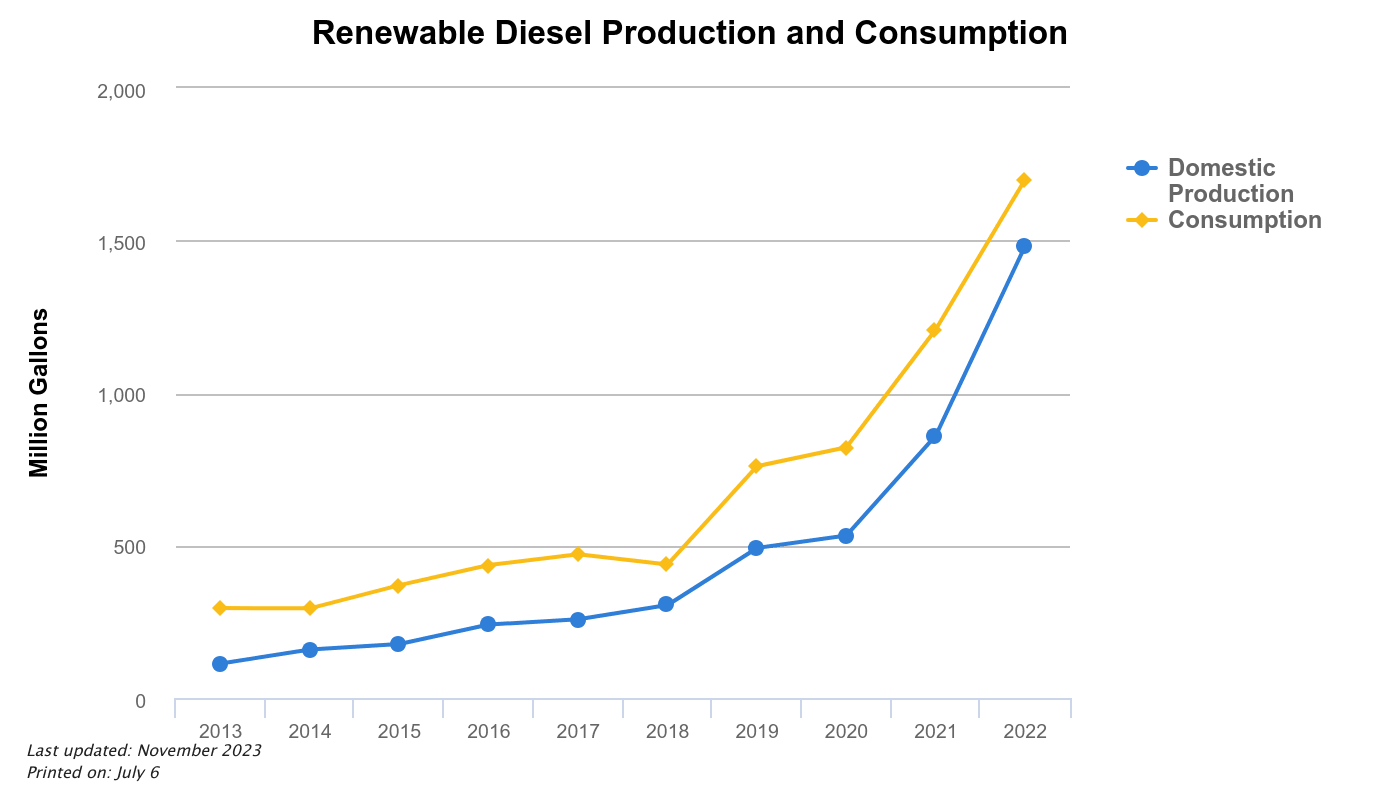
Renewable Diesel Consumption it the US Source: Alternative Fuels Data Center

THE AVAILABILITY OF BIODIESEL

The US makes billions of gallons of biodiesel.  A fuel that’s quality and performance continues to improve.  If you are not a fan of biodiesel in your fuel thinking strategically about the fuel will likely benefit your fleet operation.  The big concern with diesel fuel in a ultra low sulfur world is water and dirt suspended in the fuel affecting the performance of diesel emission systems.  With clean and drier quality specifications of B99 blend stocks today versus a decade ago the use of this fuel has grown substantially especially in the truck stop market.

When crude petroleum prices are high and therefore refined diesel prices are equally as high biodiesel is often an extremely competitive fuel.  If a large seller of diesel (including petroleum refiners) can pick up pennies per gallons on millions of gallons sold they will do so.  Therefore Biodiesel is often seen in diesel in small blends even if you do not see a label on retail pump.  For blends above 5% a label is required for retail fuel sales. RTHWEST?
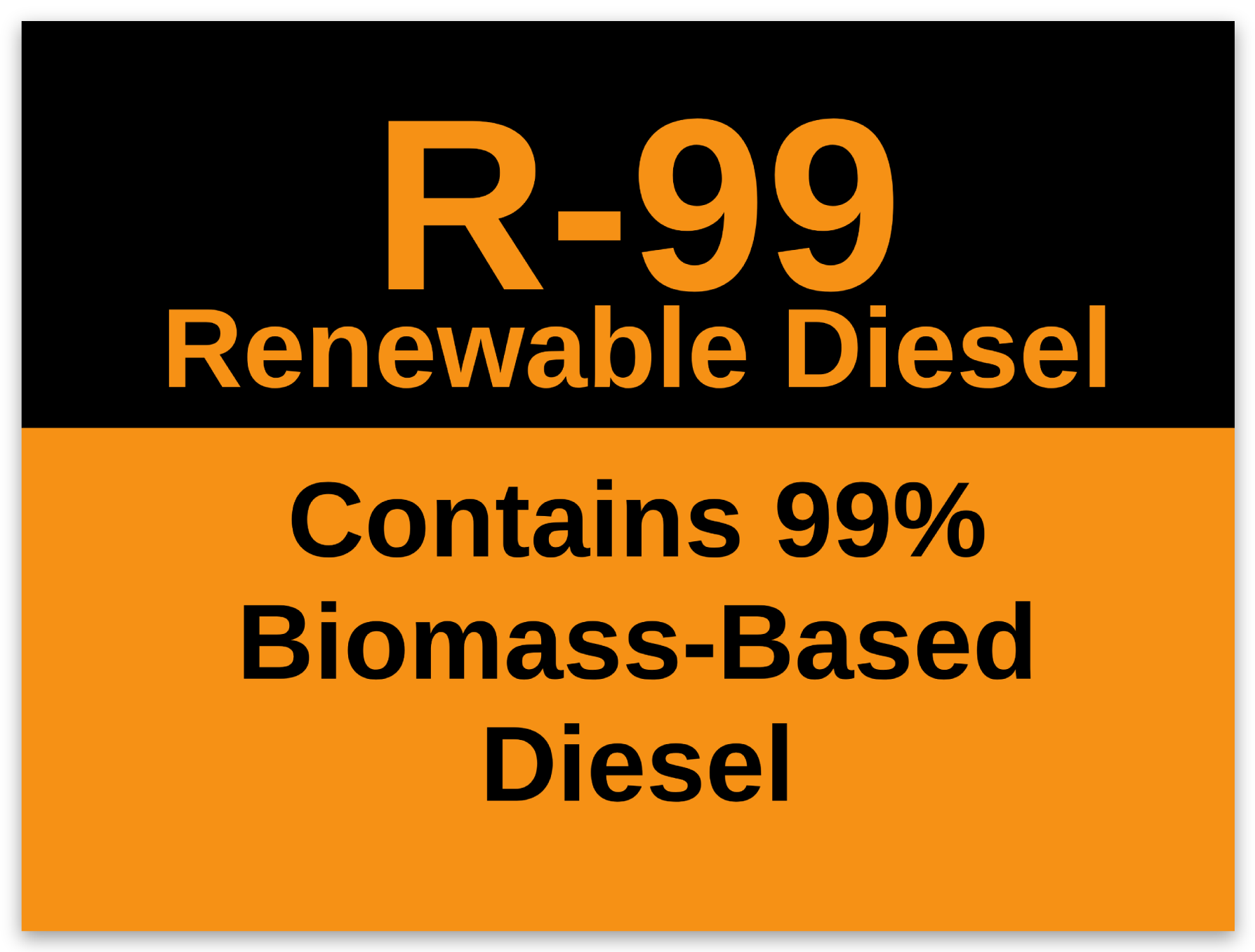
R99 Renewable Diesel label indicating 99% biomass-based diesel content
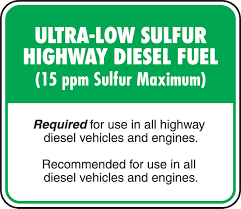
Ultra Low Sulfur Retail Diesel Label
Biodiesel Blend Percentage label for retail diesel dispenser

Above are a variety of labels used to denote what fuel blend is coming out of a retail diesel dispenser. Feel free to call Star Oilco at 503-283-1256 if this confuses you and you want it explained.  We would be glad to do so.

These labels can be found together often at one pump.  All state and Federal standards require ultra low sulfur diesel for any on-road diesel sale.  The Federal standards also adopted by the states require a disclosure at the fuel pump if a blend is above 5% biodiesel.  The max allowable blend of biodiesel for diesel truck manufactures is a 20% blend.  If a truck dealership says that you cannot blend biodiesel up to 20% they need to take that up with the Federal Government because they need to support it.  This is why the label shows a blend may contain between 5% and 20% biodiesel content.

Renewable diesel is a hydrocarbon diesel. 


It is diesel meeting the ASTM D975 specification for diesel. 

Retailers selling blends of R99 in their fuel do not need to label it given this.  They still do label it given the benefits of the fuel’s performance and that customers are seeking that fuel.

Contact Us Today To Schedule Your Next Bulk Fuel Delivery

Many retail places will have stacked labels showing they may be blending 5% to 20% biodiesel as well as may be adding R99 Renewable Diesel to the fuel as market conditions dictate it is the more cost competitive fuel.  When seeing a label like this it can usually be assumed they are blending a R80 (80% Renewable Diesel) and a B20 (20% Biodiesel) blend of fuel.  This blend is actually believed by some to be a higher performing fuel seeing better performance that a R99 or B20 fossil fuel blend.

Fossil fuel diesels are being replaced or blended with biomass based diesels.  Be it Renewable Diesel or Biodiesel.  These blends are driven by more than one industry requirements, government rules, or other market forces. One of these being Portland’s banned on petroleum diesel through the Renewable Fuel Standard (RFS). This is resulting in an increase of low-carbon biofuel blends that will ultimately move to a mix of 99% renewable fuel requirement by 2030.
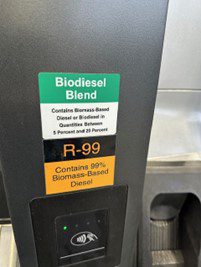
Renewable Diesel and Biodiesel Blend fuel dispenser label.

The big drivers are industry specification for fuels (both labeling as well as chemical characteristics), state rules on selling these fuels, their quality assurance as well as CO2 content, and of course the market forces.  Market forces being the supply and demand availability of fuel needed to meet customers.  Less fuel available to sell means higher prices for customers.

A decade ago the market for diesel was far simpler. Though you had biofuels and some blend mandates basically you had a diesel specification accepted and the daily price as tracked by a lighted retailers sign, a wholesale market average or spot buying by some customers.   Today this market is far more complicated by government regulation on the west coast.  There are three big programs at state levels impacting this.

State Fuel Rules cause a unique need for one state or another. Whereas twenty years ago if Oregon or Washington fuel was selling for more than the Gulf Coast you might see brokers bring fuel into the region then driving down high prices.  With the creation of various complex and unique rules on diesel, imports of fuel to these low CO2 fuel states has dropped.  The amount of people moving product into west coast states has dropped.  The big rules causing this are the Cap and Invest programs of the West Coast states, the Low CO2 Fuel Standards of the states, and the fuel blend mandates of various jurisdictions of these states. For instance California now requires all off-road diesels but 99% renewable diesel.  Portland, Oregon also has a CO2 requirement and minimum 15% blend of biomass based diesel on all fuel sold in the state.

WHAT ARE THE DIESEL FUELS AND THEIR SPECIFICATIONS

Petroleum Diesel:
ASTM D975 Specification.

The ASTM D975 is a series of tests used to maintain consistent industry standard product performance for diesel fuel.  It includes among several tests cloud point, cold filter plug point (CFPP), several masurements of diesel fuel operability performance, intrained water content, sediment, carbon residue, ash, distillation, viscosity, sulfur, copper corrosion, cetane number, cetane index, aromaticity, and conductivity.

Renewable Diesel:
ASTM D975 Specification.

Renewable Diesel is following the same series of tests as petroleum refined diesel fuels.  It is the same ASTM D975 specification. Though Renewable Diesel has some different properties that exceed the ASTM specification of diesel.  Renewable Diesel is highly prized as a fuel because it typically is a cleaner and drier diesel fuel than petroleum diesel. This being seen by the tests on sediment and water content in a parts per million level.  Renewable Diesel content in diesel fuel can also be tested for looking for a C14 molecule (the chain typically created in a Hydrotreated Diesel process from fats, oils and greases.

Biodiesel (Methyl Esther):
ASTM D6751 Specification.

The ASTM for Biodiesel tests a mono-alkyl esters of long chain fatty acids derived from vegetable oils and animal fats. The testing for quality assurance covers an analysis for flash point, methanol, water and sediment, kinematic viscosity, sulfated ash, oxidation stability, sulfur, copper strip corrosion, cetane number, cloud point, acid number, carbon residue, total and free glycerin, phosphorus, reduce pressure distillation temperature, atmospheric equivalent temperature, combined calcium and magnesium, and combined sodium and magnesium.

For more on Biodiesel Use and Handling the National Renewable Energy Laboratory has a great book on the subject.

THE HISTORY OF DIESEL FUEL SPECIFICATIONS IN THE UNITED STATES

In the 1990’s the US EPA passed rules that demanded a phase out of sulfur in diesel fuel.  The presence of sulfur was very good for the fuel’s storage stability as well as fuel lubricity, but was horrible for air quality.   Additionally the big smog contributor was NOx (nitrous oxide) which was one of the EPA’s reason’s for pulling sulfur out of diesel.  For the EPA to get engine manufacturers to treat the NOx emissions at the tailpipe they needed all the sulfur gone (ultra low sulfur diesel) for modern diesel emission systems to be able to eliminate NOx as well as a host of other pollutants including particulates.

The story of changing diesel fuel standards in the US under the EPA is one of removing sulfur from our diesel fuel.  In 1996 the fuel refiners and sellers of diesel had to move the sulfur content of the fuel sold for on-road purposes to below a 500 parts per million standard. Commonly referred to as Low Sulfur Diesel fuel.   In 2006 the standard moved to a maximum of 15 parts per million of sulfur for all on road fuels.

In 2006 while the sulfur content of fuel was dropping the City of Portland released the first mandated blend of biodiesel content.  This being a 5% biodiesel blend.  The next year, the State of Oregon followed with its own Renewable Fuel Standard requiring this throughout the state.  This began the expectation of biodiesel in most diesel fuel in the Portland, Oregon area.  Washington also passed a similar policy for blending biodiesel but the enforcement and need for the fuel is less specific at Washington fuel pumps.


Sign Up To Receive Our Fuel Market Report For Your Weekly Fill Of Updates!

Name
home insulation representing energy efficiency for renewable fuel standard compliance in Portland Oregon
What Is The Renewable Fuel Standard In Portland? 1024 683 Star Oilco

What Is The Renewable Fuel Standard In Portland?

Did you hear about the time Portland banned fossil fuel diesel?

Portland is making a big move to provide cleaner air and reduce greenhouse gas emissions. Portland has implemented what’s called the Renewable Fuel Standard (RFS) beginning  its first phase on May 15th, 2024. The RFS policy in Portland mandates that there has to be an increase of use of low-carbon biofuels in diesel within city limits of Portland. This is part of the ultimate Climate Emergency plan. This RFS mandate was first implemented in 2006 as a B5 (5%) Biodiesel blend mandate with the goal of mandating a 20% blend. The RFS is the first of its kind not only in Oregon but in the entire United States. Portland’s reputation as a leader in environmental sustainability efforts continues. 

Portland’s Phases To Implement Almost 100% Renewable Diesel

What makes Portland’s mandate unique is the requirement that the biofuels have a CO2 value so low it bars most American made biodiesels. The blending requirement starts at 15% in 2024, and then it will steadily increase to 50% by 2026 and will reach 99% by 2030. This schedule demonstrates how Portland’s low-carbon ambition is present to transition away from fossil fuels and promote alternative energy sources.

This policy is expected to reduce air pollution and carbon emissions. It will also create new markets for biofuels, which will lead to increased economic opportunities. This will ultimately help the city become a more sustainable and environmentally friendly place to live as Portland has taken the lead in striving for sustainability over the years.

The policy will also help create jobs in the biofuel industry and provide opportunities for businesses to switch to renewable energy sources. It will also help reduce the city’s dependence on fossil fuels and protect the environment for future generations.

Want to learn more about meeting Portland’s requirements for the Renewable Fuel Standard mandate?

landscape view of Mount Hood representing Star Oilco’s fuel delivery service area in Oregon

Focus on Lower-Emission Biofuels

Uniquely, Portland’s RFS goes beyond just the biofuel blend. It also sets a strict carbon intensity (CI) standard for the biofuels themselves. This ensures the biodiesels used have a significantly lower carbon footprint compared to traditional options. Biodiesels produced domestically often fall short of this CI requirement, prompting many suppliers to look to renewable diesel sources. This focus on biofuels with a lower lifecycle carbon footprint makes Portland’s RFS even more impactful in reducing greenhouse gas emissions.

Iconic Portland sign on Broadway at dusk with city buildings in the background

Exemptions and Implementation Details

The initial phase of the RFS targets on-road diesel sales. This applies to diesel purchased at gas stations, by mobile fueling companies, and for use in large stationary tanks. However, the long-term goal includes all diesel use within the city. Some temporary exemptions apply to off-road diesel uses such as heating oil, generator fuel, aircraft fuels, watercraft fuels, and other dyed fuel users. One local truck stop, Jubitz Truckstop, was granted a temporary exemption. This is likely due to concerns about disrupting critical transportation operations. Daimler (the manufacturer of Freightliner and Western Star trucks) has a research facility in Portland. Daimler was also granted an exemption to meet their specific fuel needs for testing purposes. 

The RFS enforces compliance through fuel sampling and requires documentation proving the fuel meets the minimum biofuel content and CI standards. Businesses that purchase diesel need to be able to show their compliance through bills of lading (BOLs) or similar records from their fuel provider, like Star Oilco. If a business does not comply and provide this documentation, it can result in pretty hefty fines. First offenses can be a fine of $10,000 per day. Repeat offenders will end up facing even bigger penalties of up to $15,000 per day. These fines can really show the impact of how serious Portland is taking this initiative. 

Impact on Businesses and Consumers

While residential consumers who don’t purchase diesel directly are not directly impacted, businesses purchasing diesel, especially in bulk, will need to adapt to the new regulations. This may involve acquiring documentation from fuel suppliers or entering into contracts guaranteeing compliant fuel blends. Wholesale fuel distributors, who sometimes purchase from multiple vendors and blend fuel mid-route, may face additional challenges in tracking the biofuel content and CI of their product. However, as the program matures, the industry is expected to adapt and streamline these compliance procedures.

Contact Us Today To Discuss What This Means For Your Business

A Step Forward for Cleaner Transportation

Portland’s ambitious RFS sets a new expectation for sustainable transportation. Promoting low-carbon biofuels allows Portland to aim to significantly reduce its reliance on fossil fuels and be able to contribute to cleaner air for its residents. The RFS program will be able to serve as a model for other cities that are looking at implementing similar initiatives. Great job Portland for paving the way to a sustainable future for other cities! Although challenges will remain, as businesses adapt to this new norm, Portland’s RFS represents a significant step forward in creating a more sustainable transportation sector.

The RFS program is an important step in the fight towards sustainability and lower carbon fuels. It sends a clear message that cities are willing to take action to reduce emissions and protect the environment. We anticipate that other cities will follow Portland’s lead and create similar initiatives. This will have a significant impact in reducing emissions and helping to protect the environment.

It is a positive step towards a more sustainable future. Alternative fuels have become more and more readily available. Investing in alternative fuels and reducing carbon emissions is essential for protecting the planet for future generations. Governments should prioritize investing in renewable energy sources and incentivize communities to switch to alternative fuel solutions.

Thank you for choosing Star Oilco as your preferred fuel provider in Portland and Vancouver, Washington. Give us a call to discuss how the RFS mandate can affect your business and one of our team members would be happy to discuss this with you.

JOIN THE FUEL MARKET REPORT NEWSLETTER FOR YOUR WEEKLY FILL OF UPDATES!

Name
comparison chart showing difference between off-road diesel and on-road diesel fuel in Portland OR
The Future of Diesel Fuel 940 788 Star Oilco

The Future of Diesel Fuel

Retail Diesel Dispenser Example
Retail Diesel Pumps with a variety of blends of diesel. Biodiesel, Renewable Diesel, and Fossil Diesel blends shown in Portland, Oregon.

The Future of Diesel is Low CO2 Synthetic Fuels

The stew of molecules your diesel is made of has been changing. A next level technology in chemistry is enabling garbage to be transformed into hydrocarbon fuels like diesel, jet fuel, naphtha, and propane as well as other high value chemicals. These technologies enable petroleum refineries in the United States to retool themselves and move into making biofuels with the very technology used to refine modern gasoline and diesel fuels from crude oil.  Currently oil refineries take crude petroleum and crack the molecules and reform them with a hydrotreater.  This hydrogenation is what makes renewable diesel from fats, oils and greases.

If you have ever worked under your sink at home. Remember the greasy mess inside the pipes below your kitchen sink.  These renewable hydrogenation technologies can turn that trash into a super clean high performance synthetic diesel fuel.  That waste stream along with used deep fryer oil, the animal fats from rendering and other sources is the feedstock for renewable diesel.  It is exciting and this will be the future of our diesel and jet fuels.  These fuels also have a fraction of the CO2 footprint of a fossil fuel equivalent as measured by Oregon, Washington or California’s rules to measure the carbon intensity of fuels.

Diesel Fuel in Oregon and Washington

Star Oilco has been getting questions on the changes of diesel in Portland, Oregon.  If you have not noticed, many diesel pumps at retail gas stations and cardlock have seen changing stickers on the face of the fuel pumps.  As of July 1st, 2024 the City of Portland requires a minimum 15% biofuel content of all diesel sold.  This policy is called the Portland Renewable Fuel Standard.  Portland currently plans to ramp up this requirement to a 50% biofuel blend in May of 2026.  So that every gallon of diesel sold inside the City of Portland must be half biomass based diesel products blended with fossil diesel.

This has caused quite a few changes in what fuel pumps have as their fuel for sale.  Usually people notice this change with teh color of the diesel coming out of the retail nozzle.  Diesel fuel buyers are noticing the bright yellow color of B20 biodiesel, the fully clear color of Renewable Diesel or a mix of several fuels tinting the color of their diesel.  This trend is bigger than just Portland.

Today on the west coast there are a variety of product label stickers you will see on diesel pumps.  These show the variety of diesel fuel specifications that are being sold to diesel vehicles today. Blends of petroleum ultra low sulfur diesel, R99 (99%) renewable diesel, and B99 (99%) Biodiesel are combined to meet the market needs of the diesel we all buy.

This change is because of a combination of pure market forces, government rules and local decisions by fuel haulers.  Today’s diesel not only has a commodity market for the fuel it also has a market for CO2 credit value and a cap of total petroleum diesel fuel that can be sold into a west coast state with a “Cap and Investprogram requiring blends of low CO2 biofuels, the liquid fuels sold for vehicles.

Add on top of these market forces, advances in technology used to make the liquid diesel fuel.  The diesel arriving at truck stops, gas stations, cardlock or out of a hose from a bulk truck has been changing and it’s often in good ways.  Knowing how can be helpful in navigating why diesel may cost one price or another and may have a need or maintenance that another fuel does not.

THE RISE OF RENEWABLE DIESEL

Renewable diesel, also called R99 as in 99% renewable diesel, is a synthetic diesel fuel made from the same feedstock as biodiesel. The big difference though is that renewable diesel’s finished product is hydrocarbon diesel.  Biodiesel chemically is not a hydrocarbon or made up of diesel molecules.  Renewable diesel is a biofuel, but it is also chemically diesel on a molecular level. For fuel regulation they refer to it (as well as biodiesel) as “Biomass Based Diesel” for labeling at the fuel pump.

There have been billions of plant capacity brought online in the United States for renewable diesel.  During the COVID market drop in fuel prices a number of petroleum refineries shut down, then upgraded their technology to make hydrocarbon diesel fuels out of the very biobased fats, oils, and greases biodiesel is made from.  These refineries use hydrotreating technology just like they do with a crude petroleum to make an actual hydrocarbon diesel molecule.   With this technology adoption to make diesel and jet fuels from vegetable oils and animal fats billions of gallons of low CO2 diesel fuels are coming on the market and governments are requiring it’s use, such as Portland’s Renewable Fuel Standard.

Renewable Diesel Consumption it the US Source: Alternative Fuels Data Center

THE AVAILABILITY OF BIODIESEL

The US makes billions of gallons of biodiesel.  A fuel that’s quality and performance continues to improve.  If you are not a fan of biodiesel in your fuel thinking strategically about the fuel will likely benefit your fleet operation.  The big concern with diesel fuel in a ultra low sulfur world is water and dirt suspended in the fuel affecting the performance of diesel emission systems.  With clean and drier quality specifications of B99 blend stocks today versus a decade ago the use of this fuel has grown substantially especially in the truck stop market.

When crude petroleum prices are high and therefore refined diesel prices are equally as high biodiesel is often an extremely competitive fuel.  Recently changes in Federal subsidies on biodiesel have changed this market dynamic a bit but you can presume that biodiesel will often be sold at a discount against fossil fuel diesel.  If a large seller of diesel (including petroleum refiners) can pick up pennies per gallons on millions of gallons sold they will do so.  Therefore Biodiesel is often seen in diesel in small blends even if you do not see a label on retail pump.  For blends above 5% a label is required for retail fuel sales.

R99 Renewable Diesel label indicating 99% biomass-based diesel content
Ultra Low Sulfur Retail Diesel Label
Biodiesel Blend Percentage label for retail diesel dispenser

Above are a variety of labels used to denote what fuel blend is coming out of a retail diesel dispenser. Feel free to call Star Oilco at 503-283-1256 if this confuses you and you want it explained.  We would be glad to do so.

These labels can be found together often at one pump.  All state and Federal standards require ultra low sulfur diesel for any on-road diesel sale.  The Federal standards also adopted by the states require a disclosure at the fuel pump if a blend is above 5% biodiesel.  The max allowable blend of biodiesel for diesel truck manufactures is a 20% blend.  If a truck dealership says that you cannot blend biodiesel up to 20% they need to take that up with the Federal Government because they need to support it.  This is why the label shows a blend may contain between 5% and 20% biodiesel content.

Renewable diesel is a hydrocarbon diesel. 


It is diesel meeting the ASTM D975 specification for diesel. 

Retailers selling blends of R99 in their fuel do not need to label it given this.  They still do label it given the benefits of the fuel’s performance and that customers are seeking that fuel.

Contact Us Today To Schedule Your Next Bulk Fuel Delivery

Many retail places will have stacked labels showing they may be blending 5% to 20% biodiesel as well as may be adding R99 Renewable Diesel to the fuel as market conditions dictate it is the more cost competitive fuel.  When seeing a label like this it can usually be assumed they are blending a R80 (80% Renewable Diesel) and a B20 (20% Biodiesel) blend of fuel.  This blend is actually believed by some to be a higher performing fuel seeing better performance that a R99 or B20 fossil fuel blend.

Fossil fuel diesels are being replaced or blended with biomass based diesels.  Be it Renewable Diesel or Biodiesel.  These blends are driven by more than one industry requirements, government rules, or other market forces. One of these being Portland’s banned on petroleum diesel through the Renewable Fuel Standard (RFS). This is resulting in an increase of low-carbon biofuel blends that will ultimately move to a mix of 99% renewable fuel requirement by 2030.

Renewable Diesel and Biodiesel Blend fuel dispenser label.

The big drivers are industry specification for fuels (both labeling as well as chemical characteristics), state rules on selling these fuels, their quality assurance as well as CO2 content, and of course the market forces.  Market forces being the supply and demand availability of fuel needed to meet customers.  Less fuel available to sell means higher prices for customers.

A decade ago the market for diesel was far simpler. Though you had biofuels and some blend mandates basically you had a diesel specification accepted and the daily price as tracked by a lighted retailers sign, a wholesale market average or spot buying by some customers.   Today this market is far more complicated by government regulation on the west coast.  There are three big programs at state levels impacting this.

State Fuel Rules cause a unique need for one state or another. Whereas twenty years ago if Oregon or Washington fuel was selling for more than the Gulf Coast you might see brokers bring fuel into the region then driving down high prices.  With the creation of various complex and unique rules on diesel, imports of fuel to these low CO2 fuel states has dropped.  The amount of people moving product into west coast states has dropped.  The big rules causing this are the Cap and Invest programs of the West Coast states, the Low CO2 Fuel Standards of the states, and the fuel blend mandates of various jurisdictions of these states. For instance California now requires all off-road diesels but 99% renewable diesel.  Portland, Oregon also has a CO2 requirement and minimum 15% blend of biomass based diesel on all fuel sold in the state.

WHAT ARE THE DIESEL FUELS AND THEIR SPECIFICATIONS

Petroleum Diesel:
ASTM D975 Specification.

The ASTM D975 is a series of tests used to maintain consistent industry standard product performance for diesel fuel.  It includes among several tests cloud point, cold filter plug point (CFPP), several masurements of diesel fuel operability performance, intrained water content, sediment, carbon residue, ash, distillation, viscosity, sulfur, copper corrosion, cetane number, cetane index, aromaticity, and conductivity.

Renewable Diesel:
ASTM D975 Specification.

Renewable Diesel is following the same series of tests as petroleum refined diesel fuels.  It is the same ASTM D975 specification. Though Renewable Diesel has some different properties that exceed the ASTM specification of diesel.  Renewable Diesel is highly prized as a fuel because it typically is a cleaner and drier diesel fuel than petroleum diesel. This being seen by the tests on sediment and water content in a parts per million level.  Renewable Diesel content in diesel fuel can also be tested for looking for a C14 molecule (the chain typically created in a Hydrotreated Diesel process from fats, oils and greases.

Biodiesel (Methyl Esther):
ASTM D6751 Specification.

The ASTM for Biodiesel tests a mono-alkyl esters of long chain fatty acids derived from vegetable oils and animal fats. The testing for quality assurance covers an analysis for flash point, methanol, water and sediment, kinematic viscosity, sulfated ash, oxidation stability, sulfur, copper strip corrosion, cetane number, cloud point, acid number, carbon residue, total and free glycerin, phosphorus, reduce pressure distillation temperature, atmospheric equivalent temperature, combined calcium and magnesium, and combined sodium and magnesium.

For more on Biodiesel Use and Handling the National Renewable Energy Laboratory has a great book on the subject.

THE HISTORY OF DIESEL FUEL SPECIFICATIONS IN THE UNITED STATES

In the 1990’s the US EPA passed rules that demanded a phase out of sulfur in diesel fuel.  The presence of sulfur was very good for the fuel’s storage stability as well as fuel lubricity, but was horrible for air quality.   Additionally the big smog contributor was NOx (nitrous oxide) which was one of the EPA’s reason’s for pulling sulfur out of diesel.  For the EPA to get engine manufacturers to treat the NOx emissions at the tailpipe they needed all the sulfur gone (ultra low sulfur diesel) for modern diesel emission systems to be able to eliminate NOx as well as a host of other pollutants including particulates.

The story of changing diesel fuel standards in the US under the EPA is one of removing sulfur from our diesel fuel.  In 1996 the fuel refiners and sellers of diesel had to move the sulfur content of the fuel sold for on-road purposes to below a 500 parts per million standard. Commonly referred to as Low Sulfur Diesel fuel.   In 2006 the standard moved to a maximum of 15 parts per million of sulfur for all on road fuels.

In 2006 while the sulfur content of fuel was dropping the City of Portland released the first mandated blend of biodiesel content.  This being a 5% biodiesel blend.  The next year, the State of Oregon followed with its own Renewable Fuel Standard requiring this throughout the state.  This began the expectation of biodiesel in most diesel fuel in the Portland, Oregon area.  Washington also passed a similar policy for blending biodiesel but the enforcement and need for the fuel is less specific at Washington fuel pumps.

Sign Up To Receive Our Fuel Market Report For Your Weekly Fill Of Updates!

Name
Field of bright yellow sunflowers grown for biodiesel feedstock oil
Biodiesel Feedstocks – Sunflower Oil & Tung Oil 1024 683 Star Oilco

Biodiesel Feedstocks – Sunflower Oil & Tung Oil

We are nearing the end of our journey, as there is only one more blog after this one. If you would like to look back and see all of the feedstocks we have covered start here with our first post.  In this post we explore the feedstocks Sunflower Oil and Tung Oil as we continue our look into different types of feedstock that Renewable Energy Group (REG) studied in 2009 in the Feedstock and Biodiesel Characteristics Report.

Sunflower Oil

The Sunflower oil in this project was purchased from Jedwards, International, Inc.  The common sunflower scientific name is Helianthus annuus. Sunflowers at late afternoon. Flowerheads facing East, away from the Sun.

First domesticated in the Americas the plant was exported to Europe in the 16th century and has become a staple as a cooking ingredient.  According Wildflower.org the common sunflower prefers full sun and well-drained soil. The plant grows up to 8 feet tall and has coarse hairy stems and leaves. The flowers are bright yellow surrounding a central maroon disk, that as it matures, holds the seeds and produces the oil.

The most known uses for sunflower seeds and its oils include; foods, cooking oils and butters. The pressed seed oil is useful for food and the resulting cake (matter left after the oil is harvested) is commonly used as animal food. One of the more interesting uses for the plant is, that it can produce a natural latex in its leaves. This latex can be used to produce hypoallergenic gloves.  The purpose of this post though is to discuss the possibility of biofuel created from sunflower seeds. Biodiesel magazine talks about both the pros and cons for this plant as a feedstock option:

“Because sunflower oil is priced higher than soybean and canola oils, its use as a feedstock for commercial biodiesel refining may be hindered in the U.S. market, according to the National Sunflower Association (NSA). However, there is an interest in the tall golden flowers because the seeds yield about 600 pounds of oil per acre, considerably more than soybeans, which produce a little over 500 pounds per acre.”

Because of the high value of the oil in other areas, using the oil for biodiesel can be cost prohibitive.  Higher concentrates of oil per acre can be vital as more efficiency in  biofuel production becomes necessary. According to Farm Energy, 15,000 to 25,000 plants per acre can be grown.  This means that a small or large farm can use this crop profitably or simply in the production of fuel for that farm.

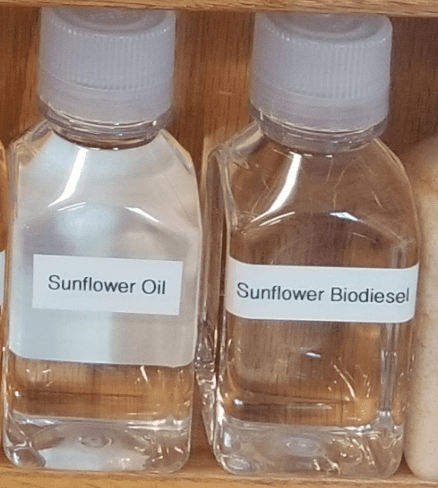
Sunflower Oil and Sunflower biodiesel


Tung Oil

The Tung oil from this study was purchased from Sigma-Aldrich Co. The Tung tree, Vernicia fordii, is native to China and Vietnam.  This tree can be over 60 feet in height and is deciduous. Tung Tree at the Botanical Gardens Faculty of Science Osaka City University, Osaka, Japan According to Texas Invasive Species Institute:

“The bark is smooth, thin, and exudes white sap when cut. The leaves are simple, heart-shaped or with three lobes, and 6-10 inches long. The white flowers have 5 petals with red veins, and they bloom before the leaves emerge. The toxic fruits can grow up to 3 inches in diameter and are reddish green when fully developed.”

This tree is valued for its oil from the seeds.  Traditionally this oil was used in lamps and even as waterproofing on boats.  In more contemporary time this oil is used in varnishes and paint.  This value encouraged the importation of this tree. According to Texas Invasive Species Institute there was over 10,000 acres planted in the United States in 1927.  Cultivation of this tree has waned in the US after frosts and hurricanes destroyed many of the plantations.

This is one feedstock that isn’t part of the food vs fuel controversy.  The Tung tree and its oil is poisons to humans.  Even one seed from the fruit can be fatal, with symptoms including slowed breathing, vomiting and diarrhea.


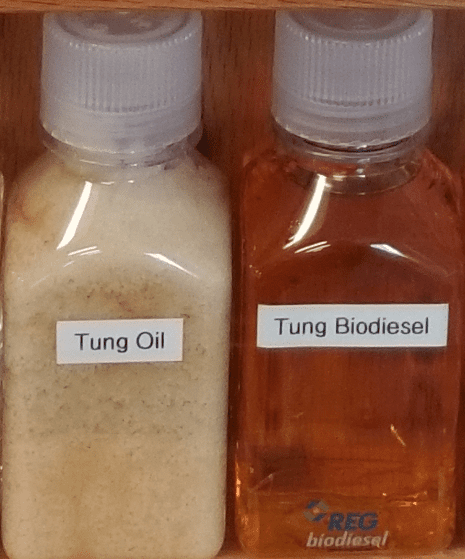
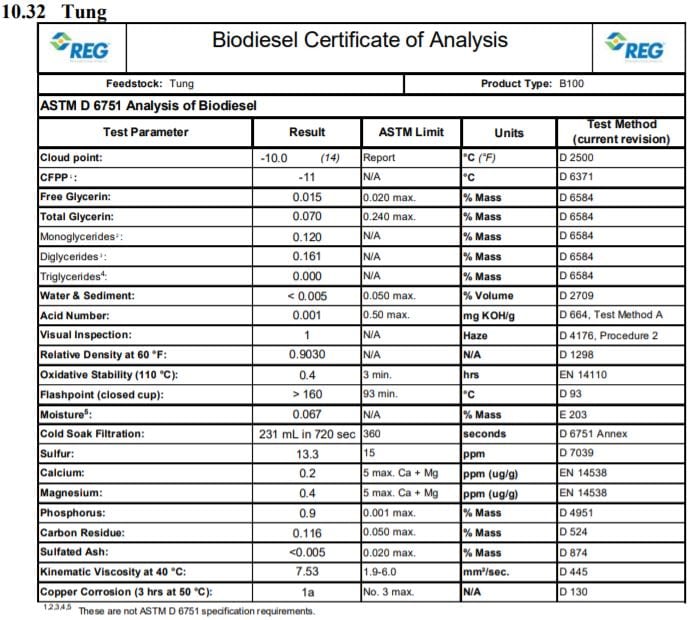
Tung Oil and Tung Biodiesel

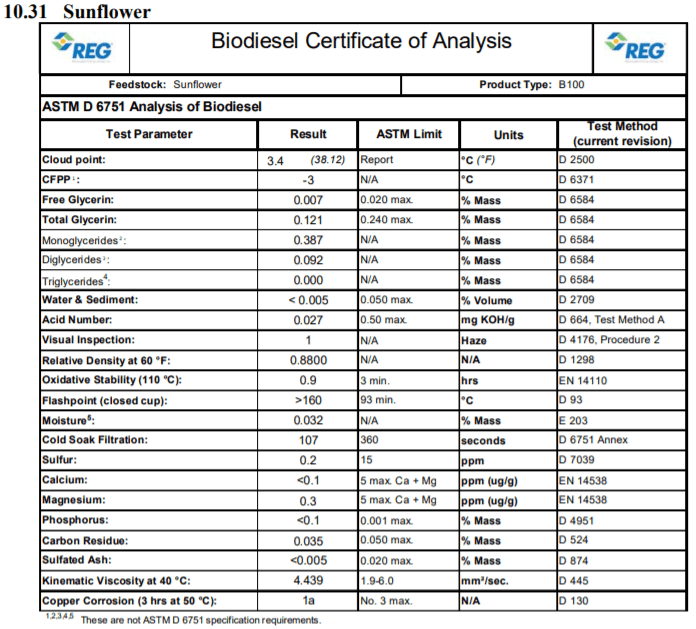
Tung Oil/Bio-diesel Certificate of Analysis


Last article for biodiesel feedstocks was – Soybean Oil & Stillingia Oil

If you would like to learn more about bio-diesel you can check out this post Every Question We Have Been Asked About Biodiesel

Downtown Portland street view with iconic Portland sign
Oregon Biodiesel and Ethanol Fuel Mandates 1024 640 Star Oilco

Oregon Biodiesel and Ethanol Fuel Mandates

Oregon Biofuel Blending Requirements for Gasoline and Diesel.

Oregon law has a 5% Biodiesel and 10% Ethanol fuel blend mandate.

In Oregon, you can expect to buy a biofuel with every gallon of gas or diesel, whether you are buying at a retail pump or commercially delivered bulk fuel. Unless you are expressly seeking out a ethanol-free premium unleaded or off road heating oil expressly free of biodiesel, you can expect the fuel will have a low carbon blend of biofuel in it.

Why does Oregon have biofuel blended in every gallon of fuel?

There are several layers of rules, requirements, and incentives placing a minimum of 5% biodiesel blend in diesel and a 10% ethanol blend in gasoline. The City of Portland’s Bureau of Development Services provides information and resources on the background of both Portland and Oregon’s requirements.

Oregon state has a 5% blend mandate for all diesel fuels sold statewide. Portland has its own standard of for 5% biofule in diesel, which is slightly different but functionally the same as the states. Oregon’s standard requires B5/R5 if it’s sold into  machinery (dyed off road or clear on road diesel), which requires a 5% biofuel component. In the  formation of this Oregon statewide mandate, renewable diesel was considered acceptable.

Oregon also has a 10% ethanol blend mandate for all gasoline fuels with a few exceptions. Portland has this same rule as it mandated ethanol blends prior to Oregon state. Oregon has exceptions for ethanol-free premium unleaded.  (Warning: the City of Portland has no exemption for non-oxygenated premium fuels) though there are some sellers of it. Oregon state’s exceptions being premium gasoline for aviation and non-ethanol premium gasoline sold at retail gas stations. This was adopted later after the initial Renewable Fuel Standard mandates. Portland did not follow Oregon with this flexibility for small engine or classic car enthusiasts seeking non-ethanol fuel.

The rules that drive biofuel use in Oregon’s fuel:

The City of Portland has its own Renewable Fuel Standard (RFS) which is seen in Portland City Code Chapter 16.60 Motor Vehicle Fuels. This RFS requires all diesel sold (either commercial or retail fuel) to contain a minimum 5% biodiesel (specifically methyl-ester molecule). The RFS also requires all gasoline sold (either commercial or retail gas stations) to contain a 10% blend of ethanol. In addition to this fuel blend requirement, Portland also has requirements for the original feedstock biodiesel is made from. Portland requires that 50% of the biodiesel feedstock be sourced from recycled vegetable oil, canola oil, and a few other types available in the Pacific NW.

The State of Oregon has its own Renewable Fuel Standard. It is less restrictive than Portland’s, allowing renewable diesel or biodiesel to meet its 5% blend requirement. You can find the law in Oregon Revised Statute 646.922. The Oregon RFS also requires a 10% ethanol to be blended with gasoline. There is an exception for premium gasoline to be ethanol-free.  This fuel is commonly called “Non-Oxy Premium” or “Clear Premium” by those seeking to order it.

If you want more information on successfully using Biodiesel and Ethanol in your fleet.

If your fleet is seeking to succeed with biofuels, here are some great resources to learn more about biodiesel, ethanol,  and renewable diesel fuels.

If you have questions about biofuels, Star Oilco can help. Do not hesitate to reach out if you have questions, even if you are not in our market. We want you to be successful in your fleet.  We are here to help.

Contact Form

  • This field is for validation purposes and should be left unchanged.