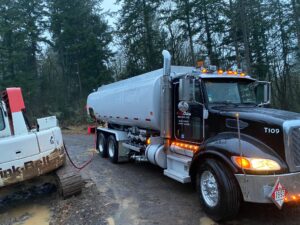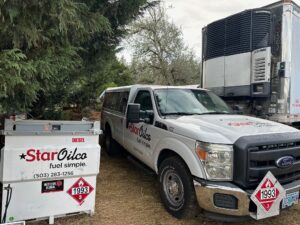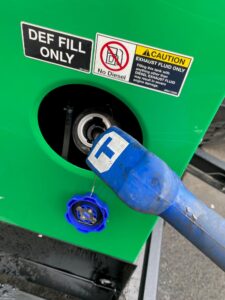

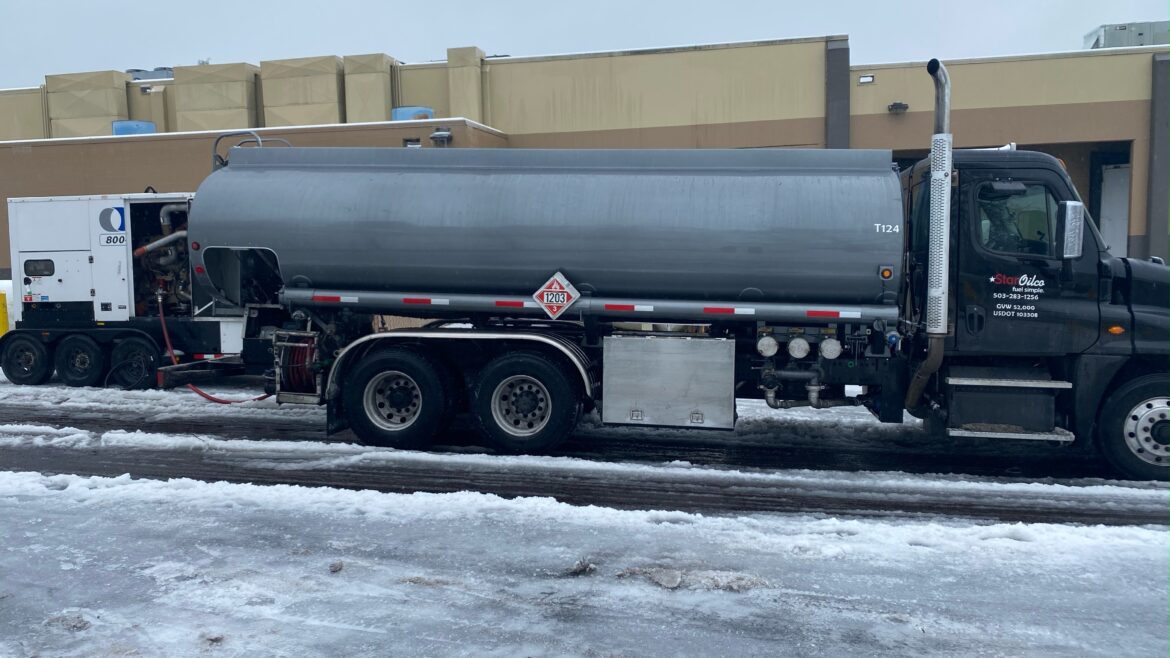
On-site Refueling

On-site fueling provides simplicity, convenience and cost-effective productivity with your next project.

Digital lock icon over data graphics representing fuel security technology
Fleet Fueling in Portland, Oregon and Fuel Security 1024 576 Star Oilco

Fleet Fueling in Portland, Oregon and Fuel Security

How do you eliminate the management hassles of fueling your fleet in Portland, Oregon?

Use Star Oilco’s Total Solution fueling service.

Stop burning labor costs and dealing with management headaches trying to track fuel in vehicles. Let us simplify this for your administration. We can make that really simple with our Total Fleet Solution.  Bulk, Wet-hose Fleet Fueling, and Pacific Pride cardlock when and where you need it.

Seize Control of your Fuel Costs.  Save Money.  Stop Slippage!

Star Oilco’s best practices when thinking about bulk fuel security at your facility.


Wet Hose Fueling Service in Vancouver, Washington

Star Oilco is your Fleet Fueling Services Company with solutions to knock out fuel theft.

Mobile Fueling Service, Pacific Pride Cards, and connecting fuel to your HR Policy can save you thousands of dollars a year in the long run.

“Fuel Slippage” is an industry term for the fuel that you can’t account for in the actual course of business. A stolen tank of gasoline on a company fleet card or diesel saddle tank that came up empty without explanation. We are here to help stop slippage in your business.

We have strategies on how to protect yourself from internal theft, how to use prepaid and preset fuel card controls with employees, as well as securing yourself from external theft. This article is about protecting your fleet from physical fuel theft.

Fuel theft is on the rise in the Portland, Oregon area.

In Portland, Oregon with the rise of homeless campers all over our industrial areas, we have seen a increasing fuel theft. Star Oilco can help you knock out fuel theft. For as hard as fleets work to make a dollar, seeing it shrink from the bottom line due to criminal theft is an avoidable scenario. Think ahead, remove opportunity for thieves to steal, and create systems that keep honest people honest.

The biggest preventive measure Star Oilco can provide is total control of what goes into and out of your fleet. If you have a bulk tank, a tank monitor and key control cardlock system is very affordable these days, guaranteeing inventory is kept to the gallon. If you have fleets on the road without a tank please consider using Pacific Pride secured cardlock fueling in combination with Mobile Onsite Refueling of your fleet in your yard.

Stop Fuel Theft: Best Practices for Portland, Oregon

Prevent fuel theft in Portland, Oregon

To train your fleet consider the following best practices below:

1 – Educate your people on the dangers and evidence of fuel theft

Fuel thieves usually come back again and again. Make sure your whole team is aware of the mess fuel thieves usually leave behind. Transferring from a saddle tank to their vehicle or container leaves a mess. Also make sure they are aware of unsafe places. Unsecured yards, especially with homeless campers in diesel RV’s, are a prime environment to expose yourself to theft. If you are a refrigerated trailer fleet, make sure your drivers tell your clients that unattended reefer trailers are the favorite hunting ground for fuel thieves and a locking gas cap is not necessarily a deterrent.

2 – Install fences, lighting, security cameras, and work with the local police.

Vehicle yards are a popular target for fuel thieves, so make it as difficult as possible for them to get in unnoticed. Secure fencing and bright lighting make your yard far more visible from the road and less attractive to thieves. Security cameras can act as both a deterrent and an effective way to catch criminals if theft ever occurs. Also, make sure you report theft to the local police to ensure they are tracking activity. It can be discouraging given the scale of the problems in Portland right now, but the data matters.  You never know when a fuel thief will get caught for some other crime and the evidence of pumping equipment and containers will tip off the police of the culprit.

3 – Fit bulk tanks with level monitors and inventory control systems.

Inventory control systems are extremely affordable now. Not only is it a convenient tool to track tank levels for your ordering purposes and provide proof that the tank is not leaking for local environmental regulators, it will also tip you off if an odd time of day is seeing fuel drawn. Inventory control systems have also become far more affordable than they were ten years ago. Key control for turning on power to your fuel dispensing system, which will track drivers, and the equipment they are fueling (license plate, equipment number, on-road, off-road, or tax exempt status) will keep you informed.

4 – Defensive parking, landscaping and crash protection.

If it is not easy for someone to get immediately next to the fuel tanks of your vehicles or bulk tank, it is that much harder to steal. Park vehicles in a way that protects and blocks access to someone trying to operate a pump to easily reach your fuel tanks. If you are using on-site refueling, your vendor can suggest some ideas that still enable them access to your saddle tanks without problem.

5 – Communicate with neighbors, vendors, and employees that theft is suspected or definitely occurring.

Many fleets have multiple vendors access their yard at night or over weekends. Make sure those vendors are on your team and on the look out. Tire and fleet fueling services should let you know if a loiterer appears to be in your area in the middle of the night. If a gate has been tampered with or a mess is obvious inside the yard, make sure they are letting you know earlier rather than later. Also, be aware during business hours. Fuel thieves will often scope a yard during the day to target later that night. Take note of anyone acting suspiciously around your yard, perhaps engaging them to find out what they’re doing. Don’t hesitate to ask them what they are doing either. Face to face contact can encourage them to find another place to be a criminal.

If you have any questions or want our perspective we encourage you to reach out.  


Contact Form

  • This field is for validation purposes and should be left unchanged.

Advice is always free and helping is why Star Oilco is here.

For more reading on using securing your business from theft:

Star Oilco Fleet Cards to secure yourself from employee fuel theft at gas stations and cardlocks.

Seven ways to stop fuel theft before it happens.

Use Star Oilco Pacific Pride cards as a management tool. 

Close-up of calculator and printed fuel cost audit spreadsheet
What’s in a “Keep it Simple Fuel Audit” 1024 683 Star Oilco

What’s in a “Keep it Simple Fuel Audit”

How do you compare different fuel card vendors?

You audit your fuel bill.

We will help you clarify your bill by showing what you pay, what’s in that cost of fuel, and how you can save going forward. We do this by concentrating on one fact: there are only three fees in the total cost of a gallon of gas or diesel.

The three verifiable costs in a gallon of fuel are:

  1. The commodity cost of fuel (the wholesale and verifiable fuel cost itself),

  2. The fuel taxes charged by the feds, state, and local governments on top of that, and;

  3. The margin your fuel vendor puts on top of those two very transparent costs.

Fuel bill audit best practices

Tax time is a good time to revisit your policies and systems.

Let us audit your bill and catch inconsistencies and over charges.

We have a transparent way to analyze your fuel expense that breaks it down in an easily understood format. Our approach will demystify what you’re paying in fuel so you can grab control of your gasoline and diesel bills. Our mission is to ‘Keep it Simple’ and make fuel make sense. There are several types of expenses that get added to your cost of fuel.

Pacific Pride Fuel Security

At Star Oilco, we ‘Keep it Simple’ when analyzing fuel bills.

Today, two trends can be witnessed in the Pacific Northwest: fuel prices are all over the place, and wages are rising against that trend. This makes managing for a low cost of gasoline or diesel extremely hard given the labor that might be involved in chasing that price.

Add to that the fact that retail gas stations are keeping more margins than ever in retail fuel history. With minimum wage at $15 in parts of the Pacific NW, the cost of retail gas stations is rising faster than inflation.

Stand-alone commercial cardlock locations such as Pacific Pride and CFN help you save on your own labor, as well as avoid the higher retail cost. One additional feature is you can audit a commercial cardlock fuel seller against the commercial wholesale rack price. Retail sellers promising discounts are discounting from a posted price that is based solely on what they decide a good price can be. Today, that’s a historically high margin above wholesale cost price.

Dig into your bill for an understanding of what you are paying and what you are paying for. Let us demystify the fees, charges, and hard-to-understand line items of our competitors. It seems that many of our competitors, much like cell phone companies, want to give you a bill that is as complex as possible so it’s difficult for you to understand your cost of fuel.

We can clarify your bill by showing what you pay, what’s in that cost of fuel, and how you can save going forward. Commodity cost of the fuel, fuel taxes and the margin of the vendor make up every fuel bill.

Wholesale Fuel Cost + Taxes + Margin = Total Fuel Cost

These three costs can be audited and confirmed. When we quote a prospective customer, we take their existing fuel bill and break it down into a spreadsheet that is easy to understand thanks to these definable costs. Take your existing fuel bill. Choose a few locations that are most commonly used by your fleet. Usually just the two most-used sites are enough to gauge if savings can be gained by changing vendors. Focus on the cost there, as this simplifies your focus as a representative sample of your fuel expenses.

In a spreadsheet, make easy-to-read tabs for each fuel and location. Then gather the dates fuel was bought at each location. Place the date and the price per gallon paid in their own columns. Now you know your cost. In the next column, enter the wholesale price of fuel to compare. This is going to be pretty close to what your fuel vendor was paying for it on that day give or take a few pennies.

The commodity cost of fuel is established in the market. Though different size players have discounts, these discounts are usually pennies per gallon and aren’t substantial overall. You can request a 30 day free trial of the Oil Price Information Service or “OPIS” for your local wholesale market for fuel. Government bids often use this service as a transparent bid price for fuel. NOTE: If you are buying with a Pacific Pride or CFN fleet card that uses stand-alone 24-7 commercial cardlock sites, the price will be based on OPIS as well. If you want help with this, Star Oilco can provide you with a copy of OPIS.

After that, the next column is the fuel taxes on that fuel. In another column next to the wholesale cost of fuel, you place the local taxes associated with that fueling site. Your state will usually have a “Fuel Tax Group” or some variation of that name where the state’s website will list all state and municipal taxes.

After seeing the wholesale cost and fuel taxes charged, all that remain is the margin. Many fuel sellers will try to complicate this by passing costs through, but at the end of the day, this is still their markup regardless of what they call it. This enables you to really have a discussion on what price you are charged to use their fleet card.

Our next step is to determine the typical margin you are being charged. Take the real price you paid on a day. Your next column on the spreadsheet will be the following formula:
NOTE: Margin Charged is the result that should be in your new column.

(Cell with the ACTUAL PRICE PAID) – (Cell with the WHOLESALE COST) – (Cell with FUEL TAXES) = MARGIN CHARGED

If you line up all the days for MARGIN CHARGED and average those (select a cell at the bottom of the column and type “=AVG” and select the data in the MARGIN CHARGED column), you will find the average margin. Usually this is about the same on every one of the sheets for the type of fuel you are buying. Diesel and gasoline margins are typically different. Retail gas stations, in particular, will treat diesel like a premium product so don’t be surprised if those margins are over $.40 a gallon in some places.

If you want help with this, call us!

We will empower you with the knowledge of what your vendor is charging you and determine if it is a fair price for the service. Beyond that, there should be no other costs. If your vendor has other costs (fees, invoice charges, etc.), we’ll show you what those really cost per gallon so you understand your true cost fuel.

Star Oilco makes this clear and easy to understand. Let us know if we can help.

Contact Form

  • This field is for validation purposes and should be left unchanged.


Call for service.


Star Oilco fuel truck delivering to a construction jobsite in Portland
Easy Construction Jobsite Fueling 1024 768 Star Oilco

Easy Construction Jobsite Fueling

Diesel Fueling for Construction Projects in Oregon

Construction Site Fuel in Portland

Get a Star Oilco account and make your jobsite fueling easy.

Star Oilco is on the road fueling construction, jobsites and generators.

Star Oilco is here to serve your diesel fueling needs.

Fueling in the Portland, Oregon and Vancouver, Washington service areas.

We are now Serving Salem, OR and Surrounding areas.

Regardless if your project is for one day or a few years, we are here to keep that equipment topped off and running. Star Oilco does wet hose fueling construction jobsites in Vancouver, Washington and Portland, Oregon.  We have also expanded in the Salem, Oregon and the surrounding areas with fleet fueling and On-site fueling.   Our dyed diesel, clear diesel, or gas construction refuelers are on the road ready for your order.

We fill your equipment with diesel and we can deliver DEF as well.

Whether it’s backhoes and loaders or lightsets, generators, refrigerated trailers, and pumping equipment.  Star Oilco is there with regular on-time, off-road diesel fuel in the Portland and Vancouver markets. If you have a need for gasoline in small volumes on your site, we can help with that as well. If you need fuel and want it there on time, we are here to keep you up and running.  We keep your equipment full so you can focus on the project.

We loan diesel and gasoline tanks to simplify your project fueling needs.

Loaner tanks are also immediately available for your project to keep fuel costs down. Avoid the recurring rental costs and go with a vendor who truly cares about your up time and schedule needs. Whether it is high service hands on wet hosing fueling or bulk drops, Star Oilco makes fueling your construction project easy.

Save money, time and labor with a better construction fueling partner.

Sending your scarce and expensive human resources to gas stations to pay retail prices for diesel eats up far more money than you think. Make fueling your project an afterthought and keep the equipment making you money moving. Star Oilco is here to make your project management easier. Keep your equipment moving and on the job and kick those fuel cans.

Let us know if we can be of help. We keep it full!

On-Site Fueling and Fleet Cards: Combine your construction fueling with Pacific Pride fuel cards to improve your operational efficiency as well as save on your cost of fuel.  Get away from those credit card fees while increasing your security from fuel theft with Star Oilco. 

How to use secure gas cards to protect your business from fuel theft:  Star Oilco can also pair your construction fueling account with a Pacific Pride card.  We approach Commercial Cardlock and Fleet Cards differently. With an easy to implement system to ensure you are not seeing fuel theft.

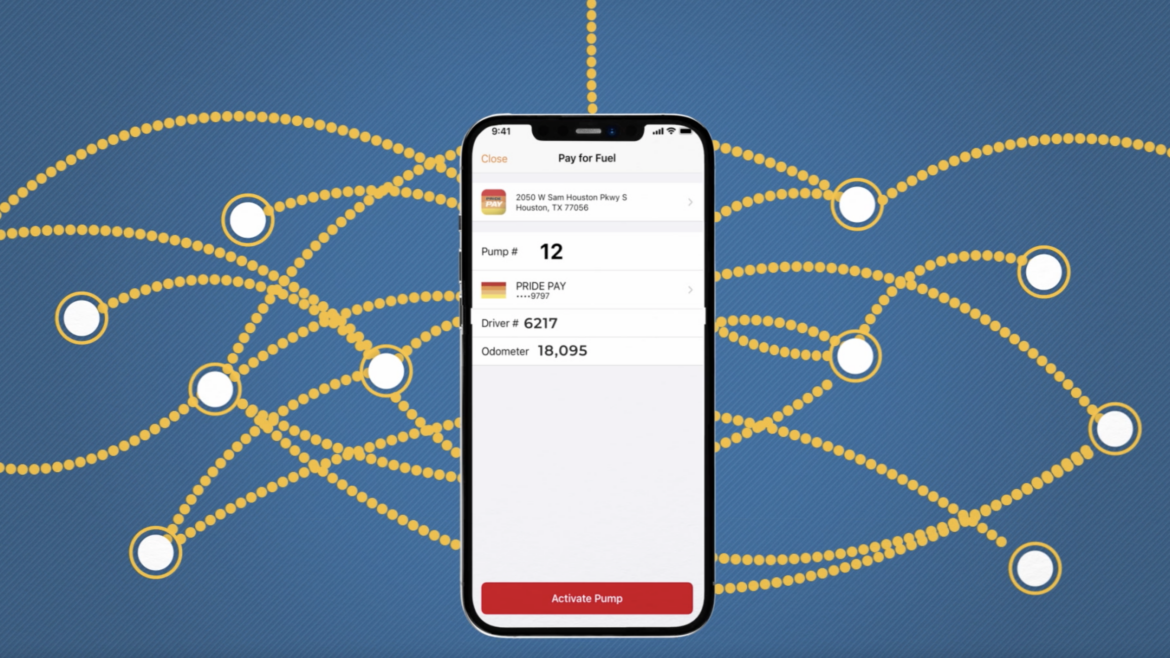
Mobile fuel card app interface showing pump activation and driver info
Save money with a commercial fuel card 1024 544 Star Oilco

Save money with a commercial fuel card

Save money with a commercial fuel card by avoiding the credit card retail price and preventing fuel theft in your business.

How do you avoid the higher credit card prices at gas stations?

Buy Your Fuel at a Commercial Cardlock

Make sure that employee fuel theft is not robbing from your bottom line.


  • Buy Diesel from Pacific Pride and CFN Commercial Cardlocks over retail gas stations.
  • Use a secure Fleet Card that ensures that employee theft is locked down.
    • Make sure your company’s Fleet Card is secured for:
      • A Fleet Card attached to the individual vehicle with a secure identifiable PIN for each employee.
      • Only the times of day you operate.
      • Only the days of the week you operate.
      • Only the fuel products your vehicle uses.
      • A limited number of transactions a day to ensure if a card gets misused the amount is extremely reduced.
      • A real time “E-Receipt” that notifies you of fuel purchases in real time to better manage employees for your fuel costs.

Wholesale pricing at a Pacific Pride commercial cardlock

 Take control of your fuel spend by buying wholesale instead of retail gasoline.

Over the last year fuel costs have jumped to record highs.   Retail gas and diesel prices in particular are high compared to wholesale market purchasing opportunities for fleets.  Retail posted prices for credit card purchases further increase the cost on your business.

Commercial gas station cards that direct your fleet to buy fuel at convenience stores cost far more than the posted price for fuel.  Many of these gas stations also price diesel fuel with the same mark up as premium gasoline. By getting your employees out of the retail fuel line save in several ways.

How do you save with Commercial Cardlock over a retail gas station?

PRODUCTIVITY – Get out of retail gas lines and self serve your fleet 24-7-365.

PURCHASE CONTROLS – Lock down your fleet cards by vehicle, fuel type, time of day, and Zip Codes to ensure a either a well meaning employee doesn’t buy the wrong product or  a stolen wayward card does not rob from your bottom line.

WHOLESALE AVERAGE BASED PRICING – Buy your diesel and gasoline from a verifiable wholesale index.  Pacific Pride Commercial Cardlock sites are all based from an auditable OPIS Average market index plus our agreed margin. Know what and why you are paying for fuel.  (NOTE: Star Oilco will gladly help you audit your current fuel purchase program)

FLEXIBLE – Star Oilco can combine our fleet card program with Mobile Onsite Fueling and our billing simplifies your fuel program management by consolidating all purchases by your license plates on one invoice. Our Mobile Onsite Fueling and Commercial Cardlock invoices are combined showing you all purchases on one invoice also available for export in a CSV file.

You will first of all pick up productivity, a lack of managerial control, as well as a system that conceals employee theft is tied to the cost of buying fuel.  Move your fleet fuel purchases to Pacific Pride’s network card and save per gallon as well by restricting the fuel purchases you would not want.

Now is the time to look at your total cost of fuel

Let us help you audit your fuel program

We will help you clarify your bill by showing what you pay, what’s in that cost of fuel, and how you can save going forward. We do this by concentrating on one fact: there are only three fees in the total cost of a gallon of gas or diesel.

How we approach buying commercial fuel with a gas card.  There are only three parts of your fuel cost.  Let us help you understand what you pay for fuel:

  1. The commodity cost of fuel (the wholesale and verifiable fuel cost itself),

  2. The fuel taxes charged by the feds, state, and local governments on top of that, and;

  3. The margin your fuel vendor puts on top of those two very transparent costs.

Tax time is a good time to revisit your policies and systems.

Let us audit your bill and catch inconsistencies and over charges.

We have a transparent way to analyze your fuel expense that breaks it down in an easily understood format. Our approach will demystify what you’re paying in fuel so you can grab control of your gasoline and diesel bills. Our mission is to ‘Keep it Simple’ and make fuel make sense. There are several types of expenses that get added to your cost of fuel.

Pacific Pride Fuel Security

At Star Oilco, we ‘Keep it Simple’ when analyzing fuel bills.

Today, two trends can be witnessed in the Pacific Northwest: fuel prices are all over the place, and wages are rising against that trend. This makes managing for a low cost of gasoline or diesel extremely hard given the labor that might be involved in chasing that price.

Add to that the fact that retail gas stations are keeping more margins than ever in retail fuel history. With minimum wages approaching $15 in parts of the Pacific NW, the cost of retail gas stations is rising faster than inflation.

Stand-alone commercial cardlock locations such as Pacific Pride and CFN help you save on your own labor, as well as avoid the higher retail cost. One additional feature is you can audit a commercial cardlock fuel seller against the commercial wholesale rack price. Retail sellers promising discounts are discounting from a posted price that is based solely on what they decide a good price can be. Today, that’s a historically high margin above wholesale cost price.

Dig into your bill for an understanding of what you are paying and what you are paying for. Let us demystify the fees, charges, and hard-to-understand line items of our competitors. It seems that many of our competitors, much like cell phone companies, want to give you a bill that is as complex as possible so it’s difficult for you to understand your cost of fuel.

We can clarify your bill by showing what you pay, what’s in that cost of fuel, and how you can save going forward. Commodity cost of the fuel, fuel taxes and the margin of the vendor make up every fuel bill.

Wholesale Fuel Cost + Taxes + Margin = Total Fuel Cost

These three costs can be audited and confirmed. When we quote a prospective customer, we take their existing fuel bill and break it down into a spreadsheet that is easy to understand thanks to these definable costs. Take your existing fuel bill. Choose a few locations that are most commonly used by your fleet. Usually just the two most-used sites are enough to gauge if savings can be gained by changing vendors. Focus on the cost there, as this simplifies your focus as a representative sample of your fuel expenses.

In a spreadsheet, make easy-to-read tabs for each fuel and location. Then gather the dates fuel was bought at each location. Place the date and the price per gallon paid in their own columns. Now you know your cost. In the next column, enter the wholesale price of fuel to compare. This is going to be pretty close to what your fuel vendor was paying for it on that day give or take a few pennies.

The commodity cost of fuel is established in the market. Though different size players have discounts, these discounts are usually pennies per gallon and aren’t substantial overall. You can request a 30 day free trial of the Oil Price Information Service or “OPIS” for your local wholesale market for fuel. Government bids often use this service as a transparent bid price for fuel. NOTE: If you are buying with a Pacific Pride or CFN fleet card that uses stand-alone 24-7 commercial cardlock sites, the price will be based on OPIS as well. If you want help with this, Star Oilco can provide you with a copy of OPIS.

After that, the next column is the fuel taxes on that fuel. In another column next to the wholesale cost of fuel, you place the local taxes associated with that fueling site. Your state will usually have a “Fuel Tax Group” or some variation of that name where the state’s website will list all state and municipal taxes.

After seeing the wholesale cost and fuel taxes charged, all that remain is the margin. Many fuel sellers will try to complicate this by passing costs through, but at the end of the day, this is still their markup regardless of what they call it. This enables you to really have a discussion on what price you are charged to use their fleet card.

Our next step is to determine the typical margin you are being charged. Take the real price you paid on a day. Your next column on the spreadsheet will be the following formula:
NOTE: Margin Charged is the result that should be in your new column.

(Cell with the ACTUAL PRICE PAID) – (Cell with the WHOLESALE COST) – (Cell with FUEL TAXES) = MARGIN CHARGED

If you line up all the days for MARGIN CHARGED and average those (select a cell at the bottom of the column and type “=AVG” and select the data in the MARGIN CHARGED column), you will find the average margin. Usually this is about the same on every one of the sheets for the type of fuel you are buying. Diesel and gasoline margins are typically different. Retail gas stations, in particular, will treat diesel like a premium product so don’t be surprised if those margins are over $.40 a gallon in some places.

If you want help with this, call us!

We will empower you with the knowledge of what your vendor is charging you and determine if it is a fair price for the service. Beyond that, there should be no other costs. If your vendor has other costs (fees, invoice charges, etc.), we’ll show you what those really cost per gallon so you understand your true cost fuel.

Star Oilco makes this clear and easy to understand. Let us know if we can help.

Contact Form

  • This field is for validation purposes and should be left unchanged.


For more on what is required to self serve gasoline as a small business in Oregon.

For more on Fueling Solutions developed for small businesses dedicated to managing a fleet and drivers for local Delivery. 

Call for service.


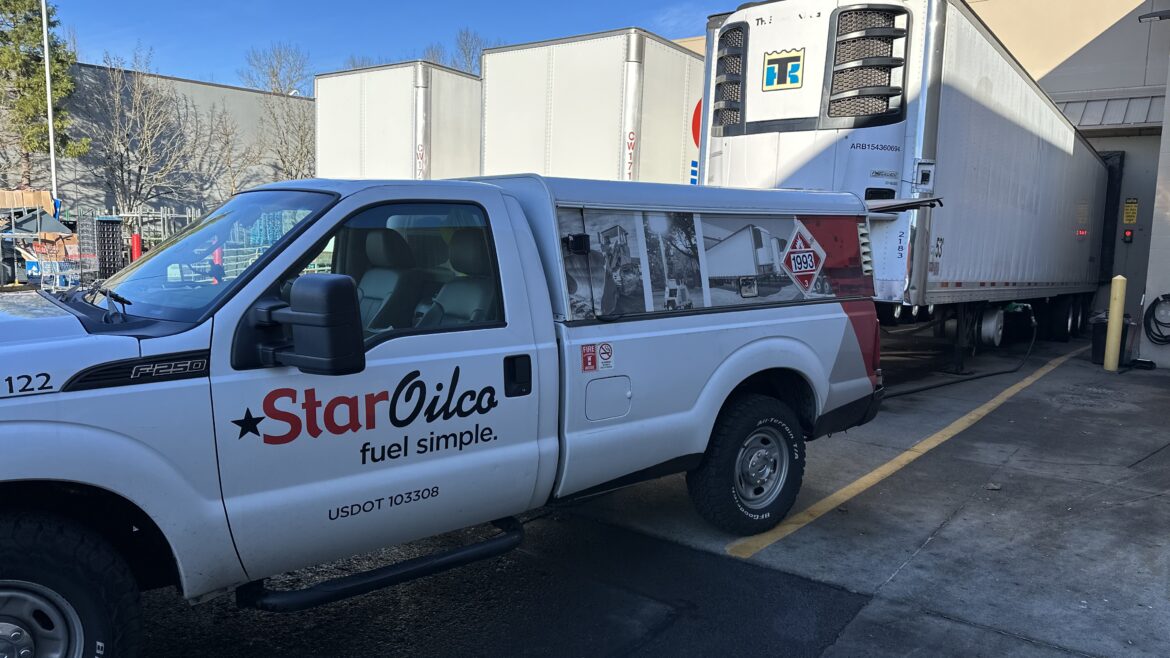
Mobile fueling hose delivering diesel between two parked trailers
On-Site Refueling in Oregon 768 1024 Star Oilco

On-Site Refueling in Oregon

       Wet Hose Fueling and Mobile On-Site Diesel Delivery in the Pacific Northwest.

If some days you have more work than drivers…

Wet Hose Fueling Service in Portland

Mobile On-site refueling or “Wet Hosing” is a solution that will push more money to your bottom line and reduce stress on your drivers.  Star Oilco can also merge our mobile onsite refueling service with our national Fleet Card system.

 One bill, labor saving in town and secured fleet fueling over the road.


  Top Five Reasons to Use Wet Hosing for your Fleet Diesel Fueling

On-site refueling or “Wet Hosing” is a preferred method for fueling these days. Fleets of all sizes prefer getting their fleet fueling delivered after hours in their yard. The reasons are numerous but at the top of the list, labor is the driving force behind it.

Shaving off even fifteen minutes of labor–which is one of the two highest costs for most fleets, right after diesel–can have a huge payback to the bottom line.

If your fleet is consistently on overtime or short that one extra hour of legal driver time, picking up fifteen to thirty minutes per truck a few times a month can be a huge opportunity. On top of that fleet fueling, your diesel can also save considerably just by controlling where you pay your fuel taxes (Oregon PUC is tax exempt on the fuel bill, while Washington cardlock and truck stops are paying nearly $.50 a gallon in Washington diesel road tax).  Though you are paying IFTA, why pay the tax earlier than you need to.

Call Star Oilco if you have questions and want to examine the payback value of Mobile On-site Refueling compared against your current vendor for diesel. You might be surprised how much it will save you in time, money and management effort.

                         Five Reasons your fleet should use Mobile On-site Refueling:

  1. Driver Time – The most valuable resource your fleet owns.
    • Truck drivers are a limited resource, and they cost more than you can usually measure in money alone. Without calculating the lost productivity of your truck, you are paying over $10 each time you allow your drivers to stop for fuel. Just the out of route, stopping, and getting back on the road time will put refueling your own trucks at a half hour of lost time. As the average fill up we see is under 50 gallons fueling your own trucks will cost you $.20 to $1 a gallon in labor costs alone.
  2. One More Stop – Picking up productivity in your fleet.
    • Getting drivers on the road and without a reason to be out of route pays back dividends. If you pay productivity bonuses, your most productive drivers will thank you as well. Even in fleets where pay is by stop, not based on hourly wages, the ability those few times a year when drivers are so busy they are bumping up against DOT work rules, they will thank you for the convenience of being ready to go the start of each shift and not having to worry about that one more stop on the way back to base. A few extra stops a year is often worth thousands of dollars to your bottom line–more than a cost of a tank of diesel.
  3. Save on the Cost of Diesel
    • Today the price of diesel at gas stations, truck stops, and other retail options is high compared to wholesale rack averages.  It is not uncommon for our customers to get an extreme labor savings with Mobile Onsite Fueling while also saving on the cost of diesel at the end of the month.  If you are using a credit card to buy fuel, the added Credit Card pricing of diesel is usually $.10 or more cents a gallon. Cut out the retail mark up on fuel and get a cost-plus deal with a true wholesale diesel seller delivering into your yard after hours.
  4. Easily Integrates with cardlock and other fleet cards onto one bill easily.
    • If you have a major hub with a critical mass of trucks in town, wet-hosing yPride Advantage Sample Cardour fleet can pay back rapidly. Even if the majority of your fleet is over the road and out of town, on-site refueling can be a money saving proposition. You can also integrate it seamlessly with a Pacific Pride, CFN, Fuelman, Voyager or another fleet card program as well. Star Oil can provide a Pacific Pride or Fuelman card that will work over the road consolidating all your fuel into one bill. Star can also accept Fuelman, Comdata, WEX or Voyager and bill those fleet cards directly with onsite refueling. Call if your fleet uses one of these national fleet cards and you want to move to wet hosing billed directly to the card and license plate of each one of your trucks. (For further reading on corporate fleet card security features please read our article on Upgrade your Fleet Card’s Security Features)
  5. Cost Plus Diesel – Budget to know every day you are getting a good wholesale rate for your fleet.
    • Star Oilco can connect your fleet to an agreed and easily verifiable cost plus supply agreements. Be it OPIS Average or Low Rack Plus agreements we can guarantee you have a good wholesale price of fuel. On-site refueling will provide a simplified fleet management experience for both your drivers and your Accounts Payable department. Call us if you want to talk about what this can do for your business. ( For further reading on the benefits of premium diesel and a wholesale partner for diesel, read our article on What is the benefit of Premium Diesel versus untreated diesel?)

We are here to serve you and keep the process simple. Contact us to learn more at, 503-283-1256.


Contact Form

  • This field is for validation purposes and should be left unchanged.
Blue diesel-powered emergency generator outdoors
Backup Generator Fuel – Keep Full 1024 1024 Star Oilco

Backup Generator Fuel – Keep Full

Star Oilco Generator Refueling Service in the Portland area.

Set up a Generator Diesel “Keep Full” account with Star Oilco before the bad weather.

Need fuel for your backup generator? Star Oilco delivers emergency diesel fuel right to your location before the power goes out and while you’re relying on it. We offer fast, reliable backup generator fuel delivery in Portland, Oregon, Vancouver, Washington, and surrounding areas. Whether you’re powering a business, hospital, data center, or another business that uses a backup generator, you can count on us to keep your generator fuel tank full, your lights on, your business running and your customers served.


Commercial Fleet Fueling in Portland


Remember that ordering diesel for your generator is a specialized service.

You want to stabilize and treat your diesel for generators and other back up equipment.

Order fuel treated for long term storage!

We often receive questions about backup generators, backup water pumps, and other emergency equipment. Fueling these critical pieces of equipment is a special kind of fueling service but we’re here to answer all your questions. We also encourage you to call with questions about generator fuel.  If you have questions about your building’s back up diesel generator’s fuel quality in the Portland, Oregon area we will sample and test your fuel at not cost with if you have an account with Star Oilco.

Generator Fuel is a specially treated oxidative stabalized off-road fuel designed to store for years.

Fuel for a backup generator is a specialized product. Besides the fuel, the service itself takes a vendor who understands your needs and can keep you up and running in an emergency.

Generators take off-road diesel, of course, but you want an ultra low sulfur diesel to ensure it works with modern emission systems. Some companies may deliver a higher sulfur heating oil product that looks the same but can foul the emission systems of your equipment.

Backup Generator Fuel in Portland

Beyond just the service provided by a truck and driver, you also want a vendor who offers a fuel stabilizer and biocide for the special long term storage needs of your backup generator. Star Oilco recommends you add a biocide and long term storage stabilizer to your fuel to ensure it is good whenever you need it. We use Valvtect Bioguard Plus 6 for generators, emergency water pumps, backup boiler fuel, and other long term storage purposes. This product kills any existing biological growth and stabilizes your fresh diesel fuel for long term storage. Make sure your diesel is ready the next time you need backup power.

As a complimentary service to our customers, Star Oilco will also test fuel for its quality. If you want to confirm fuel quality at the time of a top off, let us know and we will ensure the driver has a sample kit to get your backup fuel tested for peace of mind.

Feel free to message us if you need a backup tank filled. If you are in charge of Corporate Fueling, please call with any questions you may have.

Read more about stabilizing your generator fuel for long term storage.

Keep it simple with Star Oilco. We make it easy for you to be prepared. Don’t wait for a power outage to find out your generator is low on fuel. Trust Star Oilco for fast, dependable diesel fuel delivery for backup generators in Portland, Salem, Vancouver, and throughout Oregon and SW Washington. Whether you need on-site generator fueling, dyed diesel, or emergency fuel service, we’re ready to help. Call (503) 283-1256 today to schedule your standby generator fuel delivery and ensure your power stays on when it matters most.

Contact Form

  • This field is for validation purposes and should be left unchanged.
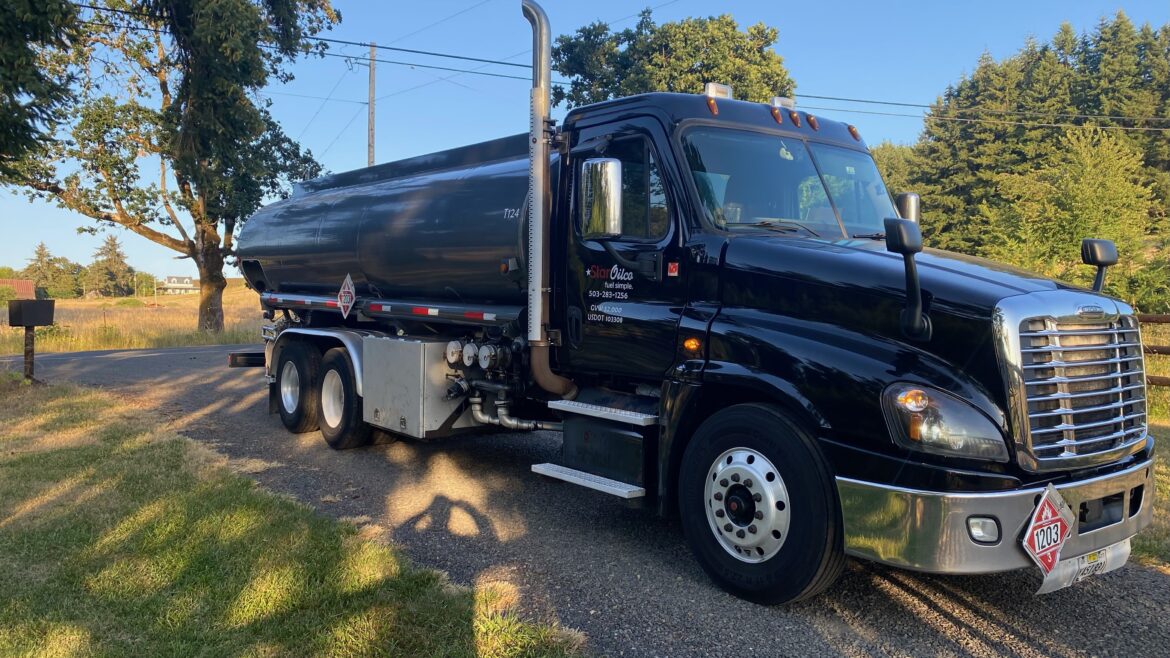
Star Oilco black fuel truck parked on rural road with trees in background
Understanding The Renewable Fuel Standard In Portland 1024 768 Star Oilco

Understanding The Renewable Fuel Standard In Portland

Diesel Fuel Is Changing In Portland With The Renewable Fuel Standard (RFS)

Portland Old Town sign representing the city’s commitment to renewable fuel standards

Figuring out what this means for you or your business can be challenging. We have shared many questions that we have been asked already, to help provide more clarity on what this Renewable Fuel Standard (RFS) means for Wholesale Purchaser-Consumers. If your question isn’t listed below, please reach out to Star Oilco so we can make sure your questions are answered!

Choose Star Oilco As Your Preferred Fuel Delivery Company

The Renewable Fuel Standard (RFS) is Portland City Council’s response to the City’s 2022-2025 Climate Emergency Workplan,  which lists the City’s priority actions over the next three years.

On Dec. 7, 2022, City Council unanimously adopted amendments to the Renewable Fuel Standard, Portland City Code Chapter 16.60, which reduces dependence on nonrenewable fossil fuels, by increasing the required percentage of renewable fuels blended with petroleum diesel sold in the city of Portland.

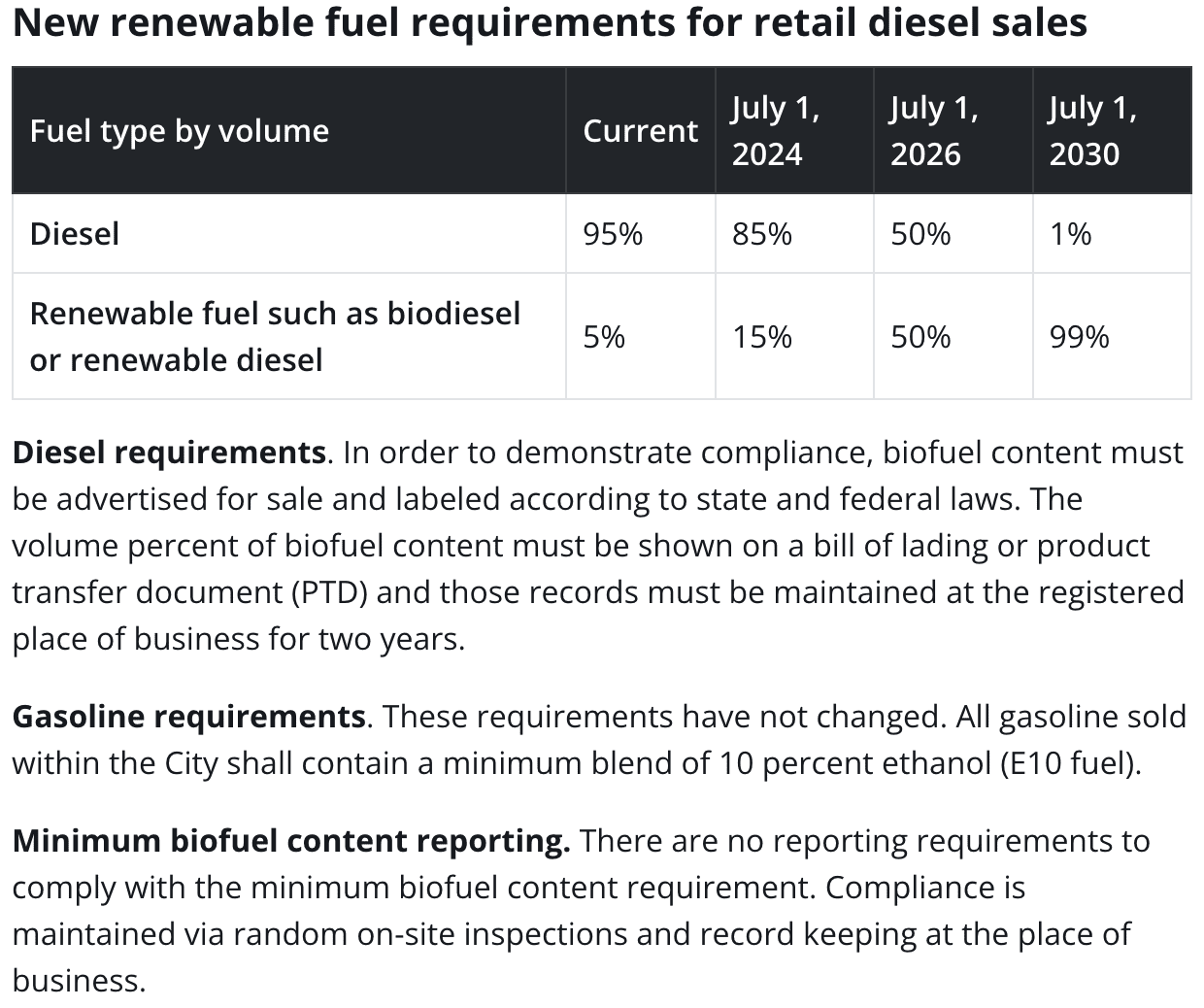
This policy increases low-carbon biofuel blends, moving Portland’s diesel fuel mix to 99% renewable by 2030. This policy includes a carbon intensity standard to shift to fuels that are lower carbon across their entire lifecycle.

Portlands Renewable Fuel Standard Requirements

 July 1, 2024, Portland required that all diesel fuel sold contain a minimum 15% blend of biodiesel or renewable diesel. This percentage will increase steadily over the next few years, reaching a minimum 99% renewable fuel requirement by July 1, 2030.

There are no reporting requirements for retailers to comply with this mandate. Instead, the city enforces compliance through random on-site inspections and by requiring retailers to maintain records of the biofuel content of the diesel they sell.

  • The policy speaks to “Covered Entities
  • Diesel Fuel Transaction within the City of Portland Oregon
  • Fuel distributors, resellers, retailers, nonretail dealers, terminals, importers and wholesale purchaser-consumers are directly regulated by PCC Chapter 16.60 and referred to as “covered entities.”
  • Wholesale Purchaser-Consumers​: also know as WPCs are directly regulated by PCC Chapter 16.60 and referred to as “covered entities.”

Wholesale purchaser-consumer (WPC) is a category of entities that own or utilize diesel vehicle fleets and purchase fuel in bulk for delivery into a storage tank at their facility or directly into a vehicles fuel tank. WPCs are required to register with the RFS program.

A fuel distributor or common carrier delivers on road diesel to your facilities on-site tank such as: 

  • Bulk Tank
  • Aboveground Storage Tank (AST)
  • Underground Storage Tank (UST)

A fuel distributor delivers on road diesel directly into your vehicles also known as:

  • On-Site Fleet Fueling
  • Wet Hose Fueling

Yes, these rules apply to fuel for on-road motor vehicles. Fuels used for the following purposes are not covered by these rules

  1. Railroad locomotives, watercraft, aircraft, and emergency equipment
  2. Dyed diesel for off-road vehicles
  3. Dyed diesel for furnaces, boilers, generators
  4. Propane and liquefied natural gas for vehicles

Wholesale Purchaser-Consumers are required to meet three primary components of the RFS:

  1. Biofuel Minimum Content Requirements,
  2. Carbon Intensity standard,
  3. Selecting a compliance option, and
  4. Record keeping.

Biofuel Minimum Content Requirements for Wholesale Purchaser-Consumers

  • WPCs in the City of Portland are required to meet the minimum biofuel content requirements for all fuel they purchase for their vehicle fleet. Beginning July 1, 2024, all diesel purchased must include 15% biofuel content, from either renewable diesel or biodiesel. This requirement increases to 50% on July 1, 2026, and 99% on July 1, 2030.
  • The biofuel content requirements will be enforced through random inspections of fleet facilities to see that they (1) have a contract in place with fuel suppliers that specifies that fuel meets the minimum blend requirements, or (2) verification of actual products purchased through testing or review of product transfer documents.
  • All WPCs also need to be aware of the Carbon Intensity Standard in PCC Chapter 16.60.
  • All biodiesel and renewable diesel sold in the City of Portland must have a carbon intensity equal to or less than 40g CO2e/MJ as certified by DEQ’s Clean Fuels Program, Approved Carbon Intensity Values.
  • Carbon intensity requirements apply to biofuel blendstock, not the final blended products, which may contain a portion of petroleum-based diesel fuel at a higher carbon intensity.

Selecting a compliance option for Wholesale Purchaser-Consumers

  • WPCs will need to select a compliance option by the start of the compliance period, July 1, 2024.
  • Portland Bureau of Planning & Sustainability (BPS) will provide notification about selecting compliance options by May 31, 2024.
  • To receive notification, covered entities must be registered with the RFS Program

*Compliance option selection may be changed at any time during the compliance period after consulting with BPS. If a covered entity decides to change the compliance option during the compliance period, they are responsible for compliance under the new option for the full compliance period.

Record Keeping Requirements for Wholesale Purchaser-Consumers

Portland City Code (PCC) Chapter 16.60 and administrative rules requires that an invoice, bill of lading, shipping paper, or other documentation, referred to as “Product Transfer Documents” (PTD) must accompany each fuel delivery in the city of Portland. The administrative rules specify that:

  1. PTDs must include the type of renewable fuel, including biodiesel, renewable diesel, ethanol, or any blends of these fuels, and declare the volume percent of such renewable fuel.
  2. PTDs must comply with OAR 603-027-0430 (1) (a) which includes identifying the quantity, the name of the product, the name and address of the seller and buyer, and the date and time of the sale.
  3. WPCs using the Product Transfer Document compliance pathway must also ensure that fuel pathway codes issued by Oregon Clean Fuels Program are also included on a PTD associated with each delivery received by the WPC or have a contract with a fuel supplier specifying the carbon intensity requirements of PCC Chapter 16.60.

Contact Us Today To Learn More About The RFS For Your Operations

JOIN THE FUEL MARKET REPORT NEWSLETTER FOR YOUR WEEKLY FILL OF UPDATES!

Construction Loaner Diesel Tanks
Diesel Fueling for Construction Jobsites 720 720 Star Oilco

Diesel Fueling for Construction Jobsites

Diesel fueling for construction jobsites in Portland, Oregon.

Keep full service for construction jobsites with R99 Renewable Diesel available.

Diesel Fuel for Construction


If you are managing a project we will keep that jobsite full.

Diesel fueling for construction jobsites seven days a week in the Portland metro region.  We have a variety of diesels accompanied with DEF top off to keep your operation running without interruption. We can provide a consistent schedule to keep going seven days a week.  If you are running generators, blowers, heaters and other 24-7 equipment we can keep those running through the weekends.  Our autofill construction service can provide the fuel you need, tanks for your project, and regular scheduled service to guarantee uptime.

Does your diesel fueling for construction needs call for a guaranteed stops on a schedule? Do your projects sometime require every 12 hour or 6 hour fueling? Does you fueling project needs call for generators, heaters, reefer-trailers, light sets, and yellow iron?  Star Oilco can do a few gallons wet hose fueled into your equipment to 100,000+ supply contracted for your project.  We have trucks dispatched seven days a week with several shifts.  Star Oilco can do twice a day fueling if needed for your project including regular 0 gallon stop by visits to confirm your equipment is running.

We can keep your generators running, your heaters blowing hot air, your pumps pumping, and your crew running without having to stop for fuel or DEF!


Fueling Back Hoe on construction site

Jobsite fueling service to meet the needs of your project management.

Off Road Diesel, Dyed Renewable Diesel and DEF available for your project need.


Mobile Fueling of Construction site in Portland, Oregon

Keep Full Mobile Onsite Fueling

Star Oilco can provide scheduled mobile fueling to your jobsite seven days a week.  Our diesel construction fuel service includes onsite tanks as well as DEF equipment for your project needs. At start of shift and end of shift schedule is also available for delivery.


Tight Access Diesel Construction Fueling Available.

Star Oilco’s fleet includes smaller fuel trucks able to access tight to reach areas in parking garages, active facilities, back alleys, inside buildings, and other hard to reach areas required by a project.


DEF Delivery Included with your Diesel Fueling.

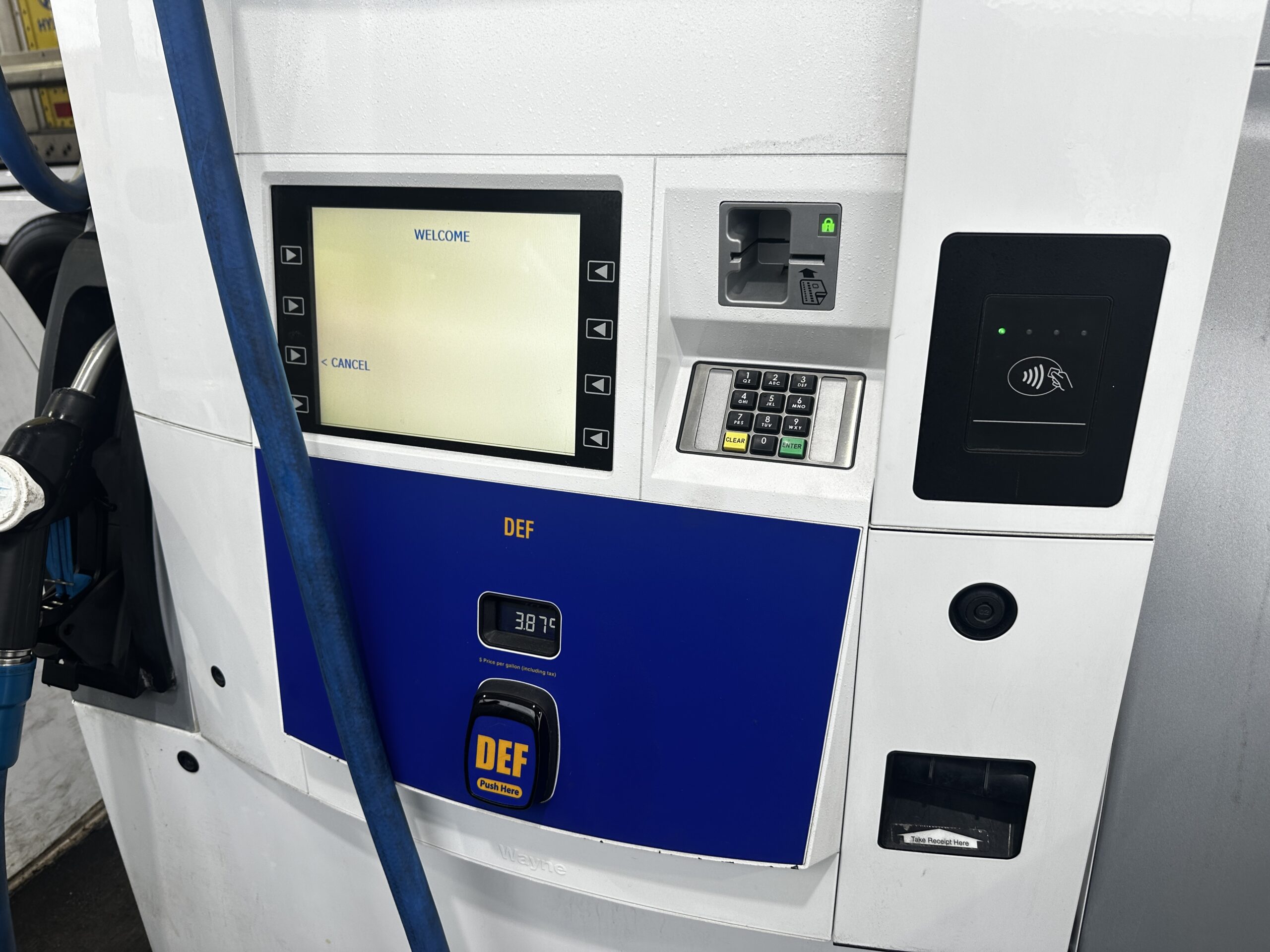
Diesel Exhaust Fluid (DEF) keep full and bulk delivery service to your jobsite.  We have DEF bulk equipment as well as boxes available for your project.  What you want for your operations is what we want. Keeping those small DEF tanks full and generators running is what we can do for you.  We are here to make it easy.


Renewable Diesel in Oregon

Dyed Renewable Diesel for your Diesel Construction Fueling needs.

Does your project require a lower CO2 footprint?  We have off-road R99 Renewable Diesel on our trucks daily.  Star Oilco also has multiple sources for R99 in the Pacific Northwest for your needs to guarantee supply. If large volumes are needed for Renewable Diesel for a project in the future we can enable a contract to meet these needs.


Construction Loaner Diesel Tanks


Diesel Fueling Construction Tanks available.

Star Oilco has fuel tanks available for your project.  Our typical inventory of tanks sizes are 250 and 500 gallon UL142 double wall thanks.  We have 100 and 50 gallon fuel cells for moving fuel around a jobsite in the back of a fuel truck. Larger sizes available for longer term and larger projects with advance planning.


Wet Hose Fueling Service in Vancouver, WashingtonStar Oilco can provide your project with the fuel you request.

– B5 ULSD Dyed Diesel
– B20 ULSD Dyed Diesel
– Dyed R99 Renewable Diesel
– E10 Gasoline
– Non-Ethanol Premium Gasoline
– Kerosene, and others if the project calls for it.

Schedule Your Fuel Delivery Today

  • This field is for validation purposes and should be left unchanged.
Diesel Exhaust Fluid (DEF) Quality, Storage, and Future Considerations 1024 1024 Star Oilco

Diesel Exhaust Fluid (DEF) Quality, Storage, and Future Considerations

Have you ever noticed that Diesel Exhaust Fluid (DEF) often lives in the background until suddenly it’s the reason your fleet can’t meet emissions standards or a system clogs up? DEF quality and storage isn’t just technical noise, it’s vital for keeping your SCR system happy and your operations rolling smoothly. We want to share with you what makes DEF high quality, the best ways to store it, and what trends are shaping its role in diesel emissions systems moving forward.

Diesel Exhaust Fluid (DEF) is a crucial component in modern diesel engines equipped with Selective Catalytic Reduction (SCR) systems. While many fleet operators are familiar with its basic function of reducing nitrogen oxide (NOx) emissions, understanding the intricacies of DEF quality, storage, supply chain considerations, and system maintenance can help businesses optimize efficiency and avoid costly repairs. At Star Oilco, we provide fleets with the knowledge and resources needed to navigate these complexities. This guide will explore the advanced aspects of DEF, from maintaining quality and ensuring proper storage to understanding emerging trends in emissions technology. 

Understanding DEF Quality and Purity 

 The quality of DEF plays a significant role in the performance and longevity of an SCR system. DEF must adhere to ISO 22241 standards, which regulate its composition, concentration, and purity. Using non-compliant DEF can lead to injector clogging, crystallization, and system failures. Even small amounts of contaminants such as dirt, fuel, or water can negatively impact DEF performance and damage expensive SCR components. 

To ensure DEF meets the necessary standards, regular testing should be performed. Refractometers can measure the urea concentration to verify the correct 32.5 percent solution. DEF testing strips can detect impurities, while more advanced lab analysis can help diagnose performance issues related to fluid quality. Purchasing DEF from a reliable, ISO-certified supplier is the best way to avoid contamination and maintain compliance. 

DEF Storage Best Practices to Prevent Contamination 

Proper storage is essential for maintaining DEF integrity. Temperature control is a key factor, as DEF should be stored between 12 and 86 degrees Fahrenheit to prevent degradation. Freezing does not damage DEF, but extreme heat can cause evaporation and reduce its effectiveness. To minimize exposure to environmental factors, DEF should be stored in opaque, UV-resistant containers to prevent sunlight from breaking down its chemical properties. 

Choosing the right storage material is also critical. DEF should be kept in plastic or stainless steel containers, as certain metals such as aluminum, copper, and zinc react with DEF, leading to contamination. Additionally, keeping storage containers sealed will prevent air exposure, which can introduce dust or debris. Managing inventory efficiently is another important aspect of storage. DEF typically has a shelf life of 12 months, but in warmer climates, its lifespan may be reduced to six months. Using a first-in, first-out (FIFO) inventory approach ensures that older stock is used before it degrades. 

Regular inspections and cleaning of storage equipment are also recommended to maintain DEF purity. Be sure to check for residue buildup, leaks, or any signs of contamination in tanks, nozzles, and dispensing systems. Training staff on proper handling procedures can further reduce the risk of accidental contamination. By taking these proactive steps, you can ensure your DEF stays clean, effective, and ready to support emissions compliance.

DEF dispensing station pump showing control panel, hose, and DEF push button

How Temperature Affects DEF Performance 

Temperature fluctuations can significantly impact DEF performance. In cold climates, DEF freezes at 12 degrees Fahrenheit, causing operational challenges for fleets. While frozen DEF does not degrade, it must be properly thawed before use. Heated DEF dispensers and insulated storage solutions can help prevent freezing issues in extreme weather conditions. It is important to avoid adding water to thaw frozen DEF, as this disrupts the precise urea concentration and compromises its effectiveness. 

On the other end of the spectrum, high temperatures can cause DEF to degrade. Exposure to prolonged heat above 86 degrees Fahrenheit can lead to evaporation and an increase in urea concentration, which may result in improper dosing and SCR malfunctions. Storing DEF in shaded or climate-controlled areas can help mitigate heat-related degradation. Seasonal changes also impact DEF consumption rates, with colder temperatures often leading to increased DEF usage as SCR systems adjust to lower combustion efficiencies. 

DEF Supply Chain Considerations 

DEF relies on a stable global urea supply, making it susceptible to market fluctuations. Since urea is also used in fertilizer production, shifts in agricultural demand, export restrictions, and production slowdowns can lead to price increases and supply shortages. In times of high demand, fleets may struggle to secure sufficient DEF, leading to increased costs and operational challenges. 

To avoid supply disruptions, fleet operators should consider strategic sourcing options. Establishing relationships with reliable DEF suppliers and securing bulk deliveries can help mitigate the risk of shortages. On-site DEF storage solutions can also provide a buffer against market volatility, allowing businesses to maintain an adequate supply without relying on just-in-time purchasing. Planning ahead for seasonal or industry-wide fluctuations in DEF availability can help fleets remain operational without unexpected expenses. 

The Economics of DEF for Fleet Operations 

DEF consumption is directly tied to diesel fuel usage, with most fleets using approximately two to three percent DEF per gallon of diesel burned. Understanding this ratio allows businesses to budget accordingly and monitor costs. Optimizing fuel efficiency can also lead to lower DEF usage, as well-maintained engines operate more efficiently and require less NOx reduction. 

Using high-quality DEF prevents costly maintenance issues. Non-compliant or contaminated DEF can cause injector clogging, pump failures, and SCR system malfunctions, resulting in expensive repairs and downtime. Some manufacturers void engine warranties if improper DEF is used, making it even more important to source DEF from a certified provider. Preventative maintenance and regular DEF quality testing can help fleets avoid hidden costs associated with poor-quality fluid. 

DEF System Failures: Causes and Prevention 

Common DEF system failures can be traced back to improper handling, storage, and contamination. Crystallization, for example, occurs when DEF is exposed to air and loses moisture, leaving behind solid urea deposits that can clog injectors and sensors. Contaminated DEF can lead to buildup in the SCR system, affecting performance and triggering warning lights that may lead to vehicle derating or shutdown. 

Preventing DEF system failures requires proactive maintenance. Regularly flushing DEF tanks, inspecting nozzles for blockages, and ensuring proper storage conditions can help prevent these issues. Using ISO-certified DEF from a trusted supplier also reduces the risk of contamination. Scheduled maintenance checks and SCR system inspections allow fleet operators to address minor issues before they escalate into costly repairs. 

The Future of DEF and Emissions Technology 

As emissions regulations continue to evolve, the role of DEF in diesel technology is likely to expand. The Environmental Protection Agency (EPA) continues to push for stricter NOx reduction targets, which may lead to advancements in SCR systems and increased DEF usage. Some manufacturers are exploring alternative NOx-reduction methods, such as ammonia-based catalysts or hydrogen fuel cell technology, but DEF remains the most effective solution for modern diesel engines. 

While DEF will remain a key component of emissions compliance for the foreseeable future, fleet operators should stay informed about regulatory changes and advancements in emissions technology. Investing in high-quality DEF and optimizing storage and usage practices will help businesses stay ahead of evolving environmental standards. 

DEF Myths and Misconceptions 

Several misconceptions about DEF persist, leading to improper use and maintenance practices. One common myth is that water can be added to DEF in emergencies. This is incorrect, as dilution disrupts the precise 32.5 percent urea concentration, rendering it ineffective and potentially damaging the SCR system. 

Another common belief is that DEF improves fuel efficiency. While DEF itself does not enhance fuel economy, it allows for optimized engine performance by reducing backpressure in the exhaust system. This results in better combustion efficiency, which can lead to slight improvements in fuel usage. 

A final misconception is that DEF does not expire. In reality, DEF has a shelf life and degrades over time, especially when exposed to heat or contaminants. Proper storage and inventory management are essential to maintaining DEF quality. 

How Star Oilco Ensures High-Quality DEF for Customers 

Star Oilco provides high-quality, ISO 22241-certified DEF to ensure fleets remain compliant and operational. Our bulk DEF delivery services allow businesses to secure a reliable supply, reducing the risk of shortages and minimizing costs. We also offer on-site DEF storage solutions to help fleets manage their inventory efficiently. 

In addition to supplying high-quality DEF, we assist customers with DEF system maintenance, testing, and best practices to ensure long-term reliability. With our commitment to quality and service, Star Oilco is the trusted partner for businesses looking to optimize their DEF usage and reduce the risk of SCR system failures. 

We also help customers stay up to date on regulatory changes and evolving DEF standards to ensure full compliance. Whether you’re a small fleet or a large operation, our team is ready to tailor a DEF solution that meets your specific needs.

For more information on our DEF solutions, contact Star Oilco today to learn how we can help keep your fleet running efficiently while meeting emissions compliance standards. 

Frequently Asked Questions

DEF (Diesel Exhaust Fluid) is injected into the exhaust stream of modern diesel engines equipped with Selective Catalytic Reduction (SCR) systems. It reacts with exhaust gases to convert harmful nitrogen oxides (NOx) into harmless nitrogen and water vapor. This process dramatically cuts emissions, keeping your fleet compliant with strict EPA standards.

Stored properly, DEF generally has a shelf life of up to 12 months. However, exposure to heat can shorten this to 6 months or less, especially in warmer climates. That’s why using a first-in, first-out (FIFO) system is crucial. It ensures older DEF is used before it degrades, protecting your SCR systems from concentration issues that could cause costly repairs. 

Most fleets use about 2-3% DEF relative to diesel fuel burned. That means for every 100 gallons of diesel, you’ll consume roughly 2 to 3 gallons of DEF. Knowing this ratio helps you forecast DEF needs alongside your fuel budgets.

Not directly. DEF doesn’t boost fuel economy on its own. However, by reducing exhaust backpressure through the SCR process, your engine can operate more efficiently, which may lead to slightly better combustion and fuel performance over time. 

Yes. DEF naturally degrades over time, even under ideal conditions. Keeping it cool, sealed, and protected from UV rays slows this process, but eventually it ages out. That’s why FIFO inventory management and routine checks of DEF age are important to avoid using degraded product.

Colder temperatures can make diesel engines burn less efficiently, leading the SCR system to dose more DEF to keep NOx emissions in check. This seasonal variance is normal, but it means winter months may see DEF usage spike slightly higher than your average.

Regulations on NOx emissions are only getting tighter. This means future SCR systems could demand even more precise DEF dosing, or fleets might see an overall increase in DEF consumption. Staying committed to quality DEF, proper storage, and system maintenance now will help keep you ahead of regulatory curves and avoid penalties later.

We supply only ISO-certified DEF, deliver it in bulk or packaged form, and provide on-site storage solutions to keep your operations protected. Our team also supports customers with DEF quality testing, maintenance guidance, and proactive system checks to help you avoid breakdowns, warranty headaches, and surprise costs.

comparison chart showing difference between off-road diesel and on-road diesel fuel in Portland OR
The Future of Diesel Fuel 940 788 Star Oilco

The Future of Diesel Fuel

Retail Diesel Dispenser Example
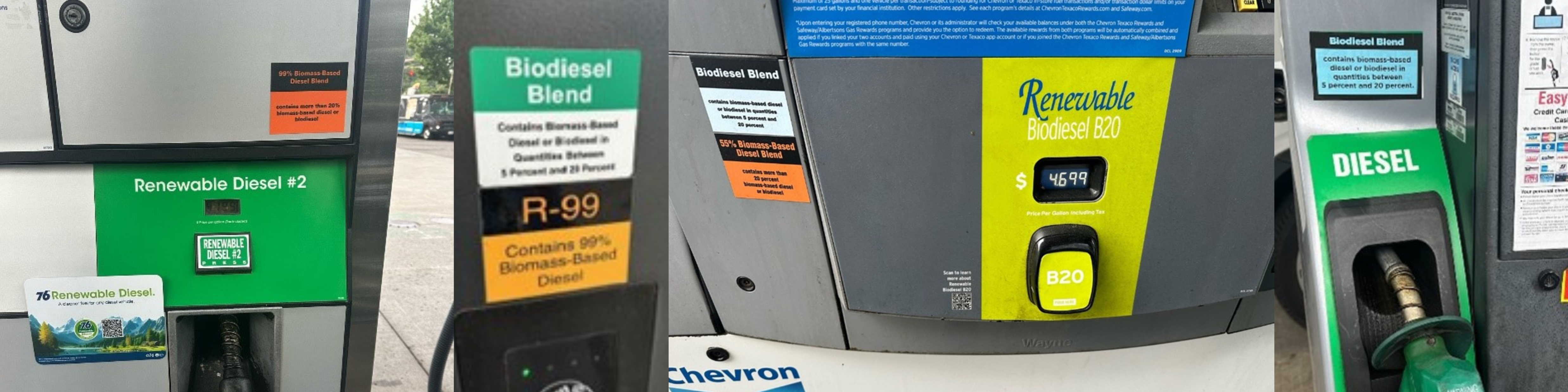
Retail Diesel Pumps with a variety of blends of diesel. Biodiesel, Renewable Diesel, and Fossil Diesel blends shown in Portland, Oregon.

The Future of Diesel is Low CO2 Synthetic Fuels

The stew of molecules your diesel is made of has been changing. A next level technology in chemistry is enabling garbage to be transformed into hydrocarbon fuels like diesel, jet fuel, naphtha, and propane as well as other high value chemicals. These technologies enable petroleum refineries in the United States to retool themselves and move into making biofuels with the very technology used to refine modern gasoline and diesel fuels from crude oil.  Currently oil refineries take crude petroleum and crack the molecules and reform them with a hydrotreater.  This hydrogenation is what makes renewable diesel from fats, oils and greases.

If you have ever worked under your sink at home. Remember the greasy mess inside the pipes below your kitchen sink.  These renewable hydrogenation technologies can turn that trash into a super clean high performance synthetic diesel fuel.  That waste stream along with used deep fryer oil, the animal fats from rendering and other sources is the feedstock for renewable diesel.  It is exciting and this will be the future of our diesel and jet fuels.  These fuels also have a fraction of the CO2 footprint of a fossil fuel equivalent as measured by Oregon, Washington or California’s rules to measure the carbon intensity of fuels.

Diesel Fuel in Oregon and Washington

Star Oilco has been getting questions on the changes of diesel in Portland, Oregon.  If you have not noticed, many diesel pumps at retail gas stations and cardlock have seen changing stickers on the face of the fuel pumps.  As of July 1st, 2024 the City of Portland requires a minimum 15% biofuel content of all diesel sold.  This policy is called the Portland Renewable Fuel Standard.  Portland currently plans to ramp up this requirement to a 50% biofuel blend in May of 2026.  So that every gallon of diesel sold inside the City of Portland must be half biomass based diesel products blended with fossil diesel.

This has caused quite a few changes in what fuel pumps have as their fuel for sale.  Usually people notice this change with teh color of the diesel coming out of the retail nozzle.  Diesel fuel buyers are noticing the bright yellow color of B20 biodiesel, the fully clear color of Renewable Diesel or a mix of several fuels tinting the color of their diesel.  This trend is bigger than just Portland.

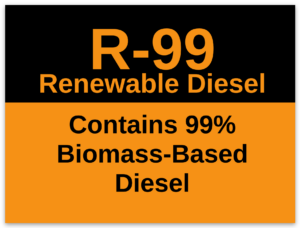
Today on the west coast there are a variety of product label stickers you will see on diesel pumps.  These show the variety of diesel fuel specifications that are being sold to diesel vehicles today. Blends of petroleum ultra low sulfur diesel, R99 (99%) renewable diesel, and B99 (99%) Biodiesel are combined to meet the market needs of the diesel we all buy.

This change is because of a combination of pure market forces, government rules and local decisions by fuel haulers.  Today’s diesel not only has a commodity market for the fuel it also has a market for CO2 credit value and a cap of total petroleum diesel fuel that can be sold into a west coast state with a “Cap and Investprogram requiring blends of low CO2 biofuels, the liquid fuels sold for vehicles.

Add on top of these market forces, advances in technology used to make the liquid diesel fuel.  The diesel arriving at truck stops, gas stations, cardlock or out of a hose from a bulk truck has been changing and it’s often in good ways.  Knowing how can be helpful in navigating why diesel may cost one price or another and may have a need or maintenance that another fuel does not.

THE RISE OF RENEWABLE DIESEL

Renewable diesel, also called R99 as in 99% renewable diesel, is a synthetic diesel fuel made from the same feedstock as biodiesel. The big difference though is that renewable diesel’s finished product is hydrocarbon diesel.  Biodiesel chemically is not a hydrocarbon or made up of diesel molecules.  Renewable diesel is a biofuel, but it is also chemically diesel on a molecular level. For fuel regulation they refer to it (as well as biodiesel) as “Biomass Based Diesel” for labeling at the fuel pump.

There have been billions of plant capacity brought online in the United States for renewable diesel.  During the COVID market drop in fuel prices a number of petroleum refineries shut down, then upgraded their technology to make hydrocarbon diesel fuels out of the very biobased fats, oils, and greases biodiesel is made from.  These refineries use hydrotreating technology just like they do with a crude petroleum to make an actual hydrocarbon diesel molecule.   With this technology adoption to make diesel and jet fuels from vegetable oils and animal fats billions of gallons of low CO2 diesel fuels are coming on the market and governments are requiring it’s use, such as Portland’s Renewable Fuel Standard.

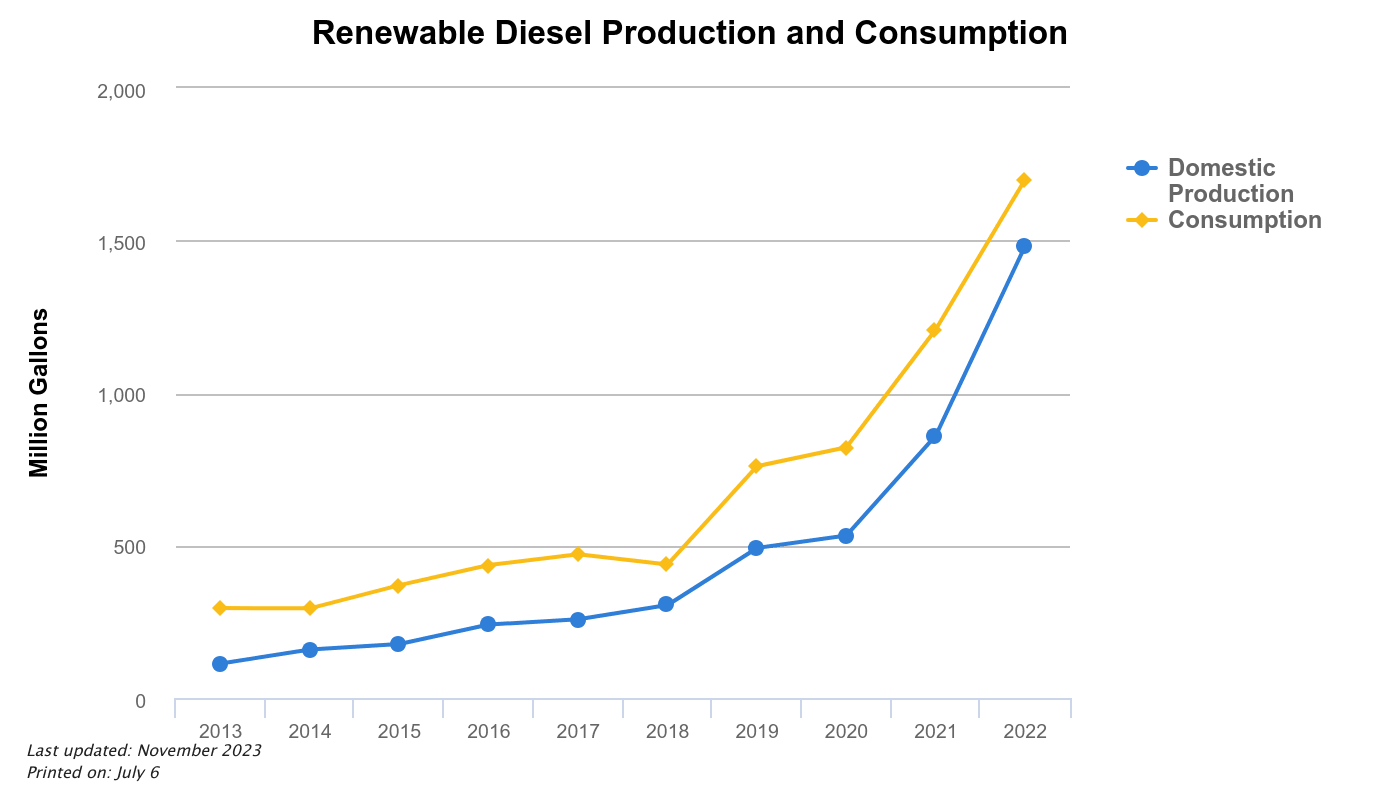
Renewable Diesel Consumption it the US Source: Alternative Fuels Data Center

THE AVAILABILITY OF BIODIESEL

The US makes billions of gallons of biodiesel.  A fuel that’s quality and performance continues to improve.  If you are not a fan of biodiesel in your fuel thinking strategically about the fuel will likely benefit your fleet operation.  The big concern with diesel fuel in a ultra low sulfur world is water and dirt suspended in the fuel affecting the performance of diesel emission systems.  With clean and drier quality specifications of B99 blend stocks today versus a decade ago the use of this fuel has grown substantially especially in the truck stop market.

When crude petroleum prices are high and therefore refined diesel prices are equally as high biodiesel is often an extremely competitive fuel.  Recently changes in Federal subsidies on biodiesel have changed this market dynamic a bit but you can presume that biodiesel will often be sold at a discount against fossil fuel diesel.  If a large seller of diesel (including petroleum refiners) can pick up pennies per gallons on millions of gallons sold they will do so.  Therefore Biodiesel is often seen in diesel in small blends even if you do not see a label on retail pump.  For blends above 5% a label is required for retail fuel sales.

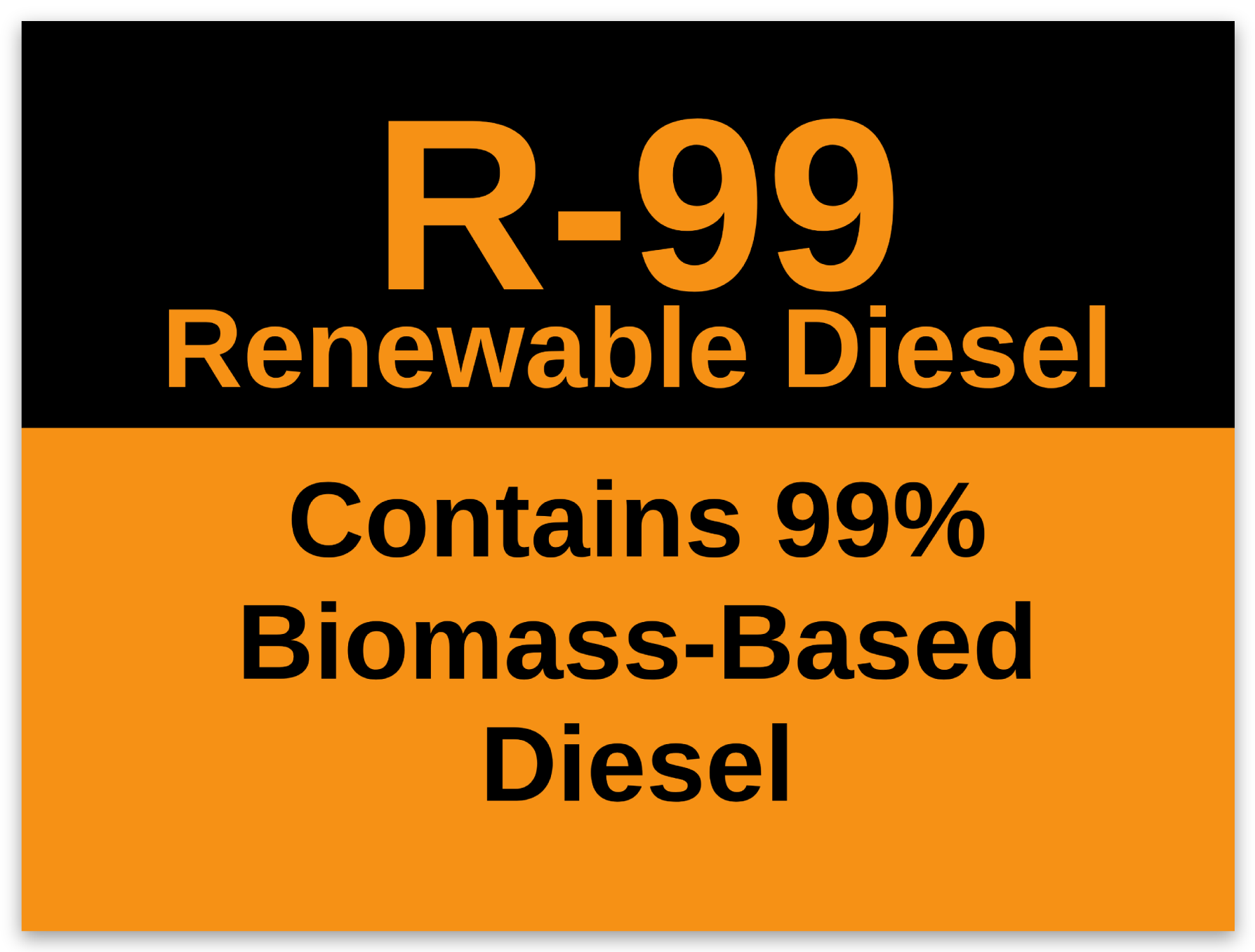
R99 Renewable Diesel label indicating 99% biomass-based diesel content
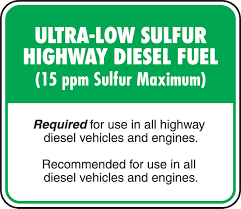
Ultra Low Sulfur Retail Diesel Label
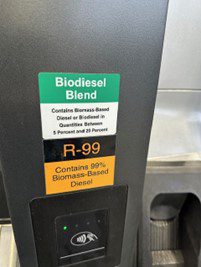
Biodiesel Blend Percentage label for retail diesel dispenser

Above are a variety of labels used to denote what fuel blend is coming out of a retail diesel dispenser. Feel free to call Star Oilco at 503-283-1256 if this confuses you and you want it explained.  We would be glad to do so.

These labels can be found together often at one pump.  All state and Federal standards require ultra low sulfur diesel for any on-road diesel sale.  The Federal standards also adopted by the states require a disclosure at the fuel pump if a blend is above 5% biodiesel.  The max allowable blend of biodiesel for diesel truck manufactures is a 20% blend.  If a truck dealership says that you cannot blend biodiesel up to 20% they need to take that up with the Federal Government because they need to support it.  This is why the label shows a blend may contain between 5% and 20% biodiesel content.

Renewable diesel is a hydrocarbon diesel. 


It is diesel meeting the ASTM D975 specification for diesel. 

Retailers selling blends of R99 in their fuel do not need to label it given this.  They still do label it given the benefits of the fuel’s performance and that customers are seeking that fuel.

Contact Us Today To Schedule Your Next Bulk Fuel Delivery

Many retail places will have stacked labels showing they may be blending 5% to 20% biodiesel as well as may be adding R99 Renewable Diesel to the fuel as market conditions dictate it is the more cost competitive fuel.  When seeing a label like this it can usually be assumed they are blending a R80 (80% Renewable Diesel) and a B20 (20% Biodiesel) blend of fuel.  This blend is actually believed by some to be a higher performing fuel seeing better performance that a R99 or B20 fossil fuel blend.

Fossil fuel diesels are being replaced or blended with biomass based diesels.  Be it Renewable Diesel or Biodiesel.  These blends are driven by more than one industry requirements, government rules, or other market forces. One of these being Portland’s banned on petroleum diesel through the Renewable Fuel Standard (RFS). This is resulting in an increase of low-carbon biofuel blends that will ultimately move to a mix of 99% renewable fuel requirement by 2030.

Renewable Diesel and Biodiesel Blend fuel dispenser label.

The big drivers are industry specification for fuels (both labeling as well as chemical characteristics), state rules on selling these fuels, their quality assurance as well as CO2 content, and of course the market forces.  Market forces being the supply and demand availability of fuel needed to meet customers.  Less fuel available to sell means higher prices for customers.

A decade ago the market for diesel was far simpler. Though you had biofuels and some blend mandates basically you had a diesel specification accepted and the daily price as tracked by a lighted retailers sign, a wholesale market average or spot buying by some customers.   Today this market is far more complicated by government regulation on the west coast.  There are three big programs at state levels impacting this.

State Fuel Rules cause a unique need for one state or another. Whereas twenty years ago if Oregon or Washington fuel was selling for more than the Gulf Coast you might see brokers bring fuel into the region then driving down high prices.  With the creation of various complex and unique rules on diesel, imports of fuel to these low CO2 fuel states has dropped.  The amount of people moving product into west coast states has dropped.  The big rules causing this are the Cap and Invest programs of the West Coast states, the Low CO2 Fuel Standards of the states, and the fuel blend mandates of various jurisdictions of these states. For instance California now requires all off-road diesels but 99% renewable diesel.  Portland, Oregon also has a CO2 requirement and minimum 15% blend of biomass based diesel on all fuel sold in the state.

WHAT ARE THE DIESEL FUELS AND THEIR SPECIFICATIONS

Petroleum Diesel:
ASTM D975 Specification.

The ASTM D975 is a series of tests used to maintain consistent industry standard product performance for diesel fuel.  It includes among several tests cloud point, cold filter plug point (CFPP), several masurements of diesel fuel operability performance, intrained water content, sediment, carbon residue, ash, distillation, viscosity, sulfur, copper corrosion, cetane number, cetane index, aromaticity, and conductivity.

Renewable Diesel:
ASTM D975 Specification.

Renewable Diesel is following the same series of tests as petroleum refined diesel fuels.  It is the same ASTM D975 specification. Though Renewable Diesel has some different properties that exceed the ASTM specification of diesel.  Renewable Diesel is highly prized as a fuel because it typically is a cleaner and drier diesel fuel than petroleum diesel. This being seen by the tests on sediment and water content in a parts per million level.  Renewable Diesel content in diesel fuel can also be tested for looking for a C14 molecule (the chain typically created in a Hydrotreated Diesel process from fats, oils and greases.

Biodiesel (Methyl Esther):
ASTM D6751 Specification.

The ASTM for Biodiesel tests a mono-alkyl esters of long chain fatty acids derived from vegetable oils and animal fats. The testing for quality assurance covers an analysis for flash point, methanol, water and sediment, kinematic viscosity, sulfated ash, oxidation stability, sulfur, copper strip corrosion, cetane number, cloud point, acid number, carbon residue, total and free glycerin, phosphorus, reduce pressure distillation temperature, atmospheric equivalent temperature, combined calcium and magnesium, and combined sodium and magnesium.

For more on Biodiesel Use and Handling the National Renewable Energy Laboratory has a great book on the subject.

THE HISTORY OF DIESEL FUEL SPECIFICATIONS IN THE UNITED STATES

In the 1990’s the US EPA passed rules that demanded a phase out of sulfur in diesel fuel.  The presence of sulfur was very good for the fuel’s storage stability as well as fuel lubricity, but was horrible for air quality.   Additionally the big smog contributor was NOx (nitrous oxide) which was one of the EPA’s reason’s for pulling sulfur out of diesel.  For the EPA to get engine manufacturers to treat the NOx emissions at the tailpipe they needed all the sulfur gone (ultra low sulfur diesel) for modern diesel emission systems to be able to eliminate NOx as well as a host of other pollutants including particulates.

The story of changing diesel fuel standards in the US under the EPA is one of removing sulfur from our diesel fuel.  In 1996 the fuel refiners and sellers of diesel had to move the sulfur content of the fuel sold for on-road purposes to below a 500 parts per million standard. Commonly referred to as Low Sulfur Diesel fuel.   In 2006 the standard moved to a maximum of 15 parts per million of sulfur for all on road fuels.

In 2006 while the sulfur content of fuel was dropping the City of Portland released the first mandated blend of biodiesel content.  This being a 5% biodiesel blend.  The next year, the State of Oregon followed with its own Renewable Fuel Standard requiring this throughout the state.  This began the expectation of biodiesel in most diesel fuel in the Portland, Oregon area.  Washington also passed a similar policy for blending biodiesel but the enforcement and need for the fuel is less specific at Washington fuel pumps.

Sign Up To Receive Our Fuel Market Report For Your Weekly Fill Of Updates!

Name