
Posts By :

Sunny Battazzi

Close-up of green, yellow, and blue fuel nozzles at a diesel pump station
How Renewable Diesel Is Made 940 788 Star Oilco

How Renewable Diesel Is Made

Renewable diesel is a type of biofuel called biomass based diesel

How Renewable Diesel is Made

How is Renewable Diesel made?

Very similarly to fossil fuel diesel.

In the 1990’s the world started moving towards an ultra-low sulfur diesel fuel specification. Over decades we have arrived to where even marine fuels are running a lower sulfur fuel. The technology used to achieve this is hydrotreating the distilled crude oils.  By use of hydrocrackers, the molecules of petroleum crude oils are cracked and reformed into ultra-low sulfur diesel.  The use of hydrotreating diesel fuels has enabled the removal of sulfur and then enabling the use of emissions systems that not only reduce acid rain but also smog causing emissions like NOx.  This advanced petroleum refining chemistry technology is the forebearer to today’s renewable diesel technologies.  The technical chemistry of taking a feedstock, cracking the molecules and reforming them into a final product is where renewable diesel comes from.

Renewable diesel is a type of biofuel that is chemically similar to petroleum diesel and can be used in any diesel engine. It can be produced from various feedstocks, such as vegetable oils, animal fats, waste cooking oil, and algae. Renewable diesel can reduce greenhouse gas emissions and improve air quality compared to petroleum diesel⁵.  The inputs for renewable diesel are typically low value but high btu value feedstocks.   From virgin soy bean and canola oils to the lowest grade municipal wastes.  The modern chemistry of today’s petrochemical industry transforms them into the highly sought fuels. 

There are two processes making renewable diesel.  Hydrogenation and Fischer Tropsch Pyrolysis.

The most common way to produce renewable diesel is by hydrotreating, commonly referred to as hydrocracking, which involves reacting the feedstock with hydrogen under high temperature and pressure in the presence of a catalyst.  Renewable diesel made with this process is often called Hydogenated Vegetable Oil (HVO). HVO and Renewable Diesel are the same fuel.  Utility scale power generation often will refer to HVO as their technical term for this low CO2 biofuel.

How HVO is made is extremely similar to crude fossil fuel.  The investments to do it also cost billions of dollars similar to the costs of petroleum refining.  Imagine a vegetable or animal fat being put under pressure, the molecules are cracked into smaller chain molecules and as this stream of feedstock is passed in the presence of a catalyst as hydrogen is added it forms hydrocarbon molecules like diesel, jet fuel, and propane.   This process removes oxygen, sulfur, nitrogen, and other impurities from the feedstock and converts it into hydrocarbons that are similar to those in petroleum diesel⁴⁵. Hydro processing is also used in petroleum refineries to upgrade crude oil into various fuels, such as renewable diesel. 

Other ways to produce renewable diesel include pyrolysis, usually using a Fischer Tropsch process.  Pyrolysis is usually made from high energy content dry garbage.  Think wood waste, plastics, tires, and other high Btu content waste streams.  These garbage feedstocks are transformed into hydrocarbons with a process of heating the feedstock in the absence of oxygen to produce a liquid bio-oil that can be further upgraded into renewable diesel; gasification, which involves converting the feedstock into a mixture of carbon monoxide and hydrogen (syngas) that can be synthesized into renewable diesel; and biochemical and thermochemical technologies, which involve using enzymes, microorganisms, or catalysts to convert the feedstock into renewable diesel⁴. 

According to the U.S. Energy Information Administration (EIA), U.S. production capacity for renewable diesel could increase significantly through 2030, based on several announced and developing projects. This growth is driven by higher state and federal targets for renewable fuel, favorable tax credits, and the conversion of existing petroleum refineries into renewable diesel refineries². As of the end of 2020, U.S. renewable diesel production capacity totaled nearly 0.6 billion gallons per year (gal/y), or 38,000 barrels per day (b/d). Several projects currently under construction or completed can jump this capacity up billions of gallons.  could increase this capacity by 2.4 billion gal/y; proposed and announced projects would add another 1.8 billion gal/y by 2024. If all projects come online as intended, U.S. renewable diesel production would total 5.1 billion gal/y (330,000 b/d) by the end of 2024². 

Globally, over 1.45 billion gallons of renewable diesel are produced annually and are forecasted to grow up to 3.34 billion gallons in 2024. Neste, a Finland based petroleum refining company, is currently dominating the production of renewable diesel¹. Other major producers in the United States include Chevron, BP, Seaboard Energy, Phillips 66, HF Sinclair, Montana Renewables, Marathon, and Diamond Green Diesel¹. 

Resources:

(1) Renewable Diesel – Alternative Fuels Data Center.

(2) Renewable Diesel and Biodiesel Basics – EIA 

(3) U.S. renewable diesel capacity could increase – EIA

(4) Renewable Diesel: The Fuel of the Future – FutureBridge.

(5) Overview of the Production Capacity of U.S. Renewable Diesel Plants

Diesel fuel flowing into a dark reflective liquid surface
What Are Our Options for Alternative Fuels? 1024 578 Star Oilco

What Are Our Options for Alternative Fuels?

What are our options for alternative fuel?

Biofuels are eco-friendly fuel choices because they are made from renewable resources and produce fewer emissions than fossil fuels. Biofuels and biodiesel can also be used to improve air quality. They also allow us to reduce the dependence we have on using fossil fuels. 

Biofuels are liquid fuels produced from biomass, which is organic matter such as plants, algae, and agricultural waste. Biofuels can be used to power vehicles, generate electricity, and heat homes and businessesBiofuels are renewable and can reduce emissions of greenhouse gases. They provide an alternative to fossil fuels and help to conserve natural resources. Reducing the emissions of greenhouse gases is an important factor in helping to combat climate change. Biofuels have the potential to be a significant part of the solution. Biofuels can reduce emissions of greenhouse gases by replacing fossil fuels, which are made from non-renewable sources. Using biofuels instead of fossil fuels can also help to reduce air pollution. 

Some common types of biofuels include: 

Ethanol

Ethanol is a type of alcohol that is made from fermented corn, sugarcane, and other crops. It is blended with gasoline to create E85, a fuel that can be used in flexible-fuel vehiclesThis type of fuel is cheaper than regular gasoline, and it is more environmentally friendly. It is also safer to store and transport than other types of fuel. The benefits of using ethanol fuel include reduced emissions of carbon dioxide, improved air quality, and increased energy security. It is also renewable and biodegradable, making it a more sustainable fuel choice. Additionally, the production and use of ethanol fuel can create jobs and support local economies. 


Biodiesel

Biodiesel is a type of diesel fuel that is made from vegetable oils, animal fats, and waste grease. It can be used in unmodified diesel engines as a drop-in solution. It is a renewable fuel and emits less carbon dioxide than petroleum-based diesel. Biodiesel is also less toxic and it’s biodegradable. The benefits of biodiesel include reduced emissions of carbon dioxide, sulfur dioxide, carbon monoxide, and unburned hydrocarbons; improved combustion efficiency and power output; improved lubricity; and improved fuel economy. Additionally, biodiesel is biodegradable and has a lower energy content than petroleum-based diesel, making it safer to handle and transport in the Portland, Oregon metro area as well as Vancouver, Washington. 

Biodiesel can be used in a variety of applications, including transportation, heating and electricity. Biodiesel is used in transportation to power diesel engines in cars, trucks, buses, and other vehicles. Biodiesel can also be used to heat homes and businesses. Biodiesel also can generate electricity in power plants.  

Biodiesel is a promising alternative to petroleum diesel, and its use is growing around the world. The United States is the world’s largest producer of biodiesel. 

Algae-based biofuels

Algae-based biofuels are a new type of biofuel that is made from algae. Algae are a rapidly renewable resource that can be grown in a variety of environments. Algae is a group of photosynthetic organisms that grow in water. Algae have the potential to produce significantly more oil than traditional biofuel crops, such as corn and soybeans, and they can be grown on non-arable land, such as saltwater or wastewater. This makes algae an attractive potential source of renewable fuel. 

When algae are grown in the right conditions, they can produce up to 77% oil, which can be converted into biodiesel, renewable diesel, or other biofuels such as ethanol, butanol and jet fuel. Algae-based biofuels have the potential to significantly reduce greenhouse gas emissions from transportation, electricity generation, and other industries. However, there are still challenges that need to be overcome before algae-based biofuels can be commercially viable. These challenges include scalable production, costs, efficient harvesting and efficient processing to extract the oil. There is a lot of research and development underway to overcome these challenges and with continued investment, algae-based biofuels have the potential to become a major source of renewable fuel in the future. 


Hydrogen

Hydrogen is a versatile energy carrier that has the potential to play a significant role in the transition to a clean energy future. It is the most abundant element in the universe and can be produced from a variety of sources, including natural gas, biomass, and renewable electricity. When used in a fuel cell, hydrogen produces only water and heat, making it a clean and efficient fuel source. 

Using hydrogen as a fuel provides clean burning, a high energy density, efficiency, among many other benefits. Hydrogen doesn’t produce any emissions of harmful pollutants which makes it an attractive option as a fossil fuel alternative. Hydrogen’s high energy density means that a relatively small amount of hydrogen can provide a lot of energy. Using hydrogen fuel cells to generate electricity are 2-3 times more efficient than internal combustion engines. It can also be used in a wide range of applications, including transportation, electricity generation as well as industrial processes.  

Some of the challenges we face with hydrogen as a fuel are its current methods of production. They are not always as clean or sustainable currently. Storing hydrogen, being a gas, requires specialized storage tanks. The infrastructure for transporting and distributing hydrogen is not yet fully developed.  

Overall, there is a growing interest in using hydrogen as a fuel source with very promising results and possibilities in our future. Governments and businesses all over the world have been investing in research and development to figure out solutions to these challenges in order to make hydrogen a more viable energy source.  

Renewable Diesel

Renewable diesel can also be known as hydro-treated vegetable oil (HVO) or green diesel, and is a type of biofuel that is chemically identical to petroleum diesel. It is produced from a variety of feedstocks, including vegetable oils, animal fats, and waste oils. Renewable diesel can be used in any diesel engine without modification, and it offers a number of environmental benefits over petroleum diesel, including: 


Reduced greenhouse gas emissions 

Renewable diesel (R99) reduces greenhouse gas emissions by up to 90% compared to petroleum diesel. R99 being cleaner and more efficient, makes it an attractive option for many transportation companies. 


Improved air quality 

Renewable diesel produces fewer harmful pollutants, such as particulate matter and sulfur oxides, than petroleum diesel. Additionally, renewable diesel is lower in carbon than petroleum diesel, making it a more sustainable option for transportation. Renewable diesel is also more efficient, reducing the amount of energy needed to produce the same amount of fuel. 


Biodegradability  

Renewable diesel is biodegradable, meaning that it breaks down naturally in the environment.  This helps to reduce the amount of harmful pollutants in the environment. Renewable diesel also reduces emissions of carbon dioxide, a major contributor to climate change. 

Renewable diesel is a promising alternative to petroleum diesel, and its use is growing around the world. The United States is the world’s largest producer of renewable diesel, and the European Union has a mandate to use 10% renewable diesel by 2030.  

Even more of the benefits of using renewable diesel:  

The use of renewable diesel helps reduce our dependence on fossil fuels since it is a renewable fuel.  

The local economy can be supported by renewable diesel, which is often produced from local crops.  

A number of sectors, including agriculture, manufacturing, and transportation, create jobs in the renewable diesel industry.  

Ultimately, renewable diesel is a clean and sustainable fuel that offers environmental and economic benefits. Around the world, its use is growing as an alternative to petroleum diesel. Renewable diesel helps to reduce air pollution, reduce greenhouse gas emissions, and reduce dependence on foreign oil. It is also a renewable and sustainable fuel source that can be used to produce electricity. As such, renewable diesel is an important option for reducing carbon emissions and improving sustainability overall. 

When we look at the variety of renewable and biofuel opportunities, there are a variety of ways that we can reduce our carbon footprint today without any modifications to our current engines. However, long term, we have opportunities that we can explore for where we believe that our future is going and the solutions that can allow for an even greater impact to our Pacific Northwest carbon footprint and reducing greenhouse gas emissions. Among all of the renewable resources, we can reduce air pollution, increase economic benefits and create a more sustainable future for the Portland, OR and Vancouver, WA metro areas. As technology continues to improve and the production of biofuels and biodiesel becomes more efficient, these fuels are likely to become more affordable and widely available. Feel free to give Star Oilco a call today to discuss your fueling needs today and how we can provide you with renewable sources today as a drop-in solution. 

JOIN THE FUEL MARKET REPORT NEWSLETTER FOR YOUR WEEKLY FILL OF UPDATES!

Name

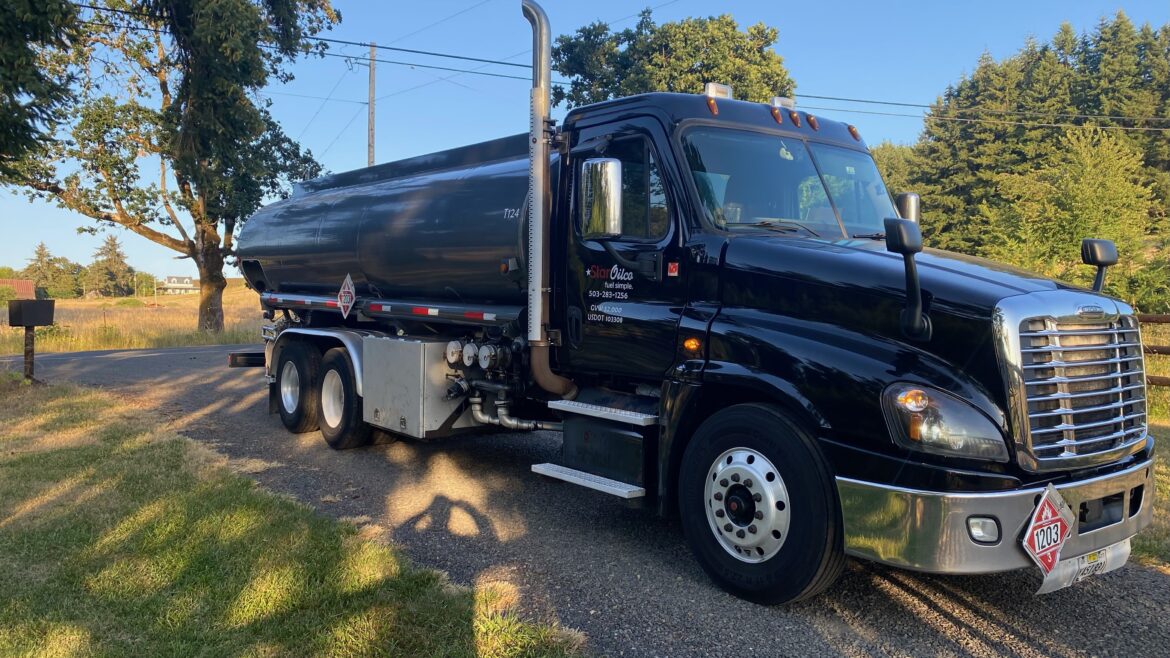
Star Oilco black fuel truck parked on rural road with trees in background
What Is Portland’s Renewable Fuel Standard? 1024 768 Star Oilco

What Is Portland’s Renewable Fuel Standard?

Diesel Fuel Is Changing In Portland With The Renewable Fuel Standard (RFS)

Portland Old Town sign representing the city’s commitment to renewable fuel standards

Figuring out what this means for you or your business can be challenging. We have shared many questions that we have been asked already, to help provide more clarity on what this Renewable Fuel Standard (RFS) means for Wholesale Purchaser-Consumers. If your question isn’t listed below, please reach out to Star Oilco so we can make sure your questions are answered!

Choose Star Oilco As Your Preferred Fuel Delivery Company

The Renewable Fuel Standard (RFS) is Portland City Council’s response to the City’s 2022-2025 Climate Emergency Workplan,  which lists the City’s priority actions over the next three years.

On Dec. 7, 2022, City Council unanimously adopted amendments to the Renewable Fuel Standard, Portland City Code Chapter 16.60, which reduces dependence on nonrenewable fossil fuels, by increasing the required percentage of renewable fuels blended with petroleum diesel sold in the city of Portland.

This policy increases low-carbon biofuel blends, moving Portland’s diesel fuel mix to 99% renewable by 2030. This policy includes a carbon intensity standard to shift to fuels that are lower carbon across their entire lifecycle.

Portlands Renewable Fuel Standard Requirements

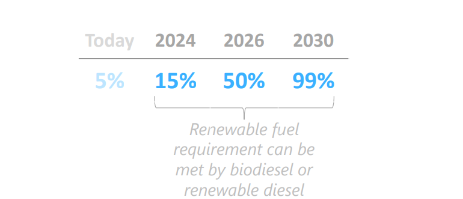
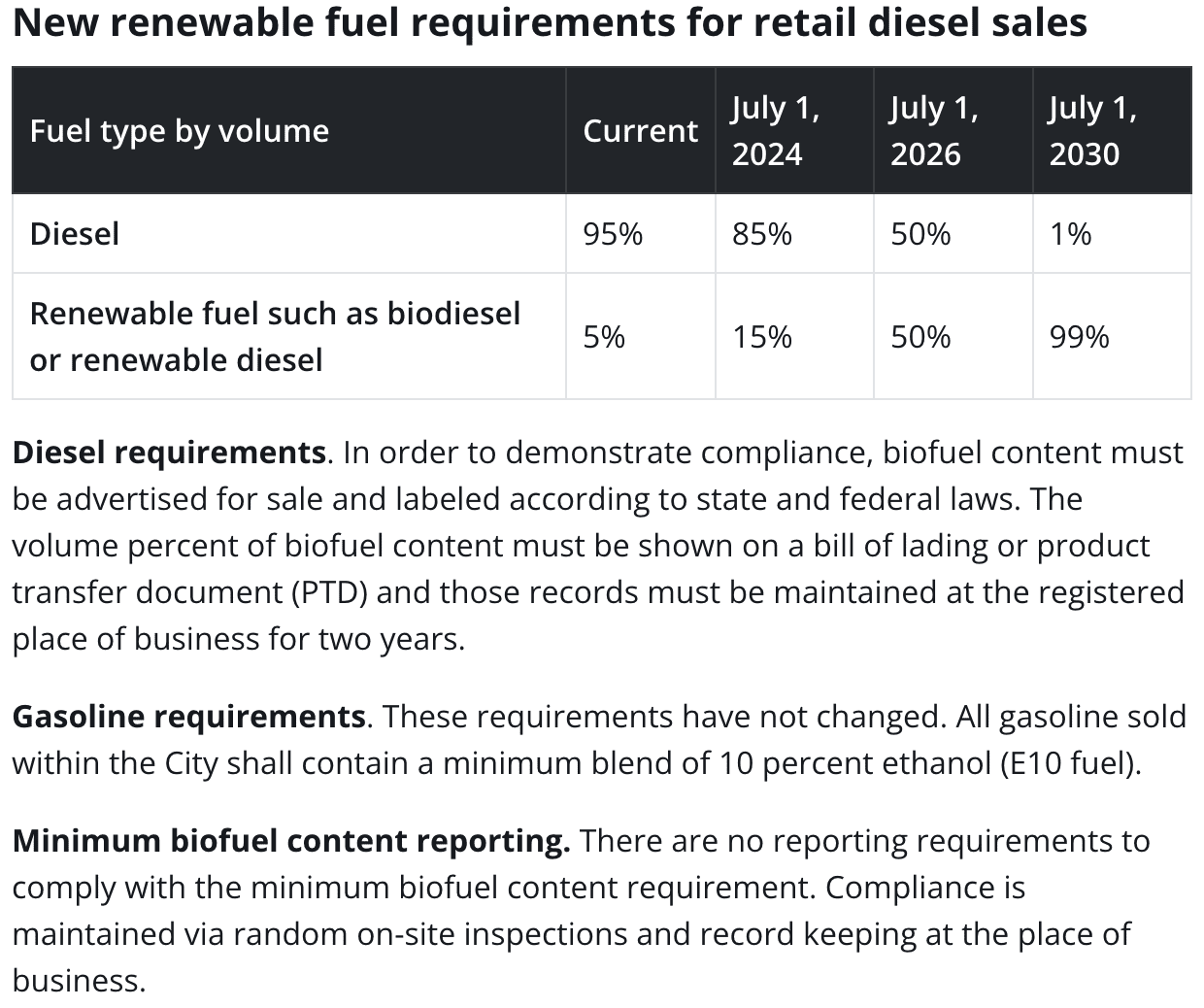
 July 1, 2024, Portland required that all diesel fuel sold contain a minimum 15% blend of biodiesel or renewable diesel. This percentage will increase steadily over the next few years, reaching a minimum 99% renewable fuel requirement by July 1, 2030.

There are no reporting requirements for retailers to comply with this mandate. Instead, the city enforces compliance through random on-site inspections and by requiring retailers to maintain records of the biofuel content of the diesel they sell.

  • The policy speaks to “Covered Entities
  • Diesel Fuel Transaction within the City of Portland Oregon
  • Fuel distributors, resellers, retailers, nonretail dealers, terminals, importers and wholesale purchaser-consumers are directly regulated by PCC Chapter 16.60 and referred to as “covered entities.”
  • Wholesale Purchaser-Consumers​: also know as WPCs are directly regulated by PCC Chapter 16.60 and referred to as “covered entities.”

Wholesale purchaser-consumer (WPC) is a category of entities that own or utilize diesel vehicle fleets and purchase fuel in bulk for delivery into a storage tank at their facility or directly into a vehicles fuel tank. WPCs are required to register with the RFS program.

A fuel distributor or common carrier delivers on road diesel to your facilities on-site tank such as: 

  • Bulk Tank
  • Aboveground Storage Tank (AST)
  • Underground Storage Tank (UST)

A fuel distributor delivers on road diesel directly into your vehicles also known as:

  • On-Site Fleet Fueling
  • Wet Hose Fueling

Yes, these rules apply to fuel for on-road motor vehicles. Fuels used for the following purposes are not covered by these rules

  1. Railroad locomotives, watercraft, aircraft, and emergency equipment
  2. Dyed diesel for off-road vehicles
  3. Dyed diesel for furnaces, boilers, generators
  4. Propane and liquefied natural gas for vehicles

Wholesale Purchaser-Consumers are required to meet three primary components of the RFS:

  1. Biofuel Minimum Content Requirements,
  2. Carbon Intensity standard,
  3. Selecting a compliance option, and
  4. Record keeping.

Biofuel Minimum Content Requirements for Wholesale Purchaser-Consumers

  • WPCs in the City of Portland are required to meet the minimum biofuel content requirements for all fuel they purchase for their vehicle fleet. Beginning July 1, 2024, all diesel purchased must include 15% biofuel content, from either renewable diesel or biodiesel. This requirement increases to 50% on July 1, 2026, and 99% on July 1, 2030.
  • The biofuel content requirements will be enforced through random inspections of fleet facilities to see that they (1) have a contract in place with fuel suppliers that specifies that fuel meets the minimum blend requirements, or (2) verification of actual products purchased through testing or review of product transfer documents.
  • All WPCs also need to be aware of the Carbon Intensity Standard in PCC Chapter 16.60.
  • All biodiesel and renewable diesel sold in the City of Portland must have a carbon intensity equal to or less than 40g CO2e/MJ as certified by DEQ’s Clean Fuels Program, Approved Carbon Intensity Values.
  • Carbon intensity requirements apply to biofuel blendstock, not the final blended products, which may contain a portion of petroleum-based diesel fuel at a higher carbon intensity.

Selecting a compliance option for Wholesale Purchaser-Consumers

  • WPCs will need to select a compliance option by the start of the compliance period, July 1, 2024.
  • Portland Bureau of Planning & Sustainability (BPS) will provide notification about selecting compliance options by May 31, 2024.
  • To receive notification, covered entities must be registered with the RFS Program

*Compliance option selection may be changed at any time during the compliance period after consulting with BPS. If a covered entity decides to change the compliance option during the compliance period, they are responsible for compliance under the new option for the full compliance period.

Record Keeping Requirements for Wholesale Purchaser-Consumers

Portland City Code (PCC) Chapter 16.60 and administrative rules requires that an invoice, bill of lading, shipping paper, or other documentation, referred to as “Product Transfer Documents” (PTD) must accompany each fuel delivery in the city of Portland. The administrative rules specify that:

  1. PTDs must include the type of renewable fuel, including biodiesel, renewable diesel, ethanol, or any blends of these fuels, and declare the volume percent of such renewable fuel.
  2. PTDs must comply with OAR 603-027-0430 (1) (a) which includes identifying the quantity, the name of the product, the name and address of the seller and buyer, and the date and time of the sale.
  3. WPCs using the Product Transfer Document compliance pathway must also ensure that fuel pathway codes issued by Oregon Clean Fuels Program are also included on a PTD associated with each delivery received by the WPC or have a contract with a fuel supplier specifying the carbon intensity requirements of PCC Chapter 16.60.

Contact Us Today To Learn More About The RFS For Your Operations

JOIN THE FUEL MARKET REPORT NEWSLETTER FOR YOUR WEEKLY FILL OF UPDATES!

Two semi-trucks driving on a highway with trees in the background
Weekly Fuel Market Report – May 24th-30th, 2026 1024 683 Star Oilco

Weekly Fuel Market Report – May 24th-30th, 2026

fuel-market-report-star-oilco
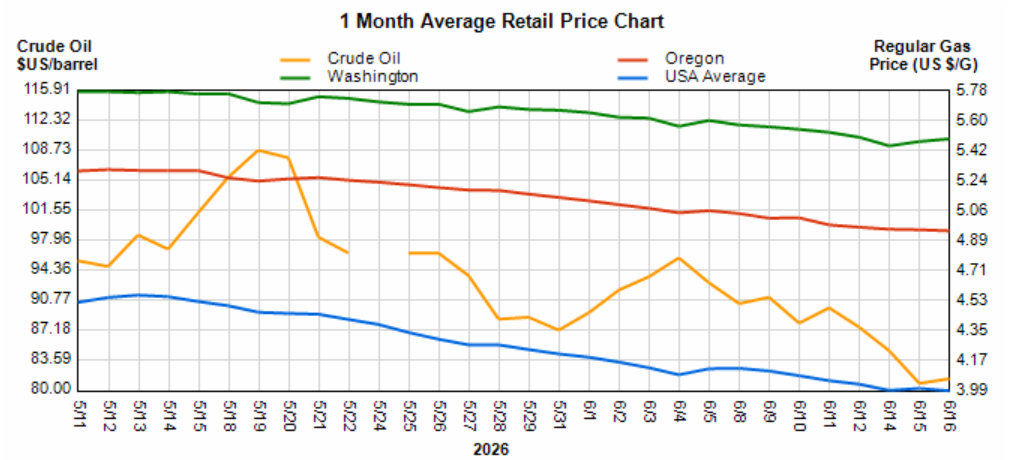
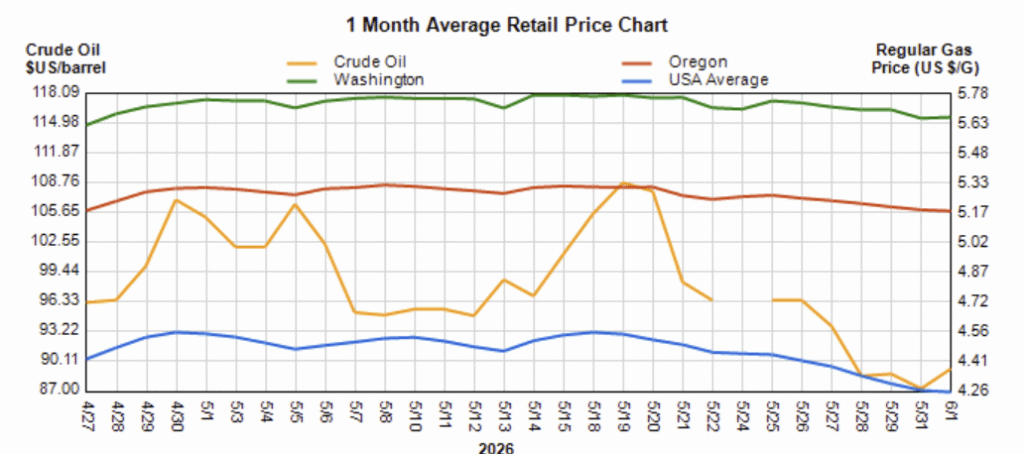
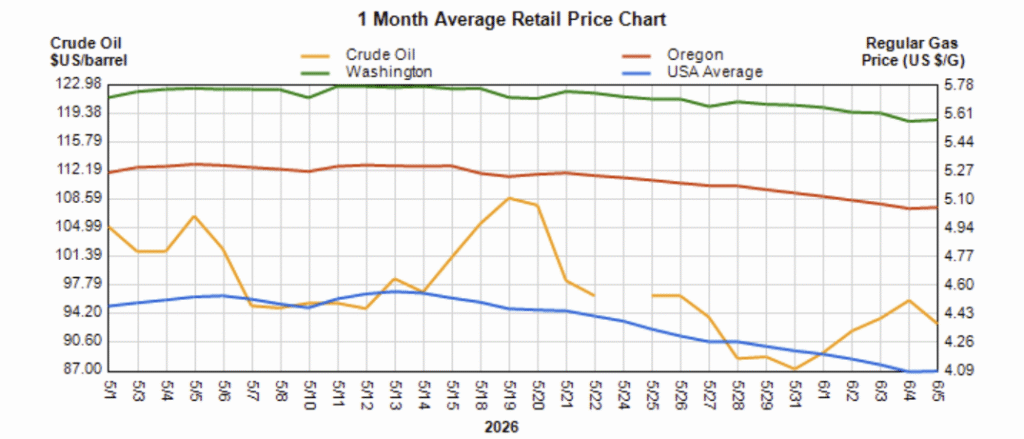
Line chart of 1-month average prices: orange crude oil per barrel, green Washington gas price, red Oregon price, blue USA average, with right axis gas $/gal and left axis $/barrel; dates late Apr–Jun 1, 2026.

Did You Know That R99 Is The Same Cost As Diesel Currently?

Call to set up R99 Mobile Fueling Onsite Service in Portland at the same cost of retail diesel. Dyed untaxed R99 is also available. Give us a call today to schedule your delivery.

Wholesale Price Average 5/30/26

Wholesale LowWholesale Avg
E10$3.61$3.77
B5$4.19$4.30
B20$4.14$4.25
R99$3.69$3.82

Average Retail Prices 5/30/26

NationalOregonWashington
E10$4.32$5.23$5.71
B5$5.45$6.05$6.65

Taxes

FederalState: ORLocalState: WA
Gas$0.184$0.40$0-.13$0.494
Diesel$0.244$0.40$0-.13$0.494

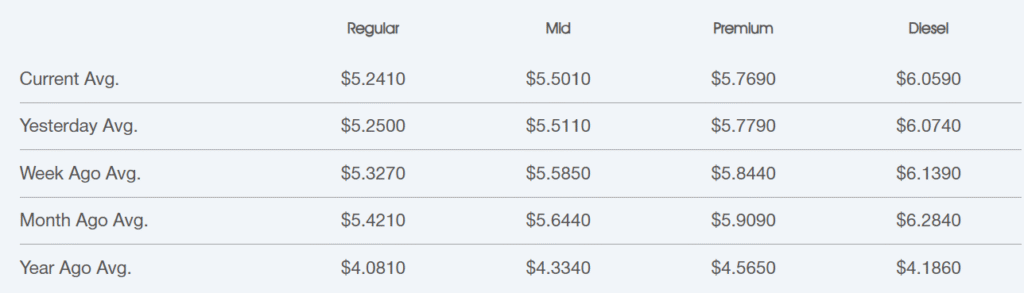
Portland Retail Fuel Price Variance

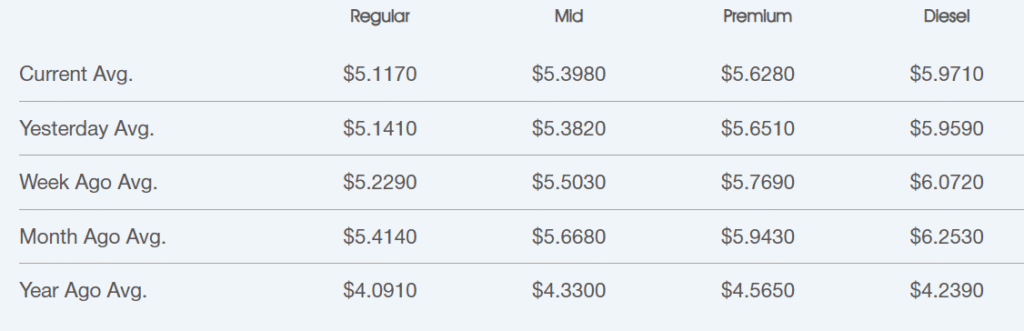
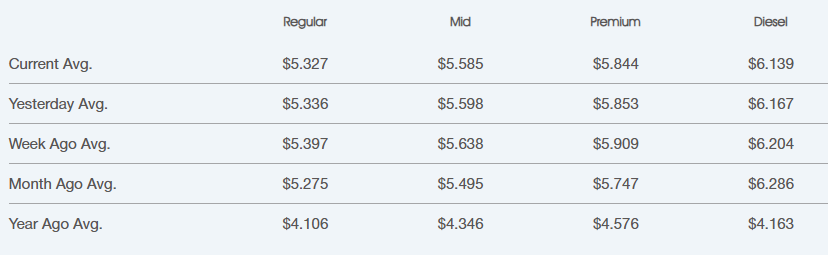
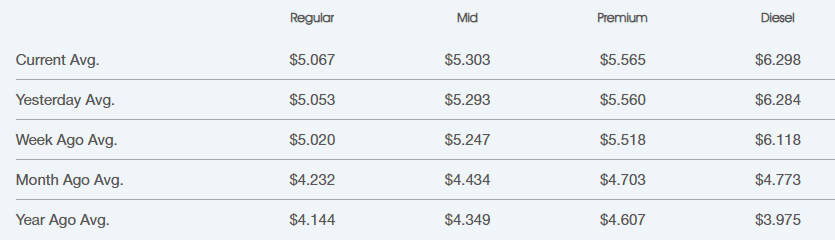
Fuel price table with time-point averages (Current, Yesterday, Week Ago, Month Ago, Year Ago) for Regular, Mid, Premium, and Diesel bikes/fuels.

Fuel Market News

Fuel prices dropped this past week as tensions and conflict in Iran remained stagnant. The stagnation did not last as Iran announced negotiations did not continue, and they will return to a full blockade of the Strait of Hormuz. Upon this announcement, the US reinitiated its ground striking campaign in Iran with multiple strikes on Saturday & Sunday. The US reportedly struck military bases, radars, and drone sites in Tehran. The re-engagement of the conflict between Iran & The US has continued to choke the marine traffic throughout the Straight of Hormuz. Last week, only 36 ships passed through the waterway compared to 130/day before the conflict started.

Crude oil prices are skyrocketing on the heels of news over the weekend of the re-engaged military conflict in Iran. Fuel prices are expected to take a steep climb throughout this week as the conflict continues with no end in sight. The Trump Admin has proposed waiving the federal gas/diesel tax until September 2026. An act that would require approval by Congress. This proposal has signaled to many that the conflict in Iran will not be over anytime soon. This week, we will likely see crude oil prices back over $100/barrel.

fuel-market-report-star-oilco-5-18-24

Important Note: Per the City Of Portland, “Distributors in the City of Portland are required to meet the minimum biofuel content requirements for all fuel they distribute beginning on May 15, 2024. All diesel fuel distributed to retail stations, non-retail dealers, or wholesale purchaser-consumers must include a minimum of 15% biofuel content, from either renewable diesel or biodiesel. This requirement increases to 50% on May 15, 2026, and 99% on May 15, 2030”.

Crude oil is hovering just above $95/barrel, at a current price of  $95.45/barrel.

Crude oil is the main ingredient for gasoline and diesel. Per AAA, on average about 50% of what you pay at the pump is the price of crude oil, breaking down as 25% refining, 11% distribution & marketing, and 14% taxes – a helpful breakdown for consumers wondering why they are paying the prices that they pay. Crude Oil is currently trading at $95.45/barrel compared to $98.19/barrel last week and $75 a year ago.

It’s essential to recognize that fuel prices result from a complex interplay of the factors mentioned above and other regional factors. Additionally, prices may vary by specific regions within Oregon and Washington. For the most precise and up-to-date information on fuel prices and the causes for these price changes within your area, use the links below for AAA & GasBuddy.

If you have any questions, feel free to contact Star Oilco and speak to one of our fuel market advisors to discuss how the market can impact your business.
Set up your R99 Mobile Fueling Onsite Service in Portland Today Including Dyed Untaxed R99.

Give Us A Call Today

For other news in the fuel market:

https://gasprices.aaa.com/?state=OR

https://www.gasbuddy.com/charts

Join the Fuel Market Report newsletter for your weekly fill of updates!

Two semi-trucks driving on a highway with trees in the background
Weekly Fuel Market Report – April 25th, 2026 1024 683 Star Oilco

Weekly Fuel Market Report – April 25th, 2026

fuel-market-report-star-oilco
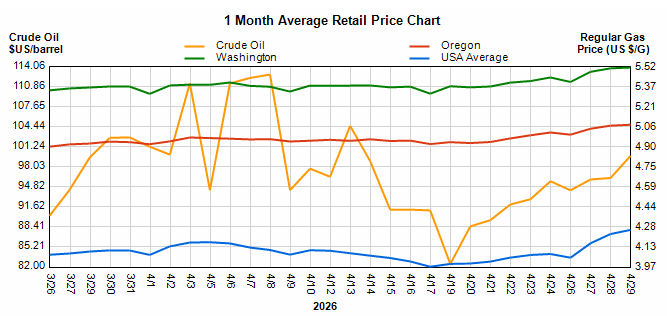
Line chart of 1 Month Average Retail Price: crude oil ($/barrel, orange, left axis) and regional gas prices ($/gal, right axis) for Washington (green), Oregon (red), USA Average (blue) from March 26 to April 29, 2026; oil ranges about $82–$115, gas prices about $4.0–$5.5 per gallon.

Did You Know That R99 Is The Same Cost As Diesel Currently?

Call to set up R99 Mobile Fueling Onsite Service in Portland at the same cost of retail diesel. Dyed untaxed R99 is also available. Give us a call today to schedule your delivery.

Wholesale Price Average 4/25/26

Wholesale LowWholesale Avg
E10$3.65$3.95
B5$4.54$4.65
B20$4.51$4.60
R99$4.20$4.32

Average Retail Prices 4/25/26

NationalOregonWashington
E10$4.22$5.11$5.54
B5$5.46$6.22$6.85

Taxes

FederalState: ORLocalState: WA
Gas$0.184$0.40$0-.13$0.494
Diesel$0.244$0.40$0-.13$0.494

Portland Retail Fuel Price Variance

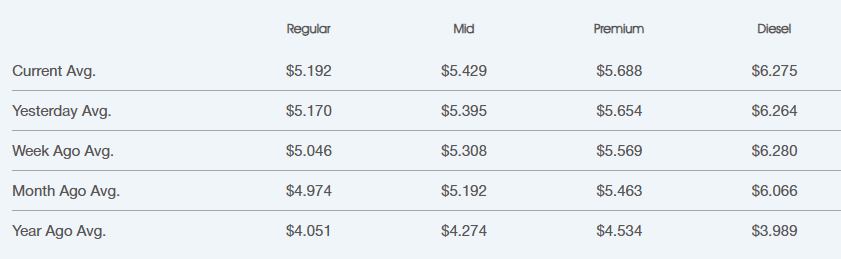
Table of average fuel prices by type: Regular, Mid, Premium, Diesel; rows show Current, Yesterday, Week Ago, Month Ago, Year Ago.

Fuel Market News

Fuel prices jumped back up this week after a brief downfall in prices last week. Retail gas prices jumped $0.19/gal while diesel moved up $0.12/gal. This comes on the heels of President Trump announcing an indefinite extension of the ceasefire between the US & Iran. With no hard-set dates or timelines, many are wondering what will come of the latest ceasefire and how it will hold up. The Strait of Hormuz is still closed and under a multi-national blockade between Iran and the US with ships being boarded & shot at on both sides as prices continue to climb. This ongoing conflict has continued to create supply network bottlenecks across the globe, affecting CNG, Crude Oil, fertilizers, chip manufacturing, and transportation costs.

Brent Crude is currently trading at $119/barrel, up $22/barrel since last week. The UAE has announced it will be leaving OPEC and OPEC+ as of May 1st. This will further the divide within global oil supply networks. The UAE is the third-largest producer of crude oil among OPEC members behind Iran & Saudi Arabia. OPEC supplies nearly 40% of global oil output, with over 4.6M barrels per day following the departure of the UAE. This will allow the UAE to produce and sell more of its crude oil to a larger market.

fuel-market-report-star-oilco-5-18-24

Important Note: Per the City Of Portland, “Distributors in the City of Portland are required to meet the minimum biofuel content requirements for all fuel they distribute beginning on May 15, 2024. All diesel fuel distributed to retail stations, non-retail dealers, or wholesale purchaser-consumers must include a minimum of 15% biofuel content, from either renewable diesel or biodiesel. This requirement increases to 50% on May 15, 2026, and 99% on May 15, 2030”.

Crude oil is hovering just below $120/barrel, at a current price of  $119/barrel. This is $4/barrel lower than it was in our last report.

Crude oil is the main ingredient for gasoline and diesel. Per AAA, on average about 50% of what you pay at the pump is the price of crude oil, breaking down as 25% refining, 11% distribution & marketing, and 14% taxes – a helpful breakdown for consumers wondering why they are paying the prices that they pay. Crude Oil is currently trading at $119/barrel compared to $97.45/barrel/barrel last week and $74 a year ago.

It’s essential to recognize that fuel prices result from a complex interplay of the factors mentioned above and other regional factors. Additionally, prices may vary by specific regions within Oregon and Washington. For the most precise and up-to-date information on fuel prices and the causes for these price changes within your area, use the links below for AAA & GasBuddy.

If you have any questions, feel free to contact Star Oilco and speak to one of our fuel market advisors to discuss how the market can impact your business.

Set up your R99 Mobile Fueling Onsite Service in Portland Today Including Dyed Untaxed R99.

Give Us A Call Today

For other news in the fuel market:

https://gasprices.aaa.com/?state=OR

https://www.gasbuddy.com/charts

Join the Fuel Market Report newsletter for your weekly fill of updates!

Two semi-trucks driving on a highway with trees in the background
Fuel Market Report: April 12th-18th 1024 683 Star Oilco

Fuel Market Report: April 12th-18th

fuel-market-report-star-oilco
1-month average retail price chart: crude oil ($/barrel) and regular gas ($/gal) for Washington, Oregon, and USA average; shows fluctuations with mid-month spikes.

Did You Know That R99 Is The Same Cost As Diesel Currently?

Call to set up R99 Mobile Fueling Onsite Service in Portland at the same cost of retail diesel. Dyed untaxed R99 is also available. Give us a call today to schedule your delivery.

Wholesale Price Average 4/18/26

Wholesale LowWholesale Avg
E10$3.63$3.74
B5$4.52$4.63
B20$4.49$4.61
R99$4.19$4.35

Average Retail Prices 4/18/26

NationalOregonWashington
E10$4.02$4.98$5.38
B5$5.51$6.25$6.86

Taxes

FederalState: ORLocalState: WA
Gas$0.184$0.40$0-.13$0.494
Diesel$0.244$0.40$0-.13$0.494

Portland Retail Fuel Price Variance

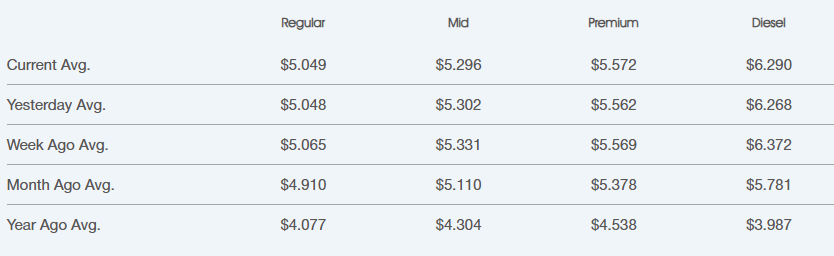
Table of fuel price averages by type (Regular, Mid, Premium, Diesel) for Current, Yesterday, Week Ago, Month Ago, and Year Ago; current prices: Regular $5.049, Mid $5.296, Premium $5.572, Diesel $6.290.

Fuel Market News

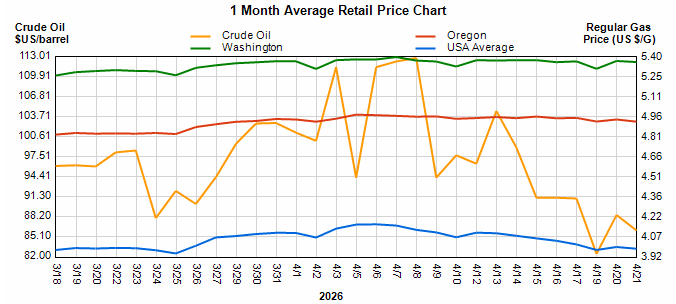
Fuel prices dropped this week for the first time in 10 weeks. Retail fuel prices are still high, as fuel prices are still over 45% higher than they were as of March 1st. Brent crude is still hovering around $100/barrel due to the prolonged strain throughout the Strait of Hormuz. The Blockade between Iran & the US has created a new dynamic within the crude market in which crude oil does not trade like a traditional market but as a geopolitical power structure. The current market is seemingly being driven by logistical supply chain challenges, not demand or consumption. While the US & Iran continue to negotiate a treaty, markets are still experiencing extreme volatility. This issue is not only affecting crude oil supply but also feedstocks, fertilizers, and thousands of key supplies to infrastructure globally.  

The US & Iran are said to be continuing negotiations of a peace treaty, as prior deadlines approach this week. The current market conditions are expected to continue in the coming weeks as negotiations persist. We may see prices remain high into June. With summer travel trends increasing in the summer months, drivers may see record-high fuel prices as they hit the road for their summer travel. 

fuel-market-report-star-oilco-5-18-24

Important Note: Per the City Of Portland, “Distributors in the City of Portland are required to meet the minimum biofuel content requirements for all fuel they distribute beginning on May 15, 2024. All diesel fuel distributed to retail stations, non-retail dealers, or wholesale purchaser-consumers must include a minimum of 15% biofuel content, from either renewable diesel or biodiesel. This requirement increases to 50% on May 15, 2026, and 99% on May 15, 2030”.

Crude oil is hovering around $100/barrel, at a current price of  $97.45/barrel. This is $4/barrel lower than it was in our last report. 

Crude oil is the main ingredient for gasoline and diesel. Per AAA, on average about 50% of what you pay at the pump is the price of crude oil, breaking down as 25% refining, 11% distribution & marketing, and 14% taxes – a helpful breakdown for consumers wondering why they are paying the prices that they pay. Crude Oil is currently trading at $97.45/barrel compared to $101.39/barrel last week and $71 a year ago. 

It’s essential to recognize that fuel prices result from a complex interplay of the factors mentioned above and other regional factors. Additionally, prices may vary by specific regions within Oregon and Washington. For the most precise and up-to-date information on fuel prices and the causes for these price changes within your area, use the links below for AAA & GasBuddy.

If you have any questions, feel free to contact Star Oilco and speak to one of our fuel market advisors to discuss how the market can impact your business.

Set up your R99 Mobile Fueling Onsite Service in Portland Today Including Dyed Untaxed R99.

Give Us A Call Today

For other news in the fuel market:

https://gasprices.aaa.com/?state=OR

https://www.gasbuddy.com/charts

Join the Fuel Market Report newsletter for your weekly fill of updates!

Two semi-trucks driving on a highway with trees in the background
Fuel Market Report: April 5th-11th 1024 683 Star Oilco

Fuel Market Report: April 5th-11th

fuel-market-report-star-oilco
Line chart showing a 1‑month trend of crude oil price (orange) and gas prices for Washington (green), Oregon (red), and USA average (blue); left axis is $/barrel, right axis $/G for gas, with a mid‑April spike in prices and Washington highest overall while USA average is lowest.

Did You Know That R99 Is The Same Cost As Diesel Currently?

Call to set up R99 Mobile Fueling Onsite Service in Portland at the same cost of retail diesel. Dyed untaxed R99 is also available. Give us a call today to schedule your delivery.

Wholesale Price Average 4/11/26

Wholesale LowWholesale Avg
E10$3.60$3.72
B5$4.98$5.19
B20$4.94$5.13
R99$4.79$4.98

Average Retail Prices 4/11/26

NationalOregonWashington
E10$4.13$4.99$5.39
B5$5.65$6.34$6.92

Taxes

FederalState: ORLocalState: WA
Gas$0.184$0.40$0-.13$0.494
Diesel$0.244$0.40$0-.13$0.494

Portland Retail Fuel Price Variance

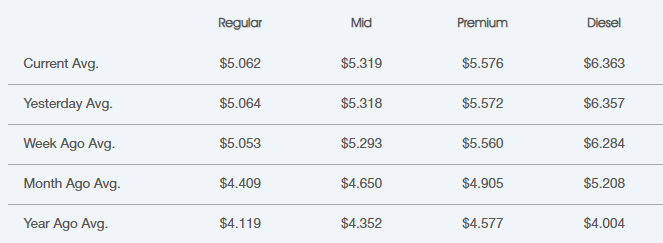
Fuel price averages by type (Regular, Mid, Premium, Diesel) across time: Current, Yesterday, Week Ago, Month Ago, Year Ago.

Fuel Market News

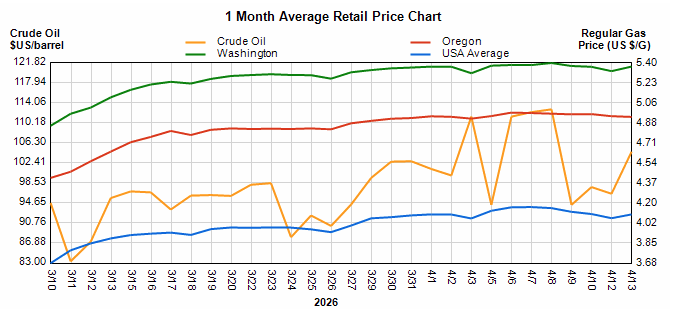
Fuel prices are up for the tenth consecutive week, with prices up 5% since last week. As of Monday, April 13, oil pushed back above $100 a barrel after the United States began enforcing a blockade on Iranian ports following failed talks with Tehran, while Iran continued to limit shipping in and around the Strait of Hormuz. Reuters reported Brent above $100, while WTI paced over $108. Rack averages dropped slightly this past week but drivers did not see this trickle down to the retail street price. The AAA average in every state is at his highest price in 5 years. OPEC has cut its second-quarter global demand forecast by 500,000 barrels per day, acknowledging that a sustained energy shock will suppress consumption. IMO reported that around 1,600 vessels and 20,000 seafarers are stranded in the Gulf.

For fuel buyers, fleet operators, and other energy-exposed businesses, the takeaway is straightforward: volatility is no longer theoretical and replacement cost risk is rising faster than headline crude alone suggests. 

fuel-market-report-star-oilco-5-18-24

Important Note: Per the City Of Portland, “Distributors in the City of Portland are required to meet the minimum biofuel content requirements for all fuel they distribute beginning on May 15, 2024. All diesel fuel distributed to retail stations, non-retail dealers, or wholesale purchaser-consumers must include a minimum of 15% biofuel content, from either renewable diesel or biodiesel. This requirement increases to 50% on May 15, 2026, and 99% on May 15, 2030”.

Crude oil is trading just above $100/barrel, at a current price of $101.39/barrel. This is $15.00/barrel higher than it was in our last report.

Crude oil is the main ingredient for gasoline and diesel. Per AAA, on average about 50% of what you pay at the pump is the price of crude oil, breaking down as 25% refining, 11% distribution & marketing, and 14% taxes – a helpful breakdown for consumers wondering why they are paying the prices that they pay. Crude Oil is currently trading at $101.39/barrel compared to $115/barrel last week and $72 a year ago.

It’s essential to recognize that fuel prices result from a complex interplay of the factors mentioned above and other regional factors. Additionally, prices may vary by specific regions within Oregon and Washington. For the most precise and up-to-date information on fuel prices and the causes for these price changes within your area, use the links below for AAA & GasBuddy.

If you have any questions, feel free to contact Star Oilco and speak to one of our fuel market advisors to discuss how the market can impact your business.

Set up your R99 Mobile Fueling Onsite Service in Portland Today Including Dyed Untaxed R99.

Give Us A Call Today

For other news in the fuel market:

https://gasprices.aaa.com/?state=OR

https://www.gasbuddy.com/charts

Join the Fuel Market Report newsletter for your weekly fill of updates!

Two semi-trucks driving on a highway with trees in the background
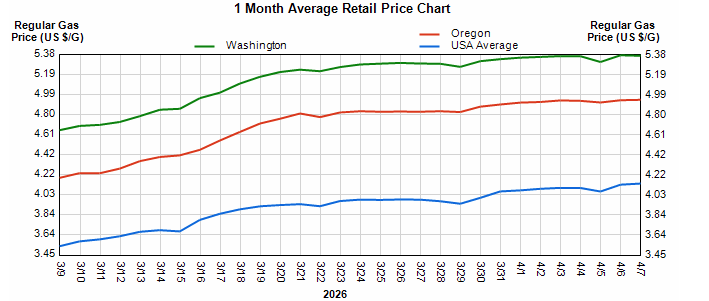
Fuel Market Report: March 29th-April 4th 1024 683 Star Oilco

Fuel Market Report: March 29th-April 4th

fuel-market-report-star-oilco

Did You Know That R99 Is The Same Cost As Diesel Currently?

Call to set up R99 Mobile Fueling Onsite Service in Portland at the same cost of retail diesel. Dyed untaxed R99 is also available. Give us a call today to schedule your delivery.

Wholesale Price Average 4/4/26

Wholesale LowWholesale Avg
E10$3.68$3.75
B5$5.09$5.23
B20$5.01$5.12
R99$4.90$5.05

Average Retail Prices 4/4/26

NationalOregonWashington
E10$4.14$5.00$5.39
B5$5.65$6.28$6.85

Taxes

FederalState: ORLocalState: WA
Gas$0.184$0.40$0-.13$0.494
Diesel$0.244$0.40$0-.13$0.494

Portland Retail Fuel Price Variance

Fuel Market News

Fuel prices are up for the ninth consecutive week, with prices up 8% since last week. Washington State currently has an average diesel price of over $6.85/gal with gas at $5.39/gal. The Seattle area is averaging over $7.01/gal for diesel while gas is at $5.66/gal. Oregon currently has an average diesel price of $6.28/gal with gas at $5.02/gal. The Portland area is averaging over $6.30/gal for diesel while gas is at $5.07/gal. This is the first time in 5 years that Oregon has had an average gas price over $5/gal. WTI Crude is currently trading at $115/barrel. The conflict in Iran has no signs of ending anytime soon, despite previous reports of a “two-week” operation and claims of the war being over. With more announced strikes approaching this evening, prices will likely jump again tomorrow morning.

fuel-market-report-star-oilco-5-18-24

Important Note: Per the City Of Portland, “Distributors in the City of Portland are required to meet the minimum biofuel content requirements for all fuel they distribute beginning on May 15, 2024. All diesel fuel distributed to retail stations, non-retail dealers, or wholesale purchaser-consumers must include a minimum of 15% biofuel content, from either renewable diesel or biodiesel. This requirement increases to 50% on May 15, 2026, and 99% on May 15, 2030”.

Crude oil is trading above $110/barrel, at a current price of  $115/barrel. This is $22/barrel higher than it was in our last report.

Crude oil is the main ingredient for gasoline and diesel. Per AAA, on average about 50% of what you pay at the pump is the price of crude oil, breaking down as 25% refining, 11% distribution & marketing, and 14% taxes – a helpful breakdown for consumers wondering why they are paying the prices that they pay. Crude Oil is currently trading at $115/barrel compared to $105/barrel last week and $69 a year ago.

It’s essential to recognize that fuel prices result from a complex interplay of the factors mentioned above and other regional factors. Additionally, prices may vary by specific regions within Oregon and Washington. For the most precise and up-to-date information on fuel prices and the causes for these price changes within your area, use the links below for AAA & GasBuddy.

If you have any questions, feel free to contact Star Oilco and speak to one of our fuel market advisors to discuss how the market can impact your business.
Set up your R99 Mobile Fueling Onsite Service in Portland Today Including Dyed Untaxed R99.

Give Us A Call Today

For other news in the fuel market:

https://gasprices.aaa.com/?state=OR

https://www.gasbuddy.com/charts

Join the Fuel Market Report newsletter for your weekly fill of updates!

Two semi-trucks driving on a highway with trees in the background
Fuel Market Report: March 8th-14th 1024 683 Star Oilco

Fuel Market Report: March 8th-14th

fuel-market-report-star-oilco

Did You Know That R99 Is The Same Cost As Diesel Currently?

Call to set up R99 Mobile Fueling Onsite Service in Portland at the same cost of retail diesel. Dyed untaxed R99 is also available. Give us a call today to schedule your delivery.

Wholesale Price Average 3/14/26

Wholesale LowWholesale Avg
E10$3.12$3.25
B5$4.09$4.22
B20$4.02$4.14
R99$3.78$3.87

Average Retail Prices 3/14/26

NationalOregonWashington
E10$3.71$4.49$4.92
B5$4.99$5.40$6.01

Taxes

FederalState: ORLocalState: WA
Gas$0.184$0.40$0-.13$0.494
Diesel$0.244$0.40$0-.13$0.494

Portland Retail Fuel Price Variance

Fuel Market News

Fuel prices are up for the sixth consecutive week, with fuel prices up 22% in the last two weeks. Last week, crude oil reached $112.48/barrel, sending prices higher across the nation. The stalling of tanker ships traveling through the Strait of Hormuz, as a result of the conflicts in Iran, has played a major role in crude oil prices spiking. Drivers in all 50 states saw fuel prices spike by over $0.25/gal. The national average price for gasoline is up $0.48/gal, while diesel is up $0.96/gal. It is estimated that for every $1 increase in the price of crude oil, gasoline prices will increase by 0.2 to 0.5 on average. It is likely that prices will continue to climb over the next 4 weeks as the Iran & U.S situation continues to develop.

fuel-market-report-star-oilco-5-18-24

Important Note: Per the City Of Portland, “Distributors in the City of Portland are required to meet the minimum biofuel content requirements for all fuel they distribute beginning on May 15, 2024. All diesel fuel distributed to retail stations, non-retail dealers, or wholesale purchaser-consumers must include a minimum of 15% biofuel content, from either renewable diesel or biodiesel. This requirement increases to 50% on May 15, 2026, and 99% on May 15, 2030”.

Crude oil is trading above $90/barrel, at a current price of  $94.18/barrel. This is $6.71/barrel higher than the week prior.

Crude oil is the main ingredient for gasoline and diesel. Per AAA, on average about 50% of what you pay at the pump is the price of crude oil, breaking down as 25% refining, 11% distribution & marketing, and 14% taxes – a helpful breakdown for consumers wondering why they are paying the prices that they pay. Crude Oil is currently trading at $94.18/barrel compared to $87.47/barrel last week and $66 a year ago. 

It’s essential to recognize that fuel prices result from a complex interplay of the factors mentioned above and other regional factors. Additionally, prices may vary by specific regions within Oregon and Washington. For the most precise and up-to-date information on fuel prices and the causes for these price changes within your area, use the links below for AAA & GasBuddy.

If you have any questions, feel free to contact Star Oilco and speak to one of our fuel market advisors to discuss how the market can impact your business.

Set up your R99 Mobile Fueling Onsite Service in Portland Today Including Dyed Untaxed R99.

Give Us A Call Today

For other news in the fuel market:

https://gasprices.aaa.com/?state=OR

https://www.gasbuddy.com/charts

Join the Fuel Market Report newsletter for your weekly fill of updates!

Two semi-trucks driving on a highway with trees in the background
Fuel Market Report: March 1st-7th, 2026 1024 683 Star Oilco

Fuel Market Report: March 1st-7th, 2026

fuel-market-report-star-oilco

Did You Know That R99 Is The Same Cost As Diesel Currently?

Call to set up R99 Mobile Fueling Onsite Service in Portland at the same cost of retail diesel. Dyed untaxed R99 is also available. Give us a call today to schedule your delivery.

Wholesale Price Average 3/7/26

Wholesale LowWholesale Avg
E10$2.80$2.91
B5$3.51$3.69
B20$3.49$3.64
R99$3.14$3.29

Average Retail Prices 3/7/26

NationalOregonWashington
E10$3.58$4.28$4.72
B5$4.83$5.07$5.72

Taxes

FederalState: ORLocalState: WA
Gas$0.184$0.40$0-.13$0.494
Diesel$0.244$0.40$0-.13$0.494

Portland Retail Fuel Price Variance

Fuel Market News

Fuel prices are up for the sixth consecutive week, with fuel prices up 22% in the last two weeks. Last week, crude oil reached $112.48/barrel, sending prices higher across the nation. The stalling of tanker ships traveling through the Strait of Hormuz, as a result of the conflicts in Iran, has played a major role in crude oil prices spiking. Drivers in all 50 states saw fuel prices spike by over $0.25/gal. The national average price for gasoline is up $0.48/gal, while diesel is up $0.96/gal. It is estimated that for every $1 increase in the price of crude oil, gasoline prices will increase by 0.2 to 0.5 on average. It is likely that prices will continue to climb over the next 4 weeks as the Iran & U.S situation continues to develop.

fuel-market-report-star-oilco-5-18-24

Important Note: Per the City Of Portland, “Distributors in the City of Portland are required to meet the minimum biofuel content requirements for all fuel they distribute beginning on May 15, 2024. All diesel fuel distributed to retail stations, non-retail dealers, or wholesale purchaser-consumers must include a minimum of 15% biofuel content, from either renewable diesel or biodiesel. This requirement increases to 50% on May 15, 2026, and 99% on May 15, 2030”.

Reasons For Price Variance

Oil Prices Above $85

US and Iran Conflict

Crude oil is trading above $65, at a current price of $87.47/barrel. This is $12.28/barrel higher than the week prior.

Crude oil is the main ingredient for gasoline and diesel. Per AAA, on average about 50% of what you pay at the pump is the price of crude oil, breaking down as 25% refining, 11% distribution & marketing, and 14% taxes – a helpful breakdown for consumers wondering why they are paying the prices that they pay. Crude Oil is currently trading at $87.47/barrel compared to $75.19/barrel last week and $68 a year ago.

It’s essential to recognize that fuel prices result from a complex interplay of the factors mentioned above and other regional factors. Additionally, prices may vary by specific regions within Oregon and Washington. For the most precise and up-to-date information on fuel prices and the causes for these price changes within your area, use the links below for AAA & GasBuddy.

If you have any questions, feel free to contact Star Oilco and speak to one of our fuel market advisors to discuss how the market can impact your business.
Set up your R99 Mobile Fueling Onsite Service in Portland Today Including Dyed Untaxed R99.

Give Us A Call Today

For other news in the fuel market:

https://gasprices.aaa.com/?state=OR

https://www.gasbuddy.com/charts

Join the Fuel Market Report newsletter for your weekly fill of updates!