

Posts By :

Sunny Battazzi

Ceramic house with red winter hat and pinecones
Heating Oil Tank Maintenance Tips 1024 683 Star Oilco

Heating Oil Tank Maintenance Tips

Extending the Lifespan of Your Heating Oil Tank:

Maintenance Tips and Replacement Intervals 

There are many households that are equipped with a heating oil tank which provides them with warmth during the coldest months of the year. Regular maintenance of the equipment and timely replacement of its parts are essential if one wishes to ensure its optimal performance as well as prevent potential problems. The following blog post describes how often you should replace your heating oil tank and provides valuable tips on how you can extend its lifespan in order to get the most out of it. In order to maintain your tank’s longevity, maximize its efficiency, and keep your home comfortable for many years to come, you should follow these guidelines. By doing so, you will be able to maximize the lifespan of your tank.  

Regular maintenance is also important to keep your tank working properly. This includes checking the tank for leaks, cleaning the burner, and checking the fuel lines. Additionally, it is important to schedule regular inspections to ensure everything is in working order. 

Ceramic house with red winter hat and pinecones

How often should you replace your heating oil tank? 

There are several factors that can influence the lifespan of a heating oil tank, including the material, the quality of the installation, and the method by which it is maintained. As a general rule of thumb, it is recommended to consider replacing your tank every 15 to 20 years as a general guideline. The older a tank becomes, the more likely it will be to experience corrosion, leaks, and structural weakness, which can pose a safety hazard and lead to expensive repairs. An inspection by a qualified professional is a good way to determine the condition of your tank and whether or not it needs to be replaced. In order to comply with local regulations, be sure to familiarize yourself with the specific timeframes that may be required for the replacement of your tank. Having a properly maintained heating oil tank is essential for the safety of your home and those around you. Regular inspections and maintenance are important to keep your tank functioning properly. It is important to act quickly if any signs of corrosion or leaks are detected. 

Maintenance tips for a longer-lasting heating oil tank 

To extend the lifespan of your heating oil tank, proactive maintenance is key. Here are some essential tips to keep in mind: 

Regular inspections:  

In order to ensure that your tank is in good working order, you should have an annual inspection performed by a certified professional who can assess the tank’s condition, check for corrosion, and ensure that all of the components are functioning properly. The professional should also check for leaks, inspect the tank’s piping, and ensure that it is properly sealed. They should also test the safety equipment and make any necessary changes. They should provide a report with their findings and recommendations. 

Monitor oil levels:

Regularly check the oil level in your tank and schedule heating oil refills to prevent the tank from running dry. As a result of an empty tank, sludge and sediment will build up, accelerating corrosion as time goes by. This can shorten the lifespan of the tank, resulting in costly repairs and replacements. Additionally, an oil leak can cause environmental damage and contaminate groundwater.

Keep the area clean:

If there is any debris, vegetation, or objects around the heating oil tank that could trap moisture or cause it to rust, it must be removed. The tank should be properly ventilated, and it should be accessible to inspection and maintenance so that the tank can be inspected.

Check for leaks:

Ensure that your heating oil tank is routinely inspected for any signs of leaks, such as stains, odors, or an unusually high rate of oil consumption. As soon as you find a leak, take immediate action to prevent environmental contamination and property damage.  Contact the professionals as soon as possible to arrange for repairs. Clean out any spilled oil with the proper equipment. Document the accident and report it to your local authorities.

Install a tank protection system:

It may be a good idea to install a tank protection system, such as a tank tray or electronic leak detection system, in order to protect the tank. As a result of these devices, an additional layer of safety can be added, and leaks can be detected at an early stage in advance.  This can help to avoid unnecessary environmental damage, as well as costly repairs. Additionally, it can help to extend the life of the tank, as any potential issues can be addressed quickly.

Monitor water accumulation:

It is possible for water to accumulate in your heating oil tank due to condensation, which speeds up the corrosion process. It is important to keep an eye out for water accumulation and to consider the installation of an absorbent pad or a water drain to mitigate the problem.

Autumn home setting with tea, blankets, and cozy decor

Signs indicating the need for immediate heating oil tank replacement

You can extend your heating oil tank’s lifespan significantly with regular maintenance, but certain signs may indicate it needs to be replaced immediately.

Here are some signs that your heating oil tank may need to be replaced: 

Corrosion visible in the tank, such as rust or holes.  

The tank leaks or spills oil frequently.  

The tank is more than 15-20 years old.  

Regulations and safety standards are not met by the tank.  

Buildup of sediment or sludge inside the tank.  

Damage to the structure, such as bulging or sagging.  

Tank support or fittings deteriorated. 

By following these maintenance tips and adhering to recommended replacement intervals, you can maximize the lifespan of your heating oil tank and ensure its safe and efficient operation. Regular inspections, proper maintenance, and prompt replacement when necessary will contribute to a reliable and long-lasting heating system for your home. To extend the lifespan of your heating oil tank, proactive maintenance is key. Regular cleaning and inspection of the tank should be done to detect any potential issues. Additionally, the heating oil tank should be filled only when it is full, and the tank should be drained when not in use. The tank should be refilled regularly to ensure that it is full and ready for use. We hope these tips are helpful in your experience with a heating oil tank and thank you for choosing Star Oilco as your preferred heating oil provider for the Portland area!
Two semi-trucks driving on a highway with trees in the background
Fuel Market Report: Jan 4th – Jan 10th, 2026 1024 683 Star Oilco

Fuel Market Report: Jan 4th – Jan 10th, 2026

fuel-market-report-star-oilco

Did You Know That R99 Is The Same Cost As Diesel Currently?

Call to set up R99 Mobile Fueling Onsite Service in Portland at the same cost of retail diesel. Dyed untaxed R99 is also available. Give us a call today to schedule your delivery.

Wholesale Price Average 1/10/26

Wholesale LowWholesale Avg
E10$1.83$1.91
B5$2.15$2.28
B20$2.13$2.26
R99$2.04$2.12

Average Retail Prices 1/10/26

NationalOregonWashington
E10$2.80$3.35$3.80
B5$3.50$3.99$4.60

Taxes

FederalState: ORLocalState: WA
Gas$0.184$0.40$0-.13$0.494
Diesel$0.244$0.40$0-.13$0.494

Portland Retail Fuel Price Variance

Fuel Market News

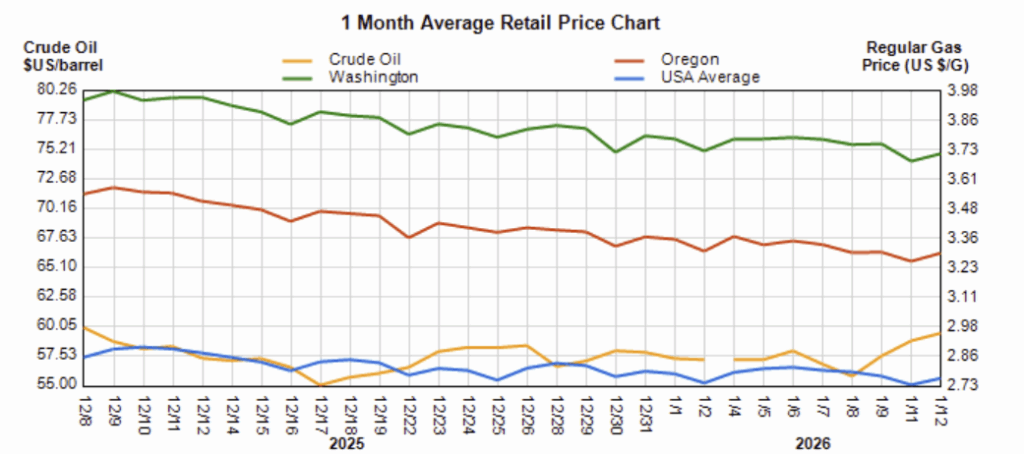
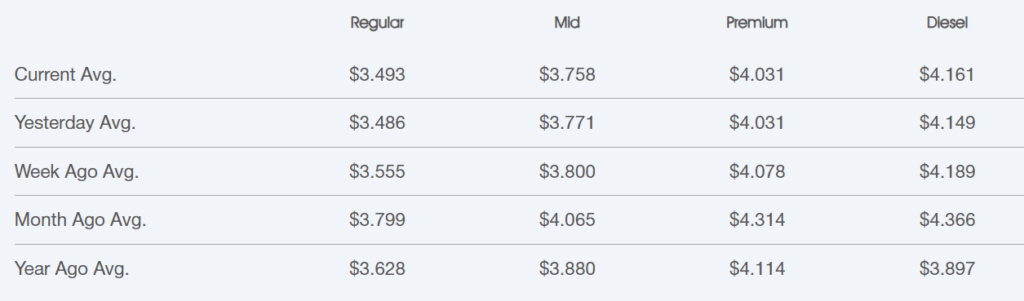
Fuel prices are down this week compared to the week prior, as crude oil prices are still hovering just below $60/barrel and crude oil supply is in a global surplus. On January 3rd, the U.S carried out an operation which led to the capture of Venezuelan President, Nicolas Maduro. After the operation, global headlines stirred across the globe with reports on oil prices and quantities. Although headlines were plentiful, the overall impact on the global oil market was minimal. Venezuela currently accounts for less than 1% of the global supply at less than 1 Mbpd. The reports that the U.S will assume all of Venezuela’s crude oil supply are not confirmed. Any investments made into Venezuela’s oil sector will require upwards of billions of dollars and multiple years to yield any real results

fuel-market-report-star-oilco-5-18-24

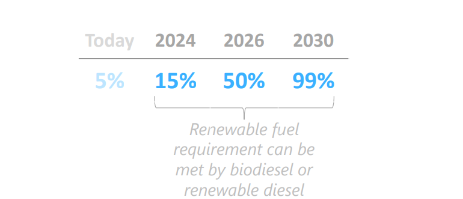
Important Note: Per the City Of Portland, “Distributors in the City of Portland are required to meet the minimum biofuel content requirements for all fuel they distribute beginning on May 15, 2024. All diesel fuel distributed to retail stations, non-retail dealers, or wholesale purchaser-consumers must include a minimum of 15% biofuel content, from either renewable diesel or biodiesel. This requirement increases to 50% on May 15, 2026, and 99% on May 15, 2030”.

Want to know what to expect this Fall in regards to our diesel market? You can read our 2025 Diesel Market Outlook For Oregon.

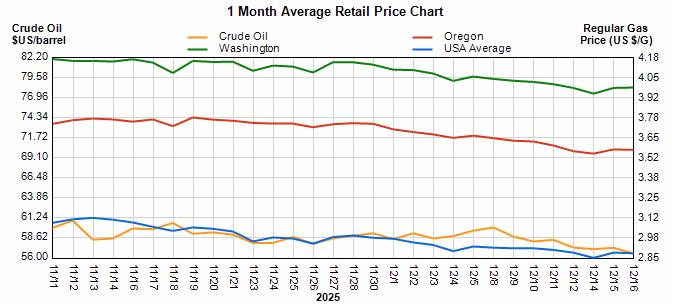
Crude oil is trading below $60, at a current price of $55.21/barrel. This is $3.59/barrel lower than it was last week.

Crude oil is the main ingredient for gasoline and diesel. Per AAA, on average about 50% of what you pay at the pump is the price of crude oil, breaking down as 25% refining, 11% distribution & marketing, and 14% taxes – a helpful breakdown for consumers wondering why they are paying the prices that they pay. Crude Oil is currently trading at $55.21/barrel compared to $58.80/barrel last week and $64 a year ago.

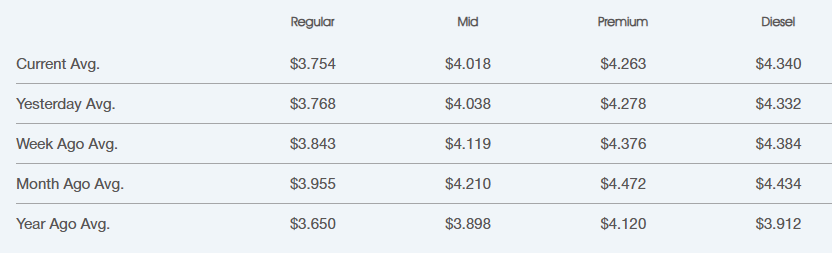
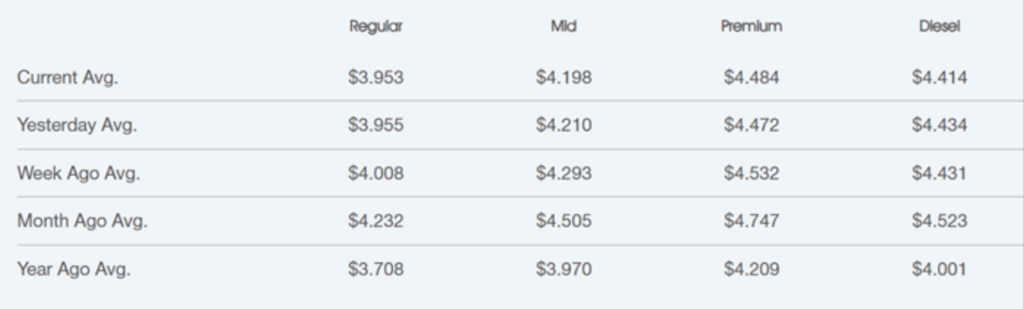
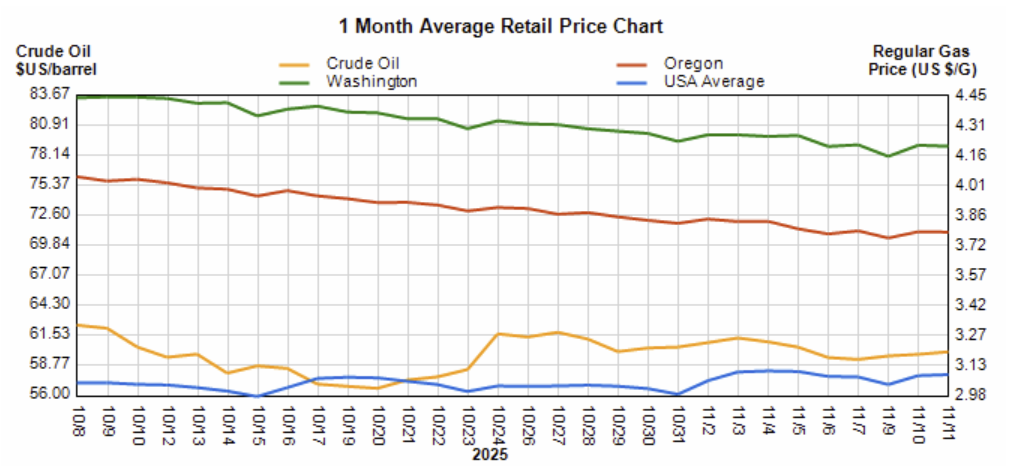
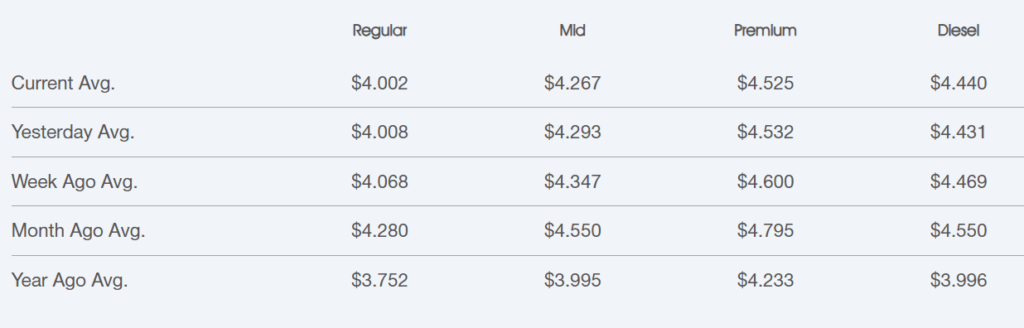
It’s essential to recognize that fuel prices result from a complex interplay of the factors mentioned above and other regional factors. Additionally, prices may vary by specific regions within Oregon and Washington. For the most precise and up-to-date information on fuel prices and the causes for these price changes within your area, use the links below for AAA & GasBuddy.

If you have any questions, feel free to contact Star Oilco and speak to one of our fuel market advisors to discuss how the market can impact your business.

Set up your R99 Mobile Fueling Onsite Service in Portland Today Including Dyed Untaxed R99.

Give Us A Call Today

For other news in the fuel market:

https://gasprices.aaa.com/?state=OR

https://www.gasbuddy.com/charts

Join the Fuel Market Report newsletter for your weekly fill of updates!

Excavators parked at a construction site during sunrise
When To Use Off-Road Diesel in Portland, Oregon 1024 683 Star Oilco

When To Use Off-Road Diesel in Portland, Oregon

Off-road diesel is an important fuel that powers heavy equipment and machinery for industries like construction, farming, and transportation. It’s a popular choice because it’s affordable and reliable for tough jobs that need a strong energy source. In the Portland, Oregon metro area, fuel rules are getting stricter, especially with laws pushing for cleaner, renewable fuels. That means businesses using off-road diesel need to stay informed about the latest regulations and fuel options to keep running smoothly and legally.

This guide breaks down everything you need to know about off-road diesel, including how it’s used, the laws surrounding it, and its impact on the environment in Portland. It also looks at the challenges and benefits of switching to cleaner fuels. Whether you run construction equipment or want to learn more about renewable diesel options, this guide will help you understand what’s needed to keep up with Portland’s changing fuel standards while keeping costs low and reducing pollution.

1. Definition and Uses of Off-Road Diesel 

Off-road diesel, often referred to as “dyed diesel,” is a specialized fuel used exclusively in off-road applications. It is chemically identical to on-road diesel but contains a red dye that differentiates it for regulatory purposes. 

Common Applications of Off-Road Diesel: 

  • Construction equipment such as excavators, bulldozers, and cranes. 
  • Agricultural machinery like tractors and combines. 
  • Generators and other stationary equipment used on job sites. 
  • Marine vessels operating in inland or coastal waters. 
Excavators parked at a construction site during sunrise

The red dye in off-road diesel is a critical feature that ensures compliance with tax exemptions and usage restrictions mandated by federal and state regulations. This dye serves as a visual marker to easily differentiate untaxed off-road diesel from its taxed on-road counterpart, streamlining inspections and enforcement efforts. By law, off-road diesel is specifically designated for vehicles and machinery that operate exclusively off public roads, such as construction equipment, agricultural machinery, and generators. The red coloration not only identifies the fuel’s intended purpose but also acts as a deterrent against improper use in on-road vehicles, where the financial and legal penalties for misuse can be significant. Using red-dyed diesel outside its prescribed applications is considered tax evasion and can result in hefty fines and legal consequences. This visible distinction ensures transparency and accountability in fuel usage while supporting the infrastructure and industries reliant on off-road diesel. 

Off-road vehicle tire tracks in remote open terrain

2. Legal Considerations 

While off-road diesel is essential for many industries, it comes with strict legal guidelines. Using dyed diesel in on-road vehicles is a serious offense. 

Penalties for Misuse: 

  • In Oregon, using off-road diesel in on-road vehicles can result in fines of up to $10,000 per day. State authorities regularly perform roadside inspections to ensure compliance. 
  • Misuse can also lead to the revocation of fuel tax exemptions for businesses. 

To avoid these penalties, businesses must implement strict protocols to ensure the proper segregation of fuels and comprehensive employee training on the correct applications of dyed diesel. This includes maintaining dedicated storage tanks for dyed diesel to prevent accidental contamination with on-road fuel. Employees should be educated about the legal ramifications of misuse, as well as the operational differences between dyed and clear diesel. Regular audits of fuel usage logs and equipment can further enhance compliance. Additionally, businesses can leverage technological solutions like fuel monitoring systems to track usage and ensure that dyed diesel is utilized exclusively for off-road applications. Such measures not only mitigate the risk of hefty fines but also promote efficiency and accountability within operations, safeguarding the reputation and financial stability of the organization. 

3. Portland’s Renewable Fuel Standard 

Portland has been at the forefront of adopting renewable fuel standards (RFS) to reduce its carbon footprint. These standards directly impact off-road diesel and its renewable counterparts. 

Phased Renewable Content Requirements: 

  • By 2024, diesel sold in Portland must contain at least 15% renewable content. 
  • By 2030, this requirement will increase to 99%, effectively transitioning the market towards renewable diesel and biodiesel. 
Portland Old Town sign representing the city’s commitment to renewable fuel standards

Impact on Off-Road Diesel Users: 

  • Businesses will need to adapt to the changing fuel composition. 
  • Equipment compatibility and performance with renewable diesel must be assessed to ensure seamless operations. This involves evaluating whether older engines and fuel systems can handle the chemical properties of renewable diesel, which may differ from traditional ultra-low sulfur diesel (ULSD). Renewable diesel, while chemically similar to petroleum-based diesel, can have slight variations in viscosity and lubrication properties that might affect certain types of equipment. For optimal performance, businesses should consider consulting with equipment manufacturers or fuel suppliers to determine the suitability of renewable diesel for their machinery. Furthermore, implementing a phased approach to testing and monitoring fuel performance can help identify and address potential issues before transitioning entirely to renewable options. By ensuring compatibility, businesses can maximize efficiency and contribute to Portland’s broader environmental goals. 
Green diesel nozzle filling off-road fuel tank labeled for ultra low sulfur diesel

4. Environmental Impact 

Transitioning to renewable diesel and biodiesel offers significant environmental benefits, aligning with Portland’s goals to combat climate change. 

Key Benefits of Renewable Diesel: 

  • Reduced Carbon Intensity: Renewable diesel has a lower carbon intensity compared to traditional diesel, significantly reducing greenhouse gas emissions. 
  • Improved Air Quality: Lower emissions of particulate matter and nitrogen oxides contribute to cleaner air in the Portland metro area. 

Portland’s stringent fuel standards aim to cut carbon emissions by integrating renewable fuels, contributing to a sustainable and eco-friendly urban environment. These measures align with the city’s broader goals to become a leader in climate action and renewable energy adoption. By mandating the use of renewable diesel and biodiesel, Portland reduces its reliance on fossil fuels, helping to lower greenhouse gas emissions and improve air quality. This shift also supports the development of renewable fuel infrastructure and incentivizes innovations in sustainable energy technologies. Furthermore, these standards encourage local businesses to adopt environmentally responsible practices, fostering a culture of sustainability that benefits both the economy and the community. As Portland continues to implement these changes, it sets a benchmark for other cities aiming to combat climate change through progressive fuel regulations. 

5. Availability and Delivery 

Portland is home to several suppliers catering to the off-road diesel market, offering both bulk delivery and local fueling stations. 

Local Suppliers: 

  • Companies like Star Oilco provide dyed diesel in bulk quantities, tailored to industries requiring consistent fuel supplies. 
  • Fuel delivery options include on-site tank refills for construction sites and remote locations. 
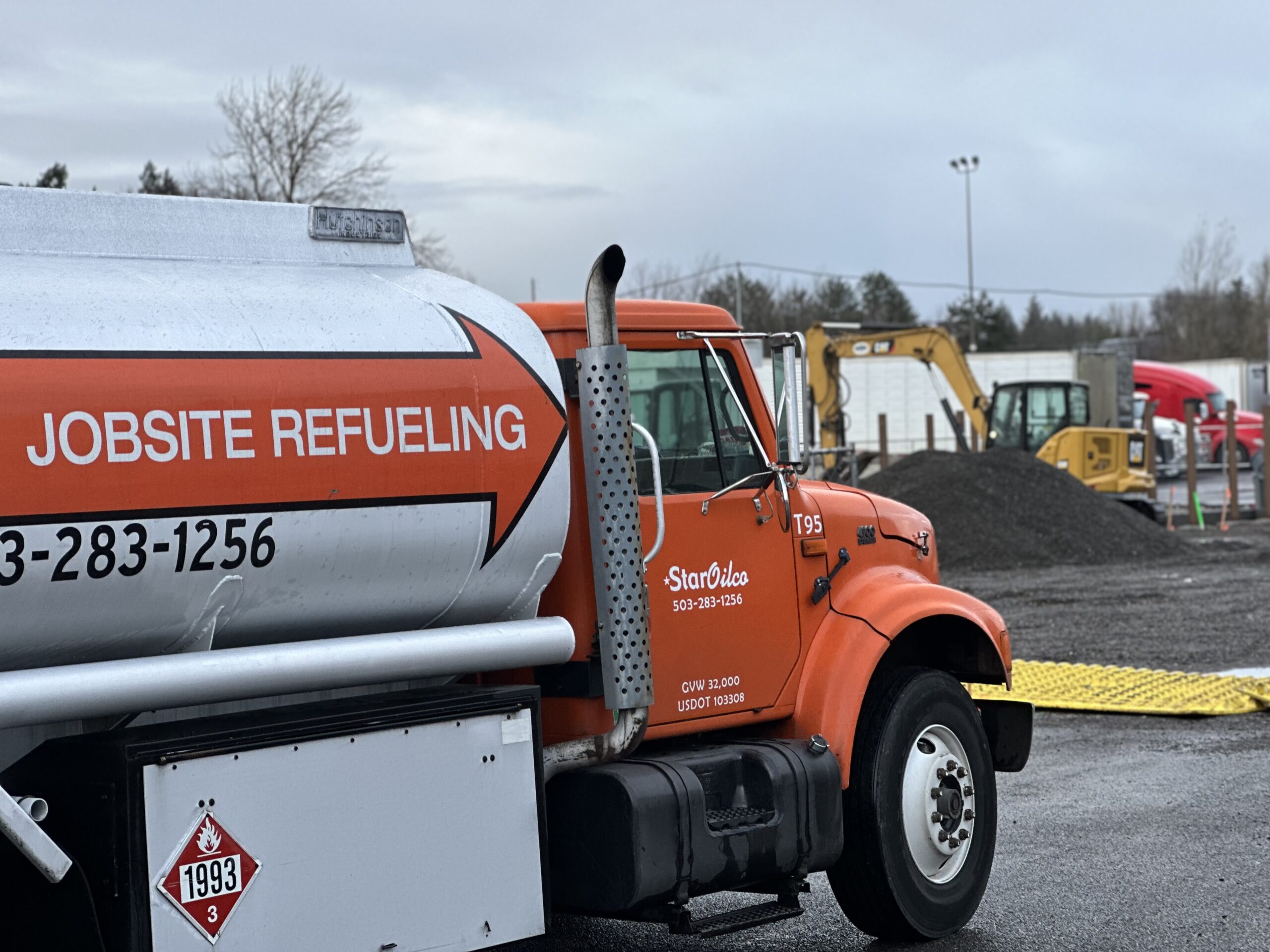
Star Oilco technician testing off-road diesel fuel quality with a funnel and filter on-site in Portland OR

Businesses can rely on bulk delivery services for operational efficiency, ensuring equipment is fueled without delays. Bulk delivery eliminates the logistical challenges of transporting fuel to job sites, allowing companies to focus on their core operations without interruptions. Suppliers in Portland often provide flexible delivery schedules, ensuring that fuel needs are met even during peak demand periods. Additionally, bulk delivery services often include on-site fuel storage solutions, enabling businesses to maintain reserves for unforeseen requirements. This level of convenience and reliability ensures that critical operations, such as construction projects or agricultural activities, can proceed smoothly without fuel shortages impacting productivity. By leveraging these services, companies can streamline their operations and enhance overall efficiency. 

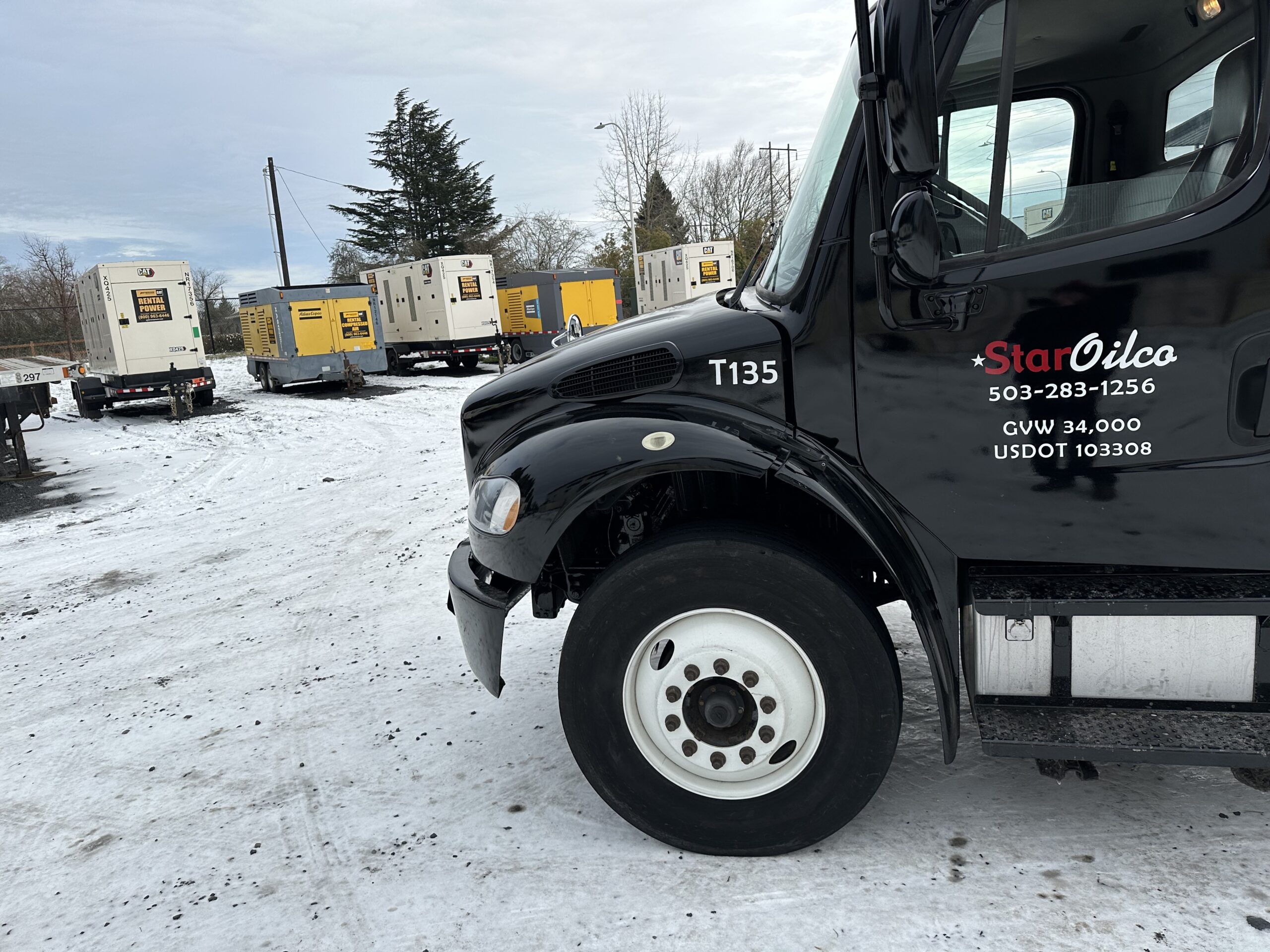
Star Oilco diesel fuel truck servicing portable generators on a snowy Portland job site

6. Cost Considerations 

Off-road diesel is less expensive than its on-road counterpart due to tax exemptions. However, the shift to renewable fuels may impact costs. 

Factors Influencing Costs: 

  • Tax Exemptions: Off-road diesel is exempt from federal and state road taxes, resulting in lower per-gallon costs. 
  • Renewable Fuel Standards: Increased renewable content may raise production costs, potentially leading to higher prices for end-users. 

Monitoring market trends and negotiating supplier contracts can help businesses manage fuel expenses effectively. Market fluctuations in crude oil prices, changes in renewable fuel standards, and supply chain disruptions can all influence the cost of off-road diesel. By staying informed about these factors, businesses can better anticipate price changes and adjust their budgets accordingly. Establishing long-term relationships with reliable suppliers can also secure more favorable rates and ensure consistent fuel availability. Additionally, investing in fuel-efficient equipment and adopting best practices for fuel storage and usage can help minimize waste and reduce overall costs. Proactive strategies like these enable businesses to remain competitive while navigating the complexities of the evolving fuel market. 

7. Future Trends 

The future of off-road diesel in Portland is closely tied to advancements in renewable energy and regulatory changes. 

Key Trends: 

  • A gradual shift from ultra-low sulfur diesel (ULSD) to renewable diesel. 
  • Increased focus on carbon intensity metrics to measure and reduce emissions. 
  • Technological innovations in fuel storage and distribution to accommodate renewable blends. 
Star Oilco fuel truck delivering to a construction jobsite in Portland

By staying informed about these trends, businesses can position themselves for success in a rapidly evolving energy landscape. The transition towards renewable diesel, for instance, offers both challenges and opportunities for industries dependent on fuel. Companies need to evaluate their current fuel strategies and determine how to integrate renewable options without disrupting operations. This involves not only upgrading equipment where necessary but also training staff on the use of new fuel types. Furthermore, staying ahead of technological innovations—such as advanced storage solutions or cleaner combustion technologies—can provide a competitive edge. By embracing these developments, businesses not only comply with regulations but also demonstrate their commitment to sustainability and innovation, fostering trust and loyalty among customers and stakeholders. 

Frequently Asked Questions About Off-Road Diesel

Finding reliable suppliers with consistent availability is a common challenge, especially as the demand for renewable fuels grows. Businesses must navigate a competitive market to identify suppliers who can meet their specific operational needs, whether through bulk delivery or on-site fueling options. Reliable suppliers often offer additional services, such as flexible delivery schedules, fuel monitoring, and emergency refueling, which are essential for maintaining consistent operations. Additionally, the shift towards renewable diesel means that suppliers must stay ahead of regulatory changes and ensure they provide compliant fuel blends. Partnering with established, well-regarded suppliers can help businesses reduce downtime, improve efficiency, and ensure they meet both operational and environmental goals. Investing time in research and forming long-term partnerships with suppliers can mitigate risks and streamline fuel logistics for industries relying on off-road diesel. 

Adapting to renewable fuel standards and ensuring equipment compatibility requires a proactive approach by businesses to seamlessly transition their operations. Renewable diesel, while chemically similar to traditional ultra-low sulfur diesel (ULSD), can have slight differences in physical properties such as viscosity and lubrication. These differences may necessitate modifications to older engines and equipment to maintain efficiency and prevent wear. Additionally, businesses need to assess their existing fuel storage and handling systems to ensure compatibility with renewable blends, which might behave differently under various environmental conditions. Partnering with equipment manufacturers, fuel suppliers, and industry experts can help identify and implement solutions tailored to specific operational needs. By staying informed and prepared, businesses can not only meet regulatory requirements but also benefit from the improved environmental performance and potential long-term cost savings associated with renewable fuels. 

Off-road diesel is a critical energy source utilized across various industries for powering construction equipment such as excavators, bulldozers, and cranes, which are indispensable for infrastructure development. It is equally essential for agricultural machinery like tractors, combines, and other specialized farm equipment that sustain food production and farming operations. Additionally, off-road diesel is widely employed in generators, providing reliable backup power for construction sites, remote areas, and emergency scenarios. Marine vessels, particularly those operating in inland waterways or coastal regions, also depend on off-road diesel for propulsion and auxiliary power. This specialized fuel ensures that vital machinery operates efficiently, supporting economic activities and maintaining productivity in diverse sectors.

No. Using dyed diesel in on-road vehicles is illegal and subject to significant fines due to its tax-exempt status and the strict regulations governing its use. These penalties are in place to ensure that dyed diesel is only utilized in its intended applications, such as off-road equipment and machinery. Enforcement agencies conduct random inspections and fuel tests to identify misuse, which can result in fines up to $10,000 per day in Oregon. Misusing dyed diesel not only leads to financial repercussions but also undermines the funding mechanisms for road maintenance, as road taxes are critical for infrastructure development. Businesses and individuals must remain vigilant and ensure compliance to avoid these severe consequences. 

Traditional off-road diesel contributes significantly to air pollution due to the release of greenhouse gases, particulate matter, and nitrogen oxides during combustion. These pollutants have far-reaching impacts on air quality, public health, and the environment, especially in urban areas like Portland where industrial and construction activities are prevalent. In contrast, renewable alternatives such as biodiesel and renewable diesel dramatically reduce emissions, including carbon dioxide and harmful particulates, making them a more sustainable choice. These renewable fuels are produced from non-petroleum sources such as waste oils, animal fats, and plant-based feedstocks, which not only lower their carbon intensity but also promote a circular economy. The adoption of renewable diesel in off-road applications aligns with Portland’s goals to reduce its environmental footprint, improve urban air quality, and mitigate climate change effects, setting a model for cleaner industrial operations statewide. 

Yes, off-road diesel is flammable and must be handled and stored with care. Due to its combustible nature, it’s essential to follow strict safety protocols when storing and transporting off-road diesel. Fuel should be kept in approved containers that are properly sealed to prevent leaks and vapor release. Storage areas should be well-ventilated and located away from sources of heat or open flames to minimize the risk of ignition. Additionally, fire suppression systems and emergency response plans should be in place in facilities where large quantities of off-road diesel are stored. Regular maintenance of fuel storage tanks, including inspections for corrosion or damage, further reduces the risk of accidents and ensures the long-term safety and integrity of the fuel. 

Cold temperatures can cause diesel to gel, significantly impacting engine performance and fuel flow in off-road equipment. As temperatures drop, the paraffin wax in diesel begins to solidify, creating a thick, gel-like consistency that can clog fuel lines and filters. This issue is particularly concerning in Portland during the winter months, where subfreezing conditions are common. To prevent gelling, operators should consider using anti-gel additives specifically formulated for cold weather. These additives lower the fuel’s pour point and cold filter plugging point, ensuring that diesel remains fluid even in extreme temperatures. Additionally, preheating fuel tanks or using insulated storage solutions can further mitigate the risks associated with cold weather. By taking these precautions, businesses can maintain operational efficiency and avoid costly downtime caused by gelled diesel.

Off-road diesel is exempt from road taxes, which makes it a cost-effective choice for industries operating heavy machinery and equipment. However, this tax exemption comes with stringent regulations to ensure that the fuel is used exclusively for its intended off-road purposes. Misuse, such as using dyed diesel in on-road vehicles, can lead to severe penalties, including fines of up to $10,000 per day in Oregon. Enforcement agencies frequently conduct inspections to detect improper use, emphasizing the importance of compliance. Businesses must educate their teams on proper fuel usage, maintain accurate records, and implement strict oversight to prevent accidental or intentional misuse. Beyond financial implications, non-compliance can damage a company’s reputation and disrupt operations.

Portland’s renewable fuel standards mandate increased renewable content in diesel, progressively reducing emissions over time and setting a strong example of environmental leadership. These standards not only focus on lowering greenhouse gas emissions but also encourage the adoption of innovative fuel technologies like renewable diesel and biodiesel. By requiring a phased increase in renewable content, the city ensures a gradual yet impactful transition, giving industries the time needed to adapt while aligning with long-term climate goals. This approach supports local economic growth by fostering investments in renewable energy infrastructure and creating opportunities for green technology advancements. As businesses comply with these standards, Portland strengthens its position as a pioneer in sustainable urban development. 

Dyed diesel is visually identifiable by its red color, distinguishing it from clear (on-road) diesel. The red dye is added to off-road diesel as a regulatory marker to signify its tax-exempt status and restricted use in off-road applications. This vivid coloration ensures easy identification during inspections and helps prevent accidental or intentional misuse. While chemically identical to on-road diesel, the presence of the dye plays a crucial role in compliance and enforcement, allowing authorities to quickly verify that fuel is being used appropriately. This distinction is essential for maintaining the integrity of tax systems that fund public infrastructure while supporting industries that rely on cost-effective fuel solutions. 

Dyed diesel is exclusively designated for off-road use and benefits from tax exemptions, making it a cost-effective option for industries that rely heavily on heavy-duty equipment and machinery. In contrast, clear diesel is taxed to fund public road infrastructure and is mandated for use in on-road vehicles. The differentiation is not merely a technicality but a legal requirement, with dyed diesel being subject to strict usage regulations. This separation ensures that industries using off-road diesel gain economic advantages while maintaining compliance with tax laws designed to support public infrastructure projects. The clear distinction between dyed and clear diesel fuels helps streamline enforcement and minimizes misuse, ensuring fairness and accountability in fuel taxation systems. 

Off-road diesel is typically ultra-low sulfur diesel (ULSD), which reduces harmful emissions and complies with environmental regulations. The transition to ULSD represents a significant step forward in minimizing the environmental impact of diesel fuel. By drastically reducing sulfur content, ULSD helps to lower the emissions of sulfur dioxide, a major contributor to acid rain, and particulate matter, which is harmful to respiratory health. This compliance with environmental standards is particularly important in urban areas like Portland, where air quality is a key concern. Furthermore, ULSD enhances the performance of advanced emission control technologies, such as diesel particulate filters (DPFs) and selective catalytic reduction (SCR) systems, allowing modern engines to meet stricter emissions requirements. The widespread adoption of ULSD underscores the diesel industry’s commitment to sustainability while ensuring that off-road diesel remains a reliable and efficient energy source for heavy-duty applications.

Use insulated or heated storage tanks and anti-gel additives during colder months to maintain fuel quality. Insulated tanks help to regulate temperatures, preventing the fuel from reaching conditions where gelling typically occurs. Heated storage options further ensure that the diesel remains fluid, even in extreme cold, by maintaining a consistent temperature above the gelling threshold. Anti-gel additives work by lowering the pour point and cold filter plugging point of the diesel, allowing it to flow smoothly through the fuel system. Additionally, regular monitoring of fuel tanks for condensation or water contamination is crucial during winter months, as water can exacerbate gelling issues. Combining these strategies provides comprehensive protection against cold-weather challenges, ensuring that equipment operates reliably in harsh conditions.

Off-road diesel is an indispensable resource for industries operating in the Portland metro area, serving as the backbone for critical operations in construction, agriculture, and logistics. Understanding the nuances of its uses, from powering heavy machinery to fueling generators, is essential for businesses aiming to maintain seamless operations. Moreover, staying informed about the legalities and environmental impacts of off-road diesel ensures compliance with stringent state and federal regulations, protecting businesses from costly penalties. As Portland takes bold steps towards adopting renewable diesel, industries have the opportunity to align their fuel strategies with the city’s ambitious sustainability goals. Embracing these changes not only reduces carbon footprints but also positions businesses as leaders in innovation and environmental stewardship, fostering a competitive edge in an increasingly eco-conscious market. 

Diesel fuel flowing into a dark reflective liquid surface
Diesel 1 vs Diesel 2 1024 578 Star Oilco

Diesel 1 vs Diesel 2

Diesel 1 and Diesel 2 can often bring confusion when it comes to understanding what the differences are between them. Consumers can have confusion about which one is best for their equipment or their business. Whether they’re looking for improvements in quality, igniting quickly with its high cetane rating for easy starts in cold weather or ensuring overall efficiency with engine performance and lower maintenance needs. We will explore the differences between Diesel 1 and Diesel 2 and help you understand the benefits of each. 

Key distinctions between the properties of Diesel 1 and Diesel 2 

Before you invest your hard-earned money in fuel that might not be suitable or, even worse, could harm your vehicles and equipment, let’s clear the air. Let’s simplify the differences between Diesel 1 and Diesel 2 in a way that’s easy to follow and gives you the confidence you need. 

Sulfur Content

Diesel 1: Lower sulfur content, reducing sulfur dioxide emissions and aligning with environmental standards.

Diesel 2: Higher sulfur content for specific applications with advanced emissions control. 

Cetane Number

Diesel 1: Boasts a higher cetane number (ignition quality of diesel fuel), ensuring better ignition and smoother combustion, especially in cold weather.

Diesel 2: It has a lower cetane number and is optimized for slightly delayed ignition in engines designed for this grade. 

Viscosity

Diesel 1: It generally has a lower viscosity, facilitating smoother fuel flow and distribution. 

Diesel 2: Its higher viscosity may require specialized fuel systems designed to handle its thicker consistency, such as generator power plant engines or industrial machinery. 

Cold Flow Properties

Diesel 1: It excels in cold climates because it contains kerosene and lacks paraffin, which prevents the diesel from gelling in colder temperatures. So, it’s best for the residents of the coldest regions.

Diesel 2: This fuel needs additional winterization measures in extremely cold temperatures, like mixing Diesel 1 (20%) with Diesel 2 (80%) and additives to lower the viscosity of Disesel 2. But make sure that your vehicle’s engine is capable of handling it.

Additives

Diesel 1: Contains extra constituents that improve cleanliness and lubrication and reduce rusting effects due to corrosion inhibitors in the engine. It also has demulsifiers that separate water from the fuel system and prevent engine problems. 

Diesel 2: Generally has fewer additives; common ones decrease viscosity for more accessible engines starting in cold conditions. Due to the higher wax content, some other chemicals are infused within it to stop the accumulation of wax sediments. 

Engine Wear and Tear

Diesel 1: Gentle on engines with low wax content, anti-corrosive additives, and high cetane rating, resulting in less wear, lower maintenance, and a longer lifespan. 

Diesel 2: Causes more wear, but viscosity contributes to enhanced lubrication and mitigates engine damage by reducing friction. 

Sound

Diesel 1: Less noisy due to its high cetane rating, ensuring rapid ignition and reducing the usual knocking sound linked with diesel engines. 

Diesel 2: Tends to be noisier due to a lower cetane rating and a longer combustion process. Results in higher levels of heat and pressure for a louder engine. 

Smoke Release

Diesel 1: Emits less smoke due to quick ignition and cleaner exhaust due to lower wax levels, demulsifiers, and other additives that cause smoke. 

Diesel 2: Results in smokier emissions because of a lower cetane rating, slower ignition, and increased accumulation of unburned fuel. 

Fuel Energy Efficiency 

Diesel 1: Slightly lower fuel economy (miles per gallon) than Diesel 2 due to its lighter grade and lower heating value. 

Diesel 2: It burns more slowly and proves to be the superior choice for extended highway travel, optimizing efficiency and minimizing refueling stops.

Cost

Diesel 1: It comes at a slightly higher cost because it is enhanced with lubricants, reducing friction for efficient fuel system operation. The premium diesel D1 has more benefits, like reduced repairs.  

Diesel 2: Represents a more economical choice. Despite lacking premium additives, more miles per gallon and a higher heating value make it the least expensive option at the pump. 

Finding the Right Fuel Fit: Diesel Decisions 

Selecting the appropriate diesel for your vehicle is crucial, and it all comes down to your vehicle type, usage, and environmental conditions for optimal performance. Diesel #2 is cost-effective and versatile for everyday commuting, while Diesel #1 is ideal for high-performance or newer engines due to its higher cetane rating.  

Trucks and heavy-duty vehicles benefit from Diesel #2’s versatility and cost savings. In fleet management, Diesel #2 is practical for various vehicles. Diesel #1 is the choice for lower emissions compliance in environmentally strict areas. Always check your vehicle manual for specific recommendations. 

Diesel 1 and Diesel 2 bring unique qualities to engines and the environment. Diesel 1 is cleaner and ideal for high-performance engines and excels in colder climates. Diesel 2, versatile and cost-effective, suits everyday driving and heavy-duty vehicles.  

Understanding these distinctions empowers you to make informed diesel decisions, ensuring engine longevity and environmental responsibility. 

If you have any questions about different fuels, feel free to give us a call and speak to one of our fuel experts.  

503-283-1256
www.staroilco.net 

Two semi-trucks driving on a highway with trees in the background
Fuel Market Report: Dec 7th – Dec 13th, 2025 1024 683 Star Oilco

Fuel Market Report: Dec 7th – Dec 13th, 2025

fuel-market-report-star-oilco

Did You Know That R99 Is The Same Cost As Diesel Currently?

Call to set up R99 Mobile Fueling Onsite Service in Portland at the same cost of retail diesel. Dyed untaxed R99 is also available. Give us a call today to schedule your delivery.

Wholesale Price Average 12/13/25

Wholesale LowWholesale Avg
E10$1.91$1.99
B5$2.35$2.48
B20$2.41$2.50
R99$2.08$2.19

Average Retail Prices 12/13/25

NationalOregonWashington
E10$2.90$3.61$4.00
B5$3.64$4.21$4.81

Taxes

FederalState: ORLocalState: WA
Gas$0.184$0.40$0-.13$0.494
Diesel$0.244$0.40$0-.13$0.494

Portland Retail Fuel Price Variance

Fuel Market News

Fuel prices took another big dip this week, as prices dropped over $0.15/gal on gas and diesel. Rack averages in Portland dropped $0.16/gal for E10 gasoline, $0.22/gal for B5 & B20 diesel, and $0.26/gal for R99 Renewable diesel. Although these pricing drops are a bit extreme, they were somewhat expected after the Olympic Pipeline came back to operational status. Fuel prices are reaching their annual lows for the year and were on their way there before the pipeline supply interruption. The retail market is beginning to follow as the average retail price for gasoline is down $0.10/gal nationwide. WTI Crude is also reaching an annual low at a current price per barrel of $55.21.  

fuel-market-report-star-oilco-5-18-24

Important Note: Per the City Of Portland, “Distributors in the City of Portland are required to meet the minimum biofuel content requirements for all fuel they distribute beginning on May 15, 2024. All diesel fuel distributed to retail stations, non-retail dealers, or wholesale purchaser-consumers must include a minimum of 15% biofuel content, from either renewable diesel or biodiesel. This requirement increases to 50% on May 15, 2026, and 99% on May 15, 2030”.

Want to know what to expect this Fall in regards to our diesel market? You can read our 2025 Diesel Market Outlook For Oregon.

Crude oil is trading below $60, at a current price of $55.21/barrel. This is $3.59/barrel lower than it was last week.

Crude oil is the main ingredient for gasoline and diesel. Per AAA, on average about 50% of what you pay at the pump is the price of crude oil, breaking down as 25% refining, 11% distribution & marketing, and 14% taxes – a helpful breakdown for consumers wondering why they are paying the prices that they pay. Crude Oil is currently trading at $55.21/barrel compared to $58.80/barrel last week and $64 a year ago.

It’s essential to recognize that fuel prices result from a complex interplay of the factors mentioned above and other regional factors. Additionally, prices may vary by specific regions within Oregon and Washington. For the most precise and up-to-date information on fuel prices and the causes for these price changes within your area, use the links below for AAA & GasBuddy.

If you have any questions, feel free to contact Star Oilco and speak to one of our fuel market advisors to discuss how the market can impact your business.

Set up your R99 Mobile Fueling Onsite Service in Portland Today Including Dyed Untaxed R99.

Give Us A Call Today

For other news in the fuel market:

https://gasprices.aaa.com/?state=OR

https://www.gasbuddy.com/charts

Join the Fuel Market Report newsletter for your weekly fill of updates!

Two semi-trucks driving on a highway with trees in the background
Fuel Market Report: Nov 29th – Dec 6th, 2025 1024 683 Star Oilco

Fuel Market Report: Nov 29th – Dec 6th, 2025

fuel-market-report-star-oilco

Did You Know That R99 Is The Same Cost As Diesel Currently?

Call to set up R99 Mobile Fueling Onsite Service in Portland at the same cost of retail diesel. Dyed untaxed R99 is also available. Give us a call today to schedule your delivery.

Wholesale Price Average 12/6/25

Wholesale LowWholesale Avg
E10$2.01$2.14
B5$2.61$2.73
B20$2.69$2.78
R99$2.34$2.45

Average Retail Prices 12/6/25

NationalOregonWashington
E10$2.95$3.70$4.08
B5$3.69$4.28$4.88

Taxes

FederalState: ORLocalState: WA
Gas$0.184$0.40$0-.13$0.494
Diesel$0.244$0.40$0-.13$0.494

Portland Retail Fuel Price Variance

Fuel Market News

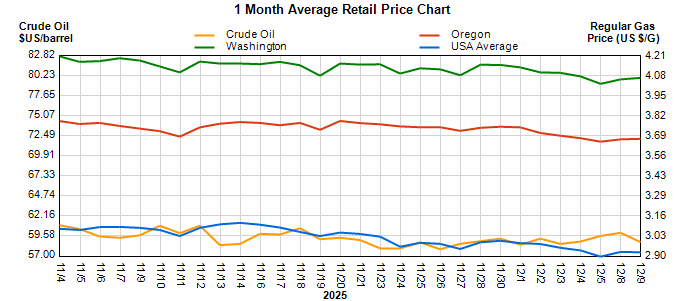
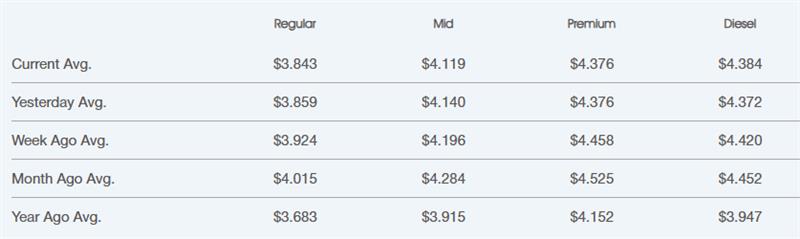
Fuel prices dipped this past week in Portland, as rack averages for gasoline had its biggest single-week price drop this year, of over $0.30/gal. This comes on the heels of the Olympic pipeline getting back to operational status after a 10-day shutdown in the weeks before. Fuel prices across the board have dropped this past week, as rack averages for diesel were also down $0.04/gal. Surprisingly, these price dips have yet to hit the retail street market, as the retail fuel prices are still relatively high at a current average of $3.84/gal & $4.38/gal for diesel. We should see prices continue to fall on the wholesale market as oil prices are low, inventories are high, and demand has been consistent.

fuel-market-report-star-oilco-5-18-24

Important Note: Per the City Of Portland, “Distributors in the City of Portland are required to meet the minimum biofuel content requirements for all fuel they distribute beginning on May 15, 2024. All diesel fuel distributed to retail stations, non-retail dealers, or wholesale purchaser-consumers must include a minimum of 15% biofuel content, from either renewable diesel or biodiesel. This requirement increases to 50% on May 15, 2026, and 99% on May 15, 2030”.

Want to know what to expect this Fall in regards to our diesel market? You can read our 2025 Diesel Market Outlook For Oregon.

Crude oil is trading below $60, at a current price of $58.80/barrel. This is $0.59/barrel lower than it was last week.

Crude oil is the main ingredient for gasoline and diesel. Per AAA, on average about 50% of what you pay at the pump is the price of crude oil, breaking down as 25% refining, 11% distribution & marketing, and 14% taxes – a helpful breakdown for consumers wondering why they are paying the prices that they pay. Crude Oil is currently trading at $58.80/barrel compared to $59.39/barrel last week and $68 a year ago. 

It’s essential to recognize that fuel prices result from a complex interplay of the factors mentioned above and other regional factors. Additionally, prices may vary by specific regions within Oregon and Washington. For the most precise and up-to-date information on fuel prices and the causes for these price changes within your area, use the links below for AAA & GasBuddy.

If you have any questions, feel free to contact Star Oilco and speak to one of our fuel market advisors to discuss how the market can impact your business.

Set up your R99 Mobile Fueling Onsite Service in Portland Today Including Dyed Untaxed R99.

Give Us A Call Today

For other news in the fuel market:

https://gasprices.aaa.com/?state=OR

https://www.gasbuddy.com/charts

Join the Fuel Market Report newsletter for your weekly fill of updates!

home insulation representing energy efficiency for renewable fuel standard compliance in Portland Oregon
What Is The Renewable Fuel Standard In Portland? 1024 683 Star Oilco

What Is The Renewable Fuel Standard In Portland?

Did you hear about the time Portland banned fossil fuel diesel?

Portland is making a big move to provide cleaner air and reduce greenhouse gas emissions. Portland has implemented what’s called the Renewable Fuel Standard (RFS) beginning  its first phase on May 15th, 2024. The RFS policy in Portland mandates that there has to be an increase of use of low-carbon biofuels in diesel within city limits of Portland. This is part of the ultimate Climate Emergency plan. This RFS mandate was first implemented in 2006 as a B5 (5%) Biodiesel blend mandate with the goal of mandating a 20% blend. The RFS is the first of its kind not only in Oregon but in the entire United States. Portland’s reputation as a leader in environmental sustainability efforts continues. 

Portland’s Phases To Implement Almost 100% Renewable Diesel

What makes Portland’s mandate unique is the requirement that the biofuels have a CO2 value so low it bars most American made biodiesels. The blending requirement starts at 15% in 2024, and then it will steadily increase to 50% by 2026 and will reach 99% by 2030. This schedule demonstrates how Portland’s low-carbon ambition is present to transition away from fossil fuels and promote alternative energy sources.

This policy is expected to reduce air pollution and carbon emissions. It will also create new markets for biofuels, which will lead to increased economic opportunities. This will ultimately help the city become a more sustainable and environmentally friendly place to live as Portland has taken the lead in striving for sustainability over the years.

The policy will also help create jobs in the biofuel industry and provide opportunities for businesses to switch to renewable energy sources. It will also help reduce the city’s dependence on fossil fuels and protect the environment for future generations.

Want to learn more about meeting Portland’s requirements for the Renewable Fuel Standard mandate?

landscape view of Mount Hood representing Star Oilco’s fuel delivery service area in Oregon

Focus on Lower-Emission Biofuels

Uniquely, Portland’s RFS goes beyond just the biofuel blend. It also sets a strict carbon intensity (CI) standard for the biofuels themselves. This ensures the biodiesels used have a significantly lower carbon footprint compared to traditional options. Biodiesels produced domestically often fall short of this CI requirement, prompting many suppliers to look to renewable diesel sources. This focus on biofuels with a lower lifecycle carbon footprint makes Portland’s RFS even more impactful in reducing greenhouse gas emissions.

Iconic Portland sign on Broadway at dusk with city buildings in the background

Exemptions and Implementation Details

The initial phase of the RFS targets on-road diesel sales. This applies to diesel purchased at gas stations, by mobile fueling companies, and for use in large stationary tanks. However, the long-term goal includes all diesel use within the city. Some temporary exemptions apply to off-road diesel uses such as heating oil, generator fuel, aircraft fuels, watercraft fuels, and other dyed fuel users. One local truck stop, Jubitz Truckstop, was granted a temporary exemption. This is likely due to concerns about disrupting critical transportation operations. Daimler (the manufacturer of Freightliner and Western Star trucks) has a research facility in Portland. Daimler was also granted an exemption to meet their specific fuel needs for testing purposes. 

The RFS enforces compliance through fuel sampling and requires documentation proving the fuel meets the minimum biofuel content and CI standards. Businesses that purchase diesel need to be able to show their compliance through bills of lading (BOLs) or similar records from their fuel provider, like Star Oilco. If a business does not comply and provide this documentation, it can result in pretty hefty fines. First offenses can be a fine of $10,000 per day. Repeat offenders will end up facing even bigger penalties of up to $15,000 per day. These fines can really show the impact of how serious Portland is taking this initiative. 

Impact on Businesses and Consumers

While residential consumers who don’t purchase diesel directly are not directly impacted, businesses purchasing diesel, especially in bulk, will need to adapt to the new regulations. This may involve acquiring documentation from fuel suppliers or entering into contracts guaranteeing compliant fuel blends. Wholesale fuel distributors, who sometimes purchase from multiple vendors and blend fuel mid-route, may face additional challenges in tracking the biofuel content and CI of their product. However, as the program matures, the industry is expected to adapt and streamline these compliance procedures.

Contact Us Today To Discuss What This Means For Your Business

A Step Forward for Cleaner Transportation

Portland’s ambitious RFS sets a new expectation for sustainable transportation. Promoting low-carbon biofuels allows Portland to aim to significantly reduce its reliance on fossil fuels and be able to contribute to cleaner air for its residents. The RFS program will be able to serve as a model for other cities that are looking at implementing similar initiatives. Great job Portland for paving the way to a sustainable future for other cities! Although challenges will remain, as businesses adapt to this new norm, Portland’s RFS represents a significant step forward in creating a more sustainable transportation sector.

The RFS program is an important step in the fight towards sustainability and lower carbon fuels. It sends a clear message that cities are willing to take action to reduce emissions and protect the environment. We anticipate that other cities will follow Portland’s lead and create similar initiatives. This will have a significant impact in reducing emissions and helping to protect the environment.

It is a positive step towards a more sustainable future. Alternative fuels have become more and more readily available. Investing in alternative fuels and reducing carbon emissions is essential for protecting the planet for future generations. Governments should prioritize investing in renewable energy sources and incentivize communities to switch to alternative fuel solutions.

Thank you for choosing Star Oilco as your preferred fuel provider in Portland and Vancouver, Washington. Give us a call to discuss how the RFS mandate can affect your business and one of our team members would be happy to discuss this with you.

JOIN THE FUEL MARKET REPORT NEWSLETTER FOR YOUR WEEKLY FILL OF UPDATES!

Name
Two semi-trucks driving on a highway with trees in the background
Fuel Market Report: Nov 23rd – Nov 28th, 2025 1024 683 Star Oilco

Fuel Market Report: Nov 23rd – Nov 28th, 2025

fuel-market-report-star-oilco

Did You Know That R99 Is The Same Cost As Diesel Currently?

Call to set up R99 Mobile Fueling Onsite Service in Portland at the same cost of retail diesel. Dyed untaxed R99 is also available. Give us a call today to schedule your delivery.

Wholesale Price Average 11/29/25

Wholesale LowWholesale Avg
E10$2.35$2.44
B5$2.64$2.77
B20$2.73$2.82
R99$2.41$2.49

Average Retail Prices 11/29/25

NationalOregonWashington
E10$3.00$3.79$4.17
B5$3.74$4.31$4.89

Taxes

FederalState: ORLocalState: WA
Gas$0.184$0.40$0-.13$0.494
Diesel$0.244$0.40$0-.13$0.494

Portland Retail Fuel Price Variance

Fuel Market News

Fuel prices jumped again this week due to the shutdown of the Olympic Pipeline. Supply of gasoline was very tight throughout the PNW over the holiday week due to the Pipeline shutdown. Rack averages for E10 in Portland jumped over $0.09/gal while rack averages for B5 & B20 diesel jumped $0.05/gal. As of 12/01, the Pipeline is back to full operation and is supplying throughout the PNW. With the pipeline back in operation, WTI crude being below $60/barrel, and the winter blend of fuel on the market, fuel prices should fall slightly this week and continue to do so in the weeks ahead. The national average price for gasoline reached its lowest point since 2021 last week at $2.83/gal, although prices are still quite a bit higher in Washington, Oregon & California—still, a good sign for fuel prices in the weeks ahead.

fuel-market-report-star-oilco-5-18-24

Important Note: Per the City Of Portland, “Distributors in the City of Portland are required to meet the minimum biofuel content requirements for all fuel they distribute beginning on May 15, 2024. All diesel fuel distributed to retail stations, non-retail dealers, or wholesale purchaser-consumers must include a minimum of 15% biofuel content, from either renewable diesel or biodiesel. This requirement increases to 50% on May 15, 2026, and 99% on May 15, 2030”.

Want to know what to expect this Fall in regards to our diesel market? You can read our 2025 Diesel Market Outlook For Oregon.

Reasons For Price Variance

Oil Prices Below $60

Winter Blend Of Fuel Back To Market

New Sanctions On Russian Oil

Crude oil is trading below $60, at a current price of $59.39/barrel. This is $0.32/barrel lower than it was last week.

Crude oil is the main ingredient for gasoline and diesel. Per AAA, on average about 50% of what you pay at the pump is the price of crude oil, breaking down as 25% refining, 11% distribution & marketing, and 14% taxes – a helpful breakdown for consumers wondering why they are paying the prices that they pay. Crude Oil is currently trading at $59.39/barrel compared to $59.71/barrel last week and $66 a year ago.

It’s essential to recognize that fuel prices result from a complex interplay of the factors mentioned above and other regional factors. Additionally, prices may vary by specific regions within Oregon and Washington. For the most precise and up-to-date information on fuel prices and the causes for these price changes within your area, use the links below for AAA & GasBuddy.

If you have any questions, feel free to contact Star Oilco and speak to one of our fuel market advisors to discuss how the market can impact your business.

Set up your R99 Mobile Fueling Onsite Service in Portland Today Including Dyed Untaxed R99.

Give Us A Call Today

For other news in the fuel market:

https://gasprices.aaa.com/?state=OR

https://www.gasbuddy.com/charts

Join the Fuel Market Report newsletter for your weekly fill of updates!

Two semi-trucks driving on a highway with trees in the background
Fuel Market Report: Nov 9th – Nov 15th, 2025 1024 683 Star Oilco

Fuel Market Report: Nov 9th – Nov 15th, 2025

fuel-market-report-star-oilco

Did You Know That R99 Is The Same Cost As Diesel Currently?

Call to set up R99 Mobile Fueling Onsite Service in Portland at the same cost of retail diesel. Dyed untaxed R99 is also available. Give us a call today to schedule your delivery.

Wholesale Price Average 11/15/25

Wholesale LowWholesale Avg
E10$2.33$2.40
B5$2.62$2.72
B20$2.65$2.77
R99$2.47$2.51

Average Retail Prices 11/15/25

NationalOregonWashington
E10$3.07$3.78$4.19
B5$3.77$4.30$4.91

Taxes

FederalState: ORLocalState: WA
Gas$0.184$0.40$0-.13$0.494
Diesel$0.244$0.40$0-.13$0.494

Portland Retail Fuel Price Variance

Fuel Market News

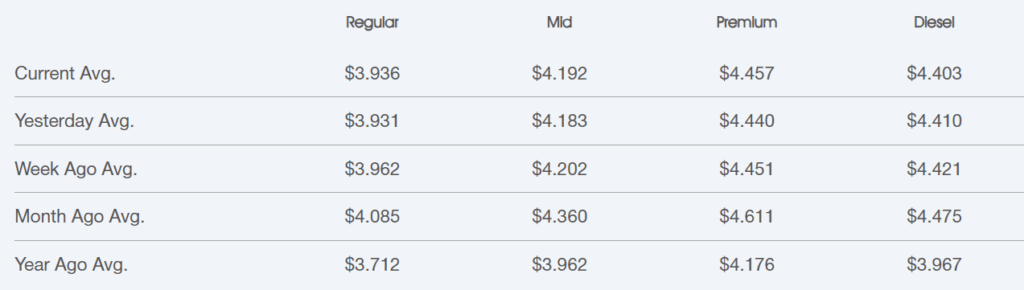
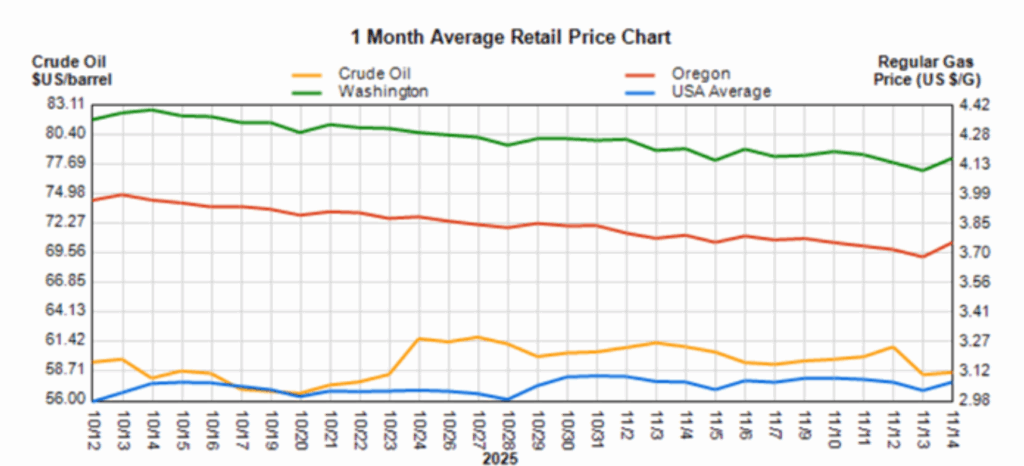
Fuel prices rose this week, as prices are up on both gas and diesel. Rack averages in Portland for E10 gasoline jumped $0.07/gal, while diesel jumped $0.05/gal. Just as fuel prices hit their annual lows, the Olympic Pipeline reported leaks near Everett, Washington, which caused BP to shut down sections of the pipeline. This will likely put a bottleneck on the supply of gas and diesel throughout the PNW, as prices will likely jump significantly over the next few days and continue to remain high for the following weeks. This comes at a less-than-ideal time for commuters, as fuel prices were expected to remain low rolling into December and the holiday season. With Thanksgiving approaching next week, the demand for fuel will continue to rise as the supply experiences temporary bottlenecks.  

fuel-market-report-star-oilco-5-18-24

Important Note: Per the City Of Portland, “Distributors in the City of Portland are required to meet the minimum biofuel content requirements for all fuel they distribute beginning on May 15, 2024. All diesel fuel distributed to retail stations, non-retail dealers, or wholesale purchaser-consumers must include a minimum of 15% biofuel content, from either renewable diesel or biodiesel. This requirement increases to 50% on May 15, 2026, and 99% on May 15, 2030”.

Want to know what to expect this Fall in regards to our diesel market? You can read our 2025 Diesel Market Outlook For Oregon.

Crude oil is trading below $60, at a current price of $59.71/barrel. This is $0.98/barrel lower than it was last week.

Crude oil is the main ingredient for gasoline and diesel. Per AAA, on average about 50% of what you pay at the pump is the price of crude oil, breaking down as 25% refining, 11% distribution & marketing, and 14% taxes – a helpful breakdown for consumers wondering why they are paying the prices that they pay. Crude Oil is currently trading at $59.71/barrel compared to $60.69/barrel last week and $66 a year ago. 

It’s essential to recognize that fuel prices result from a complex interplay of the factors mentioned above and other regional factors. Additionally, prices may vary by specific regions within Oregon and Washington. For the most precise and up-to-date information on fuel prices and the causes for these price changes within your area, use the links below for AAA & GasBuddy.

If you have any questions, feel free to contact Star Oilco and speak to one of our fuel market advisors to discuss how the market can impact your business.

Set up your R99 Mobile Fueling Onsite Service in Portland Today Including Dyed Untaxed R99.

Give Us A Call Today

For other news in the fuel market:

https://gasprices.aaa.com/?state=OR

https://www.gasbuddy.com/charts

Join the Fuel Market Report newsletter for your weekly fill of updates!

Two semi-trucks driving on a highway with trees in the background
Fuel Market Report: Nov 2nd – Nov 8th, 2025 1024 683 Star Oilco

Fuel Market Report: Nov 2nd – Nov 8th, 2025

fuel-market-report-star-oilco

Did You Know That R99 Is The Same Cost As Diesel Currently?

Call to set up R99 Mobile Fueling Onsite Service in Portland at the same cost of retail diesel. Dyed untaxed R99 is also available. Give us a call today to schedule your delivery.

Wholesale Price Average 11/8/25

Wholesale LowWholesale Avg
E10$2.21$2.33
B5$2.71$2.71
B20$2.72$2.77
R99$2.43$2.49

Average Retail Prices 11/8/25

NationalOregonWashington
E10$3.07$3.82$4.22
B5$3.74$4.33$4.94

Taxes

FederalState: ORLocalState: WA
Gas$0.184$0.40$0-.13$0.494
Diesel$0.244$0.40$0-.13$0.494

Portland Retail Fuel Price Variance

Fuel Market News

Fuel prices dropped across the board this week, with gas and diesel prices down. It was the first week in 2 months where wholesale prices dropped while retail prices increased. Wholesale rack averages dropped $0.03/gal for E10 gasoline, and over $0.15/gal for B5 & B20 diesel. The government shutdown has seemingly come to an end with a vote from the Senate last night to continue funding and operating the government. This has calmed many worries within the market as the shutdown was the longest recorded in historyWith the government back in session, we may see prices continue to fall as fears of a continued shutdown are fading within the market. Crude Oil prices are hovering just about $60/barrel for WITI crude, as prices have risen slightly over the last two weeks.

fuel-market-report-star-oilco-5-18-24

Important Note: Per the City Of Portland, “Distributors in the City of Portland are required to meet the minimum biofuel content requirements for all fuel they distribute beginning on May 15, 2024. All diesel fuel distributed to retail stations, non-retail dealers, or wholesale purchaser-consumers must include a minimum of 15% biofuel content, from either renewable diesel or biodiesel. This requirement increases to 50% on May 15, 2026, and 99% on May 15, 2030”.

Want to know what to expect this Fall in regards to our diesel market? You can read our 2025 Diesel Market Outlook For Oregon.

Crude oil is trading just below $61, at a current price of $60.69/barrel. This is $0.43/barrel higher than it was last week.

Crude oil is the main ingredient for gasoline and diesel. Per AAA, on average about 50% of what you pay at the pump is the price of crude oil, breaking down as 25% refining, 11% distribution & marketing, and 14% taxes – a helpful breakdown for consumers wondering why they are paying the prices that they pay. Crude Oil is currently trading at $60.69/barrel compared to $60.26/barrel last week and $66 a year ago.

It’s essential to recognize that fuel prices result from a complex interplay of the factors mentioned above and other regional factors. Additionally, prices may vary by specific regions within Oregon and Washington. For the most precise and up-to-date information on fuel prices and the causes for these price changes within your area, use the links below for AAA & GasBuddy.

If you have any questions, feel free to contact Star Oilco and speak to one of our fuel market advisors to discuss how the market can impact your business.

Set up your R99 Mobile Fueling Onsite Service in Portland Today Including Dyed Untaxed R99.

Give Us A Call Today

For other news in the fuel market:

https://gasprices.aaa.com/?state=OR

https://www.gasbuddy.com/charts

Join the Fuel Market Report newsletter for your weekly fill of updates!