

Star Oilco

Stack of hundred dollar bills representing fuel tax savings
Fuel Tax Advantages 1024 683 Star Oilco

Fuel Tax Advantages

A Guide To Fuel Tax Advantages And Wholesale vs Retail Prices 

Wholesale prices from direct deals cut costs for businesses buying in bulk. Retail prices, including taxes and operational fees, determine your pump price. Opting for fuel supplier purchases gives businesses constant supply, stable prices, and a boost in productivity. 

Discover the layers of federal, state, and sales taxes shaping retail diesel costs and we will also discuss the exlusive advantages of choosing a local fuel supplier.  

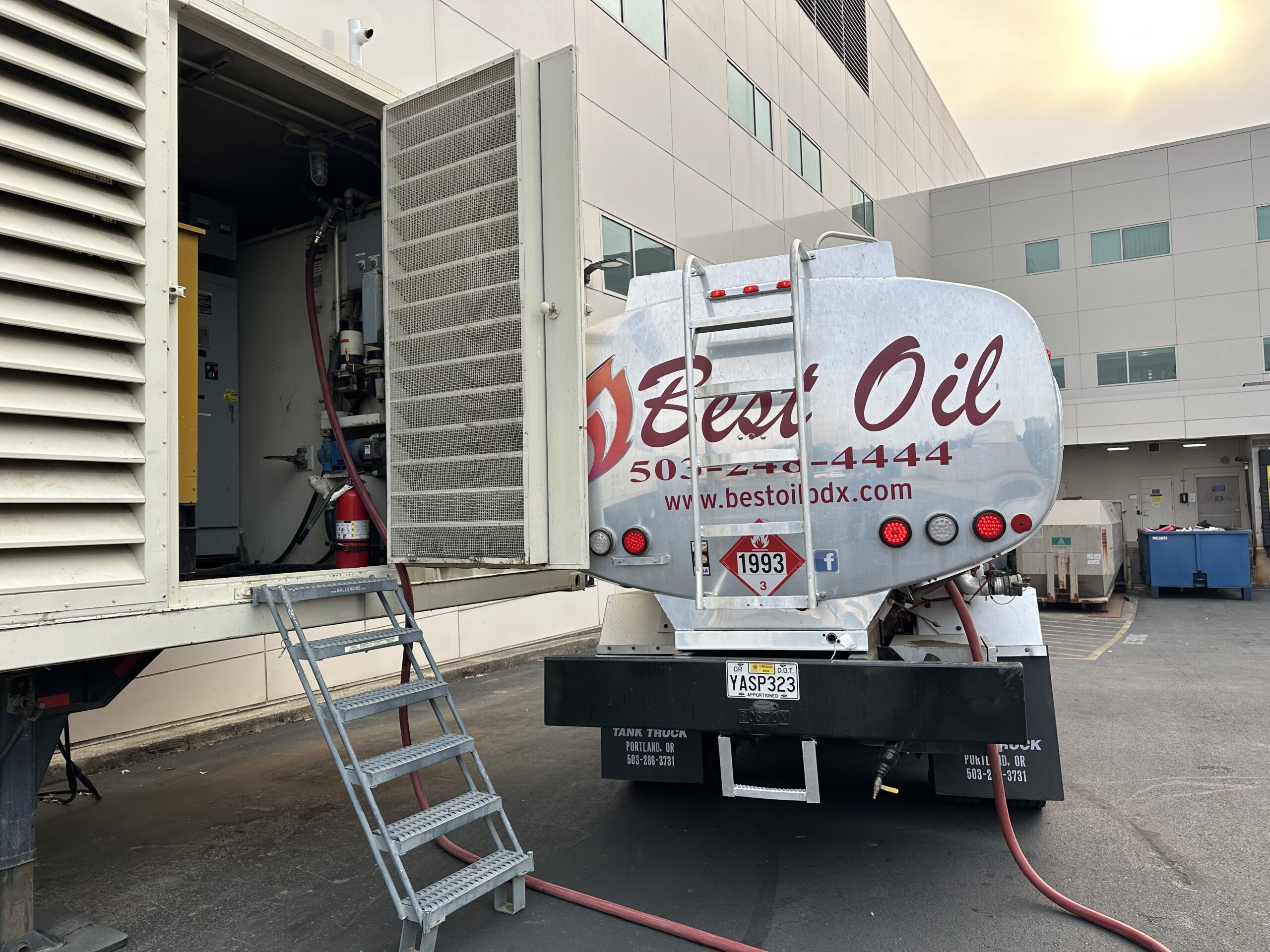
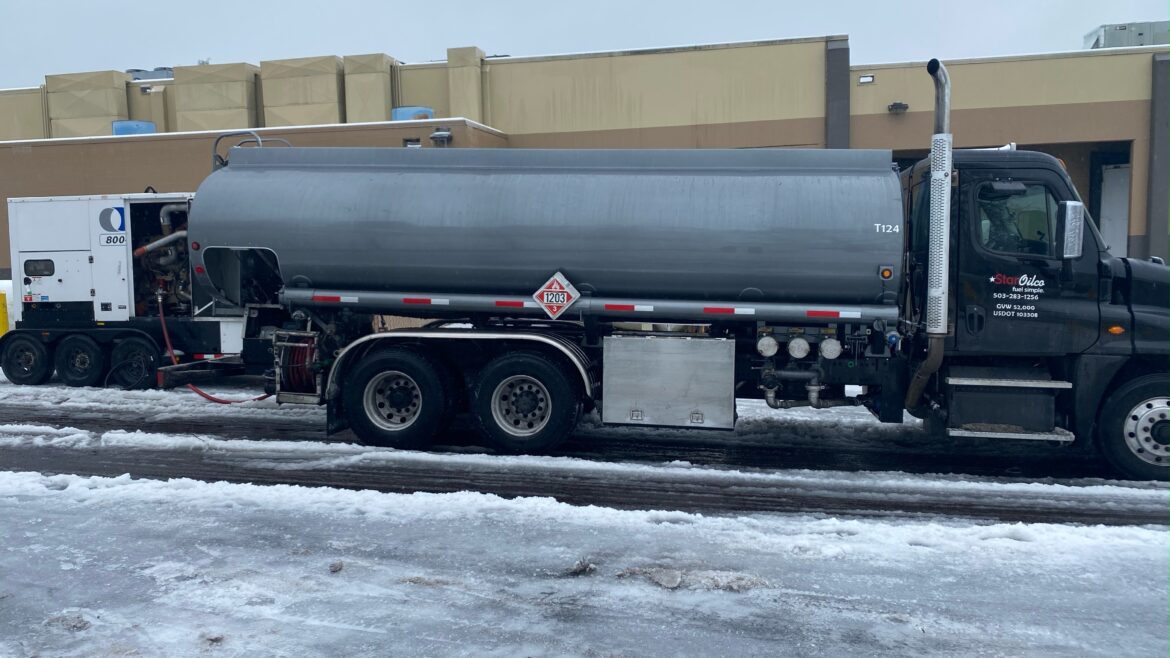
Star Oilco fuel tanker truck delivering diesel to refrigeration unit during icy winter conditions

The Difference Between Wholesale vs Retail Prices 

In fuel commerce, the distinction between wholesale and retail prices plays a crucial role in shaping business strategies and consumer choices. If we dive into the key differences that define these pricing models:

Wholesale Fuel Prices 

It represents the fuel cost at the initial point of sale between the fuel supplier and business entities. This transaction is pivotal for businesses that require fuel in substantial quantities. Here’s a breakdown of the key points: 

Transaction Dynamics 

  • Wholesale fuel prices are decided through direct transactions between fuel suppliers and businesses. 
  • These transactions typically involve bulk purchases, allowing businesses to acquire fuel in larger quantities. 

Bulk Purchase Advantage 

  • One of the primary features of wholesale fuel prices is the cost advantage associated with bulk purchases, such as consistent prices and no price inversion according to market demands. 
  • Businesses buying fuel in larger quantities can negotiate lower prices per unit, resulting in significant cost savings. 

Retail Fuel Prices 

This is the total cost consumers bear at gas stations or retail outlets. It’s essential to recognize the elements contributing to retail prices, providing a transparent view for consumers. 

Tax Inclusions 

A notable component of retail fuel prices is taxes. These taxes are imposed at federal, state, and local levels, contributing to government funds for infrastructure and transportation projects. 

Retailer Margins and Operational Costs 

  • It incorporates the profit margin of the fuel retailer. 
  • Operational costs, such as maintenance, staffing, and other overheads related to running a retail outlet, are also factored into the final retail price. 

Taxes Associated with Retail Fuel Prices 

Understanding fuel taxes is crucial for businesses and consumers alike, as these levies play a vital role in government revenue and impact the final pump price. Here’s a concise breakdown: 

Person calculating taxes and expenses with receipts and a calculator

Federal Excise Tax: 

The nature of this tax is a fixed amount applied to each gallon of fuel, covering both gasoline and diesel. It primarily funds essential national projects, especially those linked to highways and commuting infrastructure. 

State Excise Tax: 

This fuel tax varies by state, leading to diverse fuel prices. Revenues go directly to state transportation funds, supporting local projects like road maintenance. Higher tax rates in some states mean higher fuel prices at the pump. 

Sales Tax: 

This tax is a percentage of the total sale price, including the base fuel price and applicable excise taxes.  

Structures vary, with some states applying the percentage to the sum of the base price and excise taxes from federal and state authorities. The revenues fund general state services beyond conveyance projects. 

The Business Benefits of Bulk Fuel Purchases From Fuel Suppliers 

Buying fuel at wholesale prices is a strategic move that can uplift your business more than you think. These benefits are particularly relevant for large-scale operations in both industrial and governmental sectors and fuel sellers who acquire wholesale fuel for end-customer distribution. 

1. All-Time Availability:

Annual contracts with bulk fuel suppliers ensure a consistent and reliable fuel supply, eliminating the risk of interruptions during emergencies and providing specific machinery with a steady source. 


2. Consistent Pricing and Time Savings:

Locking in a contract guarantees compatible fuel prices, allowing for budgetary planning. This streamlined process saves time, eliminating the need for market price research, negotiations, and interruptions to operations. 


3. Continual Supply and Price Protection:

Bulk fuel contracts offer a constant and uninterrupted fuel supply, shielding businesses from market fluctuations. Additionally, they prevent the impact of rare occurrences like price inversions, ensuring stability in fuel costs and availability. 


4. Increased Productivity:

Immediate access to fuel minimizes route deviations for delivery vehicles, streamlining operations and enhancing fleet competitiveness. On-site fuel storage eliminates concerns about station closures during off-hours, weekends, or holidays, reducing logistical complexities for 24/7 operations. 

Sign up to receive our fuel market report for your weekly fill of updates!

Name
Two semi-trucks driving on a highway with trees in the background
Fuel Market Report: Feb 15th – Feb 21st, 2026 1024 683 Star Oilco

Fuel Market Report: Feb 15th – Feb 21st, 2026

fuel-market-report-star-oilco

Did You Know That R99 Is The Same Cost As Diesel Currently?

Call to set up R99 Mobile Fueling Onsite Service in Portland at the same cost of retail diesel. Dyed untaxed R99 is also available. Give us a call today to schedule your delivery.

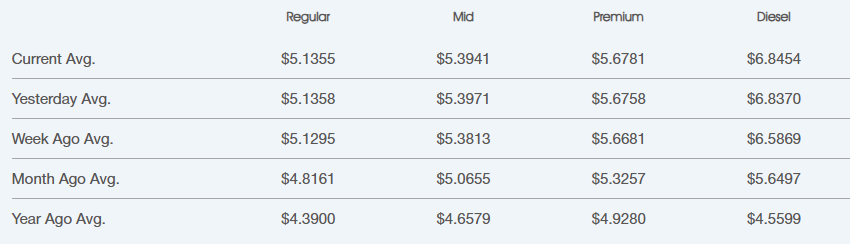
Wholesale Price Average 2/21/26

Wholesale LowWholesale Avg
E10$2.68$2.80
B5$2.79$2.97
B20$2.81$2.92
R99$2.42$2.50

Average Retail Prices 2/21/26

NationalOregonWashington
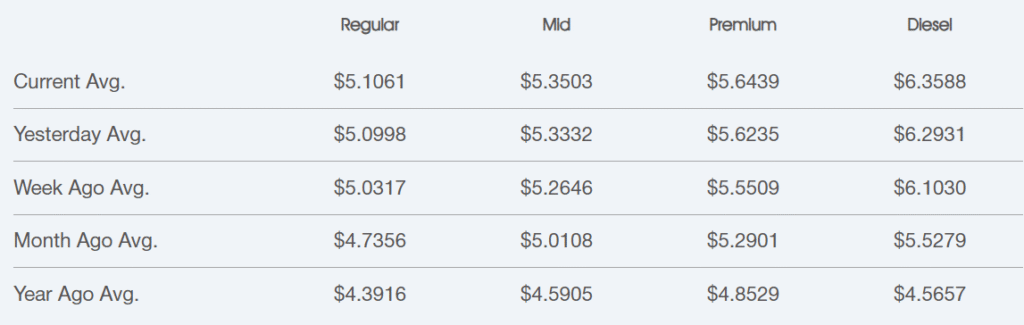
E10$2.95$3.92$4.35
B5$3.73$4.22$4.86

Taxes

FederalState: ORLocalState: WA
Gas$0.184$0.40$0-.13$0.494
Diesel$0.244$0.40$0-.13$0.494

Portland Retail Fuel Price Variance

Fuel Market News

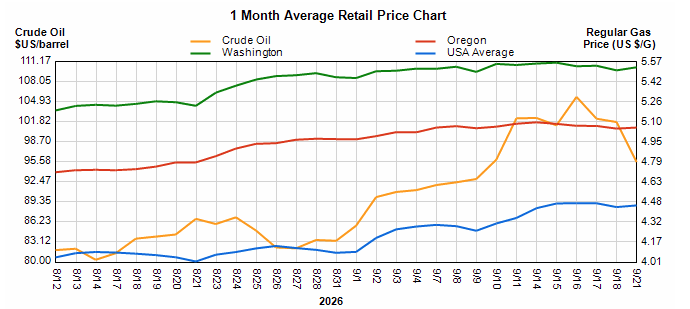
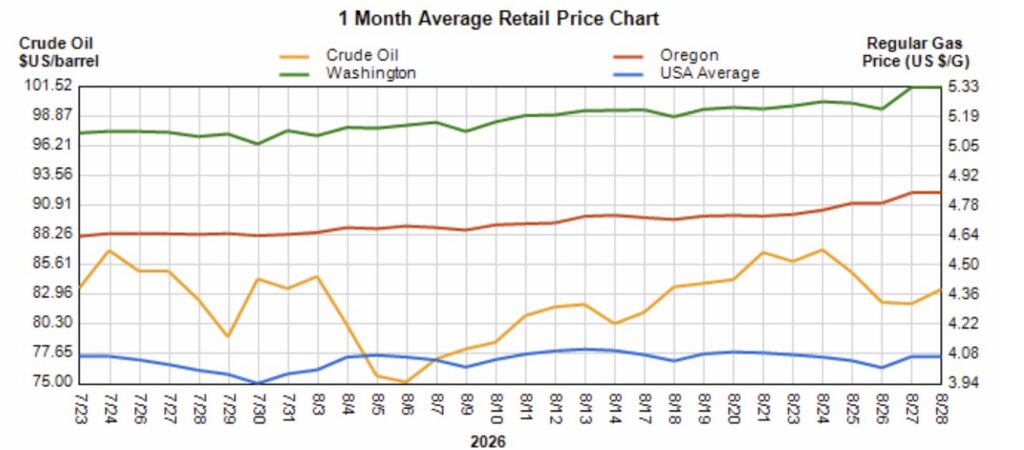
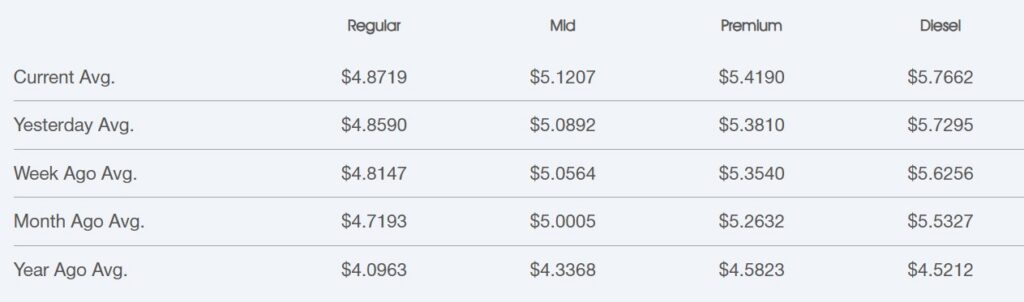
Fuel prices are up for the fourth consecutive week, with gas prices jumping over $0.24/gal and diesel over $0.15/gal. The average retail price for gas in Portland has increased by $0.24/gal over the last week. The Olympic pipeline went down for maintenance on Tuesday, February 17th, sending prices up across WA & OR. The Pipeline resumed operation on Friday morning, the 20th, but the effects on the supply chain are still being felt. U.S. Crude oil prices are also up over $2/barrel, which has contributed to higher fuel prices across the nation. This, along with California refineries switching to summer blends of fuel could likely push prices higher into this week as we continue to see prices climb.

fuel-market-report-star-oilco-5-18-24

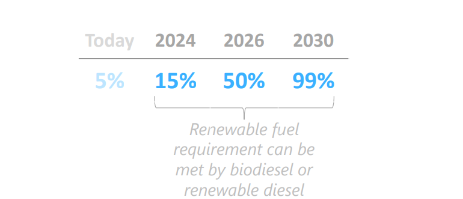
Important Note: Per the City Of Portland, “Distributors in the City of Portland are required to meet the minimum biofuel content requirements for all fuel they distribute beginning on May 15, 2024. All diesel fuel distributed to retail stations, non-retail dealers, or wholesale purchaser-consumers must include a minimum of 15% biofuel content, from either renewable diesel or biodiesel. This requirement increases to 50% on May 15, 2026, and 99% on May 15, 2030”.

Reasons For Price Variance

Oil Prices Above $65

OPEC+ Strategic Pause

Crude oil is trading above $65, at a current price of $65.90/barrel. This is $2.17/barrel higher than the week prior.

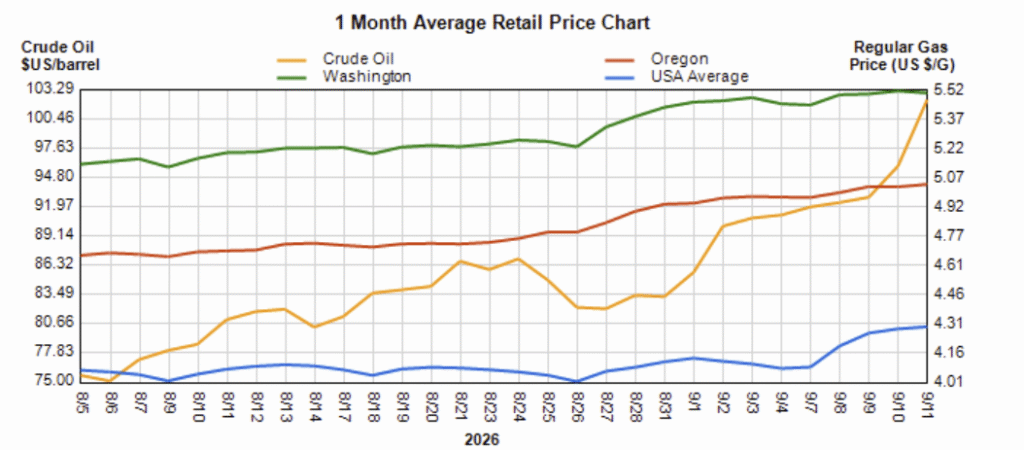
Crude oil is the main ingredient for gasoline and diesel. Per AAA, on average about 50% of what you pay at the pump is the price of crude oil, breaking down as 25% refining, 11% distribution & marketing, and 14% taxes – a helpful breakdown for consumers wondering why they are paying the prices that they pay. Crude Oil is currently trading at $65.90/barrel compared to $63.73/barrel last week and $69 a year ago.

It’s essential to recognize that fuel prices result from a complex interplay of the factors mentioned above and other regional factors. Additionally, prices may vary by specific regions within Oregon and Washington. For the most precise and up-to-date information on fuel prices and the causes for these price changes within your area, use the links below for AAA & GasBuddy.

If you have any questions, feel free to contact Star Oilco and speak to one of our fuel market advisors to discuss how the market can impact your business.

Set up your R99 Mobile Fueling Onsite Service in Portland Today Including Dyed Untaxed R99.

Give Us A Call Today

For other news in the fuel market:

https://gasprices.aaa.com/?state=OR

https://www.gasbuddy.com/charts

Join the Fuel Market Report newsletter for your weekly fill of updates!

B99 Biodiesel as a Heavy Duty Fuel 150 150 Star Oilco

B99 Biodiesel as a Heavy Duty Fuel

Using B99 Biodiesel in a Tier 4 Heavy Duty Diesel

B99 Biodiesel reduces CO2 footprint of a 105,500 GVW truck and trailer by more than half at a lower cost than petroleum diesel.

What is B99 Biodiesel?

B99 Biodiesel is as pure of blend of Biodiesel you can get in the United States and still participate in the incentives associated with this alternative fuel.  B99 is the product received by petroleum refiners, terminals, and truck stops to blend with petroleum diesel.  Biodiesel is a renewable, clean-burning diesel replacement.  B99 Biodiesel is a common blendstock with petroleum diesel (being 99% biodiesel).  It can be presumed that nearly every major truck stop throughout the US is consistently using either a blend of 5%, 10% or 20% of biodiesel   The reason for this is both due to its price advantage against petroleum currently as well as Federal/State laws requiring it’s use.

Why Higher Blends of Biodiesel Matter?

Biodiesel is a low CO2, net energy positive fuel.  Depending on the feedstock Biodiesel is made from a CO2 reduction of 30% to 80%+ can be expected compared to petroleum diesel.  As the West Coast (Oregon, Washington and California) ramps up CO2 regulations that charge an additional cost for carbon emissions associated with petroleum diesel the financial case for Biodiesel becomes obvious.  Early adopters will see direct financial benefit.

Star Oilco has fielded the Optimus Technologies system on our 105,500 GVW truck and trailers.  Star Oilco began with a single Freighliner truck and trailer operating a Cummins ISX as a trial.  This truck’s typical route was approximately 305 miles round trip from Portland, Oregon to Grays Harbor, Washington.  This run is from Star Oilco in Portland, Oregon to the Grays Harbor REG Biodiesel plant and back to the Portland terminals for delivery of this product.    Over the last year and a half this truck has performed amazingly well, the only maintenance concern is swapping the fuel filters more regularly with every oil change.  Mileage and power difference are negligible as noticed by drivers or our Elog system.  On a few occasions a loss of power was experienced requiring an in between service fuel filter swap.

This field trial of the Optimus Technologies system Star Oilco has regularly saved between $15 and $75 a day when running this dedicated route, depending on the cost of B99 Biodiesel versus petroleum ultra low sulfur diesel.  Consistently the price of B99 Biodiesel has been below petroleum diesel in the Portland, Oregon market. This has been due to a combination (or is effected by) RIN values, a Blender’s Tax Credit on biodiesel, and Oregon’s Clean Fuels Program which also prices the CO2 reduction value of B99 Biodiesel.   We see this trend continuing as an assumed market reality for biodiesel.

What is the business case for our deploying B99 Biodiesel Optimus Tech upfit kits?

The systems increase the intelligence of our late model trucks with their very complicated Tier 3 and Tier 4 emissions systems.   The Optimus Kit enables two saddle tanks to operate with the duty cycle of the truck. One tank (which we will be running B5 ULSD or R99 through) is dedicated to fuel the particulate trap and SCR systems.  These systems have extremely tight tolerances and tend to choke on higher blends of biodiesel.  By dedicating a tank with a smart controlling system we reduce the maintenance and concern with these after treatment systems hopefully extending the maintenance cycle on these traps by years while reducing inconvenient efficiency killing regens.

The Optimus Kit also enables a modern diesel engine to run B99 Biodiesel.  It does this by controlling the temperature of the fuel in it’s dedicated saddle tank and routing B99 to the engine when the RPMs and operating temperatures are best for this fuel. Upon start up and shut down the Optimus Technology kit will flush the engine, fuel rail, and injectors with the petroleum/R99 tank ensuring easy start up and no cold weather effects.  The B99 saddle tank is temperature controlled as well to enable performance in extreme weather.  When operating under load the Optimus Kit will move to B99 as the fuel into the engine.  As B99 Biodiesel has a substantial reduction of emissions, particulate, and other compounds when combusted; this further reduces the impact of miles on a truck to the particulate trap and it’s service needs.

Beyond this maintenance experience, the performance and function of the system has been indistinguishable to our other trucks running the same route.

Biodiesel Mandates in the Pacific Northwest

Oregon and Washington have passed legislation which puts a price on the CO2 emissions associated with petroleum diesel.   These laws mean that petroleum fuel costs more than biofuels with a low CO2 footprint.  These laws are also added on top of other mandates and incentives for biofuels.  Biodiesel blends between 5% and 20% are common on the west coast at every gas station, cardlock, and truckstop.

How Can I Utilize B99 or B100 in My Own Fleet? 

Star Oilco uses The Vector System developed by Pittsburgh-based Optimus Technologies. The Vector System is the only EPA-compliant biodiesel engine system and upgrades any medium or heavy-duty engine to operate on 100% biodiesel. It can be installed in as little as 12 hours. Learn more about The Vector System by contacting Optimus Technologies here directly or by reaching out to Star Oilco locally. 


Contact Form

  • This field is for validation purposes and should be left unchanged.


For more on Biodiesel, Renewable Diesel or Low CO2 fuels please see these other Star Oilco articles:

Every Question Star Oilco has been asked about Biodiesel

Every Question Star Oilco has been asked about Renewable Diesel 

Do you have questions about Renewable Diesel in Oregon 

Wet Hose Fueling Service in Portland, Oregon

About Diesel Fuel 

Biodiesel Use and Handling Guide 

Pacific Pride commercial fuel station with service vehicles fueling
Why Business Owners Should Use Fuel Cards for Business Operations 1024 556 Star Oilco

Why Business Owners Should Use Fuel Cards for Business Operations

Business owners typically consider these factors when deciding between a fuel card and a credit card for their fleet. 

Control Over Spending 

Fuel cards offer additional control as they restrict purchases to fuel and specific stations. Credit cards allow for multiple purchases, making expense tracking more challenging. This level of detail makes it possible for better budgeting and financial planning. Cardlock programs allow spending limits on individual cards. This provides an extra layer of control over fuel expenses, preventing employees from exceeding the designated budget. 

Imagine having full control over card spending with automatic limits so you can continue to focus on your business operations without managing your fuel expenses.

Fuel cards: 

  • Limit purchases to fuel only. 
  • Restrict use to specific stations. 

Credit cards: 

  • Allow for various purchases beyond fuel. 
  • Make expense tracking harder. 
Two Pacific Pride fuel cards on a country road background

Fuel discounts 

Fuel cards often come with discounts at participating stations, reducing fuel costs. Credit cards may offer reward points, but these could have less value than fuel discounts. With a fuel card, you get a discount right away, which can be several cents or even more per gallon. That can add up quickly depending on how much you drive. With a credit card, reward points may have a waiting period or expire after a certain amount of time. Additionally, fuel cards are typically easier to use than credit cards, as they are accepted at more gas stations. 

Fuel cards: 

  • Offer immediate discounts at participating fuel stations. 
  • Discounts can be significant (several cents or more per gallon), leading to substantial savings with high fleet fuel consumption. 
  • Wide network of participating stations ensures easy access to discounts. 

Credit cards: 

  • Reward points may offer less value than fuel card discounts. Earning points often translates to minimal gas discounts. 
  • Points typically come with restrictions like redemption minimums, blackout dates, and limitations on usable items. 
  • Using points often requires extra effort compared to automatic fuel card discounts. 

Data and tracking 

Fuel cards provide detailed data on fuel purchases, driver behavior, and fuel efficiency. Credit cards offer less data, making it more difficult to identify trends and optimize fleet operations. With a fuel card, companies can track individual driver behavior, such as what fuel stations they use, how much they purchase, and how often they make stops. They can also compare this data with other fleets to identify trends and areas for improvement. With a credit card, companies must rely on self-reported data, which can be unreliable and make it difficult to make informed decisions about fleet operations. 

Fuel cards: 

  • Track fuel purchases (date, time, location, amount, gallons). 
  • Reveal driver behavior patterns (frequent stops, refueling times, locations). 
  • Enable monitoring of fuel efficiency (by tracking fuel use vs. mileage). 

Credit cards: 

  • Limited data (total amount spent, merchant name). 
  • Hindering identification of fuel usage trends. 
  • Make it difficult to optimize fleet operations (due to lack of driver and efficiency data). 

How could a fuel card help you better manage your fuel tracking and expenses automatically to save time and money for your business operations and your bottom line?

Security 

Fuel cards typically have PIN verification and spending limits, minimizing fraud risk. Credit cards can be misused for unauthorized purchases. Additionally, fuel cards are more secure than credit cards because they are not linked to a bank account, limiting the amount of money that can be withdrawn. On top of that, fuel cards are easier to track and monitor than credit cards, making it easier to identify any suspicious activity.  

Fuel cards typically have PIN verification and spending limits, minimizing fraud risk. Credit cards can be misused for unauthorized purchases. Additionally, fuel cards are more secure than credit cards because they are not linked to a bank account, limiting the amount of money that can be withdrawn. On top of that, fuel cards are easier to track and monitor than credit cards, making it easier to identify any suspicious activity.  

Star Oilco black fuel truck parked on rural road with trees in background

JOIN THE FUEL MARKET REPORT NEWSLETTER FOR YOUR WEEKLY FILL OF UPDATES!

Name
Star Oilco heating oil delivery truck on a residential driveway in front of a large home
Carbon Footprint Reduction 473 1024 Star Oilco

Carbon Footprint Reduction

How Fleet Managers Can Lower Emissions Using Renewable Fuels

Fleet managers are always looking for ways to lower costs and help the environment, especially living in the Portland area. One of the biggest goals in the Pacific Northwest is to lower carbon emissions. The laws are getting stricter and companies set higher sustainability goals, like the Portland Renewable Fuel Standard, and it’s important to find good ways to reduce a fleet’s footprint. Renewable fuels are a great option for them to cut emissions without losing performance.

What Are Renewable Fuels?

Renewable fuels, or biofuels, are made from natural sources like plants, animal waste, and other materials that can break down easily. They’re different from fossil fuels, like gasoline and diesel, because they come from things that can grow back or be replaced, making them better for the environment. Here are some common types:

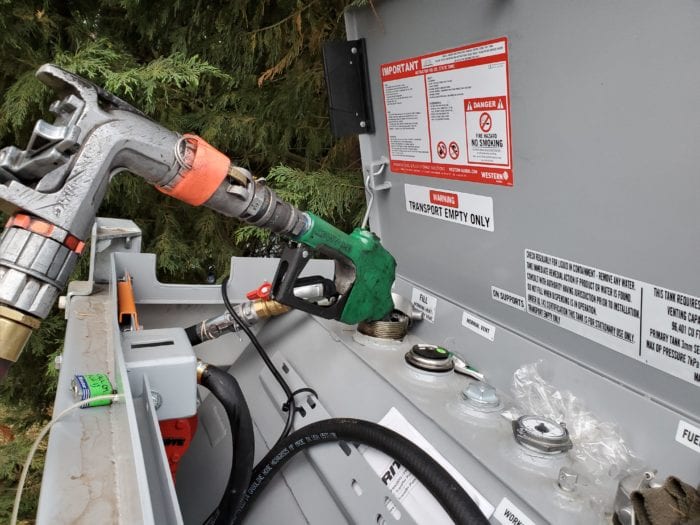
Close-up of green diesel nozzle fueling a generator unit outdoors

Biodiesel

Biodiesel is a type of fuel made from natural oils like vegetable oils or animal fats. These oils go through a process that turns them into fuel that can be used in diesel engines. The great thing about biodiesel is that it can be mixed with regular diesel fuel, so there’s no need to make major changes to diesel engines. This helps reduce harmful emissions that contribute to air pollution. For example, trucks or buses that run on diesel can use biodiesel blends to be a bit more environmentally friendly.


Renewable Diesel

Renewable diesel is similar to biodiesel, but it’s made using a different process. The result is a fuel that’s chemically the same as regular diesel, which means it works in any engine that runs on diesel. What makes renewable diesel better is that it has a much smaller carbon footprint, which means it produces less pollution. Because of this, it’s considered a “greener” option for companies that rely on diesel engines.


Ethanol

Ethanol is a renewable fuel made from plants like corn, sugarcane, or other crops. It’s often blended with gasoline and used in regular cars. When ethanol is mixed with gasoline, it helps reduce the harmful gases that come from burning fuel. For example, you might see a fuel at the gas station labeled E10 or E15, which means it’s 10% or 15% ethanol mixed with gasoline. Ethanol is a common way to make car fuel a little more eco-friendly without needing to change anything about the cars themselves.


Renewable Natural Gas (RNG)

Renewable Natural Gas, or RNG, is made from organic waste, such as food scraps, animal manure, or the gases that come from landfills. This waste naturally releases methane, which is a powerful greenhouse gas. RNG captures this methane and turns it into a cleaner version of natural gas. This means that RNG can be used to power things like homes, vehicles, or industries that rely on natural gas, but with less environmental harm. It’s a smart way to take waste that would otherwise pollute the air and turn it into useful energy.

greenhouse gas emissions reduction graphic by Star Oilco

The Environmental Benefits of Using Renewable Fuels

The biggest reason to switch to renewable fuels is that they are better for the environment. When you burn fossil fuels like gasoline or diesel, they release a lot of greenhouse gasses (GHGs), which trap heat in the atmosphere and cause climate change. Renewable fuels, on the other hand, produce much lower levels of these harmful gasses.

For example, using biodiesel can cut down greenhouse gas emissions by about 86% compared to regular diesel. Renewable diesel can reduce emissions by around 75%. This makes a huge difference in lowering the overall carbon footprint, which is the amount of carbon dioxide and other greenhouse gasses released into the air.

But it’s not just about GHGs. Renewable fuels also produce less harmful pollution, like soot and sulfur dioxide, which are common with traditional diesel fuels. These pollutants can lower air quality and cause health problems, especially for people with asthma or other respiratory issues. By using renewable fuels, we can improve the air we breathe and reduce health risks linked to diesel exhaust. In the long run, this could mean fewer cases of lung disease and other health issues caused by pollution.

How Fleet Managers Can Use Renewable Fuels

Check Current Fuel Use and Emissions

The first step is to understand how much fuel your fleet uses and how many emissions it produces. An emissions audit can help you see which vehicles or equipment create the most emissions so you can target them for renewable fuel use.

Consider Renewable Diesel and Biodiesel

Renewable diesel and biodiesel are great options for fleet managers. Both types of fuel work with existing diesel engines, so you won’t need to spend money on new vehicles. Start by slowly adding renewable diesel or biodiesel blends to your fueling plan and watch the results.

Work With Renewable Fuel Suppliers

Teaming up with a reliable supplier like Star Oilco is key to getting a steady supply of quality renewable fuels. Star Oilco offers options like biodiesel and renewable diesel that fit various industries. Working with experts helps you find the best fuels for your fleet.

Include Renewable Fuels in Your Sustainability Goals

Set clear goals for reducing emissions using renewable fuels as part of your overall sustainability plan. Fleet managers can track their progress and share these results in corporate sustainability reports. Customers and stakeholders care more about companies with strong environmental practices.

Take Advantage of Incentives

Many states and local governments provide incentives and rebates for using renewable fuels. Fleet managers should look into these programs to help lower the costs of switching to renewable fuels. These programs not only make it cheaper but also help speed up the shift to cleaner transportation.

Why Fleet Managers Should Act Now

The transportation industry is one of the biggest contributors to global greenhouse gas (GHG) emissions, and that’s why fleet managers have an important role in building a more sustainable future. By switching their fleets to renewable fuels, they can significantly reduce their carbon footprint, comply with strict environmental laws, and improve their company’s image as an eco-friendly business.

As renewable fuel technology continues to improve, it’s becoming easier and more beneficial to make the switch. Using renewable fuels not only helps lower emissions, but it also gives businesses a competitive advantage. More and more customers and clients prefer to support companies that are committed to protecting the environment, and using renewable fuels is a strong way to show that commitment.

In addition to cutting emissions, renewable fuels help keep fleet operations running smoothly and efficiently. Fleet managers can make a real difference by reducing their fleet’s impact on the environment, which is a major step toward sustainability. Plus, as renewable fuels become more widely available, they’re a practical choice for meeting both business and environmental goals.

For more information about how renewable fuels can benefit your fleet, it’s worth exploring how they can help you stay ahead in the industry while doing your part for the planet.

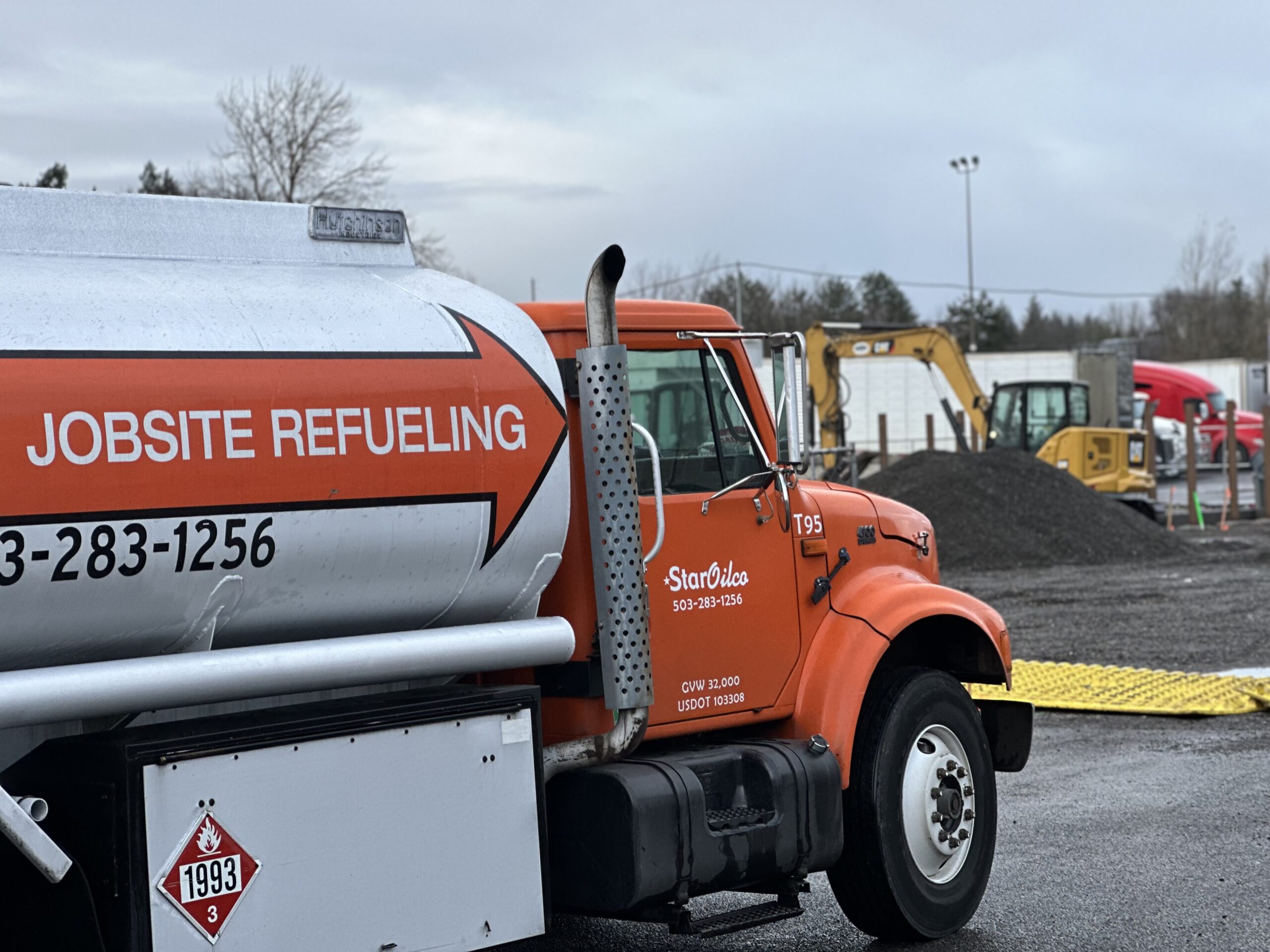
Star Oilco fuel trucks staged for mobile on-site fueling

Visit Star Oilco to check out our renewable fuel solutions!

JOIN THE FUEL MARKET REPORT NEWSLETTER FOR YOUR WEEKLY FILL OF UPDATES!

Name
Fuel nozzles at a gas station in multiple colors
Saving Money On Rising Fuel Costs 1024 683 Star Oilco

Saving Money On Rising Fuel Costs

Here are some fuel-saving tips that a fuel delivery company can offer to their construction customers to help them save money on fuel.  

Optimize Routes and Schedules 

Plan deliveries to minimize travel distances and combine multiple stops whenever possible. This will reduce fuel and time costs and emissions from vehicles. Additionally, it will increase efficiency by reducing wait times and allowing for more deliveries to be made.

Reduced Costs & Environmental Impact: 

  • Minimize travel distances and combine deliveries to save on fuel and related expenses. 
  • This strategy also reduces emissions from our delivery vehicles, contributing to a greener future. 
  • Enhance your efficiency. By combining stops, we streamline delivery routes, reducing wait times and allowing for more deliveries in a shorter amount of time. 

Promote Proper Equipment Maintenance 

Every minute counts on a construction site, but even short breaks can lead to unnecessary engine idling. Idling not only wastes fuel and increases costs, but also contributes to air pollution. With Portland’s new fossil-based diesel fuel restrictions within city limits, with the larger effort to achieve net-zero carbon emissions by 2050, this is a great time to consider how your business operations can reduce its fuel consumption and overall work to achieve net-zero carbon emissions. To promote a more environmentally friendly work environment and keep fuel costs down, employees should work together to discourage idling. A simple yet powerful solution is to remind workers to completely shut down engines during breaks, no matter how short. This small step can significantly reduce our overall fuel consumption and create a cleaner, healthier site for everyone. 

Idle Reduction: 

  • Even short breaks can lead to unnecessary engine idling, wasting fuel and increasing costs. 
  • Idling also contributes to air pollution, impacting the environment and worker health. 

Simple Solution, Big Impact: 

  • To promote a cleaner, more cost-effective worksite, all employees should work together to discourage idling. 
  • Remind workers to completely shut down engines during breaks, no matter how short. 
  • This small step can significantly reduce fuel consumption and create a healthier environment for everyone. 

Invest in Fuel-Efficient Equipment 

Consider upgrading to newer equipment models known for better fuel economy. By investing in fuel-efficient equipment, businesses can reduce their fuel costs and reduce their carbon footprint, as newer machines tend to be more fuel-efficient. Plus, newer models tend to have fewer parts and are more reliable, so businesses can expect to spend less on maintenance and repairs. 

Upgrading to fuel-efficient equipment: 

  • Reduces fuel costs for construction projects. 
  • Lowers a company’s carbon footprint by minimizing emissions. 

Newer equipment: 

  • Has fewer parts, simplifying maintenance needs. 
  • They also tend to be more reliable, leading to less downtime and repair expenses. 

Train Operators on Fuel-Saving Techniques

Operators should be trained on fuel-efficient driving habits, like avoiding excessive acceleration and maintaining steady speeds. Regular maintenance is crucial for fuel-efficient equipment as it ensures optimal performance and fuel efficiency. Maintenance services include regular engine tune-ups, oil changes, and air filter replacements, all of which contribute to better fuel economy. Additionally, regular maintenance helps to detect and fix any potential issues that may impact fuel efficiency, such as clogged or dirty fuel systems or faulty sensors, ultimately prolonging the life of the equipment and maximizing its fuel savings potential. 

Fuel-Efficient Operation: 

  • Avoid rapid acceleration and maintain steady speeds for optimal fuel economy. 

Regular Maintenance for Efficiency: 

  • Schedule routine engine tune-ups, oil changes, and air filter replacements. 

Identify & Fix Issues Early:  

  • Regularly check for clogged fuel systems, faulty sensors, and other potential issues. 
  • Early detection saves fuel and extends the equipment’s lifespan. 

Save Money with a Cardlock Fuel Card

Take control of your fueling operations and put money back in your pocket with a convenient cardlock fuel card program. Cardlock fuel cards are an easy way to track and manage fuel purchases. You save money and time by eliminating manual recordkeeping and billing. Plus, you can monitor fuel usage and get real-time reports. 

By applying these fuel-saving strategies, construction companies can experience significant cost reductions and environmental benefits. From optimizing delivery routes and promoting mindful equipment operation to regular maintenance practices, every step counts. 

Fuel nozzle leaning against stack of golden coins symbolizing fuel cost savings

JOIN THE FUEL MARKET REPORT NEWSLETTER FOR YOUR WEEKLY FILL OF UPDATES!

Name
Two semi-trucks driving on a highway with trees in the background
Fuel Market Report: Feb 8th – Feb 14th, 2026 1024 683 Star Oilco

Fuel Market Report: Feb 8th – Feb 14th, 2026

fuel-market-report-star-oilco

Did You Know That R99 Is The Same Cost As Diesel Currently?

Call to set up R99 Mobile Fueling Onsite Service in Portland at the same cost of retail diesel. Dyed untaxed R99 is also available. Give us a call today to schedule your delivery.

Wholesale Price Average 2/14/26

Wholesale LowWholesale Avg
E10$2.42$2.56
B5$2.73$2.82
B20$2.66$2.79
R99$2.29$2.35

Average Retail Prices 2/14/26

NationalOregonWashington
E10$2.92$3.68$4.15
B5$3.65$4.13$4.77

Taxes

FederalState: ORLocalState: WA
Gas$0.184$0.40$0-.13$0.494
Diesel$0.244$0.40$0-.13$0.494

Portland Retail Fuel Price Variance

Fuel Market News

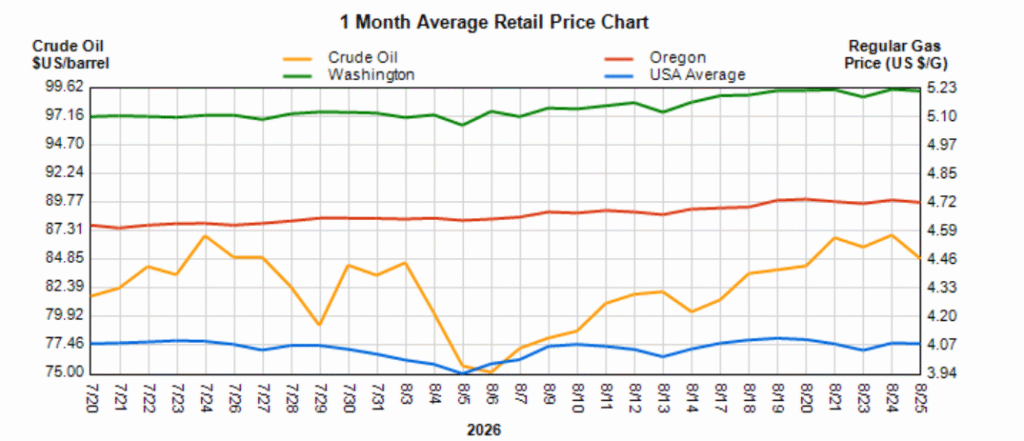
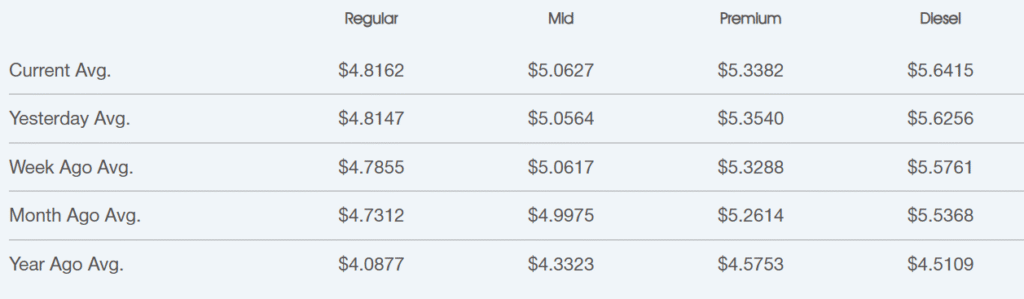
Fuel prices are up for the third consecutive week as prices jumped over $0.20/gal on gas and $0.12/gal on diesel this past week. Rack averages in Portland jumped $0.29/gal for regular E10 gasoline, and $0.13/gal for B5 & B20 diesel. The average retail price for gas in Portland has increased by $0.22/gal over the last two weeks. In part, this is due to current geopolitical tensions between Iran and the U.S along with higher crude oil prices, extreme storm weather across the nation, and refineries beginning to switch back to summer blend gas as we approach the spring season starting March 20th. We should expect prices to continue to trickle upwards as the switch to summer blend gas creates logistical and operational challenges affecting pricing and distribution.  

fuel-market-report-star-oilco-5-18-24

Important Note: Per the City Of Portland, “Distributors in the City of Portland are required to meet the minimum biofuel content requirements for all fuel they distribute beginning on May 15, 2024. All diesel fuel distributed to retail stations, non-retail dealers, or wholesale purchaser-consumers must include a minimum of 15% biofuel content, from either renewable diesel or biodiesel. This requirement increases to 50% on May 15, 2026, and 99% on May 15, 2030”.

Reasons For Price Variance

Oil Prices Above $60

OPEC+ Strategic Pause

Crude oil is trading above $60, at a current price of $63.73/barrel. This is $1.78/barrel higher than the week prior.

Crude oil is the main ingredient for gasoline and diesel. Per AAA, on average about 50% of what you pay at the pump is the price of crude oil, breaking down as 25% refining, 11% distribution & marketing, and 14% taxes – a helpful breakdown for consumers wondering why they are paying the prices that they pay. Crude Oil is currently trading at $63.73/barrel compared to $61.95/barrel last week and $71 a year ago.

It’s essential to recognize that fuel prices result from a complex interplay of the factors mentioned above and other regional factors. Additionally, prices may vary by specific regions within Oregon and Washington. For the most precise and up-to-date information on fuel prices and the causes for these price changes within your area, use the links below for AAA & GasBuddy.

If you have any questions, feel free to contact Star Oilco and speak to one of our fuel market advisors to discuss how the market can impact your business.

Set up your R99 Mobile Fueling Onsite Service in Portland Today Including Dyed Untaxed R99.

Give Us A Call Today

For other news in the fuel market:

https://gasprices.aaa.com/?state=OR

https://www.gasbuddy.com/charts

Join the Fuel Market Report newsletter for your weekly fill of updates!

Diesel fuel nozzle filling a refrigerated trailer in winter
Winter Diesel Additives For Portland Weather 1024 768 Star Oilco

Winter Diesel Additives For Portland Weather

How to Prevent Diesel Fuel from Gelling in Low Temperatures

When the chill of winter arrives in Portland and across Oregon, diesel engines face a unique challenge. Cold temperatures can transform diesel fuel from a fluid state into a gel-like substance, leading to significant engine issues. Understanding and combating these cold-weather challenges is crucial for optimal diesel performance

Understanding Cold-Weather Diesel Challenges

As temperatures drop in Portland, diesel fuel, known for its efficiency and power, encounters an Achilles’ heel—the tendency to gel. This gelling occurs primarily due to the crystallization of the waxes naturally present in diesel. When these waxes crystallize, they can clog fuel filters and lines, hindering fuel flow and causing engines to struggle or even fail to start. This is a common situation for those familiar with traveling in colder areas of Oregon, emphasizing the importance of preventive measures to ensure the uninterrupted performance and reliability of diesel machinery and vehicles.

Star Oilco black fuel delivery truck driving through snow during winter storm

The Science Behind Fuel Gelling and Wax Crystallization

Diesel fuel has a natural reaction to cold weather because it contains paraffin waxes. These waxes are helpful in warm weather because they provide energy to the fuel. But when temperatures get colder, the waxes start to solidify, just like water turns into ice when it freezes. As the temperature drops, the waxes form crystals that grow larger and make the fuel thicker.

This process is called crystallization, and it makes the fuel less fluid, which can cause gelling. When diesel fuel gels, it becomes thick and sludgy, like a semi-solid. This makes it difficult for the fuel to flow through the engine, which can lead to serious problems for diesel engines.

The formation of these wax crystals is a big issue because they can clog fuel lines and filters, stopping the engine from running properly. When fuel can’t move smoothly through the system, engines can stall or fail to start altogether. This is why gelling is such a major concern for diesel engines during cold weather, and it’s important to find solutions to prevent it from happening.

Introduction to Cold Flow Improvers

To address the issue of gelling, additives known as cold flow improvers have been developed. These chemical additives prevent diesel from gelling in cold temperatures by targeting wax crystals in the fuel. They keep these crystals small and dispersed, ensuring diesel remains fluid and pumpable. This functionality is crucial for maintaining smooth engine operation and fuel system efficiency in cold climates, such as those experienced in Portland and other areas of Oregon, without altering the diesel’s inherent properties.

How Cold Flow Improvers Work

Star Oilco diesel service truck parked in front of a snow-covered log cabin in the Oregon woods

When diesel fuel gets cold, it can start to thicken because wax crystals form inside it. These wax crystals can grow and stick together, which makes the fuel hard to flow through the engine. Cold flow improvers are special additives that are designed to stop this from happening.

At a molecular level, cold flow improvers change how diesel behaves in cold temperatures. They target the process where wax crystals form and grow. Normally, when it gets cold, these crystals start to connect with each other, and that can cause clogs in fuel filters or slow down fuel flow. But when cold flow improvers are added to diesel, they act as nucleation inhibitors. This means they stop the wax crystals from growing too big or interlocking with each other.

Because of this, the fuel stays fluid and can still flow smoothly, even when temperatures drop. Cold flow improvers help ensure that diesel engines run properly in cold weather by keeping the fuel from gelling up. This keeps fuel filters from clogging and helps the engine perform better, so vehicles and equipment can operate reliably, even in the winter

Benefits of Cold Flow Improvers

Cold flow improvers have proven valuable for businesses in Portland, OR, that rely on diesel-powered equipment, especially during the chilly, wet winter months. Here are a few examples of how these additives can benefit equipment performance:

1. Reduced Fuel Gelling in Cold Temperatures

  • Problem: Diesel fuel can start to gel when temperatures dip, leading to clogged fuel lines and filters. This is especially problematic for trucks, construction equipment, and other diesel-powered machinery that operates outdoors.
  • Solution: Cold flow improvers lower the temperature at which diesel fuel thickens, preventing gelling. This keeps machinery running smoothly during cold snaps, even when temperatures fluctuate widely across Portland’s winter.

2. Improved Fleet Reliability for Delivery and Transport Services
  • Problem: Delivery trucks and transport services often face delays or downtime due to fuel issues in the winter, as fuel flow can slow or stop altogether.
  • Solution: By using cold flow improvers, delivery companies keep fuel flowing reliably in suboptimal weather. This reduces the risk of late deliveries and unplanned maintenance, helping fleets stay on schedule and lowering operational costs.

3. Enhanced Performance for Emergency Backup Generators
  • Problem: Many commercial and industrial businesses in Portland rely on backup generators to kick in during outages, but generators need reliable fuel flow to work properly in cold temperatures.
  • Solution: Adding cold flow improvers to generator fuel storage ensures that fuel remains liquid and usable during winter, helping businesses maintain critical operations in power outages.

4. Lower Maintenance Costs for Construction Equipment
  • Problem: Heavy equipment used on construction sites, especially in winter months, can suffer from fuel blockages, leading to breakdowns and costly repairs.
  • Solution: Cold flow improvers prevent fuel line blockages and improve equipment reliability, reducing maintenance expenses and keeping projects on track, even during Portland’s colder periods.

By adding cold flow improvers, businesses across Portland can minimize disruptions due to cold weather, maintain reliable equipment performance, and reduce winter-related repair costs. This small addition to fuel management can make a significant difference in operational efficiency and reliability during the cold months.

Monitoring Fuel Usage

Using cold flow improvers offers several essential benefits for diesel engines in cold weather:

Prevent Fuel Gelling and Filter Clogs
These additives keep wax crystals small, preventing filter blockages.

Enhance Fuel Flow and Engine Performance
Improved fluidity leads to better engine efficiency and reliability.

Prevent Downtime
Using cold flow improvers can help avoid costly equipment downtime due to fuel system gelling.

Ensure Operational Reliability in Cold Climates
These additives are vital for the consistent performance of diesel engines in winter conditions.

Cost-Effective
Cold flow improvers enhance fuel efficiency and reduce maintenance needs, offering long-term cost savings.

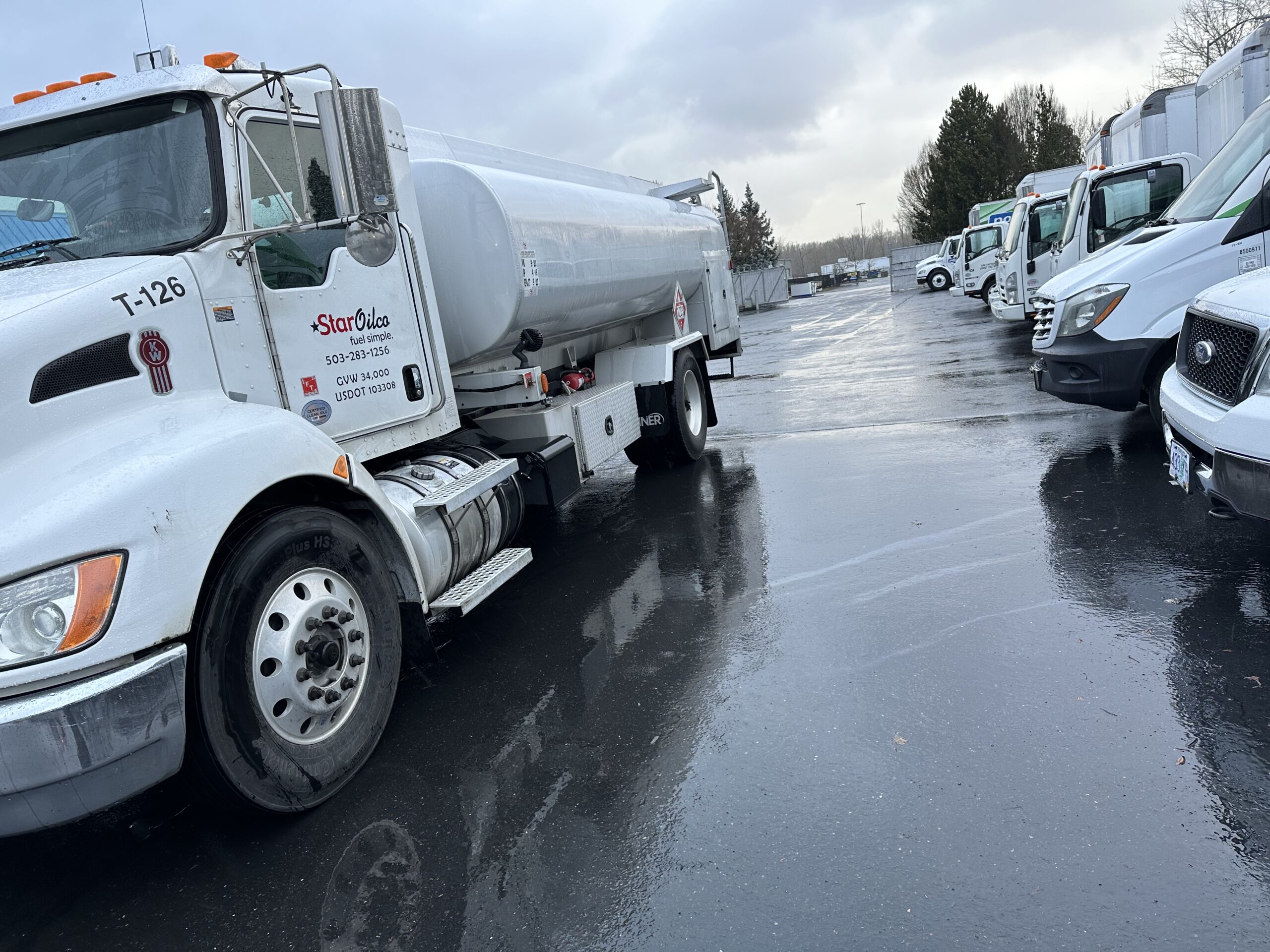
Star Oilco fuel delivery truck parked beside commercial fleet vehicles on a wet asphalt lot

Star Oilco’s Winterized Diesel Offering

If you’re purchasing fuel in Portland or throughout Oregon, consider sourcing from a fuel supplier that provides winterized diesel, like Star Oilco. Star Oilco’s winterized diesel includes these crucial additives, ensuring you have the right protection against gelling. This can save you time and help maintain optimal performance during the cold months​ in the Pacific Northwest.

Star Oilco is a trusted fuel supplier based in Portland, Oregon, dedicated to delivering high-quality fuels and related services to both commercial and residential customers. With decades of industry experience, the company offers a wide range of solutions, including heating oil delivery, off-road diesel, cardlock fueling systems, and emergency backup fuel options. Committed to sustainability, Star Oilco also provides biodiesel and renewable diesel to reduce environmental impact while supporting the energy needs of the Portland community. From optimizing fleet fuel efficiency to ensuring reliable heating in colder months, Star Oilco prioritizes customer satisfaction with tailored, dependable fuel solutions for businesses and homeowners alike.

Ensuring the Right Dosage

The effectiveness of cold flow improvers depends heavily on using the correct dosage. Over- or under-dosing can lead to suboptimal performance or damage to the fuel system. Consulting with a fuel specialist is recommended to determine the appropriate amount of cold flow improver needed for specific applications, taking into account the fuel properties and temperature forecasts.

Cold flow improvers are essential for diesel engines during winter, especially in Portland and Oregon, ensuring optimal performance in cold climates. They prevent fuel gelling and wax crystallization, maintaining fluidity and engine efficiency. Their role is vital in providing operational reliability and cost-effectiveness for those reliant on diesel fuel during colder months. Embracing these improvers allows you to face winter’s challenges confidently, safeguarding engine performance and longevity.

For more guidance on keeping your diesel running smoothly this winter, or to explore Star Oilco’s winterized diesel options, don’t hesitate to reach out or visit our website today!

JOIN THE FUEL MARKET REPORT NEWSLETTER FOR YOUR WEEKLY FILL OF UPDATES!

Name
Decarbonization concept with CO2 reduction icons over a globe in green grass symbolizing clean energy
Biofuels industry exceeds EPA’s expectations 1024 618 Star Oilco

Biofuels industry exceeds EPA’s expectations

Biofuels Industry Surpasses Expectations with a Massive Production Rise

Based on the data, biomass-based diesel production has increased massively in the United States, including biodiesel, renewable diesel, sustainable aviation fuel, and heating oil. Biomass-based diesel was expected to produce 4 billion gallons in 2023. Biofuel production and use increased by one billion gallons from last year to this year, which is a big jump. As a result of this achievement, a breakthrough has been achieved. The industry has surpassed what the EPA once thought was impossible with the development of advanced biofuels derived from sustainable sources.

So the real question is, what if we don’t choose biodiesel or renewable diesel over petroleum diesel for our diesel engines?

Biofuel production from plant oils and renewable crops for clean diesel alternatives
  • Biofuel production soared in 2023, exceeding EPA goals.

  • US biomass-based diesel production (biodiesel, renewable diesel, SAF, heating oil) reached 4 billion gallons.

  • Biofuel production and use jumped by 1 billion gallons year-over-year.

Clean Fuel Industry Beats Regulations in Decarbonization Push

While the Clean Fuels Alliance urged the EPA to set even more ambitious goals, like increasing biomass-based diesel production by 500 million gallons a year over the next three years, the EPA has taken a more conservative approach. Regulations aren’t keeping up with the industry, but it’s not waiting for them. Clean fuels are becoming more accessible and heavy-duty transportation fuels used by aviation and maritime are getting decarbonized. The industry has shown its ability to grow quickly and sustainably thanks to this collaborative effort.

  • Clean Fuels Alliance pushed for aggressive EPA goals: 500 million gallons annual increase in biomass-based diesel production for 3 years.

  • EPA’s finalized standards took a cautious approach.

  • Oil and gas producers, refiners, distributors, and retailers don’t have to wait for strict regulations to act (producers, refiners, distributors, retailers).
  • Industry collaboration demonstrates the potential for rapid, sustainable growth.

Decarbonization concept with CO2 reduction icons over a globe in green grass symbolizing clean energy

Despite this year’s achievements, the Clean Fuels Alliance remains focused on the future. There’s so much potential in sustainable biofuels that we think the EPA hasn’t tapped into yet. Supporting biodiesel, renewable diesel, and SAF production can help achieve clean energy progress.

In reality, why wouldn’t we make the switch to lower our carbon emissions today?

JOIN THE FUEL MARKET REPORT NEWSLETTER FOR YOUR WEEKLY FILL OF UPDATES!

Name
comparison chart showing difference between off-road diesel and on-road diesel fuel in Portland OR
The Future of Diesel Fuel 940 788 Star Oilco

The Future of Diesel Fuel

Retail Diesel Dispenser Example
Retail Diesel Pumps with a variety of blends of diesel. Biodiesel, Renewable Diesel, and Fossil Diesel blends shown in Portland, Oregon.

Diesel Fuel In Oregon and Washington

Star Oilco has been getting questions on the changes of diesel in Portland, Oregon.  If you have not noticed, many diesel pumps at retail gas stations and cardlock have seen changing stickers on the face of the fuel pumps.  As of July 1st, 2024 the City of Portland requires a minimum 15% biofuel content of all diesel sold.  This policy is called the Portland Renewable Fuel Standard.

This has caused quite a few changes in what fuel pumps have for fuel.  Diesel fuel buyers are noticing the bright yellow color of B20 biodiesel, the water clear color of Renewable Diesel or a a mix of several fuels tinting the color of their diesel.  This trend is bigger than just Portland.

Today on the west coast there are a variety of product label stickers you will see on diesel pumps.  These show the variety of diesel fuel specifications that are being sold to diesel vehicles today. Blends of petroleum ultra low sulfur diesel, R99 (99%) renewable diesel, and B99 (99%) Biodiesel are combined to meet the market needs of the diesel we all buy.

This change is because of a combination of pure market forces, government rules and local decisions by fuel haulers.  Today’s diesel not only has a commodity market for the fuel it also has a market for CO2 credit value and a cap of total petroleum diesel fuel that can be sold into a west coast state with a “Cap and Investprogram requiring blends of low CO2 biofuels, the liquid fuels sold for vehicles.

Add on top of these market forces, advances in technology used to make the liquid diesel fuel.  The diesel arriving at truck stops, gas stations, cardlock or out of a hose from a bulk truck has been changing and it’s often in good ways.  Knowing how can be helpful in navigating why diesel may cost one price or another and may have a need or maintenance that another fuel does not.

THE RISE OF RENEWABLE DIESEL

Renewable diesel is a synthetic diesel fuel made from the same feedstock as biodiesel, but the finished product is hydrocarbon diesel.  Though it is a biofuel, it is also diesel. For fuel regulation they refer to it (as well as biodiesel) as “Biomass Based Diesel” for labeling at the fuel pump.

There have been billions of plant capacity brought online for renewable diesel.  During the COVID collapse of fuel prices a number of petroleum refineries shut down, then upgraded their technology to make hydrocarbon diesel fuels out of the very biobased fats, oils, and greases biodiesel is made from.  These refineries use hydrotreating technology just like they do with a crude petroleum to make an actual hydrocarbon diesel molecule.   With this technology adoption to make diesel and jet fuels from vegetable oils and animal fats billions of gallons of low CO2 diesel fuels are coming on the market and governments are requiring it’s use, such as Portland’s Renewable Fuel Standard.

Renewable Diesel Consumption it the US Source: Alternative Fuels Data Center

THE AVAILABILITY OF BIODIESEL

The US makes billions of gallons of biodiesel.  A fuel that’s quality and performance continues to improve.  If you are not a fan of biodiesel in your fuel thinking strategically about the fuel will likely benefit your fleet operation.  The big concern with diesel fuel in a ultra low sulfur world is water and dirt suspended in the fuel affecting the performance of diesel emission systems.  With clean and drier quality specifications of B99 blend stocks today versus a decade ago the use of this fuel has grown substantially especially in the truck stop market.

When crude petroleum prices are high and therefore refined diesel prices are equally as high biodiesel is often an extremely competitive fuel.  If a large seller of diesel (including petroleum refiners) can pick up pennies per gallons on millions of gallons sold they will do so.  Therefore Biodiesel is often seen in diesel in small blends even if you do not see a label on retail pump.  For blends above 5% a label is required for retail fuel sales. RTHWEST?

R99 Renewable Diesel label indicating 99% biomass-based diesel content
Ultra Low Sulfur Retail Diesel Label
Biodiesel Blend Percentage label for retail diesel dispenser

Above are a variety of labels used to denote what fuel blend is coming out of a retail diesel dispenser. Feel free to call Star Oilco at 503-283-1256 if this confuses you and you want it explained.  We would be glad to do so.

These labels can be found together often at one pump.  All state and Federal standards require ultra low sulfur diesel for any on-road diesel sale.  The Federal standards also adopted by the states require a disclosure at the fuel pump if a blend is above 5% biodiesel.  The max allowable blend of biodiesel for diesel truck manufactures is a 20% blend.  If a truck dealership says that you cannot blend biodiesel up to 20% they need to take that up with the Federal Government because they need to support it.  This is why the label shows a blend may contain between 5% and 20% biodiesel content.

Renewable diesel is a hydrocarbon diesel. 


It is diesel meeting the ASTM D975 specification for diesel. 

Retailers selling blends of R99 in their fuel do not need to label it given this.  They still do label it given the benefits of the fuel’s performance and that customers are seeking that fuel.

Contact Us Today To Schedule Your Next Bulk Fuel Delivery

Many retail places will have stacked labels showing they may be blending 5% to 20% biodiesel as well as may be adding R99 Renewable Diesel to the fuel as market conditions dictate it is the more cost competitive fuel.  When seeing a label like this it can usually be assumed they are blending a R80 (80% Renewable Diesel) and a B20 (20% Biodiesel) blend of fuel.  This blend is actually believed by some to be a higher performing fuel seeing better performance that a R99 or B20 fossil fuel blend.

Fossil fuel diesels are being replaced or blended with biomass based diesels.  Be it Renewable Diesel or Biodiesel.  These blends are driven by more than one industry requirements, government rules, or other market forces. One of these being Portland’s banned on petroleum diesel through the Renewable Fuel Standard (RFS). This is resulting in an increase of low-carbon biofuel blends that will ultimately move to a mix of 99% renewable fuel requirement by 2030.

Renewable Diesel and Biodiesel Blend fuel dispenser label.

The big drivers are industry specification for fuels (both labeling as well as chemical characteristics), state rules on selling these fuels, their quality assurance as well as CO2 content, and of course the market forces.  Market forces being the supply and demand availability of fuel needed to meet customers.  Less fuel available to sell means higher prices for customers.

A decade ago the market for diesel was far simpler. Though you had biofuels and some blend mandates basically you had a diesel specification accepted and the daily price as tracked by a lighted retailers sign, a wholesale market average or spot buying by some customers.   Today this market is far more complicated by government regulation on the west coast.  There are three big programs at state levels impacting this.

State Fuel Rules cause a unique need for one state or another. Whereas twenty years ago if Oregon or Washington fuel was selling for more than the Gulf Coast you might see brokers bring fuel into the region then driving down high prices.  With the creation of various complex and unique rules on diesel, imports of fuel to these low CO2 fuel states has dropped.  The amount of people moving product into west coast states has dropped.  The big rules causing this are the Cap and Invest programs of the West Coast states, the Low CO2 Fuel Standards of the states, and the fuel blend mandates of various jurisdictions of these states. For instance California now requires all off-road diesels but 99% renewable diesel.  Portland, Oregon also has a CO2 requirement and minimum 15% blend of biomass based diesel on all fuel sold in the state.

WHAT ARE THE DIESEL FUELS AND THEIR SPECIFICATIONS

Petroleum Diesel:
ASTM D975 Specification.

The ASTM D975 is a series of tests used to maintain consistent industry standard product performance for diesel fuel.  It includes among several tests cloud point, cold filter plug point (CFPP), several masurements of diesel fuel operability performance, intrained water content, sediment, carbon residue, ash, distillation, viscosity, sulfur, copper corrosion, cetane number, cetane index, aromaticity, and conductivity.

Renewable Diesel:
ASTM D975 Specification.

Renewable Diesel is following the same series of tests as petroleum refined diesel fuels.  It is the same ASTM D975 specification. Though Renewable Diesel has some different properties that exceed the ASTM specification of diesel.  Renewable Diesel is highly prized as a fuel because it typically is a cleaner and drier diesel fuel than petroleum diesel. This being seen by the tests on sediment and water content in a parts per million level.  Renewable Diesel content in diesel fuel can also be tested for looking for a C14 molecule (the chain typically created in a Hydrotreated Diesel process from fats, oils and greases.

Biodiesel (Methyl Esther):
ASTM D6751 Specification.

The ASTM for Biodiesel tests a mono-alkyl esters of long chain fatty acids derived from vegetable oils and animal fats. The testing for quality assurance covers an analysis for flash point, methanol, water and sediment, kinematic viscosity, sulfated ash, oxidation stability, sulfur, copper strip corrosion, cetane number, cloud point, acid number, carbon residue, total and free glycerin, phosphorus, reduce pressure distillation temperature, atmospheric equivalent temperature, combined calcium and magnesium, and combined sodium and magnesium.

For more on Biodiesel Use and Handling the National Renewable Energy Laboratory has a great book on the subject.

THE HISTORY OF DIESEL FUEL SPECIFICATIONS IN THE UNITED STATES

In the 1990’s the US EPA passed rules that demanded a phase out of sulfur in diesel fuel.  The presence of sulfur was very good for the fuel’s storage stability as well as fuel lubricity, but was horrible for air quality.   Additionally the big smog contributor was NOx (nitrous oxide) which was one of the EPA’s reason’s for pulling sulfur out of diesel.  For the EPA to get engine manufacturers to treat the NOx emissions at the tailpipe they needed all the sulfur gone (ultra low sulfur diesel) for modern diesel emission systems to be able to eliminate NOx as well as a host of other pollutants including particulates.

The story of changing diesel fuel standards in the US under the EPA is one of removing sulfur from our diesel fuel.  In 1996 the fuel refiners and sellers of diesel had to move the sulfur content of the fuel sold for on-road purposes to below a 500 parts per million standard. Commonly referred to as Low Sulfur Diesel fuel.   In 2006 the standard moved to a maximum of 15 parts per million of sulfur for all on road fuels.

In 2006 while the sulfur content of fuel was dropping the City of Portland released the first mandated blend of biodiesel content.  This being a 5% biodiesel blend.  The next year, the State of Oregon followed with its own Renewable Fuel Standard requiring this throughout the state.  This began the expectation of biodiesel in most diesel fuel in the Portland, Oregon area.  Washington also passed a similar policy for blending biodiesel but the enforcement and need for the fuel is less specific at Washington fuel pumps.

Sign Up To Receive Our Fuel Market Report For Your Weekly Fill Of Updates!

Name