
Renewable Diesel

Renewable diesel is a synthetic diesel fuel, known for its lower CO2 characteristics, typically seeing purity and real world performance response superior to petroleum diesel fuel.

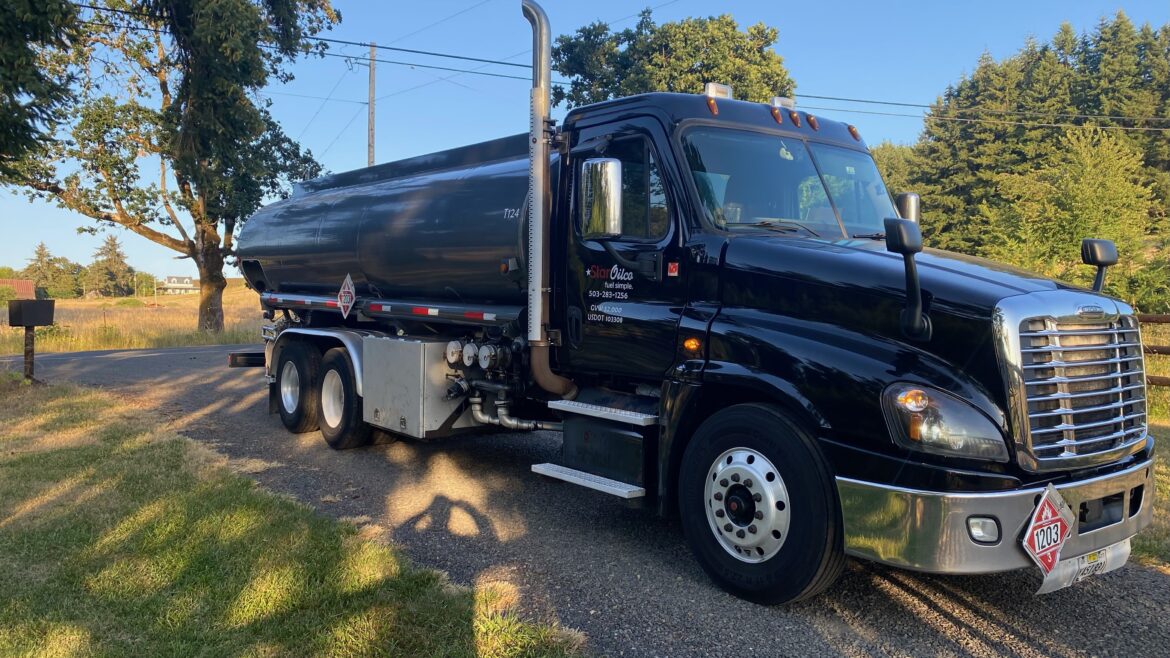
Star Oilco black fuel truck parked on rural road with trees in background
What Is Portland’s Renewable Fuel Standard? 1024 768 Star Oilco

What Is Portland’s Renewable Fuel Standard?

Diesel Fuel Is Changing In Portland With The Renewable Fuel Standard (RFS)

Portland Old Town sign representing the city’s commitment to renewable fuel standards

Figuring out what this means for you or your business can be challenging. We have shared many questions that we have been asked already, to help provide more clarity on what this Renewable Fuel Standard (RFS) means for Wholesale Purchaser-Consumers. If your question isn’t listed below, please reach out to Star Oilco so we can make sure your questions are answered!

Choose Star Oilco As Your Preferred Fuel Delivery Company

The Renewable Fuel Standard (RFS) is Portland City Council’s response to the City’s 2022-2025 Climate Emergency Workplan,  which lists the City’s priority actions over the next three years.

On Dec. 7, 2022, City Council unanimously adopted amendments to the Renewable Fuel Standard, Portland City Code Chapter 16.60, which reduces dependence on nonrenewable fossil fuels, by increasing the required percentage of renewable fuels blended with petroleum diesel sold in the city of Portland.

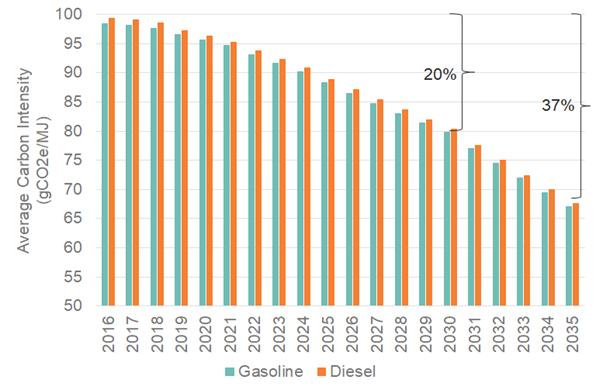
This policy increases low-carbon biofuel blends, moving Portland’s diesel fuel mix to 99% renewable by 2030. This policy includes a carbon intensity standard to shift to fuels that are lower carbon across their entire lifecycle.
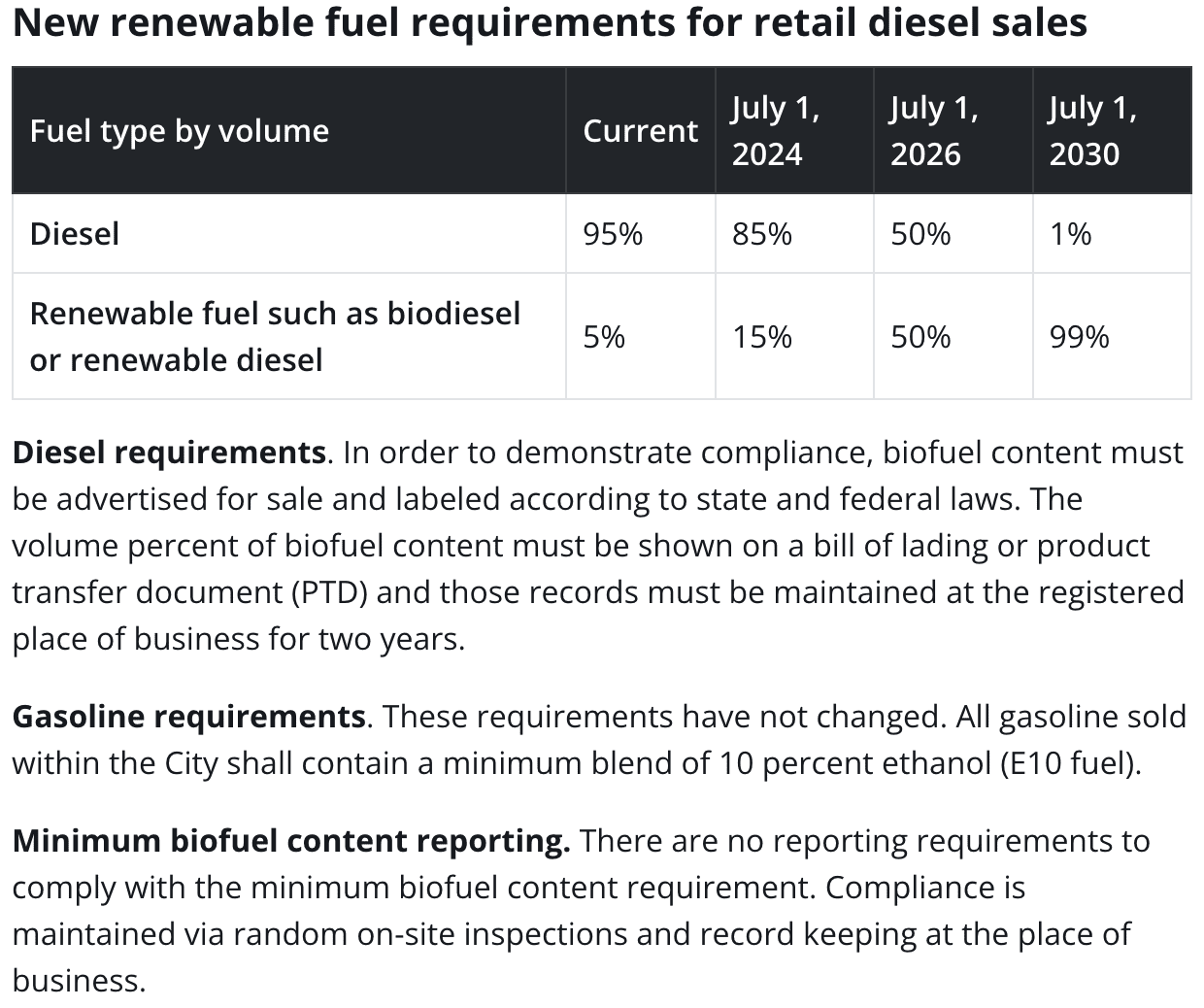
Portlands Renewable Fuel Standard Requirements

 July 1, 2024, Portland required that all diesel fuel sold contain a minimum 15% blend of biodiesel or renewable diesel. This percentage will increase steadily over the next few years, reaching a minimum 99% renewable fuel requirement by July 1, 2030.

There are no reporting requirements for retailers to comply with this mandate. Instead, the city enforces compliance through random on-site inspections and by requiring retailers to maintain records of the biofuel content of the diesel they sell.

  • The policy speaks to “Covered Entities
  • Diesel Fuel Transaction within the City of Portland Oregon
  • Fuel distributors, resellers, retailers, nonretail dealers, terminals, importers and wholesale purchaser-consumers are directly regulated by PCC Chapter 16.60 and referred to as “covered entities.”
  • Wholesale Purchaser-Consumers​: also know as WPCs are directly regulated by PCC Chapter 16.60 and referred to as “covered entities.”

Wholesale purchaser-consumer (WPC) is a category of entities that own or utilize diesel vehicle fleets and purchase fuel in bulk for delivery into a storage tank at their facility or directly into a vehicles fuel tank. WPCs are required to register with the RFS program.

A fuel distributor or common carrier delivers on road diesel to your facilities on-site tank such as: 

  • Bulk Tank
  • Aboveground Storage Tank (AST)
  • Underground Storage Tank (UST)

A fuel distributor delivers on road diesel directly into your vehicles also known as:

  • On-Site Fleet Fueling
  • Wet Hose Fueling

Yes, these rules apply to fuel for on-road motor vehicles. Fuels used for the following purposes are not covered by these rules

  1. Railroad locomotives, watercraft, aircraft, and emergency equipment
  2. Dyed diesel for off-road vehicles
  3. Dyed diesel for furnaces, boilers, generators
  4. Propane and liquefied natural gas for vehicles

Wholesale Purchaser-Consumers are required to meet three primary components of the RFS:

  1. Biofuel Minimum Content Requirements,
  2. Carbon Intensity standard,
  3. Selecting a compliance option, and
  4. Record keeping.

Biofuel Minimum Content Requirements for Wholesale Purchaser-Consumers

  • WPCs in the City of Portland are required to meet the minimum biofuel content requirements for all fuel they purchase for their vehicle fleet. Beginning July 1, 2024, all diesel purchased must include 15% biofuel content, from either renewable diesel or biodiesel. This requirement increases to 50% on July 1, 2026, and 99% on July 1, 2030.
  • The biofuel content requirements will be enforced through random inspections of fleet facilities to see that they (1) have a contract in place with fuel suppliers that specifies that fuel meets the minimum blend requirements, or (2) verification of actual products purchased through testing or review of product transfer documents.
  • All WPCs also need to be aware of the Carbon Intensity Standard in PCC Chapter 16.60.
  • All biodiesel and renewable diesel sold in the City of Portland must have a carbon intensity equal to or less than 40g CO2e/MJ as certified by DEQ’s Clean Fuels Program, Approved Carbon Intensity Values.
  • Carbon intensity requirements apply to biofuel blendstock, not the final blended products, which may contain a portion of petroleum-based diesel fuel at a higher carbon intensity.

Selecting a compliance option for Wholesale Purchaser-Consumers

  • WPCs will need to select a compliance option by the start of the compliance period, July 1, 2024.
  • Portland Bureau of Planning & Sustainability (BPS) will provide notification about selecting compliance options by May 31, 2024.
  • To receive notification, covered entities must be registered with the RFS Program

*Compliance option selection may be changed at any time during the compliance period after consulting with BPS. If a covered entity decides to change the compliance option during the compliance period, they are responsible for compliance under the new option for the full compliance period.

Record Keeping Requirements for Wholesale Purchaser-Consumers

Portland City Code (PCC) Chapter 16.60 and administrative rules requires that an invoice, bill of lading, shipping paper, or other documentation, referred to as “Product Transfer Documents” (PTD) must accompany each fuel delivery in the city of Portland. The administrative rules specify that:

  1. PTDs must include the type of renewable fuel, including biodiesel, renewable diesel, ethanol, or any blends of these fuels, and declare the volume percent of such renewable fuel.
  2. PTDs must comply with OAR 603-027-0430 (1) (a) which includes identifying the quantity, the name of the product, the name and address of the seller and buyer, and the date and time of the sale.
  3. WPCs using the Product Transfer Document compliance pathway must also ensure that fuel pathway codes issued by Oregon Clean Fuels Program are also included on a PTD associated with each delivery received by the WPC or have a contract with a fuel supplier specifying the carbon intensity requirements of PCC Chapter 16.60.

Contact Us Today To Learn More About The RFS For Your Operations

JOIN THE FUEL MARKET REPORT NEWSLETTER FOR YOUR WEEKLY FILL OF UPDATES!

B99 Biodiesel for Fleets & Heavy Equipment 150 150 Star Oilco

B99 Biodiesel for Fleets & Heavy Equipment

Using B99 Biodiesel in a Tier 4 Heavy Duty Diesel

B99 Biodiesel reduces CO2 footprint of a 105,500 GVW truck and trailer by more than half at a lower cost than petroleum diesel.

What is B99 Biodiesel?

B99 Biodiesel is as pure of blend of Biodiesel you can get in the United States and still participate in the incentives associated with this alternative fuel.  B99 is the product received by petroleum refiners, terminals, and truck stops to blend with petroleum diesel.  Biodiesel is a renewable, clean-burning diesel replacement.  B99 Biodiesel is a common blendstock with petroleum diesel (being 99% biodiesel).  It can be presumed that nearly every major truck stop throughout the US is consistently using either a blend of 5%, 10% or 20% of biodiesel   The reason for this is both due to its price advantage against petroleum currently as well as Federal/State laws requiring it’s use.

Why Higher Blends of Biodiesel Matter?

Biodiesel is a low CO2, net energy positive fuel.  Depending on the feedstock Biodiesel is made from a CO2 reduction of 30% to 80%+ can be expected compared to petroleum diesel.  As the West Coast (Oregon, Washington and California) ramps up CO2 regulations that charge an additional cost for carbon emissions associated with petroleum diesel the financial case for Biodiesel becomes obvious.  Early adopters will see direct financial benefit.

Star Oilco has fielded the Optimus Technologies system on our 105,500 GVW truck and trailers.  Star Oilco began with a single Freighliner truck and trailer operating a Cummins ISX as a trial.  This truck’s typical route was approximately 305 miles round trip from Portland, Oregon to Grays Harbor, Washington.  This run is from Star Oilco in Portland, Oregon to the Grays Harbor REG Biodiesel plant and back to the Portland terminals for delivery of this product.    Over the last year and a half this truck has performed amazingly well, the only maintenance concern is swapping the fuel filters more regularly with every oil change.  Mileage and power difference are negligible as noticed by drivers or our Elog system.  On a few occasions a loss of power was experienced requiring an in between service fuel filter swap.

This field trial of the Optimus Technologies system Star Oilco has regularly saved between $15 and $75 a day when running this dedicated route, depending on the cost of B99 Biodiesel versus petroleum ultra low sulfur diesel.  Consistently the price of B99 Biodiesel has been below petroleum diesel in the Portland, Oregon market. This has been due to a combination (or is effected by) RIN values, a Blender’s Tax Credit on biodiesel, and Oregon’s Clean Fuels Program which also prices the CO2 reduction value of B99 Biodiesel.   We see this trend continuing as an assumed market reality for biodiesel.

What is the business case for our deploying B99 Biodiesel Optimus Tech upfit kits?

The systems increase the intelligence of our late model trucks with their very complicated Tier 3 and Tier 4 emissions systems.   The Optimus Kit enables two saddle tanks to operate with the duty cycle of the truck. One tank (which we will be running B5 ULSD or R99 through) is dedicated to fuel the particulate trap and SCR systems.  These systems have extremely tight tolerances and tend to choke on higher blends of biodiesel.  By dedicating a tank with a smart controlling system we reduce the maintenance and concern with these after treatment systems hopefully extending the maintenance cycle on these traps by years while reducing inconvenient efficiency killing regens.

The Optimus Kit also enables a modern diesel engine to run B99 Biodiesel.  It does this by controlling the temperature of the fuel in it’s dedicated saddle tank and routing B99 to the engine when the RPMs and operating temperatures are best for this fuel. Upon start up and shut down the Optimus Technology kit will flush the engine, fuel rail, and injectors with the petroleum/R99 tank ensuring easy start up and no cold weather effects.  The B99 saddle tank is temperature controlled as well to enable performance in extreme weather.  When operating under load the Optimus Kit will move to B99 as the fuel into the engine.  As B99 Biodiesel has a substantial reduction of emissions, particulate, and other compounds when combusted; this further reduces the impact of miles on a truck to the particulate trap and it’s service needs.

Beyond this maintenance experience, the performance and function of the system has been indistinguishable to our other trucks running the same route.

Biodiesel Mandates in the Pacific Northwest

Oregon and Washington have passed legislation which puts a price on the CO2 emissions associated with petroleum diesel.   These laws mean that petroleum fuel costs more than biofuels with a low CO2 footprint.  These laws are also added on top of other mandates and incentives for biofuels.  Biodiesel blends between 5% and 20% are common on the west coast at every gas station, cardlock, and truckstop.

How Can I Utilize B99 or B100 in My Own Fleet? 

Star Oilco uses The Vector System developed by Pittsburgh-based Optimus Technologies. The Vector System is the only EPA-compliant biodiesel engine system and upgrades any medium or heavy-duty engine to operate on 100% biodiesel. It can be installed in as little as 12 hours. Learn more about The Vector System by contacting Optimus Technologies here directly or by reaching out to Star Oilco locally. 


Contact Form

  • This field is for validation purposes and should be left unchanged.


For more on Biodiesel, Renewable Diesel or Low CO2 fuels please see these other Star Oilco articles:

Every Question Star Oilco has been asked about Biodiesel

Every Question Star Oilco has been asked about Renewable Diesel 

Do you have questions about Renewable Diesel in Oregon 

Wet Hose Fueling Service in Portland, Oregon

About Diesel Fuel 

Biodiesel Use and Handling Guide 

comparison chart showing difference between off-road diesel and on-road diesel fuel in Portland OR
The Future of Diesel Fuel: Trends & Outlook 940 788 Star Oilco

The Future of Diesel Fuel: Trends & Outlook

Retail Diesel Dispenser Example
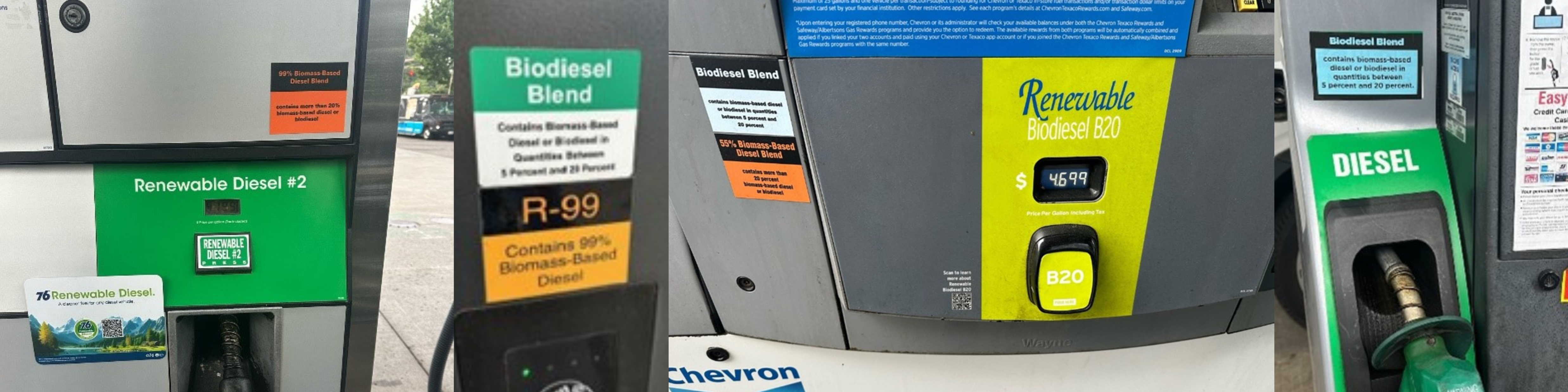
Retail Diesel Pumps with a variety of blends of diesel. Biodiesel, Renewable Diesel, and Fossil Diesel blends shown in Portland, Oregon.

Diesel Fuel In Oregon and Washington

Star Oilco has been getting questions on the changes of diesel in Portland, Oregon.  If you have not noticed, many diesel pumps at retail gas stations and cardlock have seen changing stickers on the face of the fuel pumps.  As of July 1st, 2024 the City of Portland requires a minimum 15% biofuel content of all diesel sold.  This policy is called the Portland Renewable Fuel Standard.

This has caused quite a few changes in what fuel pumps have for fuel.  Diesel fuel buyers are noticing the bright yellow color of B20 biodiesel, the water clear color of Renewable Diesel or a a mix of several fuels tinting the color of their diesel.  This trend is bigger than just Portland.

Today on the west coast there are a variety of product label stickers you will see on diesel pumps.  These show the variety of diesel fuel specifications that are being sold to diesel vehicles today. Blends of petroleum ultra low sulfur diesel, R99 (99%) renewable diesel, and B99 (99%) Biodiesel are combined to meet the market needs of the diesel we all buy.

This change is because of a combination of pure market forces, government rules and local decisions by fuel haulers.  Today’s diesel not only has a commodity market for the fuel it also has a market for CO2 credit value and a cap of total petroleum diesel fuel that can be sold into a west coast state with a “Cap and Investprogram requiring blends of low CO2 biofuels, the liquid fuels sold for vehicles.

Add on top of these market forces, advances in technology used to make the liquid diesel fuel.  The diesel arriving at truck stops, gas stations, cardlock or out of a hose from a bulk truck has been changing and it’s often in good ways.  Knowing how can be helpful in navigating why diesel may cost one price or another and may have a need or maintenance that another fuel does not.

THE RISE OF RENEWABLE DIESEL

Renewable diesel is a synthetic diesel fuel made from the same feedstock as biodiesel, but the finished product is hydrocarbon diesel.  Though it is a biofuel, it is also diesel. For fuel regulation they refer to it (as well as biodiesel) as “Biomass Based Diesel” for labeling at the fuel pump.

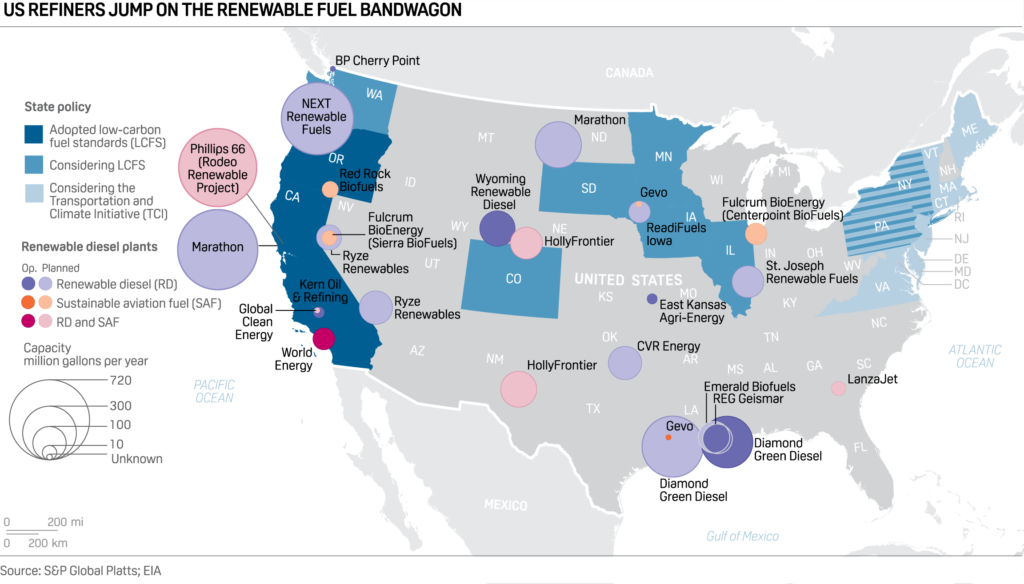
There have been billions of plant capacity brought online for renewable diesel.  During the COVID collapse of fuel prices a number of petroleum refineries shut down, then upgraded their technology to make hydrocarbon diesel fuels out of the very biobased fats, oils, and greases biodiesel is made from.  These refineries use hydrotreating technology just like they do with a crude petroleum to make an actual hydrocarbon diesel molecule.   With this technology adoption to make diesel and jet fuels from vegetable oils and animal fats billions of gallons of low CO2 diesel fuels are coming on the market and governments are requiring it’s use, such as Portland’s Renewable Fuel Standard.

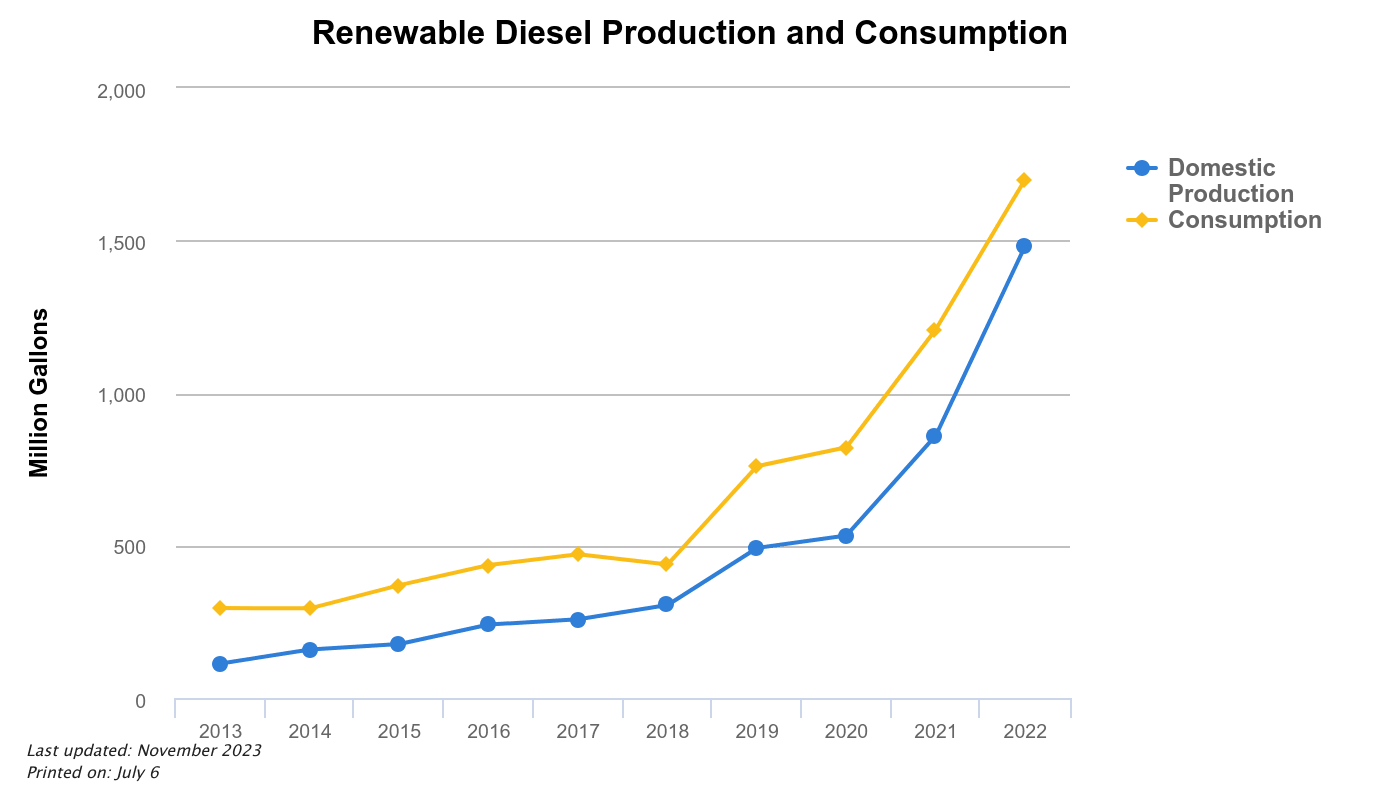
Renewable Diesel Consumption it the US Source: Alternative Fuels Data Center

THE AVAILABILITY OF BIODIESEL

The US makes billions of gallons of biodiesel.  A fuel that’s quality and performance continues to improve.  If you are not a fan of biodiesel in your fuel thinking strategically about the fuel will likely benefit your fleet operation.  The big concern with diesel fuel in a ultra low sulfur world is water and dirt suspended in the fuel affecting the performance of diesel emission systems.  With clean and drier quality specifications of B99 blend stocks today versus a decade ago the use of this fuel has grown substantially especially in the truck stop market.

When crude petroleum prices are high and therefore refined diesel prices are equally as high biodiesel is often an extremely competitive fuel.  If a large seller of diesel (including petroleum refiners) can pick up pennies per gallons on millions of gallons sold they will do so.  Therefore Biodiesel is often seen in diesel in small blends even if you do not see a label on retail pump.  For blends above 5% a label is required for retail fuel sales. RTHWEST?

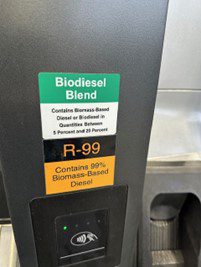
R99 Renewable Diesel label indicating 99% biomass-based diesel content
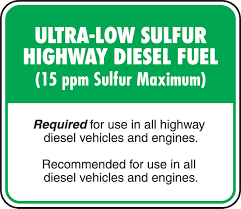
Ultra Low Sulfur Retail Diesel Label
Biodiesel Blend Percentage label for retail diesel dispenser

Above are a variety of labels used to denote what fuel blend is coming out of a retail diesel dispenser. Feel free to call Star Oilco at 503-283-1256 if this confuses you and you want it explained.  We would be glad to do so.

These labels can be found together often at one pump.  All state and Federal standards require ultra low sulfur diesel for any on-road diesel sale.  The Federal standards also adopted by the states require a disclosure at the fuel pump if a blend is above 5% biodiesel.  The max allowable blend of biodiesel for diesel truck manufactures is a 20% blend.  If a truck dealership says that you cannot blend biodiesel up to 20% they need to take that up with the Federal Government because they need to support it.  This is why the label shows a blend may contain between 5% and 20% biodiesel content.

Renewable diesel is a hydrocarbon diesel. 


It is diesel meeting the ASTM D975 specification for diesel. 

Retailers selling blends of R99 in their fuel do not need to label it given this.  They still do label it given the benefits of the fuel’s performance and that customers are seeking that fuel.

Contact Us Today To Schedule Your Next Bulk Fuel Delivery

Many retail places will have stacked labels showing they may be blending 5% to 20% biodiesel as well as may be adding R99 Renewable Diesel to the fuel as market conditions dictate it is the more cost competitive fuel.  When seeing a label like this it can usually be assumed they are blending a R80 (80% Renewable Diesel) and a B20 (20% Biodiesel) blend of fuel.  This blend is actually believed by some to be a higher performing fuel seeing better performance that a R99 or B20 fossil fuel blend.

Fossil fuel diesels are being replaced or blended with biomass based diesels.  Be it Renewable Diesel or Biodiesel.  These blends are driven by more than one industry requirements, government rules, or other market forces. One of these being Portland’s banned on petroleum diesel through the Renewable Fuel Standard (RFS). This is resulting in an increase of low-carbon biofuel blends that will ultimately move to a mix of 99% renewable fuel requirement by 2030.

Renewable Diesel and Biodiesel Blend fuel dispenser label.

The big drivers are industry specification for fuels (both labeling as well as chemical characteristics), state rules on selling these fuels, their quality assurance as well as CO2 content, and of course the market forces.  Market forces being the supply and demand availability of fuel needed to meet customers.  Less fuel available to sell means higher prices for customers.

A decade ago the market for diesel was far simpler. Though you had biofuels and some blend mandates basically you had a diesel specification accepted and the daily price as tracked by a lighted retailers sign, a wholesale market average or spot buying by some customers.   Today this market is far more complicated by government regulation on the west coast.  There are three big programs at state levels impacting this.

State Fuel Rules cause a unique need for one state or another. Whereas twenty years ago if Oregon or Washington fuel was selling for more than the Gulf Coast you might see brokers bring fuel into the region then driving down high prices.  With the creation of various complex and unique rules on diesel, imports of fuel to these low CO2 fuel states has dropped.  The amount of people moving product into west coast states has dropped.  The big rules causing this are the Cap and Invest programs of the West Coast states, the Low CO2 Fuel Standards of the states, and the fuel blend mandates of various jurisdictions of these states. For instance California now requires all off-road diesels but 99% renewable diesel.  Portland, Oregon also has a CO2 requirement and minimum 15% blend of biomass based diesel on all fuel sold in the state.

WHAT ARE THE DIESEL FUELS AND THEIR SPECIFICATIONS

Petroleum Diesel:
ASTM D975 Specification.

The ASTM D975 is a series of tests used to maintain consistent industry standard product performance for diesel fuel.  It includes among several tests cloud point, cold filter plug point (CFPP), several masurements of diesel fuel operability performance, intrained water content, sediment, carbon residue, ash, distillation, viscosity, sulfur, copper corrosion, cetane number, cetane index, aromaticity, and conductivity.

Renewable Diesel:
ASTM D975 Specification.

Renewable Diesel is following the same series of tests as petroleum refined diesel fuels.  It is the same ASTM D975 specification. Though Renewable Diesel has some different properties that exceed the ASTM specification of diesel.  Renewable Diesel is highly prized as a fuel because it typically is a cleaner and drier diesel fuel than petroleum diesel. This being seen by the tests on sediment and water content in a parts per million level.  Renewable Diesel content in diesel fuel can also be tested for looking for a C14 molecule (the chain typically created in a Hydrotreated Diesel process from fats, oils and greases.

Biodiesel (Methyl Esther):
ASTM D6751 Specification.

The ASTM for Biodiesel tests a mono-alkyl esters of long chain fatty acids derived from vegetable oils and animal fats. The testing for quality assurance covers an analysis for flash point, methanol, water and sediment, kinematic viscosity, sulfated ash, oxidation stability, sulfur, copper strip corrosion, cetane number, cloud point, acid number, carbon residue, total and free glycerin, phosphorus, reduce pressure distillation temperature, atmospheric equivalent temperature, combined calcium and magnesium, and combined sodium and magnesium.

For more on Biodiesel Use and Handling the National Renewable Energy Laboratory has a great book on the subject.

THE HISTORY OF DIESEL FUEL SPECIFICATIONS IN THE UNITED STATES

In the 1990’s the US EPA passed rules that demanded a phase out of sulfur in diesel fuel.  The presence of sulfur was very good for the fuel’s storage stability as well as fuel lubricity, but was horrible for air quality.   Additionally the big smog contributor was NOx (nitrous oxide) which was one of the EPA’s reason’s for pulling sulfur out of diesel.  For the EPA to get engine manufacturers to treat the NOx emissions at the tailpipe they needed all the sulfur gone (ultra low sulfur diesel) for modern diesel emission systems to be able to eliminate NOx as well as a host of other pollutants including particulates.

The story of changing diesel fuel standards in the US under the EPA is one of removing sulfur from our diesel fuel.  In 1996 the fuel refiners and sellers of diesel had to move the sulfur content of the fuel sold for on-road purposes to below a 500 parts per million standard. Commonly referred to as Low Sulfur Diesel fuel.   In 2006 the standard moved to a maximum of 15 parts per million of sulfur for all on road fuels.

In 2006 while the sulfur content of fuel was dropping the City of Portland released the first mandated blend of biodiesel content.  This being a 5% biodiesel blend.  The next year, the State of Oregon followed with its own Renewable Fuel Standard requiring this throughout the state.  This began the expectation of biodiesel in most diesel fuel in the Portland, Oregon area.  Washington also passed a similar policy for blending biodiesel but the enforcement and need for the fuel is less specific at Washington fuel pumps.

Sign Up To Receive Our Fuel Market Report For Your Weekly Fill Of Updates!

Name
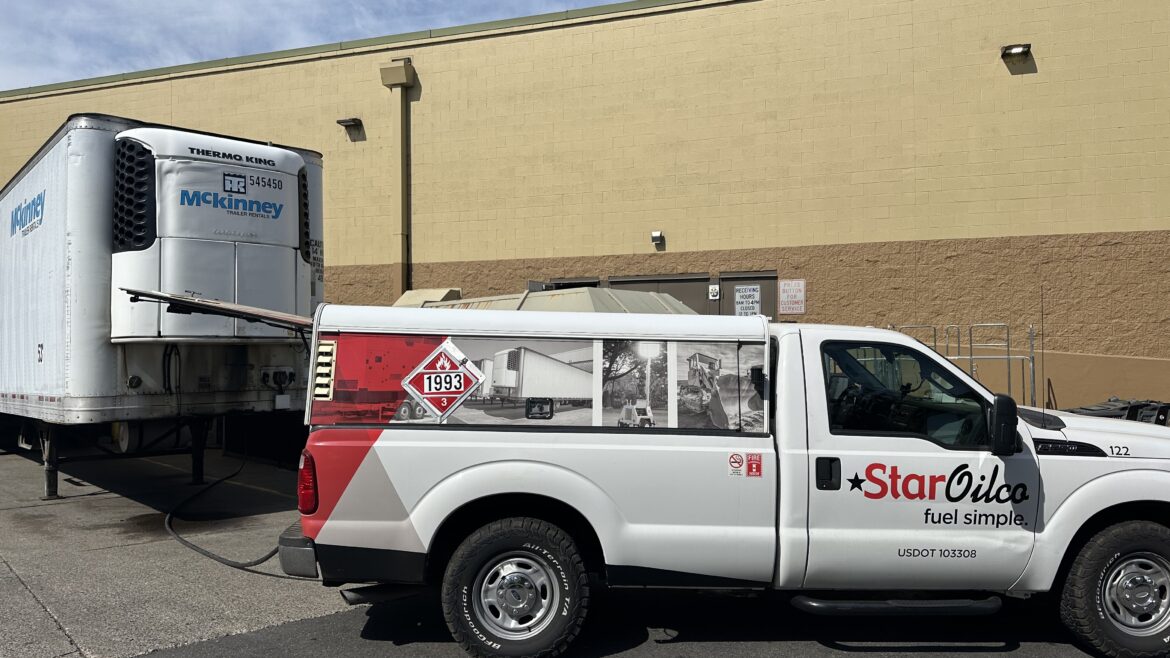
Star Oilco fuel service truck refueling a McKinney refrigerated trailer at a commercial loading dock
Renewable Diesel Pros & Cons for Diesel Trucks 1024 768 Star Oilco

Renewable Diesel Pros & Cons for Diesel Trucks

Yellow Star Oilco truck at sunrise on a rural Oregon property

The Pros and Cons of Renewable Diesel in Your Diesel Truck 

 As the world continues to become more aware of sustainable alternatives, renewable biodiesel (otherwise known as R99) has emerged as a promising solution to reduce carbon emissions in the transportation sector. Diesel truck owners, for example, may wonder whether they can switch to renewable diesel and contribute to a greener future as the city of Portland will be enforcing new restrictions and limitations on carbon emissions. Here is more information on the feasibility of using renewable diesel in diesel trucks and looking at the benefits and possible challenges. By understanding the advantages and limitations, you can make an informed decision about integrating this renewable fuel into your trucking operations.

1. Understanding Renewable diesel:

Renewable diesel is a clean-burning alternative fuel derived from natural sources such as vegetable oils, animal fats, and recycled cooking oil. It is produced through a process called transesterification, where the oils or fats are chemically reacted with alcohol to separate the glycerin from the fatty acids, resulting in renewable diesel. This sustainable fuel can be used in diesel engines with little to no modifications, making it a viable option for diesel truck owners. 


2. Environmental Benefits of Renewable Diesel:

Renewable diesel (known as R99) has significant environmental benefits. Renewable diesel reduces greenhouse gas emissions, such as carbon dioxide, sulfur dioxide, and particulates matter, compared to traditional diesel. It has lower levels of harmful pollutants, contributing to improved air quality and reduced smog formation. Additionally, renewable diesel is biodegradable, non-toxic, and significantly minimizes net carbon dioxide emissions over its lifecycle, making it a valuable tool in mitigating climate change. 


3. Compatibility and Performance:

While renewable diesel is compatible for diesel engines as a drop in solution, its essential to consider any factors before switching. Renewable diesel has a slightly lower energy content than regular diesel, which can result in a slight decrease in fuel economy.


4. Availability and Infrastructure:

Is renewable diesel readily available? While renewable diesel is becoming more widespread, its availability may vary depending on your location. Star Oilco offers delivery of renewable diesel (R99) to the Portland, Oregon surrounding area as well as Vancouver, Washington. You can reach out to us to get a quote based on your location and service needs. 

Renewable diesel offers a promising alternative for diesel truck owners who want to reduce their environmental impact. With its environmental benefits, compatibility with diesel engines as a drop-in solution, and ongoing availability improvements, renewable diesel presents a viable solution to achieve sustainable transportation and it contributes to a greener future across the Pacific Northwest.

Call Star Oilco today to discuss using Renewable Diesel as a drop-in solution for your diesel trucks.

Stay in the know and sign up for our monthly newsletter

Name(Required)

greenhouse gas emissions reduction graphic by Star Oilco
Why diesel fuel in Oregon may go up in 2025 940 788 Star Oilco

Why diesel fuel in Oregon may go up in 2025

What are the market forces impacting diesel in Oregon for 2025?

There are some big changes coming for diesel fuel in Oregon and it is not widely reported. The biggest likely change being a smaller supply of renewable diesel in the first quarter of 2025.  Renewable Diesel is expected to see a shorter supply than in recent years as imports drop off with the removal of subsidies.

Oregon is going to see several major market forces impacting the wholesale, as well as retail cost of diesel to those that buy it.   To list them simply, the following events will converge on New Years Eve:
The end of the $1 a gallon US Blenders Tax Credit (BTC) subsidy on biodiesel and renewable diesel.
– The subsidy replacing the BTC, the Producers Tax Credit (PTC), blocks imported biofuels such as Neste Renewable Diesel.
– Oregon is relaunching its Climate Protection Program which will cap the market allowance for fossil fuels.
Portland has a Renewable Fuels Program that requires the blending of Biodiesel and Renewable Diesel under a 60% reduction in CO2 emissions from petroleum diesel (biofuels sold in Portland must be below a 40CI under Oregon’s Clean Fuels Program).
California has mandates for Renewable Diesel in many uses raising the cost of R99 renewable diesel throughout the US.

These forces will raise the cost of fossil fuel diesel, renewable diesel and biodiesel while at the same time Oregon and Portland are requiring the use of these biofuels.  This will mean a higher retail and wholesale price inside Oregon compared to the rest of the United States. We cover the details of these trends below in depth.

THE OREGON CLIMATE PROTECTION PROGRAM

The biggest change impacting the price for on-road diesel is the return of Oregon’s Climate Protection Program (CPP). The program’s more common name is Cap and Invest, in fuel pricing it is referred to as “Cap at the Rack” as its allowance requirements are priced on a gallon of fossil fuel.  The program caps the total fossil fuel allowed to be sold inside Oregon. Then, revenue generated from selling the allowances to import CO2 contributing fossil fuels into the state, is invested to reduce future needs for these fuels.  In 2025, this program will return and fuel importers into the state of Oregon will have to capture the cost of reducing their CO2 emissions under this program.

Oregon previously had a “Cap and Invest” program limiting the total market share allowed for petroleum diesel fuels.  This created a higher cost for diesel fuels refined from petroleum compared to renewable diesel and biodiesel. This program was stopped by an Oregon court decision in 2023. The Oregon Department of Environmental Quality (DEQ) just finished and published the new rules for this program correcting the issues the court had with the program.

The way the Oregon Cap and Invest works on the market is similar to musical chairs. If you imagine the market for diesel is limited just like seats in musical chairs, every year they will take a few of the fossil fuel chairs away.  That means that anyone maintaining their existing customer gallons or trying to grow their volumes must meet this demand with renewable diesel, biodiesel or some other fuel.  The limited market for fossil fuels is represented by “Allowances” provided by the Oregon DEQ.  If a fuel seller cannot reduce their fossil fuel dependency, they need to buy a CPP Allowance in an Oregon DEQ curated market for them.

The value of these CPP Allowances is actually charged on each gallon of fuel sold by the regulated parties.  It is commonly called “Cap at the Rack” and can range in cost from nothing to over $.50 a gallon depending on how hard it is to meet the need of the program.  The biggest impact on the Cap at the Rack cost is how much renewable diesel or biodiesel is being used by those selling fuel.   Prior to the stoppage of Oregon’s CPP program, the Cap at the Rack cost usually ran around $.05 to $.30 a gallon.  It is expected we will see a return to this cost starting January 1st, 2025.  OPIS reports have an adjusted and non-adjusted option to capture the cost of this program.

The way the CPP program is designed is that if a fuel seller brings in a lower CO2 fuel like renewable diesel or biodiesel into the state of Oregon those gallons do not count towards the fossil fuel market cap.  So a R99 seller has no CPP Allowance obligations for those gallons.  A B20 biodiesel blender, as well, picks up 20% more gallons available to sell as those biodiesel gallons do not count against their CPP Allowances.  This facet of the CPP is why the market of renewable diesel in particular is a big deal for diesel prices.

The intent of Oregon is for consumers, fleets, farmers, municipalities, and industry in Oregon to grow their energy needs, they will need to use more low carbon energy.  If this energy use is a fleet running over 32,000 GVW this will mean low CO2 biomass based diesel fuels.   At the same time, the CPP program is kick-starting back into existence, the world of these biofuels is seeing some major market changes.

OREGON CLEAN FUELS PROGRAM

Oregon has another program to reduce the CO2 of the liquid fuels sold inside the state.  This program is additional and works in conjunction with the CPP.  It is the Clean Fuels Program (CFP) and is extremely similar to the California Low Carbon Fuel Standard (LCFS).  This program creates a market for Carbon Credits that are traded and required by fuel importers into Oregon.  OPIS also shows this program’s cost per gallon on their reporters.

Where the Climate Protection Program is like musical chairs with market share as the allowed market for fossil fuel shrinks year over year, the Clean Fuels Program is like a coupon required with sales of fossil fuel.  The major importers of fossil fuels into Oregon must show they are blending lower CO2 biofuels by presenting CO2 credit generated under the CFP program.  Users of fuel inside Oregon also see a benefit for bringing in low CO2 fuels when the market needs the credits so that voluntary users of high blend biofuels like R99, B99, B20 or E85 (85% ethanol) get financial support via a reduced final cost per gallon if using those fuels.

The reason we see renewable diesel in Oregon compared to the rest of the United States is because of this program.  This value of a Carbon Credit is usually taken to buy down the competitive price of these biofuels.  The concept is that if a fuel importer is bringing low CO2 fuels into Oregon, the reduction in CO2 these fuels represent can generate a CO2 credit.  That credit being sold on an open market to help reduce the cost of a low CO2 fuel compared to a fossil fuel.  The market for these credits is banked and has been building for years. Currently, the CO2 value is low as there are plenty of credits.

If the market availability of renewable diesel and biodiesel is dropping, the value of these credits should be rising.  The overall market will be bearing this cost though consumers will likely never see it.  In effect these regulatory market impacts of less renewable diesel in Oregon will mean a higher Carbon Credit price under the CFP program.  That will help lower the blended or delivered costs of B99 biodiesel and R99 renewable diesel hitting the end consumer.

RENEWABLE DIESEL AND BIODIESEL SUPPLY IN OREGON

Biodiesel and renewable diesel are called “Biomass Based Diesel” as a respective class of biofuels.  Where fossil fuel diesel is made from crude petroleum, biomass based diesels are diesel fuels made by several technologies from biomass feedstocks. The most widely used feedstock being fats, oils, and greases from virgin vegetable seed oils (soy and canola) or waste streams like recycled deep fryer oils, meat processors rendering fats, recovered trap greases, and many other sources of fat waste streams.

The 2025 Oregon Fuels Forecast for Oregon predicts a 199+ million gallon need for R99

The Oregon Department of Administrative Services Office of Economic Analysis produces a Clean Fuels Forecast which describes the size of the market need in Oregon.  In 2023, Oregon used 133.3 million gallons of R99 inside the state. The fossil fuel diesel used in 2023 was 577.6  million gallons by comparison.  So R99 and B99 blended with those gallons is a substantial 26% of the diesel burned in Oregon by the most recent total data.  The forecast for 2024 Renewable Diesel is 46.6 million gallons of R99, which appears to be exceeded by quite a bit.

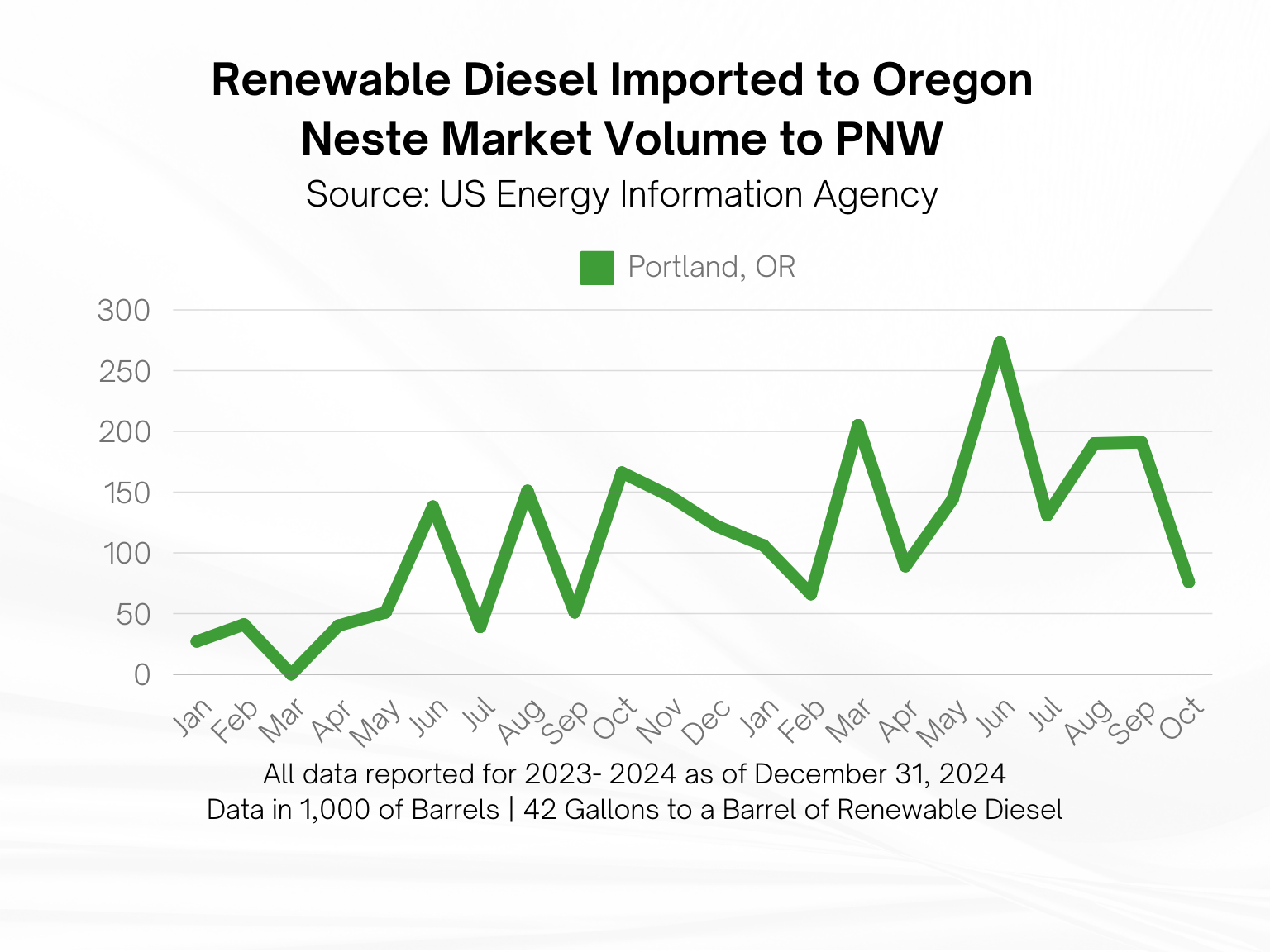
We do not have total consumption numbers for 2024 yet, but we do know thanks to the US Energy Information Agency, that imported R99 from Neste Singapore by itself through October was roughly 62 million gallons rounding up.  The Oregon Clean Fuels Forecast expects 199.5 million gallons of renewable diesel in 2025.  As the program ramps up with this expectation, the imports of previous years will be far less competitive without subsidies.  This means the price of renewable diesel will be higher, unless US production scales to not only fill this market void but also add tens of millions of gallons into the state.

Of that 133.3 million gallons of R99 used in 2023 in Oregon, a third, more than 40 million gallons of it was imported Neste Renewable Diesel.  973,000 barrels of renewable diesel was shipped from Singapore to Oregon that year.  Other renewable diesel refiners such as Diamond Green, HF Sinclair, Marathon, Montana Renewables, Phillips 66 and Chevron also had R99 product sold into Oregon.  Regardless of the expansion of US domestic Renewable Diesel production in recent years, the Neste product no longer receiving subsidies will have a real impact to maintain these 133+ million gallons of R99 inside Oregon.

This same projection reports that Oregon’s B99 Biodiesel use inside the state in 2023 was 78.8 million gallons.  With a projection of Biodiesel to rise 83.8 million gallons in 2025.  Given these market needs, Star Oilco predicts R99 to be expensive compared to petroleum diesel. Biodiesel will be more competitive given the available product and no substantial change in suppliers.  Biodiesel will also need to be used to replace R99 gallons under the CO2 reduction programs of Oregon. Due to these market forces Star Oilco has contracts for supply at reasonable prices for our existing customers.

R99 is mandated in certain diesel uses in California by the California Air Resource Board (CARB) which make for an inelastic price.  Diesel equipment operators in California will have to buy R99 at any price.  This will raise the prices we in Oregon can expect to see renewable diesel at.  The other low CO2 diesel fuel biodiesel will not be impacted by CARB the same way and we can expect to see B20 become more widely sold because of its more competitive price.

Biodiesel has a much more widely used market development around the US, especially in over-the-road trucking.  The plants that make biodiesel also tend to be co-located, owned in collaboration with feedstock producers, and integrated within the Soy industry that produces the feedstock.  Expect that biodiesel will continue to be more competitive with diesel than renewable diesel if price is the concern.

It is worth mentioning that the CARB mandates for R99 use in California will have impact to set the price for renewable diesel in other states.  If the market demand mandated by CARB continues and the market is short, the price can be expected to rise to meet this demand.  So unsubsidized imported R99 will likely continue to flow into California and other states but it will be at a full cost to make up the subsidy.  This will likely mean that incremental gallons of R99 needed to meet the market growth projected in Oregon will be at a premium over Oregon diesel to match California’s diesel market.

US BLENDERS TAX CREDIT EXPIRATION IMPACTING OREGON

The biggest unknown on how expensive diesel will be for Oregonians relates to Federal biofuel policy.  For the last twenty years the US Government has had an on-again/off-again subsidy on biodiesel and more recently renewable diesel.  There have been years the subsidy was not renewed which informs us of what probably will happen with prices on biodiesel.  Renewable diesel though is a stickier market.  The reaction of R99 renewable diesel prices in California, Washington and Oregon market is the big question and it comes down to an issue of production.  Two big issues at play are how much renewable diesel will these states continue to see from Neste’s Singapore plant and how much new US production for renewable diesel comes online to feed the market need.

The Blenders Tax Credit will be replaced with the Producers Tax Credit

The Blenders Tax Credit expired December 31st.  There are those that hope that in January the new Congress will take up an extension of this but most experts in the industry do not expect and are not betting an extension will not occur.  Meanwhile there is subsidy regime named the “Clean Fuels Production Credit” or the slang term preferred by industry the Producers Tax Credit (PTC) which ranges from $.20 a gallon to $.80 a gallon depending on how low CO2 the fuel as well as some labor practices.  The PTC also bars imported renewable diesel and biodiesels from getting any money at import.  Approximately more than 40,000,000 gallons a month of renewable diesel flows from Neste Singapore to the west coast, this will have a huge impact on Oregon.  For those accustomed to that fuel at the same price as fossil fuel diesel, the expiration of this subsidy will raise our prices for those demanding R99 renewable diesel which was already in short supply prior to this change.

There is also another wrinkle in the subsidy policy of the US with this.  The subsidy on Sustainable Aviation Fuel (SAF), basically renewable diesel meeting the Jet A fuel specification, is still in place for imported product for another year.  Europe also has some significant incentives and mandates for SAF.  Renewable diesel refiners, both domestic as well as foreign have a huge financial incentive to make renewable jet fuel over renewable diesel. This reality probably means that if a gallon of fuel can go to a jet fuel market over a transportation market it will.

So the market forces for renewable diesel in particular probably means less R99 available nationwide in the US.  While that is happening, the state of California has mandated that all off road equipment run R99 Renewable Diesel.  So regardless of what the price of this fuel is, California will have to use it in huge volumes.  Markets being what they are, for high volume fleets demanding R99 they can expect the R99 price in Oregon will track the price paid in California.  There will be exceptions of contract relationships for supply of R99 as well as retail brands moving renewable diesel blends to meet their strategic CPP requirements.  This will definitely mean anyone wanting R99 will want to line up a contractual supply agreement or can expect a higher price than in 2024.

THE FEDERAL RFS AND RINS

It should also be mentioned that the US EPA has a Renewable Fuel Standard of its own. It is a completely different regulatory system compared to the Portland RFS.  This program requires gasoline refiners as well as importers to use so much biofuel in their sales inside the United States.  Federally refiners and importers must prove they blended specifically assigned amounts of ethanol, and biomass based diesel fuels.

This program attaches a Renewable Industry Number (RIN) on every gallon of biofuel sold in the US.  As there are many unobligated users of this biofuel in the US those blending their own biodiesel, renewable diesel and ethanol generate RINs that can be sold to the refiners and importers of gasoline inside the US.

The RIN value has been low compared to historic values for biomass based diesels.  As Biodiesel and Renewable Diesel generate the same type of RIN, the reduction in imported R99 might raise the value of these RINs.  This value increase for the Renewable Industry Number is expected to slightly off set the hard subsidy.  It will be a market based value so it can not be relied upon for lowering the cost of biofuels, but can be expected to help with price.

As more US produced renewable diesel is coming online, hopefully enough to replace the lost imported gallons before the busy summer diesel season, these RIN values may not have a major contribution to the wholesale price of R99.

CONCLUSION

We predict diesel prices to rise in Oregon compared to the US in the first quarter of 2025

Star Oilco’s team saw these market conditions coming during the summer of 2024.  We have locked in contractual supply of R99 renewable diesel for our existing customers and have additional supply for customers seeking R99 renewable diesel by Star Oilco owned cardlock sites, mobile onsite fueling or smaller volume bulk delivery.

Star Oilco expects a Cap at the Rack price from the Oregon CPP to be between $.10 and $.40 a gallon by the end of January depending on biofuel supply. With unofficial conversational predictions with several large fossil fuel refiners and brokers, there is an expectation of over $.25 a gallon as a Cap at the Rack price.  We think it will be higher than that with the removal of millions of gallons of R99 from Oregon’s market.  In the first quarter with the removal of imported R99 hitting the state we expect the Cap at the Rack price to start in the higher $.30 a gallon range where it left off when the program was ended by a court. As the low CO2 exempt renewable diesel gallons shrink in the first quarter a heavier reliance on fossil diesel will be required.

We expect quite a bit of biodiesel to be loaded up ahead of the $1 a gallon subsidy being ended on December 31st.  Renewable diesel will be in short supply due to disruptions in supply of imported product.  So first quarter R99 will be at a premium and B99 for blending with diesel will be a deal to be had as fossil fuel diesel prices rise.  Expect to see far more B10 and B20 offered in the market place as either a more common than not fuel at retail gas stations, truck stops, and most cardlock stations, especially in Portland.  Star Oilco will have options for our customers of either B20, R99, or R20 blends of diesel all complying with the City of Portland Renewable Fuel Standard inside the city.  Star Oilco’s Portland CFN and Pacific Pride locations will have both R99 and B20 hoses available for customers.

California will continue to demand any and all R99.  If the market is short R99 because of a removal of imported renewable diesel, the value of R99 in California will rise to justify foreign R99 to enter the market without a subsidy.  Star Oilco presumes that number will be between $.40 to $.80 a gallon.  If R99 in California is able to demand a premium, Oregon will have to pay that price for incremental gallons.  Oregon has a specific need for R99 and B99 for retail gasoline sellers to meet the Climate Protection Program (if you sell so much gasoline you must reduce your market share someplace and R99 diesel is the easiest way to do that).  Oregon retailers will be seeking to move a budgeted amount of renewable diesel and biodiesel to meet their fossil fuel allowance budgets under the CPP.  Each gallon beyond that will have to compete with California at a high price.

R99 will still be available but we expect incremental gallons to be at a premium.  Contractual gallons direct with a refiner of renewable diesel will have a consistent price that a business can manage fuel surcharges against diesel.  Outside of a contract for volumes, the wholesale rack price of R99 may vary wildly compared to a B5 ULSD fossil fuel diesel prices depending on how high diesel is going for are as well as the CPP and CFP values of a Carbon Credit and Cap at the Rack.

The big unknown to price is how one key importer of R99 will respond to the market without a subsidy.  It is the assumption of Star Oilco that California will continue to buy imported R99 without a subsidy for it’s off-road mandated market. If the economics of Neste are such, they can compete and open the floodgates of R99 and this could change.  This open flood of product is not expected especially given the economics of Sustainable Aviation Fuel which renewable diesel plants are expected to make more of in 2025.

The Oregon and Washington market will see a flow of new capacity of R99 for retailers mandated to reduce their fossil fuel volumes.  US production of R99 is expected to more than compensate by 2026, but 2025 will be a chasm to jump.  Chevron, HF Sinclair, Marathon, and Phillips 66 will be procuring and supplying US made biomass based diesel to the Pacific NW for their retail gas station needs.  We would expect to see R99 or blends of it sold at parity with branded diesel in the retail market in Oregon.

Commercial sellers of wholesale unbranded diesel will have a tougher time lining up R99 at a price in line with wholesale B5 or B20 ULSD.  No doubt with these higher prices we will be seeing an evolution of R20 (20% renewable diesel) as well as blends of biodiesel with renewable diesel available inside the City of Portland for it’s Renewable Fuel Standard as a premium fuel at a competitive price with diesel.

Star Oilco has R99 and R20 blends for commercial customers in the Portland, Oregon area.  We also have R99 available for Clark County Washington commercial and municipal fleets.  Star Oilco also has biodiesel blends and can support fleets seeking to succeed with it.  Call us if you would like to talk about your fuel supply in 2025.

If your fleet has an interest in a consistent and contractual supply of R99 renewable diesel or wants to develop a relationship that prioritizes a 20% of renewable diesel blended to meet Portland’s Renewable Fuel Standard compliance please feel free to reach out to Star Oilco.

Reach Out To Our Team

Our team of fuel experts would be happy to work with you and help you understand how this affects your operations

Yellow Star Oilco truck at sunrise on a rural Oregon property
Renewable Diesel Production in the U.S. 1024 768 Star Oilco

Renewable Diesel Production in the U.S.

The United States has witnessed a remarkable shift towards renewable energy in recent years, with a growing emphasis on reducing greenhouse gas emissions and achieving a sustainable future. Renewable diesel has emerged as a alternative to conventional petroleum-based diesel, while providing engine performance on par with petroleum diesel. 

renewable-diesel-united-states

Renewable Diesel Producers in the United States:

Neste:

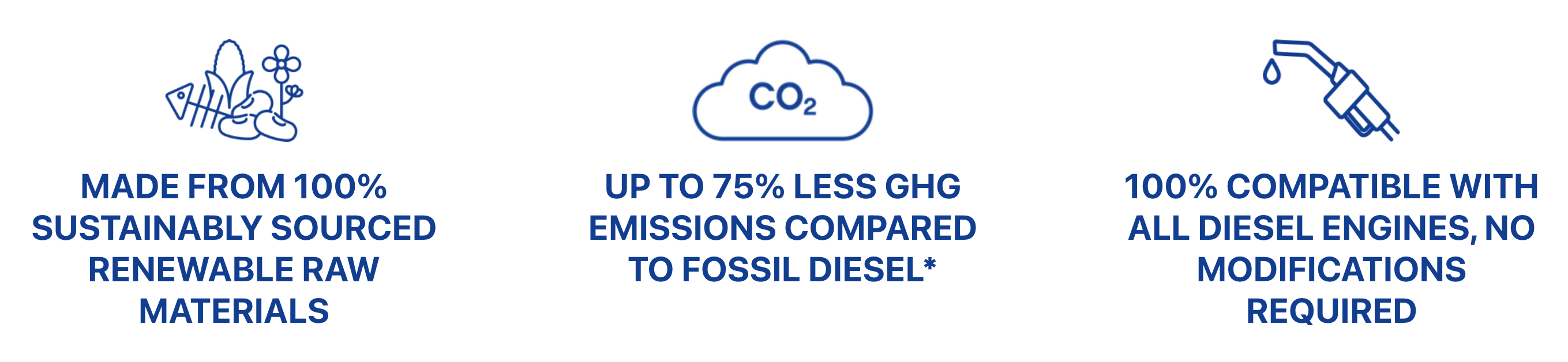
Neste, a global leader in renewable diesel production, has made significant strides in the United States. The company operates multiple renewable diesel refineries across the world, including its flagship facility in Rotterdam, the Netherlands. To cater to the growing demand in North America, Neste has expanded its production capacity in the United States. The company’s renewable diesel is derived from 100% renewable raw materials, such as waste fats and vegetable oils, resulting in a fuel with significantly lower carbon emissions. Neste has already established a strong presence in the United States, and their production volumes are expected to increase significantly over the next five years. 

Renewable-Diesel-Sustainably-Made-With-Raw-Materials

Diamond Green Diesel  (Valero and Darling Ingredients):

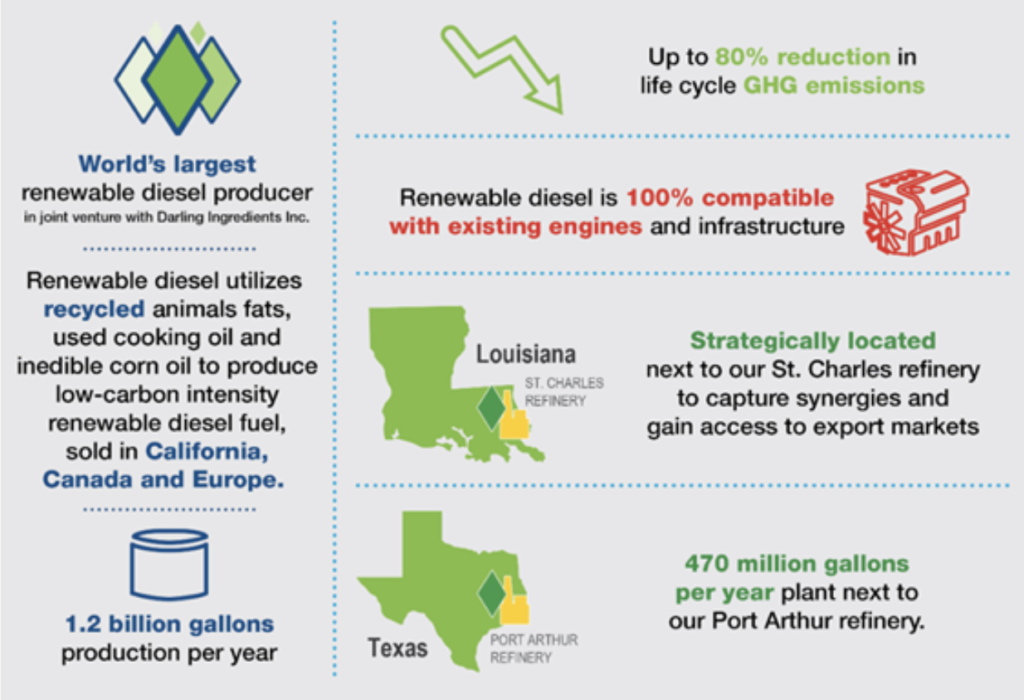
Diamond Green Diesel (DGD) is a joint venture between Valero Energy Corporation and Darling Ingredients Inc. that focuses on producing renewable diesel in the United States. The DGD facility, located in Norco, Louisiana, is one of the largest renewable diesel refineries in the country. It has the capacity to produce approximately 18,000 barrels per day (bpd) of renewable diesel, equating to over 600 million gallons per year. The joint venture partners are committed to expanding their renewable diesel production capabilities, with future projects expected to increase production volumes even further. 

worlds-largest-renewable-diesel-producer

Renewable Energy Group (REG):

Renewable Energy Group (REG), headquartered in Ames, Iowa, is a leading producer of advanced biofuels, including renewable diesel, in the United States. The company operates multiple bio-refineries across the country, strategically located to maximize feedstock availability and transportation logistics. REG’s renewable diesel production is expected to witness significant growth in the coming years due to increasing demand and favorable regulatory policies promoting renewable fuels. The company has continuously invested in expanding its production capacity, making them a key player in the renewable diesel market. 

Marathon Petroleum Corporation:

Marathon Petroleum Corporation, one of the largest petroleum refining companies in the United States, has also entered the renewable diesel market. The company is repurposing existing refining infrastructure to produce renewable diesel from a variety of feedstocks, including soybean oil, corn oil, and animal fats. Marathon Petroleum aims to capitalize on its extensive refining capabilities and distribution network to expand its renewable diesel production and meet the growing demand for sustainable transportation fuels. 

Estimated Production Volumes and Driving Factors: 

The production of renewable diesel in the United States is expected to experience substantial growth over the next five years. While precise figures can vary due to market dynamics and regulatory changes, industry experts anticipate a significant increase in production capacity and output. Factors driving this growth include: 

Renewable Fuel Standards (RFS) and Low Carbon Fuel Standards (LCFS):

Federal and state-level regulations, such as the Renewable Fuel Standard (RFS) and Low Carbon Fuel Standard (LCFS), have played a pivotal role in incentivizing the production and consumption of renewable fuels, including renewable diesel. These policies impose blending mandates and create markets for renewable fuels, encouraging companies to invest in production infrastructure and increasing overall production volumes. 

clean-fuels-program-oregon

Environmental Sustainability Goals:

The commitment to environmental sustainability and reducing carbon emissions has become a top priority for businesses, governments, and consumers alike. Renewable diesel, otherwise referred to as R99, offers a viable solution for achieving these goals, as it significantly reduces greenhouse gas emissions compared to traditional diesel. The increasing awareness and demand for cleaner transportation fuels are expected to drive the production of renewable diesel in the United States. 

Investment in Production Infrastructure:

Major players in the energy industry, such as Neste, Valero, and Marathon Petroleum, have made substantial investments in retrofitting existing refineries and constructing new facilities dedicated to renewable diesel production. These investments indicate a long-term commitment to renewable diesel and signal the potential for significant production increases in the coming years. 

Renewable diesel production in the United States is poised for remarkable growth over the next five years, driven by regulatory support, environmental sustainability goals, and significant investments by key industry players. Companies like Neste, Diamond Green Diesel, Renewable Energy Group, and Marathon Petroleum are leading the charge, expanding their production capacities to meet the growing demand for sustainable transportation fuels. With these advancements, the United States is well on its way to achieving a greener and more sustainable future, reducing carbon emissions and promoting a cleaner energy landscape. 

Close-up of green diesel nozzle fueling a generator unit outdoors
Green oil droplets suspended in liquid under magnification
The Benefits of Renewable Diesel 1024 683 Star Oilco

The Benefits of Renewable Diesel

In an era of environmental consciousness and sustainable alternatives, the need for renewable energy sources has become increasingly evident. One of the notable contenders in this field is renewable diesel —a clean-burning, low-emission fuel that could revolutionize the transportation sector. We will dive into renewable diesel, exploring its production process, environmental benefits, and potential to replace petroleum-based diesel. 

What is renewable diesel? Renewable diesel, also known as green diesel or second-generation biodiesel, is a next-generation alternative fuel derived from sustainable feedstocks such as vegetable oils, animal fats, and waste fats and oils. Unlike traditional biodiesel, which is typically produced through transesterification, renewable diesel is synthesized through hydro-treating. This process removes oxygen from the feedstocks, resulting in a cleaner and more energy-dense fuel that is chemically identical to petroleum-based diesel. 

Environmental Benefits: 

  1. Reduced greenhouse gas emissions: One of the primary advantages of renewable diesel is its significant reduction in greenhouse gas emissions. Studies have shown that renewable diesel can reduce carbon dioxide (CO2) emissions by up to 80% compared to petroleum diesel. This reduction is attributed to the use of sustainable feedstocks, which have a lower carbon intensity than fossil fuels.
  2. Improved air quality: Renewable diesel has lower levels of particulate matter, nitrogen oxides (NOx), and sulfur emissions than conventional diesel. Renewable diesel combustion produces fewer harmful pollutants, leading to improved air quality and a decrease in respiratory and cardiovascular health risks for both urban and rural communities.
  3. Sustainable feedstock utilization: Renewable diesel can be produced from a wide range of feedstocks, including used cooking oil, animal fats, and waste oils. By utilizing these feedstocks, the fuel industry can promote the circular economy by reducing waste and repurposing materials that would otherwise end up in landfills. Furthermore, growing dedicated energy crops for renewable diesel production can be done sustainably, without deforestation or compromising food production. 

Advantages Over Traditional Biodiesel:  

  1. Compatibility with existing infrastructure: Unlike traditional biodiesel, renewable diesel can be seamlessly blended with petroleum diesel or used as a drop-in replacement without modifications to existing diesel engines or distribution infrastructure. This characteristic makes it an attractive option for achieving immediate emissions reductions in the transportation sector.
  2. Superior cold-weather performance: Renewable diesel exhibits excellent cold-weather performance compared to conventional biodiesel. It has a lower cloud point and a higher cetane number, which ensures better ignition and combustion even in cooler climates. This attribute makes it a more reliable fuel choice, particularly in regions with frigid winters.
  3. Higher energy density: Renewable diesel has a higher energy density than biodiesel, resulting in increased fuel efficiency and mileage. This benefit translates to longer driving distances per gallon of fuel, making renewable diesel an economically viable choice for vehicle owners and fleet operators. 

Renewable diesel represents a groundbreaking alternative to petroleum-based diesel, offering a host of environmental benefits and paving the way for a greener and more sustainable future. With its significant reduction in greenhouse gas emissions, improved air quality, and compatibility with existing infrastructure, renewable diesel presents a strong case for a need and desire for a widespread adoption in the transportation sector. As renewable energy technologies continue to evolve, embracing renewable diesel can be a crucial step towards reducing our dependence on fossil fuels.