
Next Generation Fuels

Aerial view of Portland, Oregon at sunset with Mount Hood in the background
Oregon-Made Biodiesel 1024 819 Star Oilco

Oregon-Made Biodiesel

     Low CO2 Biodiesel Made from Waste Vegetable Oil in Salem, Oregon.

B20 Biodiesel A PROVEN FUEL

            Star Oilco is a proud seller of locally sourced biodiesel products.

We believe in biodiesel and run B20 in our own fleet. Star Oilco has been a pioneer in successful fleet demonstration of B20 and blends up to B99 in a host of applications for over a decade. There is no lower cost way to reduce your CO2 emissions than by substituting petroleum diesel with a recycled vegetable oil feedstock biodiesel blend. It is a drop in solution that requires awareness in your fleet maintenance concern — but beyond that is a very low barrier to use.

       We have worked with our vendor for recycled oil biodiesel, SeQuential Biofuels, since 2004.

SeQue Biofuels collects feed stocks collected from deep fryers and food processors throughout the Pacific Northwest to make the lowest CO2 biodiesel fuel in Oregon. If you are seeking to reduce your carbon footprint, biodiesel is your drop in solution. Ready and approved by every manufacturer for on- and off-road vehicles at a 20% biodiesel blend.

                                           How can we help you move forward?  

We are here to help you be successful with biodiesel, even if you are not our customer. Let us know if you have questions or if we can be of help.

Simply call us at 503-283-1256 or contact us using the form below.

Contact Form

  • This field is for validation purposes and should be left unchanged.
Ripple effect in a pool of yellow biodiesel oil representing renewable energy feedstocks
BioDiesel Feedstocks – Castor Oil and Amp – Choice White Grease 1024 721 Star Oilco

BioDiesel Feedstocks – Castor Oil and Amp – Choice White Grease

Biodiesel Feedstocks – Castor Oil and amp – Choice White Grease

In this post we continue our deeper look into different types of feedstock that Renewable Energy Group (REG) studied in 2009 in the Feedstock and Biodiesel Characteristics Report. This week’s two feedstocks are Castor Oil and Choice White Grease. For more information and more feedstocks this is the main page of the feedstocks we have examined so far.

Castor Oil

Castor oil comes from Ricinus communis, known commonly as the castor bean plant. While the castor bean is not a real bean, it is called this due to the shape of the seeds.  These seeds consist of about 45-50% oil. Ricinus communis known commonly as Castor Bean plantRicinus communis is a fast-growing shrub type plant that can reach the size of a small tree. This perennial flowering plant is native to the southeastern Mediterranean Basin, Eastern Africa, and India, but grows easily throughout tropical regions. It is not a cold hardy plant, although in a suitable environment it can become invasive.  Castor bean plants are grown as ornamental plants throughout the world and are used extensively as a decorative plant in parks and public areas. The castor bean plan will grow rapidly in a single season, about 6-10’ tall. Ornamentally, it is most valued for its huge, palmately (having four or more lobes or leaflets radiating from a single point) 5-11 pointed lobes, toothed, glossy green leaves (each to 1-3’ across) and round, spikey, reddish-brown seed capsules. Small cup-shaped, greenish-yellow apetalous (lacking flower petals) spikes which are not particularly showy. Different cultivations of the plant result in dwarf and large plants, some with attractive reddish, bronze or purple leaves and bright and colorful flowers. Castor Beans contain about 45-50% oil

An additional benefit of this source of oil is that it doesn’t impact the food supply. The entire plant is poisonous but has some reported medicinal uses. Other uses of the plant include being used as an insecticide against some ticks and food for silkworms. Castor oil has been used as a lubricant in engines for years, because of the high heat resistance it has historically been used in two-stroke engines.


Castor Oil and Bio-diesel sampleCastor Oil biodiesel Certificate of Analysis

Choice White Grease

The US Department of Agriculture defines Choice White Grease (CWG) as “A specific grade of mostly pork fat defined by hardness, color, fatty acid content, moisture, insoluble’s, unsaponifiable’s and free fatty acids.”

CWG is similar to beef tallow that we discussed in a previous week. It is an animal by-product, meaning that they are only produced in relation of raising the animal for meat or food production. As we can see from the picture it is a saturated fat and is at least partially solid at room temperature. This means that the resulting B100 biodiesel will have a higher cloud point.  CWG has historically been used as livestock feed. Additionally, using CWG for biodiesel gives pork producers an additional revenue and outlet for the product, helping elevate the return on investment for these farmers.

Choice White Grease and Bio-diesel sampleChoice White Grease biodiesel Certificate of Analysis


Last article for biodiesel feedstocks was Algae Oil and Canola Oil.

Ripple effect in a pool of yellow biodiesel oil representing renewable energy feedstocks
Biodiesel Feedstocks – Poultry Fat And Rice Bran Oil 1024 721 Star Oilco

Biodiesel Feedstocks – Poultry Fat And Rice Bran Oil

                    Biodiesel Feedstocks – Poultry Fat and Rice Bran Oil

Looking further into biodiesel feedstock we continue with Poultry Fat and Rice Bran Oil in our deeper dive into the feedstocks that Renewable Energy Group (REG) studied in 2009 in the Feedstock and Biodiesel Characteristics Report. If you would like to see more, you can read more here about the feedstocks we have examined in the past.

Poultry Fat

Rendering is the process of turning the left over animal products into fat or tallow. After the common parts of the animal are harvested the remaining parts are ground up and cooked. The oil and fat is then separated from the protein solids. Poultry fat, commonly made from chicken, Poultry Fat a possible source of bio-dieselis different from other forms of fat and tallow.  It tends to have less saturated fat. According to Farm Energy:

“Beef tallow and pork lard are typically about 40% saturated (sum of myristic, palmitic and stearic acids). Chicken fat is lower at about 30-33%. For comparison, soybean oil is about 14% saturated and canola oil is only 6%. Thus, tallow and lard are usually solid at room temperature and chicken fat, while usually still liquid, is very viscous and nearly solid.”

The high content of saturated fat can be a draw back for biodiesel produced from animal products. Beef Tallow in this study produced B100 (100% biodiesel) with a cloud point of 16° C or 60.8° F.  The Poultry Fat B100 in this study had a cloud point of 6.1° C or 42.98° F, in comparison Soybean Oil B100 in the same study was 0.9° C or 33.62° F.

One of the benefits of using animal fats for biodiesel is a higher Cetane number. (Source) “cetane number is a measurement of the quality or performance of diesel fuel. The higher the number, the better the fuel burns within the engine of a vehicle.”  Petroleum based fuels have a cetane number between 40 -44, soybean-based biodiesel is between 48 – 52 and animal fat-based biodiesel can have values over 60. (Source)

Poultry Fat Feedstock and Bio-DieselPoultry Fat Certificate of Analysis


Rice Bran Oil

Rice bran oil is a vegetable oil which is greatly available in East Asia countries. It is a byproduct of rice processing, containing about 15-23% oil.  The Rice Bran Oil that was used in this study was refined, bleached, deodorized, winterized (RBDW).

Rice bran oil is similar in make-up to peanut oil made up of monounsaturated, polyunsaturated, and saturated fatty acids.

While the Oil is this study was considered non-edible, when processed in other ways the oil can be used in cooking and is popular for Asian countries such as Bangladesh, China, India and Japan.

Rice Bran Oil - Feedstock and Bio-DieselRice Bran Oil Certificate of Analysis


Last article for biodiesel feedstocks was – Palm Oil & Perilla Seed Oil

Ripple effect in a pool of yellow biodiesel oil representing renewable energy feedstocks
BioDiesel Feedstocks – Algae Oil & Canola Oil 1024 721 Star Oilco

BioDiesel Feedstocks – Algae Oil & Canola Oil

Biodiesel Feedstocks – Algae Oil and Canola Oil


This post’s two oils are Algal Oil and Canola Oil.  If you would like to look ahead at some of the other feedstocks that Renewable Energy Group (REG) studied, or if you would like to look a little more in-depth at the comparisons here is the link to the Feedstock and Biodiesel Characteristics Report.   This is the main page of feedstocks we have looked at so far, and last week’s look at Borage Oil & Camelina Oil is here.  B20 Biodiesel (B20 stands for 20% biodiesel and 80% petroleum diesel) is the drop in solution for reduced emissions in today’s modern diesel engines.  To understand what some of the alternate feedstocks that can be used for biodiesel, we are examining a report that Renewable Energy Group (REG) produced in 2009. All certificates of analysis and results are for B100.

Algae Oil

Algae Oil has a huge potential to be the next source of Biofuel feedstock. Among the many benefits is that algae can be grown in any environment that can contain water, and algae doesn’t carry the negative stigma of using a potential source of food to create a fuel.  In addition, you could use algae to clean up wastewater and then use the fats to create the biodiesel. A recent study here is working on that concept. The U.S. Department of Energy has recently invested $2 million dollars into University of Michigan for research into algae as a diesel fuel. (see story here) The goal is to find high yield algae that produce a high-grade bio crude for renewable diesel or biodiesel. Here is the YouTube video about the research.

The two diverse samples of crude algal oil, that were used in the report from 2009, were obtained from Solazyme, Inc.  This Company works with algae to produce renewable oils and ingredients for industries. The report doesn’t go into what kinds of algae was used or the process that they used to convert the algae to oil.

Biodiesel Certificate of Analysis for Algae Oil 1Bio-diesel Certificate of Analysis for Algae Oil 2


Canola Oil

Canola is the seed of the species Brassica napus or Brassica campestris.Canola is the seed of the species Brassica napus Brassica Napus is also known as rape or rapeseed.  The name rape is derived from the Latin word for turnip, rapum.  Brassicaceae is the family of which mustard, cauliflower and cabbage belong.  The name Canola comes from the contraction of Canada and ola, meaning oil.  Developed in 1970s by researchers from the University of Manitoba and Agri-Food Canada, the use of the term Canola means that the oilseed meets certain standards.  The Official Definition of Canola is:

“Seeds of the genus Brassica (Brassica napusBrassica rapa or Brassica juncea) from which the oil shall contain less than 2% erucic acid in its fatty acid profile and the solid component shall contain less than 30 micromoles of any one or any mixture of 3-butenyl glucosinolate, 4-pentenyl glucosinolate, 2-hydroxy-3 butenyl glucosinolate, and 2-hydroxy- 4-pentenyl glucosinolate per gram of air-dry, oil-free solid.”

Government regulation requires Canola oil to to be limited to a maximum of 2% erucic acid these particular samples contains less than two percent erucic acid and the solid component contains less than 30 micromoles per gram of glucosinolates.

According to Reuters, “Rapeseed is the most produced oilseed in the EU.” This trend is gradually shifting to soya beans this article continues to explain. Currently 60 percent of the vegetable oil used in biodiesel comes from rapeseed oil in the EU.

Canola is the seed of the species Brassica napusCertificate of Analysis from REG for Canola Oil based Bio-diesel


Ripple effect in a pool of yellow biodiesel oil representing renewable energy feedstocks
Biodiesel Feedstocks – Lesquerella Oil & Linseed Oil 1024 721 Star Oilco

Biodiesel Feedstocks – Lesquerella Oil & Linseed Oil


                          Biodiesel Feedstocks – Lesquerella Oil and Linseed Oil

Lesquerella fendleri Oil

Lesquerella fendleri, also known as Physaria fendleri, is part of the mustard family. (Lesquerella) Physaria Fendleri part of the mustard familyThe common names of this plant are popweed and Fendler’s bladderpod. This silvery-gray perennial has four-petaled yellow flowers that grow on a plant that is about 1 to 16 inches tall. Found in plains and mesas in the southwestern United States, it requires low water usage and is one of the first of the flowering wildflowers in the spring (Source).

Lesquerella produces hairless capsules called siliques which contain 6 to 25 seeds. These seeds contain 20-28% oil with around 62% lesquerolic acid. Lesquerella oil is a source of hydroxyl unsaturated fatty acids, and is useful as a replacement for castor oil in some applications.

While there are benefits from using this seed oil, the dark reddish-brown color of the oil is a potential limiting factor. Potential selective breeding and domestication of the plant may solve this issue, but there haven’t been much momentum at this time. That being said, there have been some studies about growing this plant for its oil and the natural gum in its seed coat for commercial use.

Lesquerella Oil and Lesquerella BiodieselLesquerella BioDiesel Certificate of Analysis

Linseed Oil

Linseed (Linum usitatissimum) is also known as flax in North America. The plant is an annual and can grow in large range of climates. Linseed Oil and SeedsFor example, it grows in Argentina, India, and Canada. Linseed oil has been traditionally used as a drying oil. According to REG report, these seeds contains 37-42% oil. The crude oil contains 0.25% phosphatides, a small amount of crystalline wax, and a water-soluble resinous matter with antioxidant properties.

As one the earliest cultivated field crops in the US, it has found many uses for its oils. Linseed oil can be used as a varnish, pigment binder or to manufacture linoleum. These applications have seen reductions in use due to synthetic options that resist yellowing. Other uses for this plant are as nutritional supplements and foods, although raw linseed oil can become rancid unless refrigerated.  After the oil has been pressed out of the seeds, the leftover residue makes great animal food.

As some of the traditional uses of the plant are replaced with other options, use of this crop for a feedstock in biodiesel is an option.

Linseed Oil and Linseed biodiesel

Last article for biodiesel feedstocks was Jatropha Oil, Jojoba Oil, & Karania Oil.

We’re continuing our deeper look into different types of feedstock that Renewable Energy Group (REG) studied in 2009 in the Feedstock and Biodiesel Characteristics Report. This posts two feedstocks are Lesquerella Oil & Linseed Oil.  Here is a link to the main page of feedstocks we have examined so far.

Ripple effect in a pool of yellow biodiesel oil representing renewable energy feedstocks
Biodiesel Feedstocks – Moringa Oil & Neem Oil 1024 721 Star Oilco

Biodiesel Feedstocks – Moringa Oil & Neem Oil

                              Biodiesel Feedstocks – Moringa Oil and Neem Oil

Moringa oleifera Oil

Moringa oleifera is a tree with the common names moringa, drumstick tree, horseradish tree and ben oil tree.The tree and seedpods of Moringa oleifera in Dakawa, Morogoro, Tanzania. This tree ranges in height from 15 to 30 feet tall, and is native to India, Africa, Arabia, Southeast Asia, the Pacific and Caribbean islands, South America, and the Philippines. This deciduous tree is fast-growing and drought-resistant. It loves sun and heat and doesn’t tolerate freezing weather. Moringa oleifera is a slender tree with drooping branches, brittle stems and whitish-grey corky bark. It has feathery green to dark-green foliage tripinnate leaves and yellowish-white flowers. The trees usually begin producing about second year about 300 pods, but it can take a few years to get to the 1000 or more pods a good tree can yield.

There are a vast amount of uses for this tree. According to Purdue University, almost every part of the plant has value as a food. The seeds can be eaten like a peanut, the roots can be eaten and taste like horseradish, and the leaves are eaten in salads, curries and used for seasoning.

The plant has other non-food uses include Moringa seeds being pressed for oil. This oil is used in arts and lubricating small and delicate machines, and it clear, sweet and odorless it is edible and is also used in manufacturing perfumes and hair products. The wood can be used to create a blue dye and the bark is used in tanning.

The oil from the seeds contain between 33 and 41 % oil. It is also known as Ben Oil, due to its content of behenic (docosanoic) acid. This oil can be used in the production of biodiesel, (Source) and the remaining seed cake can be used as fertilizer.

Morigna Oil and Morigna BiodieselMorigna oleifera Biodiesel Certificate of Analysis


Neem Oil

The Neem tree is also known as nimtree, Indian lilac, or margosa tree. ABHIJEET (photographer) (2014, September 19) Neem tree in banana farms at Chinawal, India. The scientific name is Azadirachta indica. This large evergreen tree that is usually 49 to 66 ft tall but can get as big as 130 ft tall. This fast growing  tree is found in India, Pakistan, Sri Lanka, Burma, Malaya, Indonesia, Japan, and the tropical regions of Australia. It has long skinny leaves that are dark green in color and produces white fragrant flowers. The flowers produce a smooth olive like fruit. The seed in the center is called the kernel which contain 40-50% of an acrid green to brown colored oil.  The oil in the REG study was pure, cold pressed neem oil that was purchased from The Ahimsa Alternative, Inc.

This tree can tolerate high to very high temperatures but does poorly in temperatures below 40o F.   It grows best in dry, sandy well-draining soil. (Source)  Neem trees are drought resistant, but begin to lose leaves in prolonged droughts. The tree propagates itself by seeding and in some non-native environments the plant has been classified as a weed.

There are many uses of the Neem tree. The wood is strong and durable, the tree is related to the mahagony family, so furniture and other durable good can be made from the wood.  The leaves are dried and used in cupboards as an insect deterrent to prevent insects from eating clothes and rice. The trees oil and products can be found in shampoos, soaps creams, toothpastes and mouthwashes. The young twigs are even used as toothbrushes in rural areas. (Source)   The oil extracted from the seeds are used as a natural insecticide, repellent and fungicide. The oil is also used as a lubricant, lamp fuel and can be turned into biodiesel.

Neem Oil & Neem BiodieselNEEM Biodiesel Certificate of Analysis

Last article for biodiesel feedstocks was Lesquerella Oil & Linseed Oil.

We’re continuing our deeper look into different types of feedstock that Renewable Energy Group (REG) studied in 2009 in the Feedstock and Biodiesel Characteristics Report. This posts two feedstocks are Moringa oleifera Oil and Neem Oil.  To see more of the feedstocks we have already covered follow this link to the main page of feedstocks we have examined so far.

Ripple effect in a pool of yellow biodiesel oil representing renewable energy feedstocks
BioDiesel Feedstocks – Jatropha Oil, Jojoba Oil, & Karania Oil 1024 721 Star Oilco

BioDiesel Feedstocks – Jatropha Oil, Jojoba Oil, & Karania Oil

                                        Jatropha Oil, Jojoba Oil & Karania Oil

We are continuing our deeper look into different types of feedstock that Renewable Energy Group (REG) studied in 2009 in the Feedstock and Biodiesel Characteristics Report. If you would like to see what feedstocks we have talked about, this is the main page and it links to the ones we have examined.

As a reminder, B20 biodiesel (B20 stands for 20% biodiesel and 80% petroleum diesel) is the drop-in solution for reduced emissions in today’s modern diesel engines. To understand some of the alternate feedstocks that can be used for biodiesel, we are examining a report that Renewable Energy Group (REG) produced in 2009. All certificates of analysis and results are for B100.

This post is a bit different as we have only one successful biodiesel created and two failures. The oils are jatropha oil, jojoba oil and karanja oil.

                                                                             Jatropha Oil

Jatropha oil comes from the shrub Jatropha curcas, also known as physic nut, Barbados nut, poison nut, bubble bush or purging nut. This plant is a succulent that loses its leaves during the dry season. It is best adapted for arid and semi-arid conditions. The resistance to high degrees of aridity allows it to grow in deserts. This shrub can thrive on only 10 inches of rain for a whole year. It is native to Mexico, Central America, Brazil, Bolivia, Peru, Argentina, and Paraguay. Jatropha curcas is considered a shrub or small tree and can reach a height of 20 ft. or more.Top of a Jatropha plant as part of a hedge

 “Shrubs begin to produce when only 4 – 5 months old, and reach full productivity at about 3 years Under good rainfall conditions, nursery plants bear fruit after the first rainy season, while directly seeded plants bear for the first time after the 2nd rainy season. With vegetative propagation, the first seed yield is higher. At least 2 – 3 tonnes of seeds per hectare can be achieved in semi-arid areas.” (Source)

The seeds contain 27% to 40% oil (Source) and develop in 90 days from the flower to the seed. Trees can have a productive life of 40 to 50 years without tending.

Uses of the plant include medical, edible and as a source of oil for biofuels. The young shoots and even young leaves can be cooked and eaten as a vegetable. The nuts can be eaten but they are purgative and, if eaten in large quantities, can be poisonous.

Medicinal uses include uses the juice from the bark as a treatment for malarial fevers and or using it to treat external burns, scabies and ringworm (Source).

The low maintenance and high oil content makes this plant attractive as a biofuel feedstock. In addition to its use for biodiesel, the oil has been made into jet fuels. In 2008, Air New Zealand flew a plane on 50/50 mix of jatropha oil fuel and jet A1 fuel (Source).

Currently biodiesel is being produced from this plant in the Philippines, Pakistan and Brazil.


Jatropha Oil and the biodiesel it produces

Jatropha biodiesel certificate of analysis

                                                                                      Jojoba Oil

Golden jojoba oil was produced from the plant called jojoba (Simmondsia chinensis), an evergreen perennial shrub grown in Arizona, Mexico, and neighboring areas. Some of the common names of this are goat nut, deer nut, pignut, wild hazel, quinine nut, coffeeberry and the gray box bush (Source). The dehulled seeds of jojoba contain 44% of liquid wax ester, which is not a triglyceride.

Seeds on a Female Jojoba BushThis shrub grows to 3 to 6 feet tall and some can get as tall as nearly 10 feet. The fruit is acorn-shaped and .4 inches to .8 inches long.  The seed is dark brown.

Uses of the plant include forage for wild animals such as deer, bighorn sheep and some livestock. In large quantities, the seed meal is toxic to many animals. The oil is different than many of the feedstocks we have discussed.

“Jojoba is unique in that the lipid content of the seeds, which is between 45 and 55 wt.%, is in the form of long-chain esters of fatty acids (FA) and alcohols (wax esters) as opposed to triacylglycerols (TAG) encountered in other vegetable oils and animal fats” (Source).

Because of this, the Jojoba oil wasn’t made into a biodiesel for this study. According to the REG Report:

“The purpose of this project was to trans esterify all the feedstocks using the same procedure and if jojoba was done differently, comparisons could not be made with jojoba methyl esters. Jojoba can be trans esterified and used as a fuel using a different process.”

Jojoba Oil as a biodiesel feedstock

                                                                            Karanja Oil

Pure, cold pressed karanja oil was purchased from The Ahimsa Alternative, Inc.Karanja Tree source for Biodiesel Karanja (Pongamia pinnata) is a medium sized evergreen tree, and usually about 25 ft. tall but can grow as large as 80 ft tall (Source). The tree has dark green leaves and the very fragrant flowers of lavender, pink and white.  The tree grows in the humid tropic and can be found in India, China, and Japan. The seed contains 27-39% oil.

Karanja is used for oil production and has some successes in India as a feedstock. In regards to this study, they weren’t able to create a biodiesel fuel using the same procedure as the rest of the feedstocks and therefore there isn’t a sample created to test.

REG’s notes about this oil are as follows:

“Esterification was only able to reduce the FFA (Free Fatty Acid) of the oil to 0.7 wt %. Since 0.5 wt % was the maximum amount of FFA allowed in the feedstock, karanja was not made into biodiesel using the standard procedure. A small scale experiment was performed to see what would happen to the karanja when it was transesterified. A 20 gram sample of karanja oil was used, along with the standard ratios of chemicals as in the other feedstocks for the project. After the water wash step, the karanja formed an emulsion with the water and the phases would not separate. No further refining experiments were done to make karanja suitable for transesterification.”

Karanja Oil

Last article for biodiesel feedstocks was Hemp Oil & High IV and Low IV Hepar

Bio-diesel and Feed-stock samples at REG
What Types of Feedstock Can Be Used To Make Biodiesel? 700 525 Star Oilco

What Types of Feedstock Can Be Used To Make Biodiesel?

               What Types Of Feedstock Can Be Used To Make Biodiesel?

        To answer what feedstocks can be used to make biodiesel we need to first answer:  What is Biodiesel?

Biodiesel is created through a process called transesterification.  Transecterification is when an alcohol such as methanol or ethanol is added to an oil or fat.  This creates methyl esters and glycerin.  Methyl esters is the scientific name of Biodiesel.  Because biodiesel needs a fat or an oil to start with, this fuel can can be created with any number of feedstocks.  If you would like to learn more about Biodiesel check out this for more questions about biodiesel.

According to the U.S. Office of Energy Efficiency & Renewable Energy:

“A feedstock is defined as any renewable, biological material that can be used directly as a fuel, or converted to another form of fuel or energy product. Biomass feedstocks are the plant and algal materials used to derive fuels like ethanol, butanol, biodiesel, and other hydrocarbon fuels. Examples of biomass feedstocks include corn starch, sugarcane juice, crop residues  such as corn stover and sugarcane bagasse, purpose-grown grass crops, and woody plants. “

Renewable Energy Group (REG) performed a study in 2009 with the support of the Iowa Power Fund Board and the Iowa Office of Energy Independence that tested 36 individual feed-stocks.  Star Oilco will be spotlighting these feedstocks through our blog and our social media. The full report can be found on their site if you would like to read ahead or explore the results in more depth. We hope you find these as interesting as we did!
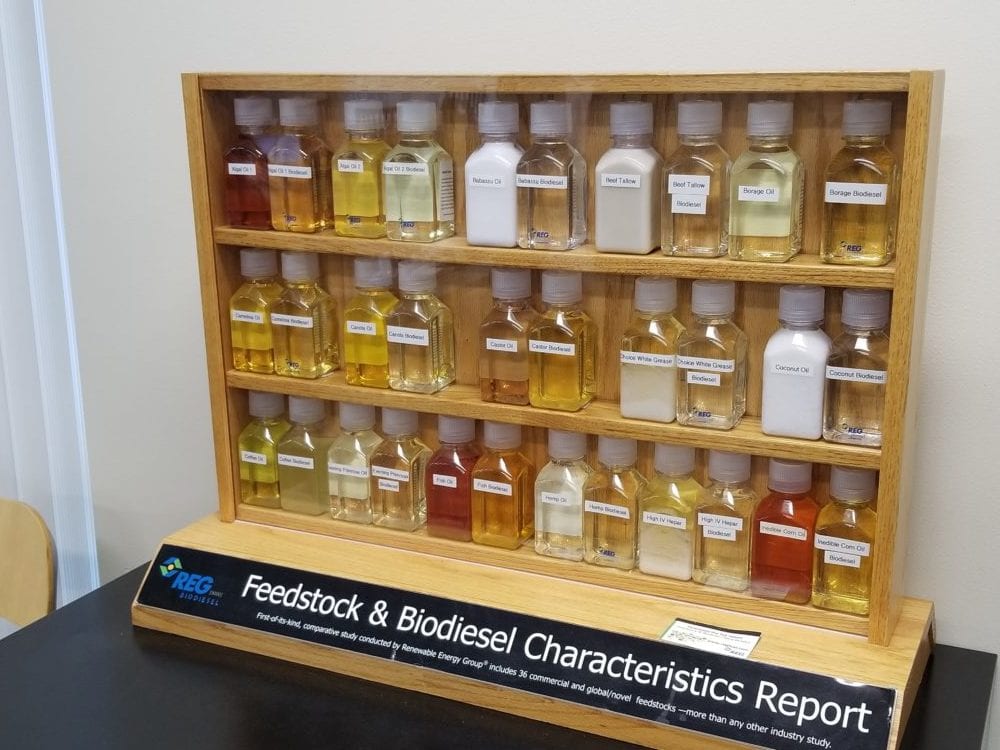
Bio-diesel and Feed-stock samples at REG

Above photo taken at REG headquarters in Ames, Iowa.

This first blog highlights the following 2 types of feed-stock:

                                                            Babussa Oil & Beef Tallow

Babassu Oil

Attalea speciosa

Babassu oil is extracted from the seeds of the babassu palm tree, Attalea speciosa, an evergreen tree growing to 30 m (98ft) by 20 m (65ft) at a slow rate. It is hardy to zone (UK) 10 and is not frost tender. The flowers are pollinated by bees and other insects. The tree is common in Brazil, Mexico, and Honduras; it grows well in areas typically cultivated for coconut or palm. The kernels contain 60-70% oil, appear transparent, and smell like walnuts. In its natural form the oil is liquid at 20-30°C (68 – 86°F). The seeds are edible and the oil is used in margarine, soaps, detergents, lamp oil and skin products. Oil extraction results in a cake containing 15-25% protein (depending on the shell content), which is a valuable feedstuff.

In February 2008, Babassu palm oil and coconut oil were blended with jet fuel to power a Virgin Atlantic Boeing 747 during a test flight from London’s Heathrow to Amsterdam.

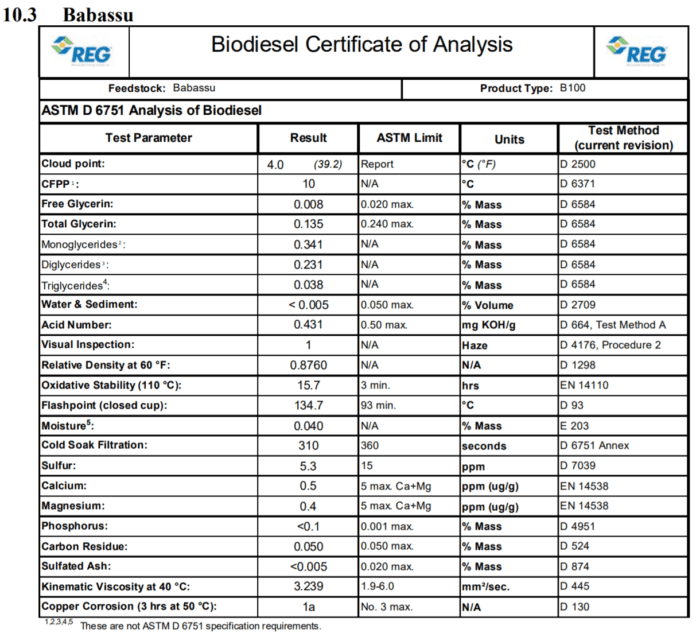
Babassu oil is extracted from the seeds of the babassu palm treeBabassu Oil Chart

Beef Tallow

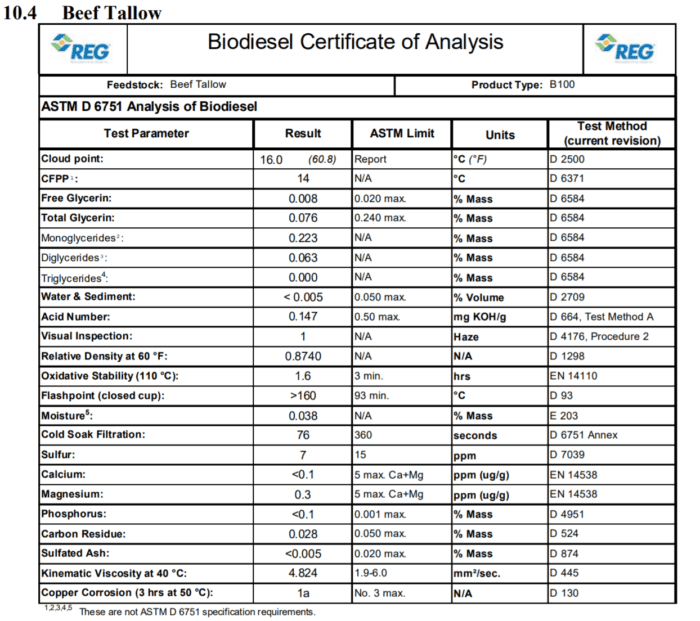
Tallow is a rendered form of the waste fats and greases from processing beef. Rendering is a process by which lipid material is separated from meat tissue and water under heat and pressure. Beef tallow is primarily made up of triglycerides and it is solid at room temperature. The B100 that is created from this source has a very high cloud point. “Cloud point is the temperature at which wax (paraffin) begins to separate when oil chilled to a low temperature, and it serves as an important indicator of practical performance in automotive applications in low temperatures.”  (Source)  The other uses for tallow include animal feed, soap, cooking and in the past, candles.

Beef Tallow Animal tissue is converted to tallow using rendering; a process by which lipid material is separated from meat tissue and water under heat and pressure.Beef Tallow Chart


Article 2 Feedstock : Borage Oil & Camelina Oil

Article 3 Feedstock : Algae Oil & Canola Oil.

Article 4 Feedstock : Castor Oil and Choice White Grease

Article 5 Feedstock : Coconut Oil and Coffee Oil

Article 6 Feedstock : Evening Primrose Oil and Fish Oil

Article 7 Feedstocks : Hemp Oil & High IV and Low IV Hepar

Article 8 Feedstocks : Jatropha Oil, Jojoba Oil, & Karania Oil

Article 9 Feedstocks : Lesquerella Oil & Linseed Oil

Article 10 Feedstocks – Moringa Oil & Neem Oil

Article 11 Feedstocks – Palm Oil & Perilla Seed Oil

Article 12 Feedstocks – Poultry Fat & Rice Bran Oil

Article 13 Feedstocks – Soybean Oil & Stillingia Oil

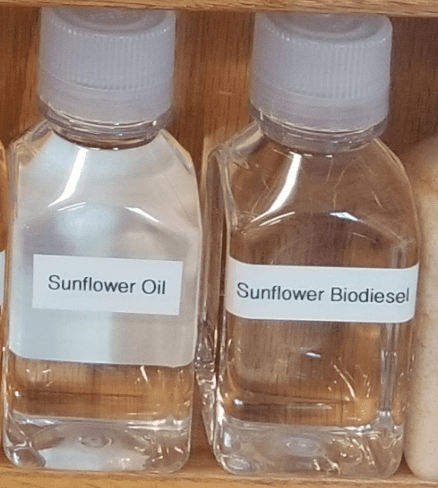
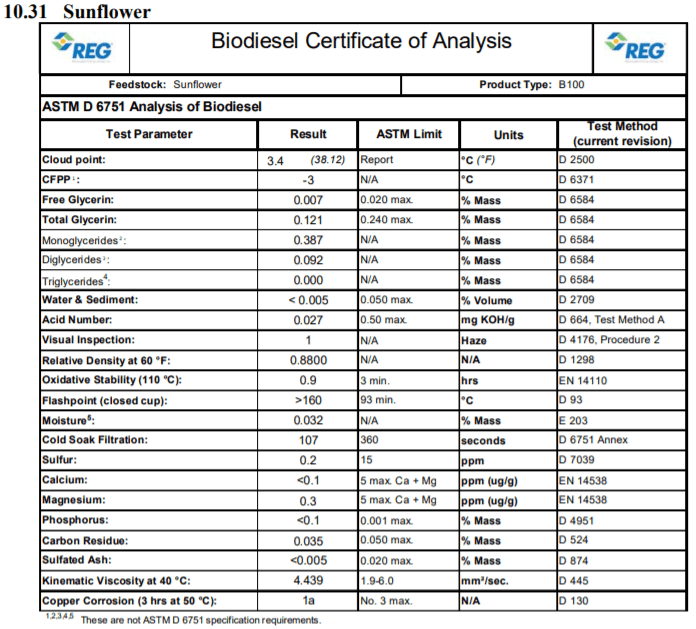
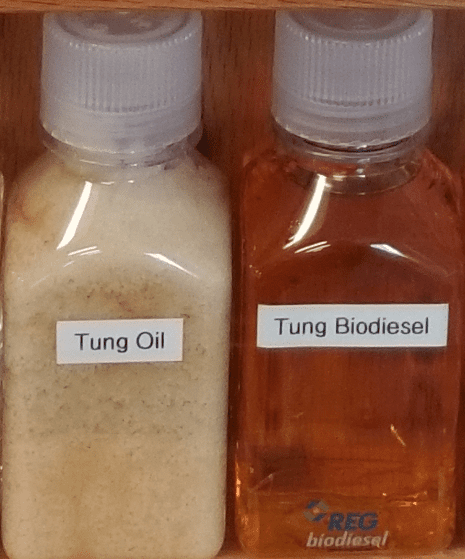
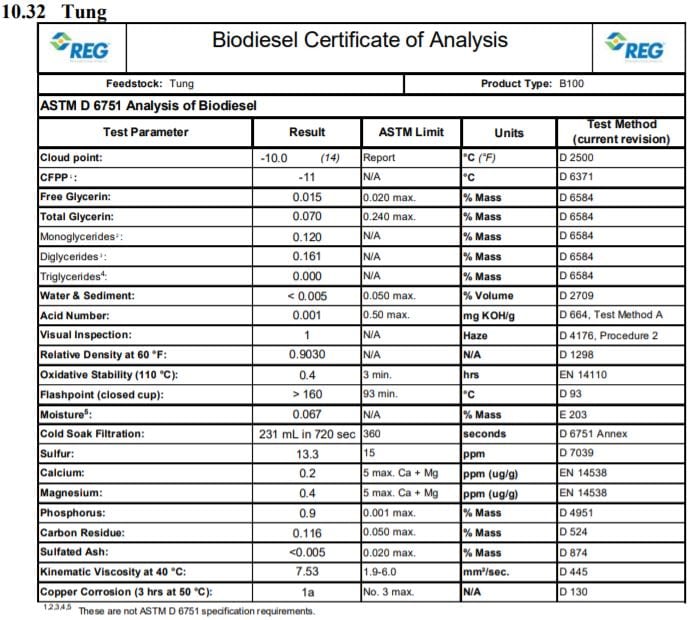
Article 14 Feedstocks – Sunflower Oil & Tung Oil

Person looking through binoculars in an autumn forest with vibrant fall colors reflected in both lenses, symbolizing focus on Oregon’s diesel and CO2 credit market conditions.
Fall Diesel Outlook for 2025 – the Oregon Market 1024 1024 Star Oilco

Fall Diesel Outlook for 2025 – the Oregon Market

What market forces are impacting the Oregon diesel outlook?

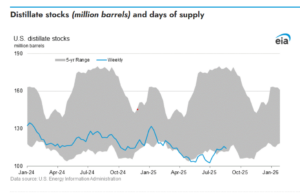
The US market is short diesel in storage while the Oregon market is short CO2 credits causing a unique market condition as we head into fall.

Diesel prices in the Pacific Northwest have not been following National trends for diesel.  The west coast is paying a premium compared to other nearby states.  Diesel in Oregon is significantly higher than the national average.  More to the point, the carbon credits associated with biodiesel and renewable diesel in Oregon are trading at recent record high prices. Higher than California’s CO2 credit prices. What’s going on?

Well for once it isn’t the price of crude oil causing this, or the amount of biofuels. Its all about todays Oregon diesel and carbon markets.  The story starts a few weeks before Memorial day.

Memorial day is often cited as the kick off to the driving season.  It also is when we usually see construction and trucking pick up with the summer weather.  A few weeks before Memorial day the Olympic pipeline went down unexpectedly.  The Olympic pipeline serves Portland and Eugene with their diesel and gasoline fuels from the refineries in northwest Washington state.

That pipeline had an unexpected outage.  Those happen for plenty of reasons usually safety checks or repairs. When the pipeline went down the market was notified it would probably be a week and open again the Monday before memorial day.  That Monday, the Monday before one of the bigger fuel weekends of the year, came and notice went out the pipeline would still be down for another week.

At that moment supply was already short for gas and diesel. Especially diesel.  The Portland and Eugene market saw diesel like a dollar cheaper in states like Idaho, Utah and others. So guess where diesel started flowing from? Markets responded as the bigger players on the ground in Oregon started moving diesel from those states.  Your local truck stops, gas stations, and cardlocks didn’t run out of fuel in several parts of Oregon because of these efforts.

In a US diesel market that was already tight for diesel supply, Portland, Oregon had an event that made it even tighter demanding diesel from around the region. Markets responded sending higher price offers to bring diesel into Oregon. Source is US EIA.

Oregon does not have any petroleum refineries or even biofuel plants.  It can only be supplied by pipeline, barge, rail or truck from outside the state.  When the pipeline came back online quite a bit of outside diesel had flowed into the state from nontraditional sources by rail and truck.

The people who moved that diesel are regulated in Oregon with two programs for CO2 emissions.  One is called the Clean Fuels Program which requires anyone importing diesel into Oregon to come up with a CO2 reductions by either blending low carbon biofuels or buying CO2 credits from others that use those fuels in the state.  Oregon also has a Cap and Invest program which only allows so much fossil fuel to be sold inside Oregon in a calendar year.  Oregon caps the total market for fossil fuels sold at retail stations as part of it’s carbon reducing strategy.

Guess what happens when a bunch of suppliers start bringing in gas and diesel to meet the market need?  They have to come up with Carbon credits and allowances to meet those carbon reduction programs for liquid fuels.  When unexpected volumes of diesel get imported into Oregon the CO2 market dynamics change.

For diesel, they need to start blending biofuels such as renewable diesel and biodiesel.  So since that Memorial Day pipeline outage the people who imported diesel from other states need CO2 credits under Oregon Clean Fuels Program as well as to ensure they done sell to many additional gallons of fossil fuel diesel to exceed the allowance of Oregon’s cap and invest regime.

Therefore CO2 credits are high, people are trying to blend more biofuels to catch up to the unexpected volumes of diesel they moved into Oregon.  Prices are higher than the rest of the US for diesel as a hangover to the supply disruption.

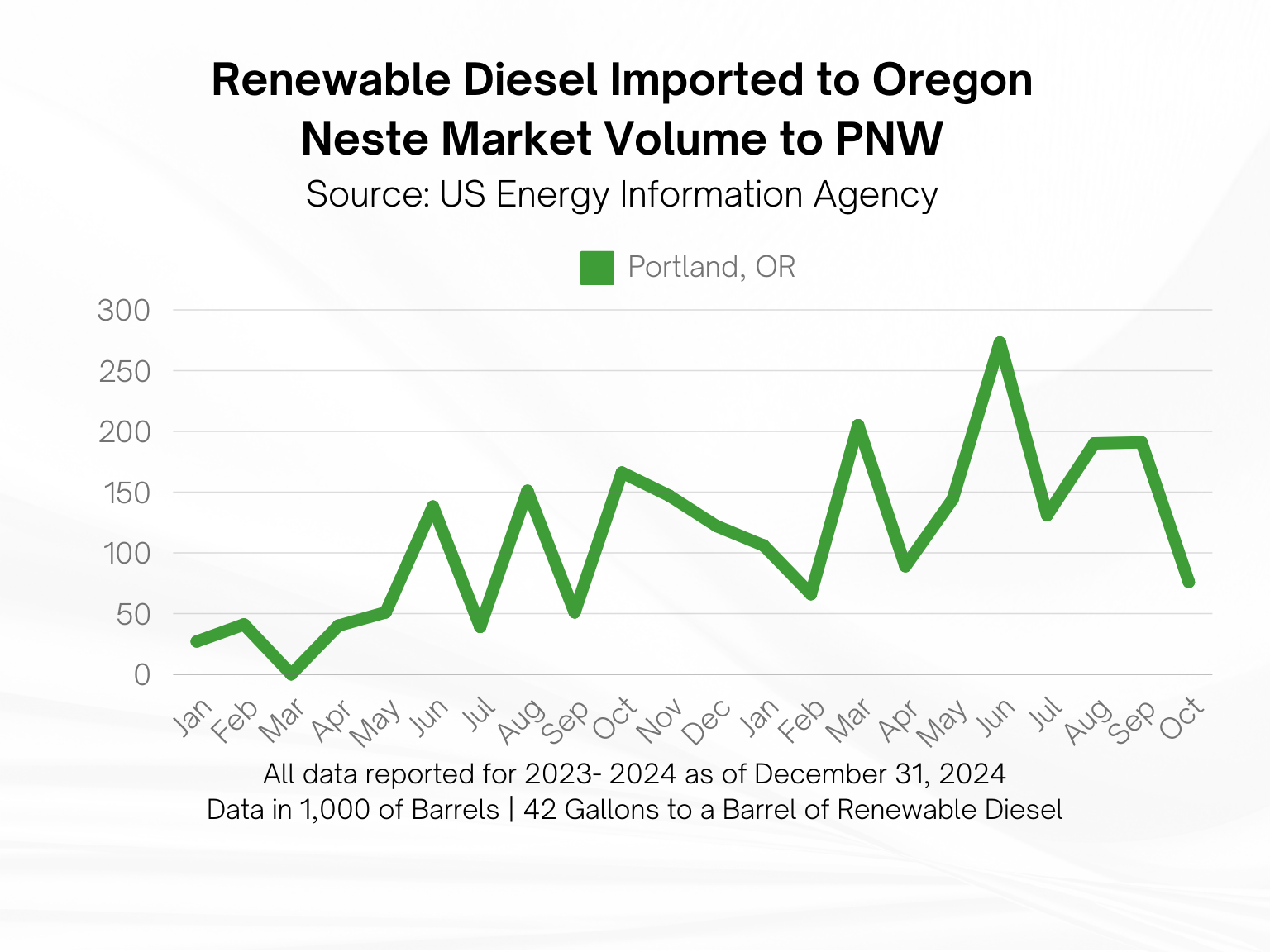
Upside for the first summer in a few years there is plenty of Renewable Diesel in the Portland, Oregon market as the CO2 credit prices are higher than California and the diesel prices are also high to help.  In the last month we have seen a huge amount of Renewable Diesel show up into the terminals in Portland.  So hopefully we will see lower prices heading into fall as all this works itself out.  As we pass by Labor Day the market cost of diesel should normalize and return to a much more affordable price.

The one downside of high diesel prices is that it makes Renewable Diesel the same price as fossil diesel.  If you want to try it, now is a good time where you can get it affordably and field test it for results with your fleet.  Want to see how it performs in reducing truck regens, EGR services, and see if fuel economy improves with a cleaner burning synthetic diesel running in your fleet.  This fall is a good time to experiment with it.

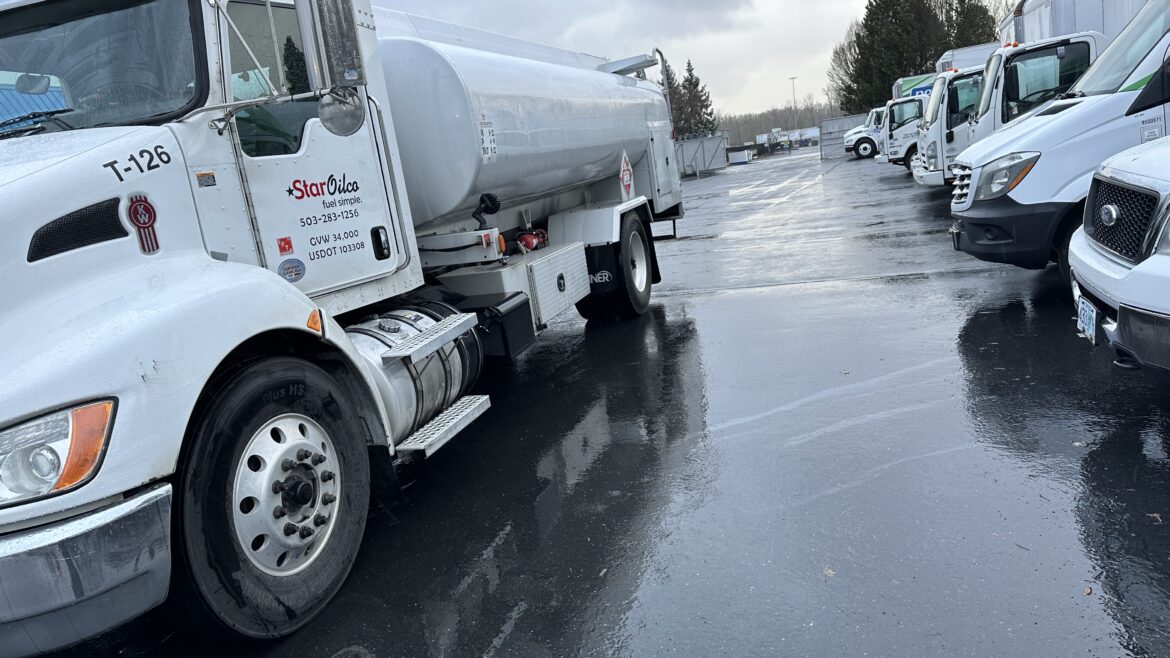
If you want to try Renewable Diesel in your fleet.  Star Oilco has it immediately available.  Please reach out to give it a try at either our Cardlock locations, with Mobile Onsite Refueling in your yard, or a Loaner Bulk Tank trial of the fuel in a few trucks.

Star Oilco has Renewable Diesel seven days a week for your fleet: Mobile Onsite Fueling, Cardlock, and Bulk Delivery.
Call us at 503-283-1256 or email at OrderDesk@StarOilco.net.

Renewable Diesel in Oregon

Welcome to Oregon road sign on a forested highway
The Next Generation Of Diesel – Bio Diesel 1024 683 Star Oilco

The Next Generation Of Diesel – Bio Diesel

B99 and R99 Biofuels are the alternatives to petroleum diesel in Oregon

Oregon bans the sale of petroleum diesel, a rapid transition to biofuels such as renewable diesel and biodiesel are happening.


Oregon HB3305 explained


HB 3305 Petroleum Diesel ban

In Oregon, HB3305 is a House Bill proposed by Representative Karin Power outlaws the sales of petroleum diesel to the public for use in motor vehicles.  HB3305 quoted below:

“Prohibits retail dealer, nonretail dealer or wholesale dealer from selling petroleum diesel for use in motor vehicle on or after specified dates. Requires public improvement contract to require that motor vehicles be powered by fuel other than petroleum diesel. Prohibits public body from using petroleum diesel in motor vehicle under control of public body”

The full text of the current version of HB3305 can be seen here.

HB 3305 mandates non-petroleum diesel be the only legal fuel for sale to diesel powered motor vehicles in Oregon.

Star Oilco has customers ask about this proposal and how real it is?  In Oregon the focus on low CO2 fuels in the legislature is so consistent we can expect this to not go away.  Even if HB 3305 does not move this Legislative session, this will not be the last of biofuel mandates.  For this reason Star Oilco has been working to be ahead of the curve with non-petroleum diesel substitutes. Star Oilco has been selling B99 biodiesel since 2002 and renewable diesel since 2015.  If your fleet has an interest in learning more about low CO2 fuels or try these fuels, Star Oilco is ready to serve you with both R99 renewable diesel and B99 biodiesel.

News coverage of Oregon HB 3305 is below

The Center Square’s Oregon, whose coverage of this has been syndicated to many other online news organizations, lead with the headline: Bill in the Oregon Legislature would ban diesel fuel sales by end of decade.

CDL Life had this to say: The bill would begin to ban the sale of “petroleum” diesel by “non-retail dealers” as soon as 2024 in Clackamas, Washington or Multnomah counties and state-wide by 2027.

Landline as well has following the story: Oregon bill would ban petroleum diesel. Later in the article they add this to the background of HB 3305’s origin: Power said in a statement that her goal is to phase out petroleum-based diesel and replace it with renewable diesel. She says she introduced the bill on behalf of Titan Freight, a local trucking company she says has already transitioned to renewable diesel.

KXL covered this local news quoting Oregon State Representative Shelly Boshart-Davis, a legislator who owns a trucking company and actually buys quite a bit of petroleum diesel.

Lars Larson radio interviews Rep. Shelly Boshart-Davis about HB 3305.

KQEN news radio in Douglas County also covered it with the headline: GOP says supermajority declares war on working class.

The Wildcoast Compass covered the story quoting Rep.Vikki Breese-Iverson (R-Prineville): “There is absolutely no way we can implement this legislation in accordance to these timelines without extreme disruption to Oregonians’ daily lives and the obliteration of our economy as we know it,” 

Oregon Public Broadcasting covered HB 3305 a few days after the bill dropped which might be an indication it’s moving forward. From the story: One bill, House Bill 3305, would set a staggered timeline for ending sales of diesel in the state — first in the Portland area, then throughout Oregon. Its backers hope to spur widespread use of “renewable diesel,” a product with far lower emissions that can be used in any diesel engine. They say the fuel could be an important and near-instant way for the state to cut into greenhouse gas emissions while other technologies emerge.

The Banks Post covered HB 3305 as well with the headline: Diesel fuel under fire in Oregon legislature.

What HB 3305 means in the real world?

HB 3305 means the petroleum diesel used by any commercial vehicles operated on Oregon’s highways will be replaced with biofuels.

Biofuels will replace on-road petroleum diesel at all Oregon:

  • Retail gas stations
  • Trucks stops
  • Commercial cardlocks (Pacific Pride and CFN)
  • Privately owned bulk tanks
  • Mobile on-site fueling (wet hose fueling), and
  • All other bulk deliveries of diesel fuel. Star Oilco wanted to provide more background of what this law would mean for Oregon.  We hope this provides in depth information about what the options are for diesel fuels and a whole host of background information.  The news coverage so far fails to really provide this depth and background for those with concerns.  If you have questions, please do not hesitate to ask. Star Oilco seeks to be a neutral and accurate source of information.

Star Oilco sells renewable diesel in bulk and by our mobile on-site fueling service. It is worth mentioning from our first hand experience that users of it become raving fans.  Renewable diesel is a new fuel that many believe out performs petroleum diesel in every way. Many customers who have used it experienced improvements in horse power, fuel economy, and emission regeneration system performance.

Currently renewable diesel is in extreme high demand, limited production, and commands a high premium over petroleum diesel with few sources of supply.  Renewable diesel has some major backers in the trucking industry as well as OEMs.  As the availability of this next generation fuel grows, the number of plants manufacturing it expands, and it’s price comes down, this type of law may make far more sense.

If petroleum diesel is no longer legal for sale in Oregon, what does that mean diesel vehicles will use?

There are two immediately available diesel rated biofuels that can replace petroleum diesel.  These are two very different fuels. Renewable Diesel and Biodiesel have differences in their properties.  So please don’t confuse biodiesel and renewable diesel as the same fuels.

Biodiesel and Renewable Diesel are very different fuels.

Biodiesel is a proven and longtime available fuel in Oregon.   Biodiesel is not actually a hydrocarbon diesel though, it is a diesel like biofuel made from vegetable oil usually sold in a 5% to 20% blend with petroleum diesel. It is not recommended to run pure biodiesel in late model diesel engines if they have a particulate trap.  This differs from Renewable Diesel which is a next generation synthetic hydrocarbon diesel made from various feedstocks including vegetable oil.  It is actually diesel, it can be used as a pure drop in fuel without any blending with petroleum diesel.

What are non-petroleum diesel fuels?

Oregon HB 3305

Biodiesel or B99 (99% Biodiesel + 1% Petroleum Diesel)

Renewable Diesel or R99 (99% Renewable Diesel + 1% Petroleum Diesel)

Blends of Biodiesel and Renewable Diesel (branded REG UltraClean Diesel)

HB3305 allows for biofuels in replacement for diesel.  We assume that change would be from a current Oregon fuel mandates of B5 or R5 biofuel diesel blend to a B99 or R99 mandated fuel.  Oregon’s biofuel content law can be read at ORS 646.922 and we can assume this would change that to a 99% mandate. Why 99% instead of 100%, that is a good question relating to Federal regulation of the US diesel and gasoline markets.


Why does this require a 99% blend (B99/R99) instead of 100% biofuel?

The reason biodiesel and renewable diesel are sold at a 99% blend is because of Federal rules associated with how petroleum companies must handle these fuels.  For this fuel to be used under the US EPA’s Renewable Fuel Standard program biodiesel and renewable diesel must be blended at a minimum 1%.  When fuel is blended at 1% with diesel, the EPA enables it to generate a “Renewable Identification Number” or “RIN” which is regulated to ensure a minimum amount of biofuels is used in the stream of commerce for fuel in the United States.  This Federal program is separate and unrelated to any program in Oregon, though the law recognizes and seeks to align with the framework created by the EPA.

What are the fuels HB 3305 allows to be used by diesel motor vehicles?

The two fuels immediately available if are B99 Biodiesel and R99 Renewable Diesel.

Both of these fuels exist today but have their own drawbacks.  In a nutshell, B99 is not a drop in substitute for petroleum diesel.  It is recommended to be blended at 20% with petroleum diesel (NOTE: B99 biodiesel can be used in modern diesel with an up-fit kit provided by Optimus Technologies).  On the upside, biodiesel is plentiful and competitive with petroleum diesel in cost.  If HB 3305 passed though this plentiful fuel wouldn’t be a ready substitute beyond a 20% blend with renewable diesel or with mechanical changes to existing trucks.  Contrast this with  R99 renewable diesel as a drop in ready to go substitute for petroleum diesel.  It is ready to use without blending, but has the downside of being in short supply and at a cost premium above petroleum diesel.

If Oregon’s over 2,000,000 gallons of diesel usage a day (or 750+ million gallons a year) was mandated to renewable diesel no doubt that premium would probably exceed $2 a gallon over petroleum diesel given R99’s lack of ready additional supply.  This $5 a gallon presumes that Oregon would have to pay more for the existing renewable diesel supply finding it’s way to California with several dollars a gallon of value paid for it’s lower CO2 baseline value.  California has a Clean Fuel Standard and a CO2 Cap and Trade program which provide a monetary value for renewable diesel’s lower CO2 numbers.  Oregon has a Clean Fuel Program as well, but it’s program does not pay as much for low CO2 fuels as California, making low CO2 fuels such as renewable diesel more expensive in Oregon.

B99 Biodiesel in depth.

Blends of biodiesel below 20% are extremely common in Oregon.  All fuel must contain at least 5% biodiesel content and many retail outlets, cardlocks, and major truck stops commonly sell a 10% to 20% blend of biodiesel around the state.

Biodiesel is a diesel like fuel manufactured by a chemical reaction called transesterfication, typically from vegetable oil or recycled cooking oil.  It is made by a relatively simple process and biodiesel has been a proven fuel in use in Oregon for nearly twenty years.  Star Oilco started handling and selling biodiesel in 2002.  Prior to 2007, B99 was commonly used by many commercial fleets due to it’s huge reductions in tail pipe emissions.  Vehicles manufactured after 2007, are clean diesels.  The US EPA required new clean diesel emissions systems which are impressive in their ability to make modern diesel engines extremely clean, but they can only handle biodiesel blends below B20 or 20% biodiesel unless an upgraded system is added.

Today B99 is a possible fuel for a modern clean diesel fleet with an upgrade to existing vehicle fuel supply system.  Optimus Technologies has an approved technology to enable a modern diesel aftertreatment system to operate without problems on B99.   Star Oilco has purchased five of these systems and is currently fielding them in the Pacific NW.  We expect these systems to be mainstream in coming years, but just like Renewable Diesel the technology is newly available and scaling up.

For more information about biodiesel please see our biodiesel FAQ titled Every question Star Oilco has been asked about biodiesel.

If you are interested in using biodiesel in your fleet, you can contact Star Oilco with questions or if you want to start researching we highly recommend starting with this US Department of Energy handbook titled Biodiesel Use and Handling.


R99 Renewable Diesel in depth.

Renewable Diesel is a next generation biofuel made from fats, oils, and greases. It is not an alternative diesel, renewable diesel is a petroleum free hydrocarbon diesel fuel. It is diesel! Renewable diesel not only less than half the CO2 of diesel refined from petroleum fuel, but it is cleaner burning and has shown evidence of reducing the cost of maintenance in fleets using it. Renewable diesel is a profound technology which has the potential to use the lowest grade trap greases, sewer materials, rendering wastes, municipal garbage, and a host of other refuse products making them into this high performance, sustainable, low CO2 diesel.

There are two categories of technology that renewable diesel is made from.  Hydrogenation and Fischer Tropsch process.

Renewable Diesel from Hydrogenation or Hydrotreating

Hydrogenation derived renewable diesel is very similar in manufacture to modern petroleum diesel in that the molecules of a the feedstock is cracked and reformed in the presence of a catalyst to form a very specific series of hydrocarbon molecules.  These being diesel and propane range fuels. The feedstocks used by renewable diesel plants are vegetable oils and animal fats.

The hydrotreating plants providing renewable diesel to Oregon currently are Neste from a plant in Indonesia, Diamond Green (in a joint venture with Valero), Sinclair, and Renewable Energy Group. All of these plants are over subscribed and 100% of their production is being taken at a premium primarily by the California low CO2 fuels market.   There are several new renewable diesel plants under way though.  Holly Frontier, Marathon, CVR Energy, and Phillips 66 are converting existing petroleum refineries into renewable diesel plants.  This process costs billions of dollars, will take years to complete, and also will be likely destined for California’s low CO2 fuel market with smaller markets like Oregon being an afterthought.

Renewable Diesel from Fischer Tropsch process.

Currently there are a number of smaller demonstration facilities making renewable diesel from wood waste and other feedstocks.  The largest proposed project currently on the books is Illinois Clean Fuels which will be collocated with major CO2 capture facility making their product negative CO2.  Fischer Tropsch renewable diesel is expected to be the future of refining given it’s flexibility of feedstock.  It’s process enables the use of municipal garbage, agricultural waste, woody biomass, and other low value plentiful materials as feedstock.  Given that the United States is called by some the “Saudi Arabia of garbage” we have plenty of supply waiting for a higher and better use as low CO2 transportation fuel.  Illinois Clean Fuels has a great explanation of how Fischer Tropsch makes renewable diesel and jet fuels.

Where can you get Renewable Diesel in Oregon?

Star Oilco currently is selling R99 Renewable Diesel for commercial use.  We can deliver to fleets seeking it in bulk or mobile onsite delivery (wet hose R99 diesel service began in the Spring of 2021).  Call Star Oilco if you have an interest in Renewable Diesel for your fleet 503-283-1256.

If you have questions about renewable diesel, Star Oilco wants to provide answers.  Feel free to reach out if we do not have the answer we will research it.

For more information about renewable diesel please see our renewable diesel FAQ titled Every question Star Oilco has been asked about Renewable Diesel.


Star Oilco Crest


Contact Form

  • This field is for validation purposes and should be left unchanged.