

Bulk Fuel

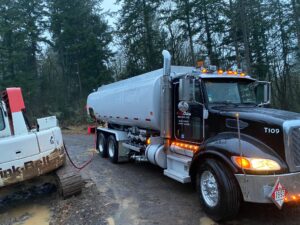
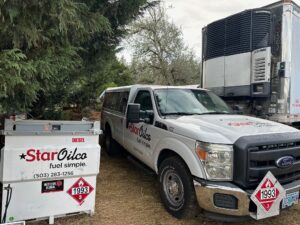
We have daily routes for diesel fueling in Portland, Oregon and Vancouver, Washington. If you need diesel, kerosene, gasoline, biodiesel, or renewable diesel in bulk or as a wet-hose fueling service, we are ready for your next project.

home insulation representing energy efficiency for renewable fuel standard compliance in Portland Oregon
What Is The Renewable Fuel Standard In Portland? 1024 683 Star Oilco

What Is The Renewable Fuel Standard In Portland?

Did you hear about the time Portland banned fossil fuel diesel?

Portland is making a big move to provide cleaner air and reduce greenhouse gas emissions. Portland has implemented what’s called the Renewable Fuel Standard (RFS) beginning  its first phase on May 15th, 2024. The RFS policy in Portland mandates that there has to be an increase of use of low-carbon biofuels in diesel within city limits of Portland. This is part of the ultimate Climate Emergency plan. This RFS mandate was first implemented in 2006 as a B5 (5%) Biodiesel blend mandate with the goal of mandating a 20% blend. The RFS is the first of its kind not only in Oregon but in the entire United States. Portland’s reputation as a leader in environmental sustainability efforts continues. 

Portland’s Phases To Implement Almost 100% Renewable Diesel

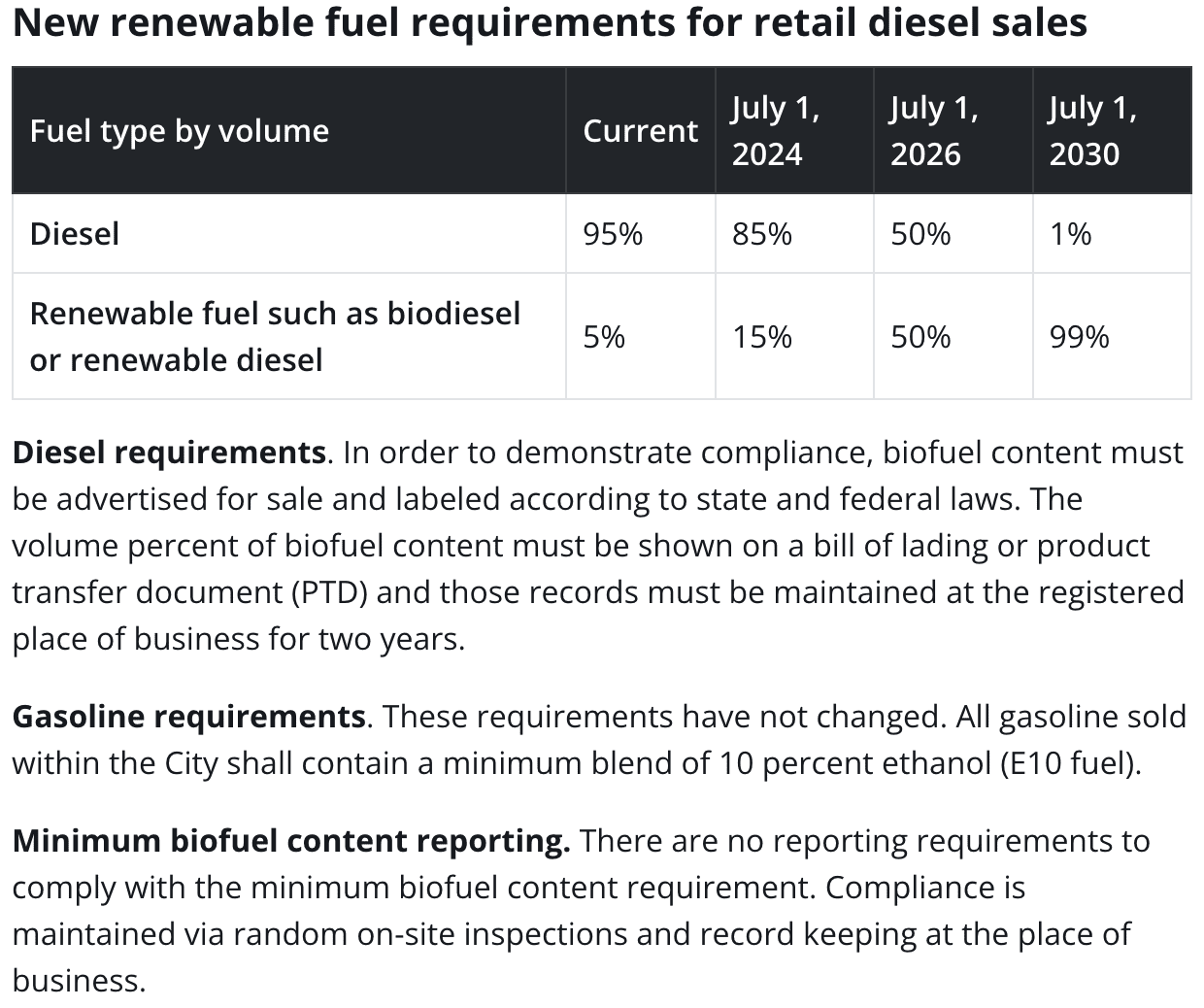
What makes Portland’s mandate unique is the requirement that the biofuels have a CO2 value so low it bars most American made biodiesels. The blending requirement starts at 15% in 2024, and then it will steadily increase to 50% by 2026 and will reach 99% by 2030. This schedule demonstrates how Portland’s low-carbon ambition is present to transition away from fossil fuels and promote alternative energy sources.

This policy is expected to reduce air pollution and carbon emissions. It will also create new markets for biofuels, which will lead to increased economic opportunities. This will ultimately help the city become a more sustainable and environmentally friendly place to live as Portland has taken the lead in striving for sustainability over the years.

The policy will also help create jobs in the biofuel industry and provide opportunities for businesses to switch to renewable energy sources. It will also help reduce the city’s dependence on fossil fuels and protect the environment for future generations.

Want to learn more about meeting Portland’s requirements for the Renewable Fuel Standard mandate?

landscape view of Mount Hood representing Star Oilco’s fuel delivery service area in Oregon

Focus on Lower-Emission Biofuels

Uniquely, Portland’s RFS goes beyond just the biofuel blend. It also sets a strict carbon intensity (CI) standard for the biofuels themselves. This ensures the biodiesels used have a significantly lower carbon footprint compared to traditional options. Biodiesels produced domestically often fall short of this CI requirement, prompting many suppliers to look to renewable diesel sources. This focus on biofuels with a lower lifecycle carbon footprint makes Portland’s RFS even more impactful in reducing greenhouse gas emissions.

Iconic Portland sign on Broadway at dusk with city buildings in the background

Exemptions and Implementation Details

The initial phase of the RFS targets on-road diesel sales. This applies to diesel purchased at gas stations, by mobile fueling companies, and for use in large stationary tanks. However, the long-term goal includes all diesel use within the city. Some temporary exemptions apply to off-road diesel uses such as heating oil, generator fuel, aircraft fuels, watercraft fuels, and other dyed fuel users. One local truck stop, Jubitz Truckstop, was granted a temporary exemption. This is likely due to concerns about disrupting critical transportation operations. Daimler (the manufacturer of Freightliner and Western Star trucks) has a research facility in Portland. Daimler was also granted an exemption to meet their specific fuel needs for testing purposes. 

The RFS enforces compliance through fuel sampling and requires documentation proving the fuel meets the minimum biofuel content and CI standards. Businesses that purchase diesel need to be able to show their compliance through bills of lading (BOLs) or similar records from their fuel provider, like Star Oilco. If a business does not comply and provide this documentation, it can result in pretty hefty fines. First offenses can be a fine of $10,000 per day. Repeat offenders will end up facing even bigger penalties of up to $15,000 per day. These fines can really show the impact of how serious Portland is taking this initiative. 

Impact on Businesses and Consumers

While residential consumers who don’t purchase diesel directly are not directly impacted, businesses purchasing diesel, especially in bulk, will need to adapt to the new regulations. This may involve acquiring documentation from fuel suppliers or entering into contracts guaranteeing compliant fuel blends. Wholesale fuel distributors, who sometimes purchase from multiple vendors and blend fuel mid-route, may face additional challenges in tracking the biofuel content and CI of their product. However, as the program matures, the industry is expected to adapt and streamline these compliance procedures.

Contact Us Today To Discuss What This Means For Your Business

A Step Forward for Cleaner Transportation

Portland’s ambitious RFS sets a new expectation for sustainable transportation. Promoting low-carbon biofuels allows Portland to aim to significantly reduce its reliance on fossil fuels and be able to contribute to cleaner air for its residents. The RFS program will be able to serve as a model for other cities that are looking at implementing similar initiatives. Great job Portland for paving the way to a sustainable future for other cities! Although challenges will remain, as businesses adapt to this new norm, Portland’s RFS represents a significant step forward in creating a more sustainable transportation sector.

The RFS program is an important step in the fight towards sustainability and lower carbon fuels. It sends a clear message that cities are willing to take action to reduce emissions and protect the environment. We anticipate that other cities will follow Portland’s lead and create similar initiatives. This will have a significant impact in reducing emissions and helping to protect the environment.

It is a positive step towards a more sustainable future. Alternative fuels have become more and more readily available. Investing in alternative fuels and reducing carbon emissions is essential for protecting the planet for future generations. Governments should prioritize investing in renewable energy sources and incentivize communities to switch to alternative fuel solutions.

Thank you for choosing Star Oilco as your preferred fuel provider in Portland and Vancouver, Washington. Give us a call to discuss how the RFS mandate can affect your business and one of our team members would be happy to discuss this with you.
JOIN THE FUEL MARKET REPORT NEWSLETTER FOR YOUR WEEKLY FILL OF UPDATES!

Name
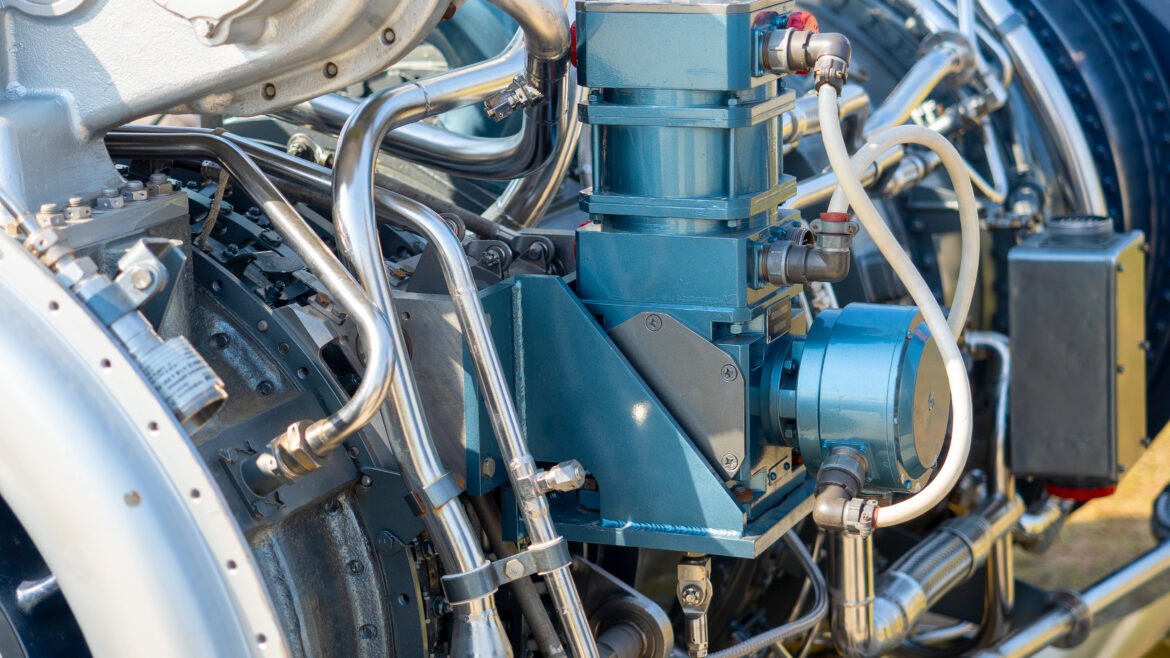
Close-up of diesel engine components and fuel system
Make And Keep Your Diesel Fuel A Lot More Clean 1024 768 Star Oilco

Make And Keep Your Diesel Fuel A Lot More Clean

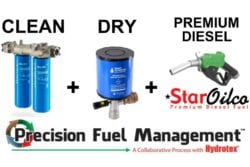
                               Make And Keep Your Diesel Fuel A Lot More CleanClean, dry, premium diesel

What is Clean Diesel? 

Clean diesel is free of the contaminants that harm modern diesel engines. Today, there is a gap between ASTM diesel standards and the ISO cleanliness standards needed for use in high pressure common rail engines. Anyone operating a modern clean diesel engine is seeing the effect, including injector replacement, DPF regeneration, and a host of other fuel quality related maintenance concerns we never saw twenty years ago. On top of all of that, today’s refined diesel fuels are less storage stable than ever before. What is on the bottom of your bulk tank can also complicate matters further. When diesel is bought wholesale, it typically meets and exceeds ASTM required industry standards, but almost always requires additional filtration to avoid excessive engine wear and premature part failures.

Having clean diesel requires an additional amount of care. Namely, you need to make sure that the fuel is aggressively filtered at 4 microns to catch the microscopic particles that are big enough to damage your modern diesel engine’s high pressure fuel rail system. Furthermore, clean diesel is fuel that is free of water and stabilized with Premium Diesel to guarantee no bacteria, yeast and other creatures can grow and further contaminate the saddle tanks on your trucks.

For more on clean diesel, see Donaldson’s description of “The New Clean” for an in-depth explanation of what ISO cleanliness and filtration mean for your diesel fleet.

Making Diesel Cleaner!

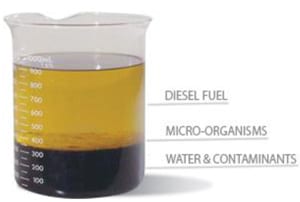
Knowing the quality of your fuel is the first step. This is done by taking samples off of the bottom of your bulk storage, as well as a representative sample from your fuel dispenser. Lab tests of those samples will tell you if you have water, biological growth, or dirt issues with your storage. The contaminants in the tank being sampled are almost always visible, which is to say that they look horribly ugly. If your fuel quality assurance has been on autopilot, do not be surprised if you find this. After gathering knowledge about your fuel, the next step is to get your fuel quality clean.

Filtration and tank bottom sampling is the start. Beyond that, the only way to improve your fuel quality performance is to filter your fuel, ensure water is not getting into the tank through condensation, and additize it with a Premium Diesel additive to upgrade the performance of the fuel. Many fleets today are seeing injector wear and continual problems with particulate trap maintenance. This is a combination of water in fuel and microscopic particles not captured by a 10 or 30 micron filter used at most diesel dispensers. You have to filter more aggressively than this.

Clean, Dry, and Premium Diese

Where To Start?

The first step is sampling your bulk diesel tank. We check your bulk tank for water and dirt to make sure and meet the specifications your engine is built for. Star Oilco can help by providing a complementary diesel test for those fleets interested in taking control of their fuel quality assurance. Usually when testing fuel, we take a sample off of the tank bottom as well as a representative sample out of the fuel dispensing nozzle.

What we usually find is ASTM specification diesel fuel (it meets ASTM spec) that is higher than you’d want (still in spec) for water with far more dirt than the OEM’s would want to see in your engine. This dirt fails to be within the “ISO Cleanliness” specifications recommended by engine manufacturers. Usually, we also see water on the bottom of the fuel tank, which is a likely source for future or current biological growth in your fuel tank.

Star Oilco can help you fix this! The first step is to sample your fuel tank.

NOTE: If you have a current biological growth problem in your bulk fuel tank or fleet, your first step is to treat that effected fuel with a diesel microbiocide to kill the bugs growing in your tank. For more on this, see our Valvtect Plus 6 Diesel Microbiocide page.

Tank Testing Form

  • This field is for validation purposes and should be left unchanged.
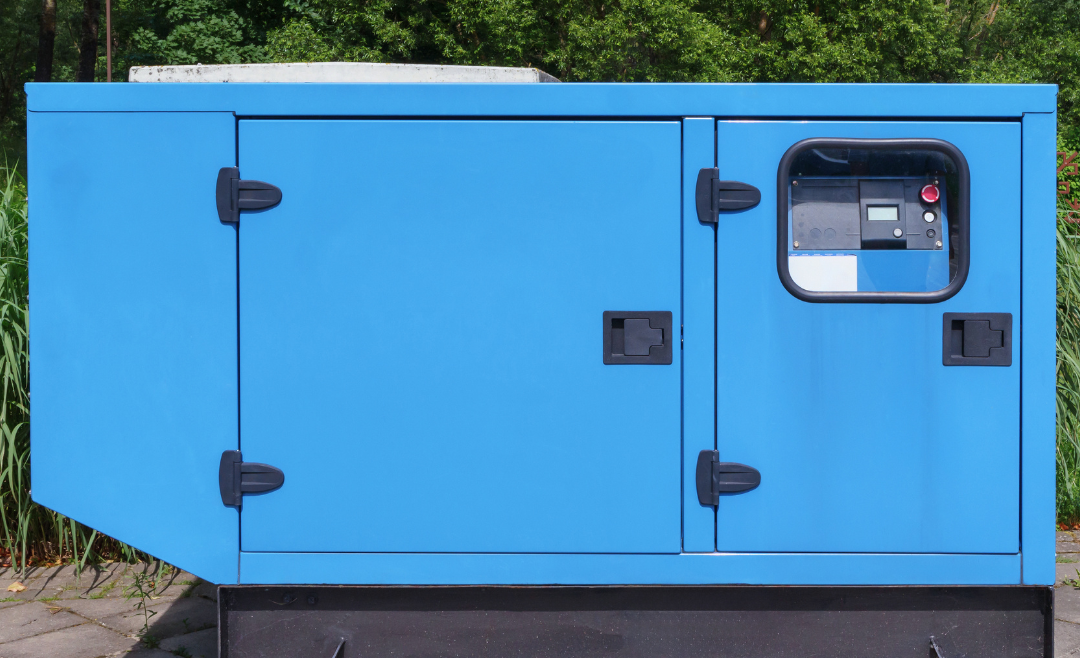
Blue diesel-powered emergency generator outdoors
Backup Generator Fuel – Keep Full 1024 1024 Star Oilco

Backup Generator Fuel – Keep Full

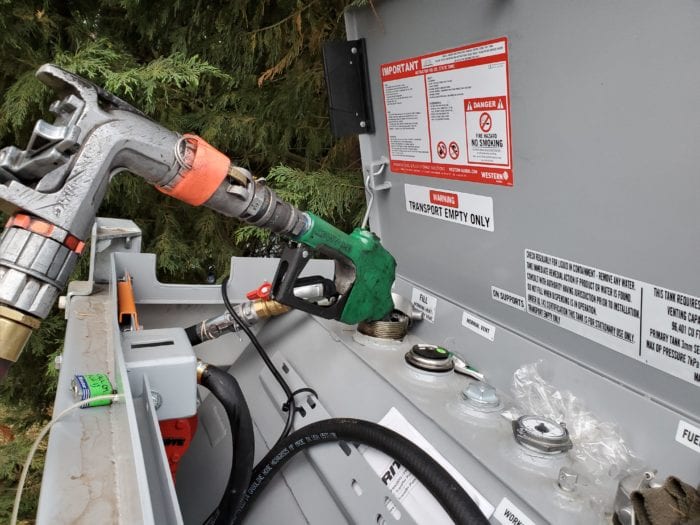
Star Oilco Generator Refueling Service in the Portland area.

Set up a Generator Diesel “Keep Full” account with Star Oilco before the bad weather.

Need fuel for your backup generator? Star Oilco delivers emergency diesel fuel right to your location before the power goes out and while you’re relying on it. We offer fast, reliable backup generator fuel delivery in Portland, Oregon, Vancouver, Washington, and surrounding areas. Whether you’re powering a business, hospital, data center, or another business that uses a backup generator, you can count on us to keep your generator fuel tank full, your lights on, your business running and your customers served.


Commercial Fleet Fueling in Portland


Remember that ordering diesel for your generator is a specialized service.

You want to stabilize and treat your diesel for generators and other back up equipment.

Order fuel treated for long term storage!

We often receive questions about backup generators, backup water pumps, and other emergency equipment. Fueling these critical pieces of equipment is a special kind of fueling service but we’re here to answer all your questions. We also encourage you to call with questions about generator fuel.  If you have questions about your building’s back up diesel generator’s fuel quality in the Portland, Oregon area we will sample and test your fuel at not cost with if you have an account with Star Oilco.

Generator Fuel is a specially treated oxidative stabalized off-road fuel designed to store for years.

Fuel for a backup generator is a specialized product. Besides the fuel, the service itself takes a vendor who understands your needs and can keep you up and running in an emergency.

Generators take off-road diesel, of course, but you want an ultra low sulfur diesel to ensure it works with modern emission systems. Some companies may deliver a higher sulfur heating oil product that looks the same but can foul the emission systems of your equipment.

Backup Generator Fuel in Portland

Beyond just the service provided by a truck and driver, you also want a vendor who offers a fuel stabilizer and biocide for the special long term storage needs of your backup generator. Star Oilco recommends you add a biocide and long term storage stabilizer to your fuel to ensure it is good whenever you need it. We use Valvtect Bioguard Plus 6 for generators, emergency water pumps, backup boiler fuel, and other long term storage purposes. This product kills any existing biological growth and stabilizes your fresh diesel fuel for long term storage. Make sure your diesel is ready the next time you need backup power.

As a complimentary service to our customers, Star Oilco will also test fuel for its quality. If you want to confirm fuel quality at the time of a top off, let us know and we will ensure the driver has a sample kit to get your backup fuel tested for peace of mind.

Feel free to message us if you need a backup tank filled. If you are in charge of Corporate Fueling, please call with any questions you may have.

Read more about stabilizing your generator fuel for long term storage.

Keep it simple with Star Oilco. We make it easy for you to be prepared. Don’t wait for a power outage to find out your generator is low on fuel. Trust Star Oilco for fast, dependable diesel fuel delivery for backup generators in Portland, Salem, Vancouver, and throughout Oregon and SW Washington. Whether you need on-site generator fueling, dyed diesel, or emergency fuel service, we’re ready to help. Call (503) 283-1256 today to schedule your standby generator fuel delivery and ensure your power stays on when it matters most.

Contact Form

  • This field is for validation purposes and should be left unchanged.
Person looking through binoculars in an autumn forest with vibrant fall colors reflected in both lenses, symbolizing focus on Oregon’s diesel and CO2 credit market conditions.
Fall Diesel Outlook for 2025 – the Oregon Market 1024 1024 Star Oilco

Fall Diesel Outlook for 2025 – the Oregon Market

What market forces are impacting the Oregon diesel outlook?

The US market is short diesel in storage while the Oregon market is short CO2 credits causing a unique market condition as we head into fall.

Diesel prices in the Pacific Northwest have not been following National trends for diesel.  The west coast is paying a premium compared to other nearby states.  Diesel in Oregon is significantly higher than the national average.  More to the point, the carbon credits associated with biodiesel and renewable diesel in Oregon are trading at recent record high prices. Higher than California’s CO2 credit prices. What’s going on?

Well for once it isn’t the price of crude oil causing this, or the amount of biofuels. Its all about todays Oregon diesel and carbon markets.  The story starts a few weeks before Memorial day.

Memorial day is often cited as the kick off to the driving season.  It also is when we usually see construction and trucking pick up with the summer weather.  A few weeks before Memorial day the Olympic pipeline went down unexpectedly.  The Olympic pipeline serves Portland and Eugene with their diesel and gasoline fuels from the refineries in northwest Washington state.

That pipeline had an unexpected outage.  Those happen for plenty of reasons usually safety checks or repairs. When the pipeline went down the market was notified it would probably be a week and open again the Monday before memorial day.  That Monday, the Monday before one of the bigger fuel weekends of the year, came and notice went out the pipeline would still be down for another week.

At that moment supply was already short for gas and diesel. Especially diesel.  The Portland and Eugene market saw diesel like a dollar cheaper in states like Idaho, Utah and others. So guess where diesel started flowing from? Markets responded as the bigger players on the ground in Oregon started moving diesel from those states.  Your local truck stops, gas stations, and cardlocks didn’t run out of fuel in several parts of Oregon because of these efforts.

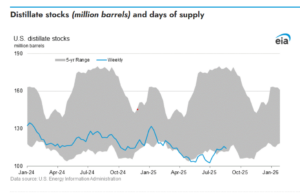
In a US diesel market that was already tight for diesel supply, Portland, Oregon had an event that made it even tighter demanding diesel from around the region. Markets responded sending higher price offers to bring diesel into Oregon. Source is US EIA.

Oregon does not have any petroleum refineries or even biofuel plants.  It can only be supplied by pipeline, barge, rail or truck from outside the state.  When the pipeline came back online quite a bit of outside diesel had flowed into the state from nontraditional sources by rail and truck.

The people who moved that diesel are regulated in Oregon with two programs for CO2 emissions.  One is called the Clean Fuels Program which requires anyone importing diesel into Oregon to come up with a CO2 reductions by either blending low carbon biofuels or buying CO2 credits from others that use those fuels in the state.  Oregon also has a Cap and Invest program which only allows so much fossil fuel to be sold inside Oregon in a calendar year.  Oregon caps the total market for fossil fuels sold at retail stations as part of it’s carbon reducing strategy.

Guess what happens when a bunch of suppliers start bringing in gas and diesel to meet the market need?  They have to come up with Carbon credits and allowances to meet those carbon reduction programs for liquid fuels.  When unexpected volumes of diesel get imported into Oregon the CO2 market dynamics change.

For diesel, they need to start blending biofuels such as renewable diesel and biodiesel.  So since that Memorial Day pipeline outage the people who imported diesel from other states need CO2 credits under Oregon Clean Fuels Program as well as to ensure they done sell to many additional gallons of fossil fuel diesel to exceed the allowance of Oregon’s cap and invest regime.

Therefore CO2 credits are high, people are trying to blend more biofuels to catch up to the unexpected volumes of diesel they moved into Oregon.  Prices are higher than the rest of the US for diesel as a hangover to the supply disruption.

Upside for the first summer in a few years there is plenty of Renewable Diesel in the Portland, Oregon market as the CO2 credit prices are higher than California and the diesel prices are also high to help.  In the last month we have seen a huge amount of Renewable Diesel show up into the terminals in Portland.  So hopefully we will see lower prices heading into fall as all this works itself out.  As we pass by Labor Day the market cost of diesel should normalize and return to a much more affordable price.

The one downside of high diesel prices is that it makes Renewable Diesel the same price as fossil diesel.  If you want to try it, now is a good time where you can get it affordably and field test it for results with your fleet.  Want to see how it performs in reducing truck regens, EGR services, and see if fuel economy improves with a cleaner burning synthetic diesel running in your fleet.  This fall is a good time to experiment with it.

If you want to try Renewable Diesel in your fleet.  Star Oilco has it immediately available.  Please reach out to give it a try at either our Cardlock locations, with Mobile Onsite Refueling in your yard, or a Loaner Bulk Tank trial of the fuel in a few trucks.

Star Oilco has Renewable Diesel seven days a week for your fleet: Mobile Onsite Fueling, Cardlock, and Bulk Delivery.
Call us at 503-283-1256 or email at OrderDesk@StarOilco.net.

Renewable Diesel in Oregon

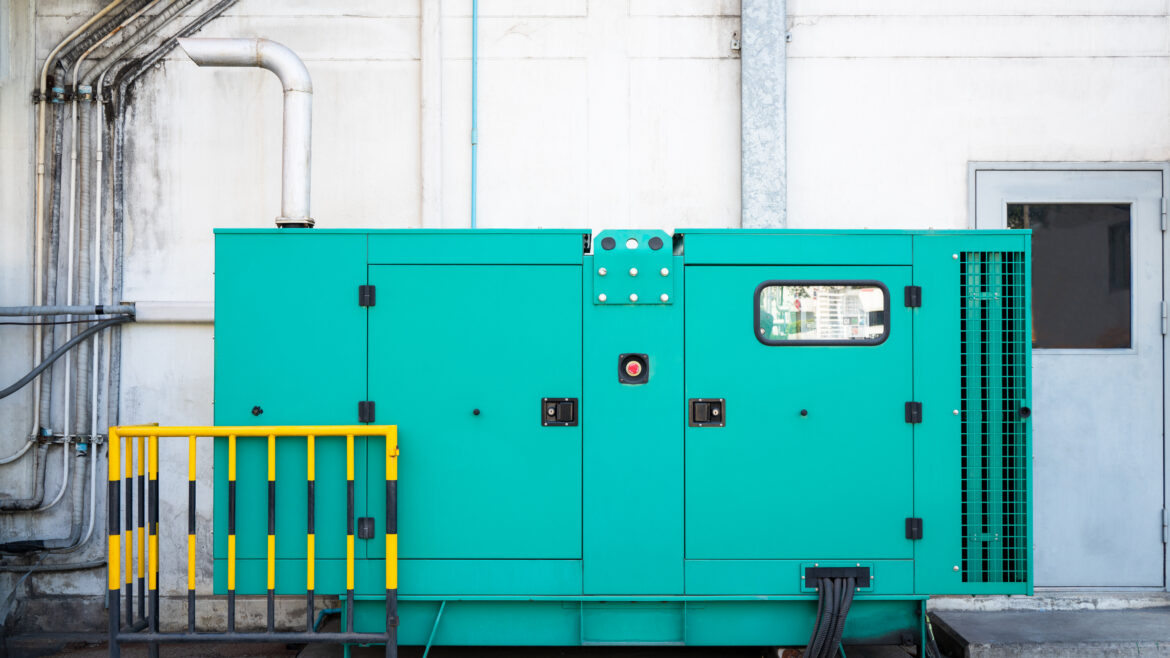
Industrial backup generator installed outside a commercial building
Emergency Back-up Diesel Fuel 1024 683 Star Oilco

Emergency Back-up Diesel Fuel

In an emergency, how often will your Emergency Back-up Diesel Fuel tank need to be filled?

We deliver dyed diesel seven days a week and will keep your equipment full for you.

Emergency Back-up diesel fuel delivered in Portland, Oregon

What is the condition of your Emergency Back-up Diesel Fuel in your generator tank?
When the Power goes out, we have diesel ready to keep your backup generator fueled.  We can also set up automatic fueling and DEF top off service with confirmation for your facility team’s needs. Whether you want long term stabilized diesel, dyed R99 renewable diesel, or B20 biodiesel blends we have you covered with your fuel specification needs.

Emergency Back-up diesel fuel tank avaialble.

Star Oilco has 250 gallon and 500 gallon tanks available to increase the onsite supply for an emergency back-up diesel need in the Pacific Northwest.

We have drivers on the road today with diesel.

When was the last time you had your generator filled with stabilized diesel?  We deliver off road diesel treated for long term storage.

Open an account with Star Oilco today and prepare for the next power outage.

Recent heat waves might have caused power outages.  Make sure your generators are full for this winter now.  With dynamic changes in the way power is used in the Pacific Northwest power outages have become more common than ever before.


Are you prepared for the next emergency?
Have you filled up since the last time?
Would you want to test your diesel fuel oxidative stability to make sure it is still good?

Keeping your back-up generator fueled could be the difference between an inconvenience and a disaster.  Stay ahead of the next emergency and re-fuel now.


Remember that ordering diesel for your generator is a specialized service, we will make it easy for you.

Getting the fuel for your generator or emergency equipment is only one part of the problem.  How you store it can be just as important.  This is why its important to work with a company that can help you.

You want to stabilize and treat your diesel for generators and other back up equipment.

Order fuel treated for long term storage!

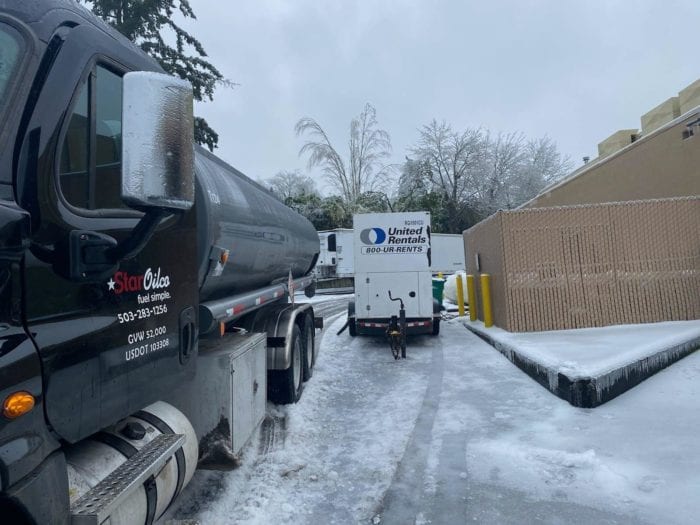
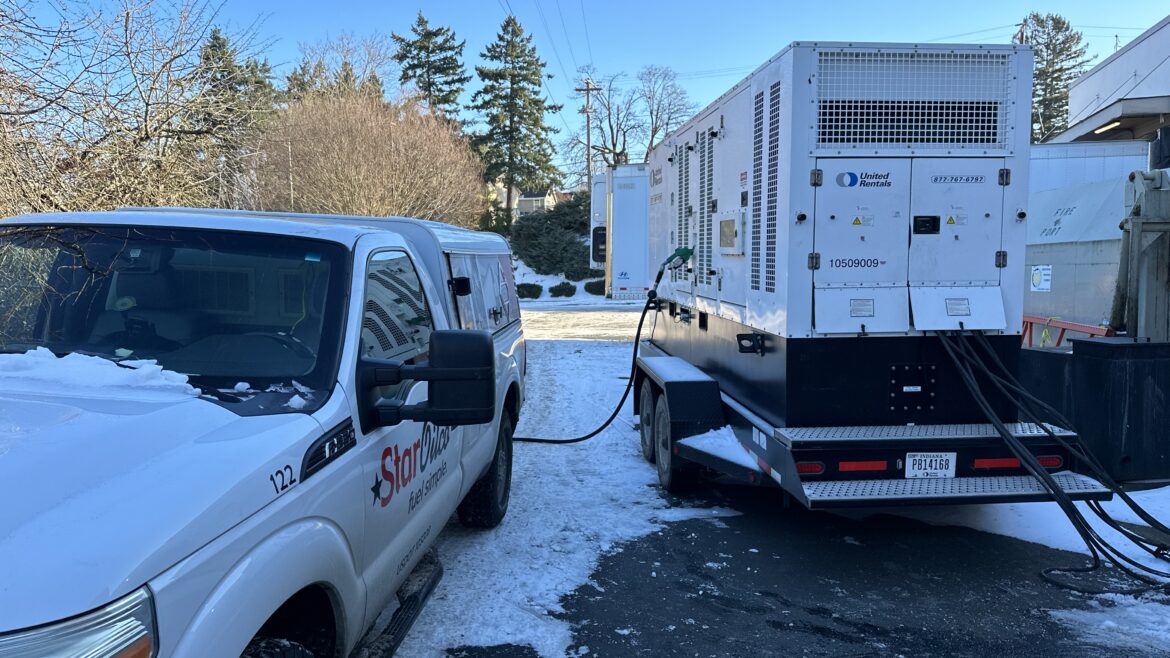
Star Oilco is an expert at fueling back-up generators, emergency water pumps, and other long term off-road diesel storage requirements. We understand, that in the Pacific Northwest, biodiesel blending is required by state laws. Biodiesel needs an extra layer of care when stored as a back-up diesel fuel.Filling a Generator in the Snow

Most off-road diesels and heating oils are ultra-low sulfur diesel containing at least 5% quantity of biodiesel.  This means long term storage requires a proactive approach.  You can’t just hope it works or wait to see if the fuel will burn after years of storage.

Emergency back-up generator diesel fuel is a specially treated oxidative stabilized off-road fuel designed to store for years.

Fueling a backup generator is a specialized product. The fueling service requires a vendor who understands your needs and keeps you up and running in an emergency.

Generators take off-road diesel, of course, but you want an ultra-low sulfur diesel to ensure it works with modern emission systems. Some companies deliver higher sulfur product that look the same but foul the emission systems of your equipment.

Beyond the service provided, you also want a vendor who offers a fuel stabilizer and biocide for the special long term storage needs of your backup generator. Star Oilco recommends you add a biocide and long-term storage stabilizer to your fuel to ensure it is good whenever you need it.

Use additives designed to prolong the life of your emergency diesel fuel.

Biocides prevent the growth of biological activity in the tank. In scenarios where micro-organisms like algae, bacteria, yeasts, and other bugs are growing in your fuel, biocides kill this growth. It is still important to remove the residual grit and other contaminants that are the hallmark of bugs growing in your tank. Usually, turning over the fuel or using a filtration can remove this.

If your tank absolutely has to be clean, you can contract a tank professional to enter the tank and physically clean the tank bottom or reline the tank with either fiberglass or an epoxy resin. We use Valvtect Bioguard Plus 6 for generators, emergency water pumps, backup boiler fuel, and other long term storage purposes. This product kills any existing biological growth and stabilizes your fresh diesel fuel for long term storage. Make sure your diesel is ready the next time you need backup power.

Water in diesel destroys fuel quality rapidly.

Check your tank for water every fall and spring.

Pumping the tank bottom removes water if it ever finds its way into your storage tank. Additionally, you want to put in an absorbent material designed to absorb water and not fuel. If your long-term storage tank has water and you are not planning to burn 100% of the fuel in the near future, DO NOT add anything that removes water by distributing into the fuel. Adding a “fuel drier” that actually pushes the water into solution with the diesel will worsen the long-term quality of your fuel, not improve it. That water is where bugs find their home to grow in fuel.

Star Oilco will test your fuel at no charge if you have an open account.

Feel free to call us with any questions you may have about long term storage of diesel. Star Oil can also deliver treated diesel ready for long term storage complete with Premium Diesel additive to improve the long-term storage quality of your fuel. For biocide, we use Valvtect BioGuard fuel microbiocide to kill any possible biological activity and prevent any chance of it starting.

Diesel Testing and Storage in Portland

If you have a long-term diesel storage tank and you are in the Portland, Oregon area, we are here to test your fuel.  Make sure your diesel is there for you when disaster strikes.

Tank Testing Form

  • This field is for validation purposes and should be left unchanged.


For more reading on diesel fuel quality assurance:

Fight Humbug in your Diesel Tank (using Valvtect Bioguard Plus 6 to stabilize your stored diesel)

Emergency Back Up Generator Fuel Quality (designed to provide a checklist to help Facility Managers keep those backup generators ready for emergency action)

Using Dessicant Breathers to keep diesel fuel dry and clean (an introductory primer on desiccant breathers and how they can be used to keep long term diesel storage drier and cleaner)

Using Diesel Filters to clean up your diesel fuel quality (an introductory primer on using aggressive filtration in line with diesel fuel dispensing for fuel quality assurance)

Yellow diesel backup generator for emergency power
Fuel Quality In An Emergency Back-Up Generator Matters – Find Out Why 1024 683 Star Oilco

Fuel Quality In An Emergency Back-Up Generator Matters – Find Out Why

                      Emergency Back Up Generator Diesel Fuel Quality

The fuel in your generator is the single most overlooked item in maintaining a back up generator.  Be prepared and know your back up generator diesel fuel quality is ready with these best practices.

When the power goes out, don’t let a decade old tank of diesel be your weak link.


Diesel Generator Fueling Service

As a provider of back up generator fueling services we know how critical fuel is in an emergency.

Back up generators are everywhere when you start looking for them.  Rarely needed but when a storm or disaster strikes their failure to fire will be extremely conspicuous. In the Pacific Northwest where resilience planning around a major subduction zone earthquake is a monthly subject of talk.  Back up diesel will be the only immediately power source after a quake.  Diesel generators are taking center stage for emergency preparedness, placing those who maintain them in some high level policy discussions.

Avoid a double emergency when the back up power isn’t there for your need by focusing on the diesel fuel quality.

The worst case scenario for fuel quality is water getting into your diesel fuel reservoir as well as biological growth occurring in that water logged diesel. If water is present in diesel, and that diesel is in a warm dark place, bacteria will start growing in your tank. So first preventive step is watch for water.  The most likely problem with fuel you will see is the fuel aging and degrading in place over years of not being used.  That can be addressed with your routine maintenance on the tank.

CIM-TEK water absorber

NOTE: To get a small amount of water or to ensure a dryer tank of fuel, CIM TEK makes a Tank Dryer which absorbs a small amount of water in a tank. Handy similar to adding a desiccant into a closet with a slight condensation issue. 

Back up power generator diesel fuel quality.

The big rule for storing back up generator fuel is to make sure the diesel you use is clean and dry.

First ensure you are testing the generator by running it once a month.  Move fuel through the system and ensure the generator is starting right up. Run the generator for a while to use up fuel and be prepared to order a regular top off when you get below 3/4th of a tank. When checking the fluids on the generator prior to start up see if the fuel filter has a visual transparent bottom where you can see what the fuel looks like there. If it looks like dirty fuel or there is evidence of water take notice.  After cycling the generator take a peek and make sure the fuel it’s pulling into the generator is bright (not dark and degraded).  If you are seeing any water (even a small drop) that is an indication of real concerns.

If you are using up half a tank a year and adding to it, the fuel quality will usually stay within specification.  If you have worries the easiest way is to just start over. With older generators sometimes it’s a good idea to just evacuate the tank (empty all the older diesel fuel) and replace it with fresh diesel treated and stabilized for long term storage.

Most back up generators are seeing routine annual maintenance where the mechanical needs of the equipment are walked through. If this is occurring ask for a bottom sample from the back up generators fuel tank. Also ask to see what the fuel in the bottom of the fuel filter (assuming they are changing that) would give an indication if problems might exist deep in the fuel tank.

Back Up Diesel Generator Fuel Service

Sampling and Onsite Testing of Fuel from Generator Diesel Tank:

  1. Pull sample from tank bottom
    1. Use a professional “Bacon-Bomb Sampler” (google it to see one) or a small fuel transfer pump available at any auto parts store.
  2. Visually inspect it by swirling it in a beaker or mason jar.
    • Look for water and dirt fall out as you swirl.  If you see a few drops of water form you’ve got a water problem. If you are seeing coffee ground type material in the fuel, that’s biological growth. If an algal or gunk type slime appears, that’s also biological growth.
    • If clear like cranberry juice and bright – your fuel is in good shape.  If a darker cherry color yet still clear, your fuel is aging and you should consider swapping or burning fuel off in the next year.
  3. If fuel is dark in color (showing that it is aging in the tank) you can send that sample to a lab to test it. You want to ensure you are confirming the following:
    • Oxidation Stability (or Accelerated Stability)
    • Water Content in PPM (under 50 PPM is what you want, under 100 PPM is not uncommon, and over 100 PPM there is probably water in the fuel and you want to pursue remedial action.)
    • Make sure the fuel testing lab you are using (your current fuel vendor should have a recommendation or do it for free for you) is checking for:
      • oxidative stability (if it’s aging out of specification),
      • biological growth (if bugs are growing in it),
      • water content (indicating a puddle someplace in the tank causing higher water content in the fuel) and,
      • dirt content of the fuel (if there is dirt, there is probably biological growth or some other problem).
  4. Set aside sample in a warm dark place for a month and check it for biological growth occurring which will confirm if you have fuel growing inside the tank.
    • How to test diesel for biological growth In-House:
      • Take your sample that appears to be in great condition and set it aside in a warm dark place for a month (day light kills most biological growth in fuel, though day light ages your diesel in other ways).
      • When you come back to look at the sample, if a film or layer of darker color is appearing in the fuel, this is biological growth occurring.
      • If you see nothing and want to experiment further, add a slight amount of water to this sample, shake it up, and put it back in a warm dark place.
      • When you check back if there is a a new layer of darker color on the surface of where the water contacts the fuel, that’s what grows in your tank.
      • If nothing grows, your fuel is safely stabilized for storage this year. Even if water is finding its way into your fuel tank, the fuel is safe and will be ready to start.
        • NOTE: Do not leave water in your tank, even if the fuel looks good. Eventually it will be a major problem and something will grow. If you are putting biocide in your tank regularly and their is an environment for growth, something resistant to that biocide will take root and you WILL NOT be able to get it out of the tank without serious effort.

NOTE: If you are curious to see a fuel lab analysis of the diesel this is an example.  This is a lab analysis from Hydrotex, Star Oilco’s premium diesel additive provider.  They are very supportive in testing everything we send them for quality assurance. 


Do you have questions about generator diesel fuel storage?

If you have questions about fuel storage, Star Oilco has answers.  Star Oilco does not do tank cleaning, we still will help you figure out what you need to do in order to have the result you need.

Contact Form

  • This field is for validation purposes and should be left unchanged.


For more on Diesel Fuel Quality Assurance please see these other Star Oilco articles:

Desiccant breathers, dry diesel, and keeping your diesel fuel clean.

Every question Star Oilco has been asked about dyed diesel.

Keep and make your diesel fuel cleaner. 

Bioguard Plus 6, Kill and prevent biological growth in your diesel fuel storage tank.


Star Oilco truck fueling a large generator during winter conditions
Diesel Backup Tanks – Treating and Refilling 1024 768 Star Oilco

Diesel Backup Tanks – Treating and Refilling

Here’s good advice if you are relying on diesel as a back up fuel in the Pacific NW.

Now is the time to refill and treat your back up fuel tanks.

Diesel as a back up fuel

Quite a bit of our business at Star Oilco is fueling back-up generators, emergency water pumps, refrigerated trailers and other long term off-road diesel storage requirements. In the Pacific Northwest, biodiesel blending is required by state laws and you need to take an extra duty of care when storing diesel as a back-up fuel.

This means that most off-road diesels and heating oils are ultra low sulfur diesel containing a small quantity of biodiesel.  That means long term storage requires a proactive approach.  You can’t just hope and wait to see what the fuel begins to look after years of storage.

Technical advice from Government Fleet Magazine to help you with storing diesel fuel.

Here is an article from Government Fleet Magazine on the subject which runs through the specifics of long term storage and what causes fuel to degrade when stored.  Government Fleet Magazine – How to Maintain Stored Diesel Fuel.

Star Oilco has also worked up a PDF check list on how to verify if your fuel is in need of freshening or is still in emergency ready shape.  If you are a customer of ours, we will deliver a laminated card version to keep next to your back up generator. If you are not a customer (or outside of our service area) drop us a message below and we will gladly email you the PDF.

For our customers, we recommend that you check the tank bottom fuel quality on an annual basis to make sure the product looks good. If the tank has sat for years and is dark in color (good diesel is bright and transparent – you will notice if it is in bad shape), we recommend pumping the tank out at least partially and replacing with fresh fuel. Often you can also hugely improve the quality of the fuel by polishing the fuel. Polishing is when you circulate fuel from the bottom of the tank through a pump, filter repeatedly in order to remove any sediment or growth from the fuel, and then place this fuel back in the same tank.

Look at your fuel for a bright and clear color.

For stored fuel, you also want to make sure it is stabilized and contains a biocide. Stabilizers prevent the oxidation of the fuel and prevent the effect of metals like lead, copper and zinc, which can react and degrade fuel. For heating oil systems with a return line, for instance, the fuel is flowing through a copper line to the furnace and then back to the tank in a return line.

Use additives designed to prolong the life of your emergency diesel fuel.

Biocides prevent the growth of biological activity in the tank. In scenarios whcontaminated_dieselere micro-organisms like algae, bacteria, yeasts, and other bugs are growing in your fuel, biocides can kill this growth. It is still important to remove the residual grit and other contaminants that are the hallmark of bugs growing in your tank. Usually you remove them by filtration or total turn over of the fuel. If your tank absolutely has to be clean, you can contract a tank professional to enter the tank and physically clean the tank bottom or reline the tank with either fiberglass or an epoxy resin.

Water in diesel destroys fuel quality rapidly. Check your tank for water every fall and spring.

In events where water finds its way into your storage tank, that can also be corrected by pumping the tank bottom. Additionally, you want to put in an absorbent material designed to absorb water and not fuel. If your long term storage tank has water and you are not planning to burn 100% of the fuel in the near future, DO NOT add anything that removes water by distributing into the fuel. Adding a “fuel drier” that actually pushes the water into solution with the diesel will worsen the long term quality of your fuel, not improve it. That water is where bugs find their home to grow in fuel.

Star Oilco will test your fuel at no charge if you have an open account.

Feel free to call us with any questions you may have about long term storage of diesel. Star Oil can also deliver treated diesel ready for long term storage complete with Hydrotex PowerKleen Premium Diesel additive to improve the long term storage quality of your fuel. For biocide, we use Valvtect BioGuard fuel microbiocide to kill any possible biological activity and prevent any chance of it starting.

Diesel Testing and Storage in Portland

If you have a long term diesel storage tank and you are in the Portland, Oregon area, we are here to test your fuel.  Make sure your diesel is there for you when disaster strikes.

Tank Testing Form

  • This field is for validation purposes and should be left unchanged.


For more reading on diesel fuel quality assurance:

Fight Humbug in your Diesel Tank (using Valvtect Bioguard Plus 6 to stabalize your stored diesel)

Diesel Fuel Technical Review (an easy to read and free text book on diesel fuel)

Emergency Back Up Generator Fuel Quality (designed to provide a checklist to help Facility Managers keep those back up generators ready for emergency action)

Using Desicant Breathers to keep diesel fuel dry and clean (an introductory primer on desicant breathers and how they can be used to keep long term diesel storage drier and cleaner)

Using Diesel Filters to clean up your diesel fuel quality (an introductory primer on using aggressive filtration in line with diesel fuel dispensing for fuel quality assurance)

Star Oilco fuel trucks staged for mobile on-site fueling
On-Site Mobile Fueling Benefits -Truck Fleets 1024 768 Star Oilco

On-Site Mobile Fueling Benefits -Truck Fleets

For companies that operate truck fleets, managing fuel consumption is a critical aspect of their operations. Refueling logistics and costs can pose significant challenges. A fuel delivery truck service is also known as fleet fueling, mobile fueling or wet hosing. By incorporating a fleet fueling service that fills their trucks every morning, companies will reap numerous benefits and eliminate additional costs. Through this approach of fleet fueling, efficiency will be improved. Costs are reduced and operations are streamlined. Ultimately, this improves profitability and sustainability for the company and the environment. 

Enhanced Operational Efficiency 

Having a fuel delivery truck fill a company’s truck fleet each morning can significantly enhance operational efficiency. Instead of requiring drivers to waste valuable time searching for gas stations and waiting in queues, the fleet is primed and ready for their daily routes. This allows for optimized productivity as drivers can focus on their core responsibilities through wet hose fueling.

Furthermore, with a centralized refueling system, companies can eliminate the risk of trucks running low on fuel during the day. This minimizes unforeseen delays, ensuring timely deliveries and improving customer satisfaction. The streamlined refueling process also reduces administrative burdens, eliminating drivers to track fuel expenses and submit reimbursement forms.  

Cost Savings and Budget Predictability

Implementing a fuel delivery truck service offers substantial cost savings for companies with truck fleets. By purchasing fuel in bulk, companies can negotiate favorable pricing terms with the fuel supplier. It allows companies to secure discounts or fixed rates. Fuel costs predictability allows for better budget planning, avoiding fluctuating fuel prices.

By eliminating the need for drivers to refuel at public gas stations, the company can prevent unauthorized fuel purchases, fuel theft, and the potential for inaccurate expense reporting. The fuel delivery service ensures that fuel consumption is closely monitored, minimizing fuel misuse.  

In addition, having a dedicated fuel delivery truck also reduces the wear and tear on company trucks caused by constant stops at gas stations. This reduces maintenance and repair costs in the long run. With regular fuel top-ups in the morning, trucks operate at optimal fuel levels, improving engine performance and extending their lifespan.  

Environmental Sustainability

By consolidating fuel delivery through a dedicated truck, companies can contribute to environmental sustainability. Bulk fuel delivery reduces the number of individual fuel stops to gas stations, resulting in reduced carbon emissions. The streamlined fleet fueling process also minimizes fuel spills and or possible leakage from conventional methods. This solution preserves air and soil quality. 

Furthermore, adopting a fuel delivery service encourages alternative and cleaner fuels. Companies can explore options like biodiesel or electric vehicles, and the fuel delivery truck can be equipped to accommodate these eco-friendly fuel sources. By transitioning to greener fuels, companies can reduce their carbon footprint and align with environmental regulations and customer preferences.  

For companies with truck fleets, integrating a fuel delivery truck service offers numerous advantages. Moreover, the streamlined refueling process through fleet fueling or mobile fueling enhances operational efficiency. Your truck fleets will benefit from fleet fueling by eliminating your employees wasting time on the clock with refueling stops. You will also benefit from the minimized administrative burdens. Cost savings are achieved through bulk purchasing, predictable budgeting, and reduced maintenance expenses. This approach contributes to environmental sustainability by reducing carbon emissions and promoting cleaner fuel alternatives.  

By optimizing fuel management and leveraging the many benefits of fuel delivery, companies can drive their fleet operations to new levels of productivity, cost-effectiveness, and environmental responsibility. Embracing this innovative solution not only benefits the company itself but also enhances customer satisfaction and positions the company as a leader in sustainable business practices. 

Star Oilco black fuel truck parked on rural road with trees in background
Understanding The Renewable Fuel Standard In Portland 1024 768 Star Oilco

Understanding The Renewable Fuel Standard In Portland

Diesel Fuel Is Changing In Portland With The Renewable Fuel Standard (RFS)

Portland Old Town sign representing the city’s commitment to renewable fuel standards

Figuring out what this means for you or your business can be challenging. We have shared many questions that we have been asked already, to help provide more clarity on what this Renewable Fuel Standard (RFS) means for Wholesale Purchaser-Consumers. If your question isn’t listed below, please reach out to Star Oilco so we can make sure your questions are answered!

Choose Star Oilco As Your Preferred Fuel Delivery Company

The Renewable Fuel Standard (RFS) is Portland City Council’s response to the City’s 2022-2025 Climate Emergency Workplan,  which lists the City’s priority actions over the next three years.

On Dec. 7, 2022, City Council unanimously adopted amendments to the Renewable Fuel Standard, Portland City Code Chapter 16.60, which reduces dependence on nonrenewable fossil fuels, by increasing the required percentage of renewable fuels blended with petroleum diesel sold in the city of Portland.

This policy increases low-carbon biofuel blends, moving Portland’s diesel fuel mix to 99% renewable by 2030. This policy includes a carbon intensity standard to shift to fuels that are lower carbon across their entire lifecycle.

Portlands Renewable Fuel Standard Requirements

 July 1, 2024, Portland required that all diesel fuel sold contain a minimum 15% blend of biodiesel or renewable diesel. This percentage will increase steadily over the next few years, reaching a minimum 99% renewable fuel requirement by July 1, 2030.

There are no reporting requirements for retailers to comply with this mandate. Instead, the city enforces compliance through random on-site inspections and by requiring retailers to maintain records of the biofuel content of the diesel they sell.

  • The policy speaks to “Covered Entities
  • Diesel Fuel Transaction within the City of Portland Oregon
  • Fuel distributors, resellers, retailers, nonretail dealers, terminals, importers and wholesale purchaser-consumers are directly regulated by PCC Chapter 16.60 and referred to as “covered entities.”
  • Wholesale Purchaser-Consumers​: also know as WPCs are directly regulated by PCC Chapter 16.60 and referred to as “covered entities.”

Wholesale purchaser-consumer (WPC) is a category of entities that own or utilize diesel vehicle fleets and purchase fuel in bulk for delivery into a storage tank at their facility or directly into a vehicles fuel tank. WPCs are required to register with the RFS program.

A fuel distributor or common carrier delivers on road diesel to your facilities on-site tank such as: 

  • Bulk Tank
  • Aboveground Storage Tank (AST)
  • Underground Storage Tank (UST)

A fuel distributor delivers on road diesel directly into your vehicles also known as:

  • On-Site Fleet Fueling
  • Wet Hose Fueling

Yes, these rules apply to fuel for on-road motor vehicles. Fuels used for the following purposes are not covered by these rules

  1. Railroad locomotives, watercraft, aircraft, and emergency equipment
  2. Dyed diesel for off-road vehicles
  3. Dyed diesel for furnaces, boilers, generators
  4. Propane and liquefied natural gas for vehicles

Wholesale Purchaser-Consumers are required to meet three primary components of the RFS:

  1. Biofuel Minimum Content Requirements,
  2. Carbon Intensity standard,
  3. Selecting a compliance option, and
  4. Record keeping.

Biofuel Minimum Content Requirements for Wholesale Purchaser-Consumers

  • WPCs in the City of Portland are required to meet the minimum biofuel content requirements for all fuel they purchase for their vehicle fleet. Beginning July 1, 2024, all diesel purchased must include 15% biofuel content, from either renewable diesel or biodiesel. This requirement increases to 50% on July 1, 2026, and 99% on July 1, 2030.
  • The biofuel content requirements will be enforced through random inspections of fleet facilities to see that they (1) have a contract in place with fuel suppliers that specifies that fuel meets the minimum blend requirements, or (2) verification of actual products purchased through testing or review of product transfer documents.
  • All WPCs also need to be aware of the Carbon Intensity Standard in PCC Chapter 16.60.
  • All biodiesel and renewable diesel sold in the City of Portland must have a carbon intensity equal to or less than 40g CO2e/MJ as certified by DEQ’s Clean Fuels Program, Approved Carbon Intensity Values.
  • Carbon intensity requirements apply to biofuel blendstock, not the final blended products, which may contain a portion of petroleum-based diesel fuel at a higher carbon intensity.

Selecting a compliance option for Wholesale Purchaser-Consumers

  • WPCs will need to select a compliance option by the start of the compliance period, July 1, 2024.
  • Portland Bureau of Planning & Sustainability (BPS) will provide notification about selecting compliance options by May 31, 2024.
  • To receive notification, covered entities must be registered with the RFS Program

*Compliance option selection may be changed at any time during the compliance period after consulting with BPS. If a covered entity decides to change the compliance option during the compliance period, they are responsible for compliance under the new option for the full compliance period.

Record Keeping Requirements for Wholesale Purchaser-Consumers

Portland City Code (PCC) Chapter 16.60 and administrative rules requires that an invoice, bill of lading, shipping paper, or other documentation, referred to as “Product Transfer Documents” (PTD) must accompany each fuel delivery in the city of Portland. The administrative rules specify that:

  1. PTDs must include the type of renewable fuel, including biodiesel, renewable diesel, ethanol, or any blends of these fuels, and declare the volume percent of such renewable fuel.
  2. PTDs must comply with OAR 603-027-0430 (1) (a) which includes identifying the quantity, the name of the product, the name and address of the seller and buyer, and the date and time of the sale.
  3. WPCs using the Product Transfer Document compliance pathway must also ensure that fuel pathway codes issued by Oregon Clean Fuels Program are also included on a PTD associated with each delivery received by the WPC or have a contract with a fuel supplier specifying the carbon intensity requirements of PCC Chapter 16.60.

Contact Us Today To Learn More About The RFS For Your Operations

JOIN THE FUEL MARKET REPORT NEWSLETTER FOR YOUR WEEKLY FILL OF UPDATES!

Construction Loaner Diesel Tanks
Diesel Fueling for Construction Jobsites 720 720 Star Oilco

Diesel Fueling for Construction Jobsites

Diesel fueling for construction jobsites in Portland, Oregon.

Keep full service for construction jobsites with R99 Renewable Diesel available.

Diesel Fuel for Construction


If you are managing a project we will keep that jobsite full.

Diesel fueling for construction jobsites seven days a week in the Portland metro region.  We have a variety of diesels accompanied with DEF top off to keep your operation running without interruption. We can provide a consistent schedule to keep going seven days a week.  If you are running generators, blowers, heaters and other 24-7 equipment we can keep those running through the weekends.  Our autofill construction service can provide the fuel you need, tanks for your project, and regular scheduled service to guarantee uptime.

Does your diesel fueling for construction needs call for a guaranteed stops on a schedule? Do your projects sometime require every 12 hour or 6 hour fueling? Does you fueling project needs call for generators, heaters, reefer-trailers, light sets, and yellow iron?  Star Oilco can do a few gallons wet hose fueled into your equipment to 100,000+ supply contracted for your project.  We have trucks dispatched seven days a week with several shifts.  Star Oilco can do twice a day fueling if needed for your project including regular 0 gallon stop by visits to confirm your equipment is running.

We can keep your generators running, your heaters blowing hot air, your pumps pumping, and your crew running without having to stop for fuel or DEF!


Fueling Back Hoe on construction site

Jobsite fueling service to meet the needs of your project management.

Off Road Diesel, Dyed Renewable Diesel and DEF available for your project need.


Mobile Fueling of Construction site in Portland, Oregon

Keep Full Mobile Onsite Fueling

Star Oilco can provide scheduled mobile fueling to your jobsite seven days a week.  Our diesel construction fuel service includes onsite tanks as well as DEF equipment for your project needs. At start of shift and end of shift schedule is also available for delivery.


Tight Access Diesel Construction Fueling Available.

Star Oilco’s fleet includes smaller fuel trucks able to access tight to reach areas in parking garages, active facilities, back alleys, inside buildings, and other hard to reach areas required by a project.


DEF Delivery Included with your Diesel Fueling.

Diesel Exhaust Fluid (DEF) keep full and bulk delivery service to your jobsite.  We have DEF bulk equipment as well as boxes available for your project.  What you want for your operations is what we want. Keeping those small DEF tanks full and generators running is what we can do for you.  We are here to make it easy.


Renewable Diesel in Oregon

Dyed Renewable Diesel for your Diesel Construction Fueling needs.

Does your project require a lower CO2 footprint?  We have off-road R99 Renewable Diesel on our trucks daily.  Star Oilco also has multiple sources for R99 in the Pacific Northwest for your needs to guarantee supply. If large volumes are needed for Renewable Diesel for a project in the future we can enable a contract to meet these needs.


Construction Loaner Diesel Tanks


Diesel Fueling Construction Tanks available.

Star Oilco has fuel tanks available for your project.  Our typical inventory of tanks sizes are 250 and 500 gallon UL142 double wall thanks.  We have 100 and 50 gallon fuel cells for moving fuel around a jobsite in the back of a fuel truck. Larger sizes available for longer term and larger projects with advance planning.


Wet Hose Fueling Service in Vancouver, WashingtonStar Oilco can provide your project with the fuel you request.
– B5 ULSD Dyed Diesel
– B20 ULSD Dyed Diesel
– Dyed R99 Renewable Diesel
– E10 Gasoline
– Non-Ethanol Premium Gasoline
– Kerosene, and others if the project calls for it.

Schedule Your Fuel Delivery Today

  • This field is for validation purposes and should be left unchanged.