
Posts By :

Sunny Battazzi

Two semi-trucks driving on a highway with trees in the background
Fuel Market Report: Jan 12th – Jan 18th, 2025 1024 683 Star Oilco

Fuel Market Report: Jan 12th – Jan 18th, 2025

fuel-market-report-star-oilco
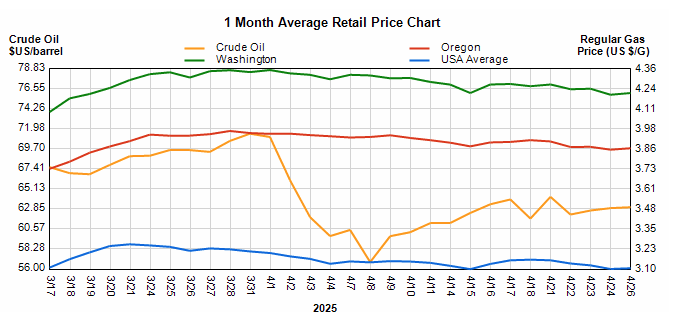
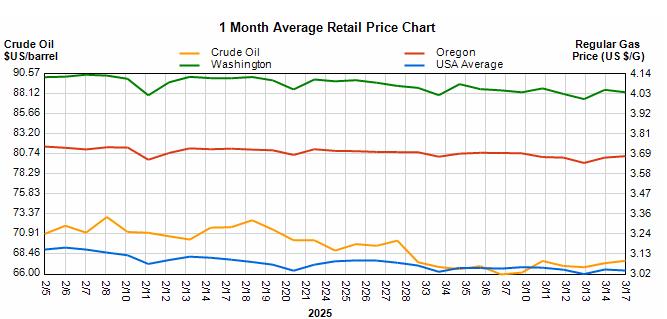
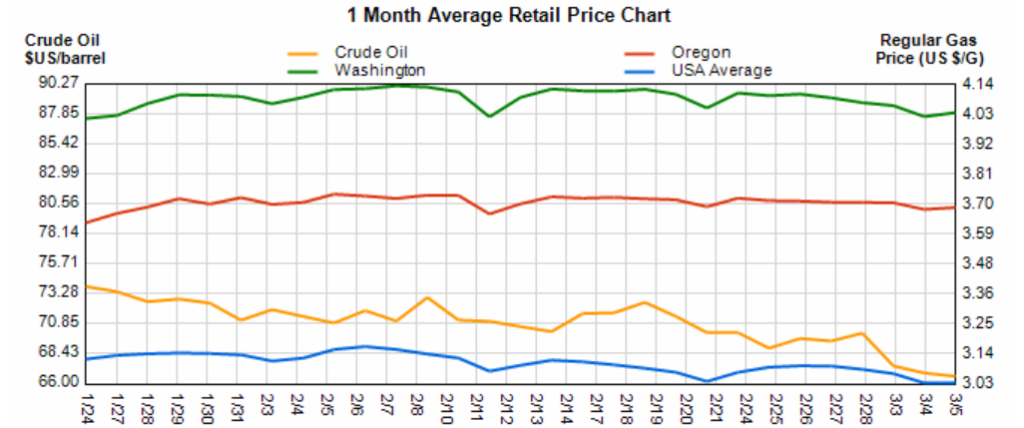
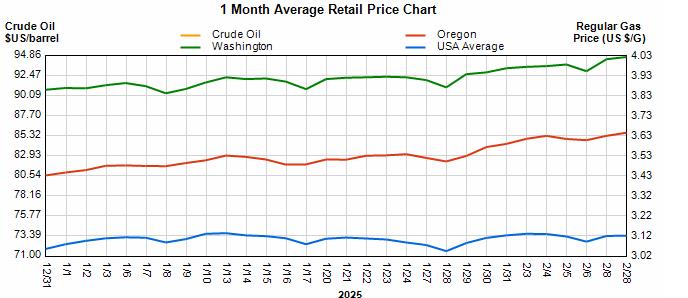
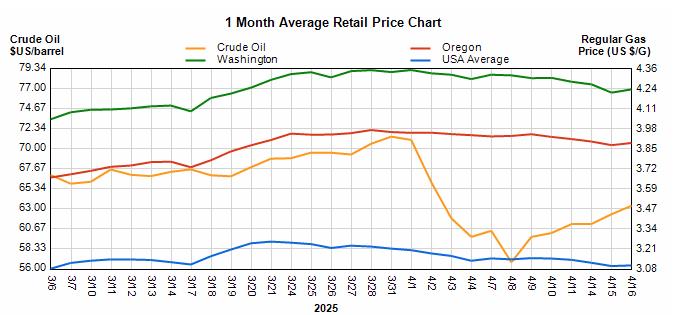
1-month average retail fuel price trends in Oregon, Washington, and the USA alongside crude oil prices for January 12th through January 18th.

Wholesale Price Average 1/18/25

Wholesale LowWholesale Avg
E10$2.23$2.32
B5$2.51$2.60
B20$2.45$2.58

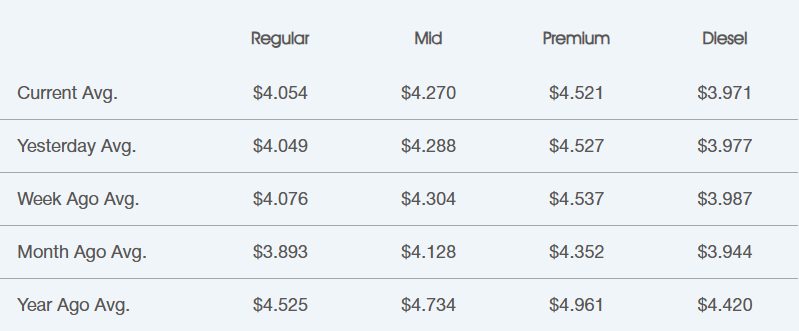
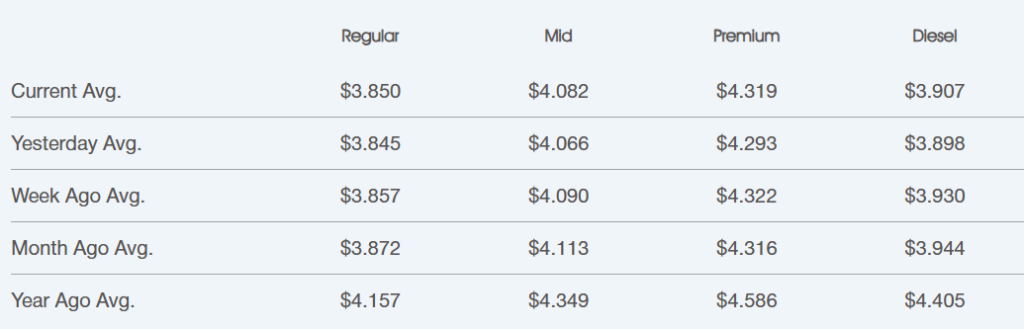
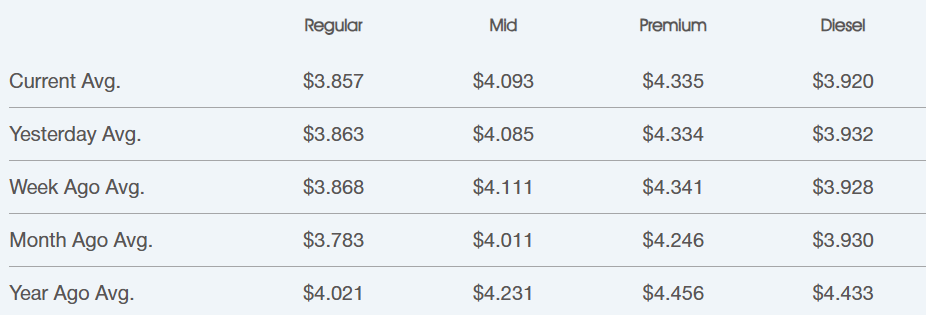
Average Retail Prices 1/18/25

NationalOregonWashington
E10$3.13$3.52$3.93
B5$3.63$3.80$4.32

Taxes

FederalState: ORLocalState: WA
Gas$0.184$0.40$0-.13$0.494
Diesel$0.244$0.40$0-.13$0.494

Oregon Fuel Price Variance

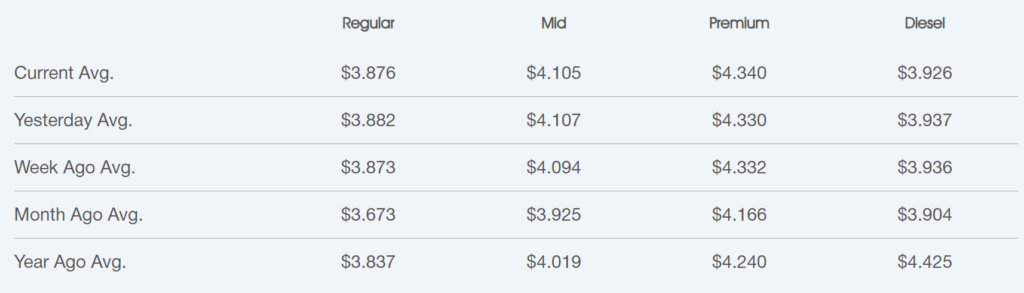
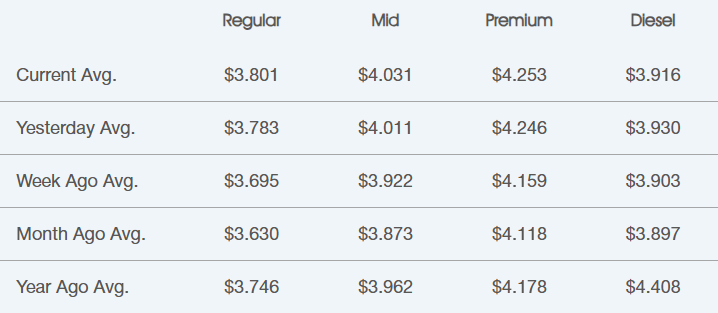
fuel-market-report-star-oilco-1-18-25-1

Fuel Market News

Fuel prices jumped this past week with rack averages up on gas and diesel. Rack averages in Portland jumped $0.10/gal for E10 (unleaded gasoline) and $0.20/gal for B5 & B20 (diesel). Since Jan 1st prices have jumped $0.20/gal on diesel and $0.15/gal on gas. Jan 20th marks the beginning of Donald Trump’s second term as President which will likely be very eventful over the next 90 days. There are hopes of deregulation within the fuel/energy sector that may bring down costs but most all of this is unpredictable. Crude oil soared to its highest price in five months last week while prices at the pump were relatively stable. These price hikes come on the tail of new US sanctions on Russian oil.  

 Oregonians may be in store for higher diesel prices this year with the end of Blenders Tax Credits, the introduction of the Producers Tax Credit & the Oregon Climate Protection Program going into 2025. For more on this report visit the link below.

2025 Fuel Market Outlook: Oregon
 

Winter season is upon us; although weather conditions have been moderate thus far, a storm can quickly change that. To avoid any power outages for your operations, be sure your backup generators are topped off and ready to trigger when needed.  

Get your generators topped off 

fuel-market-report-star-oilco-5-18-24

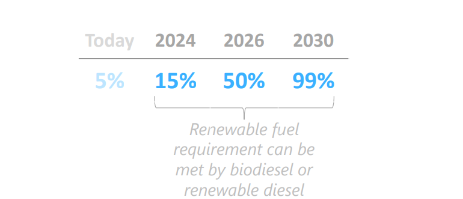
Important Note: Per the City Of Portland, “Distributors in the City of Portland are required to meet the minimum biofuel content requirements for all fuel they distribute beginning on May 15, 2024. All diesel fuel distributed to retail stations, non-retail dealers, or wholesale purchaser-consumers must include a minimum of 15% biofuel content, from either renewable diesel or biodiesel. This requirement increases to 50% on May 15, 2026, and 99% on May 15, 2030”.

Reasons For Price Variance

Oil Prices Above $75 

Winter Blend Of Fuel

Crude oil traded above $75 this past week, at a current price of $76.89/barrel. This is $1.95/lower than it was last week. 


Crude oil is the main ingredient for gasoline and diesel. Per AAA, on average about 50% of what you pay at the pump is the price of crude oil, breaking down as 25% refining, 11% distribution & marketing, and 14% taxesa helpful breakdown for consumers wondering why they are paying the prices that they pay. Crude Oil is currently trading at $76.89/barrel compared to $78.84/barrel,  last week and $77 a year ago.

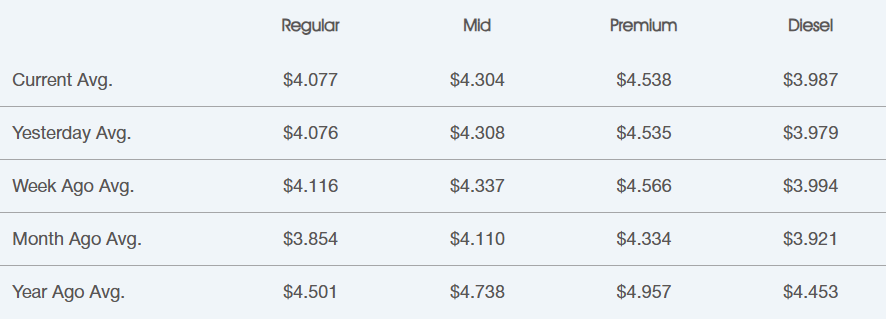
Fuel prices result from a complex interplay of the factors mentioned above and other factors regionally. Additionally, prices may vary by specific regions within Oregon and Washington. For the most precise and up-to-date information on fuel prices and the causes for these price changes within your area, use the links below for AAA & GasBuddy.

If you have any questions, feel free to contact Star Oilco and speak to one of our fuel market advisors to discuss how the market can impact your business.
For other news in the fuel market:

https://gasprices.aaa.com/?state=OR

Join the Fuel Market Report newsletter for your weekly fill of updates!

Two semi-trucks driving on a highway with trees in the background
Fuel Market Report: Jan 5th – Jan 11th, 2025 1024 683 Star Oilco

Fuel Market Report: Jan 5th – Jan 11th, 2025

fuel-market-report-star-oilco
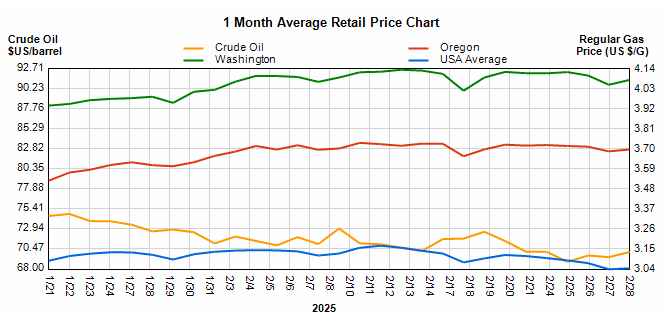
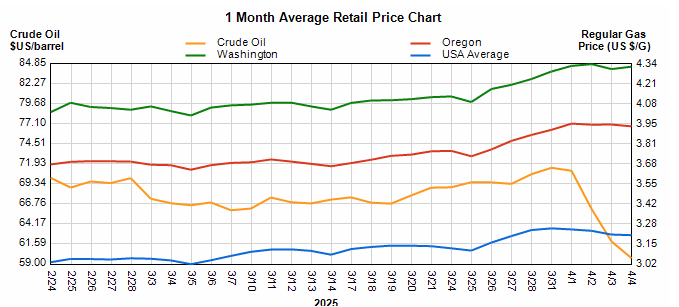
1-month average retail fuel price trends in Oregon, Washington, and the USA alongside crude oil prices for January 5th through January 11th.

Wholesale Price Average 1/11/25

Wholesale LowWholesale Avg
E10$2.12$2.21
B5$2.32$2.44
B20$2.24$2.39

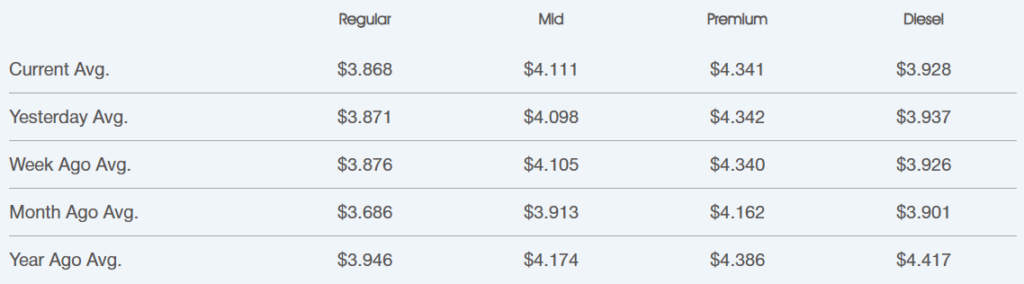
Average Retail Prices 1/11/25

NationalOregonWashington
E10$3.07$3.46$3.89
B5$3.55$3.78$4.28

Taxes

FederalState: ORLocalState: WA
Gas$0.184$0.40$0-.13$0.494
Diesel$0.244$0.40$0-.13$0.494

Oregon Fuel Price Variance

fuel-market-report-star-oilco-1-11-25-1

Fuel Market News

Fuel prices have remained relatively low as we begin the new year. Between Christmas week and New Year’s, many professionals were on leave and/or out of the office which led to very minimal price variances across the board. Rack averages in Portland have varied between $0.10 to $0.05/gal settling a few cents off from their listed price to end December. Oregonians may be in store for higher diesel prices this year with the end of Blenders Tax Credits, the introduction of the Producers Tax Credit & the Oregon Climate Protection Program going into 2025. For more on this report visit the link below.

2025 Fuel Market Outlook: Oregon


Winter season is upon is and although weather conditions have been moderate thus far, a storm can change that very quickly. To avoid any power outages for your operations, be sure your back up generators are topped off and ready to trigger when you need them.  

Get your generators topped off 

fuel-market-report-star-oilco-5-18-24

Important Note: Per the City Of Portland, “Distributors in the City of Portland are required to meet the minimum biofuel content requirements for all fuel they distribute beginning on May 15, 2024. All diesel fuel distributed to retail stations, non-retail dealers, or wholesale purchaser-consumers must include a minimum of 15% biofuel content, from either renewable diesel or biodiesel. This requirement increases to 50% on May 15, 2026, and 99% on May 15, 2030”.

Reasons For Price Variance

Oil Prices Above $75 

Winter Blend Of Fuel

Crude oil traded above $70 this past week, at a current price of $78.84/barrel. This is $7.83/higher than it was at the end of December. 


Crude oil is the main ingredient for gasoline and diesel. Per AAA, on average about 50% of what you pay at the pump is the price of crude oil, breaking down as 25% refining, 11% distribution & marketing, and 14% taxesa helpful breakdown for consumers wondering why they are paying the prices that they pay. Crude Oil is trading at $71.01/barrel compared to $68.02/barrel,  last week and $81 a year ago.

Fuel prices result from a complex interplay of the factors mentioned above and other factors regionally. Additionally, prices may vary by specific regions within Oregon and Washington. For the most precise and up-to-date information on fuel prices and the causes for these price changes within your area, use the links below for AAA & GasBuddy.

If you have any questions, feel free to contact Star Oilco and speak to one of our fuel market advisors to discuss how the market can impact your business.
For other news in the fuel market:

https://gasprices.aaa.com/?state=OR

Join the Fuel Market Report newsletter for your weekly fill of updates!

Star Oilco black fuel truck parked on rural road with trees in background
Benefits of Using Cardlock Fuel Cards 1024 768 Star Oilco

Benefits of Using Cardlock Fuel Cards

Star Oilco Pacific Pride Advantage card being held in front of a cardlock fuel station

Cardlock accounts offer a multitude of benefits for businesses, particularly those with fleets of vehicles that require regular fueling. Benefits to using cardlock for your business include reducing fuel costs, improving fuel management, reducing potential fraud risks, creating more convenience and efficiencies and allowing a more enhanced tax compliance.  

  1. Reduced Fuel Costs:
    Cardlock accounts often provide businesses with access to discounted fuel prices, which can lead to significant savings over time. Additionally, cardlock accounts can help businesses track fuel usage and identify areas where they can reduce fuel consumption.

  2.  Improved Fuel Management:
    Cardlock accounts provide businesses with detailed fuel usage data, which can be used to track individual driver behavior, identify unauthorized fuel usage, and optimize fuel routing. This data can also be used to negotiate better fuel rates with suppliers.
  3. Reduced Fraud Risk:
    Cardlock accounts offer multiple security features, such as PIN numbers, purchase limits, and real-time transaction monitoring, which can help prevent unauthorized fuel usage and fraud.
  4. Convenience and Efficiency:
    Cardlock accounts allow businesses to refuel their vehicles quickly and efficiently, without the need for cash or credit card transactions. This can help reduce downtime and improve productivity.
  5. Enhanced Tax Compliance:
    Cardlock accounts provide businesses with detailed fuel usage records, which can be helpful for tax reporting and compliance purposes.
     

Meet Maria…

Maria’s trucking company was struggling. Juggling invoices from dozens of gas stations, monitoring driver fuel spends, and fighting fraudulent charges all felt like navigating a minefield. The chaos ate into Maria’s bottom line, making every mile driven feel like a gamble. Maria was initially hesitant about applying for a cardlock account but eventually took the plunge. Her skepticism soon gave way to relief. No more crumpled up receipts. Now there’s clear consolidated bills detailing every gallon pumped, by which driver and in which truck.

Benefits to help Maria’s bottom line came one by one, including most cost control, higher security, streamlined efficiency and greater convenience. But the most unexpected benefit was control. Maria could set spending limits for each driver, track routes in real-time, and even deactivate cards instantly if anything seemed amiss. This empowered her drivers, making them feel part of a responsible team, not just gas-guzzling liabilities. Maria, once consumed by spreadsheets and anxieties, finally had room to breathe and watch her trucks roar down the highway, fueled by efficiency and an extra touch of security.

Why businesses choose cardlock accounts for their operations. 

Fuel Cost Savings

  • Discounted fuel prices: Cardlock account holders often receive discounted fuel prices from participating fuel stations. These discounts can be based on factors such as fuel volume, account history, and payment terms.
     
  • Fuel usage tracking: Cardlock accounts provide detailed fuel usage data, which can help businesses identify areas where they can reduce fuel consumption. This data can be used to develop fuel-efficient driving practices and optimize fuel routing. 

Improved Fuel Management 

  • Individual driver tracking: Cardlock accounts allow businesses to track fuel usage by individual driver, which can help identify drivers who are using excessive amounts of fuel. This data can be used to provide targeted driver training and coaching.
  • Unauthorized fuel usage prevention: Cardlock accounts offer multiple security features, such as PIN numbers, purchase limits, and real-time transaction monitoring, which can help prevent unauthorized fuel usage.
  • Fuel routing optimization: Cardlock accounts can be used to identify the most cost-effective fuel stations for each vehicle, based on factors such as fuel price, location, and fuel quality. 

Reduced Fraud Risk 

  • PIN numbers: Cardlock accounts require drivers to enter a PIN number before fueling, which helps prevent unauthorized access to cards.
  • Purchase limits: Cardlock accounts can be set up with purchase limits, which can help prevent drivers from making excessive purchases.
  • Real-time transaction monitoring: Cardlock accounts provide real-time transaction monitoring, which allows businesses to identify suspicious activity immediately. 

Convenience and Efficiency 

  • 24/7 access: Cardlock stations are typically open 24/7, which allows businesses to refuel their vehicles at any time of day or night.
  • Automated payment: Cardlock accounts allow businesses to pay for fuel automatically, which eliminates the need for cash or credit card transactions.
  • Reduced downtime: Cardlock accounts can help reduce downtime by allowing businesses to refuel their vehicles quickly and efficiently. 

Enhanced Tax Compliance 

  • Detailed fuel usage records: Cardlock accounts provide detailed fuel usage records, which can be helpful for tax reporting and compliance purposes.
  • Automated tax reporting: Some cardlock account providers offer automated tax reporting services, which can help businesses save time and money. 

Contact Star Oilco to discuss opening a cardlock account to benefit your business operations and impact your bottom line in savings, security and efficiency. Already have an account? You can shop your fuel bill by allowing us to do a cost comparison to identify cost savings by switching today.  

JOIN THE FUEL MARKET REPORT NEWSLETTER FOR YOUR WEEKLY FILL OF UPDATES!

Name
Blue diesel-powered emergency generator outdoors
Powering Through Outages With Backup Generators 1024 1024 Star Oilco

Powering Through Outages With Backup Generators

Backup Generators: How They Work & How They Are Powered  

A backup generator is an essential part of any preparedness plan for your home or business. An outage isn’t a problem when you have a backup generator, they provide you with reliable power when the grid goes down. Backup generators are also reliable and safe to use, so you can have peace of mind knowing that your family or business is protected. They are a good investment for any home or business and can help you stay prepared in the event of a power outage. They are cost-effective, with many models available for affordable prices. They are also easy to install and maintain, making them a great option for those looking for a reliable solution for their home or business.

How Backup Generators Work 

The backup generator converts fuel into electricity. Gasoline, diesel, and natural gas are the most common fuel sources for backup generators. In the event of a power outage, the generator automatically starts up and generates electricity. As a result, lights, appliances, and other equipment in the home or business are powered by this electricity. 

Blue diesel-powered emergency generator outdoors

Types of Backup Generators 

Standby generators

These are the most common type of backup generator. They are permanently installed to the home or business’s electrical system and will automatically start up when there is a power outage. Standby generators are a popular choice for homeowners that are just want a reliable source of power during an outage to keep their family warm, keep major appliances running and now let food stored in a freezer go bad. If there’s a sump pump, you’ll also want a backup generator to keep that running.  

Portable generators

These generators are smaller and more portable than standby generators. They can be used to power essential appliances and equipment during an outage. Portable backup generators are handy to have in emergency situations such as storms, floods, and other natural disasters. A portable generator can keep essential appliances like lights, refrigerators, and medical equipment running until the grid is restored. These backup generators can also be handy for outdoor recreation such as camping and RV’ing to provide electricity for lights, appliances, and entertainment devices while enjoying the outdoors. They can also be used for tailgating and outdoor events to power grills, music systems, and other equipment for tailgating parties, backyard weddings, and outdoor movie nights. 

Inverter generators

These generators produce clean power that is safe for sensitive electronics. They are a good choice for homes and businesses with computers, televisions, and other electronic devices. Inverter generators provide a quiet operation, clean power and fuel efficiency. Inverter generators produce a smoother, more stable AC current, similar to what you get from the grid. This is crucial for powering sensitive electronics like laptops, smartphones, and medical equipment without damaging them. These can be a great option for construction sites to provide a clean and stable power for tools and equipment on the construction sites. Mobile businesses such as food trucks and vendors also rely on inverter generators to power their equipment when they’re on the go.

How Backup Generators Are Powered

Gasoline:

Gasoline is the most common fuel for portable generators. It is readily available and relatively inexpensive. Gasoline is easy to use and can be stored for long periods of time. However, it is also highly flammable and can be dangerous if not handled properly. It is also not as efficient as some other fuels, such as diesel or natural gas. 

Diesel:

Diesel fuel is more expensive than gasoline, but it is also more efficient. Diesel generators can run for longer periods of time on a single tank of fuel. Diesel generators are also more reliable and have a longer life span than gasoline generators. Additionally, diesel engines produce lower emissions than gasoline engines. 

Natural gas:

Natural gas is the most convenient fuel for standby generators. It is piped directly into the home or business, so there is no need to store fuel. It is also a relatively clean-burning fuel, producing fewer emissions than other fossil fuels such as coal. Additionally, it is relatively inexpensive compared to other energy sources. 

Choosing a Backup Generator  

The size of the generator:

The size of the generator you need will depend on the amount of electricity you need to power during an outage.  The size of the generator will determine how much power it can provide, so it is important to choose a generator that is large enough to meet your power needs. If the generator is too small, it will not be able to provide enough power to meet your needs during an outage.  

The type of generator:

The type of generator you need will depend on your individual needs. For example, if you have a lot of sensitive electronics, you will need an inverter generator. Inverter generators are more lightweight and produce less noise than traditional generators. They are also more efficient and can provide more power than traditional generators. 

The fuel source:

The fuel source you choose will depend on your availability and budget. Different fuel types have different advantages and disadvantages. Diesel and propane generators are more reliable than gasoline generators, but gasoline generators are cheaper and easier to transport. 

The location of the generator: 

Make sure the generator is located in a safe area away from any potential hazards. The generator should also be positioned in such a way that it cannot be affected by wind or rain. The generator should be regularly checked and maintained to ensure it is working properly. 

Benefits of Having a Backup Generator 

Peace of mind

Knowing that you have a backup generator can give you peace of mind during an outage. 

Protection from property damage

Backup generators can help protect your home or business from damage caused by power outages. 

Increased productivity

Backup generators can help you stay productive during an outage. 

Convenience

Backup generators can make life more convenient during an outage. 

Backup generators are an essential part of any home or business preparedness plan. They can provide a reliable source of power during an outage, keeping your home or business running and protecting you from property damage. Backup generators are crucial for businesses of all sizes, providing a reliable source of power during outages and ensuring continuity of operations.  

Backup generators can help to protect revenue and productivity. If there’s a power outage it can bring a business to a standstill, leading to lost revenue, productivity and inability to help their customers. Backup generators can prevent these disruptions and keep businesses in operation. They also provide the ability to safeguard data and equipment. With many modern businesses relying on computers, servers and other electronic equipment, power outages can cause data loss, equipment damage and costly downtime. Hospitals, data centers and other sensitive facilities require uninterrupted power supply provided by backup generators to maintain critical operations and safeguard lives and valuable data. Industries such as hospitals and manufacturing have regulatory requirements for maintaining power supply during outages.

Backup generators provide critical power during emergencies, keeping things like security systems, emergency lights, and fire protection systems running when the power goes out. For businesses, this helps keep employees and customers safe and shows a strong commitment to a safe workplace. Having a standby generator can also help with employee retention, as people feel more secure knowing their safety is a priority.

A reliable backup power system also protects your operations and helps avoid supply chain disruptions. As the power grid faces more risks from severe weather, cyberattacks, and aging infrastructure, backup generators give your business a way to stay open and keep running when others can’t. With the growing risk of cyberattacks targeting power systems, having your own generator fueled and ready is one of the smartest ways to protect your business.

Backup generator fuel delivery from Star Oilco ensures your system is ready when it matters most. Whether you need power for safety, productivity, or peace of mind, a diesel-powered generator is no longer just a luxury. It’s a smart investment for any home or business in the Portland area and beyond.

Need your backup generator fueled? Contact Star Oilco today to refuel your backup generator. Has it been awhile and wondering if you need your fuel checked in your backup generator? Give us a call. We can check your fuel quality to make sure your fuel is ready when you need it. 

JOIN THE FUEL MARKET REPORT NEWSLETTER FOR YOUR WEEKLY FILL OF UPDATES!

Name
Diesel fuel flowing into a dark reflective liquid surface
What Are Our Options for Alternative Fuels? 1024 578 Star Oilco

What Are Our Options for Alternative Fuels?

What are our options for alternative fuel?

Biofuels are eco-friendly fuel choices because they are made from renewable resources and produce fewer emissions than fossil fuels. Biofuels and biodiesel can also be used to improve air quality. They also allow us to reduce the dependence we have on using fossil fuels. 

Biofuels are liquid fuels produced from biomass, which is organic matter such as plants, algae, and agricultural waste. Biofuels can be used to power vehicles, generate electricity, and heat homes and businessesBiofuels are renewable and can reduce emissions of greenhouse gases. They provide an alternative to fossil fuels and help to conserve natural resources. Reducing the emissions of greenhouse gases is an important factor in helping to combat climate change. Biofuels have the potential to be a significant part of the solution. Biofuels can reduce emissions of greenhouse gases by replacing fossil fuels, which are made from non-renewable sources. Using biofuels instead of fossil fuels can also help to reduce air pollution. 

Some common types of biofuels include: 

Ethanol

Ethanol is a type of alcohol that is made from fermented corn, sugarcane, and other crops. It is blended with gasoline to create E85, a fuel that can be used in flexible-fuel vehiclesThis type of fuel is cheaper than regular gasoline, and it is more environmentally friendly. It is also safer to store and transport than other types of fuel. The benefits of using ethanol fuel include reduced emissions of carbon dioxide, improved air quality, and increased energy security. It is also renewable and biodegradable, making it a more sustainable fuel choice. Additionally, the production and use of ethanol fuel can create jobs and support local economies. 


Biodiesel

Biodiesel is a type of diesel fuel that is made from vegetable oils, animal fats, and waste grease. It can be used in unmodified diesel engines as a drop-in solution. It is a renewable fuel and emits less carbon dioxide than petroleum-based diesel. Biodiesel is also less toxic and it’s biodegradable. The benefits of biodiesel include reduced emissions of carbon dioxide, sulfur dioxide, carbon monoxide, and unburned hydrocarbons; improved combustion efficiency and power output; improved lubricity; and improved fuel economy. Additionally, biodiesel is biodegradable and has a lower energy content than petroleum-based diesel, making it safer to handle and transport in the Portland, Oregon metro area as well as Vancouver, Washington. 

Biodiesel can be used in a variety of applications, including transportation, heating and electricity. Biodiesel is used in transportation to power diesel engines in cars, trucks, buses, and other vehicles. Biodiesel can also be used to heat homes and businesses. Biodiesel also can generate electricity in power plants.  

Biodiesel is a promising alternative to petroleum diesel, and its use is growing around the world. The United States is the world’s largest producer of biodiesel. 

Algae-based biofuels

Algae-based biofuels are a new type of biofuel that is made from algae. Algae are a rapidly renewable resource that can be grown in a variety of environments. Algae is a group of photosynthetic organisms that grow in water. Algae have the potential to produce significantly more oil than traditional biofuel crops, such as corn and soybeans, and they can be grown on non-arable land, such as saltwater or wastewater. This makes algae an attractive potential source of renewable fuel. 

When algae are grown in the right conditions, they can produce up to 77% oil, which can be converted into biodiesel, renewable diesel, or other biofuels such as ethanol, butanol and jet fuel. Algae-based biofuels have the potential to significantly reduce greenhouse gas emissions from transportation, electricity generation, and other industries. However, there are still challenges that need to be overcome before algae-based biofuels can be commercially viable. These challenges include scalable production, costs, efficient harvesting and efficient processing to extract the oil. There is a lot of research and development underway to overcome these challenges and with continued investment, algae-based biofuels have the potential to become a major source of renewable fuel in the future. 


Hydrogen

Hydrogen is a versatile energy carrier that has the potential to play a significant role in the transition to a clean energy future. It is the most abundant element in the universe and can be produced from a variety of sources, including natural gas, biomass, and renewable electricity. When used in a fuel cell, hydrogen produces only water and heat, making it a clean and efficient fuel source. 

Using hydrogen as a fuel provides clean burning, a high energy density, efficiency, among many other benefits. Hydrogen doesn’t produce any emissions of harmful pollutants which makes it an attractive option as a fossil fuel alternative. Hydrogen’s high energy density means that a relatively small amount of hydrogen can provide a lot of energy. Using hydrogen fuel cells to generate electricity are 2-3 times more efficient than internal combustion engines. It can also be used in a wide range of applications, including transportation, electricity generation as well as industrial processes.  

Some of the challenges we face with hydrogen as a fuel are its current methods of production. They are not always as clean or sustainable currently. Storing hydrogen, being a gas, requires specialized storage tanks. The infrastructure for transporting and distributing hydrogen is not yet fully developed.  

Overall, there is a growing interest in using hydrogen as a fuel source with very promising results and possibilities in our future. Governments and businesses all over the world have been investing in research and development to figure out solutions to these challenges in order to make hydrogen a more viable energy source.  

Renewable Diesel

Renewable diesel can also be known as hydro-treated vegetable oil (HVO) or green diesel, and is a type of biofuel that is chemically identical to petroleum diesel. It is produced from a variety of feedstocks, including vegetable oils, animal fats, and waste oils. Renewable diesel can be used in any diesel engine without modification, and it offers a number of environmental benefits over petroleum diesel, including: 


Reduced greenhouse gas emissions 

Renewable diesel (R99) reduces greenhouse gas emissions by up to 90% compared to petroleum diesel. R99 being cleaner and more efficient, makes it an attractive option for many transportation companies. 


Improved air quality 

Renewable diesel produces fewer harmful pollutants, such as particulate matter and sulfur oxides, than petroleum diesel. Additionally, renewable diesel is lower in carbon than petroleum diesel, making it a more sustainable option for transportation. Renewable diesel is also more efficient, reducing the amount of energy needed to produce the same amount of fuel. 


Biodegradability  

Renewable diesel is biodegradable, meaning that it breaks down naturally in the environment.  This helps to reduce the amount of harmful pollutants in the environment. Renewable diesel also reduces emissions of carbon dioxide, a major contributor to climate change. 

Renewable diesel is a promising alternative to petroleum diesel, and its use is growing around the world. The United States is the world’s largest producer of renewable diesel, and the European Union has a mandate to use 10% renewable diesel by 2030.  

Even more of the benefits of using renewable diesel:  

The use of renewable diesel helps reduce our dependence on fossil fuels since it is a renewable fuel.  

The local economy can be supported by renewable diesel, which is often produced from local crops.  

A number of sectors, including agriculture, manufacturing, and transportation, create jobs in the renewable diesel industry.  

Ultimately, renewable diesel is a clean and sustainable fuel that offers environmental and economic benefits. Around the world, its use is growing as an alternative to petroleum diesel. Renewable diesel helps to reduce air pollution, reduce greenhouse gas emissions, and reduce dependence on foreign oil. It is also a renewable and sustainable fuel source that can be used to produce electricity. As such, renewable diesel is an important option for reducing carbon emissions and improving sustainability overall. 

When we look at the variety of renewable and biofuel opportunities, there are a variety of ways that we can reduce our carbon footprint today without any modifications to our current engines. However, long term, we have opportunities that we can explore for where we believe that our future is going and the solutions that can allow for an even greater impact to our Pacific Northwest carbon footprint and reducing greenhouse gas emissions. Among all of the renewable resources, we can reduce air pollution, increase economic benefits and create a more sustainable future for the Portland, OR and Vancouver, WA metro areas. As technology continues to improve and the production of biofuels and biodiesel becomes more efficient, these fuels are likely to become more affordable and widely available. Feel free to give Star Oilco a call today to discuss your fueling needs today and how we can provide you with renewable sources today as a drop-in solution. 

JOIN THE FUEL MARKET REPORT NEWSLETTER FOR YOUR WEEKLY FILL OF UPDATES!

Name

Two semi-trucks driving on a highway with trees in the background
Fuel Market Report: Dec 8th – Dec 14th, 2024 1024 683 Star Oilco

Fuel Market Report: Dec 8th – Dec 14th, 2024

fuel-market-report-star-oilco
1-month average retail fuel price trends in Oregon, Washington, and the USA alongside crude oil prices for December 8th through December 14th.

Wholesale Price Average 12/14/24

Wholesale LowWholesale Avg
E10$1.98$2.06
B5$2.19$2.30
B20$2.16$2.28

Average Retail Prices 12/14/24

NationalOregonWashington
E10$3.02$3.47$3.98
B5$3.50$3.79$4.31

Taxes

FederalState: ORLocalState: WA
Gas$0.184$0.40$0-.13$0.494
Diesel$0.244$0.40$0-.13$0.494

Oregon Fuel Price Variance

fuel-market-report-star-oilco-12-14-24-1

Fuel Market News

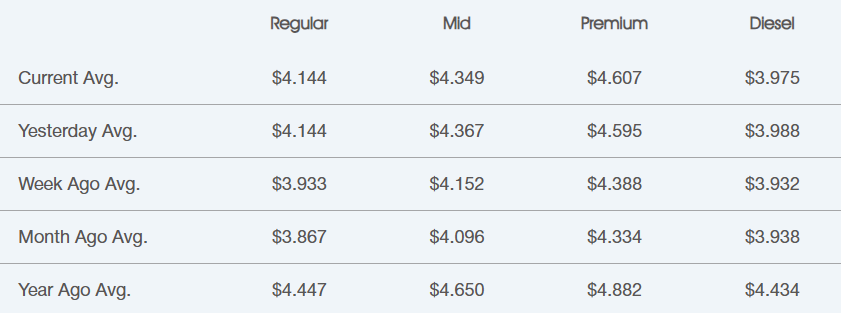
Fuel prices have dropped across multiple products with both gas and diesel down. Rack averages for E10 dropped $0.24/gal while diesel dropped $0.10/gal. The average price of gasoline in Oregon is at its lowest price since June 2021, giving drivers an early holiday gift on the road. Oil prices jumped to over $70/barrel this past week as oil prices went up for the first time in 6 weeks. Domestic crude oil production is again at a record high reaching 13.51 million barrels per day in the week ending Nov 29th. Drivers should expect to see prices continue to fall for fuel prices as we enter into the winter season.


With the winter season approaching, it is a great time to be sure your backup generators are topped off for any extreme weather conditions over the next several weeks.  

Get your generators topped off 

fuel-market-report-star-oilco-5-18-24

Important Note: Per the City Of Portland, “Distributors in the City of Portland are required to meet the minimum biofuel content requirements for all fuel they distribute beginning on May 15, 2024. All diesel fuel distributed to retail stations, non-retail dealers, or wholesale purchaser-consumers must include a minimum of 15% biofuel content, from either renewable diesel or biodiesel. This requirement increases to 50% on May 15, 2026, and 99% on May 15, 2030”.

Reasons For Price Variance

Oil Prices Above $70

Winter Blend Of Fuel

Crude oil traded above $70 this past week, for the first time in a month, at a current price of $71.01/barrel. This is $2.99 higher than it was last week. This marks the first time oil prices jumped up in six weeks. 


Crude oil is the main ingredient for gasoline and diesel. Per AAA, on average about 50% of what you pay at the pump is the price of crude oil, breaking down as 25% refining, 11% distribution & marketing, and 14% taxesa helpful breakdown for consumers wondering why they are paying the prices that they pay. Crude Oil is trading at $71.01/barrel compared to $68.02/barrel,  last week and $81 a year ago.

Fuel prices result from a complex interplay of the factors mentioned above and other factors regionally. Additionally, prices may vary by specific regions within Oregon and Washington. For the most precise and up-to-date information on fuel prices and the causes for these price changes within your area, use the links below for AAA & GasBuddy.

If you have any questions, feel free to contact Star Oilco and speak to one of our fuel market advisors to discuss how the market can impact your business.
For other news in the fuel market:

https://gasprices.aaa.com/?state=OR

Join the Fuel Market Report newsletter for your weekly fill of updates!

Two semi-trucks driving on a highway with trees in the background
Fuel Market Report: Nov 24th – Nov 30th, 2024 1024 683 Star Oilco

Fuel Market Report: Nov 24th – Nov 30th, 2024

fuel-market-report-star-oilco
1-month average retail fuel price trends in Oregon, Washington, and the USA alongside crude oil prices for November 24th through November 30th.

Wholesale Price Average 11/30/24

Wholesale LowWholesale Avg
E10$2.19$2.30
B5$2.30$2.41
B20$2.27$2.39

Average Retail Prices 11/30/24

NationalOregonWashington
E10$3.05$3.54$4.00
B5$3.54$3.83$4.34

Taxes

FederalState: ORLocalState: WA
Gas$0.184$0.40$0-.13$0.494
Diesel$0.244$0.40$0-.13$0.494

Oregon Fuel Price Variance

fuel-market-report-star-oilco-11-30-24

Fuel Market News

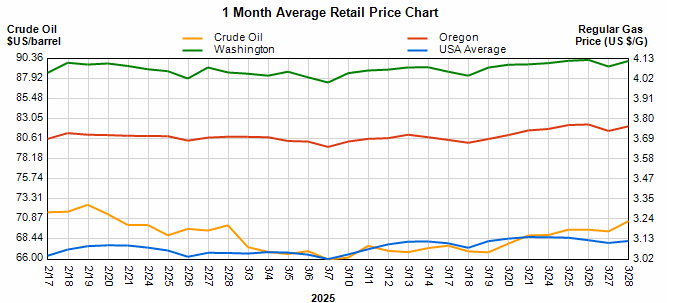
With the Thanksgiving holiday week comes time off for much of corporate America. Most people took off time for travel and family gatherings. Due to this, there was not much movement in the market after Wednesday of last week. Rack averages for diesel did not move more than a penny and gasoline jumped by $0.03/gal. Retail prices also did not have much fluctuation as they only moved about $0.01/gal. Gas prices should trickle down this week as we roll into the winter season this month starting Dec 21st.


With the winter season approaching, it is a great time to be sure your backup generators are topped off for any extreme weather conditions over the next few weeks.  

Get your generators topped off 

fuel-market-report-star-oilco-5-18-24

Important Note: Per the City Of Portland, “Distributors in the City of Portland are required to meet the minimum biofuel content requirements for all fuel they distribute beginning on May 15, 2024. All diesel fuel distributed to retail stations, non-retail dealers, or wholesale purchaser-consumers must include a minimum of 15% biofuel content, from either renewable diesel or biodiesel. This requirement increases to 50% on May 15, 2026, and 99% on May 15, 2030”.

Reasons For Price Variance

Oil Prices Below $70

Winter Blend Of Fuel

Crude oil traded just below $70 this past week, at a current price of $68.02/barrel. This is $0.47 lower than it was last week. Not much of a real difference.


Crude oil is the main ingredient for gasoline and diesel. Per AAA, on average about 50% of what you pay at the pump is the price of crude oil, breaking down as 25% refining, 11% distribution & marketing, and 14% taxesa helpful breakdown for consumers wondering why they are paying the prices that they pay. Crude Oil is trading at $68.02/barrel compared to $68.49/barrel,  last week and $83 a year ago. 

Fuel prices result from a complex interplay of the factors mentioned above and other factors regionally. Additionally, prices may vary by specific regions within Oregon and Washington. For the most precise and up-to-date information on fuel prices and the causes for these price changes within your area, use the links below for AAA & GasBuddy.

If you have any questions, feel free to contact Star Oilco and speak to one of our fuel market advisors to discuss how the market can impact your business.
For other news in the fuel market:

https://gasprices.aaa.com/?state=OR

Join the Fuel Market Report newsletter for your weekly fill of updates!

Two semi-trucks driving on a highway with trees in the background
Fuel Market Report: Nov 17th – Nov 23rd, 2024 1024 683 Star Oilco

Fuel Market Report: Nov 17th – Nov 23rd, 2024

fuel-market-report-star-oilco
1-month average retail fuel price trends in Oregon, Washington, and the USA alongside crude oil prices for November 17th through November 23rd.

Wholesale Price Average 11/23/24

Wholesale LowWholesale Avg
E10$2.14$2.27
B5$2.31$2.42
B20$2.28$2.39

Average Retail Prices 11/23/24

NationalOregonWashington
E10$3.07$3.56$4.00
B5$3.55$3.85$4.36

Taxes

FederalState: ORLocalState: WA
Gas$0.184$0.40$0-.13$0.494
Diesel$0.244$0.40$0-.13$0.494

Oregon Fuel Price Variance

fuel-market-report-star-oilco-11-23-24-1

Fuel Market News

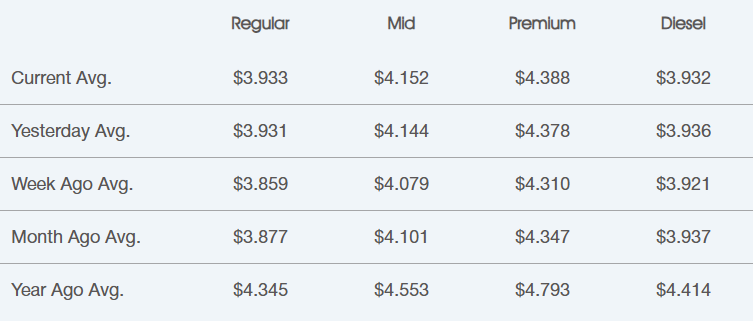
Fuel prices jumped this past week with most of the price variance affecting E10 gasoline. On the 19th the rack average for E10 in Portland jumped $0.12 in one day and continued to climb later into the week. The reasons for this are unknown as there were no refinery shutdowns or supply bottlenecks in the past week. Diesel prices were mostly unchanged with price variances below $0.05/gal for B5 & B20. AAA predicts record travel trends for the Thanksgiving holiday this season, which may contribute to higher fuel prices over the rest of the week.  

fuel-market-report-star-oilco-5-18-24

Important Note: Per the City Of Portland, “Distributors in the City of Portland are required to meet the minimum biofuel content requirements for all fuel they distribute beginning on May 15, 2024. All diesel fuel distributed to retail stations, non-retail dealers, or wholesale purchaser-consumers must include a minimum of 15% biofuel content, from either renewable diesel or biodiesel. This requirement increases to 50% on May 15, 2026, and 99% on May 15, 2030”.

Reasons For Price Variance

Oil Prices Below $70

Winter Blend Of Fuel

Crude oil traded just below $70 this past week, at a current price of $68.49/barrel. This is $0.72 lower than it was last week.  


Crude oil is the main ingredient for gasoline and diesel. Per AAA, on average about 50% of what you pay at the pump is the price of crude oil, breaking down as 25% refining, 11% distribution & marketing, and 14% taxesa helpful breakdown for consumers wondering why they are paying the prices that they pay. Crude Oil is trading at $68.49/barrel compared to $69.21/barrel,  last week and $82 a year ago. 

Fuel prices result from a complex interplay of the factors mentioned above and other factors regionally. Additionally, prices may vary by specific regions within Oregon and Washington. For the most precise and up-to-date information on fuel prices and the causes for these price changes within your area, use the links below for AAA & GasBuddy.

If you have any questions, feel free to contact Star Oilco and speak to one of our fuel market advisors to discuss how the market can impact your business.
For other news in the fuel market:

https://gasprices.aaa.com/?state=OR

Join the Fuel Market Report newsletter for your weekly fill of updates!

Two semi-trucks driving on a highway with trees in the background
Fuel Market Report: Nov 10th – Nov 16th, 2024 1024 683 Star Oilco

Fuel Market Report: Nov 10th – Nov 16th, 2024

fuel-market-report-star-oilco
1-month average retail fuel price trends in Oregon, Washington, and the USA alongside crude oil prices for November 10th through November 16th.

Wholesale Price Average 11/16/24

Wholesale LowWholesale Avg
E10$1.99$2.08
B5$2.33$2.40
B20$2.31$2.36

Average Retail Prices 11/16/24

NationalOregonWashington
E10$3.07$3.54$3.99
B5$3.53$3.86$4.34

Taxes

FederalState: ORLocalState: WA
Gas$0.184$0.40$0-.13$0.494
Diesel$0.244$0.40$0-.13$0.494

Oregon Fuel Price Variance

fuel-market-report-star-oilco-11-16-24

Fuel Market News

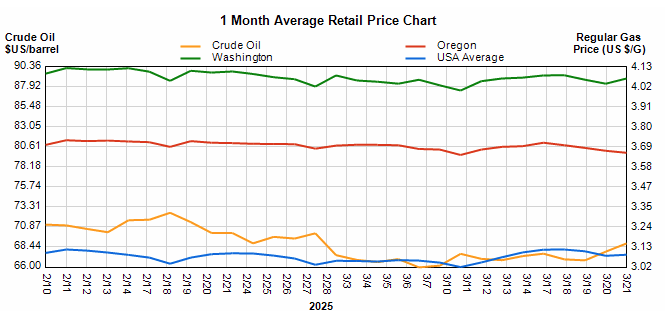
Fuel prices dropped this past week with E10, B5 & B20 all down at least $0.09/gal. This marks the lowest average gas price in Oregon this year down $0.59/gal from a year ago today. These downward price shifts are a good sign for the region, which has higher fuel prices than nearly every other state. These trends should continue into the winter months as fuel prices have been relatively low for the last 3 months. There are some concerns of another hurricane ripping through the Gulf Coast which would affect oil production and distribution throughout the country but this is ultimately an unknown factor. Hurricane season typically goes from June through November and current reports do not show any natural disasters in the Gulf Region anytime soon.  

fuel-market-report-star-oilco-5-18-24

Important Note: Per the City Of Portland, “Distributors in the City of Portland are required to meet the minimum biofuel content requirements for all fuel they distribute beginning on May 15, 2024. All diesel fuel distributed to retail stations, non-retail dealers, or wholesale purchaser-consumers must include a minimum of 15% biofuel content, from either renewable diesel or biodiesel. This requirement increases to 50% on May 15, 2026, and 99% on May 15, 2030”.

Reasons For Price Variance

Oil Prices Below $70

Winter Blend Of Fuel

Crude oil traded just below $70 this past week, at a current price of $69.21/barrel. This is $1.07 higher than it was last week. Crude oil has been hovering around $68 – $72 over the last month so this bump is not any reason for concern. 


Crude oil is the main ingredient for gasoline and diesel. Per AAA, on average about 50% of what you pay at the pump is the price of crude oil, breaking down as 25% refining, 11% distribution & marketing, and 14% taxesa helpful breakdown for consumers wondering why they are paying the prices that they pay. Crude Oil is trading at $69.21/barrel compared to $68.14/barrel,  last week and $79 a year ago. 

Fuel prices result from a complex interplay of the factors mentioned above and other factors regionally. Additionally, prices may vary by specific regions within Oregon and Washington. For the most precise and up-to-date information on fuel prices and the causes for these price changes within your area, use the links below for AAA & GasBuddy.

If you have any questions, feel free to contact Star Oilco and speak to one of our fuel market advisors to discuss how the market can impact your business.
For other news in the fuel market:

https://gasprices.aaa.com/?state=OR

Join the Fuel Market Report newsletter for your weekly fill of updates!

Two semi-trucks driving on a highway with trees in the background
Fuel Market Report: Nov 3rd – Nov 9th, 2024 1024 683 Star Oilco

Fuel Market Report: Nov 3rd – Nov 9th, 2024

fuel-market-report-star-oilco
1-month average retail fuel price trends in Oregon, Washington, and the USA alongside crude oil prices for November 3rd through November 9th

Wholesale Price Average 11/9/24

Wholesale LowWholesale Avg
E10$2.05$2.18
B5$2.38$2.49
B20$2.36$2.45

Average Retail Prices 11/9/24

NationalOregonWashington
E10$3.08$3.58$4.02
B5$3.54$3.86$4.38

Taxes

FederalState: ORLocalState: WA
Gas$0.184$0.40$0-.13$0.494
Diesel$0.244$0.40$0-.13$0.494

Oregon Fuel Price Variance

fuel-market-report-star-oilco-11-9-24-1

Fuel Market News

Fuel price changes were minimal this past week as E10, B5 & B20 moved a penny or less per gal on their rack average price. Retail prices saw similar movement as most prices stayed the same or moved by a penny or less. Crude oil prices dropped this past week as well keeping fuel prices low. Gas prices are about $0.30/gal lower than a year ago today.

President-Elect Donald Trump has already announced some of his key focuses for his first 100 days in office with US oil and gas production being one of his main talking points. The United States produced more oil and gas than ever before in history this year, although most production is being sold internationally. Time will tell how effective the proposed policies will be on the overall price of energy domestically.

fuel-market-report-star-oilco-5-18-24

Important Note: Per the City Of Portland, “Distributors in the City of Portland are required to meet the minimum biofuel content requirements for all fuel they distribute beginning on May 15, 2024. All diesel fuel distributed to retail stations, non-retail dealers, or wholesale purchaser-consumers must include a minimum of 15% biofuel content, from either renewable diesel or biodiesel. This requirement increases to 50% on May 15, 2026, and 99% on May 15, 2030”.

Reasons For Price Variance

Oil Prices Below $70

Winter Blend Of Fuel

Crude oil is trading below $70 this past week, at a current price of $68.14/barrel. This is $3.30 lower than it was last week.


Crude oil is the main ingredient for gasoline and diesel. Per AAA, on average about 50% of what you pay at the pump is the price of crude oil, breaking down as 25% refining, 11% distribution & marketing, and 14% taxesa helpful breakdown for consumers wondering why they are paying the prices that they pay. Crude Oil is trading at $68.14/barrel compared to $71.44/barrel, last week and $80 a year ago.

Fuel prices result from a complex interplay of the factors mentioned above and other factors regionally. Additionally, prices may vary by specific regions within Oregon and Washington. For the most precise and up-to-date information on fuel prices and the causes for these price changes within your area, use the links below for AAA & GasBuddy.

If you have any questions, feel free to contact Star Oilco and speak to one of our fuel market advisors to discuss how the market can impact your business.
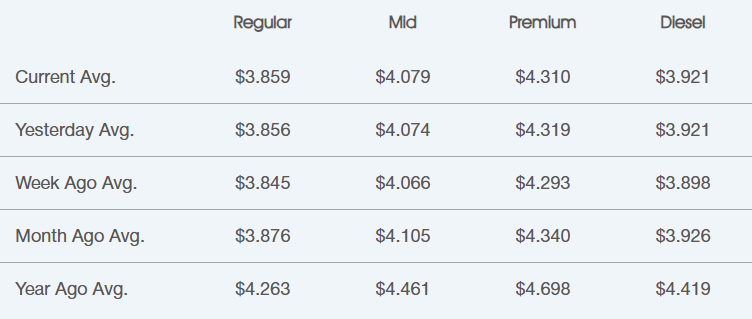
For other news in the fuel market:

https://gasprices.aaa.com/?state=OR

Join the Fuel Market Report newsletter for your weekly fill of updates!