

Star Oilco

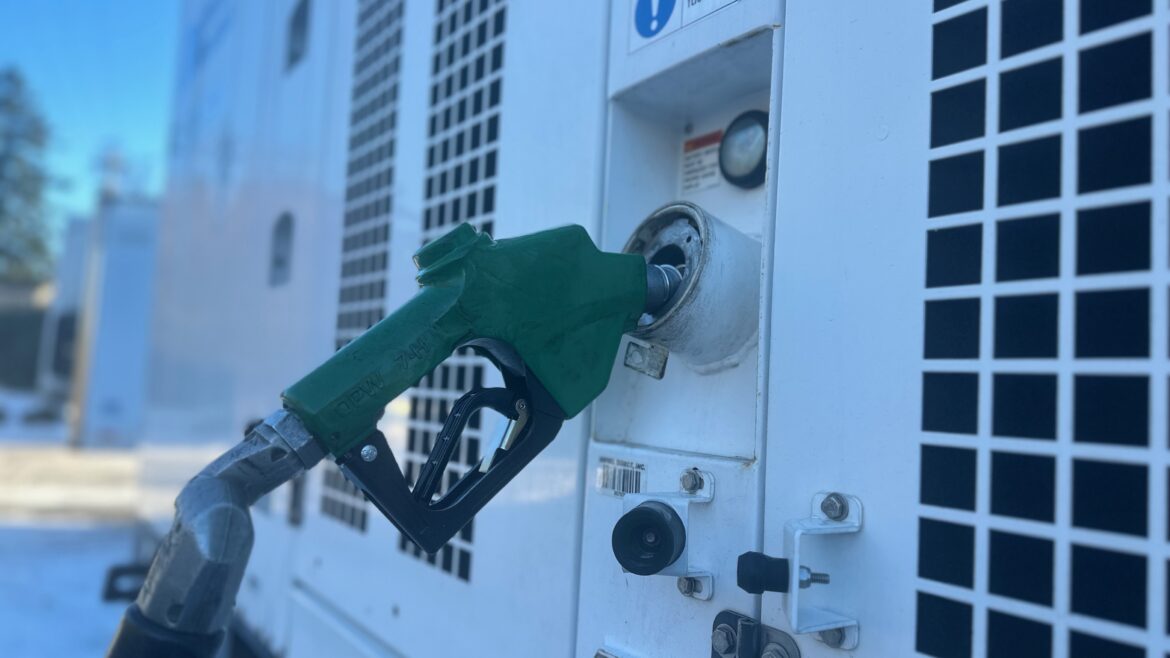
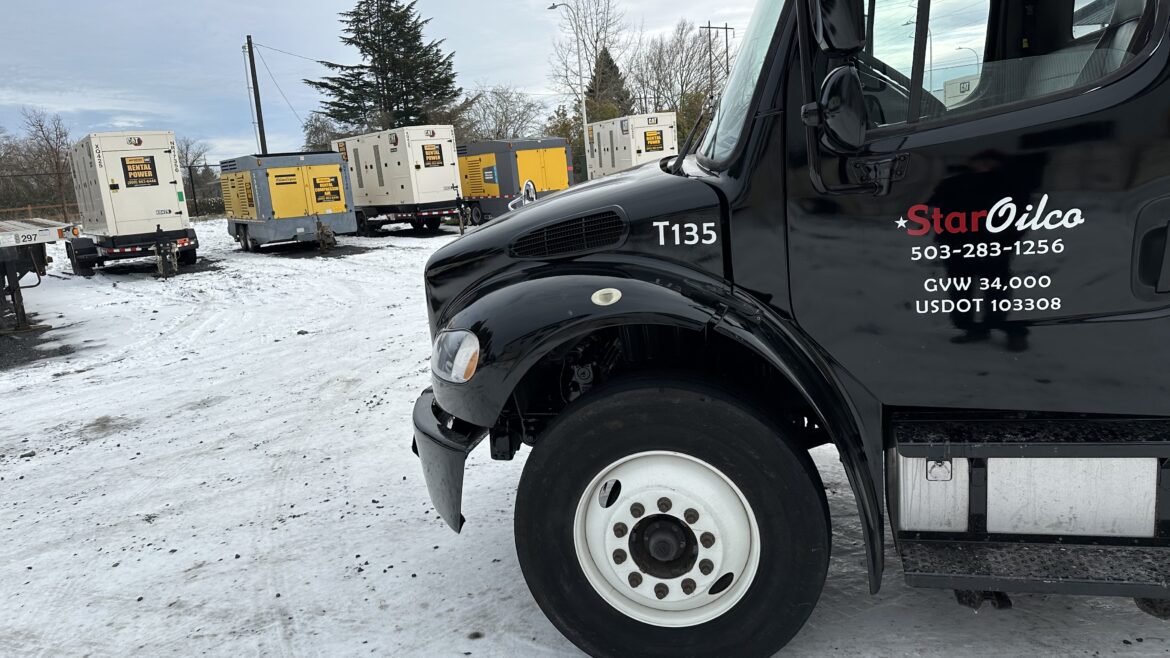
Star Oilco diesel fuel truck servicing portable generators on a snowy Portland job site
Do You Need a Diesel Loaner Tank? 1024 768 Star Oilco

Do You Need a Diesel Loaner Tank?

Did you know that Oregon allows temporary diesel tanks onsite for construction projects?

Order off-road diesel for your next construction project in the Portland, Oregon area and Star Oil will loan you a tank with your fuel purchase.

We also have routes to Longview, Washington and Salem, Oregon.

Wethose Fueling for Construction

Take the headache out of fueling your construction project with a temporary tank on the jobsite.

Star Oilco’s goal as a bulk diesel provider is to keep things simple. Make them easy, predictable, and also get the best price for our customers. We love serving construction sites with our mobile, onsite wet-hose service. But we notice sometimes construction projects can sometimes be tricky to fuel.

Planning your project around fuel is not what anyone wants to do. We make it easy by planning for regular stops at a regular time married with bulk equipment to get your price under control.

Generator Fueling Service

Star Oil provides full-service diesel construction fueling, including DEF.

Make sure your diesel generators, light sets, water pumps, air movers, and other project critical equipment are topped off with diesel and DEF.

It can be difficult to keep a construction site fueled with the stops and starts of projects. The coordination required to keep everything moving full speed while adjusting for the unexpected down times caused by subs, permitting, or weather, can be overwhelming. To “keep things simple,” which is our company motto, we know that locating a bulk diesel fuel tank on your jobsite can simplify your project’s fueling complexity. This provides you with a few days worth of fuel when you need it, while also lowering your cost of fuel.

We find that our customers benefit from lower prices and increased up time by placing a temporary bulk diesel tank in their project’s yard. Call Star Oilco for bulk fuel delivery and ask us about our ability to place a tank on your jobsite in the greater Portland ,Oregon or Vancouver, Washington area.

On-demand fueling service available upon request.

Diesel Tank Rental

Star Oilco provides you with single wall 275 gallon and 550 gallon tanks with 110% containment for your short-term construction product at no cost. 550 gallon UL142 Fuel Cubes are also available for longer-term projects or projects requiring the ability to crane a tank. Bigger tanks and card control options are available, too. Whatever your tank need is, we’ll find solutions and make construction fueling easy.

For more information call 503-283-1256, email Dispatch@StarOilco.net or let us know below.


Contact Form

  • This field is for validation purposes and should be left unchanged.


Star Oilco also can provide fleet cards and wet-hose fueling service for your next project.

Star Oilco’s 6 Reasons to Use Wet Hose Fueling

Star Oilco’s 7 Ways to Stop Fuel Theft Before it Happens

Prepaid and Preset Fuel Cards for Your Small Business 

How to Eliminate Fuel Theft an Save Money

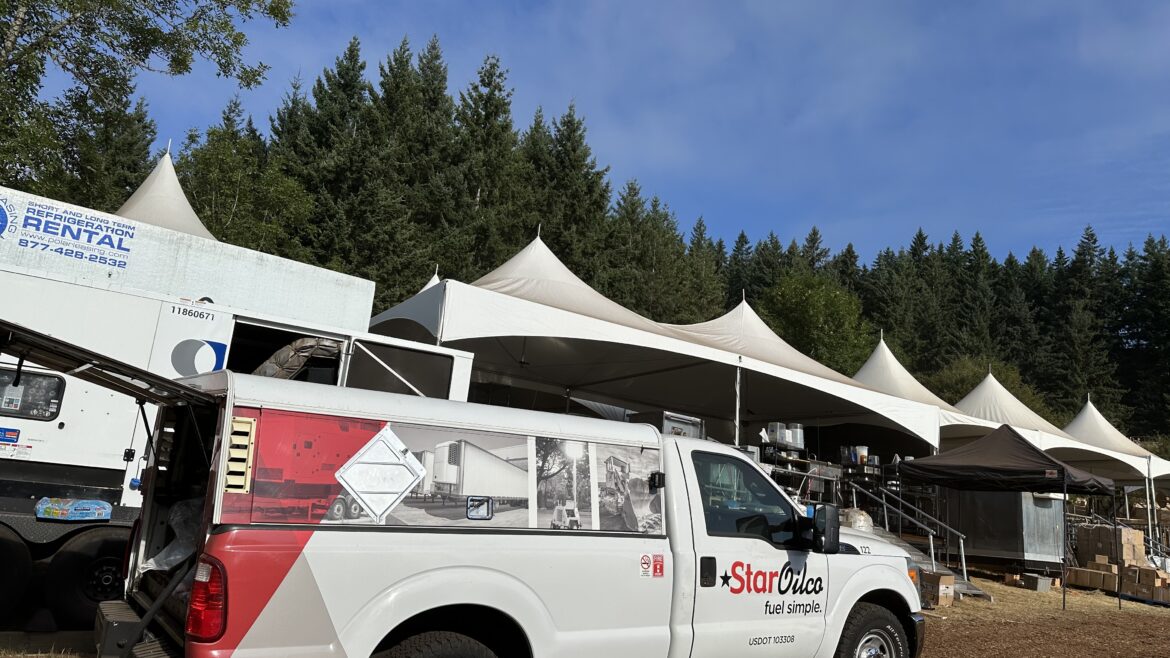
Star Oilco service truck parked at an outdoor event site with large tents and rental equipment in the background
Prepaid and Preset Fuel Cards Strategies for Small Business 1024 768 Star Oilco

Prepaid and Preset Fuel Cards Strategies for Small Business

Use Commercial Cardlock exactly like a Prepaid Credit Card as a strategy for eliminating fuel theft in your business.


Are you really just looking to eliminate your fuel theft risk?

With the recent economic slowdown, now is the time to field new management tools.  Let us help your business seize control of your fuel buying.  Know when and where fuel is bought by your employees.

Credit cards are a bad tool for this. Use the card controls and e-receipt function of Pacific Pride Cardlock fleetcards to have the same control as a Pre-Paid Visa or Mastercard but without the card charges and higher prices of fuel (get our White Paper on how to use fleet cards to stop fuel theft).

Keep control, save money, and stop would be fuel thieves.

Avoid expensive Credit Card fees while getting commercial pricing and the built in security you deserve.

Solve problems with Star Oilco preset fleet card program.

There is a growing industry of prepaid credit card programs being marketed to fleet operators as a solution to fuel management. The bigger advertisers are Bento for Business and Net Spend, which provide Visa or Mastercard credit cards with controls to protect the issuer of the cards. If you are asking yourself ‘what are the advantages of a prepaid card for fleet fueling’ the answer is simple.  Control.

What separates Star Oilco from a pure prepaid credit card is that we are total control to ensure only fuel is purchased with the card and that a commercial price can be found avoiding retail stations in many markets.  We definitely agree that prepaid credit card programs can be effective — if managed properly.  But there are draw backs to credit cards versus a restricted and programmed corporate fleet card.

The biggest of these being your business has to pay full retail credit card pricing for your fuel.  Add to that the opportunity to misuse a credit card isn’t removed and a gas station can often sell anything your employee puts on the card with fuel. Wouldn’t it be better to lock purchases down to the specific products your fleet needs?

The Star Oilco Card has all the features of a prepaid credit card at a far lower cost.  The Star Oilco Pacific Pride card has a fuel only purpose and fleet-specific protection.

Star Oilco’s fleet card program provides the same controls as a prepaid Visa or Mastercard but with the added benefit of being fuel- and fleet-focused.

Star Oilco’s approach is security-minded and designed to offer your Dispatch, HR, and Managers total clarity of what is happening daily with fuel. Like a Prepaid Visa or Mastercard, Star Oilco’s fuel card programs control transactions per day, time of day or by zip code and can add other restrictions for use, such as an e-receipt, to provide a real-time alert every time a card is used.

Unlike a Prepaid Visa or Mastercard though, we gear the security features to follow a vehicle — not a human being.

We set the controls to match the reality of the vehicle that needs gas, diesel, propane, maintenance or a hotel. Instead of a card issued to a human, it follows the company vehicle. Your drivers and employees are held responsible for a secret PIN that will show up in e-receipts, reports and invoices by their full name. The cards follow the keys of your vehicles and remain controlled by your Dispatcher and other Managers.

Star Oilco’s fleet cards are focused specifically on fleet needs.

Realistically, fleets face employee turnover. Hassling with babysitting a credit card budget each day while still giving an employee a credit card they can spend on anything isn’t a real solution. We are focused on the fuel need of fleets and have features prepaid credit cards do not.

CONTROL ALL FUEL BUYING BY:Pacific Pride secure fuel cards

-RETAIL SITES OR COMMERCIAL ONLY

– SPECIFIC FUEL TYPE

– GALLONS PER TRANSACTION

– TRANSACTIONS PER DAY

– TIME OF DAY

– PART OF TOWN (Zip Code)


The biggest difference: We have prepaid controls without having to tie up your cash in a prepaid program

As fuel prices change, your ability to use a credit card (not to mention their terms!) can change without notice. Our terms stay the same, and for credit worthy businesses, we are thinking of you in terms of gallons not a arbitrary dollar number. The biggest example is the reality of volatile fuel prices.

Fueling a fleet is a gallon game, not a dollar budget.

With a prepaid credit card, you will always have to examine your monthly fuel budget. The real downside to this occurs when prices spiral above $3 a gallon. At that point, you not only have to increase your credit exposure (and possibly tie up cash in a deposit dependent on the terms of the card) but the likelihood of theft increases as well.

A Star Oilco Pacific Pride or CFN fleet card operating on the Fuel Man network sets your limits by the approved products, the gallons per day and a number of transactions per day. This limits your exposure to theft not in an arbitrary and ever changing dollar figure but the actual fuel a driver needs.

Another reality about fuel: Retail fuel sellers hate paying a credit card processing fee.

They pass that on with a “credit” price. So not only does a prepaid card tie up your operating cash flow in a deposit, you’ll pay a higher price for the fuel you buy. It is also estimated that moving from a retail gas station and convenience store fueling method to a commercial Pacific Pride or CFN site will save you ten minutes per fueling transaction. Being a commercial only island there are smaller lines, saving you measurably on driver labor.

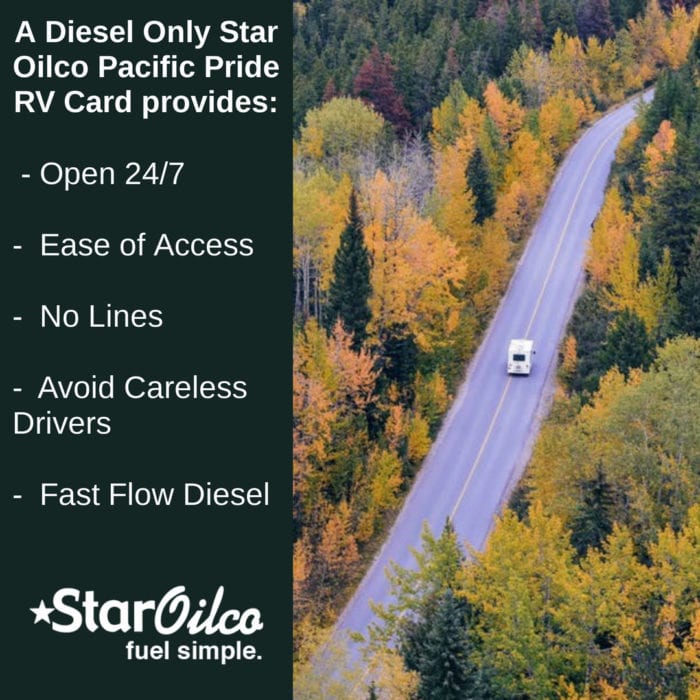
Pacific Pride and CFN also have stand alone 24-hour/7-day/365-year access commercial fueling sites with high flow diesel. For operations running all hours, commercial access is a profound improvement over retail.  These sites are priced not from a retail credit card price but a wholesale plus basis. This is a quantifiable and transparent way to negotiate a fair and competitive price for fuel.

If you want to look at Star Oilco’s approach to fuel cards, call us at 503-283-1256 or leave a message in the form below.

We look forward to helping you secure your fleet fueling easily while saving money on your total cost of fuel.

CardLock Landing Form

  • This field is for validation purposes and should be left unchanged.


Get out of the gas line

Star Oilco is a proud Independent Franchisee of Pacific Pride

with over 30 years of experience in solving fuel security issues for our customers. 

For more please see the following other blog posts:
Seven ways to stop fuel theft before it happens.

HR strategies to combat fuel theft – Upgrade your fleet card security.

On-site fueling as a labor saving strategy.

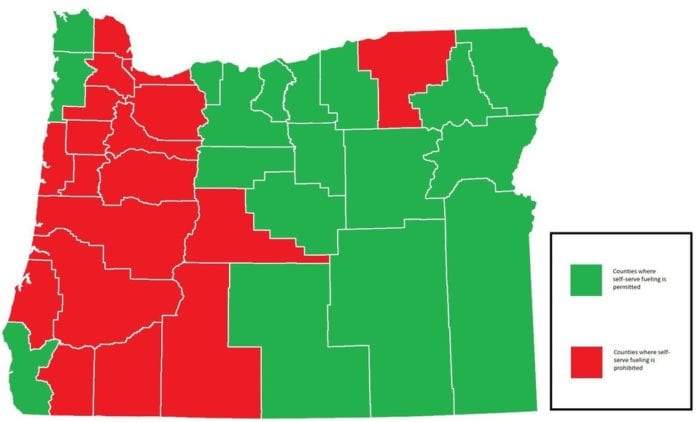
Oregon Self serve laws for retail and commercial gasoline.

Field of bright yellow sunflowers grown for biodiesel feedstock oil
Biodiesel Feedstocks – Sunflower Oil & Tung Oil 1024 683 Star Oilco

Biodiesel Feedstocks – Sunflower Oil & Tung Oil

We are nearing the end of our journey, as there is only one more blog after this one. If you would like to look back and see all of the feedstocks we have covered start here with our first post.  In this post we explore the feedstocks Sunflower Oil and Tung Oil as we continue our look into different types of feedstock that Renewable Energy Group (REG) studied in 2009 in the Feedstock and Biodiesel Characteristics Report.

Sunflower Oil

The Sunflower oil in this project was purchased from Jedwards, International, Inc.  The common sunflower scientific name is Helianthus annuus. Sunflowers at late afternoon. Flowerheads facing East, away from the Sun.

First domesticated in the Americas the plant was exported to Europe in the 16th century and has become a staple as a cooking ingredient.  According Wildflower.org the common sunflower prefers full sun and well-drained soil. The plant grows up to 8 feet tall and has coarse hairy stems and leaves. The flowers are bright yellow surrounding a central maroon disk, that as it matures, holds the seeds and produces the oil.

The most known uses for sunflower seeds and its oils include; foods, cooking oils and butters. The pressed seed oil is useful for food and the resulting cake (matter left after the oil is harvested) is commonly used as animal food. One of the more interesting uses for the plant is, that it can produce a natural latex in its leaves. This latex can be used to produce hypoallergenic gloves.  The purpose of this post though is to discuss the possibility of biofuel created from sunflower seeds. Biodiesel magazine talks about both the pros and cons for this plant as a feedstock option:

“Because sunflower oil is priced higher than soybean and canola oils, its use as a feedstock for commercial biodiesel refining may be hindered in the U.S. market, according to the National Sunflower Association (NSA). However, there is an interest in the tall golden flowers because the seeds yield about 600 pounds of oil per acre, considerably more than soybeans, which produce a little over 500 pounds per acre.”

Because of the high value of the oil in other areas, using the oil for biodiesel can be cost prohibitive.  Higher concentrates of oil per acre can be vital as more efficiency in  biofuel production becomes necessary. According to Farm Energy, 15,000 to 25,000 plants per acre can be grown.  This means that a small or large farm can use this crop profitably or simply in the production of fuel for that farm.

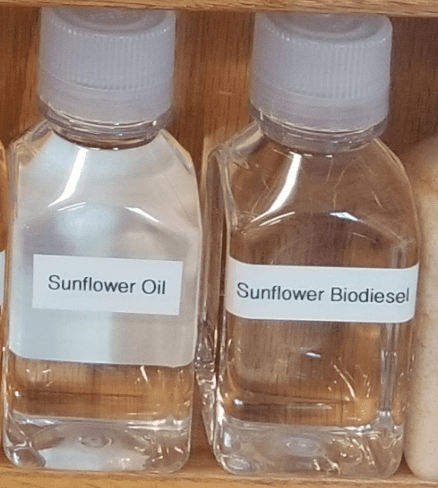
Sunflower Oil and Sunflower biodiesel


Tung Oil

The Tung oil from this study was purchased from Sigma-Aldrich Co. The Tung tree, Vernicia fordii, is native to China and Vietnam.  This tree can be over 60 feet in height and is deciduous. Tung Tree at the Botanical Gardens Faculty of Science Osaka City University, Osaka, Japan According to Texas Invasive Species Institute:

“The bark is smooth, thin, and exudes white sap when cut. The leaves are simple, heart-shaped or with three lobes, and 6-10 inches long. The white flowers have 5 petals with red veins, and they bloom before the leaves emerge. The toxic fruits can grow up to 3 inches in diameter and are reddish green when fully developed.”

This tree is valued for its oil from the seeds.  Traditionally this oil was used in lamps and even as waterproofing on boats.  In more contemporary time this oil is used in varnishes and paint.  This value encouraged the importation of this tree. According to Texas Invasive Species Institute there was over 10,000 acres planted in the United States in 1927.  Cultivation of this tree has waned in the US after frosts and hurricanes destroyed many of the plantations.

This is one feedstock that isn’t part of the food vs fuel controversy.  The Tung tree and its oil is poisons to humans.  Even one seed from the fruit can be fatal, with symptoms including slowed breathing, vomiting and diarrhea.


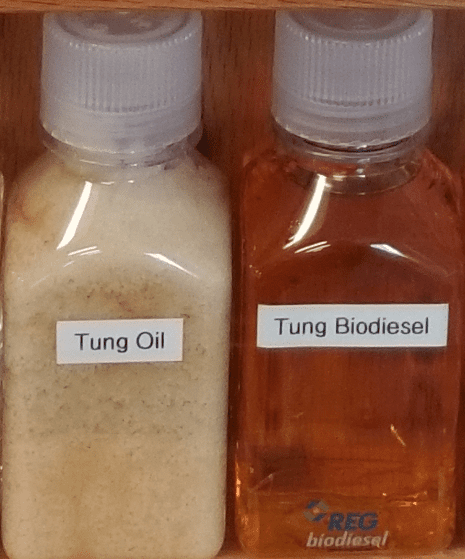
Tung Oil and Tung Biodiesel

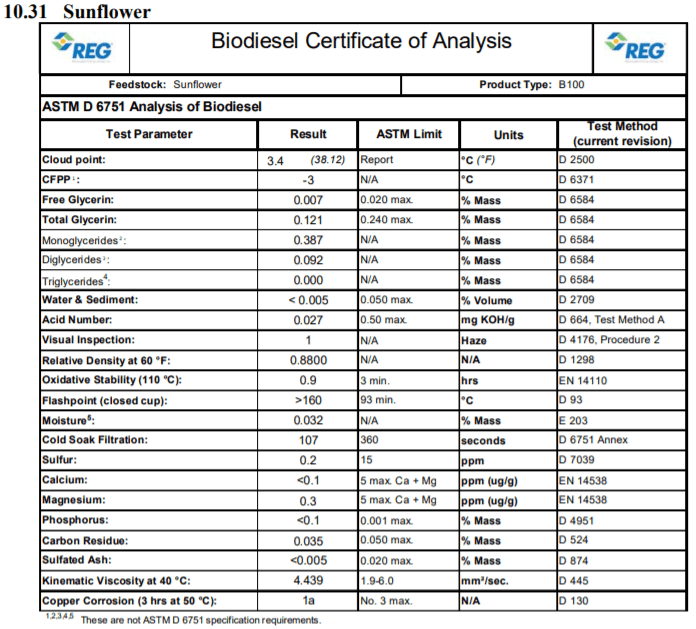
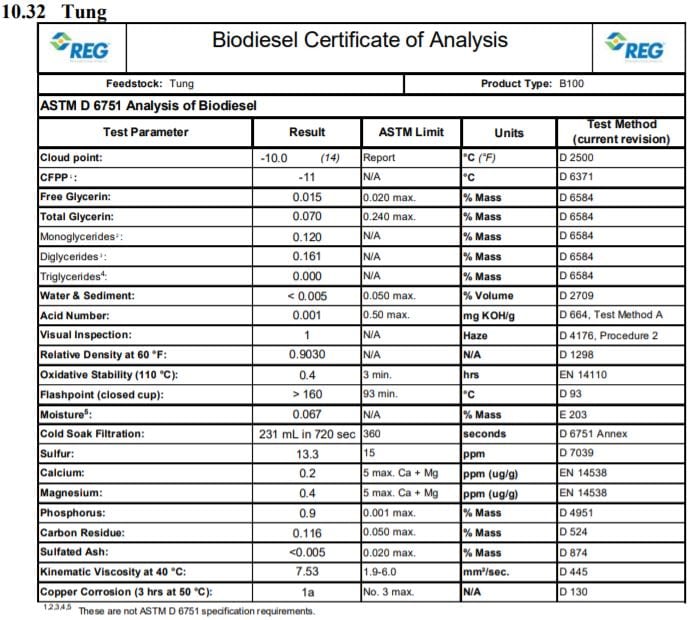
Tung Oil/Bio-diesel Certificate of Analysis


Last article for biodiesel feedstocks was – Soybean Oil & Stillingia Oil

If you would like to learn more about bio-diesel you can check out this post Every Question We Have Been Asked About Biodiesel

Pacific Pride commercial fuel station with service vehicles fueling
Fueling support for those on the road 1024 556 Star Oilco

Fueling support for those on the road

Are you worried about finding fuel?

If a gas attendant gets sick you may find gas stations closing or worse employees working while they are sick.

Construction workers, delivery drivers and first responders still need fuel and still need to be able to get to work.

Cardlock cards are an excellent way to solve this dilemma, no attendants – helps with social distancing and 24/7 access means that even in emergencies the sites are open.

Star Oilco is an independent Franchisee of Pacific Pride

Cardlock access to fuel all day every day

We are all dealing with an extraordinary set of experiences right now.  Those that are on the road may see less access to fuel stations as gas station employees get sick or decide to not work.  Food, cleaning products, and medicine are even more important right now.  If your on the road delivering these items you need to be sure that you have fuel.  The solutions is Pacific Pride fuel cards.

There are also those at home right now looking to save money when they can open again.  One of the fastest ways to save money is limit your drivers and employees on what they can buy.  Credit cards can be abused and it may be weeks later before you know it happened.

Protect your business by setting controls and monitoring systems.  With less time to monitor individual employees you can set up systems that control waste and extra expenses while giving employees the fuel they need to move your equipment.  If your business is slowing down you will need to tighten your belt and watch every expense, and this is easy to do by setting controls on your cards.   Use Star Oilco to secure yourself from that fuel theft while also saving on your cost of fuel over retail.

Oregon and Washington have some of the highest minimum wages in the U.S.  As the minimum wage and regulations increase, so do the costs at retail gas stations. This is doubly so in Oregon, where you are paying the gas stations employee to fuel your tank and the employee to be there. We can save you money and significantly reduce your risk of fuel theft while also getting your drivers out of retail gas station lines.

Whether your an owner/operator or you are managing a large fleet of corporate vehicles needing fueling commercial cardlocks can help you save time and money.  Stand-alone commercial-only Pacific Pride and CFN sites in the northwest are a real resource for small business. They speed up the labor associated with fueling and significantly lock down the chance fraud or theft will occur on your fuel card. Stand-alone sites limit access to convenience store items so employees won’t be tempted to spend time browsing and make purchases on the company credit card.  In addition, there are less people at the site and less chance of a coming into contact with someone that is sick.

All you need to access Pacific Pride sites in Oregon is a business license and use over 900 gallons of total fuel a year. CFN commercial cardlock sites have the same requirements. If you are a business using a commercial quantity of fuel, you qualify to self-serve gasoline and you can stop paying your employees to shop at the most expensive retail gas stations with the best mini-mart selection. Late night fueling becomes easier and less expensive and you can get them back on the road 24-7 and usually without a line to wait in.

With Pacific Pride and CFN stand-alone commercial cardlock sites, there are other benefits beyond just the convenience. The biggest difference is that these commercial cardlock sites are built with security in mind. Retail stations are engineered to sell as many products as possible to those pulling up for gasoline. Commercial cardlock sites are designed for commercial users who seek the fastest fueling experience. That is a big difference between the two.

What Do You Need for Fueling Cards in Washington or any other state?

If you drive into Oregon and want to use gasoline, you still need the same requirements as stated above. If you don’t need access to Oregon gas stations it is much easier to get a fuel card.

Top 5 Strategies to lock down your gas card from theft.

Get out of the gas line

Gas Card Strategy #1

TAKE INVENTORY OF YOUR GAS CARDS – Know who has your cards! Every year take inventory of what cards you have and who is using them. A clear card policy implemented by Human Resources or your Dispatcher is a good way to track what employees (or vehicles) have what cards. Star Oilco performs an annual card audit in conjunction with our Oregon Fire Marshall audit.

We’ll gladly supply a list of cards that you have and when they were last used. We can line up a list of active cards with your employees and make sure there isn’t a lost or unused card out there. Using this list, pass a clip board around asking each employee with a fleet card to confirm they still have that card and initial a confirmation that the card is still in their possession. You would be surprised how individual cards can float between employees as it is easier than asking for a new card.

Gas Card Strategy #2

HAVE ACCOUNTS PAYABLE AUDIT YOUR TRANSACTIONS – Review your transactions regularly for strange transactions such as: multiple transactions per day on a single vehicle or card, switching fuel types, and refuels when your business isn’t open. Reviewing your bill, you’ll want to look for transactions that occur outside of normal business hours and days or if certain vehicles are fueling more than once a day these can be indications of theft. An additional indicator is if fuel is being bought outside of your service area. Some of the most common times of day for employee fuel theft are early morning on the way to work (before you open) or after the bars close after midnight.

Gas Card Strategy #3

ATTACH GAS CARDS TO VEHICLE KEYS – Assigning each vehicle in your fleet with its own card is a great practice. Put your Fleet Cards on the key ring dispatched with the vehicle. Each driver is then assigned a number that can be used on any vehicle in the fleet. This way you know exactly who is using the card and which vehicle is being filled. To limit a risk of a stolen card, restrict individual card ownership to management and maintenance. Everyone else should have cards directly connected with a vehicles license plate, so it is obvious if that card goes missing.

Gas Card Strategy #4

SET THE GAS CARDS UP WITH LIMITS –  When you assign a card to each vehicle in the fleet you can set limits based on the vehicle. A gasoline vehicle only needs access to gasoline. If your tank size is 20 gallons, that card should be limited to 20 gallons per transaction. Continue to program your cards for the vehicles they are attached to. You can also restrict a card to ensure no one accidentally buys expensive premium or worse, puts the wrong fuel in the vehicle. Reducing the amount of time they can use a card a day limits exposure to theft. A vehicle that never drives more then 50 miles in a day shouldn’t need to fill up more then once a 24 hour period. This reduces the opportunity for theft and also makes theft obvious when the limits are hit. You can also add limits on zip codes, states, and times of days. If someone does steal a card, they would be limited by the time, location, and purchase amount, ensuring that your theft exposure is a few dozen gallons instead of thousands of dollars.

Gas Card Strategy #5

USE E-RECEIPTS TO MANAGE FUEL IN REAL TIME – It’s the 21st century so manage in real time. You can set-up cards to email you based on each card or, if you have one specific one you are are worried about, that card can be set to email you or your fleet management in real time. Better yet, if theft is occurring, you will see it immediately and be able to react. Not only will this lock down your gas card’s security, it will also allow you to address mistakes relating to efficiency. Owners and dispatchers also use this to see where the driver is. If they are where they said they were when fueling. Instant feedback and communication is critical to change bad behavior of drivers. They may mean to do well but just made a simple mistake.


Need to lock down your gas card from fuel theft?

Call Star Oilco, we can make it simple.

Star Oilco can help you field all of these best practices. Our motto is “Keep it Simple” and we are here to make this easy. Feel free to reach out and see what Star Oilco can do for your fleet to upgrade its fleet fueling security.

To download a white paper on these Pacific Pride fuel card security feature best practices, go to our Stop Fuel Theft page.


Star Oilco is an independent Franchisee of Pacific Pride

Contact Form

  • This field is for validation purposes and should be left unchanged.
Star Oilco fuel tank and fueling system in a warehouse
Diesel storage tanks UL-2085 needed for modern Fire Code 1024 768 Star Oilco

Diesel storage tanks UL-2085 needed for modern Fire Code

What is required to install a fuel tank in Oregon?

A Tank that meets International Fire Code is a 2 Hour Fire Guard labeled tank.

In recent years Oregon and Washington have been moving to International Fire Code as their adopted standard. Following California with this higher standard of safety as it relates to liquid fuels.  The new standards are far more involved in their construction and therefore their installation as well. Heavy and far more expensive is the most notable standard of a modern Fire Marshall approved tank.

UL 142 – Double Wall Tanks

The old standard for diesel storage was UL-142 (commonly referred to as double wall or “diked tanks” by fleet managers).  These tanks are still made and extremely common throughout the US. If you see one of these tanks for sale and it looks like a great deal it’s probably because of an upgrade requirement causing them to sell it.  Be aware to check code in your local jurisdiction. These tanks still have a wide market for use especially for agricultural zones as well as temporary use with construction sites.

UL 2085 – 2 Hour Fire Guard and Double Wall Tanks

The new standard for storing diesel for refueling vehicles is the UL-2085. This code has been around for gasoline, it is only new in the way that Fire Marshall’s and local municipalities will require it for diesel fuels.

This standard has been around for a long time but typically was used when storing gasoline or more flammable liquids. That standard now applies to diesel fuels as well if they are being installed to refuel equipment, trucks or any other service.  Its worth noting that boilers, HVAC oil furnaces, and other plumbed stationary applications can still use the UL-142 code. Similarly agricultural use in Oregon is allowed a UL-142 use in most applications.  But for fleet fueling even if only a 100 gallon tank the Fire Marshall’s new standard is the UL-2085 concrete lined fire guard tank. It is also worth noting that if you have an installed UL-142 tank in a commercial or industrial zoned property you probably are okay with grandfathered use. But if you want to change anything the Fire Marshall and local Code Enforcement are going to be looking at the newer and safer standard.

Ask your local Fire Marshall to be sure of what the requirements are.

When discussing diesel storage tank options with your local Fire Marshall it helps to see the reason they have the standards they demand. Also be aware of other requirements that local jurisdiction may have. For instance Portland, Oregon’s Bureau of Environmental Services will often demand a cover be placed over the fueling area, an engineered concrete pad beneath it, as well as a potential oil water separator.  Usually there can be an additional permit and process associated with a tank install to meet the needs of a local Fire Marshall as well.

Two hour fire guard or UL-2085 rated tanks are the new standard in Oregon as we have adopted the International Fire Code. and the picture below says a thousand words. It will protect your property from a lake of fire preventing your diesel fuel from feeding disaster.

This is a great picture of a tank being tested for a two hour fire rating by a vendor of Star Oilco’s. Its speaks to why and what is the concern of your local regulator.

Modern Weld Company is a tank manufacturer out of California that makes great tanks to order exactly perfect for your site.

As they make what you need to the specifications you need you can make the Fire Marshall, local City Code enforcement, and your CFO happy at the same time.  If you have questions about installing a bulk diesel fuel tank to either UL-142 or UL-2085 standards give Star Oilco a call. We can help you meet UL codes for diesel, gasoline, biodiesel, or other storage needs.

Star Oilco white fuel truck with flammable fuel placard parked at a fueling facility
Renewable Diesel as a Major Transportation Fuel in California 1024 768 Star Oilco

Renewable Diesel as a Major Transportation Fuel in California

RENEWABLE DIESEL IS AVAILABLE

STAR OILCO HAS RENEWABLE DIESEL FOR YOUR FLEET

In the Pacific Northwest we have gone from a complete scarcity of Renewable Diesel availability to several players having terminal positions and this next generation sustainable fuel being readily available.  Star Oilco is ready to serve you with renewable diesel in several blends to meet both your fleet’s financial and carbon budgets.

For years California has lead the west coast with availability of renewable diesel and various blends with both petroleum diesel and biodiesel fuels. This experience is available in the research paper below to help inform your fleet in making decisions about de-carbonizing your fleets.

IS RENEWABLE DIESEL WORTH THE ADDED COST?

Fleet managers fell in love with this exceptionally high quality synthetic diesel fuel. Cleaner and drier than your typical petroleum diesel quite  a few believers are willing to pay a large premium for this fuel.  There are hardcore supporters of this fuel and it’s overall ability to reduce operational cost in far excess of it’s added cost. Which raises the next question.  Is it superior to petroleum diesel?

Caravan of white trucks on country highway under blue sky
Report cover on renewable diesel as a major transportation fuel in California

IS RENEWABLE DIESEL SUPERIOR TO PETROLEUM DIESEL?

The answer points to yes based on initial experience rating the fuel on real world performance, fuel mileage, emissions system maintenance costs, and the much lower CO2 emissions.

The whitepaper shown is probably the most in depth resource for a fleet seeking to understand the potential of renewable diesel for its own use.

Renewable diesel is a next generation diesel fuel.  It has a low CO2 footprint similar to biodiesel, yet it is a high performance fuel that reduces down time and maintenance in urban stop-and-go fleet use.  Long story short, it is an impressive fuel solving many problems associated with modern clean diesel engines.

Given the newness of this fuel along, with the few producers of it, there is a real lack of in depth research on the subject.

If you have any questions about Renewable Diesel please feel free to contact us.

RENEWABLE DIESEL AS A MAJOR TRANSPORTATION FUEL

This white paper is the most in depth examination of Renewable Diesel operating in the real world. It covers a complete view of the product from the perspective of both fleets operating it and regulators seeking to reduce emissions. In our experience this is the most complete document you are going to find to advise a fleet considering using R99 Renewable Diesel.

Whitepaper – Renewable Diesel as a Major Transportation in California: Opportunities, Benefits, and Challenges.
Whitepaper that Gladstein, Neandross and Associates produced for the Bay Area Air Quality Management District and South Coast AQMD.

This report reinforces the manufacturers of renewable diesel’s statements and many anecdotal statements from fleets using the fuel. Renewable diesel sees superior performance in both emission reduction and performance in existing diesel technology. It is a cleaner burning and lower CO2 fuel that also contributes to a lower cost of vehicle maintenance.

According to this August 2017 report, California was on course to see approximately 250,000,000 gallons of R99 fuel sold in the state that year. This is a world-shaking volume of a next generation biofuel. With these readily adopted volumes, no doubt more product will be finding its way into the marketplace. The report cites a CARB expectation of the California Renewable Diesel market growing to over 2,000,000,000 (that’s BILLION) gallons in the next decade.

Portland city skyline with Mount Hood in the background
Diesel Fuel in Portland, Oregon 1024 683 Star Oilco

Diesel Fuel in Portland, Oregon

What is the difference between diesel fuel in Portland, Oregon and the rest of the Pacific Northwest?

Oregon Diesel Fuel

Star Oilco delivers and sells diesel fuel in Portland, Oregon.

We are ready for your diesel needs be they off-road, on-road, biodiesel, renewable diesel, or anything else you want.

Star Oilco has simple fuel solutions to keep your business moving.

On the West Coast, expect biodiesel blends to be in all diesel fuel. B5 biodiesel being the most commonly found fuel. Be aware though, in Oregon,  B20 biodiesel (a 20% blend of biodiesel mixed with petroleum diesel) is extremely common at retail throughout the state. B5 through B20 blends of biodiesel are becoming more common as Oregon’s legal framework regulates CO2 emissions requiring diesel sellers to blend biodiesel or charge substantially more for every gallon they sell.

On top of that, Oregon has a 5% biofuel blend mandate that can include a number of fuels, most commonly biodiesel and renewable diesel. Washington state also has a mandate for 5% biodiesel though it isn’t as specific as the Oregon mandate.

That’s Oregon Diesel. What about Portland?

The city of Portland has a stand-along city fuel tax due to its policy goals (which cause it to codify rules for low CO2 fuels and the sources of diesel in particular), as well as its own budget needs.

Portland, Oregon Diesel Fuel Mandates

A little known fact is that Portland, Oregon has its own biofuels mandate and fuel tax structure on diesel. This mandate affects all diesel equipment both on and off-road use. It does not affect boilers or HVAC systems though most people selling heating oil and boiler fuel are still handling a 5% biodiesel product to ensure they don’t cross fuel in violation of the law.

Functionally, the city of Portland’s mandate and Oregon’s specific mandate do not make a huge difference. Your biggest noticeable difference is the higher price due to the diesel fuel tax, given that Portland’s biofuel mandate now overlaps with Oregon state’s fuel mandates.

For more on the actual code for biofuel mandates in Portland, see the Portland City Code.

Until 2019, Portland had a 5% biodiesel “methylester” mandate. This meant that Portland mandated that all diesel fuel sold inside the city must contain 5% of biodiesel or sellers of fuel inside city limits would face a fine. For years, Portland actually checked every seller of diesel for a 5% biodiesel blend in person annually. This mandate also included feedstocks and did not allow for palm oil sourced biodiesel, as palm oil is responsible for a large amount of deforestation in Indonesia and other places. The Portland mandate required that half of all biodiesel blended to meet the 5% mandate must be derived from canola and waste vegetable oil sources, as Oregon can produce them.

In 2019, the city of Portland suddenly lined up their mandate to match the state of Oregon’s, which allows for renewable diesel to be used as a feedstock. Anything derived from palm is still a barred feedstock for the fuel to meet Portland mandate requirements (which is distinctly different than Oregon’s biofuel mandate).

Onsite Diesel wethose service Portland
Portland, Oregon Diesel Fuel Taxes

(NOTE: Read this article by Star Oilco for more on Oregon Fuel Taxes Explained.

In 2016, the city of Portland, Oregon created its own diesel tax of $.10 a gallon. This tax is on both gasoline and diesel fuels sold at retail or commercially.  If you are operating vehicles over 26,000 GVW that are exempt from Oregon road tax, Portland also has a weight mile for those tax exempt vehicles.

If you are fueling inside the Portland city limits, that diesel tax will be charged at the pump when you fill up unless you are a P.U.C. tax exempted vehicle in Oregon.

Find a list of every diesel and gasoline tax by city and municipalities in Oregon see the Oregon Fuel Tax Group.

If you have any questions about Portland, Oregon diesel fuel standards please feel free to call or message Star Oilco for more information.

Star Oilco is here to be your Bulk Fuel Supplier in Portland, Oregon.

Contact Form

  • This field is for validation purposes and should be left unchanged.


For more on the subject of Diesel fuel please read these other posts by Star Oilco on the subject:

Every Question Star Oilco has been asked about Biodiesel

Every Question Star Oilco has been asked about Off Road Diesel

About Diesel Fuel – Star Oilco’s Diesel Fuel FAQ

Oregon Biodiesel Tax Breaks for Retail Stations

IBC tote with Visonic remote telemetry sensor for monitoring DEF levels
Biodiesel Handling and Use Guide (5th Edition 2016) 768 1024 Star Oilco

Biodiesel Handling and Use Guide (5th Edition 2016)

Where to start when fueling your fleet with biodiesel.


The U.S. Department of Energy’s Biodiesel Handling and Use Guide (Fifth Edition)

If you are a fleet seeking to reduce your CO2 footprint and biodiesel is your drop in solution, this book is your guide.  The Biodiesel Handling and Use Guide is the definitive user’s manual for fleets seeking to field biodiesel and blends as a substitute for petroleum diesel (available from the US Department of Energy’s Alternative Fuel Data Center).

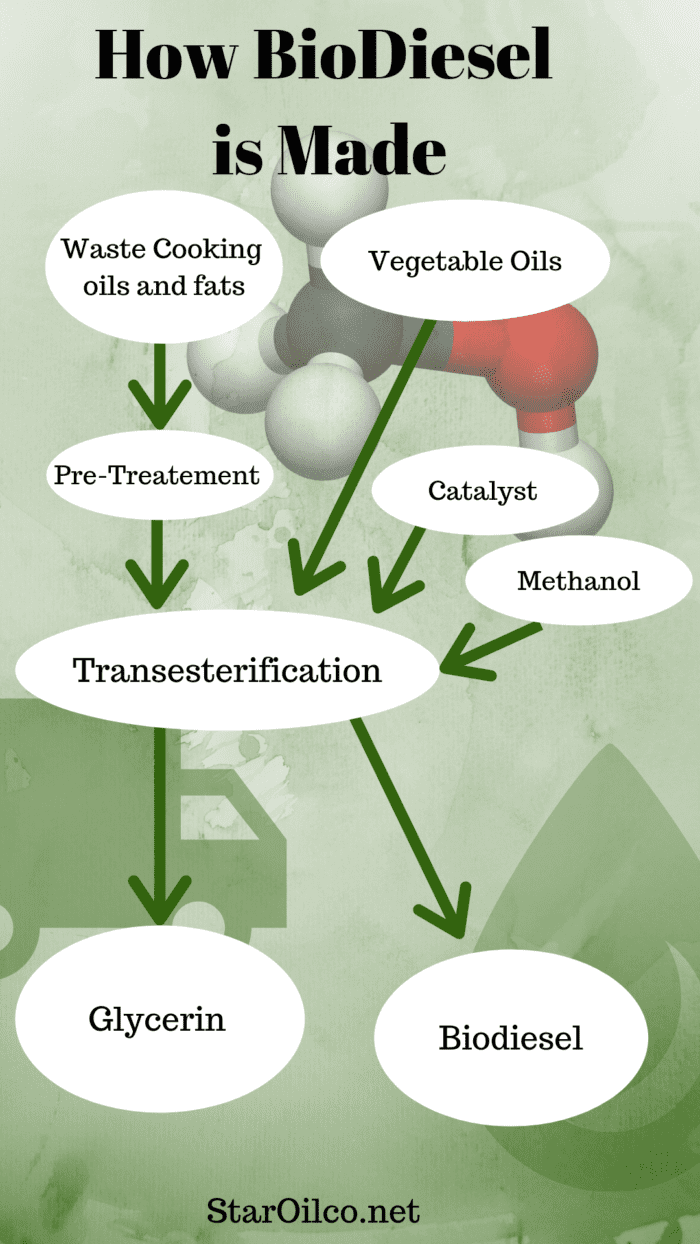
Biodiesel is diesel-rated fuel manufactured from animal fats and vegetable oils by way of a chemical reaction. It is not diesel fuel but it has extremely similar properties, allowing it to be blended with petroleum diesel.

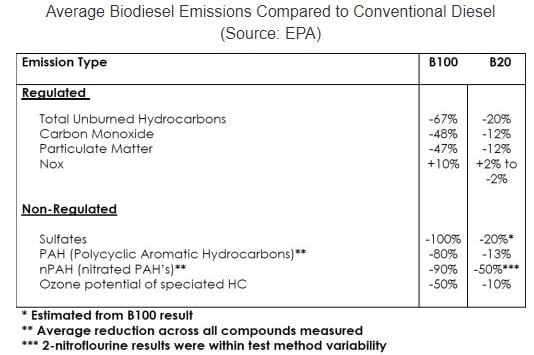
As a drop in fuel, it substantially reduces tailpipe emissions and cuts CO2 emission by more than half when used as a substitute for petroleum diesel. Many states and the federal government have financial incentives to encourage its use. Several states also have mandates for the use of biodiesel as a blend component with diesel fuel.

In the last twenty years biodiesel has come a long way and it is now a mainstream fuel around the United States. In just the last ten years, a great deal has changed with the complexity of diesel engines, the sources of crude oil refined into ultra-low sulfur on road diesel, and the complexity diesel fleets will encounter in operating day-to-day. This book is a scientific and easy-to-read manual to help you navigate success with modern diesel.

The Biodiesel Handling and Use Guide covers the technical aspects of biodiesel and how it differs from petroleum diesel. It also provides advice on higher blends and storing fuel onsite. This guide goes in-depth about equipment compatibility for your refueling infrastructure as well as maintenance concerns you want to get ahead of. There are also checklists included for fleets seeking to move from petroleum diesel to higher blends of biodiesel.

If you have questions or want help in using higher blends of biodiesel in your fleet, don’t hesitate to contact Star Oilco. Even if you are not in our service area, we will be here to help. Star Oilco has been helping fleets succeed with biodiesel blends since 2003.

B20 Biodiesel A PROVEN FUEL

Contact Form

  • This field is for validation purposes and should be left unchanged.

For further reading on Biodiesel please see the following Star Oilco pages:

Every Question Star Oilco has been asked about Biodiesel

B20 Biodiesel; a Proven Fuel

Oregon Biodiesel Tax Breaks for Retail Stations

In-Depth look at Biodiesel as a Heating Fuel


Gas pump fueling a car with biofuel in front of a green farm field under a blue sky
B20 Biodiesel, a Proven Fuel 1024 408 Star Oilco

B20 Biodiesel, a Proven Fuel

Using Biodiesel in the Pacific Northwest.

(NOTE: B20 refers to 20% biodiesel blended with an 80% petroleum diesel percentage. B5 refers to 5% biodiesel blended with petroleum diesel which is the legally required blend percentage in Oregon state. For more on biodiesel basics, visit the US DOE.)

Biodiesel is the “Drop In Solution” used in the Pacific Northwest to reduce CO2 emissions in diesel equipment.

If you are looking to use Biodiesel in a fleet or a personal vehicle it is as easy as just asking for it.  In Oregon the fuel is everywhere.  From an Oregon and Washington state requirement for a minimum 5% of biodiesel blended with every gallon to large financial incentives this low carbon diesel fuel is ready for you if you want it.

It’s not just the Pacific Northwest.  For years B20 has been a defacto blend at some of the biggest names in fuel. When you pull up to the pump on the west coast you are likely getting B5 or B20 as a blend. In Oregon, B5 biodiesel is the required fuel by law. Oregon also has a B20 incentive for a waiver of state on road taxes.  Washington as well has requirements that biodiesel finds its way into retail and commercial diesel throughout the state.   Additionally, Oregon and California have “Clean Fuel Standard” programs which heavily incentivize low CO2 fuels like biodiesel.  Washington state is expected to pass their own Clean Fuel Standard as well this year.  Biodiesel has been a fact of life in fuel for over a decade in the United States and Pacific NW and it is not going away.

Due to a mix of federal and state incentives to use biodiesel, there can also be financial advantages for a fleet dedicated to making B20 biodiesel its fuel of choice. You can see evidence of this at truck stops and other retailers making B20 available in Oregon and Washington, as well as in the trucking lanes of the United States. America’s largest fleets are choosing B20 biodiesel in order to reduce their cost per mile. So can you.

In an effort to deliver the best value to truckers, many U.S. truck stops are blending biodiesel up to 20% when the market enables them to pass along a lower cost yet high quality ASTM specified diesel fuel to their customers. Most prominent is Pilot/Flying J, who lists where and when their sites are serving up B20 or lower blends. Pilot/Flying J buys biodiesel directly and blends on site in order to give their customers the best value possible. Loves Travel Centers also sell biodiesel blends around the U.S.

In Oregon, due to a diesel road tax waiver on B20 sales, gas station retailers Safeway, Leathers Fuel, Spaceage, and others are offering B20 biodiesel as their retail diesel offering. Oregon’s system requires the biodiesel be sourced from used vegetable oil refined biodiesel products. Biodiesel has been in Oregon’s fuel supply since 2006 when the city of Portland mandated B5 biodiesel blends within its city limits. The state of Oregon followed Portland with its own statewide mandate not long after.

(NOTE: If you operate a retail gas station and are curious about Oregon’s fuel tax breaks for biodiesel blends here is a more in depth article Oregon Biodiesel Tax Breaks for Retail Fuel Stations that explains these rules for retailers of fuel).

Biodiesel has been in our fuel system since 2006 and the technology that goes into making it has vastly improved. It is proven in diesel engine performance while also creating a diversified supply for energy and significantly reducing emissions from the working fleets of the world. Biodiesel substantially reduces emission coming out of your stack without a major impact on price because it helps to offset high diesel prices.

B20 Biodiesel A PROVEN FUEL

If you want to look at using B20 blends in your fleet, we are here to help. Star Oilco carries B20 blends for mobile onsite refueling every day of the week. We also have dyed/off-road/heating oil blends of B20. If you are an over the road fleet we can provide B20 at our cardlocks as well as help you procure it with a fleetcard over the road. Let us know if we can be of help.

Contact Form

  • This field is for validation purposes and should be left unchanged.
Close-up abstract image of diesel fuel with suspended droplets and fluid motion
About Diesel Fuel 1024 512 Star Oilco

About Diesel Fuel

Bulk Diesel Fuel Frequently Asked Questions

Ultra Low Sulfur Diesel is 15 PPMDyed Off-Road Diesel

Where your diesel comes from and what you need to know about ASTM Diesel Standards and ISO cleanliness code.

Where do Pacific Northwest vendors get their fuel?

In the Pacific Northwest, diesel is fungible. Everyone buys their fuel from each other in some way or another.  

This means that every refiner is typically expecting to mix their diesel and gasoline products. The real difference is in the care a vendor takes to filter the fuel, additize and continuously check their fuel quality. If you are buying at the absolute lowest price possible, know that there is an incentive to skip any added value of quality assurance.

Through its Pacific Operations unit, Kinder Morgan operates approximately 3,000 miles of refined products pipeline that serves Arizona, California, Nevada, New Mexico, Oregon, Washington and Texas. With roots dating back to 1956, it is the largest products pipeline in the Western U.S., transporting more than one million barrels per day of gasoline, jet fuel and diesel fuel to our customers. The company-owned terminals also provide additional services, such as liquid petroleum product storage and loading facilities for delivery trucks.

Diesel Fuels

In the United States, diesel fuel is controlled according the American Society for Testing and Materials Standard D975-97.  This standard describes a limited number of properties that diesel fuels must meet.  It should be noted that the requirements are all performance- based.  They do not mandate the composition of the fuel, only the specific performance related requirements demanded of a fuel for a diesel engine.  The requirements of D975 are described below. 

ASTM Specifications for Diesel Fuel Oils (D975)*

* You can go to the source of ASTM HERE if you have an interest in really getting in depth.

Diesel fuel is characterized in the United States by the ASTM standard D975.  This standard identifies five grades of diesel fuel. We are only going to talk about the two most popular commercially diesel fuel used — No 1 and No. 2 diesel. The ASTM D975 standard is made up of a series of different tests that check the characteristic ranges of a fuel to confirm it is adequate to operate in your equipment. In simple terms, they are checking for specific gravity, the vapor point (when it turns into a gas), the flash point (when it catches fire), the dirt content, water content (how much microscopic entrained water), and a host of other requirements diesel must meet in order to be legal to be sold for use in your engine.

Grade No. 1-D and Ultra-Low Sulfur 1-D: This is a light distillate fuel for applications requiring a higher volatility fuel to accommodate rapidly fluctuating loads and speeds, as in light trucks and buses. The specification for this grade of diesel fuel overlaps with kerosene and jet fuel, and all three are commonly produced from the same base stock. One major use for No. 1-D diesel fuel is to blend with No. 2-D during winter to provide improved cold flow properties.  Ultra Ultra-Low sulfur fuel is required for on-highway use with sulfur level < 0.05%. 

Grade No. 2-D and Ultra-Low Sulfur 2-D:  This is a middle- or mid-grade distillate fuel for applications that do not require a high volatility fuel. Typical applications include high-speed engines that operate for sustained periods at high load. Ultra-Low sulfur fuel is required for on-highway use with sulfur level < 0.05%.

RecologyDealing with Dirty Fuel and Today’s Tier 4 Engines

Water and dirt are the biggest concerns for fuel quality. Why? Because no matter how perfect fuel is refined, these two elements can find their way into fuel and crash its performance. Water and dirt often build up in tanks just from the temperature change between night and day, causing a bulk fuel tank to breathe. Condensation and dust can also find their way into a bulk storage tank. If not addressed, they build up and will cause mechanical failures.

Dirty fuel will cause premature parts failure in equipment of any age. But newer equipment has far tighter tolerances than what we saw in previous decades. Today’s new and improved Tier 4 rail injector engines are more efficient, they burn cleaner, and run better, they are more powerful than ever before. But there are things that make fuel quality more important than ever. Because of the extremely high pressures (upwards of 35,000psi at the injector tip), the possibility of damage from dirty wet fuel is more prevalent than ever. This damage is much more pronounced in newer equipment with High Pressure Common Rail (HPCR) fuel systems. Hard particulate is commonly referred to as “dirt,” but is in fact made up of a wide variety of materials found at job sites (coal, iron, salt, etc.), generated by fuel tanks and lines (rust, corrosion, etc.) and inside engines (carbonaceous materials and wear particles).

Frequent diesel fuel filter changes — as well as the expensive, and time consuming, task of cleaning diesel fuel tanks — have become acceptable periodic maintenance, instead of a warning signal, for diesel engine failure. Diesel fuel filter elements should last a thousand hours or more, and injectors should endure 15,000 hours. However, since diesel fuel is inherently unstable, solids begin to form and the accumulating tank sludge will eventually clog your diesel fuel filters, ruin your injectors and cause diesel engines to smoke.

Symptoms

  • Clogged and slimy filters
  • Dark, hazy fuel
  • Floating debris in tanks
  • Sludge build up in tanks
  • Loss of power and RPM
  • Excessive smoke
  • Corroded, pitted injectors
  • Foul odor

The solids that form as the result of the inherent instability of the diesel fuel and the debris formed in the natural process of fuel degradation will accumulate in the bottom of your fuel tank. The sludge will form a coating or “bio-film” on the walls and baffles of the fuel tank, plug your fuel filters, adversely impact combustion efficiency, produce dark smoke from the exhaust, form acids that degrade injectors and fuel pumps, and impact performance. Eventually, fouled diesel fuel will clog fuel lines and ruin your equipment.

The Bigger Picture: ISO (International Standardization Organization)ISO Chart 1

In today’s world, the definition of what constitutes clean or dirty fuel is critically important and, as such, fuel cleanliness levels are now measured and reported according to the ISO Cleanliness Code 4406:1999. The International Organization for Standardization (ISO) created the cleanliness code to quantify particulate contamination levels per milliliter of fluid at three sizes: 4μ, 6μ, 14μ. Microns.

Fuel Cleanliness vs. Engine Technology

Fuel cleanliness levels using the ISO4406:1999 method were officially documented as a global standard only as recently as 1998 with the development of the Worldwide Fuels Charter (WWFC). Since its inception, the charter has established a minimum cleanliness level for each of the diesel fuels under various available categories around the world.

Most mainstream engine OEM’s now subscribe to these standards. Interestingly (and somewhat troubling to note), however, is that fuel cleanliness levels as specified by engine OEM’s and the WWFC have not changed since their inception in 1998, despite the enormous advances in fuel injection technology. This relationship is best represented in the previous table that identifies the advances in fuel injection systems and clearly highlights how OEM’s and the WWFC have not responded to reduce fuel cleanliness in accordance with advancements in technology.

Diesel Fuel Injection – Advancing Technologies & Cleanliness Levels

ISO Chart 4This table  identifies that, over time, fuel injector critical clearances have halved and fuel pressures have doubled, yet the level of fuel cleanliness being specified has not changed in accordance with such advancements. In fact, the same cleanliness levels specified in 2000 are still being used today despite these magnificent technological design advancements by engine manufacturers worldwide.

Leading fuel injector manufacturers around the world have clearly identified and communicated that they require ULSD fuels with ISO fuel cleanliness levels as low as ISO12/9/6 to maintain ultimate performance and reliability. It is here where we see an enormous mismatch in what the fuel injection OEM desires as a fuel cleanliness level, to what the engine OEM’s and the WWFC are advising the industry. The following table identifies the discrepancies in fuel cleanliness levels.

Diesel Cleanliness Levels

 ISO Chart 3                        


WWFC Diesel Category Fuel Cleanliness Standards                                                                                                      ISO Chart 5


Damage Caused by Hard Particulate

Hard particulates cause problems with moving parts in the fuel system. This can lead to starting problems, poor engine performance, idling issues and, potentially, complete engine failure. All too common, hard particulates damage engines.

The spray pattern generated by the HPCR injector is critical for proper combustion and overall fuel system performance. (1) sm-injector-with-red-light-Bosch

It must be extremely precise in terms of quantity, distribution and timing. Ball seat valves are sealed with balls that are only 1mm in diameter. A good seal is absolutely necessary for proper injection. Damage from erosive wear, such as shown below, will cause over fueling, leading to decreased fuel efficiency and eventually shut you down altogether.

hpcr injector damaged by hard particulate(3) high-pressure-fuel-system-wear

Pump performance can also be compromised by scoring and abrasive wear. These issues are magnified by tighter tolerances and extreme pressures in HPCR engines. In these circumstances, it is the smallest particles (1-5 microns in size) that cause the most damage, virtually sand blasting part surfaces.

Allowable Levels of Hard Particulate 

(4) dirt-in-vs-allowed-in-1000-gal-dieselIn some parts of the world, 10,000 gallons (38,000 liters) of “typical” diesel contains 1-1/2 lbs (700 grams) of hard particulate; this is 1000 times more than the 1/4 oz. (0.7 grams) per 10,000 gallons (38,000 liters) that is allowed by the cleanliness requirements of high pressure common rail fuel systems. In reality, there is no “OK” level of hard particulate. Injector manufacturers are very clear that damage caused by hard particulate reaching the engine is not a factory defect, but rather the result of dirty diesel that is not fit for use in HPCR fuel systems. At the end of the day, the end user is responsible for the fuel he puts into his equipment, and the consequences thereof.

How Dirt Enters Fuel

Dust and dirt are all around us, especially on job sites. Diesel fuel is fairly clean when it leaves the refinery but becomes contaminated each time it is transferred or stored. Below you will find some of the key contributors of fuel contamination:

Pipelines: Most pipelines are not new, and certainly not in pristine condition. Corrosion inhibitors are added at most refineries to help protect pipelines, but rust and other hard particulate is nevertheless picked up by the fuel that flows through them.

Barges and rail cars: How often are they drained and scrubbed out? What was in the last load? Where did it come from? How much of it was still in the tank when your load was picked up? How long was it in transit? Is the tank hermetically sealed? There are many opportunities for contaminants to make their way into the fuel.

Terminal tanks: Terminal tanks usually see a high rate of turnover, so there is not much time for the fuel to pick-up contamination from outside ingress. Has the tank ever received a “bad load” from a pipeline or a barge? Has larger dirt had a chance to settle on the bottom of the tank? How often has it been cleaned out? Was it just filled? Did the bottom get churned up in the process? How full was the tank when your fuel was loaded into the delivery truck? There are many variables that can affect fuel cleanliness.

Delivery trucks: All the same issues that apply to stationary tanks also apply to tanker trucks, except that truck tanks never get a chance to settle. In addition, have you ever considered how much dirt gets into that tanker while it is delivering fuel to a customer, potentially a customer in an extremely dusty environment? As fuel flows out, air is sucked in to displace it. Is there anything protecting the inside of the tank from all the dust in the air? Generally not. Venting is typically completely unprotected, as seen in the image to the right.

Storage tanks: Onsite bulk storage tanks typically see less rapid turn-over than terminal tanks. In addition to those issues, yard and jobsite tanks can also develop serious problems with other sources of contamination, such as the ingress of dirt and water, condensation, rust, corrosion, microbial growth, glycerin fall-out and additive instability. Time and temperature become big factors affecting fuel quality.

Dispensing process: How far does your diesel need to travel between the bulk tank and the dispenser? The more pipe it runs though, the more potential there is for contamination. Are your dispenser nozzles kept clean? Are they ever dropped on the ground? Then what? What about the vehicles’ fuel tank inlets, are they clean? Think about the extremely tight tolerances in your fuel system, then take another look at housekeeping issues. You will see them through new eyes.

Onboard fuel tanks: Contamination continues even after the fuel is in the equipment. What has that tank seen in the past? Has it been left stagnant for long periods? What kind of protection is there on the equipment’s air intake vents? Heavy equipment does hard, dirty work.

Engines: Unfortunately, even if the fuel in your tank could be perfect, additional contamination is generated by the fuel system itself. Wear particles are created by mechanical friction. High heat and extreme pressure generated inside the modern engine, lead to coking and the creation of carbon products at the injector. Much of this internally-produced particulate is returned to the fuel tank, along with the unburned diesel.

The Bottom Line

No one gets special fuel, no one has better fuel, no one has cleaner fuel. Diesel fuel vendors get the same fuel, from the same pipeline, delivered to the same terminals. We all wait in the same lines with our tank trucks to get that same fuel. So ask yourself: Given that the fuel is the same, what sets one vendor apart from all the others? Star Oilco Premium Diesel fuel is treated with Hydrotex PowerKleen® additive running through Donaldson filtration systems.

Clean, dry, premium diesel

FURTHER READING ON DIESEL FUEL:

Read about Star Oilco’s approach to Fuel Quality Assurance: Star Oilco – Precision Fuel Management

Read about dealing with biological growth in your diesel tank: Bioguard Plus 6 biocide treatment for diesel

Get Chevron’s Technical Manual to Diesel Fuel (essentially an easy to read text book on diesel): Chevron’s Fuel Technical Review

Get a white paper from Donaldson Filtration on tier 4 engines and fuel cleanliness: Donaldson on Tier 4 Engine Fuel Contamination

Read more about Donaldson Desiccant Breathers for bulk diesel tanks: Why use a Donaldson Desiccant Breather for a bulk diesel storage tank.